No. 308: Legacy Brands Can Redefine DTC

On Procter & Gamble and why they should further invest in physical retail. If 2019’s Las Vegas’ Shoptalk convention is any indication, the brand representation may mark a shift away from self-sustaining, direct-to-consumer (DTC) brands. Legacy competition for consumer packaged goods (CPG) looks to regain the momentum that the DTC era has hindered. Prominent DTC brands are fewer and far between, this year. At Shoptalk, Bonobos is traditionally present but the brand is now owned by Walmart. Dollar Shave Club, another mainstay, is now owned by Unilever. And Trunk Club is now owned by Nordstrom. This is symbolic, in and of itself. Like many brands in the DTC space, they are increasingly dependent on traditional retail channels to achieve critical mass.

Of this year’s Shoptalk attendees, fewer are there to represent top 100 or so DTC brands. Here is a short list of the digitally vertical brands in attendance: Allbirds, Brandless, Boxed, Dirty Lemon, Everlane, Frank + Oak, Glossier, Harry’s, Mack Weldon, Mizzen + Main, Native Deodorant (Procter & Gamble), and Tuft & Needle. Of these, few have shunned wholesale retail and even fewer have shied away from physical retail development. While these companies have moved upon the traditional landscape with major retail partnerships, acquisitions, or physical retail growth, traditional powers have been slow to account for the resulting changes.

In the most recent Member Brief, we published The Target Report:

Target, Walmart, and Amazon (TWA) are each facing the commoditization of online grocery sales as new challengers continue to hinder TWA’s market cap growth. To address these challenges, each retailer is adopting product marketers and DTC brands are sources of new business and loyal customers. In each case, TWA are positioning themselves as practical homes to fashion, beauty, electronics, and lifestyle brands. Amazon is aggregating. Target is curating. And Walmart is acquiring. 

While the grandeur of DTC brands may be dwindling, legacy brands like Unilever and Procter & Gamble (P&G) are reinvesting into DTC era solutions. Between 2010 and 2019, CPG challenger brands established a momentum that traditional companies have had to counter. As of yet, traditional companies have yet to mount a true offensive against challengers and the retailers that have courted them. According to Happi Magazine, P&G is responsible for 18% of Walmart’s in-store sales. This number is up from 15% in 2016. This number has grown, thus far, despite Walmart’s heavy investment into DTC operations, exclusive CPG partnerships, and private label development.

2PM Data: P&G CoNTEXT

Revenues of the leading beauty CPG manufacturers in billions (2016)
EBITDA forecast of Procter & Gamble Co in millions (2018-2020)
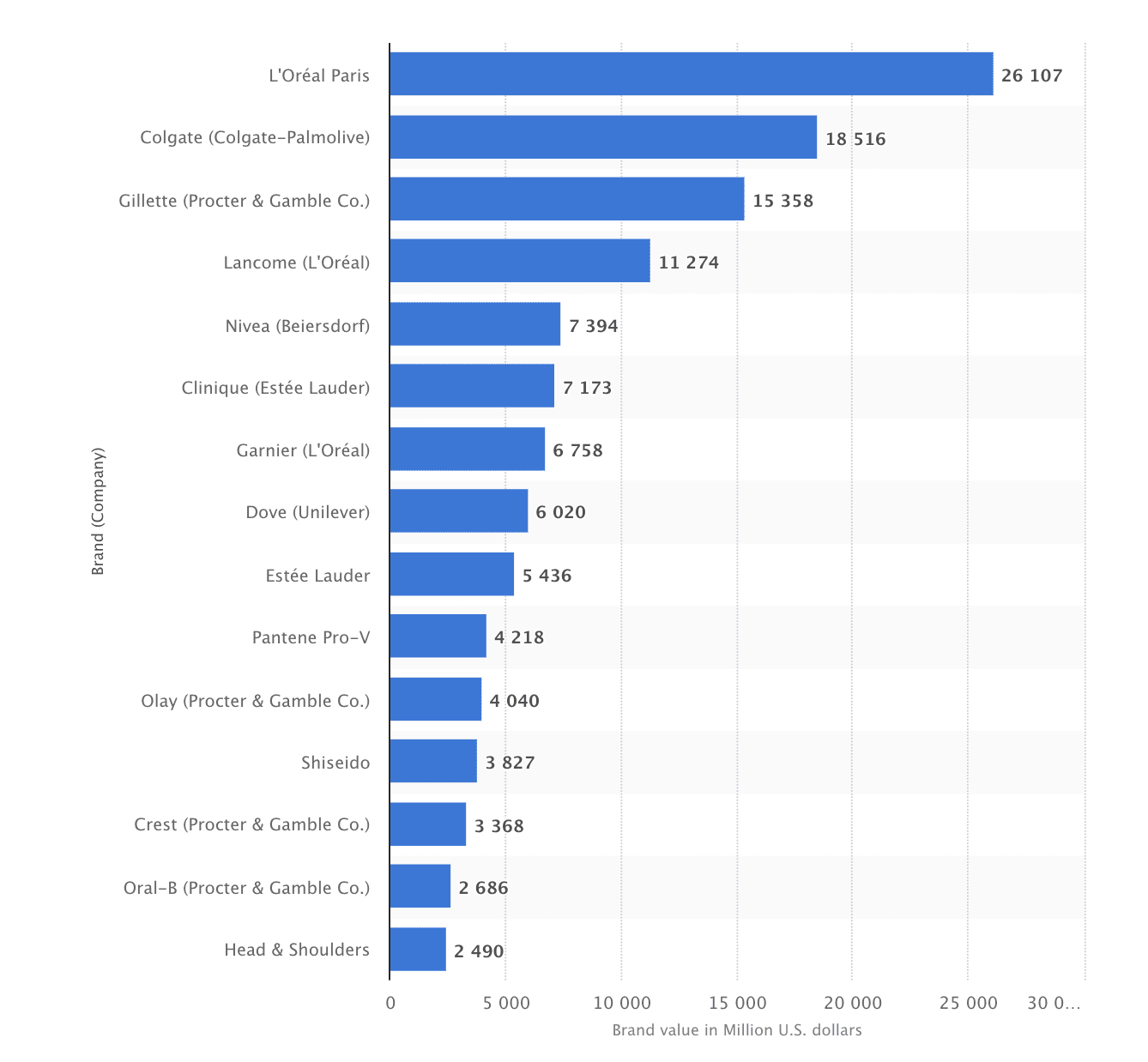
Brand equity of the leading personal care brands worldwide in millions (2018)
Procter & Gamble’s net sales worldwide by business segment in millions (2014-2018)

P&G is at a crossroads. The 182 year old consumer brand earned its highest revenue figure in 2012 and has yet to reach those heights since, though they have successfully cut expenses and bolstered profits. Even so, P&G’s 2018 net income figure was the second lowest in their last 13 years. This diminished position corresponds with the growth in DTC retail sector. This growth along with the continued development of well-marketed private label CPG brands at big box retailers has resulted in increased substitution for traditional products from marketers like P&G and Unilever.

Redefining Direct to Consumer

A rendering of their franchise opportunity

There is a remarkable opportunity for P&G to leverage their products in inventive, new ways. The Cincinnati-based company recently launched Tide Cleaners, a franchise retail experience and service center for dry cleaning. Franchisees gain access to the most recognizable brand in home goods and Tide gets a new retail channel to sell products, build affinity, grow top funnel advertising, and realize service-driven revenue streams.

Tide, one of P&G’s most recognizable brands, has been repurposed to present an on-demand laundry service. Tide Dry Cleaners allows customers to select their desired service in-app, pay, and then drop off their clothing at the storefronts to be picked up when push notified. Customers will return to find their clothes washed, dried, and folded. These dry cleaning storefronts now run in Cincinnati, Boston, Chicago, DC, Philadelphia, Denver, and Dallas. This new retail experience begs the question: why not expand into vertical retail with physical “Everyday” storefronts?
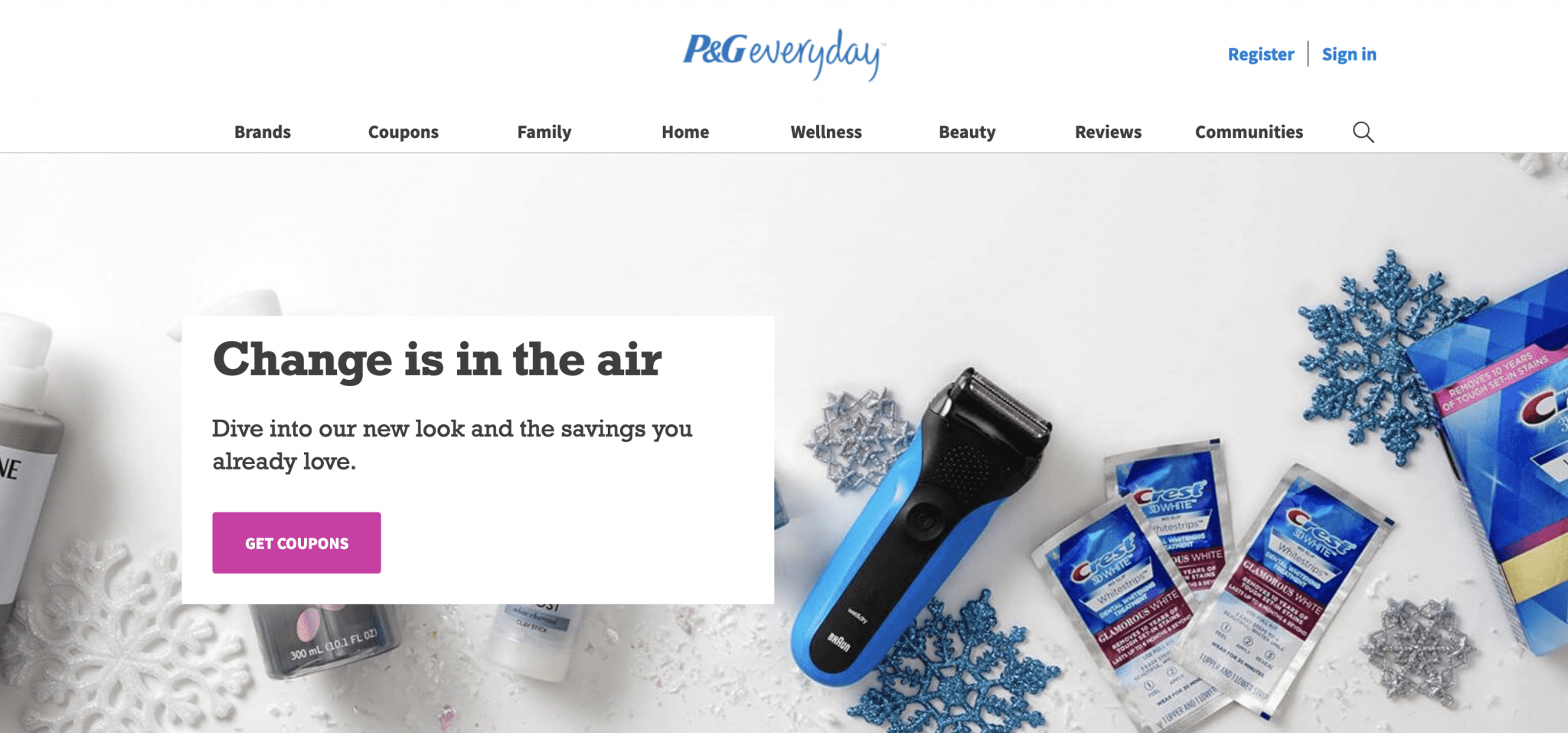
One example of Procter & Gamble’s existing DTC efforts

On “P&G Everyday” and defensibility. As of 2018, Harry’s and Dollar Shave Club (Unilever) won over 12% of Gillette’s market share thanks to their direct model and partnerships with retailers. Procter and Gamble would further benefit from the development of a DTC physical retail model. By owning their in-store “Everyday” experiences, P&G would be able to meet a few objectives that would be useful as Amazon, Walmart, and Target continue to develop competing home goods brands to address their own profitability concerns.

  • Physical stores could reduce dependency on Walmart and Target as primary sales channels while giving P&G more leverage to negotiate better terms and in-store marketing collateral at Target and Walmart or on Amazon (currently an advertising partner).
  • By going direct to consumer, these owned storefronts would cut P&G’s dependency on wholesale relationships, promoting higher margins per sale.
  • With owned storefronts, P&G would be capable of launching their own delivery services and last mile operation.

While “direct to consumer” is the buzz phrase of this era in retail, physical storefronts are once again becoming critical components in a healthy customer acquisition ecosystem. But brand manufacturers can no longer rely upon big box retailers to run the way that they did prior to this era. Digitally native brands are prioritizing physical retail to reduce customer acquisition costs and build long-term loyalty. As a result of this shift by internet-first retailers, big box retailers like Walmart and Target have prioritized partnerships and acquisitions with these brands to drive their customers to their stores.

Walmart Inc. hopes to boost profits by charging for in-store and online advertising by some of the retailer’s biggest suppliers, including Procter & Gamble Co.

Will P&G Pay to Advertise in stores?

The DTC era of retail has begun to place marketers like Unilever and P&G at a disadvantage. Just ten years ago, P&G owned the grooming and beauty aisles at stores like Target. In some stores, Harry’s and Flamingo installations are the most visible. In others, its Native’s deodorant or Casper’s pillows. As third-party retailers like Walmart reevaluated shelf space and in-store marketing, P&G began to lose control of their product presentation. But their commitment to direct-to-consumer business models is a sign that this disadvantage may be short lived.

In addition to the Tide Dry Cleaner franchise system, P&G is experimenting with digitally-native brands. In addition, the company continues to test new online retail formats with BigCommerce. But it’s the direct store format that could offer physical retail growth and brand defensibility amidst the continued evolution of retail. A P&G owned storefront wouldn’t just be a place to own relationships with old customers. It would serve as a space where P&G’s new digitally-native brands could test for and acquire new customers. Direct to consumer retail isn’t limited to online channels, DNVBs are innovating in this way. Marketers like Unilever and P&G can do the same.

Read the No. 308 curation here.

Report by Web Smith | About 2PM
Issue No. 267: On DNVB Branding

facebook-ad

What’s next in DNVB branding? Every vertical brand story has its beginning. For lifestyle and fashion DNVBs that are fortunate enough to work with the finest branding agencies, this story often begins with its founder’s biography, the problem that product x begins to solve, and proclamations of the brand’s inevitable staying power. It’s a short history, as most are in online-first retail. But it’s also a forward-thinking approach, one designed for: eCommerce, Instagram and Google advertising, and third party delivery. Less “we’ve been” and more “we will be.”

According to the godfather of the term, “DNVBs are maniacally focused on the customer experience and they interact, transact, and story-tell to consumers primarily on the web.” As brands begin to focus on off-line retail, you’ll begin to find that the packaging around the brands will change with that focus. Whereas technology and futurism appealed early on (2010-2014), the brands that succeed over the next ten years will focus on heritage as much as they focus on futurism.

Phase One (2010-2014): Technology

Warby Parker is the best example by a mile. The brand grew by implementing a practice that other direct-to-consumer companies had not. The company worked to eliminate all barriers to purchase by implementing tools designed to facilitate an ingenious customer experience. For this first phase of DNVB marketing, the eCommerce brand’s technology was the draw. The product is nominal and affordable but the access to it became just as much a part of the brand as the eyewear itself. Take this excerpt from a 2013 Wall Street Journal article co-written by Kevin Lavelle and me:

We are now in the age of e-commerce 3.0, where entrepreneurs can launch companies with few barriers to entry. eCommerce 1.0 consisted of crude online shopping in the ’90s offered by a few businesses met with significant consumer skepticism. This evolved into the more sophisticated interactions of e-commerce 2.0 in the mid 2000s, when most companies realized that if they weren’t online, they were endangering their future.

A new time is here — and the power no longer lies in the hands of a few buyers at large stores. Bigger businesses can be upended by an upstart competitor with a superior product. And retail startups no longer have to endure the long, slow road of trade-show hopping to get their product in front of a handful of buyers, or giving away a hefty portion of each sale to distributors.

Phase Two (2014-2018): Comedy

Dollar Shave Club’s 1m33s “Our Blades Are F***ing Great” video was developed to promote the launch of a (since-acquired) brand and has now been viewed over 25 million times. This internet ad is considered one of the premier examples of top funnel marketing and DSC’s brand of humor has since influenced other mens-focused brands to pursue humor as a means of brand differentiation: Chubbies (no. 67), Untuckit (no. 48), Tommy John (no. 54), and Mizzen+Main (no. 86).

Capturing one customer by way of a top funnel direct-to-consumer ad can cost upwards of $20 per click on Facebook. Digital advertising can be costly. To counter these steadily rising costs, brands have been stimulating awareness, interest, and consideration cycles by promoting a viral brand video. It achieves awareness, consideration, and intent.

Most importantly, introducing mainstream users to your brand and getting them to clickthrough for more information allows marketers to use tools like Facebook’s pixel to retarget casual visitors, moving them further down the sales funnel. Appealing to casual customers was an effective way of increasing top funnel traffic.

Phase Three (2018-forward): Heritage

Brands that began as the embodiment of online-first retailers are now expected to rival age-old incumbents, as they grow their annual revenues well beyond nine figures. Incumbent competitors are still around and some are even stronger than they were before the emergence of online rivals. All the while, new brands are beginning to compete on old-aged ground: mall retail, brick and mortar shops, and traditional advertising. The internet was supposed to completely eliminate these channels, instead, it provided cover until online retailers were prepared to go physical.

eCommerce has matured and physical retail has evolved into a more effective channel. As such, we’re beginning to see brands take on the traits of heritage companies. But if you’re eight years old, you won’t have much of a heritage story. For every Abercrombie, Filson, Ralph Lauren, Lily Pulitzer, Ray Ban, and Tag Heuer, there is a digitally vertical brand like Harry’s, Allbirds, and Outdoor Voices hoping to achieve staying power.

Heritage brands work to maintain heritage, while striving for futurism through of product and channel innovation (see Cole Haan). For heritage brands, presenting an aura of staying power means that the products and channels will present as forward-thinking for a millennial-driven, omni-channel age.

Meanwhile, vertical brands work to establish their products as an evolution of heritage products, while maintaining as many of their technological advantages as possible. For digitally vertical brands, longevity is projected by tethering to history and tradition.

The next wave in DNVB branding will be focused on developing history and tradition. Brands will deepen their roots by way of product collaborations, messaging, and unique origin stories of their own.

Look no further than this example of a heritage maker and vertical brand accomplishing both of their messaging objectives with one collaboration.

Messaging: “Legacy brands approve of us, they want us around.”

Web---NB-ReTooled

Long before designer dad sneakers infiltrated fashion hot spots across the globe, the New Balance 574 set the gold standard for what a well-designed, chunky, retro runner should be. It looked great when it launched in 1988, and in 2018 it manages to look stylish on just about anyone who wears it—actual dads included. Over the years, the 574 has become the go-to New Balance model when it comes to collaborations, too, so it’s seen a fair number of upgrades and interactions. But the latest collab—with the high-tech clothing label Ministry of Supply—brings the 574 into the ultra-performance future.  – Tyler Watamanuk, GQ

Messaging: “The finest legacy brands trust our platform.”

This month, Mr. Porter launched a tongue-in-cheek collaboration with Prada. As luxury continues to grow online, Mr. Porter is pushing to become the destination for such wares. This type of heritage nod goes a long way with consumers.

Since the 1990s, the brand has maintained an enviable position firmly at the forefront of fashion, to the extent that it has become a household name, a byword for sleek elegance, forward-looking design and, yes, a lot of fun print shirts. So great is the admiration for the brand’s wares in the MR PORTER office that there was something of a festival atmosphere when, in September 2016, we became the first online store to offer Prada’s much-coveted menswear collection.

Continue reading “Issue No. 267: On DNVB Branding”