No. 297: The DtC industrial complex

Untitled-2-Recovered

There is an entire eCommerce industry that fosters the ideation, launch, and early growth of direct to consumer (DtC) brands. When you notice a new digitally vertical native brand in 2018, there’s a platform aura around many of them. First you’ll see the early PR sensationalism. Then, the founders must live in the right city, have the right investors, and pay the right $25,000 / month PRs retainer. The DtC industrial complex that fosters challenger brands has, thus far, insulated many of them from the reality of attrition-by-market forces.

Consumers first notice that the brands are using Shopify or BigCommerce. Then these target customers ask: Red Antler? Brand Value Accelerator? Partners & Spade? Gin Lane? And then on to the excellent packaging presence. Lumi? That other one? In many (but not all) cases, the table stakes aren’t the physical products anymore. You can argue that in the world of DtC 2.0, the actual product is prologue.

After working with Warby Parker, Partners & Spade struck up a relationship with DTC razor brand Harry’s (before it had launched), Shinola, Hims and Peloton. For an already established brand like Peloton, Partners & Spade worked on their first national advertising campaign, but for a brand like Harry’s, the firm got in early on and helped debut the brand to the world (and has since launched Harry’s secondary brand for women, Flamingo).

Adweek, November 19, 2018

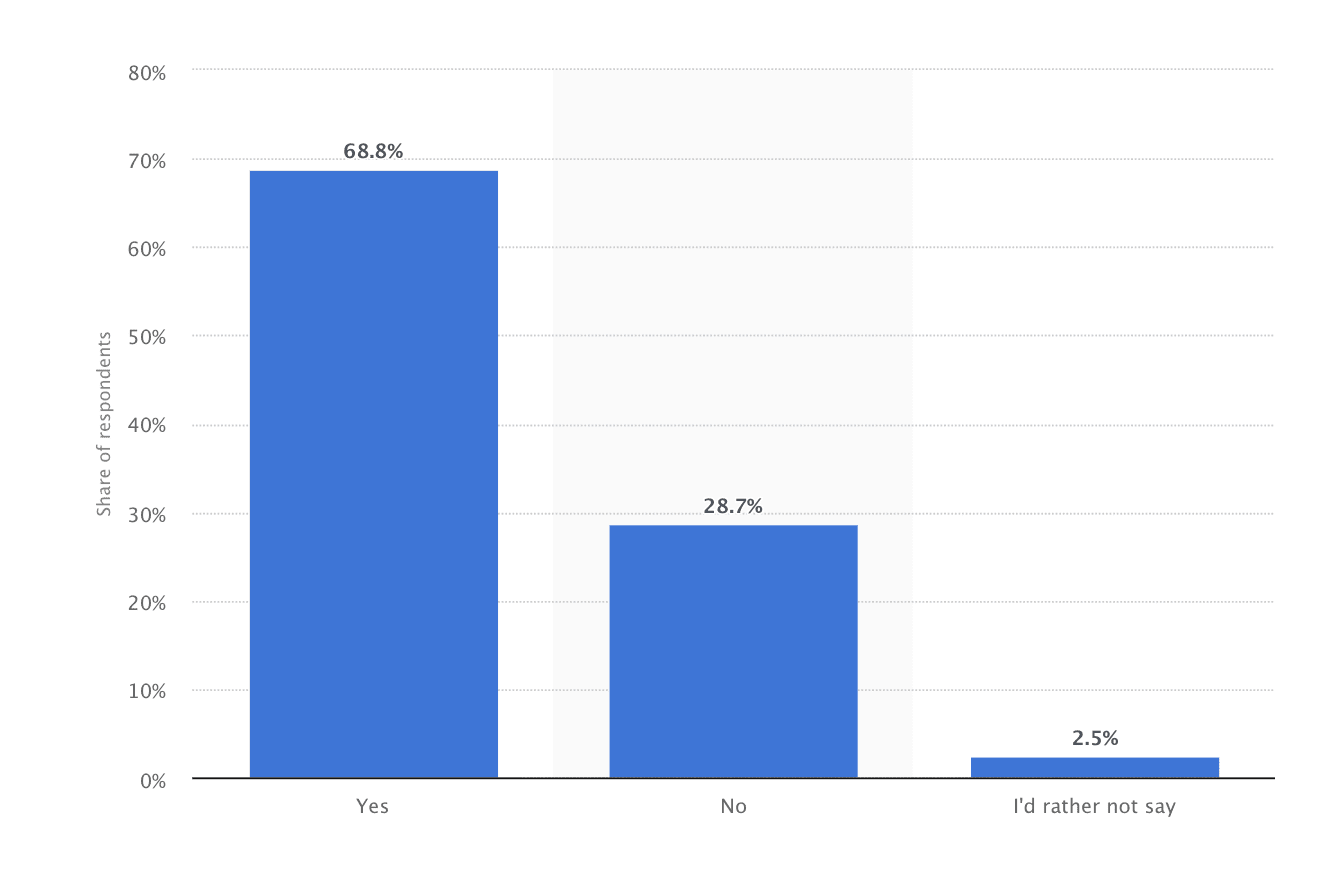
The DtC industrial complex enveloping challenger brands has, thus far, insulated many of them from the reality of attrition-by-market forces. Venture funding is the lifewater of the industrial complex. When brands launch today, many of them are hitting the ground running with $3.5 million to $17.5 million in funding. This means that the days of organic social proof (proving the efficacy of the actual product) are – for the most part – behind us. Our opinions are told to us, en masse, by the best molders of minds in the marketing today. This is not to say that new brand products aren’t great. Or that there isn’t opportunity ahead. Below is the estimated compound annual growth rate through 2022.


2PM Data

Screen Shot 2018-12-03 at 11.37.52 AM
US: DTC compound annual growth rate (2016-2022)

You’ll notice that consumer packaged goods, beauty, and food & personal care are each expected to grow tremendously. This coupled with the abundance of capital and the relative ease founding a DNVB in 2019 means that it’s likely that we haven’t yet observed peak volume of challenger brands competing in stale categories.

From No. 290: brand defensibility:

  • brand: the reputation of the product manufacturer. But also, the impression made upon consumers by the most visible brand evangelists.
  • product: the value created by the product. But also, the value created by the ease of purchase, the fulfillment process, and the customer follow-up – post purchase.
  • new distribution: how is it sold? The better the product, the more likely that a consumer has a 1:1 relationship with the brand.
  • acquisition model: how does the brand achieve meaningful foot traffic? And what is the right combination of paid and organic growth? Is organic growth sustainable?
  • the hive: who is the product’s first 100? Has the brand experienced organic growth on the foundation of this digital community? Will the “100” defend the brand when skeptics criticize the product and brand?

If there is a concern, it’s that the practice of launching a DNVB has ambitious founders shifting resources from within the company walls to outside of them. Brands can outsource product engineering, the brand message, the media relationships, and the customer acquisition. All while ignoring the benefits of the “product’s first 100” for day one, hockey stick-like growth: a strategy that has worked for Warby Parker, Harry’s, Away but very few others. A strategy that is often fueled by that pesky abundance of early stage capital. An amount of capital that’s often justified by the costs of the industrial complex. As we the cycle? Founders are raising to address an amalgam of costs that were once viewed as optional and eventual. But today, they are essentially table stakes to play the game on day one.

The winners will surely include a small handful of consumer brands that overturn the market dominance of their categories’ legacy brands. But if you’re looking for volume, the real winners of the DTC era are the agencies surrounding the products. They are crafting the narratives of the products that we are told by every editorial tastemaker and affiliate-driven publisher to never live without. Those deskside founder interviews aren’t cheap, I know. These are the products that expertly target us on every platform. And when we convert, we get the lovely welcome to the family email. This optimizes for LTV / CAC ratio. And then we receive it; the well-designed box takes our breath away and the nestled card with the well-tested social media CTA that gets us to bite.

This is the experience wished upon us by every challenger brand that adorns the publications that cover consumerism. And only then do we realize that every experience has hints of another. Not because the agencies aren’t expertly executing, they are. But because there are only so many ways to make categories – that weren’t exciting in the aisles of Target stores – revolutionary across the consumer web. There have been tremendous products launched into the stratosphere of consumer America. Few products have impressed me more than the agencies that build them.

Read your latest curation here: No. 297.

Report by Web Smith | Executive Membership

No. 296: The Idea of Recess

recess.png

Imagine knowing that your brand will eventually play “chicken” with the Coca-Cola Company. For the founder of Recess, that seems like an inevitability. While 2PM, Inc. doesn’t boast a podcast for retail founders, we’re on the horn with CPG and DNVB investors and founders each and every day. One conversation with Ben Witte and you’ll leave it feeling at ease. The CPG founder has a plan and if he has it his way, Coca-Cola won’t deter the brand that he’s building.

Coca-Cola is looking at pitching cans of cannabis-infused wellness drinks to consumers in the latest bid by a big beverage behemoth to tackle the budding market for potentially potent enhanced potables.

“Along with many others in the beverage industry, we are closely watching the growth of non-psychoactive CBD as an ingredient in functional wellness beverages around the world,” the company said in a statement issued in response to a report from the Canadian BNN Bloomberg new service.

Coke Eyes Cannabis Fueled Wellness Drinks

BevNet, the authority on the CPG beverage industry, lists nine competitors in the CBD-infused drink space. Two of them, Dirty Lemon and Recess, couldn’t be more different. But to newcomers to the CBD product space – it’s difficult to tell, early on. To remedy this, I purchased CBD-based products from both of the brands and tested things on my own:

2PM, Inc. в Twitter

Upcoming: 2PM’s first CPG / DNVB “head to head”. @BenWitte’s Recess vs. @drinkdirtylemon’s CBD. We assess the “end to end.”: purchase process, shipping, and product.

Both products were great. Where Dirty Lemon succeeded in logistical prowess and speed, Recess succeeded in product efficacy. Founded in 2015 by military veteran turned industrial engineer Zak Normandin, Dirty Lemon hit the shelves in 2016 with a focus on several aids to wellness. Here’s Normandin on the recent Loose Threads podcast:

Just one on launch: the Charcoal. And then we launched Collagen and Sleep as well, in 2016. And then in 2017, we launched Ginseng and then in 2018, we launched Rose Matcha. We’ve had a lot this year. Rose Matcha, CBD, the Vogue beverage. Yeah. And then we have Turmeric that we just released as well. So that’s the last one and we’ll do one more this year in December.

Beyond what you see, there isn’t one additional mention of “CBD” in Normandin’s interview with the Loose Threads founder. And that’s by design. Despite the incredible popularity of the Dirty Lemon CBD drink or the drink’s role in helping it leap from pop celebrity to practical mainstream, Normandin is essentially tasked with disavowing CBD until the deal finalizes with Coca-Cola. Looming in the background is Senator Mitch McConnell’s hemp legislation within 2018’s Farm Bill. Without this legislation, full spectrum CBD will effectively remain an illegal additive to mainstream beverages.

Shortly after I experienced Normandin’s innovative text ordering process and pleasing customer service, the CBD drink was effectively discontinued (for the time being). Sure to be lucrative, Dirty Lemon is the type of beverage brand that Coca-Cola or Pepsi would wildly bid for. It’s well branded, the following is loyal, and it has star power.  This in addition to the product being pretty good. Coca-Cola’s investment into Kobe Bryant’s BODYARMOR drink is the closest analog to what Dirty Lemon hopes to realize. After the brand’s recent deal with the NCAA, Bryant is one step closer to realizing an acquisition.

Consistent with our strategy of incubating bolt-on M&A deals, we believe taking an initial minority stake today, with a clear path to ownership, will allow BODYARMOR to continue to grow the business in a sustainable manner while maintaining the brand’s leadership and edge that have made it so successful.

Jim Dinkins, President of Coca-Cola


From Issue No. 282: Instagram’s CPG Problem (a deep dive into the CBD industry)

CBD, short for cannabidiol, is growing in popularity among beauty and health consumers. It’s a THC-free substance known for treating everything from muscle relief to insomnia. In June, the first CBD-based drug won FDA approval for epilepsy treatment. And as it relates to this article, CBD has been popping up in high-end skin care products. But Facebook and Instagram’s rules have been uneven at best and it’s causing quite an issue in the CPG space. It falls under Facebook’s prohibited content category.


In October 2018, Business Insider reported that Coca-Cola was mulling a Series A investment into Dirty Lemon. And according to federal laws, inclusion of CBD is considered illegal, unless expertly extracted from the right part of the cannabis plant. To achieve this takes quite a bit of research and expertise. One that Dirty Lemon was unwilling to invest in, for now.

With the closing of its new round of funding, Dirty Lemon will undergo a significant rebranding, the people said. While most of the company’s rebranding efforts aren’t apparent just yet, Dirty Lemon’s CEO Zak Normandin tells Business Insider the company is discontinuing one of its most popular products: its CBD-infused beverage.

Business Insider: Prime

But despite the incredible upside that Dirty Lemon has waiting for it in the realm of CPG acquisitions, it’s Recess that has the potential to become a transformative wellness brand. While Dirty Lemon is focused on holistic wellness with use of elements like charcoal and collagen in its drinks, Recess seems to provide a better “why” through its early branding and multi-platform content. And given its relative youth, it needs all of the help it can get.

If you try to order a case of Recess, you’ll find that it’s backordered four to five weeks. The brand’s launch and ensuing public relations tour was meticulous but Witte seems to be playing a long game (straight out of 2PM’s “best practices” handbook). Witte isn’t building a beverage company like Dirty Lemon, he’s building a platform. Much like Glossier isn’t just a makeup company, the plans for Recess are so ambitious that it might just make sense. Like Glossier and its media arm: Into the Gloss, Recess seems to be taking on the tough task of educating its consumers on the why’s of the more adult-like form of recess. Remember elementary school everyone? We don’t stop to breathe, anymore.

Screen Shot 2018-11-19 at 2.25.39 PM
American usage of the word “recess” over time (1880-2008)

While Normandin and Dirty Lemon have temporarily stricken mention of the substance from interviews and pitch decks, you won’t find the acronym “CBD” on a single can of Recess either. To Witte, the brand is bigger than the three letters. His product offering is suited around addressing productive ways for overworked consumers to value calm, balance, and clarity – despite increasingly hectic lives. For consumers who’ve sidestepped any and all forms of psychoactive substances, Recess is tasked with normalizing its productivity and safety.

Dirty Lemon’s scene is built for leisure, Recess is more grounded in the day to day.

And to this end, Recess may be experiencing a bit of serendipity. Known as a “deeper metric”, there is a growing cohort of health conscious entrepreneurs and professionals who’ve adopted the use of HRV (heart rate variance) as a tracked measure. Popularized by Whoop and available on the most recent Apple Watches, the analytical measure was intended to quantify a person’s physical recovery after sleep.

To achieve 80-90% recovery – despite external stressors, physical fitness pursuits, and shallow sleep – many entrepreneurs are adopting CBD oils and drinks. The goal: address the perception of physical, emotional, and mental stressors. To many, the Recess brand may be the most welcoming option on the market.

We all have too many tabs open in our browsers and in our brains. That’s why we made Recess: each can is a moment to reset and rebalance. It’s how you wish that 2PM coffee would make you feel.

The copywriting on Take a Recess homepage says it all. Witte’s recipe of hemp extract and adaptogens may (or may not) be like anything else on the market. But if it’s up to him, the education and entertainment that the company will provide potential consumers will be unparalleled in the CPG beverage industry. And the potential of his Glossier-like “content and commerce” strategy will provide quite the platform for further product differentiation and expansion beyond cans or bottles.

Read your curation here.

Доклад Веба Смита | Около 2 часов дня 

No. 295: Asymmetrical Warfare

The truth is somewhere in the middle. It involves nuance and an unbiased view at the industry as whole to understand what’s occurring, as things change with light speed. The recent article in The Economist paints a pretty picture of a DTC industry. The industry, as a whole, is a lot more difficult than newly-minted retail entrepreneurs would like to think. Two things can be true: (1) stodgy old brands are run by career executives that don’t understand agility or innovation (2) most DTC brands will fail because they are run by former management consultants or recent MBA grads who do not value the powers of brand, relationships, and community.


Asymmetrical warfare:  warfare involving surprise attacks by small, simply armed groups on a nation armed with modern high-tech weaponry.


Direct to consumer brands are difficult to scale. The assumption often made is that you can spend on design, manufacturing, packaging, and then acquisition. Spend, spend, spend, spend. Thus, the endless VC raises of $30 million or $50 million or even $100 million. The problem is that while able entrepreneurs can outsource design, manufacturing, packaging, and even acquisition – incumbent brands were built on relationships, consistency, value, and trust. Traditional DtC acquisition channels cannot immediately facilitate trust or value. That part takes an insane amount of work and consistency. It also takes offline interaction, a phenomenon that we’re watching in real time as “nearly 850 stores are due to open in the next five years.” [Forbes]

Industry giants took time to begin worrying about the arrival of game-changing newcomers; barriers to entry in their business are high. But by now the incumbents are stagnating. According to Nielsen, a consultancy, the biggest 25 food-and-beverage companies, for example, generated 45% of sales in the category in America but drove only 3% of the total growth in the industry between 2011 and 2015 (see chart). A long tail of 20,000 companies below the top 100 produced half of all growth.

Economist: Growth of Microbrands Threatens CPG Giants

If you ask Publicis Groupe’s EVP of Innovation Tom Goodwin about direct to consumer (DtC) brands, he will give you an earful. To be fair, defending Procter & Gamble is one of his chief functions. P&G is so important to his employer that they just announced a Cincinnati office to support P&G’s advertising strategies. In a October 22nd article that he wrote, he includes this hearty passage:

DNVBs may be a flash in the pan, they don’t have moats, they have fickle brands, they can die as soon as they fade and we can’t keep talking to the 1/100 companies that make it as anything other than survivorship bias.

Marketing Week

He’s not entirely wrong. Just a few days earlier, I’d published an article on DTC brand defensibility where I wrote on how surviving brands established the moats necessary to be more than a flash in the pan. This era of the consumer web is defined by two groups jarring over you: the affluent, intelligent, busy, and principled consumer. We are communicating many of the same elements while landing on two distinct conclusions: he believes that DNVBs cannot last and I believe that they can. Our professional experience shades our opinions here. Five years ago: Jeff Blee, the former VP of buying and planning for Brooks Brothers, commented on an early stage DtC shirt maker:

Unperturbed by the newcomer, there would always be a market for shirts he described as “newer.” And, “any competition was good news.”

Нью-Йорк Таймс

The iconic menswear brand has since adopted a Joseph A. Bank discount strategy (four shirts for $200) and Mr. Blee now runs a DtC apparel startup. This war between old and new is not limited to consumer packaged goods, or luggage, or dress shirts, or wooly shoes. It’s everywhere. In a recent article by someone at Business of Fashion (no byline), they discuss the woes of L Brands’ Victoria’s Secret and how “it can save itself.

And yet, Victoria’s Secret still feels as though it’s stuck in a time capsule: an era when it was okay, even expected, to openly project the male gaze on women’s bodies, when uncomfortable push-up bras with air pumps were viewed as innovative, when people still shopped at the mall. This season’s show felt like an homage to itself. Between set changes, archival footage played in the background.

Their article builds on an earlier report by 2PM, where we laid out the increasing competition faced by the legendary intimates incumbent. What we’re seeing here is an onslaught by new, cheaper-to-run brands that are appealing to the senses and wallets of communities primed to look elsewhere. Not only are companies like L Brands (Victoria’s Secret parent company) and P&G (Gillette’s parent company) and Brooks Brothers competing on a shifting grounds of price, ease, and selection; they are competing on culture (size inclusivity, the “pink tax”, and shifts in where / how we work).

Look no further than the pushback facing the Victoria’s Secret CMO, 70-year-old Ed Razek, who was quoted to have said, “we attempted to do a television special for plus-sizes [in 2000]. No one had any interest in it, still don’t.” Fighting a battle on multiple fronts takes sensible leaders within an organization built for agility. These leaders must also be empathetic to consumers and progress. Needless to say, Razek’s comments were tone deaf and aloof. Currently, several top brands are competing against the L Brands subsidiary by designing and marketing more inclusive products. In No. 271, I wrote that Victoria’s Secret needed an update:

In addition to intimates brands expanding into VS’ territory, there are adjacent pressures from the athleisure market, an evolving beauty market, and the rejection of lingerie by consumers looking for comfort, function, and individuality. Rather than continue competing against the likes of Adore Me (21), THINX, Inc. (31), and Third Love (51), or Savage x Fenty, Victoria’s Secret could re-invest in the brand, messaging, and end-to-end processes by following Wal-Mart’s lead.

The news around Victoria’s Secret’s latest fashion show was, by all accounts, a fiasco. But the solutions are right before them. They should observe the legacy CPG industry. There, innovation often involves: youth, acquisition, and agility. Procter and Gamble is doing just that. The CPG conglomerate recently restructured to form smaller, agile teams and the Cincinnati company is open to acquisitions.

The evolution of the DTC era has more and more brands competing in physical retailers, adjacent to the CPG, apparel, and shoe companies who’ve existed for decades. There are dozens of brands, in each market segment, looking to compete for your dollars.  Tom Goodwin is correct in his assessment of many of the brands who have raised exorbitant amounts of capital to acquire customers via paid media.

But that’s not the characteristic of the entire DtC industry. As media buying becomes more difficult for challenger brands, more direct-to-consumer brands will shutter. And competition will become more symmetrical and predictable as the hundreds of new brands narrow down to the sturdier dozen. P&G will shake off much of the newfound competition by adopting many of challengers’ practices (and brand IP via acquisition), as many begin to compete on familiar territory. But there will always be room for the independent challenger brands that get it right.

Report by Web Smith