No. 279: The Appeal of Independents

facebook-ad

While overall advertising revenues for print magazines continue to decrease, the real story is the increasing number of well-received independents. You know these magazines when you see them. They are wider and heavier than most, the paper is of higher quality, and the photography has a common theme throughout. In these publications, the magazines’ creative teams determines the artistic direction; it’s not the brands’ direction. This means a more natural feel with a greater connection to the reader.

These publications feel more like books than magazines and the price reflects that: they range between $10-25 per issue.

The savviest of these publishers are sidestepping the mistakes of previous era of print publishing. This new generation of print magazines aren’t merely media vehicles that are built to support a bloated advertising payroll. These magazines are brand statements and loyalty builders. But most importantly, they are the break from the digital economy that we all seem to be craving.

The Data
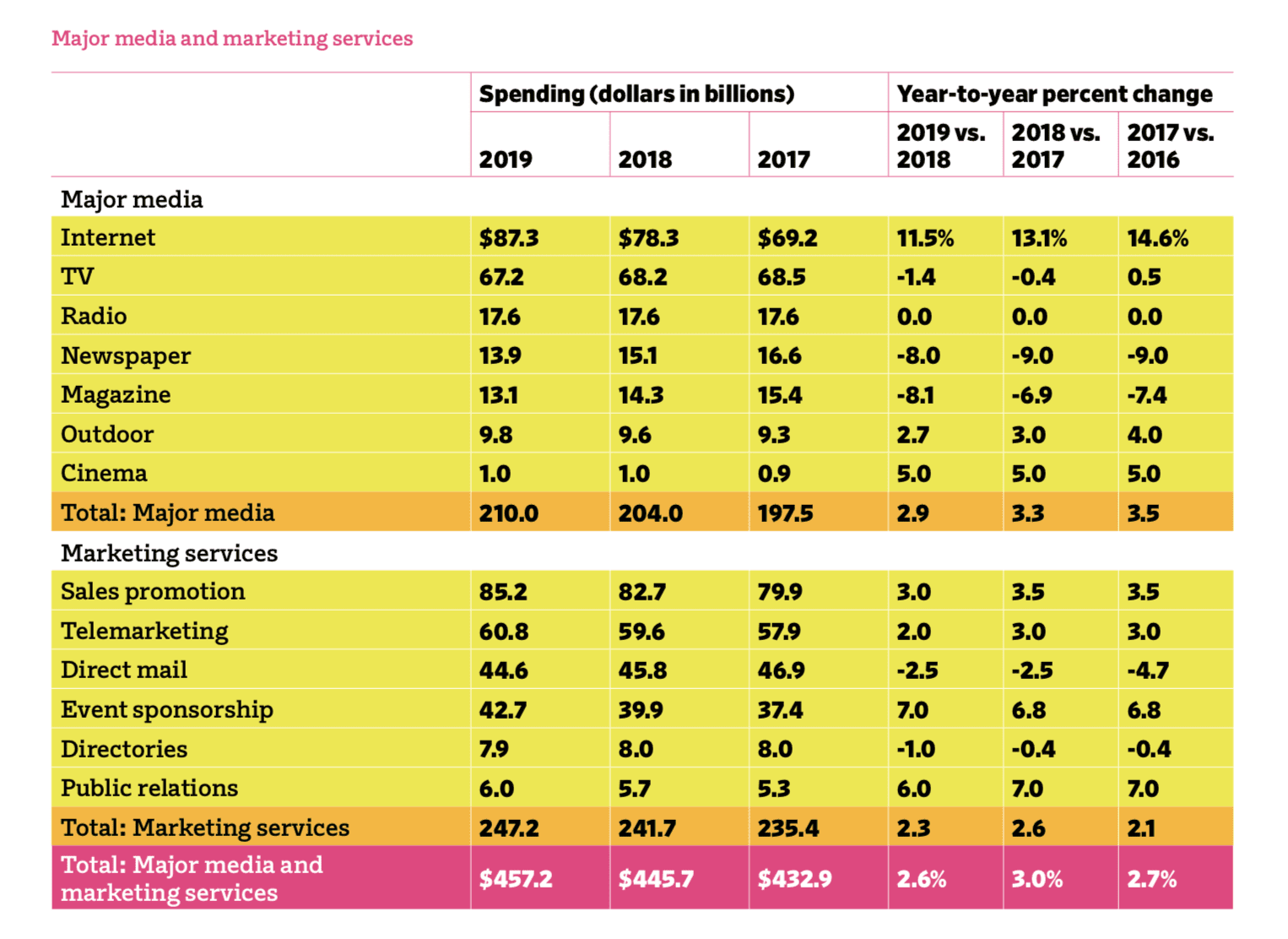
Screen Shot 2018-07-23 at 9.24.34 AM
Magazine advertising will continue dropping (2018-2020).
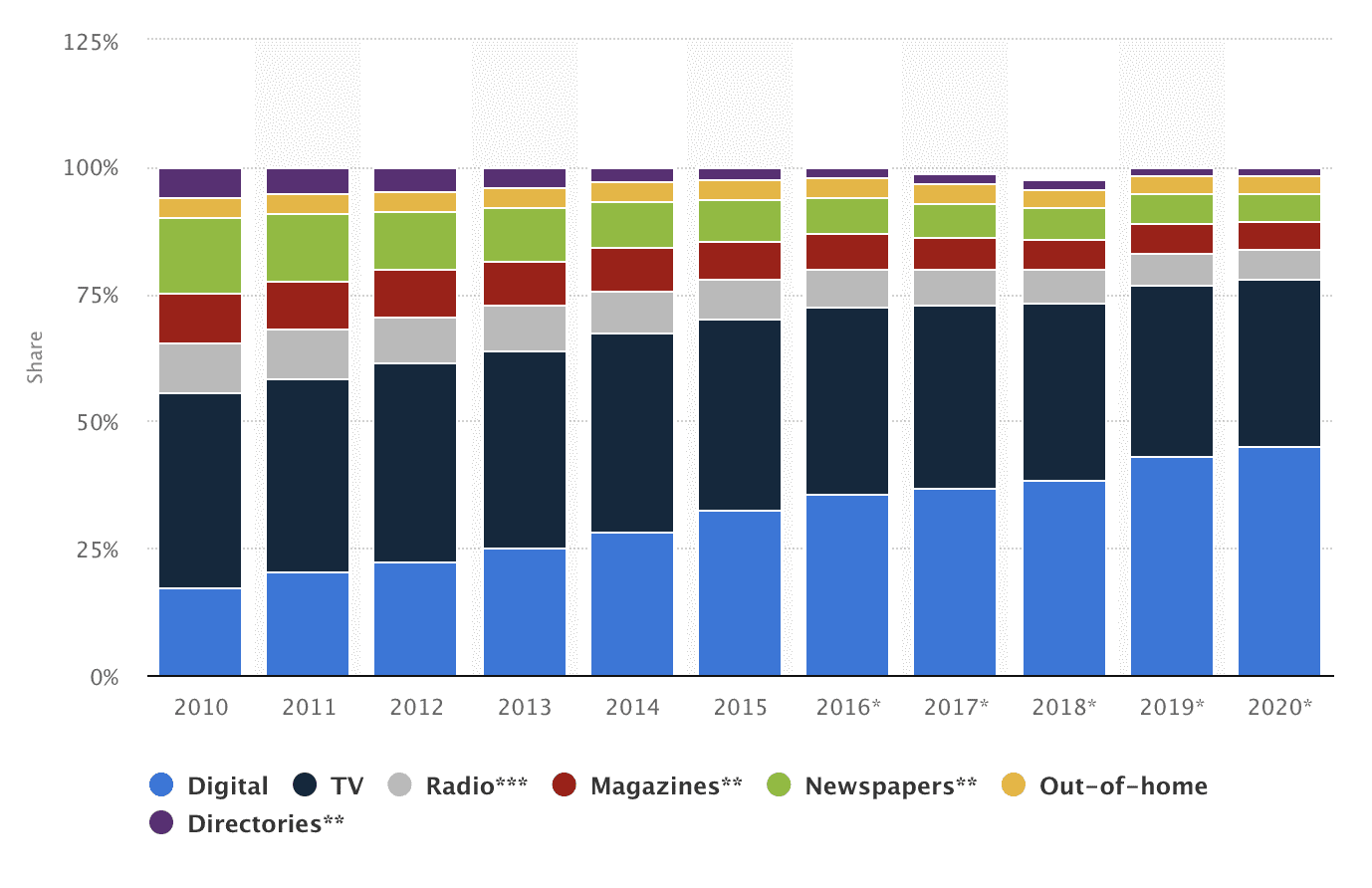
Screen Shot 2018-07-23 at 9.26.24 AM
Major media estimates for 2018: magazines ranked third from bottom.
Screen Shot 2018-07-23 at 9.26.46 AM
Magazine advertising revenue is set to fall over the next two years.

Conventional publishing houses like Hearst and Conde Nast are increasing investments into digital properties as traditional print advertising falters. But independent publishers are taking a counter cultural approach to business. The Guardian just recently published a timely article on the independent publishing craze here:

Magazines espousing the counter-cultural idea of “slow journalism”, such as Ernest or Delayed Gratification (which was founded in 2011 to review news events “after the dust has settled”, has 5,000 subscribers and a print readership of 24,000), are funded by fairly expensive subscription charges. Ernest starts at £21.50 for two issues a year, while Delayed Gratification costs £36 for an annual subscription of four issues.

Whether they prioritise elegant looks or go for a samizdat-like underground style, they all share the appeal of the tactile experience of printed paper. “It is hard to say why people buy them. But the magazines are usually run and read by people who are enjoying the fact they have a voice and a place to go,” said Catterall. Read more.

IMG_2815
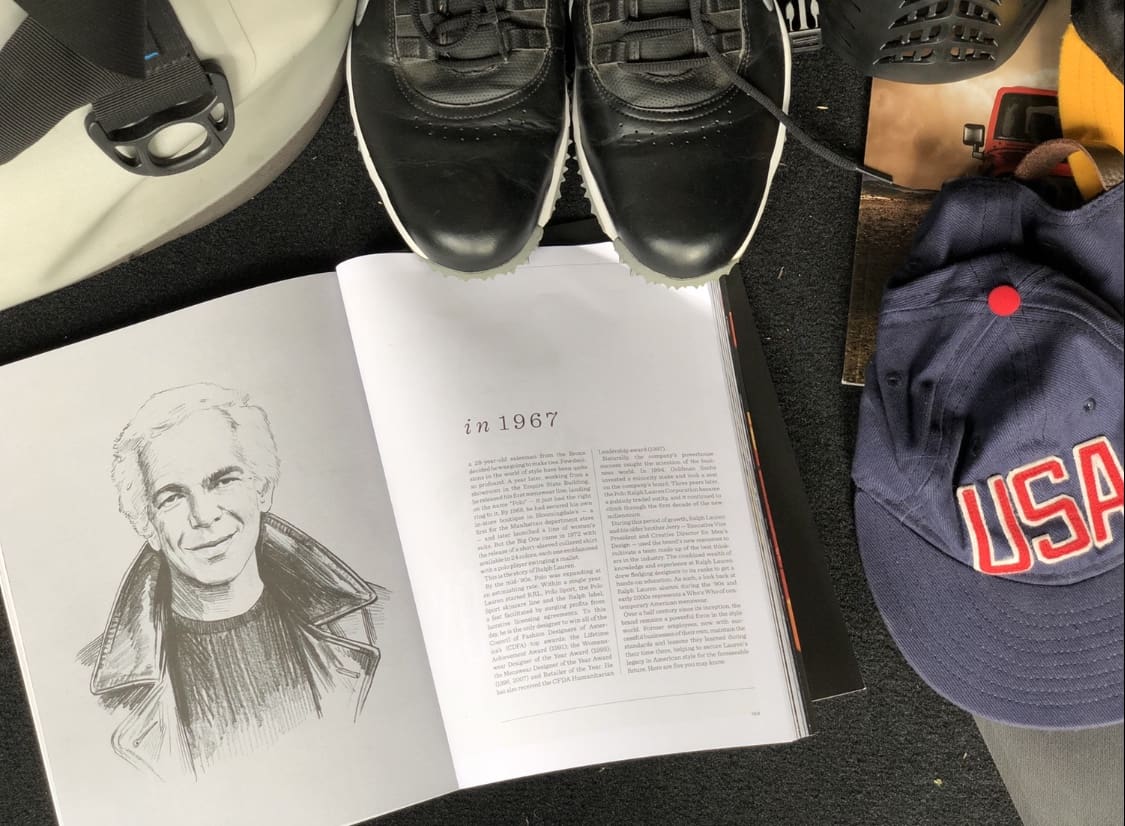
Issue No. 6: Gear Patrol.

Independent magazines have taken on a new role as home to more than a readership. These publications are cultivating consumer-driven communities away from the world wide web. Here are ten of the notables:

Monocle. $14. Winnipeg, Canada. The magazine launched on in 2007, By 2014, Tyler Brûlé sold a sizable minority stake in Monocle magazine to Nikkei Inc. It is reported that the company was valued at $115M at the time of the investment. Read more.

Darling. $20. Los Angeles, California. In 2009, the magazine’s Founder and Editor-in-Chief Sarah Dubbeldam and her husband Steve Dubbeldam created Darling. After starting off as a blog, the first print issue arrived in fall 2012. The magazine proudly embraces women of different ethnicities and body types. Read more.

Gear Patrol. $20. New York, New York. In 2014, founders Ben Bowers and Eric Yang launched the first magazine. GP is an award-winning digital, social and print publication that reaches nearly two million young, affluent men. The creative direction by Andrew Haynes has elevated the Gear Patrol brand to new levels. Read more.

Highsnobiety. $10. New York, New York. A publication covering forthcoming trends and news in fashion, art, music, and culture, all on one platform. Highsnobiety has steadily built a strong brand in the online fashion and lifestyle world. Today the blog and print magazine sit among the most visited global sources for inspiration in the areas of fashion, sneakers, music, art and lifestyle culture. Read more.

Uncrate. $15. Columbus, Ohio. A publisher for men, the bi-annual magazine features what to buy and how much it costs. Read more.

Cherry Bombe. $20. The magazine celebrates women and food through a biannual magazine. The book shares the stories of everyone from industry icons to notable newcomers, encouraging creativity in the kitchen. Read more.

Suitcase. $25. London, England. The magazine exists to change the way you travel: from where to go to how to pack. It’s for travel insiders, not tourists. Read more.

Raquet. $15. New York, New York. Racquet is a quarterly magazine that celebrates the art, ideas, style and culture that surround tennis. Read more.

Franchise. $20. New York, New York. A premium print publication dedicated to global basketball culture. The team consists of a group of players, artists and writers. The magazine documents the stories, characters and ideas that shape the game we love. Read more.

Here. $10. New York, New York. Away is a company on a mission and their latest project falls within this category. A well-produced, independent magazine that leans more on brand equity than advertising revenue. Steph Korey and Jen Rubio are the latest brand executives to turn their product into an escape for their readers. Read more.

Traditional publishing has been plagued by pay-for-play influence and an excessive approach to advertising sales and placements. Does anyone else ignore the first 20 pages of advertising? For brands that are looking to grow along with impassioned, independent audiences, this is the class of publishers that are truly making an impact for retailers.

Legacy magazine publishers focused on building a readership that advertisers would pay for. Independent publishers focus on building a product that consumers will pay for. Brand partnerships with independent publishers can reveal a smaller-yet-primed audience that can supplement performance marketing efforts. In the last two years, we’ve seen similar efforts launched by eCommerce brands: Airbnb, Hodinkee, and GOOP.

As traditional advertising and product placement continues to attract DNVB brands, you can expect to see more partnerships in this space. And more brand-funded magazines that mirror the quality of independent publishing.

Read more of the issue here.

By Web Smith | About 2PM 

No. 271: A Modern Luxury Update

There is a famous scene in The Social Network where Justin Timberlake’s portrayal of Sean Parker tells Jesse Eisenberg’s Zuckerberg contemporary the story of the Victoria’s Secret rebirth. In the script, it was Sean Parker that explained the genius of Les Wexner and his ability to change with the times after acquiring the $6 million / year business for a fraction of its real value, only to turn it into a $500 million dollar brand just four years later. The brand grew from four to nearly 100 stores in that short amount of time. It was a historic turnaround for a brand that was more niche than it was main street at the time.

The fundamentals of the brick and mortar lingerie business changed because Wexner emphasized the appeal of the brand to female consumers. He set aside the money-losing model of selling lingerie to men and replaced it with one that focused on female customers. But more importantly, he recognized that it should have been that way all along. It was an authentic move that evolved Victoria’s Secret (and its parent company: L Brands) into the $10 billion dollar company that it is today. But the brand is overdue for another shift. And it’s worth considering the recent hires and acquisitions by Wal-Mart to turn L Brands‘ most valuable ship around.

Screen Shot 2018-05-29 at 3.23.27 PM

Now led by CEO Jan Singer (former CEO of Spanx and Global VP at Nike), Victoria’s Secret cites the lingerie icon’s struggles on corporate restructuring, ending the famous catalog, and exiting the swimwear category. These are contributing factors, in addition to increasing pressure from eCommerce-first retailers. Business of Fashion:

The growing competition is promoting more variety in models and products. Now in its fifth year, online retailer ThirdLove has shoppers answer a series of intimate questions about their breasts — which of these nine illustrations matches your breast shape? — while reassuring consumers that every woman’s body is unique. The company has raised $13.6 million from investors and expects to double its sales this year. Companies like Adore Me, True&Co. and Everlane are taking a similar approach.

Their chief challenger, Adore Me (21) was founded in 2010 with the express intent to challenge Victoria’s Secret by giving consumers an online-first, inclusive alternative to the lingerie titan. The latest Inc. 5000 list has Adore Me’s growing 1,400% from 2014 and 2016 with revenues exceeding $100 million. Now, Adore Me is looking to expand offline and the timing couldn’t be worse for the L Brands subsidiary. GlobalData Retail Managing Director Neil Saunders:

Niche players may only have a small share compared to Victoria’s Secret, but their innovative approaches mean they are nibbling away at its market share.

In addition to intimates brands expanding into VS’ territory, there are adjacent pressures from the athleisure market, an evolving beauty market, and the rejection of lingerie by consumers looking for comfort, function, and individuality. Rather than continue competing against the likes of Adore Me (21), THINX, Inc. (31), and Third Love (51), or Savage x Fenty, Victoria’s Secret could re-invest in the brand, messaging, and end-to-end processes by following Wal-Mart’s lead.

Making a strategic acquisition to evolve Victoria’s Secret’s prized retail real estate could be just what the forty-year old retail property needs. The brand has a history of retail innovation. In addition to Wexner’s early decision to rebrand the shopping experience, Victoria’s Secret was one of the first brand’s to invest in early eCommerce (1999). In a recent retail roundtable, it was proposed that L Brands execute a Lore-like acquisition to oversee the brand’s eCommerce and omni-channel experience.

In addition, an interesting pivot was discussed. Victoria’s Secret could house brands and content across beauty, women’s athleisure, and intimates. The express goal would be to rebuild Victoria’s Secret as the premiere women’s-only destination – a house of brands, with their VS namesake positioned as the most premium offering within the store.

DD dan 1 relja 205
Lean Luxe Founder, Paul Munford

In a conference call with Lean Luxe’s Paul Munford, he added, “Not every brand deserves to exist forever.” He also added that L Brands‘ recent track record has been less than favorable, making the idea of a pivot like this highly unlikely. Specifically, he cited the $710 million dollar La Senza acquisition (2006) that did not achieve the intended effect. According to Munford, there was no indication that the retail group could operate with the same speed and precision that Wal-Mart has since Marc Lore became their eCommerce CEO. Munford added, “With Lore coming in at Wal-Mart, there wasn’t a negative track record of Walmart acquiring brands and dropping the ball. Walmart just started from scratch. So comparatively, Victoria’s Secret’s task seems harder.” 

Though Munford and I disagreed on the approach that the vaunted L Brands subsidiary should take, we did agree that VS is a brand that is long overdue for a modern luxury update. One of the first names that arose when discussing who’d be a great number two to Jan Singer was Emily Weiss, founder of Glossier.

By Web Smith | About 2PM

Member Brief No. 1: Linear Commerce

facebook-ad

What is the ‘Law of Linear Commerce’? Linear Commerce is a core tenet of 2PM’s understanding of an evolving commerce ecosystem. It is the prioritization of audience. Product manufacturers often outsource demand generation. Brands, that are ahead of the curve emphasize their audience’s growth as much as they do their physical product’s manufacturing. Likewise, digital media publishers that follow these principles will prioritize organic and loyal audience growth over SEO or PPC-driven commodity clicks.

This member brief is designed exclusively for Executive Members, to make membership easy, you can click below and gain access to hundreds of reports, our DTC Power List, and other tools to help you make high level decisions.

Join Here