
Memo: Retailers and Co-Branded Credit

Think symbiosis.

Lending and brand equity go hand in hand. Buy Now, Pay Later (BNPL) providers and the retailers that they serve are key to each other’s operations; they are mutually beneficial, they work in tandem. Affirm, Klarna, and countless others are key products for many retailers. Without these services, gross merchandising volume (GMV) would have been considerably lower for many, over recent years. Consumer Packaged Goods (CPG) lenders like Ampla served brands by lending to them; this allowed them to acquire inventory or pay for marketing services that helped them grow top-line revenues. As their portfolio of lending customers grew, so did their valuation – at least for a time.

And then, there are companies like Tandym, a financial services company that works with merchants to create their own private-label digital credit cards and rewards programs. Tandym charges a processing fee of just 0.5%, a substantial savings compared to the typical 1.5% to 3% fees imposed by major credit card providers. Tandym provides the capital necessary to extend credit directly to a retailer’s customers, offering businesses a seamless and cost-effective way to grow and engage their customer bases. A retailer doesn’t need to be worth trillions or even billions to access such technologies. At almost any level, credit lending and retail brands can achieve symbiosis.

****

When it comes to credit / brand symbiosis, Apple has once again set the standard at the enterprise level. This marks the fourth consecutive year that Apple Card, in partnership with Goldman Sachs, has achieved the top ranking, a testament to its user-centric design, loyalty rewards, and commitment to financial health. With innovative features like daily cash rewards and integration with Apple Wallet, it’s become a favorite among consumers.

As Apple continues to dominate the U.S. market with its top-rated card, Amazon is making its significant move in the loyalty-driven economy with the launch of a new co-branded credit card in partnership with Barclays. The Amazon Barclaycard will aim to capture consumer loyalty by offering rewards on everyday purchases, which can be redeemed for Amazon gift cards. With no annual fee and additional perks for Amazon Prime members, this new card is designed to strengthen Amazon’s ecosystem while providing customers with valuable benefits tailored to their shopping habits.

Together, these developments underscore the growing importance of branded credit cards in fostering customer loyalty and delivering value in today’s competitive financial landscape.

The consumer credit landscape is rapidly changing, with branded credit cards standing out as the most attractive option in an increasingly strained economy. Driven by rising interest rates, diminishing brand loyalty, and growing revolving debt, branded credit cards are becoming a go-to tool for brands that aim to shore up their value.

The shift toward value-oriented credit cards

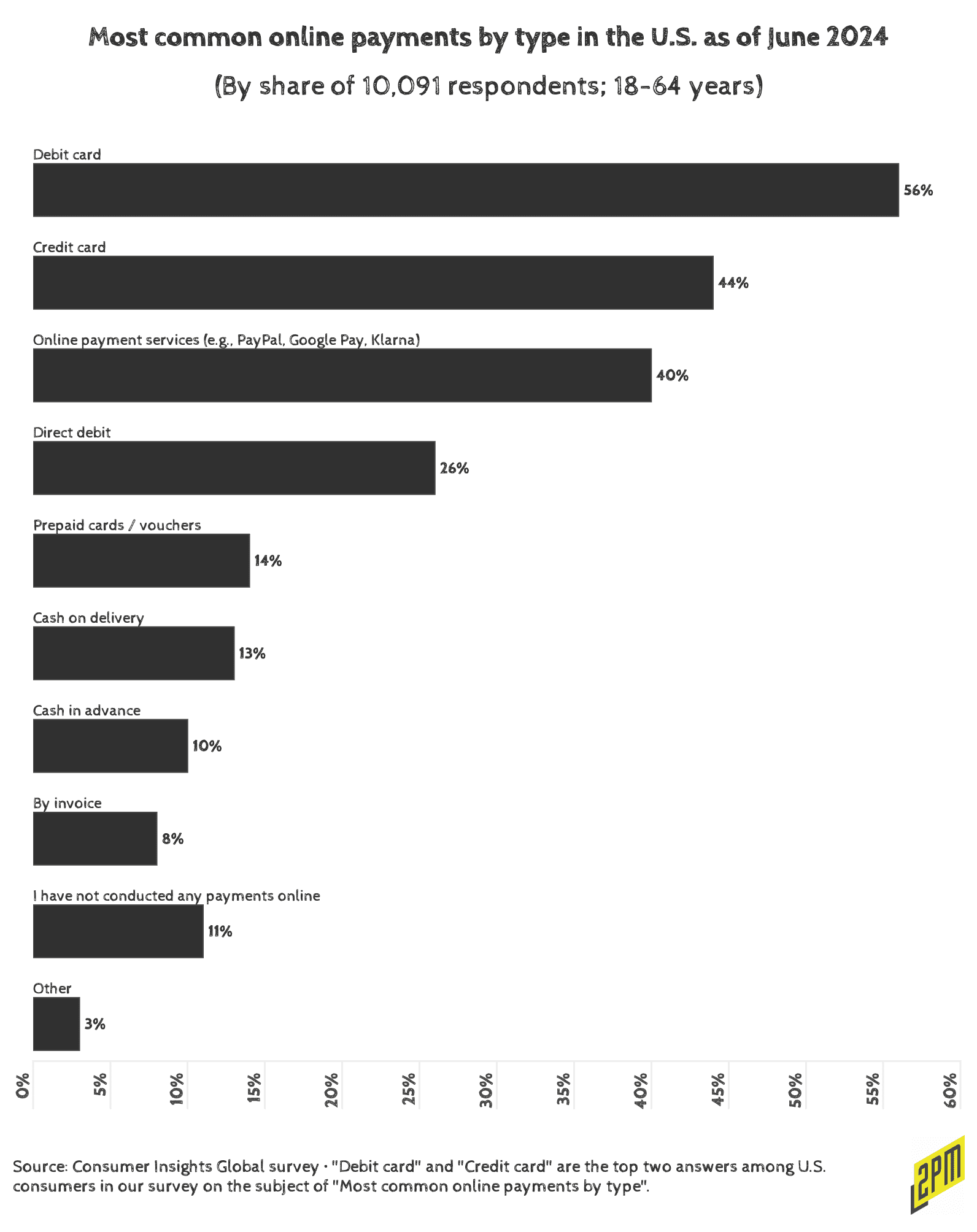
The recent J.D. Power 2024 U.S. Credit Card Satisfaction Study communicates a shift in consumer preferences and revelations worth noting here. The study reveals that over half of U.S. credit card customers are financially unhealthy, with 51% carrying revolving debt as interest rates climb. This is buoyed by the rise in Buy Now Pay Later transactions, which Apple chose to end in June of 2024. But, when juxtaposed on the data shared below, it illustrates just how important credit card usage is to the retail industry: 44% of transactions are through credit cards, another 40% are through “Brand Pay” systems and BNPL technologies: Google Pay, Apple Pay, Paypal, Klarna, Affirm, and so on. 
Given the growing strains caused by economic distress, the appeal of traditional points and air miles cards is diminishing, with many consumers opting for cash back cards that offer more tangible benefits. As such, cash back cards now dominate the market, used by 58% of cardholders, compared to 31% who still favor points and miles cards.

60% of co-branded cardholders primarily use cards affiliated with major retailers like Amazon, Costco, or Target. This shows the strong appeal of cards offering rewards on everyday purchases. (The Financial Brand)

This trend can be seen as a direct response to mounting pressures. Cashback cards, which often come with lower or no annual fees, provide a more accessible way for consumers to derive value from their spending without the complexity and long-term commitment associated with points and miles programs. As financial health declines, so does the attractiveness of credit cards that promise rewards in the distant future. Consumers are looking for immediate benefits, and cashback cards deliver just that.

Regulatory pressures and the rise of BNPL

At the same time, regulatory pressures are disrupting the Buy Now, Pay Later (BNPL) services that reshaped the broader credit landscape. The Consumer Financial Protection Bureau (CFPB) has been scrutinizing BNPL products, proposing new regulations subjecting them to similar rules as traditional credit cards. Companies like Affirm have responded by advocating for a regulatory framework tailored specifically to BNPL, arguing that applying credit card regulations to these products could create confusion and unnecessary compliance burdens.

As BNPL products have grown in popularity, they’ve posed a potential threat to traditional credit cards, particularly those that rely on high-interest revolving debt for profitability. However, recent months have stressed the importance of innovation and adaptability in the credit market. One of those innovations is the rise of the co-branded credit card.

Co-branded credit cards: a strategic advantage

Co-branded credit cards are emerging as a strategic advantage for both issuers and partner brands. The recent partnership between Amazon and Barclays to launch a co-branded credit car in the U.K. is a prime example of the continuation of this trend. The Amazon Barclaycard will offer customers rewards on everyday spending, which can be redeemed for Amazon gift cards, with additional perks for Amazon Prime members. This card strengthens customer loyalty to Amazon and provides Barclays with a valuable touchpoint for engaging with a broad customer base. Here are six top examples of co-branded credit cards:

Apple Card (Goldman Sachs):

The Apple Card stands out for its seamless integration with Apple Wallet and its commitment to transparency. With no fees, not even for late payments, and a straightforward cashback program that offers up to 3% Daily Cash on purchases, it’s designed for users who value simplicity and financial health.

Amazon Prime Rewards Visa Signature Card:

Tailored for the avid Amazon shopper, this card delivers substantial rewards—5% back on Amazon and Whole Foods purchases. Beyond Amazon, it also offers 2% back at restaurants, gas stations, and drugstores, making it a versatile tool for everyday spending. There’s no annual fee for Prime members, adding to its appeal.

Chase Sapphire Reserve:

Known for its travel perks, the Chase Sapphire Reserve is a premium card that provides 3x points on travel and dining worldwide. Cardholders enjoy an annual $300 travel credit, access to over 1,000 airport lounges through Priority Pass, and valuable travel insurance, making it a top choice for those who are often on the go.

Hilton Honors American Express Aspire Card:

This card is a powerhouse for Hilton enthusiasts, offering 14x points on stays at Hilton properties. Cardholders receive automatic Hilton Diamond status, which includes room upgrades and late checkouts, along with a free weekend night every year. It’s the ultimate companion for frequent Hilton guests.

Southwest Rapid Rewards Premier Credit Card:

This card is tailored for those who frequently fly Southwest Airlines. It rewards users with 2x points on Southwest purchases and anniversary bonus points each year. With no foreign transaction fees and the ability to earn towards Companion Pass status, it’s a strong contender for domestic travelers.

Costco Anywhere Visa® Card by Citi:

A go-to for Costco shoppers, this card offers impressive rewards, including 4% cash back on gas, 3% on restaurants and travel, and 2% on Costco purchases. Its broad rewards categories make it a versatile option for those who do most of their shopping at Costco.

Co-branded credit cards offer several key benefits. First, they align the interests of the issuer and partner brands, creating a mutually beneficial relationship that can drive customer engagement and retention. For brands like Amazon, co-branded cards enhance the shopping experience by offering rewards directly tied to their ecosystem.

The role of branded credit cards in the loyalty economy

These cards are playing an increasingly important role in the loyalty-driven economy. They offer consumers a way to earn rewards and benefits that align with their spending habits and financial goals. As the financial health of many consumers deteriorates, these cards provide a valuable tool for managing expenses and maximizing the value of everyday spending.

Best Buy listed its credit card as the second-largest driver of customer loyalty and repeat action. (eMarketer)

The success of branded credit cards depends on their ability to adapt to the changing needs and preferences of consumers. Issuers must navigate a complex landscape, balancing the need for profitability with the demand for accessible and valuable rewards. This requires a deep understanding of consumer behavior and a willingness to innovate and respond to regulatory challenges.

In all, branded credit cards represent a bright spot in an economy under increasing pressure from revolving debt and financial instability. By offering tailored rewards, lower fees, and partnerships with famous brands, these cards are helping consumers navigate a challenging financial landscape while providing issuers with a valuable tool for building customer loyalty. Co-branded credit cards offer a compelling growth opportunity for financial institutions and their retail partners. By tackling existing challenges and capitalizing on new market trends, these tailored financial products can seize a greater portion of the credit card market while delivering distinct advantages to a diverse range of consumers. Success in this space hinges on crafting strong value propositions, clearly conveying these benefits to prospective cardholders, and persistently innovating to keep pace with the shifting demands and preferences of consumers.

As the credit market continues to evolve, branded credit cards are likely to become even more important, serving as a critical driver of consumer satisfaction, financial resilience, and brand value.

Research, Data, and Writing by Web Smith

Memo: Modern Nike Vs. Bandit, Tracksmith, On, and The Rest

Once an emblem of athletic triumph and elite performance, the Nike Swoosh faces an identity crisis in today’s market. One that it’s working hard to address. Its ubiquity, from casual streetwear to high-end luxury collaborations, has diluted its significance. The Swoosh’s widespread presence undermines its association with victory and exclusivity. For instance, the WNBA, a league that embodies grit and determination, might benefit more from a partnership with brands like New Balance, known for their focus on performance and authenticity. As Nike navigates this evolving landscape, it must redefine what the Swoosh stands for in an era of shifting consumer values.

Nike, meaning “Goddess of Victory,” finds herself at a critical time. When writing this, the athletics brand-turned-luxury goods merchandiser is down 32.39% for the years.

The upcoming Olympics present a pivotal opportunity for Nike to revitalize its brand and reclaim its standing as a symbol of athletic excellence. While the global stage could spotlight Nike’s high-performance gear and elite athlete endorsements, it’s uncertain whether this will significantly boost sales amidst rising competition and changing consumer preferences. Smaller brands like Tracksmith and Bandit Running have effectively captured the spirit of modern athleticism and independence. To truly move the needle, Nike must leverage the Olympics’ visibility and innovate and align more closely with the evolving values and aspirations of today’s athletes and consumers.

Despite its historical dominance and being synonymous with athletic excellence, Nike faces diminishing sales while smaller, agile brands above like Tracksmith and Bandit Running rise to prominence. This will explore the confluence of trends, such as the increased interest in running, the explosion of creative athletic endorsement deals, and the rise of niche sports like pickleball, juxtaposing them against Nike’s current challenges.

The Running Boom and Creative Endorsements

The surge in running’s popularity, fueled by a global push towards healthier lifestyles, presents a significant opportunity for sportswear brands. Yet, Nike seems to be losing ground. Buoyed by recent viral advertising pushes, brands like Tracksmith and Bandit Running have adeptly tapped into this market by offering unique, community-driven experiences that resonate with modern consumers.

Tracksmith, for example, has built a loyal following by celebrating the amateur spirit of running. Their focus on the cultural and historical aspects of the sport, combined with high-quality, aesthetically pleasing gear, has struck a chord with a new generation of amateur runners. This approach contrasts sharply with Nike’s traditional emphasis on elite performance and high-profile endorsements.

Tracksmith: The Year of The Amateur

Similarly, Bandit Running has capitalized on athletes’ desire for authenticity and independence. The company’s “Unsponsored Project” supports track and field athletes who lack traditional sponsorships. Bandit provides them unbranded gear and short-term endorsement deals, allowing them to compete without becoming walking advertisements for brands that don’t support them financially. This initiative highlights the athletes’ struggles and showcases Bandit’s commitment to the sport’s grassroots level.

While the original video is no longer public, here is an excellent recap of Bandit’s “Unsponsored Project” by former Nike executive Jordan Rogers. Critical insights from his post:

  • Bandit Running’s unique approach highlighted a shift in sports marketing. It focused on authenticity and grassroots efforts rather than relying solely on high-profile endorsements, which challenges established giants to rethink their strategies.
  • By utilizing unbranded, minimalistic gear, Bandit effectively differentiated itself from the competition, proving that distinctiveness can capture attention even in a crowded market.
  • Brands, like Bandit, that support athletes through struggles, not just victories, cultivate deeper connections, ensuring athletes remember them positively regardless of outcomes.
  • Bandit’s grassroots approach fostered a strong community connection, enhancing brand visibility and loyalty among local runners, which larger brands often overlook.

As consumer preferences shift towards authenticity and meaningful engagement, brands that fail to adapt may lose relevance in the competitive landscape.

The Shift in Athlete Endorsements

Athlete endorsements have long been a cornerstone of Nike’s marketing strategy. As mentioned above, this landscape is shifting. Athletes increasingly seek endorsement deals that offer more than just financial compensation. They want equity, creative input, and partnerships aligning with their values and long-term career goals.

Isaac Okoro of the NBA’s Cleveland Cavaliers signed his first sneaker deal with Holo Footwear

Holo Footwear, a minority-owned start-up, over more established brands. The deal offered Okoro the opportunity to design his own signature shoe and receive equity in the company. This move highlights a growing trend where athletes prioritize independence and personal branding over traditional sponsorship deals.

Similarly, NFL star Jalen Ramsey collaborated with Omar Bailey’s Fctry Lab to create custom-built cleats tailored to his specifications. These bespoke deals provide athletes with unique products that cater to their specific needs, something large brands like Nike and Adidas struggle to offer. The success of such partnerships underscores a broader desire among athletes for more personalized and meaningful collaborations.

The Rise of Niche Sports

The growth of niche sports like pickleball also continues to challenge Nike’s dominance. Pickleball, a sport combining elements of tennis, badminton, and ping-pong, has seen a meteoric rise in popularity, particularly among older adults and young families. Smaller brands have been quicker to recognize and cater to this market, offering specialized equipment and apparel.

Nike’s slower response to emerging sports trends may partly explain its declining sales. The company’s traditional focus on mainstream sports like basketball, soccer, and football has left gaps in its product lineup that competitors are eager to fill. By the time Nike pivots to these growing markets, other brands have already established strong footholds.

The Financial Reality

While Nike’s iconic Swoosh remains a powerful symbol, the company’s financial performance tells a more complex story. In recent quarters, Nike has faced supply chain disruptions, increased competition, and changing consumer preferences. The rise of DTC sales channels and the growing importance of digital engagement have also pressured Nike to adapt its business model.

Smaller brands like have leveraged these trends to their advantage. With a more nimble approach, they have built strong online communities and direct relationships with consumers, bypassing traditional retail channels. In a Euro DTCs Invade, we highlighted several of these brands that we felt – at the time – would grow to be a threat to Nike. These brands include:

These brands share several similarities to include: a focus on running accessories, innovation and performance, an international presence, premium branding, lifestyle integration, community, culture, and agility. This agility allows them to respond quickly to market demands and foster deeper connections with their audience.

Nike’s Response / Nike’s Olympics

Despite these challenges, Nike is not sitting idle. The company has made significant investments in digital innovation, sustainability, and diversity initiatives. Nike’s DTC strategy, bolstered by its SNKRS app and the Nike Training Club, aims to strengthen customer loyalty and drive online sales. Additionally, Nike’s Move to Zero campaign underscores its commitment to sustainability, an increasingly important factor for consumers.

Nike is also exploring new endorsement strategies. While the company has scaled back on signing large numbers of athletes, it continues to secure deals with the most marketable names across various sports. These high-profile endorsements, combined with innovative product launches, are designed to keep Nike at the forefront of consumer mindshare.

Nike is poised to leverage the Olympics to stage a significant comeback as the Paris Games approach. The brand’s history with the Olympics is storied, marked by bold campaigns that have captivated and polarized audiences. A prime example is the 1996 Atlanta Games campaign featuring the tagline “You don’t win silver, you lose gold,” which celebrated grit and determination, implying that settling for second place is akin to losing the ultimate prize, while drawing criticism for perceived unsportsmanlike undertones.

In a move reminiscent of that era, Nike’s new campaign, “Winning Isn’t For Everyone,” created with agency Wieden+Kennedy and narrated by Willem Dafoe, is set to spark strong reactions. The campaign, with its bold and uncompromising nature of competition, featuring a star-studded roster that includes LeBron James, Giannis Antetokounmpo, Serena Williams, Cristiano Ronaldo, and more, is sure to captivate. The ad’s provocative script questions the moral implications of an obsession with winning and highlights Nike’s return to its hardcore athlete roots and its “Mamba mentality” ethos.

Nike’s decision to revive its bold and confrontational attitude in advertising, often symbolized by the phrase ‘f**k you’ in its campaigns, reflects a strategic pivot amid declining sales and fierce competition from brands like Adidas, On, and Hoka. This bold stance aims to reignite the brand’s competitive spirit and resonate with athletes and consumers who value performance and determination.

Moreover, the campaign’s timing is crucial as Nike seeks to counter recent criticisms of lacking innovation and relying too heavily on heritage products like Air Jordans and Dunks. By spotlighting elite athletes and their relentless pursuit of victory, Nike hopes to reestablish itself as the go-to brand for performance gear, aligning with cofounder Phil Knight’s strategy of capturing hardcore athletes first to attract casual consumers.
The Olympic platform provides a global stage for Nike to showcase its reinvigorated focus on high-performance products and athlete-driven narratives. If successful, this campaign could mark a turning point for the brand, reinforcing its legacy and driving renewed consumer interest. As Nike channels its competitive fires, the Paris Games may be the catalyst for the Swoosh’s resurgence in the sportswear market, inspiring athletes and consumers worldwide.

****

Nike’s crossroads moment is emblematic of broader shifts within the industry. The increased interest in running, the rise of creative endorsement deals, and the growth of niche sports all reflect changing consumer preferences and market dynamics. While smaller brands have adeptly navigated these trends, Nike’s response will determine its future trajectory.

To regain its footing, Nike must continue to innovate and adapt, leveraging its vast resources and iconic brand to meet the evolving needs of athletes and consumers alike. Whether through embracing new sports, forging deeper athlete partnerships, or enhancing its digital and sustainability efforts, Nike’s ability to navigate this crossroads will shape the next chapter of its storied legacy. It has to win but winning isn’t for everyone.

Research, Data, and Writing by Web Smith

Memo: eCommerce Deceleration

The global eCommerce industry has long been a beacon of rapid growth and innovation. However, according to new data by Stocklytics – a slowdown should be anticipated:

Between 2019 and 2024, global ecommerce revenues have spiked by almost 90%, rising from $2.18 trillion to $4.11 trillion. After COVID-19 triggered a boom in online shopping, the market revenue grew by an average of 25% per year before slumping in 2022 and 2023. Statista expects 2024 and 2025 to see high revenue growth rates again, rising by 14.6% and 16.4% year-over-year, respectively. However, after this recovery, the entire market will face a considerable slowdown, causing its revenue to grow much less than in previous years.

With revenue surpassing $4 trillion in 2023, driven by the convenience and technological advancements in online shopping, the sector has become a critical component of the modern retail landscape. However, recent research by Statista and Stocklytics indicates a paradigm shift is on the horizon. The annual growth rate of eCommerce is expected to contract significantly between 2025 and 2029, compelling businesses to reassess their operational efficiency strategies. This anticipated slowdown highlights the need for a more robust focus on omnichannel growth, operational efficiency, and physical retail partnerships.

From 2019 to 2024, global eCommerce revenues soared by almost 90%, catalyzed by the COVID-19 pandemic, which accelerated the adoption of online shopping. Innovations such as AI, voice search, and augmented reality blurred the lines between digital and physical shopping experiences, driving substantial user engagement and revenue growth. However, despite these advancements, the landscape is set to change drastically. According to that Stocklytics report, the annual growth rate will plummet to 4.6% by 2029, a third of the current rate. Several factors contribute to this projected decline that have been discussed here. Supply chain disruptions, inflation, rising digital advertising costs, and evolving consumer behavior are creating a more challenging environment for eCommerce profitability. The once double-digit growth rates will give way to a more tempered expansion, necessitating a strategic pivot towards integrating online and offline channels.

As eCommerce growth decelerates, the importance of an omnichannel approach becomes paramount. Omnichannel nirvana involves creating a seamless shopping experience across various channels, including online platforms, mobile apps, and physical stores.

On one end: profitable, enterprise traditional brands are in the news for moving away from wholesale and towards DTC. And on the other end: yet-to-be profitable digitally-native brands are in the news for moving towards department store wholesale in search of profits and scale.

They’re each trying to achieve a sort of omnichannel nirvana.

This strategy ensures that customers can engage with a brand consistently, regardless of the medium they choose. This approach to omnichannel balance allows retailers to offer a cohesive and personalized shopping experience. By leveraging data from both online and offline interactions, businesses can better understand customer preferences and tailor their offerings accordingly. This holistic view of the customer journey enhances satisfaction and loyalty.

Physical stores complement online channels by providing additional touchpoints for customer engagement. Showrooms, pop-up shops, and flagship stores offer tangible experiences that online platforms cannot replicate. These physical spaces also serve as venues for events, product demonstrations, and personalized consultations, enriching the customer experience. Integrating online and offline channels enables better inventory management.

Retailers can use physical stores as distribution centers for online orders, reducing shipping times and costs. This approach could enhance efficiency and meets the growing demand for efficient delivery times. Combining data from various channels provides valuable insights into customer behavior. Retailers can analyze this information to optimize their marketing strategies, improve product assortments, and enhance operational efficiencies. This data-driven approach helps businesses stay agile and responsive to market changes.

In addition to omnichannel strategies, forging partnerships with wholesalers can provide significant advantages. As eCommerce growth slows, collaborations with established brick-and-mortar stores can help eCommerce brands tap into new customer bases and leverage existing infrastructure. Partnering with physical retailers allows eCommerce brands to reach customers who prefer in-store shopping. This extended reach can drive sales and brand awareness, especially in regions where online penetration is lower. Collaborations enable resource sharing, from logistics and warehousing to marketing and customer service. This synergy can lead to cost savings and operational efficiencies, benefiting both eCommerce and physical retail partners.

Physical retail partnerships can enhance omnichannel fulfillment capabilities, as well. Retailers can offer services like “buy online, pick up in-store” (BOPIS) or “reserve online, try in-store” (ROTIS), providing customers with convenient options and driving foot traffic to physical locations. Physical retail spaces offer unique opportunities for brand building and storytelling. eCommerce brands can create immersive in-store experiences that reflect their identity and values, fostering deeper connections with customers. And several traditional brands have demonstrated the efficacy of omnichannel strategies by blending the physical and the digital in their own versions of omnichannel nirvana.

The first example is DSW (Designer Shoe Warehouse), which utilizes infinite aisle technology to offer customers a wide range of SKUs via mobile devices and digital displays. Their in-store mobile app enhances the shopping experience by allowing customers to browse rewards, wish lists, and personalized offers and checkout from anywhere in the store. DSW’s eCommerce platform improvements, such as more relevant search results and online-to-store purchase options, have significantly broadened their shopping ease and customer satisfaction​.

Urban Outfitters created an intuitive mobile app that provides a seamless online shopping experience supported by their in-store services. The brand has also developed unique content strategies like the “UO Live” music series and music-focused Instagram pages, which engage customers through a multi-sensory experience that combines fashion and music. This strategy enhances the online and offline shopping experience and strengthens their community presence.

Abercrombie & Fitch has also embraced omnichannel retailing by integrating online and in-store experiences. Their system allows customers to search for in-store merchandise online, share shopping carts across devices, and return online purchases in-store. This cross-channel flexibility ensures a seamless shopping experience and increases customer convenience and loyalty.

Foot Locker has further blurred the lines between online and offline shopping through video walls in its physical stores by revamping its FLX loyalty program. This was recently published in Glossy

Both the new FLX Rewards program and the new app are focused on two things, according to Foot Locker’s chief customer officer, Kim Waldmann: improving the connection between Foot Locker’s online and offline retail, and giving customers better access to limited products.

This strategy allows customers to research products, view them from multiple angles, and read user reviews while in-store. This integration of digital content into the physical shopping environment provides a comprehensive shopping experience and reinforces the consistency of its pricing and promotions across all channels.

IKEA has set a high standard for omnichannel retailing with its comprehensive strategy that combines digital tools and in-store experiences. Their augmented reality app, Click and Collect service, and online planning tools allow customers to engage deeply with the brand across multiple channels. Through programs like buy-back and recycling, IKEA’s commitment to sustainability and customer education further enhances its omnichannel approach and builds strong customer relationships.

These examples illustrate how effective omnichannel strategies and physical retail partnerships can drive growth and enhance customer experiences. By integrating digital and physical channels, these brands create cohesive, convenient, and engaging shopping journeys that meet the evolving expectations of modern consumers.

The anticipated slowdown in eCommerce growth between 2025 and 2029 presents both challenges and opportunities for retailers. By embracing omnichannel strategies and forging physical retail partnerships (both wholesale and owned store strategies), businesses will be more capable of navigating this evolving landscape and continue to thrive. The integration of online and offline channels, coupled with strategic collaborations, will be key to enhancing customer experiences, optimizing operations, and sustaining growth in the years to come.

Research, Data, and Writing by Web Smith