Memo: Air Freight

According to Insider’s Intelligence service, US retail e-commerce sales will grow 16.1% this year, exceeding $1 trillion for the first time. Internationally, eCommerce will reach $5 trillion in GMV this year, according to the same source. And it is projected to grow to $6 trillion by 2024.

That’s a lot of oceanic freight forwarding.

Prior to the pandemic, supply chain and logistics management were afterthoughts. In 2022, managing production and logistics cycles has become as critical as marketing and advertising. These were afterthoughts until they were not.

Over the past two years, we have witnessed disruption after disruption. A shipping canal blocked, union employees standing down en masse, the U.S. postal service slowing to a halt, an international bridge protested by truckers, and a container ship on fire with 4,000 vehicles. Over this time period, freight forwarding has increased 500% in costs, retailers have begun to acquire trucking and container resources. Shopify has invested and divested in warehouse management, and Amazon has become the number one buyer of commercial real estate.

Companies like Maersk have pursued acquisitions to manage logistics beyond the ocean. Earlier this month, A.P. Moller-Maersk A/S agreed to buy Pilot Freight Services LLC for $1.68 billion. Maersk felt that it was important to shore up its road-transport business. But more importantly, it signaled that the container shipment boom may be starting to fade.

One method that has yet to fade is air freight. In a September report on freight, 2PM explained:

The complexity of the supply chain has been complicated by labor shortages and other misallocations. The short-term solution may resemble the world’s largest retailers following the supply chain management techniques pioneered by companies like L Brands. But this is only a mitigation effort. Amazon Air flight activity has increased 17% between February and August 2021 after the company added 14 planes, including two that enable intra-Canadian operations. In addition to these 14 planes, Amazon uses up to 20-30 partner flights per day to ship goods from hub to hub according to a recent document: Blue Skies for Amazon Air.

Seko Logistics Chief Growth Officer Brian Bourke recently joined Yahoo Finance (full interview) and provided some insight into this shift. He explained that SEKO chartered 70 times in 2020, 400 in 2021, and will likely surpass 500 chartered flights in 2020.

The use of air freight is increasing due to increased volatility, geopolitical tensions, and global supply chain disruption. In February, Flexport announced a $935 million Series E raise that included the likes of A16Z and Shopify. CEO Ryan Petersen has been at the forefront, helping many who have limited insight into the logistics industry to understand its shortcomings. Petersen announced the raise with this quote:

The global pandemic and the pressure it put on global supply chains has made the transportation of goods — something many people took for granted — a daily pain point. This investment signals that the market recognizes the need for a tech-enabled logistics ecosystem that has the visibility and resilience to handle unexpected challenges of any scale.

One of the most exciting companies is commerce is one that is behind the scenes. Flexport is increasing its air freight capacity as ocean freight continues to cause headaches for retailers, large and small.

This week, Flexport, a freight forwarder, announced it signed a deal with Eastern Airlines to deploy air freight planes, filling a gap in current capacity with a focus on eCommerce shipments. The deal is designed to make the use of Eastern Airlines’ air freighters low cost and quick to deploy, a positioning that would benefit direct-to-consumer and small-to-medium online brands. The Eastern Airlines freighters will make trips between Hong Kong and Chicago and Vietnam and Chicago.

Flexport is actively looking to fill a void in air freight availability to help companies sidestep bottlenecks in other modes of transportation. In an interview with Freight Waves, Eastern CEO Stephen Harfst and Flexport CEO Neel Jones Shah explained the benefits of the deal for the current landscape:

Eastern CEO Stephen Harfst said the plane is designed around e-commerce flows. “We’re not selling weight. Our aircraft provides volume. If you have e-commerce driven goods that are 5 to 7 pounds per cubic foot, the aircraft has structural payload to fill that volume up so why spend all the time, effort and money to redesign and rebuild the airplane,” he said.

Shah went on to note that air freight demand has doubled during a time when capacity has remained around 10% of pre-pandemic levels. He expects Flexport’s volume to double in 2022. While air freight will never become a substitute for oceanic shipping, Flexport is helping certain retailers move the equivalent of three containers worth of inventory in hours instead of weeks, that is as long as the products are 5-7 pounds per cubic foot.

Last week, Flexport signed a nonbinding letter of intent to purchase up to three robot cargo jets designed to carry a 100-ton payload, a move that fits a company built on a culture of innovation that combines logistics execution with a tech-enabled platform executives envision as the operating system for global trade that can improve the customer experience.

For an apparel retailer, supplement company, or toy maker, receiving goods from the manufacturer within 24 hours can be worth the cost. Shipping expenses and global labor shortages are two of the foremost contributors to inflation. Shipping costs have caused issues for retailers, with no exception to category. Companies like Under Armour, Volkswagen, Nike, and Hasbro have experienced many of the same headaches and consumers are paying for it. The U.S. is experiencing the worst inflation in four decades.

In the Port of Los Angeles, container ships are waiting an average of 18 days to unload. While this is the smallest that the shipping backup has been since early November, it is important to remember that it was rare that ships waited for even one day prior to the pandemic.

Air freight will not single-handedly relieve inflation concerns. Shortages are expected to ease by the end of Q1 and business inventories were 2.1% higher in December than the prior month, a gain that the WJ noted was the biggest since 1992. Inflation remains unchanged and suppliers continue to maintain higher prices and the consumer is left to account for this. While trans-pacific shipping has finally begun to return to its pre-pandemic form, waiting times have not. And air freight is but one of the segments that may keep matters from becoming even worse. Analysts believe that global eCommerce will be 20% larger than it is today. The Petersen quote in the Forbes cover feature on him says a lot about how the industry views him:

Our industry thinks I’m a clown, which I don’t mind. I need to continue to convince them that I’m crazy so they don’t get their act together and compete with us.

The health of our economy and the future of eCommerce – as a whole – will depend on relieving the demand on the few shipping ports and international bridges that America over-relies on for inventory. Let’s hope that Petersen is right, shipping times and product costs will depend on Silicon Valley’s ability to begin disrupting a 3,000-year-old ocean freight industry.

By Web Smith | Edited by Hilary Milnes with art by Christina Williams

Memo: The Case for QR

If you ever want to give up, consider the QR code’s journey from where it was just a few years ago. While immensely popular in Japan and other Asian countries, prior to the pandemic it was nearly forgotten in the United States.

The QR code dates back to 1994, when it was first used by a Toyota subsidiary to track auto parts during assembly. More information-rich than a barcode, QR codes were designed to unlock information like product files or manufacturing records. It wasn’t until 2002 that the “quick response” code took on a new life as a way to drive viewers to properties like websites and events. And by 2007, QR’s promise was what we know it today: for brands and advertisers to tack on additional storytelling, details and access when trying to get customers’ attention. Still, it never ever quite caught on in a meaningful way, at least not in the US.

In fact, the technology was the butt of many jokes. When Tim Armstrong reintroduced efforts to market brands through QR codes in 2018, the idea was widely panned. The former AOL and Verizon Media CEO attempted to rebrand the then-24 year old technology as “Flowcode.” In November of 2019, his latest project, DTX Company, contacted 120 DTC brands in an attempt to build a new shopping holiday called “DTC Friday.” In 2019’s In Defense of Tim Armstrong, I explained:

Tim Armstrong is not wrong; he’s early. DTX’s effort to launch DTC Friday 2019 wasn’t designed to prioritize the advertising brands. The goal was to advertise Flowcode, a reportedly advanced rebrand of the QR code concept that was dismissed in the United States, several years ago.

In that report, I characterized the difference between the US and Asia’s offline attribution models. When this was written in 2019, billboards, mailers, catalogues, and brochures were the primary forms of offline marketing in the US. Meanwhile, China used QR codes to fuel sales and attribution at scale. My assessment of Armstrong’s bet, at the time, was as follows:

Given the flow of retail innovations from China to the United States, it’s clear to see that when Armstrong discusses payments “getting easier”, he anticipates an adoption of mobile wallets and streamlined payments systems. Why? The prevalence of these systems correlated with a mass adoption of QR code usage in China.

Mobile wallet adoption and streamlined payments systems have vastly improved since Tim Armstrong’s attempt to resurrect the QR code through DTX. He wasn’t wrong; he was early. And something else happened: the pandemic. In 2020, Square built systems around QR use for shops and small businesses. The Verge published this in 2020:

When using the feature, a restaurant can print a QR code out and leave it on a table. A customer would then scan the QR code, browse a menu, place their order, and pay from their phone. The restaurant would know what table placed the order, and then bring their food out when it’s ready. Square says the system is flexible, so a coffee shop, for example, could have a single QR code in its window that people would scan and then wait for their drink.

And the rest was history.

Web Smith on Twitter: “QR’s j-curve of adoption: 1994: Toyota invents QR 2007: Wide use in APAC2011: 14M Americans used QR2013: QR codes derided2019: DTX tries to rebrand it2020: Square’s QR for shops 2021: Pandemic popularizes it2022: 60 sec Super Bowl ad / Twitter”

QR’s j-curve of adoption: 1994: Toyota invents QR 2007: Wide use in APAC2011: 14M Americans used QR2013: QR codes derided2019: DTX tries to rebrand it2020: Square’s QR for shops 2021: Pandemic popularizes it2022: 60 sec Super Bowl ad

The QR suddenly popped up everywhere: restaurant menus, packaging, device installs, the walls of museums. There, they’ve taken the place of guides who would have ushered guests before pandemic restrictions hindered their roles. There is a newfound appreciation for the QR. Seemingly overnight, it became a necessary technology in America as payments technology proliferated and proximity payments nearly doubled over the span of 2019 to 2021.

So when the QR code popped up on the screen for 60 seconds during the Super Bowl, the room’s reaction wasn’t one of distaste. In a room of 30 adults ranging from 35 to 55, the consensus was: “OK, whoever this is, this seems smart.” As many Super Bowl lists have now-noted, it was a clever advertisement for Coinbase. The project was a joint effort between the cryptocurrency exchange and its agency of record.

Accenture Interactive, the agency responsible for the ad, had undergone a digital transformation and acquisition spree under CEO Brian Whipple, who left last summer and was replaced by David Droga. Accenture Interactive’s reinvention turned the consulting firm into a creative agency and technology partner – a combination perfectly suited for the Web3 era. I would have loved to have been in the room for the decision to acquire a the television spot for $15 million and spend nearly nothing designing the actual creative for it. It’s a level of efficiency that has become a feature in the age of proximity payments, blockchain implementation, and subscription-commerce. The less thought, the better. AdWeek explained:

Had the ad been just 15 seconds, casual viewers might have shrugged off the odd spot and gone back to their snacks. But running a leisurely 60 seconds, the spot and its hypnotic music became increasingly curiosity inducing until finally many of us had to pull out our phones and scan it. In a night defined by crypto players working hard to get your attention, Coinbase leaped past simple brand awareness and directly engaged viewers by the millions. Bonus: It also—finally—proved all those 2007-era QR evangelists right.

A 30-year-old technology experienced a J-curve in popularity, from Toyota’s invention in 1994 to widespread use in most Asian-Pacific countries in 2007. In 2011, just 11 years ago, 14 million Americans scanned a QR code. According to Bitcoin Magazine, Coinbase received 20 million hits to its website in one minute.

That’s nearly double the entire audience for QR, just a decade later in just 0.00019% of the time. By 12 p.m. EST the day after the Super Bowl, the stock price began reflecting the market’s positive reaction to the chatter. Sportico’s Jacob Feldman noted a stock price that added 1-2% to the company’s market cap. A $14 million spend and a $1 billion+ outcome.

If just 2% of viewers decided to make an account in that first minute of viewership, In theory, Coinbase won 400,000 new wallets at a cost of $35 per customer. We’re going to be seeing a lot more of QR codes in the media. Tim Armstrong wasn’t wrong, he was just early. As Web3 rises in popularity and the metaverse conversations persist, the core of many of these discussions is the basic understanding of cryptocurrencies and their potential. Before MetaMask, OpenSea, and other marketplaces — Coinbase may be the most foundational platform for mass adoption. Accenture Interactive and Coinbase were right on time with a simple message that overshadowed much of the night’s game, the internet’s betting commentary, and the musical fanfare of America’s top sporting day. A QR code did all of that.

By Web Smith | Edited by Hilary Milnes with art by Christina Williams and Alex Remy
Memo: Apple, Stripe, and (wink) Mob Ties

With a new Apple partnership, Stripe just secured more power in Silicon Valley. The running joke is that any advancement by Stripe is indicative of its “mob boss” mentality, a reference to the recently viral thread by the founder of Bolt. In actuality, Stripe is showing just how much of a positive-sum mentality it’s using by building more dynamism into American retail and entrepreneurship.

Much has happened since this pre-pandemic report on “falling American dynamism,” a term that I prescribe to suggest that entrepreneurship was falling in popularity. In that report, I explained:

The more that conglomerates exist, the more we’ll see dynamism collapse. As a number of those companies begin to succumb to antitrust scrutiny, dynamism will be called upon to close the gap between the age of conglomeration and the need for new, high-growth businesses.

The idea behind that essay was that companies like Google, Facebook, and Apple were so powerful that it was beginning to make tech employment more popular than self-starting entrepreneurship. Of course, the flip side of this argument is that most businesses cannot survive without using Google, Facebook, or Apple. In the essay, I assigned special value to Jack Dorsey’s two companies, Twitter and Square (now Block), and their positive value to dynamism (word of mouth marketing and ease of transaction). Apple builds on that positive impact with its latest project and I believe that the entire fintech ecosystem will benefit along with the advancement of the end user.

In most media reports, the Apple Pay x Stripe partnership is positioned as competitive with Dorsey’s company. I’d argue that Stripe has no interest in competing with Block, a nod to the positive-sum mentality of Stripe’s founders. In fact, I can see a future where they partner with Dorsey’s hardware/ financial services. But not everyone thinks this way about Stripe.

Days after former Bolt CEO Ryan Breslow compared the company to the mob boss of the tech world (and was retweeted 1,600 times), it was announced that Stripe would be the launch partner for Apple’s upcoming Tap to Pay technology. Tap to Pay turns Apple devices into payment hardware, making credit card swipe attachments essentially unnecessary. (That’s a separate lesson for hardware companies that have built their businesses on being middlemen for Apple and payment services.) This product partnership is the result of a 2020 Apple acquisition of Mobeeweave, an NFC innovation that enabled iPhones and other devices to operate as pay terminals without additional hardware. Apple Pay’s partnership with Stripe is expected to operate with Mobeeweave’s technology.

Whether or not Apple will approach this opportunity to monopolize payments and take on competitors like Block and Venmo is the next debate. Pointed out by NextWeb, Block is more than just a payments portal – it helps small businesses manage inventory and analytics. Shopify’s stake in Stripe boosted its positioning as the payments manager of choice for entrepreneurs and small-and-medium sized businesses. Apple’s Tap to Pay appears to only facilitate payments, but if it were to move beyond the point of sale to the backend management of inventory and data, that would give it a bigger role in the space where Block and Shopify currently operate. Or, Apple could choose to open up Tap to Pay to more partners, widening its reach in assisting payments despite the platform the seller uses. This is the most likely play, in my opinion.

It’s important to consider Apple’s ambitions in fintech. With Apple Pay standing tall as the most adopted technology, Tap to Pay seems like the extension of a strategy that’s just getting started. From Next Web:

Over the last few years, Apple has been focused on expanding its services business — especially financial offerings. In 2019, it launched the Apple Card, and plans to expand it to more countries. Last July, a Bloomberg report noted that the company is exploring a “buy now, pay later” product with Goldman Sachs. If Apple starts accepting payment on a seller’s behalf, it can explore more financial products, ranging from loans to management services. Really, this news shows how serious Apple is about getting its services to reach a $1.5 trillion valuation alone. And, at this stage, who would bet against it?

Two years later and dynamism is on the rise. The “great resignation” has led to 47.4 million American voluntarily leaving their jobs in 2021, according to CNN data. ADP Chief Economist Nela Richardson was recently quoted:

We’re seeing a lot of churn in the jobs market. But one thing we are seeing is that hires are higher. They’re not leaving the jobs market, they’re leaving for other jobs in the same industry.

But to the earlier point of dynamism, it’s not all corporate upward mobility, the pandemic has influenced a boom in dynamism. An August 2021 report in the New York Times began:

After waning for decades, applications to start businesses surged last year. If the rebound proves durable, it could provide a more resilient economy.

So it is through this lens that I see the positive sum game that the Collison brothers are playing with Apple. Will it have an impact on Block’s hardware business? Yes. But that does not mean that Apple won’t partner with Block in the future. Block sells full point of sale systems for readers; this new Apple / Stripe partnership will only impact Block’s dongle business.

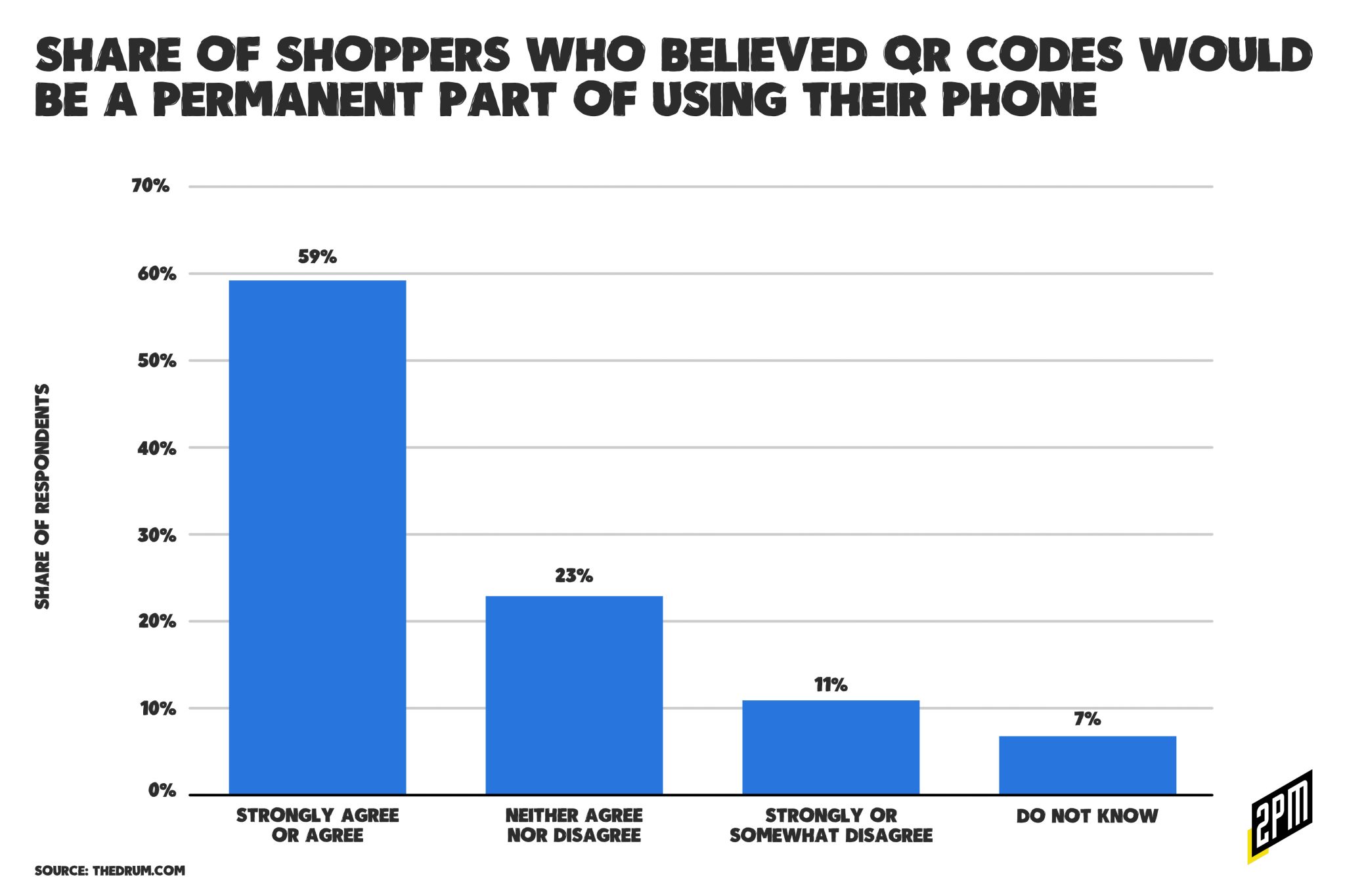
Viewed this way, Apple’s Tap to Pay could be helpful to Block as it removes the need for the dongle, giving users more and easier ways to pay, without making the dongle obsolete. Protocol makes the argument that Block is then freed up to focus on other services that are more profitable than a hardware business, including banking, payroll and other financial services. By making it easier for anyone to accept payments via iPhone, smaller business owners and entrepreneurs who aren’t looking for full POS machines can start selling, widening Block’s pool of potential customers in the long run. Then, more can win as the market for proximity payments expects to double over the next four years:

A positive-sum mentality and dynamism go hand in hand. Lost in the news cycle on the Apple Pay x Stripe partnership is that the same technology will be powering Shopify’s similar solution in the coming months. Stripe will be offering the Tap to Pay solution for iPhone users through a new Shopify app, as well.

Dynamism is defined as a theory or philosophy that explains something in terms of great energy or force. In the context of entrepreneurship, it goes hand and hand with payments technology, specifically the way that we use our phones. It is easier to pit one company against the other than it is to understand the bigger picture here. The United States is currently in eighth place behind China, South Korea, Vietnam, Norway, the United Kingdom, India, and Spain with respect to mobile payment adoption. China’s penetration was 39.5% to America’s 17.7% (as of August 2021). With an emphasis on making peer to peer transactions easier, businesses of all kinds can grow in sophistication and in reach.

And in doing so, Apple will achieve its goal for Apple Pay. It wants the payment technology to no longer be bound by the hardware that launched it. As Stripe has become the processing layer beneath much of commerce, Apple likely has aspirations to do the same for the transactions layer. And it won’t care if the trade is happening on iOS, Android or through Block, Shopify, or even Bolt. Dynamism is about agility and reach and it seems to be on its way back.

By Web Smith | Edited by Hilary Milnes with art by Alex Remy and Christina Williams 

Disclaimer: 2PM is an investor in Fast, a competitor to Bolt. To Ryan’s Breslow’s point, Stripe is an investor in Fast. But Bolt has been noted as better positioned with more money raised, more enterprise clients, and a higher GMV. Stripe has been noted as being competitive with Fast in a few of its recent initiatives. Ok, I am tired.