

This member brief is designed exclusively for Executive Members, to make membership easy, you can click below and gain access to hundreds of reports, our DTC Power List, and other tools to help you make high level decisions.
No. 281: “V” is For Vertical
If you read any post on digitally vertical native brands, you’ll be hard pressed to find one single paragraph on manufacturing. In Andy Dunn’s now famous essay on the rise of vertical brands, he doesn’t mention the process of production one time. In CB Insights much-loved analysis of the nine biggest DTC success stories, you won’t find one mention of the production process. This, despite the entire industry being driven by a global manufacturing resurgence.
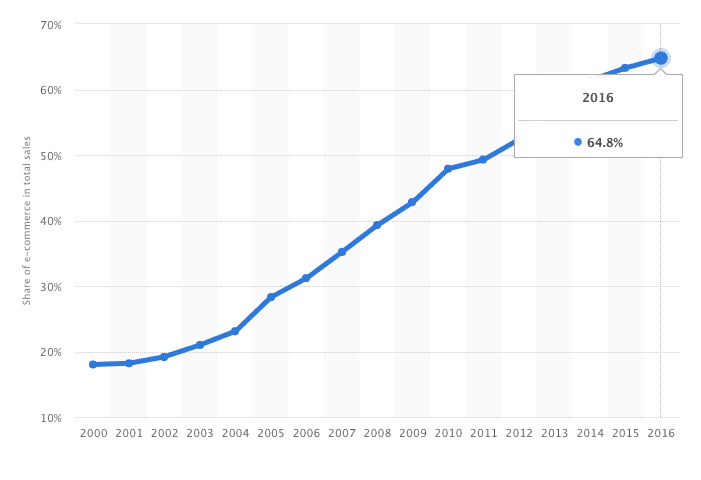
You listen hard. Stick to the basics, stick to the basics, stick to the basics, so says the antagonist from one of my favorite films of my youth. But while crusty old Coach Kilmer was a villain in the movie, he made a great point. And it’s a point that many in the DNVB space are overlooking. As the battle to rise above the noise has reached a fever pitch, brands are overlooking the most important part of the value proposition: a great product.
Face it, not everyone has a factory. This means that manufacturing partnerships must be priority number one for product-founders. A partner has to serve your best interest; they are there for the long haul. They make concessions and provide you with help during the product discovery and refinement phases.
Founder Collective on Twitter
Yes! The first Casper Mattress that sold was the 50,001st sold by founder Philip Krim, who spent a decade dropshipping beds previously. The best D2C founders are more focused on industry dynamics and acquisition channels than twee launch videos and clever branding. Follow suit! https://t.co/r9oDO74x6b
A DNVB is a manufacturer first, marketer second. Either you’re building the product within your own walls or you’re spending countless hours overseeing the process with a trusted partner. But for every Shinola, Rogue Fitness, Warby Parker, Harry’s or East Fork that own their factories, there are countless DNVB’s (see: Fashion Nova) that excel by optimizing partnerships with manufacturers. The operative word is “partnership.” If you’re the owner of a vertical brand, you’ll need more than a vendor to navigate the obstacles of today. A manufacturing vendor sends you a spreadsheet with pricing, a manufacturing partner tests ideas and sends you samples. They are an extension of you. They are as invested in you as you are in them.
Early on in my DNVB journey, I met a savvy product-driven entrepreneur named Adam Blitzer at Manhattan’s Javits Center during the very early days of Mizzen + Main. Those were the years that we spent (a) not paying ourselves and (b) being brushed off at trade shows. Blitzer’s situation was a little different than ours. His booth was always directly across and nearly always bustling. As one of the few young companies who closely-managed their own production, we built a kinship for each others brands. His product offering was refined and constantly evolving. In short, he simplified a very difficult aspect of the business.
Setting aside trade agreements, tariffs, and other political issues, things are booming. More goods, coming from more sources, going to more places.
One other thing that’s increasing: pressure. Every year there is greater pressure on producers to show regulators and customers that their goods are sourced ethically and sustainably. It’s as if the whole world is now from Missouri, saying, “Show me” when it comes to the integrity of products they purchase. Ingredients now matter as much as, if not more, than the end product. To many modern consumers, ingredients are the end product, whether it’s the wheat going into your cereal, or the cotton going into your jeans.
Trends in Global Supply Chain Management
Before becoming the CEO of his latest company, he was the founder of a successful duffel bag direct-to-consumer brand called Blue Claw Co. There, he maneuvered through the arduous obstacles faced by brands that manage the push and pull of global politics on their young companies. It was through this experience that inspired him to build Softline Brand Partners as the solution for vertical brands who are focused on insulating themselves from the industry and market fluctuations (from materials to production to shipments). Softline has become the go-to for DNVBs seeking the type of partnerships that scale from zero to one. A network of domestic and foreign manufacturing plants, the company heralds its partnerships: from startups like Bespoke Post and Leesa Mattress to retail titans like Timex, Woolrich, and Allen Edmonds.
In a recent discussion with Blitzer, here’s what he had to say about the industry:
We’ve grown accustomed to operations like Gin Lane and Red Antler successfully building product brands from sample to market. We’re the company that works with you before you complete the brand development phase. For us, the ultimate partnership would be inline with those legendary marketing agencies. Let us build a better product pipeline and make their jobs easier.
DNVB founders are in a tough position. Not only are the tech (online retail) and acquisition (paid advertising and social) vital components to achieve growth; managing the supply chain may be the most important of the three core competencies. As global trade increases in volatility, brands that are not managing their own product manufacturing (in house or through partnership) will be at a distinct disadvantage. A brand is not truly vertical unless the founders have a stake in production. The end consumer can observe the difference. There are brands who are thriving thanks to successful partnerships.
From Member Brief No. 27
Fashion Nova is not a traditional DNVB. The fashion brand began as a very small group of retail stores in Los Angeles’ B-level malls. The brand relaunched in 2013 as a digitally native brand and achieved rare air. Instagram, influencers, and consumers-turned-evangelists amassed one of the most effective top funnel efforts in brand-side eCommerce. Needless to say, they’ve built a blueprint for legacy businesses that are looking to reinvent themselves for the digital commerce age.
Fashion Nova’s manufacturing turn-around is reportedly best-in-industry. CEO Richard Saghian can move from idea to sample to production in under 72 hours by working with close to 1,000 factories. As a result, the five-year-old website releases new designs faster than most fast fashion houses. This means that typical consumers can look like their celebrity and social media icons within a few days of their red carpet appearances.
The founders who possess the sophistication to navigate trade and supply chain superiority will become the leaders of their product categories. While technical prowess and customer acquisition successes receive the majority of the press buzz, it’s supply chain excellence that empowers brands to maintain the agility and growth potential that characterized DNVBs from the start.
Read more of the issue here.
By Web Smith | Edited by Meghan Terwilliger |About 2PM
Editor’s note: If you would like an introduction to Softline Brand Partners, feel free to reach out.
No. 265: Can A DNVB Achieve Modern Luxury?
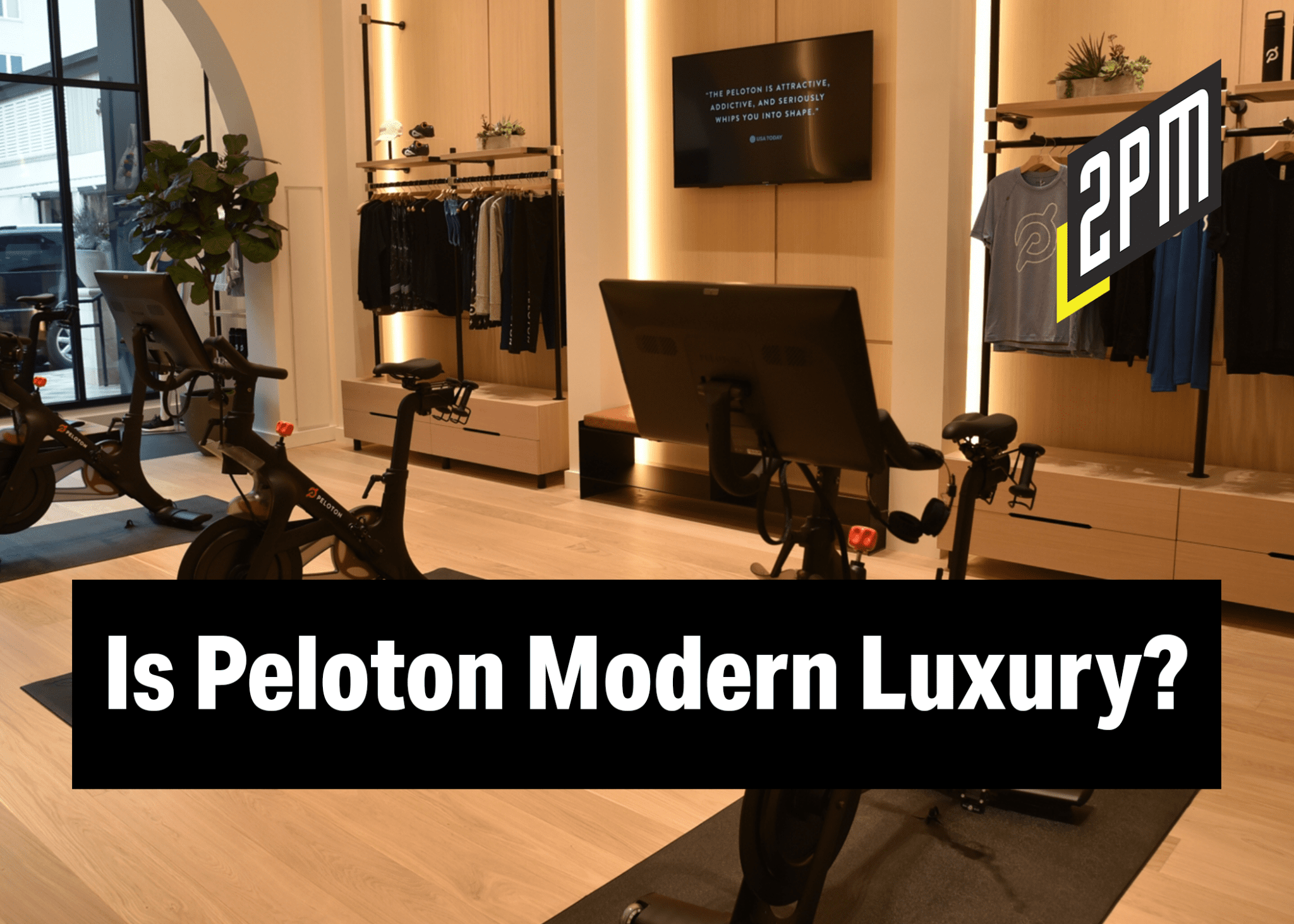
Om Malik and Lean Luxe‘s Paul Munford had a thought-provoking exchange. Does the modern luxury go-to Lean Luxe (and the industry as a whole) have a grasp on what luxury means in online retail? On its face, a physical product that makes itself available to the masses cannot be a luxury product.
Lean Luxe on Twitter
@om Sure, by the old definition of luxury – you’re correct. But don’t judge modern luxury brands’ bonafides using the old set of luxury rulebooks. More here: https://t.co/ZLjoBdxYUz and here: https://t.co/uHYOPzsI9n
There are very few products, if any, that digitally vertical native brands (DNVB) sell that would qualify as traditional luxury goods. Here is Munford’s definition:
The key strength of a modern luxury brand is its emphasis on the entire package, rather just the product (or logo) itself. It’s a different mode of operation that takes some getting used to, but it disperses with the conventions of the old, blingy version of luxury, and is best optimized for today’s new consumer behaviors and expectations.
The fact of the matter is that competing on product quality alone leaves a brand open to exposure. MLCs have smartly understood that a better overall package or bundle — in an open market like today’s — can be far more compelling to shoppers than just product alone can.
Munford makes an important point that I’d like to take a bit further. Lean Luxe tends to maintain a narrow focus on hard goods and the packaging that they arrive in. But what about the purchase process and the attentiveness to customer happiness? And what about time?
The definition of luxury: an inessential, desirable item that is expensive or difficult to obtain.
Luxury, however you define it, is a brand’s embodiment of characteristics that make it desirable. Historically, those characteristics have been more ‘What’ features like quality, exclusivity, and cost. You can still define luxury as characteristics that make a brand desirable, but those characteristics have shifted. Quality is table stakes.
The characteristics that make brands more desirable are ‘how’ features like excellent customer experience (how do I experience the brand), meaningful brand mission (how do they give back/make a difference), and community engagement. Is it artist-created and excessively expensive? Maybe not. But if it is a product, or even an entire experience that is highly desirable, it can be considered a luxurious brand. DNVBs just so happen to possess a great infrastructure to support the characteristics that define modern luxury.
Luxury is always relative; it is loosely defined to meet the times and the market. If you walk through a great mall in the United States, you will visit brand experiences that will provide a luxurious taste. Take Ohio’s Easton Town Center as an example. The indoor / outdoor mall features Burberry, Tiffany and Co., and Louis Vuitton. However, your perception of luxury changes when you walk through the Bal Harbour Shops in North Miami Beach. Bal Harbour is considered the finest mall in America. Both malls are considered “luxury” malls but neither are as luxurious as Dubai’s mall.
But can a DNVB be a luxury brand?
The notion of luxury is often applied to tech fashion brands. I partially agree with Om Malik’s statement here.
[Lean Luxe] is again confusing smoke / mirrors marketing and what is really luxury. All I know is that AllBirds and Brandless and Casper are not luxury, And no amount of your linguistic gymnastics will convince me of what is luxury, FWIW, LV is not luxury either. Too common.
AllBirds, Brandless, and Casper do not make luxury products but Munford isn’t suggesting that their products-alone are what classifies them within the modern luxury space.
Louis Vuitton was first hired as a personal box maker and packaging expert for the Empress of France. He was charged with “packing the most beautiful clothes in an exquisite way.” It was the practice that helped him to gain influence among the elite and royals, catapulting Louis Vuitton’s namesake to luxury status.
Louis Vuitton began with an early product and the two advantages commonly seen in the DNVB space:
- Packaging
- Maniacal focus on customers
The definition of a DNVB: a brand born online with a “maniacal” focus on the customer experience. A DNVB may start online but it often extends to a brick-and-mortar manifestation. Digitally native vertical brands control their own distribution.
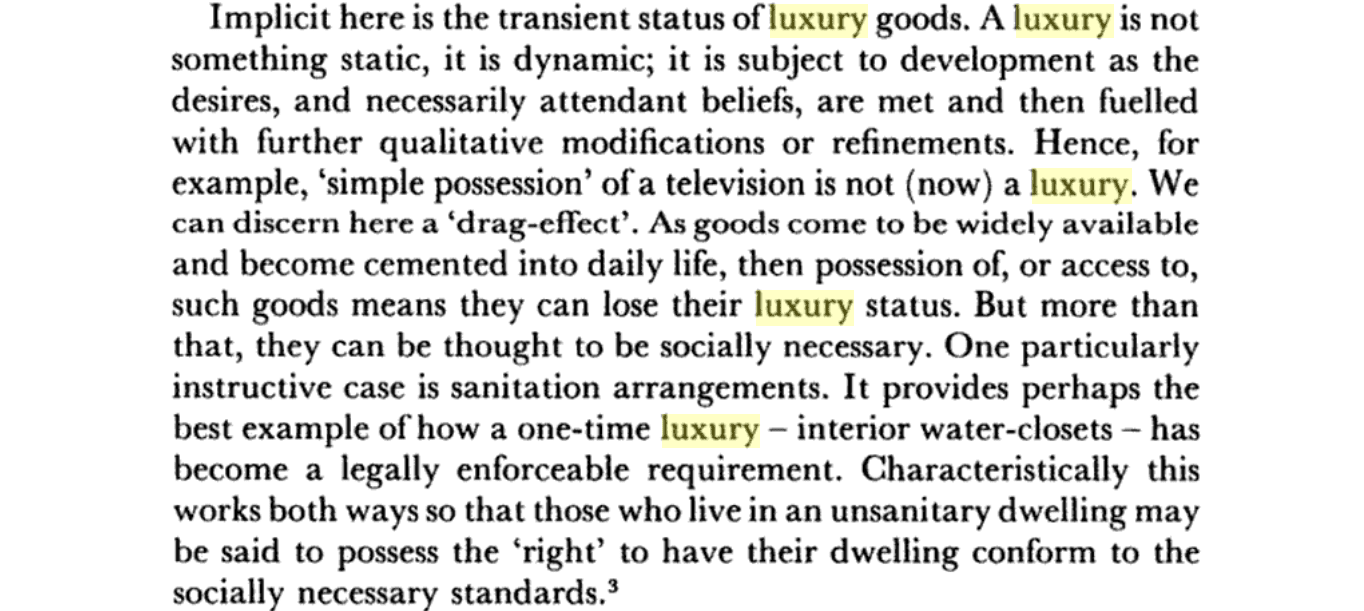
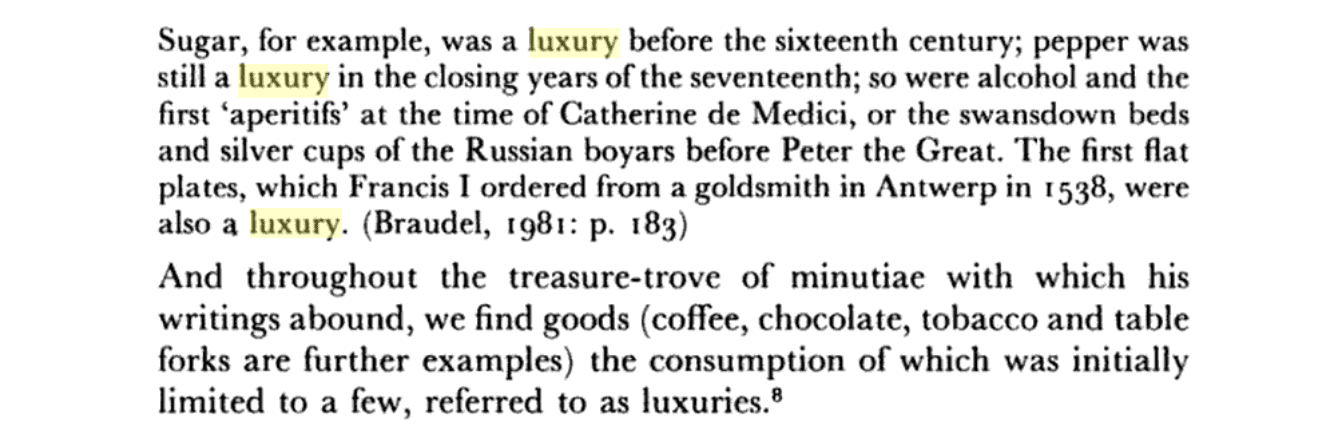
Luxury brands don’t always begin as purveyors of luxury products. And due to a macroeconomic consumer shift from materialism to investing in luxury experiences, there are a large number of consumers who prefer DNVB’s luxury-experience over traditional luxury products. For many in the business and wealth classes, it’s a symbol that their money is better spent on even finer things than goods. The definition of luxury is changing.
Here are two relevant passages from 1994’s The Idea of Luxury:
Page 18
Page 35
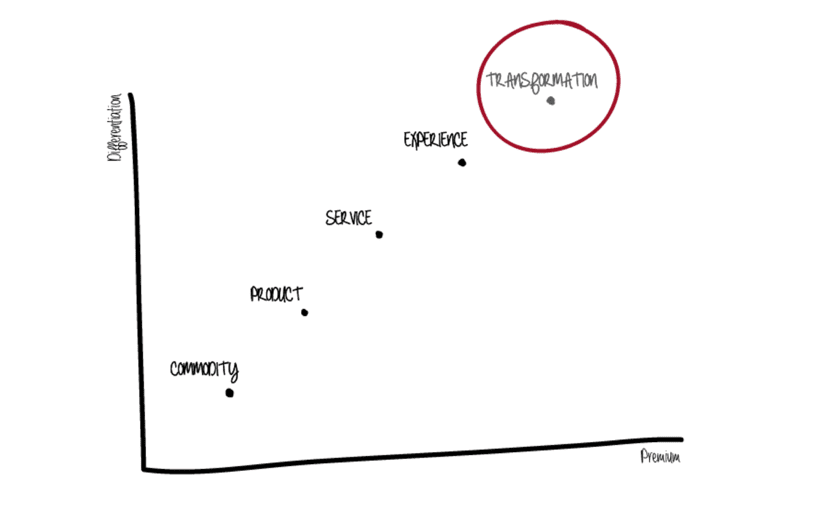
Buying experiences over buying consumer goods is a trend being adopted by the luxury-set. The interpretation of the word luxury means something altogether different for the types of customers who have the means and awareness to shop with DNVB brands. Skift’s latest research shows a clear shift in demand for more transformative travel experiences among upscale travelers (Skift / May 2, 2017). Whereas expensive products used to be the consumer desire: products, community, and service now play the role of enabling experience economy.
Many DNVB products (see the database here) are marketed to enable this type of consumer: Mizzen+Main (No. 86) is for the traveling business class male. Ministry (No. 91) is for the well-educated, urban millennial. AllBirds (No. 56) is worn by the business casual, aspiring member of the investor-class. Rogue (No. 8) turned a garage into a coveted space in a home.
Digitally vertical native brands are founded with these basic questions:
(1) How do we make a great product?
(2) How do we build a community around it?
(3) How do we provide an elegant solution for commerce?
(4) How do we enable customers to save time and focus on what matters?
“One fundamental trap that people run into when assessing the merits of a modern luxury brand is the tendency to judge that brand using the ‘best-in-class’ framework,” says Lean Luxe’s Paul Munford. Lean Luxe’s definition is mostly right. Munford discusses packaging as part of the bundle: “[These brands] offer a better bundle to offset [traditional definitions of luxury] — more convenience, transparency, connection, better messaging, pricing, etc.”
But a selection of modern luxury brands are also marketing time as part of the proverbial “bundle” and that’s the only place where Munford and my thoughts differ.
It’s no longer sufficient to define luxury products by how difficult they are to attain. Time is the scarcest resource and the ultimate luxury. Being a modern luxury brand is about being self-aware. These brands sell time as a scarcity and then build products around it.
There may be no greater example of the community / product / service paradigm than Peloton, a DNVB that Malik’s True Ventures joined back in 2015.
Peloton is now shifting gears with a new financing program ($97 per month for 39 months for both the bike and subscription service), an ad campaign that’s more relatable to a diverse consumer base and an NBC Olympics sponsorship. Peloton counts NBCUniversal among its investors, and has raised nearly $450 million in total funding to date.
“We had this idea of a very affluent rider who many of our early adopters were,” she said. “We realized, through conversations with our community, that there was a huge opportunity with people who thought $2,000 was a huge investment but were [buying] it over and over again because the product is so important to them.”
How Peloton is Marketing Beyond the Rich
Peloton is not a traditional luxury product, but it shares consumers with traditional luxury brands. Think about the type of living arrangement necessary to house a wi-fi enabled bicycle or a $4,000 VR treadmill. It’s a brilliant piece of hardware that blends community with product and service. The brand’s proposition explicitly states that the purpose is to free the owner to focus more on experiences.
Peloton’s value proposition is as much about what you can accomplish away from the treadmill. Why take the time to travel to a gym? That time could be better spent elsewhere. This is the mark of a modern luxury brand.
Read more of the issue here.
By Web Smith and Meghan Terwilliger | About 2PM