No. 314: On Linear Commerce

onlinearcommerce.jpg

I’d never seen anything like it. It was my first time at Augusta National and I wasn’t just a casual observer of the craze – I was a willing participant. Within two hours of being at Augusta, I’d convinced my father to join me in observing one of the event’s grand traditions. The average attendee will spend over $700 on merchandise.

The shop’s guests were mostly affluent and leisurely people; the audience at Berckmans Place took that affluence up a notch or two. Reports suggested that the average order value (AOV) of a Masters patron surpassed $750. And within 48 hours, at-home viewers will find these products on Ebay for 2x-5x of their suggested retail prices. And those resold products flew off of the product pages, as well. But despite the availability of the souvenirs and memorabilia, it didn’t seem like a money grab for the golf tournament. The prices were reasonable. And within 15 minutes of the Tiger Woods’ fist pump, the pro shops were closed to the public.

Perhaps golf’s most prestigious event, the audience was captive to say the least. I observed more than engagement, I observed a giddiness, an unnatural cordiality, and a sense of overwhelming joy by most on the property. Maybe it was the lack of phones (they were to be left at the entrance). But there was a particular effect that I cannot quite articulate. It’s an effect that brands only hope to emulate. It’s when the experience indexes so positively that consumers have no choice but to return the value by giving brands more money. Here’s an anecdote from a 2018 article in GQ:

The line to get in doubles as a Masters museum, and post-checkout, customers are given the option to ship their purchases home directly from the store. But what’s most interesting isn’t the fact that you can buy so much Masters gear in one place, and do so efficiently. No, it’s that this— one shop in Augusta, Georgia — is the only place in the entire world that you can buy it. Because of this, Masters merch has taken on a cult-like following, spawning obsessives and even a large resale market. To put it another way: Officially branded Masters products are basically Supreme for dads.

Sure, part of it is “I went and I want to show you that I went.” That’s the rational trigger that influences a great deal of modern retail. But sometimes, it’s a little more than that. An event, an experience, a streaming media property, or even a widely read blog can evoke an emotion that influences consumerism. These expressions can almost guarantee a baseline of organic sales. But it’s rare to see brands use these principles for their own growth. For the longest time, I searched for a physical manifestation of what I called linear commerce. I found it in Augusta.

The Masters was one of few physical examples of what happens when a curated and eager audience meets sales opportunity. A conservative estimate suggested that 2018’s Masters tournament generated $60 – 70 million in sales in its week. With an estimated 160,000 visitors over the four-day tournament, the Masters out-earned the yearly revenue of the 40th percentile of all digitally native brands in less than a week’s time.

On Linear Commerce

The digital economy rewards the entities that exist at the intersection of digital media and traditional eCommerce. A great product needs an organic and impassioned audience. Captive audiences will need products and services tailored to their tastes.

Law of Linear Commerce: the lines of demarcation between media and commerce are fading. For the brands that are most suited to the modern retail economy: media and commerce operations work to optimize for audience and sales conversion. This is the efficient path for sustained growth, retention, and profitability.

Brands will develop publishing as a core competency, and publishers will develop retail operations as a core competency. Below, you’ll find a visual representation of the launch strategies often found in the direct to consumer space.

The five basic stages of DTC linear commerce.

While versions (1) and (2) are the most predictable paths taken by venture-backed DTC brands, we’re beginning to see more of version (4) being implemented. Founder of Recess, Ben Witte launched “IRL.” A form of repurposed physical retail space, the location is designed to develop the consumer’s understanding of the Recess brand and his product pipeline. The space is designed to give the drink a purpose. At IRL, Witte schedules educational events to enrich and inspire the CPG brand’s target demographic.

Meanwhile at Away, “Here” magazine provides a tether between Steph Korey and Jen Rubio’s first market (North America) and their international growth. In this way, “Here” is a blend of versions (4) and (5). While many of Away‘s North American target consumers are aware that Away exists, “Here” has served, abroad, as an introduction to the brand. Nearly 12% of the publication’s traffic is derived internationally through WhatsApp, a sign that the approach to educating international consumers is tangible.

While version (5) is rare, chief marketers are beginning to understand its value. The best practical example of the Version 5 launch plan was Emily Weiss’ go-to-market strategy. Into the Gloss began as the primary sales driver for Glossier’s line of makeup and accessories. A newly-minted unicorn, Glossier.com‘s 2.6 million monthly visitors now arrive from a sustainable blend of customer acquisition methods: organic traffic through Into The Gloss and Instagram, paid search, Facebook / Instagram advertising, and a quiet affiliate deal with BuzzFeed. Here is Emily Weiss on Glossier’s growth:

We are building an entirely new kind of beauty company: one that owns the distribution channel and makes customers our stakeholders. By connecting directly with consumers, Glossier has access to endless inspiration for new products.

A Version Five in the making

Curating an audience is an involved process with long tail benefits and short-term headaches; marketing executives have long underestimated the value of this approach to community development and marketing. In this way, several digital publishers are ahead of the curve. 2PM recently spoke with Front Office Sports on Erika Nardini’s plans at Barstool Sports. Nardini on her recent product launch:

Golf is appealing because we love golf, and we have young fans who love golf the way we do. We try to have fun with everything we do and to approach stuff in a way that’s easy-going and approachable. The Barstool Classic is a great example of that.

With a long history of direct to consumer merchandise, their amateur version of pay-per-view sports, and a successful subscription membership under their belts, the edgy media company launched their third commerce offering – and another way to monetize the nearly nine million monthly visitors and hundreds of thousands of daily listeners who’ve propelled several Barstool podcasts to top ten sports charts. Barstool Classics is the media brand’s first foray into high dollar events, and it begins where this report started – with golf.

As media and commerce continue to meet along the line, the primary KPI is similar for both industries: do the visitors transact? At $600 per ticket, Barstool’s marketing team is betting that: a) they understand their audience and b) the audience will eagerly pay Barstool to express their support. In this way, DTC linear commerce concepts are akin to those fabled pro shops at Augusta National. And for challenger brands looking toward sustainability, there is a lot to learn from these examples. Audience-driven businesses have figured out how to monetize their visitors by providing value that captures attention. The alternative is paying the audience to show up at your party – a cost that is rising by the year.

Read the No. 314 curation here.

Report by Web Smith | About 2PM

Member Brief: The Product Lab

The 2016 Gear Patrol FJ40

The digital publisher’s product lab is a new evolution of content monetization. Publishers seek to harvest data with the intent to determine the most appealing products to the publisher’s readership. Using this method, they can sell specialized collaborations (or sourced products) to the readership. This can be interpreted as a value-add for the readership. But most importantly, it can be considered an upsell or simply a “make-good” on an existing ad buy.

Gear Patrol, a site best known for high-end product reviews, has built its brand by turning people on to other companies’ products. It’s now more interested in selling its own branded products, Digiday recently reported.

This member brief is designed exclusively for Executive Members, to make membership easy, you can click below and gain access to hundreds of reports, our DTC Power List, and other tools to help you make high level decisions.

Join Here

No. 280: Media Companies Are Brands Too

facebook-ad
Barstool CEO Erika Nardini | Game recognizes game.

The digital landscape is changing beneath our feet. For publishers to continue building organic readership, they must become brands. Operating as a source of content is no longer enough. To do that, efforts can no longer be siloed, the traditional factions of legacy-styled newsrooms must fall.

The factions in every legacy newsroom. The (1) affiliate marketing team is paid bonuses on their revenue growth. Every ounce of content that they publish is devoted to Amazon and Skimlinks. The (2) advertising team is the highest paid group in the company, with salaries ranging from $80,000 – $250,000. They are often adversarial with the affiliate and commerce groups. The (3) native advertising (brand studio) team is newer, so the advertising team leans on them to add value to existing bigger deals. This means bigger bonuses. The (4) editorial / creative team is both underpaid and the most important. For this reason, they want nothing to do with teams 1-3. And if the media company has one, the (5) direct-to-consumer team may as well be on an island. This team sees very little support and collaboration. Hey, it’s an experiment.

A lifestyle newsroom shouldn’t have factions at all. And increasingly, this is becoming the mark of the ones that are well-managed. For those newsrooms, they share a few common beliefs. The most important of those beliefs which they share: media companies are brands, too. And the second of those beliefs: depending on Amazon for a sizable portion of eCommerce revenue is a fatal error in judgment. Let’s revisit a brief from April 2017.


Issue No 209: Amazon Wants to Dress You

Amazon’s growth as an eCommerce company is tied to its growth as a publisher. As such, Amazon’s advertising business will eventually thrive as Bezos has invested in streaming, digital magazines, and owning most of our consumer lives. The intent to buy is a powerful indicator of success and stateside, it’s harder to find a place with more consumers willing to spend money than Amazon.

Their advertising platform will eventually disrupt Google’s Adwords and Facebook’s Newsfeed for this very reason. Whereas “eyeballs” determined the last 25 years of tech growth, cart conversions will determine the next 25 years. The great digital businesses understand that this is the foundation. Amazon and Alibaba are building commerce-driven ecosystems where eyeballs and clicks aren’t enough. Retailers have no choice but to reward publishers for sales efficacy with higher margins, increased leverage, and more ad spend.


Affiliate-only commerce operations will be the next to stumble. Amazon controls affiliate percentages, all while ramping up the company’s ability to generate consumer demand on its own. We’ve seen this before.

In a recent report by Digiday+, Mark Weiss writes: 

In the long run, it might be advantageous for publishers to steer clear of Amazon. Selling products on Amazon or referring traffic to Amazon only helps strengthen the direct connections between Amazon and consumers, not between consumers and publishers. As shoppers become accustomed to shopping on Amazon and fast delivery speeds, the chances that consumers will shop directly with publishers could decrease. It will also be interesting to see whether publishers, after being burned by Facebook, let themselves become dependent on another major platform.

Building a brand is essential for publishers. This cannot be done without a strong direct-to-consumer presence. And DTC success cannot happen without a collapse of departmental silos. Editorial teams believe their priority is journalism-alone; other areas of the business suffer because of it. When advertising teams see eCommerce as competition and creative teams as their horses, other areas of the business tend to suffer.

Facts and figures

  • Of publishers surveyed, 40% relied on eCommerce as a revenue source.
  • An astounding 83% of publishers sell products for Amazon.
  • Nearly 43% report sizable revenues from commerce operations
  • Less than 30% believe that editorial content should be siloed from commerce operations.
  • Recent research shows that only 16 percent of publishers allocate 25%+ of their marketing spend to promote their own commerce projects.
  •  A worthwhile 61% of those surveyed use audience data to inform content direction.
  • Just 29% of publishing executives think that editorial content should be independent of advertising.
  • And 47% spend nothing on promoting their commerce efforts, according to a survey of publishing executives.
  • In 2017, Amazon generated $21B in revenue on affiliate commerce.

It’s been my experience that direct to consumer commerce operations face unparalleled opposition within publishing houses. Often times, this is simply because it takes the most effort.  The advertising machine is in motion, branded content (native advertising) is up-front money, affiliate marketing v1.0 is just writing a hyperbolic blog on whatever it is you’re trying to sell for Amazon or your Skimlinks partner. But direct to consumer commerce takes holistic, interdepartmental development. It takes buy-in from the top down.

In issue No. 252, 2PM covered the successes of publishers excelling in the eCommerce space. Of those publishers: Barstool Sports, Uncrate, Goop, and Buzzfeed stand out as operations who understand the importance of brand, loyalty, and repeat business.

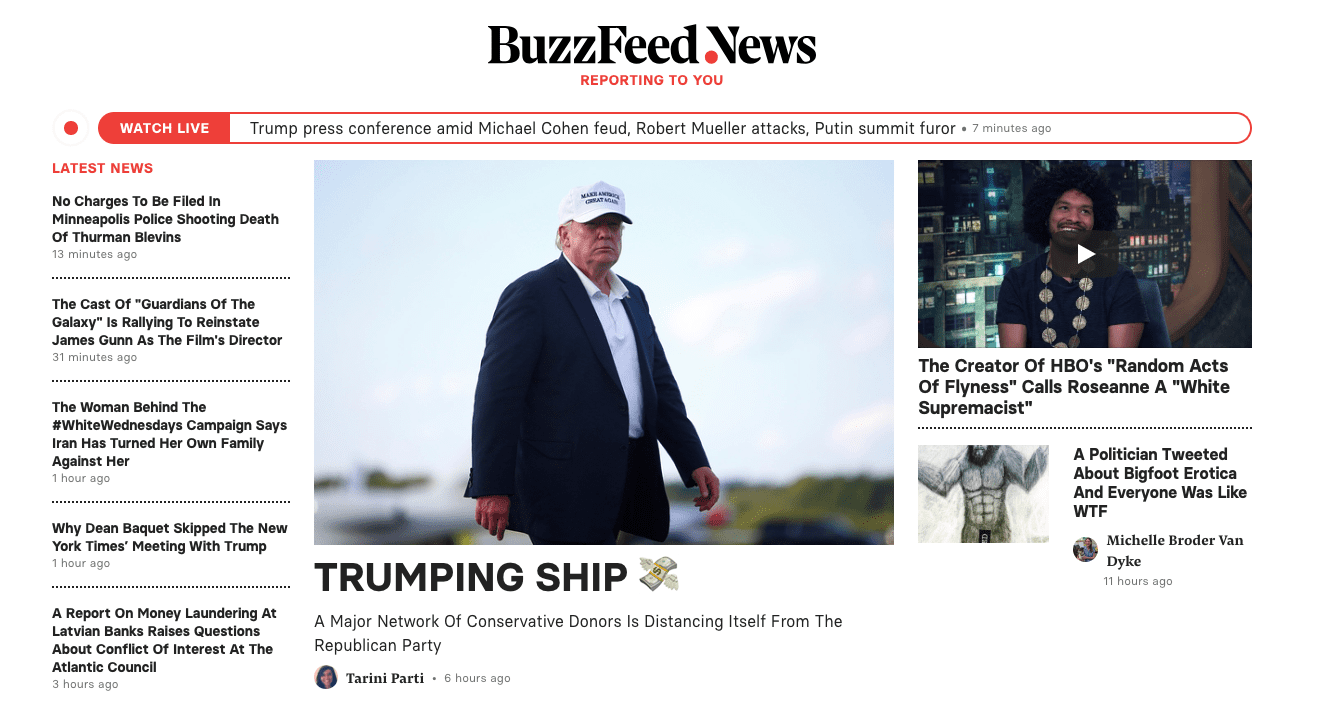
Buzzfeed is a great example. There was such a collaborative effort between departments, that the company relaunched BuzzFeed News as a separate entity responsible for covering serious matters of national import. It’s likely that this arm of BuzzFeed will move to a subscription-based model, like NYT, WAPO, The Information, and other outlets who aim to cover matters objectively.

Just a few weeks later, they launched BuzzFeed Reviews to appeal more to consumers looking for objectivity in their purchases. In Wirecutter fashion, this approach takes research and time. It is an alternative to repetitive lists of travel gadgets to buy.

Screen Shot 2018-07-30 at 2.17.39 PM
BuzzFeedNews.com

For media companies that cover non-essential matters like products, sports, entertainment, and culture, there isn’t a valid reason to pretend that journalism isn’t reliant upon the revenue driven by ad dollars and commerce spend. For media companies who do cover essential matters, a subscription model is the most favorable system. Even so, this takes an awareness of brand equity. Building a cohesive message around a publishing mission goes a long way in developing meaningful funnels for affiliate and DTC revenue. The key to understanding this philosophy is simple: publishers must be, both, intellectual property and loyalty-driven companies.

Barstool CEO Erika Nardini on intellectual property and commerce:

We have tripled down on our merchandise business with new lines of clothing, and premium clothing and apparel. Rough N Rowdy was our first foray into pay-per-view. It enables us to create things where our audience is able to buy something to wear, to listen to for 12 hours or an event to go to on a Friday night with friends.

Nardini goes on to say:

Our advertising business has grown 700 percent since I joined. […] Advertisers are also having a harder time breaking through and getting their product to resonate. Barstool does a really good job of that.

Despite perpetual controversy, they’ve figured out a model that few executives in publishing have. They report news, but the majority of their resources are spent generating intellectual property that can be monetized. Barstool has a valuation of $100M+, according to reports.

Bleacher Report, Barstool’s antithesis in many ways, has begun to do the same. Their recent eCommerce efforts have accelerated growth across all departments. According to Ed Romaine, chief brand officer for the publisher,” eCommerce is not the endgame for Bleacher Report, but rather a targeted means with which to grow its brand.”

Read more of the issue here.

By Web Smith | Edited by Meghan Terwilliger | About 2PM