Мемо: Быстрая, стремительная, самая быстрая мода

Быстрее: H&M. Быстрее: Zara. Быстрее всех: Shein. Эта прогрессия изменила потребительский стиль, ускорила производство текстиля и одновременно нанесла ущерб экономике. Zara нарушила работу H&M, а затем Shein вытеснила их обоих. Теперь H&M перешел в наступление, пытаясь вернуть себе былые преимущества.

Мы надеемся вернуть миллионы потребителей, которые ушли от Zara и Shein. Все сводится к осям x и y двух конкурирующих идей: экономики и воздействия на окружающую среду.

У фаст-фэшн и athleisure есть последствия; пластик не был предназначен для того, чтобы его безнаказанно носили и выбрасывали.

Разговоры о будущем моды - это сплошное противоречие: молодое поколение покупателей говорит, что хочет сохранить окружающую среду. Сопоставьте этот идеал с тем, что они покупают на самом деле, и вы увидите, что в их коллективной философии "спасения планеты" есть трещины. Представителей поколения Z часто называют наиболее сознательным и экологически ориентированным сегментом потребителей. Они также способствовали росту Shein, крупнейшей в истории компании быстрой моды. По сравнению с ними Zara и H&M были маленькими ритейлерами. В исследовании Гарвардской школы бизнеса 2021 года рассказывается о том, как Inditex, материнская компания Zara, внедряла инновации для повышения эффективности цепочки поставок, чтобы быстрее выпускать продукцию, которая в большей степени соответствовала тенденциям.

Zara - старейший и крупнейший бренд Группы, на долю которого приходится около 69 % продаж, или 18 млрд евро в 2018 году. В основе успеха Zara лежит инновационная бизнес-модель, основанная на очень оперативной цепочке поставок и быстрой оборачиваемости товаров. Zara разрабатывает, производит и доставляет новые товары в магазины менее чем за три недели, что позволяет ей постоянно обновлять свои коллекции и адаптироваться к меняющимся вкусам покупателей.

Всего через два года после написания этого дела Zara обращает свой взор на бренд для новорожденных: Shein - это Zara на стероидах. И поколение Z это любит. Shein стал фаворитом на TikTok, где пользователи делятся покупками платьев за 15 долларов, шорт за 10 долларов и топов за 5 долларов. Одежда дешевая и модная, рассчитанная на одноразовое ношение, которую выкладывают в социальные сети и выбрасывают. Концепция не нова, но с тенденцией к экологичности она должна была выйти из моды. Вместо этого идея стала еще более сильной.
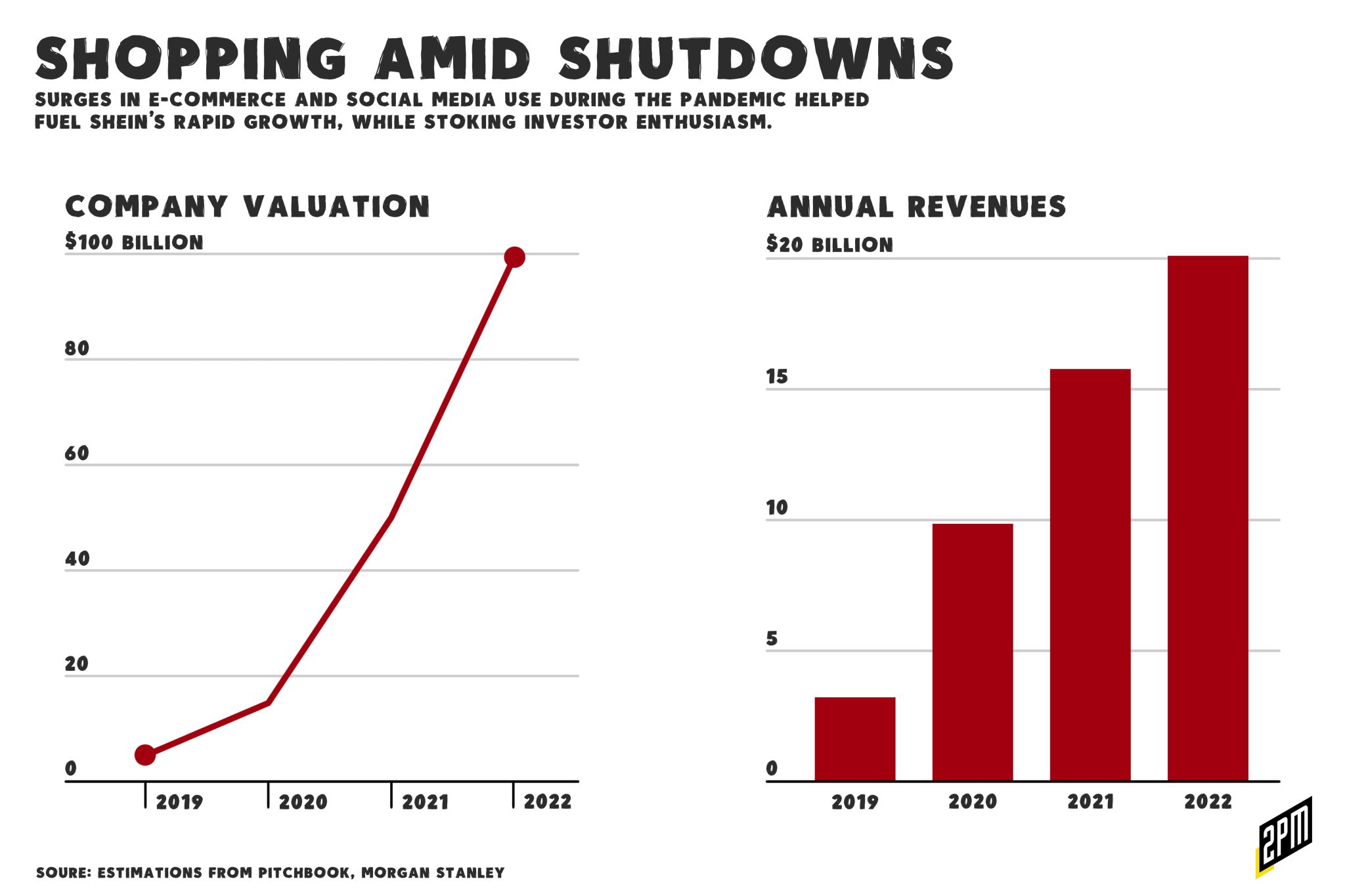
Масштабы Шейна трудно осознать. Эта операция более секретна, чем большинство других, но очевидно, что мы как никогда осознаем ее последствия. У фаст-фэшн и athleisure есть весьма ощутимые отрицательные стороны; пластик не был предназначен для того, чтобы его безнаказанно носили и выбрасывали. 31 мая Fortune написал глубокую статью о Шеине, в которой изложил суть дела:

Глобальные инвесторы, для которых становится все более модным отстаивать высокие стандарты в области экологии, социальной сферы и управления (ESG), также поражены. Они подняли стоимость Shein до 100 миллиардов долларов, сделав ее третьим по стоимости стартапом в мире после ByteDance, китайского производителя TikTok, и SpaceX Элона Маска. По данным Bloomberg, Shein сейчас стоит больше, чем H&M и Inditex, материнская компания Zara, вместе взятые.

Но хотя инновационная бизнес-модель Shein может снизить цены для потребителей, наблюдатели ворчат, что Shein построила свою империю одежды на дешевой рабочей силе, поддельных товарах и программном обеспечении для дизайна, управляемом А.И., которое побуждает потребителей выбрасывать старые наряды с вредными для планеты темпами. Эти жалобы, а также недавнее замедление темпов роста электронной коммерции делают дальнейшее господство компании далеко не однозначным.

Позиция Fortune, согласно которой, выражаясь многословно: "воздействие компании Shein на окружающую среду в конечном итоге приведет к ее гибели", в лучшем случае ошибочна. Почему? У целевого рынка быстрой моды существует когнитивный диссонанс. Можно ли спасти планету, покупая платья за 13 долларов для Instagram? До сих пор компании быстрой моды теряли свое господство только тогда, когда им на смену приходили более быстрые компании, способные повторять тренды по более низким ценам. Неважно, не видят ли покупатели гнусной практики Shein или намеренно игнорируют ее, в конечном итоге это не имеет значения. Покупатели, которых привлекает одежда по доступной цене, как правило, не те, кто останавливается, чтобы спросить, почему вещь стоит так мало. Важно лишь то, что, сталкиваясь с дешевыми вариантами, молодые потребители выбирают быструю моду.

За подъемом Shein стоит сочетание нескольких факторов. Социальные сети ускорили циклы модных тенденций. Экологически чистая мода стоит непомерно дорого, а меняющиеся приливы и отливы консьюмеризма для многих определили, что мода - это не инвестиции, по крайней мере, не в плане трендов. Потребителей часто считают ответственными за то, что они "голосуют своими долларами", когда речь идет о том, чтобы побудить корпорации быть более устойчивыми, но это никогда не было полной правдой. Покупатели будут покупать то, что легко и доступно, особенно в молодости.

Сама компания Shein - это черный ящик. О том, как она добывает и производит свою одежду, мало что известно, но цифры и ценники говорят сами за себя. Компания начала рассказывать о своих усилиях по защите окружающей среды. Vogue называет это "зеленым промыванием":

Каждую неделю на рынок Кантаманто поступает 15 миллионов единиц одежды из стран Глобального Севера, что приводит в упадок местную текстильную промышленность.

Компания наняла главу глобального отдела ESG и недавно объявила о создании фонда в размере 50 миллионов долларов, который будет направлен на компенсацию воздействия на окружающую среду и решение проблемы отходов. Это капля в море на 50 миллионов долларов, которая едва ли сможет исправить хоть что-то из того, что Шейн выплеснул на рынок TikTok, Snapchat, Instagram и поклонников Кардашьян. На этой неделе компания получила похвалу за партнерство с фондом OR Foundation, которому она выделит 15 миллионов долларов в течение трех лет на борьбу с отходами одежды в Аккре, Гана, где в итоге оказывается много выброшенной одежды.

Это не более чем отвлечение от реальности воздействия на свалки. То, что Шеин называет отходы отходами и жертвует средства, чтобы привлечь внимание к этой проблеме, может быть воспринято как неискренность. К счастью для них, H&M делает нечто подобное, выделив 250 миллионов долларов вместе с Lululemon в пользу новой организации, которая стала преемницей Aii:

"Мы пытаемся показать, что это центр притяжения для всей климатической работы, и все - от Textile Exchange до Fashion for Good и многих других, - кто работает над снижением выбросов углерода, придумывает решения и внедряет их в производство, - все являются бенефициарами этого", - сказал он. "Это коллективное "мы". Это не передача средств Aii, и они не пойдут на другие климатические работы. Это создание центрального фонда, с помощью которого мы все сможем начать рассматривать более консолидированный подход в противовес фрагментации проектов, которые не взаимодействуют друг с другом и дублируют усилия".

Проблему Шейна в моде решат не пожертвования, не связи с общественностью и не признание вины. Более плодотворным решением будет отказ социальных сетей от быстрой моды в пользу экологичности. Но нельзя полагаться на покупателей поколения Z, чтобы решить эту проблему. Пора признать, что никакие благонамеренные покупатели не смогут остановить машину розничной торговли, которую хотят видеть миллионы, поскольку появляются новые тенденции, а TikTok транслирует их для подражания.

Команда 2PM

No. 274: Merch has become fashion

facebook-ad copy 4
Cofounders of Everybody.World

The word merch is synonymous with throwaway. Or at least it used to be. In 2PM’s leading story, Quartzy discusses the changing demographics that have influenced the types of products that luxury brands sell. Gone are the days when famed fashion houses like Gucci focus solely on traditional luxury fashion. Today, their products reflect an affinity for sweat pants, tennis shoes, and modern t-shirt patterns.

This has trickled on down to the merchandise industry. Younger millennials and Gen Z’ers wear merch as a fashion statement and luxury has adopted this burgeoning trend. For merch providers, this means that the American Apparel / LA Apparel aesthetic has given way to something new patterns, styles, and definitions of inclusivity.

2PM recently took a deep dive into the types of merchandising campaigns that are moving the concept of merch away from throwaway and towards luxury. In this archived brief, we explored everything from platforms used to preferred t-shirt patterns and blanks.

Краткое содержание № 11: Mega Merch 101

Social media and the normalization of digitally vertical native brands have enabled artists and influencers to create online retail brands as a primary source of revenue. In this report, we will break down best practices – including some insights from our editor’s work with a certain Youtube creator.

Bain Capital released a 2017 report on global luxury that emphasized this shift driven by millennial consumers. Here is an important excerpt:


The Millennial State of Mind: Success in the next decade requires brands to refocus on their customers to better anticipate and cater to their needs. The younger generation will be key as millennials and Gen Z will represent 45 percent of the global personal luxury goods market by 2025. Still, when analysing behaviours, it is more correct to talk about a “millennial state of mind,” which is increasingly permeating across all generations and is thus more a psychographic phenomenon rather than a purely demographic one.

Read the rest here.


To summarize Bain Capital, the Gen Z interpretation of luxury fashion has permeated throughout the entire industry. This has affected consumer industry across footwear, accessories, and apparel. There are merch providers that are well-positioned here.

Business of Fashion’s wrote a recent feature on the two founders of Everybody.World. The write up did a masterful job of explaining how one merch provider built a direct-to-consumer brand that fueled their high growth wholesale business. By working with a curated selection that represents the zeitgeist. This includes: style contributors, graphic designers, a well-designed basics line, and the one staple that has become the go-to for festival merchandisers.

Quality, too, has become increasingly important as concert merch has evolved from souvenir to fashion statement, underscored by merch-like pieces released by luxury brands including Gucci, Balenciaga and Vetements. “The demand is absolutely higher than when I started doing this six years ago,” said Allen, who sourced roughly 70,000 pieces of merch for 2018’s Coachella Valley Music and Arts Festival. “And the expectations for the product itself are definitely higher.”

That’s why, this year, Allen looked beyond the typical “blank” T-shirt companies — think Gildan, Bella Canvas and Hanes — to boost Coachella’s offering.

Read more here (unlocked)

Cofounders Iris Alonzo and Carolina Crespo have done an extraordinary job of positioning the Everybody.World brand by building a strong direct-to-consumer business. Something that LA Apparel head Dov Charney is having problems with, this second time around. Due to the successes that they’ve had with wholesaling their famed ‘trash tee’ for $2.90/unit, wholesale traction has allowed the two founders to grow a substantial, higher-margin, direct-to-consumer business. Their main vehicle has been zeitgeist-driven basis and unexpected collaborations with contributors (even Virgil Abloh is listed on the site).

In Q2, merchandise drops have grown to become a major part of the creator narrative. Beyonce’s Coachella performance and her subsequent eCommerce drop was studied in Member Brief No. 11. And above, you’ll see high profile merchandise drops to include: Kanye West, Kid Cudi, and Nas.

As creators continue to emphasize merchandising as an extension of their art (and business), it’s imperative for providers to observe the shifts in the meaning of luxury and how Gen Z consumers have begun to shape the merchandise-turn-fashion industry. For the time being, tees are no longer a dress-down device. And it’s not just about what’s on the shirt, these days. Patterns and fit matter more than ever.

Blanks are no longer viewed as commodity products to a growing segment of American buyers. In fact, the industry is supplying a key component of Gen Z’s fashion identity. There are several providers that are well positioned to grow with the youngest of American consumers.

Подробнее о выпуске читайте здесь.

Веб Смит | Около 2 часов дня

Editor’s note: the next 2PM database (releasing 6/21) will include the most notable of merchandising providers to include Pittsburgh, Pennsylvania’s “Blank” run by Michelle Sharp. This will be a growing database. Join the executive membership for access. 

No. 272: A “Tier A” Path Forward

tierapathforward.jpg

The worst thing to happen to the American mall is the boom of online-first modern luxury companies. And it’s also the best thing to happen to the American mall.

There are 1,100+ malls in America and approximately 320 are graded Tier A. We have an oversupply of malls but that does not mean that traditional, anchored shopping centers no longer have a place in consumerism. We’d argue that Tier A malls have yet to see their best years. We expect their footfall traffic KPIs to grow, while B and C tiered malls continue their trends toward repurposed real estate and other methods to maintain footfall traffic KPIs (mall opportunity, sales opportunity, and store performance).

Suzanne Mulvee, director of research at CoStar, cites that “lower-quality malls in markets with smaller populations and lower incomes will continue to close” —a trend that persists today. And here’s a data based position:

Green Street Advisors, a research firm, forecast a 6.0 percent drop in market revenue per available foot (RevPaF) for class-B and -C malls from 2018 to 2022, versus a 0.5 percent increase for class-A malls during the same period. 

Private market values of class-B and -C malls have also dropped the most since January 2017, according to Green Street, plunging 27.0 percent and 25.0 percent, respectively, year-over-year. Meanwhile, the values of class-A malls declined by 14.0 percent year-over-year.

National Real Estate Investor

So what does this mean for digitally vertical native brands (DNVB), old and new? In short, online-first brands should be positioning their product offering for inclusion in Tier A malls. First, let’s look at the established. A retail presence for DNVBs varies, as such:

  • Harry’s has a prominent position in J. Crew shops (Tier A)
  • Shinola has marquee positioning as stand alone stores (Tier A)
  • Mizzen + Main has prominent position at Nordstrom (Tier A)
  • Bevel has showroom real estate at Macys (Tier A / B)
  • Warby Parker has great stand alone stores (Tier A)
  • Greats has marquee positioning at Nordstrom (Tier A)
  • Ministry of Supply has great stand alone stores in Tier A areas
  • Homage has great stand alone stores (Tier A)
  • Bonobos has stand alone stores and Nordstrom positioning (Tier A)
  • MeUndies has positioning at Nordstrom (Tier A)
  • Goop is opening sponsored pop ups (Tier A)

There are very few presences in Tier B malls and virtually no DNVB presence in Tier C malls. These brands have done a wonderful job positioning themselves as modern luxury companies. They’ve been incubated online for five to ten years and they’ve become prominent enough to live as lifestyle brands in traditional retail spaces. It’s a forgone conclusion that omni-channel operations should be a focus for DNVBs; retail real estate analysis is a skill that is becoming more and more important. And DNVB’s are well-positioned to benefit from the Tier A adoption of the online brands. Recall this quote from Issue No. 265:


2PM’s Meghan Terwilliger had this to say:

Luxury, however you define it, is a brand’s embodiment of characteristics that make it desirable. Historically, those characteristics have been more ‘What’ features like quality, exclusivity, and cost. You can still define luxury as characteristics that make a brand desirable, but those characteristics have shifted. Quality is table stakes.

Характеристики, которые делают бренды более желанными, - это "как", такие как превосходный клиентский опыт (как я воспринимаю бренд), значимая миссия бренда (как они отдают свои силы и меняют мир к лучшему) и вовлеченность в жизнь общества. Является ли он созданным художником и чрезмерно дорогим? Возможно, нет. Но если это продукт или даже целый опыт, который очень желанен, его можно считать роскошным брендом. Так уж сложилось, что DNVB обладают отличной инфраструктурой для поддержки характеристик, определяющих современную роскошь.


There are DNVBs that are launching daily. It is important that these brands understand that online retail mechanics has its limits. For these brands to expand into $30 million or more in annual revenue, omni-channel strategy can provide longterm growth. Additionally, this can reinvigorate top funnel sales through online channels.

Here are the top five suggestions for DNVBs launching today:

  • Master the first product. Bonobos began with pants, Mizzen + Main with a single white dress shirt, and Bevel with one blade.
  • Develop a strong sense of product ambassadorship. Mizzen + Main targets millennials, but the most capable buyers are between the age of 34-45. Developing a sense of loyalty with them can pay dividends. For their peers that don’t shop online, they’ll become a top funnel driver of them to your brick and mortar locations.
  • Avoid discount promotion, even at the beginning. Price stability over time is crucial. The moment that a brand is seen as a discounter, the Tier A mall demographic loses interest (with few exceptions).
  • Emphasize advertising to Tier A mall consumers. When DNVB’s grow online, they need to focus on the customers that possess the greatest LTV (lifetime value) potential. This correlates with Tier A mall shoppers.
  • Establish relationships with non-competitive retailers. It can be a powerful signal of longterm viability when existing brands co-sign your early product. This is most often seen by way of product collaborations, cross-promotion, or merchandising your products in their flagship stores.

Retailers that appeal to…the upper class are thriving. One look at Houston’s Galleria, Columbus’ Easton Town Center, or Miami’s Bal Harbour Shops will confirm as such. This is the future that many in retail are planning for. So no, retail is not dead. But retail is leaving the middle class behind because, frankly, so are we.

2PM Member Brief No. 5

In the first sentence, I wrote that online retail is the best and worst thing to happen to malls. In many ways, this is true. The shuttering of weaker retailers and shopping centers is long overdue. Experts attribute this trend to the emergence of online retail brands (and the excessive private equity debt that these retailers accrued to compete with them).

We have more retail real estate than any developed country on earth. Malls are not dying, the bad ones are. While eCommerce efficiency is appealing to digital marketers, the brick and mortar channel is golden for brand operatives who are establishing their brands as modern luxury products. Marketing is arithmetic, whereas brand-building is more of a subjective art. If you were to ask the chief executives at each of the aforementioned brands, they would point to their brick and mortar successes as great milestones. There will be fewer malls in the coming the years, but an early bet on the ones that remain will position young DNVBs for omni-channel success.

Read the rest of the issue.

By Web Smith and Meghan Terwilliger | About 2PM