मेमो: तेज़, तेज़, सबसे तेज़ फ़ैशन

तेज़: एच एंड एम। उससे भी तेज़: ज़ारा। सबसे तेज़: शीन। यह एक ऐसी प्रगति है जिसने उपभोक्तावाद को बदला है, कपड़ा उत्पादन को गति दी है, और ऐसा करते हुए अर्थव्यवस्था को भी नुकसान पहुँचाया है। ज़ारा ने एच एंड एम को तहस-नहस कर दिया और फिर शीन ने उन दोनों को बेदखल कर दिया। अब, एच एंड एम अपनी पुरानी बढ़त वापस पाने के लिए आक्रामक हो गया है।

उम्मीद है कि ज़ारा और शीन की राह पर चल पड़े लाखों उपभोक्ताओं को वापस लाया जा सकेगा। यह सब दो प्रतिस्पर्धी विचारों के x और y अक्षों पर निर्भर करता है: आर्थिक और पर्यावरणीय प्रभाव।

फास्ट-फैशन और एथलीजर के अपने परिणाम हैं; प्लास्टिक को पहनने और बेखौफ फेंक देने के लिए नहीं बनाया गया है।

फ़ैशन के भविष्य को लेकर चल रही चर्चाएँ एकदम विरोधाभासी हैं: खरीदारों की एक युवा पीढ़ी कहती है कि वे पर्यावरण को संरक्षित करना चाहते हैं। इस आदर्श को उनकी वास्तविक खरीदारी के साथ जोड़कर देखें, तो आप पाएँगे कि उनके सामूहिक "ग्रह बचाओ" के दर्शन में खामियाँ हैं। जेन ज़ेड को अक्सर सबसे स्थायी रूप से जागरूक, पर्यावरण के प्रति जागरूक उपभोक्ता वर्ग के रूप में जाना जाता है। वे इतिहास की सबसे बड़ी फ़ास्ट फ़ैशन कंपनी, शीन के उदय को भी बढ़ावा दे रहे हैं। इसकी तुलना में ज़ारा और एच एंड एम छोटे खुदरा विक्रेता थे। 2021 के हार्वर्ड बिज़नेस स्कूल के एक केस स्टडी में बताया गया है कि कैसे ज़ारा की मूल कंपनी, इंडिटेक्स ने आपूर्ति श्रृंखला दक्षता के इर्द-गिर्द नवाचार किया ताकि ऐसे तेज़ उत्पाद तैयार किए जा सकें जो रुझानों के ज़्यादा अनुरूप हों।

ज़ारा समूह का सबसे पुराना और सबसे बड़ा ब्रांड था, जिसकी 2018 में लगभग 69% बिक्री, यानी €18 बिलियन थी। ज़ारा की सफलता का मूल एक बेहद संवेदनशील आपूर्ति श्रृंखला और तेज़ी से माल की आपूर्ति पर आधारित एक अभिनव व्यावसायिक मॉडल था। ज़ारा ने तीन हफ़्तों से भी कम समय में नए उत्पादों को डिज़ाइन, निर्मित और स्टोर्स तक पहुँचाया, जिससे उसे अपने संग्रह को लगातार अपडेट करने और ग्राहकों की बदलती पसंद के अनुसार ढलने में मदद मिली।

इस मामले के लिखे जाने के सिर्फ़ दो साल बाद, ज़ारा अब एक नए ब्रांड की ओर देख रही है: शीन, ज़ारा का स्टेरॉयड है। और जेनरेशन ज़ेड इसे पसंद करती है। शीन टिकटॉक पर एक पसंदीदा ब्रांड बन गया है, जहाँ यूज़र्स इस ब्रांड के 15 डॉलर के ड्रेस, 10 डॉलर के शॉर्ट्स और 5 डॉलर के टॉप शेयर करते हैं। ये कपड़े सस्ते और ट्रेंडी हैं, जिन्हें सिर्फ़ एक बार पहनने के लिए डिज़ाइन किया गया है, सोशल मीडिया पर पोस्ट करके फेंक दिया जाता है। यह कॉन्सेप्ट नया नहीं है, लेकिन सस्टेनेबिलिटी की ओर बढ़ते रुझान के साथ, इसे चलन से बाहर होना चाहिए था। लेकिन, यह आइडिया ज़्यादा प्रभावशाली है।

शीन के पैमाने को समझना मुश्किल है। यह काम ज़्यादातर कंपनियों की तुलना में ज़्यादा गोपनीय है, लेकिन यह साफ़ है कि हम इसके परिणामों के बारे में पहले से कहीं ज़्यादा जागरूक हैं। फ़ास्ट-फ़ैशन और एथलीज़र के कुछ ठोस नकारात्मक पहलू भी हैं; प्लास्टिक को बेख़ौफ़ होकर पहनने और फेंकने के लिए नहीं बनाया गया था। फ़ॉर्च्यून ने 31 मई को शीन पर एक गहन लेख लिखा, जिसमें कहानी को स्पष्ट किया गया:

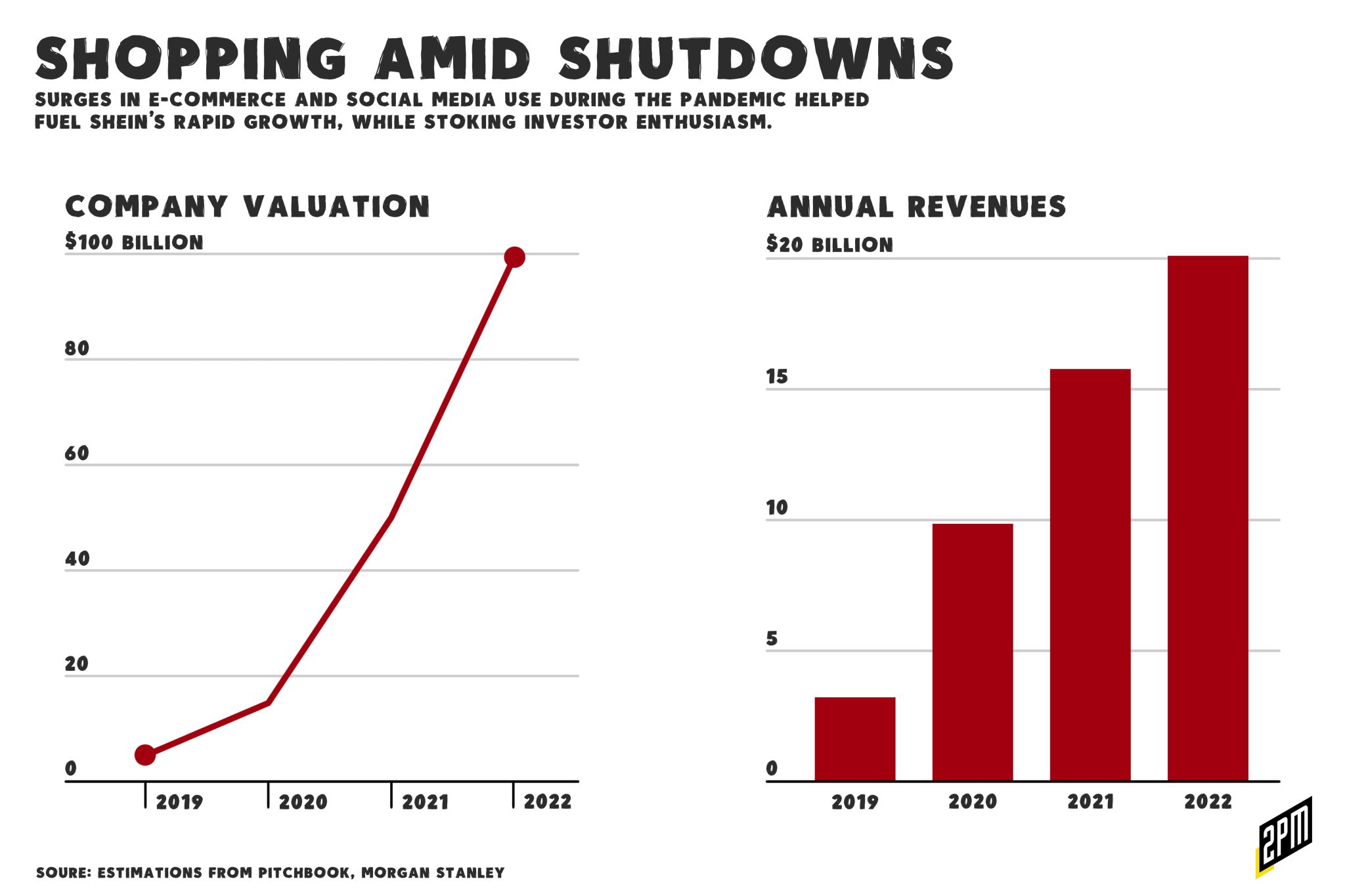
वैश्विक निवेशक, जिनके लिए पर्यावरण, सामाजिक और शासन (ईएसजी) मामलों में उच्च मानकों को बढ़ावा देना तेज़ी से प्रचलन में है, भी इसी तरह प्रभावित हैं। उन्होंने शीन का मूल्यांकन $100 बिलियन तक बढ़ा दिया है, जिससे यह टिकटॉक की चीनी मूल कंपनी बाइटडांस और एलन मस्क की स्पेसएक्स के बाद दुनिया का तीसरा सबसे मूल्यवान स्टार्टअप बन गया है। ब्लूमबर्ग के अनुसार, शीन की कीमत अब एचएंडएम और ज़ारा की मूल कंपनी इंडिटेक्स की संयुक्त कीमत से भी ज़्यादा है।

हालाँकि शीन का अभिनव व्यावसायिक मॉडल उपभोक्ताओं के लिए कीमतें कम कर सकता है, लेकिन नियामकों का कहना है कि शीन ने सस्ते श्रम, नकली सामान और कृत्रिम बुद्धिमत्ता (एआई) से प्रेरित डिज़ाइन सॉफ़्टवेयर के दम पर अपना परिधान साम्राज्य खड़ा किया है, जो उपभोक्ताओं को पुराने कपड़े त्यागने के लिए प्रोत्साहित करता है और ऐसी कीमतों पर बेचता है जो दुनिया के लिए हानिकारक हैं। ये शिकायतें, और हाल ही में ई-कॉमर्स में आई मंदी, कंपनी के प्रभुत्व को और भी अनिश्चित बना देती हैं।

फॉर्च्यून का यह कहना कि, कई शब्दों में कहें तो: "शीन का पर्यावरण पर प्रभाव अंततः उसे बर्बाद कर देगा," पूरी तरह से गलत है। क्यों? फ़ास्ट फ़ैशन के लक्षित बाज़ार में एक संज्ञानात्मक असंगति है। क्या कोई इंस्टाग्राम के लिए $13 के कपड़े खरीदकर ग्रह को बचा सकता है? अब तक, फ़ास्ट फ़ैशन कंपनियों ने अपना प्रभुत्व तभी खोया है जब उनकी जगह तेज़ कंपनियों ने ले ली है जो कम दामों पर नए ट्रेंड्स ला सकती हैं। चाहे शीन की नापाक हरकतें ग्राहकों को समझ न आएँ या जानबूझकर नज़रअंदाज़ कर दी जाएँ, अंततः इससे कोई फ़र्क़ नहीं पड़ता। जो ग्राहक कपड़ों की सस्ती कीमतों के कारण उनकी ओर आकर्षित होते हैं, वे आमतौर पर वही नहीं होते जो यह पूछने के लिए रुकेंगे कि किसी कपड़े की कीमत इतनी कम क्यों है। जो मायने रखता है वह यह है कि सस्ते विकल्पों के सामने, युवा उपभोक्ता फ़ास्ट फ़ैशन की खरीदारी करेंगे।

शीन के उदय के पीछे कई कारक काम कर रहे हैं। सोशल मीडिया ने फ़ैशन के ट्रेंड चक्र को तेज़ कर दिया है। टिकाऊ फ़ैशन बेहद महँगा है और उपभोक्तावाद के बदलते चलन ने, कई लोगों के लिए, यह तय कर दिया है कि फ़ैशन कोई निवेश नहीं है, कम से कम ट्रेंड के लिहाज़ से तो नहीं। जब कंपनियों को ज़्यादा टिकाऊ बनने के लिए प्रोत्साहित करने की बात आती है, तो अक्सर उपभोक्ताओं को "अपने पैसे से वोट देने" के लिए ज़िम्मेदार ठहराया जाता है, लेकिन यह कभी भी पूरी तरह सच नहीं रहा है। ग्राहक वही खरीदेंगे जो आसानी से और किफ़ायती तौर पर उपलब्ध हो, खासकर जब वे युवा हों।

शीन खुद एक ब्लैक बॉक्स है। यह अपने कपड़ों की सोर्सिंग और निर्माण कैसे करता है, इसके बारे में बहुत कम जानकारी सार्वजनिक की जाती है, लेकिन आंकड़े और कीमतें खुद ही सब कुछ बयां कर देती हैं। कंपनी ने अपने टिकाऊपन प्रयासों के बारे में खुलकर बोलना शुरू कर दिया है। वोग इसे ग्रीनवाशिंग कहता है:

प्रत्येक सप्ताह, वैश्विक उत्तरी देशों से कांटामांटो बाजार में 15 मिलियन वस्त्र आते हैं, जिससे वहां का स्थानीय वस्त्र उद्योग नष्ट हो जाता है।

इसने ESG के एक वैश्विक प्रमुख को नियुक्त किया है और हाल ही में 50 मिलियन डॉलर के फंड की घोषणा की है जो इसके पर्यावरणीय प्रभाव को कम करने और कचरे की समस्या से निपटने के लिए इस्तेमाल किया जाएगा। यह 50 मिलियन डॉलर की एक बूंद के बराबर है जो टिकटॉक, स्नैपचैट, इंस्टाग्राम और कार्दशियन के वफादारों के बाज़ार पर शीन द्वारा किए गए कहर को कम नहीं कर पाएगा। इस हफ़्ते, इसे OR फ़ाउंडेशन के साथ साझेदारी के लिए प्रशंसा मिली, जिसे यह अकरा, घाना में कपड़ों के कचरे से निपटने के लिए तीन वर्षों में 15 मिलियन डॉलर देगा, जहाँ बहुत सारे बेकार कपड़े फेंके जाते हैं।

यह लैंडफिल पर पड़ने वाले प्रभाव की वास्तविकता से ध्यान भटकाने के अलावा और कुछ नहीं है। शीन द्वारा कचरे को उजागर करना और इस मुद्दे पर ध्यान आकर्षित करने के लिए धन दान करना कपटपूर्ण माना जा सकता है। सौभाग्य से, एच एंड एम भी कुछ ऐसा ही कर रहा है, और एआईआई के उत्तराधिकारी नए संगठन की ओर से लुलुलेमन के साथ मिलकर 250 मिलियन डॉलर देने का वादा कर रहा है।

उन्होंने कहा, "हम यह दर्शाने की कोशिश कर रहे हैं कि यह जलवायु परिवर्तन से जुड़े सभी कार्यों का केंद्रबिंदु है और टेक्सटाइल एक्सचेंज से लेकर फ़ैशन फ़ॉर गुड और कई अन्य सभी संगठन, जो कार्बन उत्सर्जन कम करने, समाधान ढूंढने और उन्हें पायलट प्रोजेक्ट में लाने के लिए काम कर रहे हैं, इसके सभी लाभार्थी हैं।" "यह एक सामूहिक 'हम' है। यह एआई को नहीं दिया जा रहा है, और न ही यह अन्य जलवायु कार्यों में जाएगा। यह एक केंद्रीय निधि का निर्माण कर रहा है जिससे हम सभी एक अधिक समेकित दृष्टिकोण अपना सकते हैं, बजाय परियोजना कार्य के विखंडन के, जो एक-दूसरे से बात नहीं करता और प्रयासों को दोहराता है।"

फैशन की शीन समस्या का समाधान दान, जनसंपर्क या गलत कामों की स्वीकृति से नहीं होगा। ज़्यादा कारगर समाधान सोशल मीडिया का तेज़ फ़ैशन से दूर होकर स्थिरता की ओर रुझान बढ़ाना होगा। लेकिन इस समस्या के समाधान के लिए जेनरेशन ज़ेड ग्राहकों पर निर्भर रहना उचित नहीं है। अब यह स्वीकार करने का समय आ गया है कि कोई भी नेकदिल ग्राहक लाखों लोगों की पसंदीदा रिटेल मशीन को नहीं रोक सकता, क्योंकि नए ट्रेंड आते रहते हैं और टिकटॉक उन्हें सभी के अनुकरण के लिए प्रसारित करता है।

2PM टीम द्वारा

No. 274: Merch has become fashion

फेसबुक-विज्ञापन कॉपी 4
Cofounders of Everybody.World

The word merch is synonymous with throwaway. Or at least it used to be. In 2PM’s leading story, Quartzy discusses the changing demographics that have influenced the types of products that luxury brands sell. Gone are the days when famed fashion houses like Gucci focus solely on traditional luxury fashion. Today, their products reflect an affinity for sweat pants, tennis shoes, and modern t-shirt patterns.

This has trickled on down to the merchandise industry. Younger millennials and Gen Z’ers wear merch as a fashion statement and luxury has adopted this burgeoning trend. For merch providers, this means that the American Apparel / LA Apparel aesthetic has given way to something new patterns, styles, and definitions of inclusivity.

2PM recently took a deep dive into the types of merchandising campaigns that are moving the concept of merch away from throwaway and towards luxury. In this archived brief, we explored everything from platforms used to preferred t-shirt patterns and blanks.

Member Brief No. 11: Mega Merch 101

Social media and the normalization of digitally vertical native brands have enabled artists and influencers to create online retail brands as a primary source of revenue. In this report, we will break down best practices – including some insights from our editor’s work with a certain Youtube creator.

Bain Capital released a 2017 report on global luxury that emphasized this shift driven by millennial consumers. Here is an important excerpt:


The Millennial State of Mind: Success in the next decade requires brands to refocus on their customers to better anticipate and cater to their needs. The younger generation will be key as millennials and Gen Z will represent 45 percent of the global personal luxury goods market by 2025. Still, when analysing behaviours, it is more correct to talk about a “millennial state of mind,” which is increasingly permeating across all generations and is thus more a psychographic phenomenon rather than a purely demographic one.

Read the rest here.


To summarize Bain Capital, the Gen Z interpretation of luxury fashion has permeated throughout the entire industry. This has affected consumer industry across footwear, accessories, and apparel. There are merch providers that are well-positioned here.

Business of Fashion’s wrote a recent feature on the two founders of Everybody.World. The write up did a masterful job of explaining how one merch provider built a direct-to-consumer brand that fueled their high growth wholesale business. By working with a curated selection that represents the zeitgeist. This includes: style contributors, graphic designers, a well-designed basics line, and the one staple that has become the go-to for festival merchandisers.

Quality, too, has become increasingly important as concert merch has evolved from souvenir to fashion statement, underscored by merch-like pieces released by luxury brands including Gucci, Balenciaga and Vetements. “The demand is absolutely higher than when I started doing this six years ago,” said Allen, who sourced roughly 70,000 pieces of merch for 2018’s Coachella Valley Music and Arts Festival. “And the expectations for the product itself are definitely higher.”

That’s why, this year, Allen looked beyond the typical “blank” T-shirt companies — think Gildan, Bella Canvas and Hanes — to boost Coachella’s offering.

Read more here (unlocked)

Cofounders Iris Alonzo and Carolina Crespo have done an extraordinary job of positioning the Everybody.World brand by building a strong direct-to-consumer business. Something that LA Apparel head Dov Charney is having problems with, this second time around. Due to the successes that they’ve had with wholesaling their famed ‘trash tee’ for $2.90/unit, wholesale traction has allowed the two founders to grow a substantial, higher-margin, direct-to-consumer business. Their main vehicle has been zeitgeist-driven basis and unexpected collaborations with contributors (even Virgil Abloh is listed on the site).

In Q2, merchandise drops have grown to become a major part of the creator narrative. Beyonce’s Coachella performance and her subsequent eCommerce drop was studied in Member Brief No. 11. And above, you’ll see high profile merchandise drops to include: Kanye West, Kid Cudi, and Nas.

As creators continue to emphasize merchandising as an extension of their art (and business), it’s imperative for providers to observe the shifts in the meaning of luxury and how Gen Z consumers have begun to shape the merchandise-turn-fashion industry. For the time being, tees are no longer a dress-down device. And it’s not just about what’s on the shirt, these days. Patterns and fit matter more than ever.

Blanks are no longer viewed as commodity products to a growing segment of American buyers. In fact, the industry is supplying a key component of Gen Z’s fashion identity. There are several providers that are well positioned to grow with the youngest of American consumers.

इस मुद्दे पर अधिक जानकारी यहां पढ़ें।

वेब स्मिथ द्वारा | लगभग 2 बजे

Editor’s note: the next 2PM database (releasing 6/21) will include the most notable of merchandising providers to include Pittsburgh, Pennsylvania’s “Blank” run by Michelle Sharp. This will be a growing database. Join the executive membership for access. 

No. 272: A “Tier A” Path Forward

tierapathforward.jpg

The worst thing to happen to the American mall is the boom of online-first modern luxury companies. And it’s also the best thing to happen to the American mall.

There are 1,100+ malls in America and approximately 320 are graded Tier A. We have an oversupply of malls but that does not mean that traditional, anchored shopping centers no longer have a place in consumerism. We’d argue that Tier A malls have yet to see their best years. We expect their footfall traffic KPIs to grow, while B and C tiered malls continue their trends toward repurposed real estate and other methods to maintain footfall traffic KPIs (mall opportunity, sales opportunity, and store performance).

Suzanne Mulvee, director of research at CoStar, cites that “lower-quality malls in markets with smaller populations and lower incomes will continue to close” —a trend that persists today. And here’s a data based position:

Green Street Advisors, a research firm, forecast a 6.0 percent drop in market revenue per available foot (RevPaF) for class-B and -C malls from 2018 to 2022, versus a 0.5 percent increase for class-A malls during the same period. 

Private market values of class-B and -C malls have also dropped the most since January 2017, according to Green Street, plunging 27.0 percent and 25.0 percent, respectively, year-over-year. Meanwhile, the values of class-A malls declined by 14.0 percent year-over-year.

National Real Estate Investor

So what does this mean for digitally vertical native brands (DNVB), old and new? In short, online-first brands should be positioning their product offering for inclusion in Tier A malls. First, let’s look at the established. A retail presence for DNVBs varies, as such:

  • Harry’s has a prominent position in J. Crew shops (Tier A)
  • Shinola has marquee positioning as stand alone stores (Tier A)
  • Mizzen + Main has prominent position at Nordstrom (Tier A)
  • Bevel has showroom real estate at Macys (Tier A / B)
  • Warby Parker has great stand alone stores (Tier A)
  • Greats has marquee positioning at Nordstrom (Tier A)
  • Ministry of Supply has great stand alone stores in Tier A areas
  • Homage has great stand alone stores (Tier A)
  • Bonobos has stand alone stores and Nordstrom positioning (Tier A)
  • MeUndies has positioning at Nordstrom (Tier A)
  • Goop is opening sponsored pop ups (Tier A)

There are very few presences in Tier B malls and virtually no DNVB presence in Tier C malls. These brands have done a wonderful job positioning themselves as modern luxury companies. They’ve been incubated online for five to ten years and they’ve become prominent enough to live as lifestyle brands in traditional retail spaces. It’s a forgone conclusion that omni-channel operations should be a focus for DNVBs; retail real estate analysis is a skill that is becoming more and more important. And DNVB’s are well-positioned to benefit from the Tier A adoption of the online brands. Recall this quote from Issue No. 265:


2PM’s Meghan Terwilliger had this to say:

Luxury, however you define it, is a brand’s embodiment of characteristics that make it desirable. Historically, those characteristics have been more ‘What’ features like quality, exclusivity, and cost. You can still define luxury as characteristics that make a brand desirable, but those characteristics have shifted. Quality is table stakes.

ब्रांड को और अधिक वांछनीय बनाने वाली विशेषताएँ हैं 'कैसे' विशेषताएँ, जैसे उत्कृष्ट ग्राहक अनुभव (मैं ब्रांड का अनुभव कैसे करूँ), सार्थक ब्रांड मिशन (वे कैसे कुछ वापस देते हैं/बदलाव लाते हैं), और सामुदायिक जुड़ाव। क्या यह कलाकार द्वारा निर्मित और अत्यधिक महंगा है? शायद नहीं। लेकिन अगर यह एक ऐसा उत्पाद है, या यहाँ तक कि एक संपूर्ण अनुभव भी है जो अत्यधिक वांछनीय है, तो इसे एक शानदार ब्रांड माना जा सकता है। DNVBs के पास आधुनिक विलासिता को परिभाषित करने वाली विशेषताओं का समर्थन करने के लिए एक बेहतरीन बुनियादी ढाँचा है।


There are DNVBs that are launching daily. It is important that these brands understand that online retail mechanics has its limits. For these brands to expand into $30 million or more in annual revenue, omni-channel strategy can provide longterm growth. Additionally, this can reinvigorate top funnel sales through online channels.

Here are the top five suggestions for DNVBs launching today:

  • Master the first product. Bonobos began with pants, Mizzen + Main with a single white dress shirt, and Bevel with one blade.
  • Develop a strong sense of product ambassadorship. Mizzen + Main targets millennials, but the most capable buyers are between the age of 34-45. Developing a sense of loyalty with them can pay dividends. For their peers that don’t shop online, they’ll become a top funnel driver of them to your brick and mortar locations.
  • Avoid discount promotion, even at the beginning. Price stability over time is crucial. The moment that a brand is seen as a discounter, the Tier A mall demographic loses interest (with few exceptions).
  • Emphasize advertising to Tier A mall consumers. When DNVB’s grow online, they need to focus on the customers that possess the greatest LTV (lifetime value) potential. This correlates with Tier A mall shoppers.
  • Establish relationships with non-competitive retailers. It can be a powerful signal of longterm viability when existing brands co-sign your early product. This is most often seen by way of product collaborations, cross-promotion, or merchandising your products in their flagship stores.

Retailers that appeal to…the upper class are thriving. One look at Houston’s Galleria, Columbus’ Easton Town Center, or Miami’s Bal Harbour Shops will confirm as such. This is the future that many in retail are planning for. So no, retail is not dead. But retail is leaving the middle class behind because, frankly, so are we.

2PM Member Brief No. 5

In the first sentence, I wrote that online retail is the best and worst thing to happen to malls. In many ways, this is true. The shuttering of weaker retailers and shopping centers is long overdue. Experts attribute this trend to the emergence of online retail brands (and the excessive private equity debt that these retailers accrued to compete with them).

We have more retail real estate than any developed country on earth. Malls are not dying, the bad ones are. While eCommerce efficiency is appealing to digital marketers, the brick and mortar channel is golden for brand operatives who are establishing their brands as modern luxury products. Marketing is arithmetic, whereas brand-building is more of a subjective art. If you were to ask the chief executives at each of the aforementioned brands, they would point to their brick and mortar successes as great milestones. There will be fewer malls in the coming the years, but an early bet on the ones that remain will position young DNVBs for omni-channel success.

Read the rest of the issue.

By Web Smith and Meghan Terwilliger | About 2PM