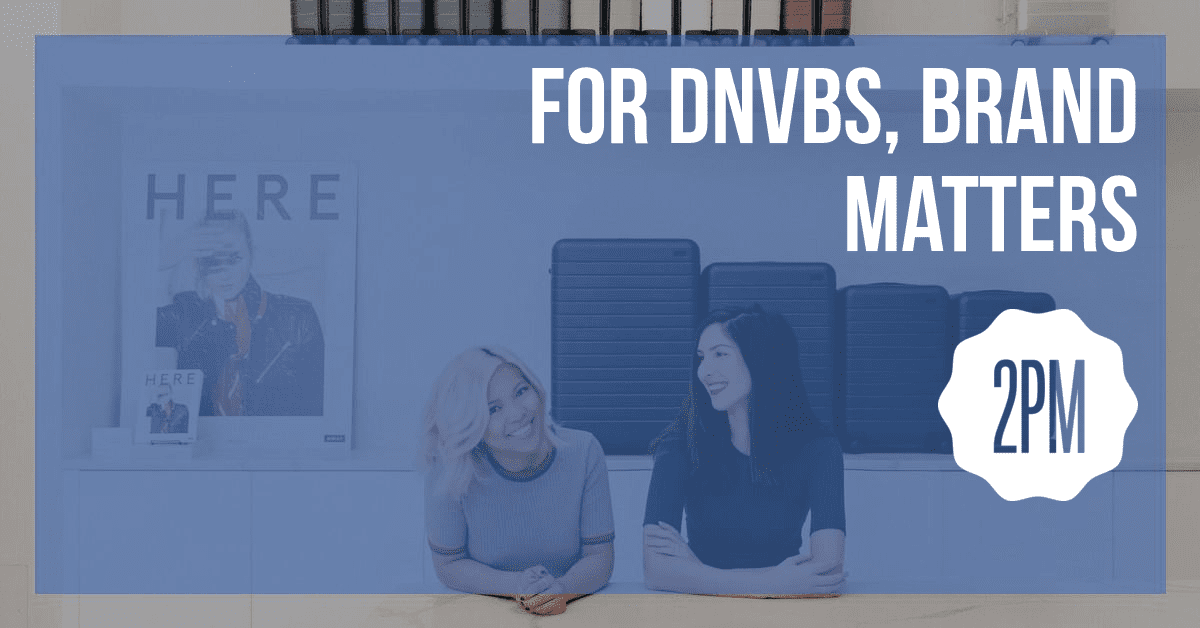
No. 270: For DNVBs, brand matters.

facebook-ad copy 4

A look at Raden’s shuttering (DNVB No. 119) and Away’s persistence (DNVB No. 40). With the news of Raden shuttering and their founder’s commentary on the online luggage industry’s outlook, 2PM has a deep dive into what may have influenced Raden’s shuttering (it wasn’t just regulation). And Away cofounder and CEO Steph Korey provides commentary on what will shape Away’s bright future.

Founder of Raden, Josh Udashkin had this to say to Conde Nast Traveler about the future of the smart luggage industry: 

I hate to say this, but I think [the future] is nonexistent. All these companies rely on word of mouth, but buying this product now gets you hassled. I don’t see how you can continue selling it.

We disagree. Millennial consumers are practical, savvy, and even slightly territorial. These consumers seek brands that appeal to their lifestyles, their timing, their values, and their personal preferences. The narrative matters because their lifestyle matters.

The key to building a strong DNVB can be attributed to perceived quality, price value, and ease of purchase.

Convenience Change + Price Change + Perception of Quality Change > 0 

Convenience: ease of purchase, superior customer service, ease of return, and quality warranty.

Price: is the price comparable and or cheaper than the premium incumbent brand prices.

Perception of quality: how is the brand perceived? Is there an affinity for the product?

Whereas, if the DNVB’s sum “change” is greater than zero, the DNVB may be a better option than the incumbent. It’s through this lens that DNVBs and CPG brands have been able to position their products against stodgier, traditional brands. One of the keys to building an online retail presence is emphasizing both components of a winning formula: product and narrative.  That narrative communicates quality, community, and brand equity around the product. For DNVBs with $5M or less in total funding, you can argue that the narrative is as important as the product itself.


Issue No. 254: An Open Letter to DNVB CEOs: 

DNVB executive teams build two products from scratch, supply and demand:

  1. The product: the shirt, or the luggage, the pants, the shades, the coats, or whatever it is that people know you for.
  2. The brand: the aura of that product, the name recognition, the association, the behind-the-scenes partners, the spokeswomen, the ambassadors, the inevitability of success.

Both Raden and Away were founded in the early months of 2015. Raden raised a seed investment from Lerer Hippeau, First Round Capital, and Gin Lane – the famed and de facto kingmaker of DNVBs. Away raised a star studded seed round that included Andy Dunn, the now-Walmart executive who coined the DNVB acronym.

When Udashkin was interviewed by Loose Threads in 2015, Udashkin indicated that product was the entirety of his focus. He went on to add that the product’s narrative wasn’t something that Raden was going to emphasize.

After spending almost a year in the prototype phase, working out of San Francisco, Los Angeles, Montreal, and Taiwan, Raden emerged as a product company that rejected the imagery and celebrity of lifestyle brands.

Udashkin went on to say: “How can you have a lifestyle on day one around your product unless you’re faking it? I think that works in the short term, but over time the customer gets smarter. If you don’t keep working on your product, eventually you lose.”

Cofounders Steph Korey and Jen Rubio took a nearly opposite approach to building their competing brand. In a July 2017 segment in Inc Magazine called “How I did it”, here is what was said about the duo:

Steph Korey and Jen Rubio had a problem. Their planned launch of Away, a new luggage brand, was fast approaching–and none of their suitcases would be ready to sell in time. Luckily, the two had a social media trick packed in their bags. They turned a proven retailing tactic, the preorder, and an idea for a book into a campaign that went viral on Instagram and beyond.

Burt Helm, Inc. Magazine

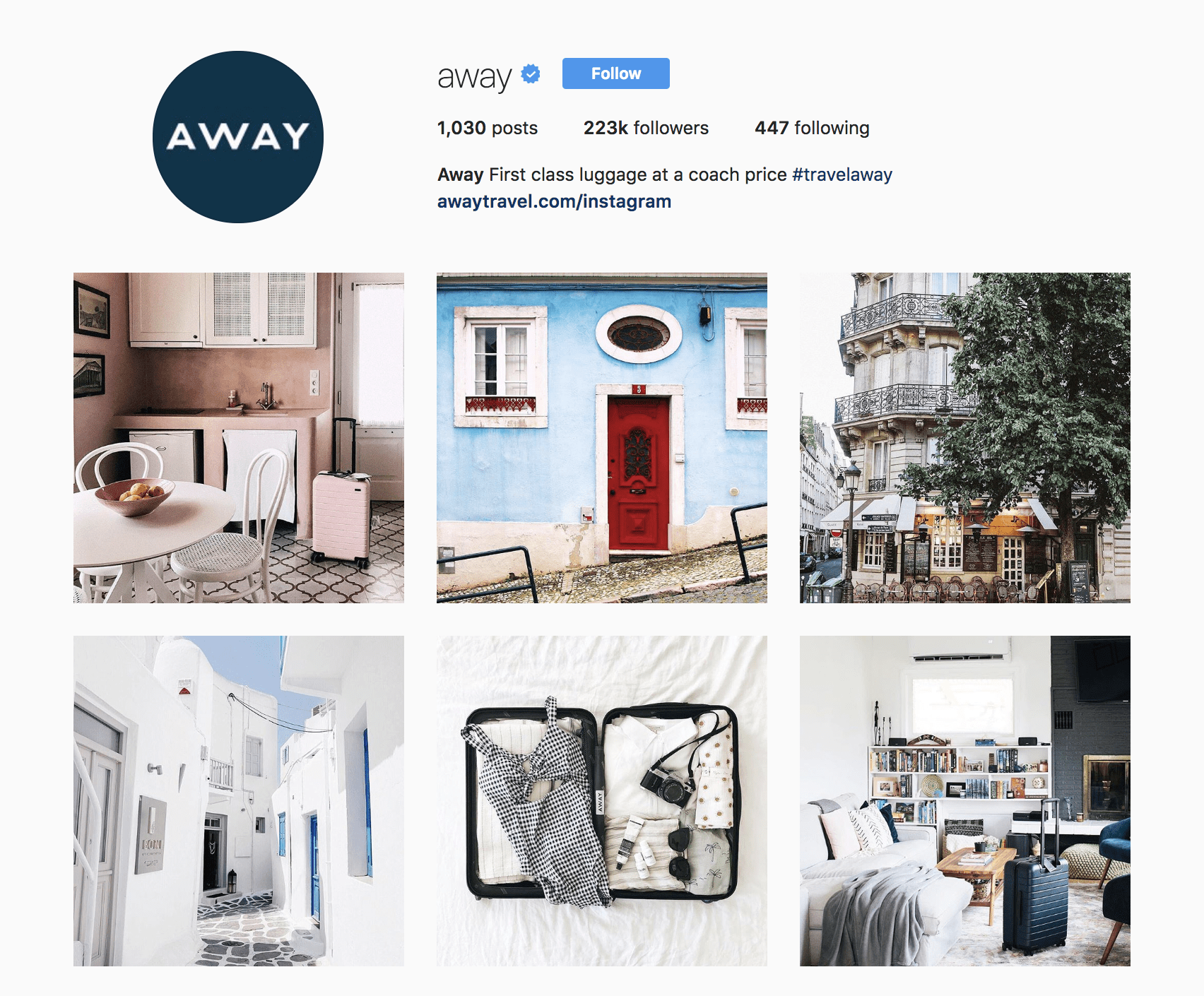
This thinking permeates through their entire product position. Whereas Raden’s Instagram focused solely on the products being sold, Away’s Instagram account features as much lifestyle and usability as it does the products that Away sells.
Screen Shot 2018-05-21 at 12.28.07 PM

While Away focused on the destination and brand affinity (to include a print magazine called “Here”), the relationship that Raden maintained with customers was altogether different than the one that Away hopes to continue. The difference between the two approaches greatly affected each brand’s product offering: Raden’s was narrow, Away’s is wide. Here’s a pivotal point in today’s featured article by Fast Company:

He walks me through the math. The target market for a direct-to-consumer suitcase brand is relatively narrow. This is not a mass purchase. Your audience is people with enough disposable income to spend between $200 and $400 on a carry-on, but also be digitally savvy enough to be willing to buy the case online, rather than in a department store.

Once the startup has convinced someone within their target market to buy a carry-on, the relationship is basically over. With some persuasion, the brand can try to sell them a piece of checked luggage or perhaps another small travel accessory. But the lifestyle value of each customer is relatively small, compared to other categories. A direct-to-consumer luxury shoe brand like M.Gemi can sell a woman a new pair of $300 shoes twice a year for the rest of her life. Everlane can sell a customer wardrobe updates every month.

Elizabeth Segran, Fast Company

Here Udashkin suggests that he did the right thing by focusing on product superiority alone (just one of the three components to the DNVB formula). But because he saw no value in building a brand and narrative around Raden, there were fewer alternative products that he could offer to his existing customers. This, in addition to his luggage’s immovable battery and the startup’s shorter runway influenced his position that the luggage maker had no choice but to cease operations. He also suggested that there was no market for these types of products in the long run, a far-reaching assertion.


In an email to 2PM, Away CEO Steph Korey explained Away’s position: 

A brand’s success isn’t determined by the amount of money it raises, or by any other one thing, but by the right combination of a lot of little things.

For us, it’s been the combination of having a customer-obsessed approach to everything we do (taking the time to listen to our customers, deeply understand what they’re telling us, and then quickly acting on it), being conscientious about the way we introduce them to the brand in the first place (ensuring what we’re marketing will be interesting to who we’re marketing it to, and simultaneously creating a narrative that’s authentic to who we are as a brand no matter the channel or intended audience), and not limiting ourselves to any one product or plan for the future (expanding from one suitcase to dozens of travel goods since launch, and setting our sights on fixing everything that’s currently wrong with the travel experience).


One of the early lessons in DNVB branding is one that cannot be explained by analytics and logic, alone. It’s too subjective. Phil Knight’s once-fledgling shoe operation sold shoes but Nike was never a shoe company: it was a company that enabled champions. Tesla sells cars but Tesla is a company for futurists. Apple sells computers but it’s a company for creators.

For aspirational products, consumers choose brands that fit their lifestyle, belief system, and goals. From the very beginning, Away achieved something that very few DNVB’s understand early on. Building the product is only half of the battle. This means that no matter what arduous regulations they may encounter, they will maintain a canvas to build products that are relevant to their community of passionate, millennial travelers. It’s likely that as traditional sales continue, you’ll see a growing number of SKUs, styles, and add-ons that are beloved by millennial travelers and commuters. Yes, Steph Korey and Jen Rubio sell luggage, but Away is a travel company. And Away will go where she wants.


Updates: On June 26, Away announced the Away x Dwayne Wade collaboration. On June 28, Away announced a $50M round of investment, one of the largest rounds by female founders in history. According to their Comms Director Cassi Gritzmacher:

With this latest round of funding, Away plans to further establish itself worldwide by extending to new markets; continue to expand its product line to create the one perfect version of everything you need to travel seamlessly; expand its physical retail footprint (opening 6 new stores by the end of 2018 in addition to its current New York, Los Angeles, San Francisco, and Austin locations); build on its existing social impact efforts (through its partnership with Peace Direct and through new initiatives); and create 249 new jobs over the next five years, transitioning the team into a 56,000-square-foot new Global Headquarters in its hometown of New York City.

Read more of the issue here.

By Web Smith and Meghan Terwilliger | About 2PM 

No. 269: Brands and Voice Commerce

facebook-ad copy 2

According to the Cowen Company, one in seven American consumers owns an Amazon Echo device. Additionally, ComScore notes that 50% of online searches will be voice controlled by 2020. The following is an actual sequence from earlier today.

Alexa, buy pants.

Amazon’s choice for pants is Goodthreads men’s athletic fit, five pocket chino pants. Navy, 29W x 34L. It’s $32.25 total including tax. Would you like to buy?

No thank you.

That’s all that I can find for pants right now. Check your Alexa app for more options. 

Here, Amazon recognizes my request and offers their own brand as the first option. This is a great opportunity for brands looking for a better way to reach new consumers. As consumer adoption of products like Google Home and Amazon Echo continue to accelerate, marketing officers must begin planning around voice as a retail channel. It’s common knowledge that voice assistants will directly and indirectly narrow consumer choices. This is done one of two ways: (a) by recommending goods that are promoted by a brand or (b) by recommending brands and products owned by the platform (see: Amazon’s private labels). For the sake of this argument, 2PM will focus on Amazon’s Echo. It’s a powerful tool with daily relevance in households around the country.

Amazon also debuted Echo Look, a new Alexa-powered device that the company dubs a “hands-free camera and style assistant.” The addition of a camera enables the device to record and comment on its owner’s clothing choices, using a combination of machine learning and human stylist feedback. This advice also takes the form of recommendations, which can drive revenue to Amazon Fashion, and specifically its private-label brands.

Amazon is iterating on and rolling out more features for the Echo Look, including curated content and even crowdsourced (human!) style feedback. It also created an AI algorithm for designing clothes and patented an AR mirror that lets you virtually try on clothes. The value of such a mirror was validated recently by L’Oreal’s acquisition of ModiFace, a company that produces technology that powers similar applications in beauty AR.

Amazon’s Next Conquest Will Be Apparel, Tech Crunch

Through the use of products like the Echo Look – hardware that allows users to layer visual context on top of voice commerce – consumers are becoming comfortable with Echo as a fashion consumer tool. For executives in the fashion industry, it’s an opportunity to establish an existing brand in a new channel.

Product. Establish a six month test of your brand’s products on Amazon. For young brands with tremendous brand equity this can be terrifying, but these tests are commonplace. Just three days ago, Mizzen + Main listed their retail brand’s company’s basics. In a savvy move, rather than listing the entire catalogue, they focused on the brand’s evergreen products. These are the types of products that can lead to strong SEO that will benefit the company whenever they choose to list seasonal products.

Software. Build your brand’s voice application for Echo. To build consumer connections and facilitate the path to purchase, it could be worthwhile to provide your existing consumers a familiar destination on a new platform. Not only will a branded app experience make it easier to do business with you over voice, experts say that it improves SEO on Amazon.com and through Echo’s product rankings.

Marketing. In addition to emphasizing voice SEO strategy to drive discovery, brands are also measuring voice app data to improve consumer engagement, they are enabling product sales within the branded voice apps, and they are promoting their branded voice app through earned, paid, and social media.

Brand. In 2002, BMW innovated by hiring a barely known British actor to star in a then-revolutionary online ad series called The Hire. Costarring Mickey Rourke, Adriana Lima, Don Cheadle and directed by Guy Ritchie, Ang Lee, John Woo, and Tony Scott – this was a significant investment into entertainment by the German car manufacturer. But nearly 20 years later, it’s not the visuals that consumers remember. It’s the actor’s voice.

In the late 1990s BMW noticed their profits were sliding a bit and decided to start targeting internet-savvy customers, a very forward-thinking move at the time. They asked their longtime parter Fallon Worldwide to come up with a campaign that was more than just pretty BMWs sweeping through the countryside like in the magazine and TV ads, something with a James Bond-esque hero who uses BMWs in a variety of different situations.

BMW’s The Hire Was Ahead Of The Curve And Still Has No Equal

Clive Owen starred and narrated the entire series, a project that returned in 2016 under the BMW Films umbrella. In a way, BMW’s marketers gave the brand a human voice and it was such an effective marketing tool that Clive Owen’s intonation remains eponymous to the brand.

The Hire may have been a decade ahead of its time, but it was right on time for BMW’s return to relevance. For retailers who seek to establish their equity over a new channel, remember BMW’s bet on the internet. In a time when scripted podcasts are driving millions of downloads and attracting tens of millions in advertising dollars, consider the potential relevance of a retailer who invests in making their physical goods relevant to audio-hungry consumers.

Once you have command of a new medium. commerce-efficacy is a but one step away.

Read the rest of the issue here.

 By Web Smith and Meghan Terwilliger | About 2PM
No. 268: The Billions Effect

facebook-ad copy 2

Affleisure: affluent leisure. Showtime’s hit series Billions peers into the life of Bobby Axelrod, a 9/11 survivor who rose through the ranks to become a billionaire hedge fund investor only to establish a rivalry with U.S. Attorney Chuck Rhoades. Axelrod is loosely based on hedge fund manager Steve Cohen and is described as a man from humble beginnings. This is the appeal of the most polarizing character on television. And he is just one part of premium cable television’s most talked about show.

If you’ve built a great product, you’ll need an audience. And if you’ve built a captive audience, you’ll need a great product. The study of content x commerce shouldn’t be reduced to digital publishing.  We see examples of media properties’ influence on commerce all around us. As such, analysts cannot ignore the influence that Billions and, particularly, Damien Lewis’ portrayal of ‘Bobby Axelrod’ has had on apparel consumers.

Historically, a media property’s proof of influence is the measure that drives advertising revenue. Thanks to a shift to streaming media, media conglomerates like Showtime, Inc. will measure this data in new ways. Namely: how will this media property advance our subscription business? 

The show, which averages between 4.5-to-5 million weekly viewers across platforms, has a very loyal legion of fans that via word-of-mouth, have helped grow the show’s viewership season-over-season. Throughout season two, the series grew on Sunday nights by more than 35% from premiere-to-finale. And, the season three premiere was the show’s highest-rated ever with the March 25 debut up 23% from last year.

Fans Love Billions, Forbes

Taking note of the viral spread of pop culture trends based on influence, Showtime recognized the opportunity to drive an additional revenue stream beyond the standard media subscriptions and event sponsorship (boxing, etc.).


Here is a recap from Issue No. 252: Content x Commerce Super Powers:

Billion’s Axe Capital is one of the most intriguing fictional companies on television. It should be no surprise that I’ve stumbled upon a handful of sophisticated finance-types wearing these branded hedge fund vests on a spring day in Manhattan. They are in on the joke.

But more than just intellectual property hawking, Showtime is innovating here. Their commerce software is capable of overlaying store content on screen during broadcasts.

Connekt’s patent for T-Commerce enables seamless and secure viewer engagement and checkout by combining consumer profiles with pre-existing registration services.

Showtime is preparing for an Apple TV-driven entertainment world where purchasing products is as simple as authorizing your iTunes account to spend $44.95 for the hoodie that Bobby Axelrod was wearing.

See the Showtime store here.


As media and branding continues to converge, controlling the ecosystem is key for many industry players. One of 2PM’s capstone beliefs is that success in merchandising is a foremost indicator that a publisher’s existing community can grow by word of mouth. And without the pull of fickle social networks or a weakening advertising business.

Web Smith on Twitter

Bobby Axlerod is influencing white collar soccer dads. Everyone is dressed in head-to-toe, all-black, biz-athleisure.

This is where cultural impact comes into play. Unlike viewership and eCommerce sales, culture can be difficult to quantify. But it’s apparent that the show is influencing its target demo: 24-39 year old males.

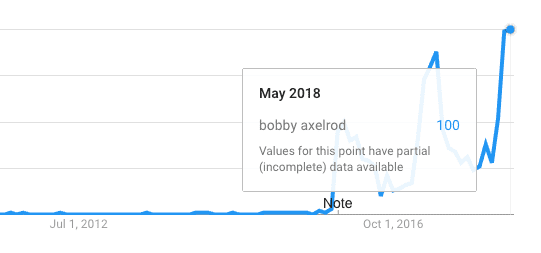
Type “Bobby Axelrod” into Google and the first recommendation that pops up is “Bobby Axelrod hoodie.” So, to satisfy your curiosity: Mr. Axelrod, the cool-as-an-ice-cube-in-Alaska protagonist of Showtime’s series “Billions,” wears Loro Piana zip-ups. They’re cashmere and just in case you’re really interested in dressing like the man who makes the billions on “Billions,” each one costs $2,295. 

How to Dress Like a Billionaire, Wall Street Journal

There is a palpable shift in both the style of clothing and the color palette used by the upper-middle class fans of the show in Silicon Valley, Los Angeles, New York, and even the metropolitan midwestern cities. Brands are beginning to partner with Showtime to capitalize on this.

Last week, Brooklyn’s Greats Brand released an ultra-limited edition Axelrod shoe; 100 pairs of the premium Italian-suede shoes sold out in under 17 minutes. Viewers are so drawn to morally-ambiguous Bobby Axelrod that they’re buying shoes in his name.

Screen-Shot-2018-05-07-at-3.41.18-PM.png
May 2018 saw peak search traffic for the ‘Billions’ character

CEO of GREATS Brand (2PM No. 73), Ryan Babenzien had this to say in defense of the collaboration:

Bobby Axelrod is a man from humble beginnings. A desire to escape his means and prove his ambition drove years of hustling and grinding. Add no small amount of cunning, and eventually Axe made himself into one of the most powerful men on Wall Street: a bona fide billionaire. We admire Axe for his ambition as much as we do for his style. Favoring a well-worn pair of jeans and Metallica t-shirt over the obvious power-suit, Axe carries himself with the confidence and understated elegance that we appreciate here at GREATS. With Axe as our inspiration, we partnered with Showtime to create our richest Royale yet.

Billions has achieved a television milestone like only a handful of shows before it. It’s influenced men’s fashion by redefining business casual (specifically high dollar affleisure) for white collar workers. Babenzien’s aforementioned statement perfectly summarized the character’s appeal. The shoe collaboration further established the influence of the show’s culture and the virtuous cycle of water cooler chatter, media buzz, and search traffic around each week’s episode. Coincidentally, the most recent Sunday night was the show’s strongest in its three year history.

Read more of the issue here.

By Web Smith and Meghan Terwilliger | About 2PM