Memo: NIL Revisited / Brand Guide

The transformative potential of Name, Image, and Likeness (NIL) legislation has catalyzed a significant shift, particularly for sports outside of men’s basketball and football. This evolution presents an unparalleled opportunity for brands to forge partnerships that are not only financially lucrative but also rich in cultural and social capital.

This, along with a host of other positive indicators, suggests a renaissance for the marketability of sports and the athletes playing them – especially the athletes who are often relegated to third or fourth place in the fandom sweepstakes.

The emergence of athletes as pitchwomen and pitchmen has heralded a new era in sports marketing, one that promises an exciting time to be a fan or the athlete.

****

Outside of the highest tiers of football or men’s basketball, the most valuable partnerships will be found across the aisle. 2023 emerged as a landmark year for women in sports, a tipping point underscored by record-shattering events such as the NCAA women’s basketball tournament and the Women’s World Cup. 2024 is shaping up to be a continuation, according to Axios among many others:

San Diego Wave FC lost 2-1 Saturday night but drew 32,066 fans to Snapdragon Stadium, breaking its own NWSL home opener attendance record set last season.

And Front Office Sports recently dished on the marketability of Caitlin Clark versus two highly marketable male athletes in Bronny James and Caleb Williams, the future NFL No. 1 draft pick:

[Caitlin] Clark’s situation is unique: She’s entering the professional ranks after years of being marketed as a professional. Ryan Hoge, PSA’s president, says Clark has outpaced USC’s Bronny James, Heisman winner Caleb Williams, and other college stars in terms of PSA submissions.

Deloitte’s forecast for 2024, projecting revenues for women’s elite sports to surpass $1 billion — a staggering 300% increase from 2021 — underscores the burgeoning commercial viability of women’s sports, according to CNBC.

This meteoric rise in the financial stature of women’s sports can be attributed to a constellation of factors, including the magnetic appeal of young phenoms, alongside strategic investments in professional leagues and enhanced sponsorship opportunities. These elements collectively fueled the commercial dynamism and audience engagement characteristic of the contemporary NCAA sports landscape.

****

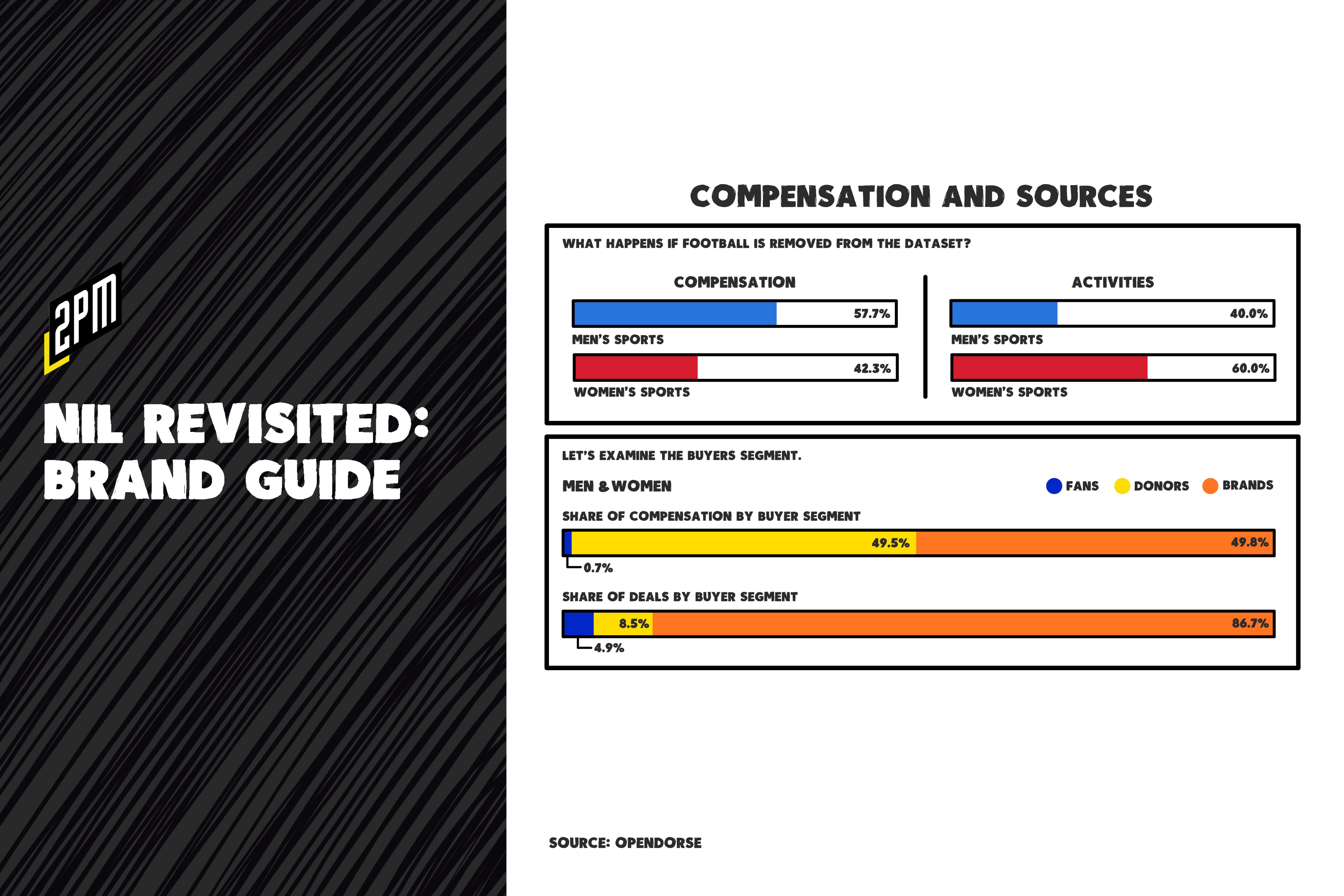
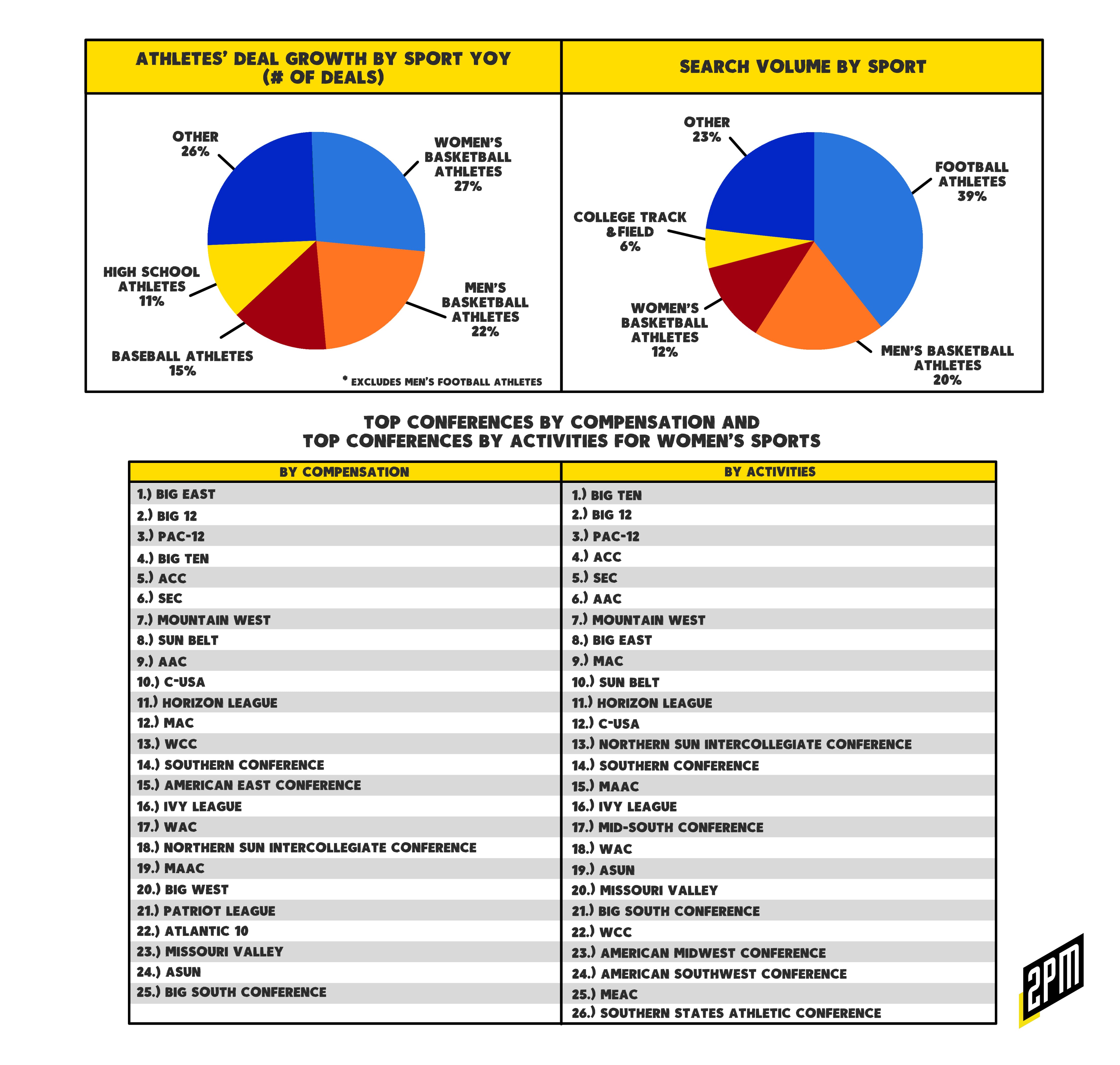
The implementation of NIL legislation in 2021 marked a watershed moment, enabling college athletes to monetize their personal brand through endorsements, thereby becoming pivotal influencers for brands targeting the lucrative Gen Z demographic. It also opened the door to athletes accepting payments from collectives of alumni and other interested parties. Outside of football, women’s basketball athletes have outpaced men’s basketball athletes in deal growth. Men’s basketball and football still maintain the highest interest by search volume.
This now three-year-old pivot has engendered a fertile ground for brand partnerships, significantly impacting the marketing strategies of companies across various sectors, particularly those in the athletic and athleisure domains.

Athletic fashion brand Vuori exemplifies this shift through its partnership with LSU All-American gymnast Livvy Dunne, who has become the brand’s first NIL athlete collaborator. Vuori’s Chief Marketing Officer, Karen Riley-Grant, emphasizes the alignment between Dunne’s “athletic expertise, determination, and positivity” and the brand’s core values, highlighting the success and authentic resonance of this partnership according to Forbes.

As Vuori’s partnership with Livvy Dunne has grown since 2021, so has her ability to collaborate with the brand.

The proliferation of NIL deals, as evidenced by Vuori’s partnership with over 400 NIL athletes, underscores the burgeoning opportunity for brands to engage with college athletes’ highly engaged fan followings. These partnerships not only offer brands a lower-cost avenue to penetrate the sports marketing realm but also enable them to leverage the personal and regional appeal of athletes, thus enhancing their marketing efficacy and reach.

Expanding Marketing Opportunities

The NIL landscape has democratized access to the collegiate sports marketing domain, allowing both established and non-traditional brands to engage with a previously inaccessible audience segment. As noted by Dan Lobring of Stretch PR, NIL provides an opportunity for individual athletes to break through the clutter, offering brands a novel pathway to capture the attention of the vast and engaged audience of March Madness and beyond. He recently spoke with Modern Retail:

It’s this unique moment where there’s obviously a ton of interest, which is great, but it also can be harder for brands to break through.

In April 2023’s Ted Lasso and Major League Soccer, I explained: “Women’s basketball figured that out and, in one season, leapfrogged the MLS and others in viewership thanks to the heroics and charisma of Caitlin Clark and Angel Reese.” Indeed, the Caitlin Clark effect and the record-breaking attendance at women’s sporting events signify not just the rising star of women’s sports but also the deepening well of marketing opportunities for brands. These events reflect an engaged and expanding audience base, ripe for brands to tap into through strategic partnerships. The remarkable viewership of the 2023 NCAA Division 1 championship game, attracting nearly 10 million viewers and NCAA women’s volleyball’s championship peaked at 2.1 million viewers according to the NCAA. To put this into perspective, the 2023 NBA finals was watched by just 1.64 million more than the NCAA’s women’s basketball title game. The NBA’s finals viewership is down 45% from its 20 year ratings highs.

****

The burgeoning domain of women’s sports, catalyzed by the advent of NIL legislation, represents a frontier of untapped potential for brands. The remarkable growth and increasing commercial viability of women’s sports have opened the doors to a plethora of marketing opportunities, enabling brands to introduce themselves to highly engaged and diverse audiences through authentic, values-aligned partnerships.

As we stand on the precipice of this new dawn in sports marketing, it is clear that the trajectory of women’s sports is not just ascending. The abilities, determination, and excellence that these athletes represent resonate profoundly with a broad spectrum of consumers, underscoring the invaluable role of NIL deals in shaping the future of sports marketing. Frankly, while college sports will always be about the money, women’s sports presents a better balance between the two realities: NCAA sports had a particular appeal built atop of the notion of the student-athlete and the fact that many of the best of those athletes are now compensated handsomely.

In the words of Karen Riley-Grant, “It’s about finding the right influencer partners…who embody the core values of [the] brand.” This ethos, captured by Forbes, encapsulates the essence of the opportunity at hand: to forge partnerships that are not merely transactions but are deeply embedded in shared values and mutual aspirations. You’re more likely to find that on the women’s side than on the men’s, where it has become nearly mercenarial for short-term gain. As brands and athletes learn this and navigate this new landscape, the potential for impactful, lasting relationships that transcend the college game is high.
As we venture into this uncharted territory, the stories of athletes like Jacy Sheldon (Ohio State), Cameron Brink (Stanford), JuJu Watkins (USC), Angel Reese (LSU) and Caitlin Clark (Iowa) serve as beacons

This narrative, marked by record-breaking viewership, groundbreaking partnerships, and an evolving understanding of the business of amateur sports, sets the stage for an era where women’s sports occupy a more central place in the cultural and commercial landscape. The rise in revenue, engagement, and visibility for women’s sports is not just a trend but a testament to the shifting dynamics of power, influence, and opportunity in the world of sports.

The integration of NIL deals into the marketing strategies of brands offers a blueprint for harnessing the potential of this new era. The success stories borne of these partnerships underscore the symbiotic relationship between athletes and brands, where shared values and common goals pave the way for innovation, engagement, and, ultimately, transformation.

As this continues to evolve, the opportunities for brands to engage in meaningful, impactful partnerships will only expand, heralding a new chapter in sports marketing where the prowess, influence, and aspirations of all athletes are at the forefront, driving forward a future of unprecedented growth and opportunity to more of those who are deserving of a warmer spotlight.

By Web Smith | Edited by Hilary Milnes with art by Christina Williams

Data: 3PL Growth 2024

In the evolving industry of global commerce, third-party logistics providers have emerged as pivotal architects of retailer success, crafting the backbone of supply chain management for entities ranging from nascent startups to colossal conglomerates. No, 3PL is no longer just a service sector; it’s an ecosystem – indistinguishable from other elements of a retailer’s brand awareness – where economics, customer-centric strategies, and cutting-edge technology converge to propel businesses forward.

This new 2PM resource delves deep into the fabric of 3PLs, the economic underpinnings, customer acquisition intricacies, and operational nuances that define their success, with a special spotlight on one 3PL who seems to be mastering their niche in this competitive landscape.

The economic viability of 3PL providers is intricately tied to their operational efficiency, warehouse management software integration, and unwavering commitment to customer satisfaction. At its essence, the competitive advantage of a 3PL hinges on its capability to streamline logistics costs while elevating service quality to new heights. This balance is achieved through strategic management of warehousing, transportation, and fulfillment processes, alongside leveraging state-of-the-art technology for seamless tracking, analytics, and unit economics.

In this fiercely competitive segment of the retail world, providers carve niches through unique value propositions, whether it be specialized handling capabilities, advanced technological frameworks, stellar customer support, or a focus on a certain caliber or category of customer. Effective customer engagement strategies pivot on targeted marketing endeavors, strategic alliances, and showcasing tangible success stories that underscore their prowess and reliability. More on that in a moment.

The Vanguard of 3PLs: A Summary Exploration

The layout of the 3PL industry is marked by an operational diversity of providers, each bringing unique strengths to the table. Some are independently owned, some are venture-backed. Some are run by startup founders and others are owned and operated by warehouse workers-turned leaders. Here’s a brief look into twenty notables within the 3PL landscape:

  • CJ Logistics America and DHL Supply Chain stand as titans with rich legacies and expansive service portfolios, underpinning the global supply chain with robust infrastructure and innovative solutions.
  • Echo Global Logistics and ShipBob represent the technological vanguard, harnessing the power of digital platforms to optimize logistics processes and enhance visibility across the supply chain.
  • Fulfillment by Amazon (FBA) and FedEx Supply Chain leverage their parent companies’ colossal networks, offering unmatched reach and efficiency.
  • Fulfyld, Hub Group, Red Stag Fulfillment, and Kenco Logistics spotlight the significance of tailored solutions, showcasing expertise in niche domains and customized service offerings.
  • Lynden, Odyssey Logistics, and Penske Logistics underscore the strategic importance of geographic and operational diversity, catering to specialized transport and logistics needs across challenging terrains and markets.
  • Phoenix Logistics, R2 Logistics, and Rakuten Supply Chain epitomize growth and adaptability, evolving in response to the ever-changing demands of global commerce and technological advancements.
  • Ruan, Ryder System, Inc., Saddle Creek Logistics Services, and SEKO Logistics further enrich the 3PL ecosystem, each contributing with their distinctive operational models, sustainability initiatives, and customer-centric approaches.

3PL providers, like those listed above. grow market share by leveraging a blend of advertising and marketing to reach potential clients and build their brand presence in the market. Some of the most effective advertising strategies they use include:

Retail Media: By leveraging digital platforms, 3PLs can target specific audiences with tailored messages about their services and capabilities.

Content / Web Design: Creating valuable, informative content such as blog posts, white papers, case studies, and videos not only attracts potential customers but also builds trust and credibility.

Trade Shows and Industry Conferences: Participating in trade shows and conferences allows 3PLs to network with potential clients, showcase their services, and stay on top of industry trends. These events also provide a platform for direct engagement and lead generation.

Online Marketplaces and Directories: Listing services on online marketplaces and industry-specific directories can improve visibility among businesses actively seeking logistics solutions.

Traditional Advertising: Although digital methods are increasingly common, traditional advertising avenues like print ads in trade magazines, radio, and billboards can still be effective, especially for reaching a particular audience.

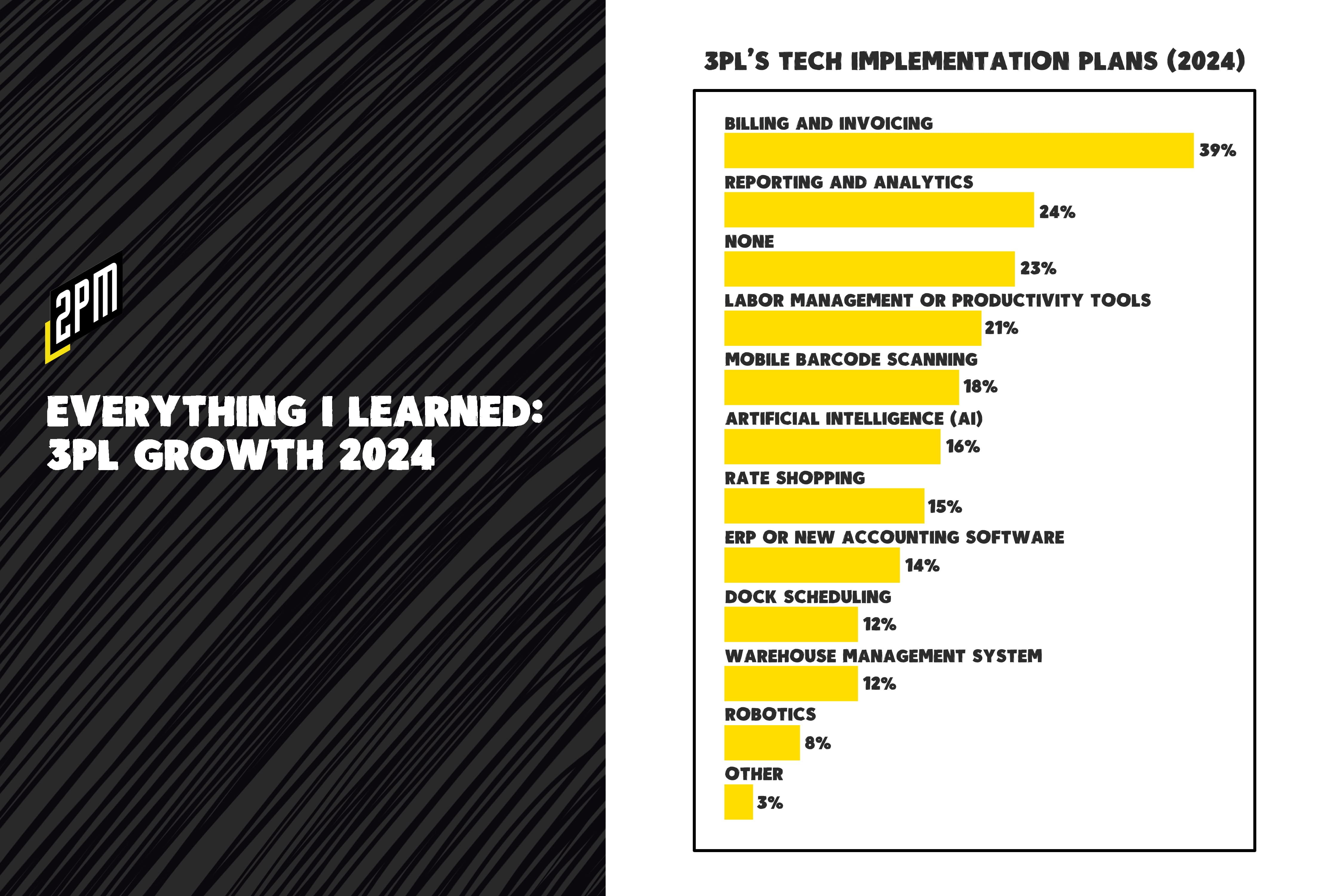
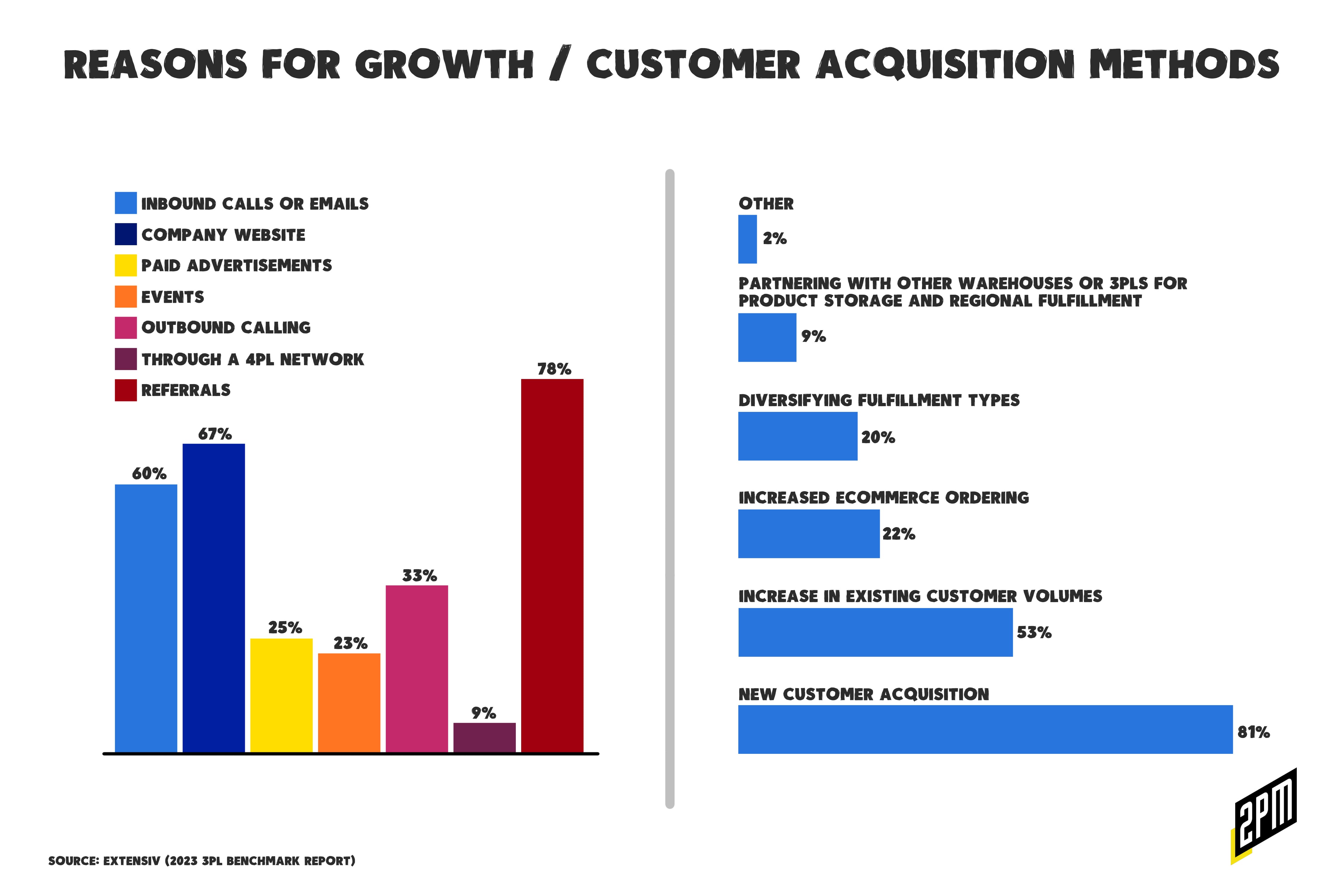
On the left, we have the most common customer acquisition methods shared by the 20 3PLs. On the right, we have the top reasons for 3PL growth. Referrals = new customer acquisition.

As you can see above, the sixth and most potent growth driver remains Efficacy-driven Word of Mouth / Referral. When 3PLs consistently deliver exceptional service, maintain inventory accuracy, and ensure timely delivery: they cultivate a reputation for reliability and excellence. Satisfied clients become enthused vocal advocates, sharing their positive experiences within their networks. This word-of-mouth endorsement is incredibly valuable, as it comes with the trust and credibility of real-world usage. In the logistics industry, where reliability can significantly impact a business’s operational success, such endorsements serve as a powerful tool for market share expansion, making efficacy-driven word of mouth the cornerstone of organic growth for 3PL providers

****

Let’s break out Red Stag Fulfillment from the others listed.

There is a discernible shift towards specialization that will begin to characterize the 3PL industry landscape. Red Stag Fulfillment exemplifies this trend, distinguishing itself by focusing primarily but not entirely on eCommerce fulfillment for bulky or high value items, a domain often overlooked due to its inherent challenges. This specialization not only enhanced operational efficiency and customer satisfaction but also positions Red Stag as a leader in this particular market segment.

Championing the motto “we get it right, or we make it right,” Red Stag embodies a culture where accountability and customer-centricity are paramount. This ethos is underpinned by their impressive metrics: industry-leading inventory accuracy rates and a steadfast guarantee compensating for any fulfillment errors, setting a benchmark in the logistics domain.

Red Stag’s operational metrics illuminate their supremacy in the logistics field. Inventory accuracy often becomes the linchpin of a company’s operational success. While the industry norm hovers around a 98% accuracy rate, a seemingly impressive figure at first glance, this statistic harbors a hidden cost. To put it in perspective, for every $1 million in inventory, the average fulfillment company’s shortfall translates to a tangible loss of $20,000 in a retailer’s goods. A stark contrast to this industry standard, Red Stag Fulfillment safeguards against this type of inventory loss. In the rare event of damage or loss upon arrival at their facilities, they actually refund the wholesale costs of goods.

The cornerstone of Red Stag’s operational excellence lies in it order processing protocols. They appear to guarantee that 100% of orders are dispatched in accordance with the service level chosen by our clients, be it Next Business Day with cutoff times at either 3:00 pm or 5:00 pm. Should they fall short, not only is the shipping fee waived, but the retailer is also credited with a $50 compensation for any inconvenience caused. This policy applies uniformly, even in instances where an order is dispatched with incorrect items or quantities, emphasizing Red Stag’s “make it right” ethos.

According to their operational team, within the initial months of partnership, one client experienced the dispatch of 50,490 packages with a staggering 99.996% punctuality in order processing and a 99.994% accuracy rate in order fulfillment.

And a long-standing partner revealed an astounding 99.999% accuracy across over 10,000 locations and more than 200,000 units. A minuscule discrepancy of 0.001% was met with immediate financial restitution, underscoring our unwavering commitment to accountability.

As a result, Red Stag Fulfillment’s YTD metrics boasted a 99.94% accuracy rate spanning inbound logistics, inventory management, order accuracy, and timely shipping. This figure not only epitomizes our dedication to operational excellence but also cements our position as a leader in the logistics industry, distinguished by an ethos that prioritizes precision and reliability above all else.

By mitigating losses linked to inventory inaccuracies and ensuring the punctuality and precision of order fulfillment, Red Stag significantly slashes costs for its clients, bolstering their financial health and operational sustainability.

Red Stag Fulfillment uses these principles and operational efficiency to effectively carve its niche, an unwavering focus on eCommerce fulfillment for bulky items.

****

The landscape of third-party logistics is a testament to the evolving dynamics of global commerce, where efficiency, reliability, and innovation are paramount. In this complex ecosystem, 3PL providers emerge as crucial enablers of business success, offering not just logistics solutions but strategic partnerships that drive growth, enhance customer satisfaction, and foster economic resilience. As the industry marches forward, the role of specialized 3PLs will undoubtedly become even more central, heralding a future where precision, adaptability, and customer-centricity define logistics excellence.

By Web Smith

Memo: The Argument For CPG Investing

The tailwinds are with CPG, grocery, and meal delivery. Invest accordingly.

By 2027 21.5% of eCommerce will  be food and beverage (Statista). This number is currently sitting at sub 14%. That’s some acceleration.

A discernible shift has emerged. After collecting a year or so of data, there is a clear redirection of momentum towards grocery and food CPG as the prudent investment over any other category, especially when juxtaposed against the volatile sectors of clothing and accessories. If you want to throw money away or get stuck in a cycle of illiquidity, invest in cool, fashion retail brands. If you want to 80x your return, invest in the right food, drink, supplement, or snack foods brand (or the technologies that support this trade).

This affirmation isn’t merely a trend but a reflection of changing consumer behaviors, technological advancements, and strategic shifts by retailers that underscore the resilience and potential of the grocery and CPG eCommerce sector. The recent developments, including Marc Lore’s new venture, Wonder; Liquid Death’s staggering $1.4 billion valuation; and Aldi’s ambitious expansion plans. 2PM recently published this on Aldi’s growing network of grocery delivery hubs:

Aldi’s growth is indicative of the changing consumer landscape. With 2,356 stores, it would land at third on this list. The place is the antithesis of complication. Shopping at Aldi is like a breath of fresh, budget-friendly air. The store’s design is straightforward, and the selection, while limited, covers all the basics at prices that test the American belief of consumer pricing index. It’s the kind of simplicity that makes you wonder why shopping anywhere else feels like preparing for a space mission. Aldi’s model is a testament to the power of keeping it simple – a lesson many subscription services could learn from.

Aldi’s plan to add 800 stores across the United States by 2028, with a significant investment, showcases another dimension of the sector’s growth. This expansion not only emphasizes Aldi’s confidence in the physical grocery market, but also its role as a powerful eCommerce delivery partner to platforms like Instacart, illustrating the synergies between brick-and-mortar strategies and e-commerce dynamics.

Additionally, the insights from a recent PYMNTS report on online grocery shopping paint a compelling picture of why this sector stands as a beacon for investors seeking stability and growth in the digital marketplace.

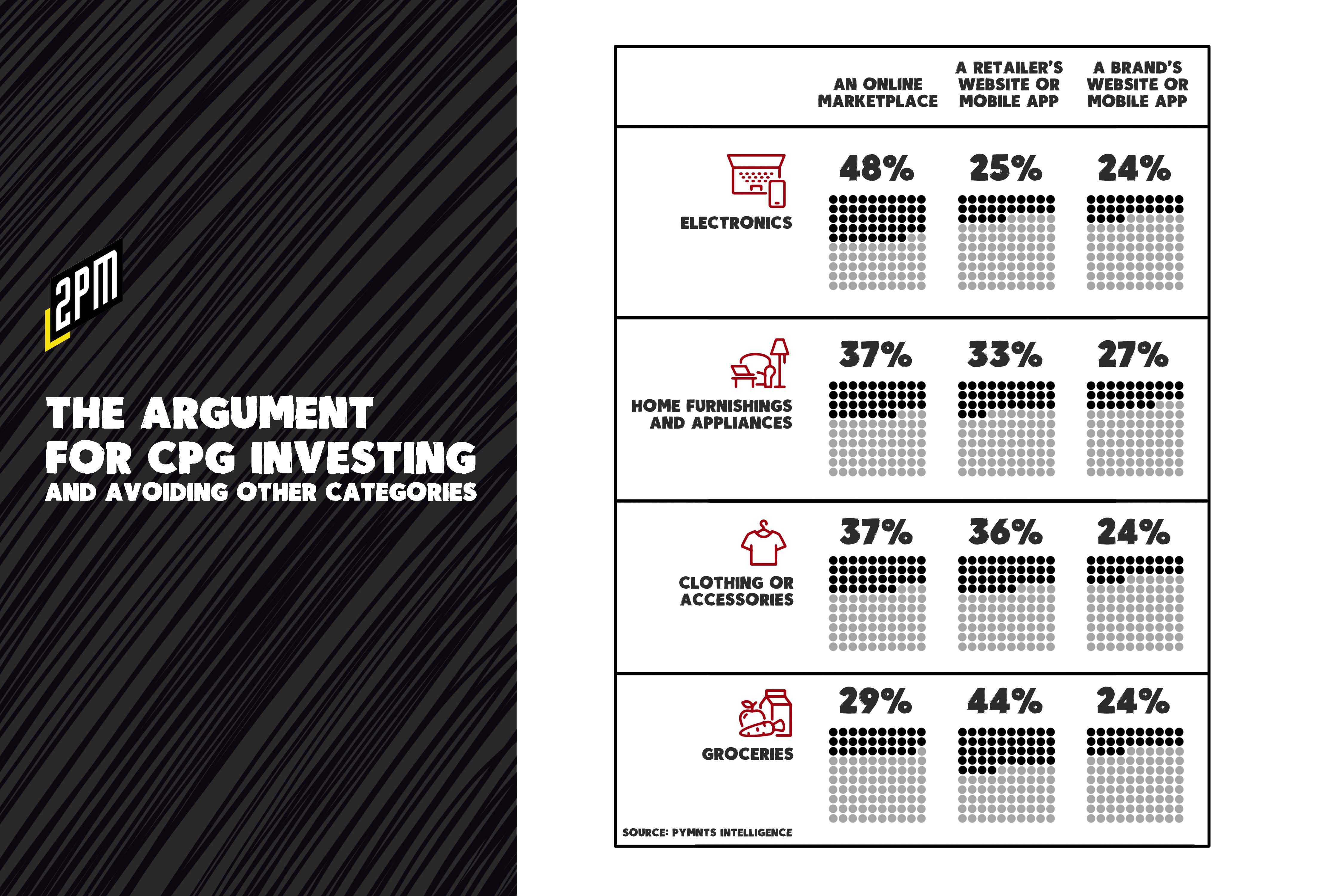
The PYMNTS report, “Retailers Win in Online Grocery,” offers a data-driven perspective on the shifting dynamics in the eCommerce landscape. It highlights a crucial consumer behavior: the preference for purchasing groceries from retailer websites and apps over online marketplaces or brands’ direct channels. This preference underscores the trust and loyalty consumers place in established grocery retailers, which offers these retailers a unique advantage in capturing and retaining customers in the digital realm. Companies like Kroger and Walmart are not just participating in the online grocery market; they are leading it, leveraging digital platforms to fuel growth and improve unit economics.

Whole Foods Market’s introduction of the Whole Foods Market Daily Shop, a quick-shop store format, seamlessly fits into the tailwinds that propel the grocery and CPG sector forward, particularly in the urban e-commerce landscape. These new, smaller-format stores, designed for urban neighborhoods, are a strategic response to the increasing demand for convenience and quality. Located in densely populated areas such as Manhattan, these stores aim to offer quick access to fresh, high-quality offerings that Whole Foods is known for, catering to the fast-paced lifestyle of urban consumers.

According to a recent study, which polled 2,000 consumers in the UK, availability and convenience remain core to the grocery shopping experience.

Only 8% of shoppers are choosing to shop exclusively online and make all of their purchases from the comfort of their own homes. This means that 96% of shoppers are regularly spending at least some of their shopping time in stores – and being exposed to supermarket advertising.

This move aligns with broader industry trends where convenience, quality, and accessibility are paramount. As I explained in Fully Vertical Meal Delivery: “If your consumer product relies exclusively on dry ice for shipment, you’re at a growing disadvantage in the “now” market.” By offering a mix of grab-and-go meals, weekly essentials, and a curated selection of fresh produce and other favorites in a compact, easy-to-navigate space, Whole Foods and Aldi are not only enhancing the shopping experience for existing customers but also expanding its reach to new ones (that may currently rely on Kroger and Walmart for delivery). This strategy underscores the importance of adaptability and customer-centric innovation in the grocery sector, as well as a pure omnichannel distribution strategy, contributing to the sustained growth and stability of grocery and CPG eCommerce.

The Whole Foods Market Daily Shop initiative is indicative of the strategic synergies between brick-and-mortar strategies and digital dynamics, enriching the consumer experience while bolstering the sector’s growth. As Whole Foods and Amazon continue to innovate, they set new standards for what consumers can expect from grocery shopping, making the sector even more attractive to investors looking for opportunities in an era defined by digital transformation and shifting consumer preferences.

But it’s not only established enterprise retailers investing heavily in logistics or marketplaces in the food space.

Marc Lore, an eCommerce titan known for his disruptive ventures, has once again grabbed the headlines with the launch of Wonder, a new company that aims to revolutionize the food delivery service. By pivoting from a van-based cooking model to kitchen-prepared meals and strategically positioning the startup within the bustling hubs of New York City, Lore has demonstrated a keen understanding of the consumer’s demand for quality and convenience. His substantial personal investment and ambitious plans for Wonder signal a strong belief in the food and beverage eCommerce sector’s growth potential, reinforcing the narrative that grocery and meal-based eCommerce is still ripe for innovation and investment. Perhaps more than ever, given the adoption levels of this form of online retail.

Further solidifying the sector’s appeal is the meteoric rise of Liquid Death, a brand that has transcended its product offering to become a cultural phenomenon, now valued at an impressive $1.4 billion. This valuation speaks volumes about the consumer’s appetite for unique, branded experiences in the grocery space, even for products as ubiquitous as water. Liquid Death’s success story is a testament to the potential for brands within the grocery and CPG sector to achieve exponential growth through strategic branding, digital marketing, and traditional DTC models.

The shift towards grocery-based eCommerce is not merely a reactionary trend but a reflection of broader societal changes. The pandemic accelerated the adoption of online shopping, and while many sectors experienced a boom-and-bust cycle, grocery eCommerce has shown resilience and sustained growth. The convenience of online shopping, combined with consumers’ growing interest in cooking and eating at home, has propelled grocery and CPG eCommerce into a position of strength.

There have been few stories or indicators of tailwinds in other eCommerce categories. In contrast, the clothing and accessories sectors face inherent challenges that grocery circumvents. The fickle nature of these products, coupled with the variability in sizes and personal preferences, leads to higher return rates and customer dissatisfaction. Thanks to unwieldy inventory management, fashion continues to be a complex and risky endeavor. With the exception of few labels like Greyson Clothiers, Todd Snyder and a short list of others, few can claim the tailwinds

Investing in grocery and CPG eCommerce, therefore, emerges as a strategy grounded in consumer demand, technological integration, and market stability. The sector’s resilience during economic downturns, coupled with its essential nature, offers a buffer against the volatility seen in discretionary spending categories like clothing and accessories. Moreover, the ongoing innovations by entrepreneurs like Marc Lore and companies like Liquid Death and the potential scale of Aldi demonstrate the sector’s potential for high returns on investment.

The pivot towards grocery and CPG eCommerce is underpinned by a confluence of factors that promise sustained growth and stability. As consumer behaviors continue to evolve towards convenience, quality, and sustainability, grocery and CPG eCommerce stands out as a sector not just surviving the digital shift but thriving within it. Again, invest accordingly.

By Web Smith | Editor: Hilary Milnes with art by Christina Williams