Memo: BigCommerce and Bolt Unite

There is a 1988 advertisement by Philip Morris that describes the enriched flavor of a brand of cigarettes. It called it a solution with Merit. It begins: “If you can’t join ’em, beat ’em.”

Bolt’s former CEO Ryan Breslow felt slighted by Shopify executives; he’s taken it personally. Now, what appeared to be just a fiery Twitter thread looks more like a strategy backed by Bolt’s board. If you can’t join Shopify in owning the market, beat them by joining its de facto rival. BigCommerce is a platform with distinct philosophical differences. For Bolt, an enemy of an enemy is a friend.

Days after we wrote about Bolt’s bold challenge to Shopify, the checkout company took a further step in taking on the eCommerce leader. Shopify rival BigCommerce and Bolt are partnering to bring Bolt’s one-click checkout to BigCommerce’s merchants.

The move contends with Shopify’s native approach to checkout options. With Shopify, platforms like Bolt and Fast have been excluded from checkout workflows. Shopify is on record as being opposed to alternative checkout options, making Shop Pay the ubiquitous checkout provider. Both BigCommerce and Shopify are approaching eCommerce in different ways: Shopify is a quasi-closed ecosystem and BigCommerce is open-source. Shopify allows non-merchants to use Shop Pay, spreading a core technology outside of its own walls. It’s a way to make Shopify more ubiquitous, even when it’s not the eCommerce provider. BigCommerce lets its merchants choose its own tech providers, meaning its platform employs APIs and external SaaS solutions in a way that Shopify doesn’t.

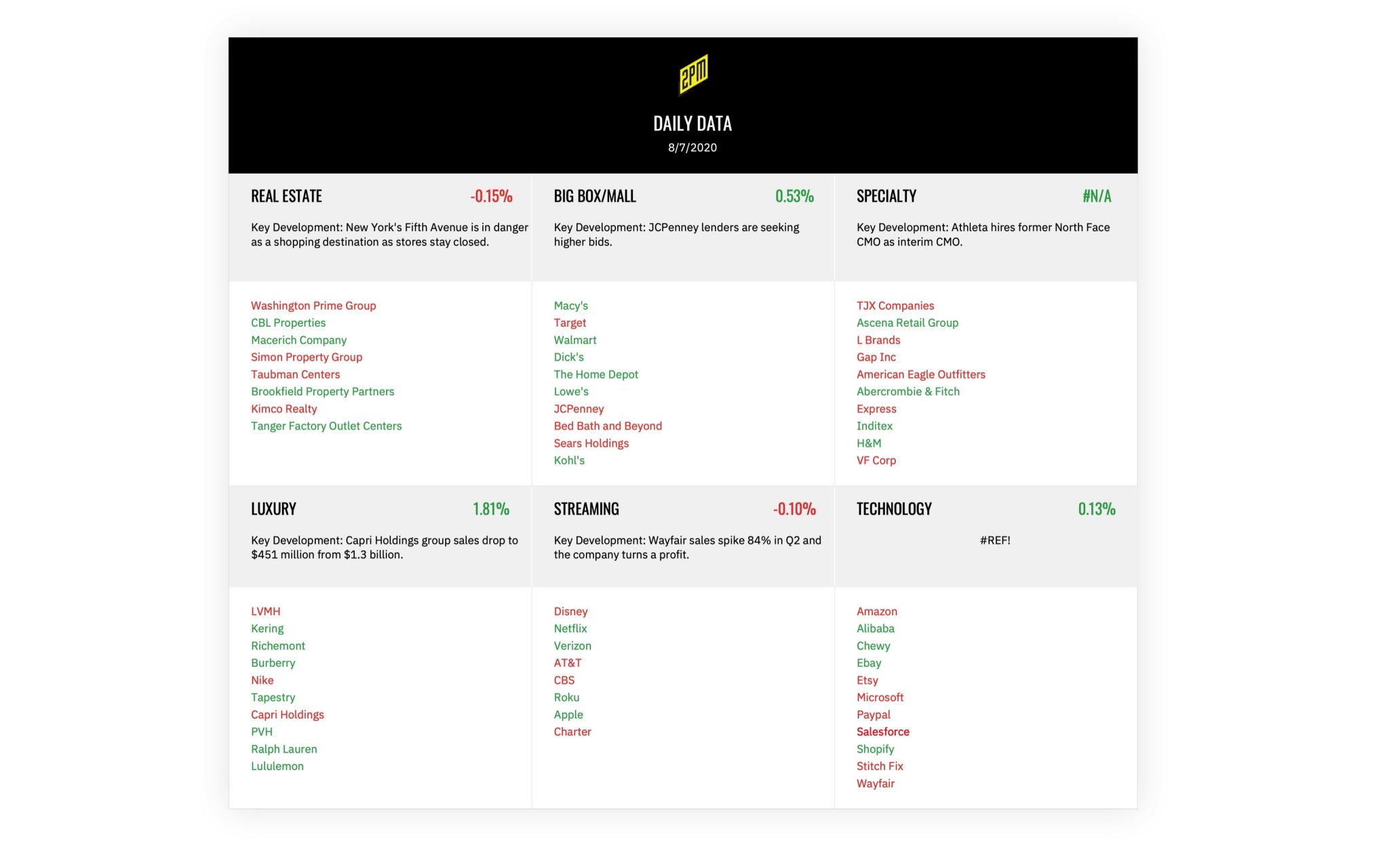
Bolt immediately jumping into a partnership with BigCommerce is part of its strategy to undermine Shopify, both institutionally and as a brand known for “arming the rebels.” Shopify’s villain is Amazon. With this move, BigCommerce and Bolt position Shopify in the same way. From Monday’s 2PM memo:

It may not work but it’s a gutsy strategy. Bolt is trying to out-rebel the armory of the rebels. The call to action is clear: “Switch to Bolt.” In another fiery thread by Bolt founder Ryan Breslow, he began: Shopify is eating their ecosystem.

Transitioning from a one-click checkout platform to a fully-fledged eCommerce solutions provider is not something that happens overnight; this is why the BigCommerce partnership is relevant. The two align in that they have a common competitor they want to overtake, but there’s also a potential future where Bolt acquires BigCommerce or vice versa. Currently, BigCommerce is worth one-ninth in the public market what Bolt is worth in the private market. See this insight from Business Insider’s report on Bolt and BigCommerce’s partnership:

BigCommerce, for its part, isn’t quite so overt about the competition, with [chief commercial officer Russel] Klein referring to Shopify as “the company whose name shall not be uttered” in an interview with Insider.

As we wrote on Monday, Bolt is rising up to fill the spot Shopify once held as the underdog, the challenger to Big Retail, the platform for the people. In the same way Shopify took on Amazon, one is not likely to actually defeat the other, but with enough differentiation, room will be made in the ecosystem for both. Then, another company will rise up to take on Bolt when its britches get too big for its market cap.

Where BigCommerce fits in is more interesting. Can Bolt arm the rebels in the same way Shopify did by aligning itself with a mainstream competitor? It’s an approach likely born of necessity. Bolt has a big valuation to meet. It doesn’t have time to slowly build a full response to Shopify. BigCommerce has growing revenue but widening losses. With Bolt as a marketing and sales partner, I can see how management at BigCommerce can envision the checkout solution as meaningful value-add beyond the OpenSaaS philosophy that both share. Bolt is excelling in sales and marketing in ways that BigCommerce has not.

The company posted revenue of $64.9 million in Q4 2021, beating analysts’ expectations of $62 million. For the year, the company reported a loss of $76.7 million. Revenue was reported as $219.9 million. And the bet is that together, Shop Pay will be overtaken as the premier checkout solution. This quote by Bolt’s Chief Business Officer was notable:

By having Bolt be that one agnostic player that’s creating this shopper network that works with all payment providers and all e-commerce platforms, it will grow bigger. It will eclipse Shop Pay.

Breslow sees Bolt as the third-generation of commerce enablers, a position shared by a number of headless competitors including its rival Fast. BigCommerce is in position to benefit from Bolt’s gutsy marketing strategy, that is unless Shopify finds a way to counter the partnership first. In the meantime, Bolt hopes to prove that it is the ultimate solution with merit.

By Web Smith | Edited by Hilary Milnes with art by Alex Remy

Update: This is something that I learned today. At the time of publishing this, BigCommerce employs over 100 in the Ukrainian city of Kyiv. Men between the age of 18 and 60 have been ordered to remain in the country. The banking system has been disrupted so funds have been difficult to ascertain for many of the employs. CEO Brent Bellm is in an unenviable position, Ukraine is an eCommerce-rich country with top engineers and nearly 10% of the company’s workforce is located within the wartorn country.
Polymathic: BigCommerce’s Big IPO

5a6bd916965cf725890962af6bc2ccc3c8bd36c5

BigCommerce’s first day trading as a public company hints that it’s a good time to be an e-commerce software provider.

This member brief is designed exclusively for Executive Members, to make membership easy, you can click below and gain access to hundreds of reports, our DTC Power List, and other tools to help you make high level decisions.

Join Here

Memo: Shopify’s ‘Cool Kid’ Paradox

n6vIM5Xw

An open letter to all eCommerce merchants. In a recent chat with 2PM Executive Member Damian Soong, the DTC founder replied with a poignant thought:

Someone needed to say that DTC isn’t Shopify.

Paul do Forno, the Managing Director of Deloitte’s Commerce Practice, chimed in with the data to support Soong’s thought, adding:

If you plotted by total platform revenue: HCL Commerce, Oracle, SAP, SalesForce would be towards the top.

Shopify has made the industry more interesting, accessible, and newsworthy. But it is not the only participant in this burgeoning ecosystem: Magento (now Adobe), Demandware (now Salesforce), SAP, BigCommerce, Squarespace, BigCartel, WooCommerce, Webflow, Square, and Wix have played pivotal roles in the development of either enterprise or merchant-level markets. Shopify is neither the biggest platform with respect to merchant volume or gross merchandise value (GMV). It sits squarely at the center of the two extremes. Yet somehow, it became the de facto operator of the DTC era.

To understand the direction of eCommerce, you must understand its past and present. During what was likely the most pivotal year in my early eCommerce career, I studied Magento from the perspective of an eCommerce brand that employed 100 or so. That earlier version of Magento was a complicated platform to understand. Its management required the employment of a dozen engineers and an equal magnitude of talent in user experience and front-end design. When I soon had my own opportunity to build an eCommerce brand alongside Kevin Lavelle, we went not to Magento, but to Shopify. We didn’t have the money to hire technical talent, nor did we have the patience to manage it on top of the challenges that we faced in manufacturing and early customer acquisition. But it’s important to recognize that this decision was made nine years ago – a lifetime in technology.

That same company of 100 is now over 1,000 strong. In under one decade, a small industry competitor became a global manufacturing leader all through direct-to-consumer channels. And they’ve done so on Adobe’s Magento. If any SaaS platform has the right to claim the dawn of the DTC era (2008), Magento could easily make that argument. Instead, it gets lost in the conversation.

Standing in a hallway of Shopify Plus’ most recent New York City conference in 2019, I sat with Shopify CEO Tobi Lutke, one of the industry’s most admired executives. I remember marveling at the production of the event. The friends, the networking, the branding of the space all communicated Shopify’s place in the eCommerce ecosystem. I applauded the entrepreneurs who shared their stories on stage with highly produced short films. Also notable was the accessibility of the C-suite executives who, frankly, should no longer be that accessible. This availability is a part of Shopify’s secret sauce. You won’t find another retail CEO of his caliber who is willing to respond to customers on platforms like Twitter and Instagram.

What I remember most about that particular meeting is the intensity of Lutke’s product focus. Suggest an idea that is outside of Shopify’s product pipeline and he will explain why Shopify isn’t right for it. He rarely waivers on his vision for what Shopify and Shopify Plus are to the eCommerce industry, or the functions that they are willing to build.

It’s this same galvanizing vision that rallies Lutke’s base of thousands of platform evangelists. Shopify’s ability to amplify its message through its partnership ecosystem has done wonders in furthering its narrative of perceived inevitability. In Shopify Unite and Network Effects [1], I wrote:

If you were to sit in a room with BigCommerce or Adobe’s c-suite and explain that product differentiation can be more than a software iteration, you won’t be sitting there for long. And that is part of Shopify’s mounting advantage. It’s unclear whether or not the original intent of the Shopify Partner ecosystem was to be a catalyst for network effects. But that’s certainly the case.

Founder Tobi Lutke, Harley Finkelstein, and team stumbled upon a new form of competitive advantage in commerce SaaS. Here, at the intersection of influence and efficacy, sociological advantages of retail brands have interfaced with an ecosystem of software as a service.

Shopify’s primary arguments for the attention it gets are valid. Its holistic approach to fulfillment, returns, and no/low code architecture will become fixtures in North America’s market as eCommerce’s percentage of retail continues to inch above and beyond 20% or 25% or 30%. And consider Squarespace or WooCommerce’s volume and Magento’s GMV: Shopify’s ability to capture mindshare despite these other companies’ advantages are as much the fault of the competitors who haven’t valued the marketing and branding aspects of business.

By weaponizing network effects, Shopify has become the proverbial cool kid of SaaS. Its brand voice is the life of the party and the center of many public discussions. There is market value in this positioning. Like Amazon, Shopify’s fortune is tied to eCommerce’s continued growth in North America. Public investors reward Shopify simply for being tied to the movement towards direct-to-consumer. It’s deserved.

ENkl02YQ
The Traditional, The Cool, The Quirky, and The Hustlers

It is important to note that this is not winner-takes-all, and what Shopify does next matters. There are eCommerce founders building on custom sites that have accomplished profitable growth. There are leaders who’ve chosen Salesforce or BigCommerce to fit their technological or philosophical needs. And in the process, they’ve built companies spewing $10s of millions in monthly EBITDA. Of course, there are examples of these feats on Shopify, but that’s the point. The democratization of eCommerce doesn’t only refer to platform simplicity.

Shopify’s ecosystem stands to benefit greatly by expanding the definition and character of the DTC industry to reach out and include the brands, founders, agencies, and technologies enabled to support them on other platforms. Some of the best and brightest stories, people, and brands are building outside of the spotlight.

The cool kids often earn the lion’s share of attention. But some of the most notable progress happens where the cool kids aren’t. That’s the paradox.

By emphasizing stories and anecdotes from founders who’ve eschewed the industry spotlight or brands that have managed growth differently than is commonly advertised, we’re closing the knowledge gap. Perhaps there was a brand founder who chose to use WooCommerce to scale and now has insights that could help Shopify-based brand founders accomplish the same. Or perhaps a Shopify Plus founder who’s successfully captured five years of year-over-year growth could explain a key strategy to a brand owner who’s built on Magento 2.3.4.

As eCommerce grows beyond 25% or 30% of American retail, we will see more examples of brands and retailers achieving a growth velocity that would have previously seemed unimaginable. In some cases, these brands will not be built with one’s preferred technical architecture. But the credibility or inclusion of these founder perspectives shouldn’t hinge on their platform preference.

Shopify Inc.’s job is two-fold. Their sales team works on converting potential users into new merchants. Their partnership ecosystem plays an essential role in replatforming existing merchants to Shopify or Shopify Plus. There are limits to this, but Shopify’s pronged ecosystem that pulls in new users and levels up existing ones is an advantage in the market, and it has an unparalleled opportunity. Where it reaches from here will determine its next phase of growth.

But they’re on notice. For every great success narrative that you hear from a Shopify partner, there five stories on competitive platforms. The DTC industry isn’t Shopify, it’s bigger than its technology or its ecosystem. This means that there is a greater opportunity to learn from, endorse, encourage, or evangelize the great work of builders who chose a different approach to a positive outcome.

By Web Smith | Editor: Hilary Milnes | Art: Andrew Haynes | About 2PM