
Memo: The Great Divide

War Games, continued. We often believe a partisan divide to be a purely American phenomenon, but there may be no greater example of the volatile intersection of politics and global economics than the state of trade policy of China and the United States. Perhaps it’s always been this way. But this new competitive precedent has been established upon new ground.

In 1979, the US and China established a new order of diplomatic and bilateral cooperation. Between that year and 2017, exports and imports grew from $4 billion to $600 billion. However, the trade deficit and the unfairness of trade practices are lingering issues between the two countries. Their persistence is a stain on the rest. I’ll explain.

A new trade war has been born of alternative asset classes like software, film, brand, and digital community, some of which is influenced by the politics of mainland China and some by our own state of politics. Platforms like Snapchat, Twitter, Reddit, and Google have been barred from operating in mainland China in the name of government-sponsored censorship. Until recently, we have never threatened reciprocity. The government-sponsored forced sale of TikTok changes that. Oracle, led by major Republican donor Larry Ellison, has won the bid for TikTok’s US operations.

It’s not a clean acquisition of operations, and Oracle is expected to be positioned more as a national overseer of operations – a “trusted tech partner” in the US – rather than fully in charge of the reins. In an unsettling new setting of precedences, the White House will get to have final say over whether or not it’s a done deal. [2PM, 1]

With questions remaining on what the acquisition (or partnership) entails, the official dispatch from Beijing stated that TikTok parent ByteDance will not sell the algorithm with the creative community. The value of the platform is that algorithm. In essence, we are willing to let die an economic engine for creators and commerce just to return fire at China. For decades, trade policy between the two super powers mostly excluded soft industry but with piercing language from the highest rungs of government. That has changed. In War Games, I explain:

But with the US Secretary of State signaling that more actions are coming, the crackdown is looming. Cited earlier this month, Secretary Mike Pompeo stated that American businesses should be wary of “untrusted” Chinese technology. He also cited the dangers of Alibaba’s cloud networks. [2PM, 2]

Geopolitical tensions are accelerating trends that will have damning effects on American small businesses and venture-backed growth companies alike. The trade war has continued for nearly two years, Beijing and Taiwan are at odds over military activity in the South China Sea, China’s early handling of an epidemic-turned-pandemic has led to distrust between its business peers, and China’s relations with Hong Kong are further complicating trade matters in international business. Not to mention, potential of an American Spring has left international observers questioning the authenticity of it all. Action here and inaction elsewhere is a confusing position. America’s largest corporations supporting activism domestically and not abroad further complicates matters.

The calculus works in America where companies like Nike, Disney, and Apple skew younger and liberal. That same calculus falls flat in China where the wrong type of support for an identical form of activism can thwart business advances. Look no further than the release of Mulan.
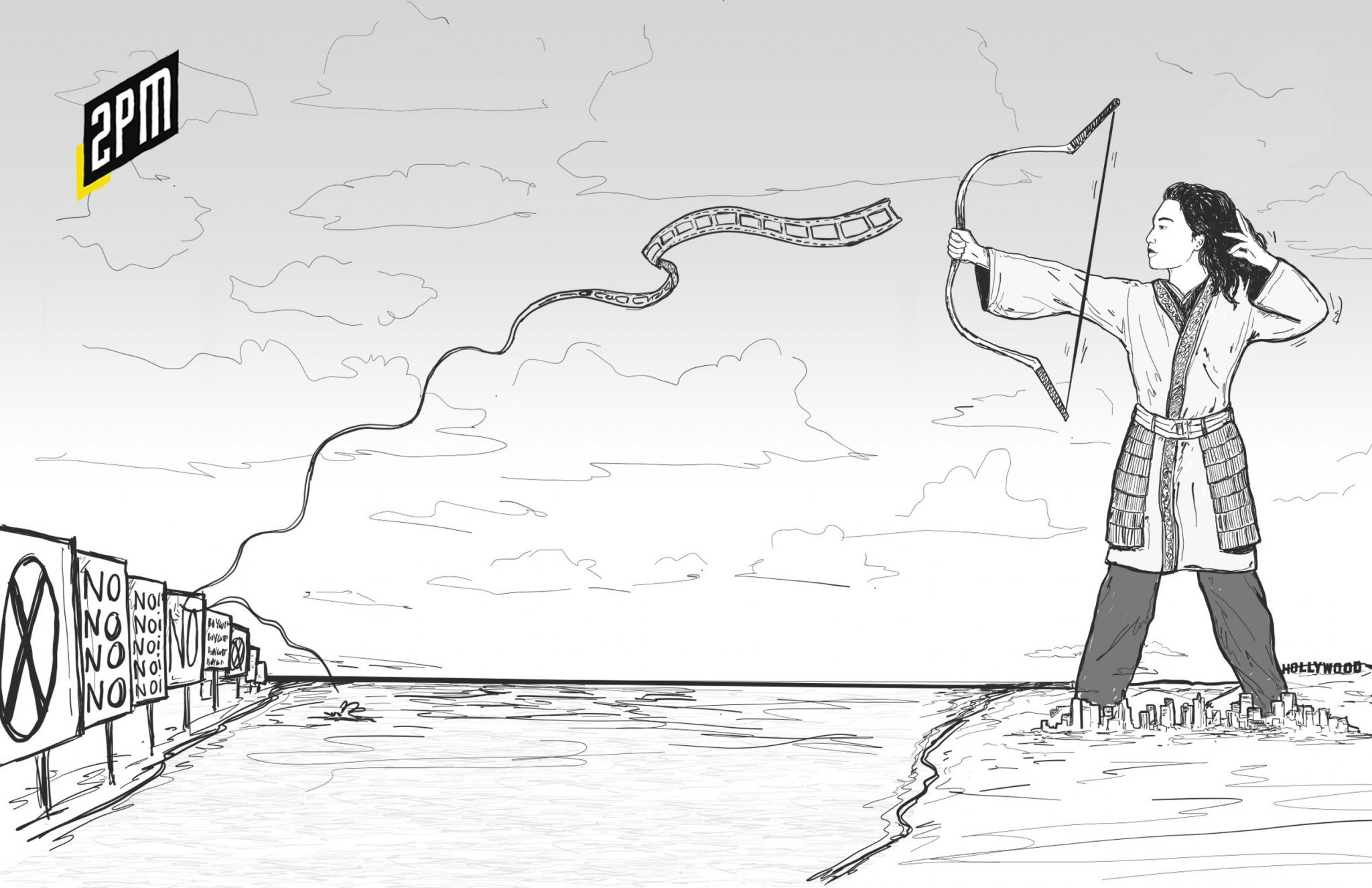
This week, Mulan held the No. 1 position on Disney+’s trending tab. According to CinemaBlend, the film had a 15% share of all streams vs. Hamilton‘s 10% share in its first full weekend. Additionally, Mulan improved Disney+’s downloads by 68% with in-app purchases up 193%. This is in addition to a reported $30 million American opening for the film hosted exclusively on Disney+. In mainland China, the reception was not as positive, stemming from a report that the film required cooperation with officials in Xinjiang, a region that houses alleged mass internment camps for ethnic minorities and has been accused of forced labor practices.

Activists rushed out a new #BoycottMulan campaign, and Disney found itself the latest example of a global company stumbling as the United States and China increasingly clash over human rights, trade and security, even as their economies remain entwined. [3]

The result was an effective boycott of the film, which opened to an underwhelming $23 million in China. Last week, Alibaba’s Taopiaopiao movie review platform published poor social scores, shorting demand for the film and reflecting a disconnect between Disney’s efforts to premiere a calculated movie that required data, focus groups, and government approval to film. Disney’s Mulan was made for Chinese audiences by the Chinese and with the Chinese. The disparity between its American reception and its Chinese failure is an indicator that not even Disney can navigate the great divide between the two nations.

US Senator Josh Hawley (R-Mo) condemned Disney for filming in the region, in what he called an effort to “whitewash” the region’s wrongs. The politics of the global economy are growing more and more complicated. Of the Fortune 500, the following businesses have also been connected to Xinjiang: Amazon, Exxon, Ford, General Electric, Citigroup, Dell, PepsiCo, FedEx, Coca Cola, Nike, Heinz, Abbott Laboratories, and Oracle – the reported owner of TikTok’s US operations – according to a 2018 article by ChinaFile, an online magazine on US-China relations.

We’ve blurred the lines between socio politics, human rights and corporate business to the point that we’ve failed to realize the implications caused when those blurred lines are no longer acceptable. The United States has the most incarcerated population on earth. The private prison system is a big business with outposts near our homes, our stadiums, our factories, and our office centers. As far back as the 1990s, American prison labor employed industries like telemarketing, technical manufacturing, and for brands like Victoria’s Secret [4]. It would take us years to separate our corporate culture from this system and yet, our corporations present with an heir of virtue here and abroad.

Not to mention, a potential American Spring has left international observers questioning the authenticity of it all. Action here and inaction elsewhere is certainly a confusing position. America’s largest corporations supporting activism domestically and not abroad further complicates matters.

In War Games, I concluded with, “Businesses must begin to account for these shifts in geopolitics.” Now that corporatism and politics are so intertwined, it is only a matter of time before scenarios like these – unforeseen just a few years ago – become commonplace. The great concern for American business is that it will become too difficult to account for these variables at any scale.

Disney’s international box office numbers for Mulan flopped in historic fashion for reasons in and out of its control. But consider the long-tail effects of the discourse around its suffering performance. I’d surmise that fewer American corporations will be willing to compete on foreign grounds given the growing sociopolitical complexity. And with new precedent set in the United States by the TikTok acquisition, we can expect reciprocity in that respect. It’s important to remember that we have sociopolitical complexities of our own and in this era of global economy, that makes our physical exports, Hollywood films, and software platforms just as vulnerable. Consumer confidence could use paths for efficient corporate growth, but the two great national economies seem to be at odds more so now than ever. The great divide will grow. And more than ever, the American consumer will notice.

By Web Smith | Editor: Hilary Milnes | Art: Alex Remy | About 2PM

Read part 1 of 2: War Games
Member Brief: War Games

dgTQedzg

With the current administration’s target on TikTok and its proposed acquisition, I began to think about the second- and third-order effects of the politicization of the digital media and commerce markets. This is one of the first moments in American history where government policy proposed a limitation on a widely used consumer technology.

This member brief is designed exclusively for Executive Members, to make membership easy, you can click below and gain access to hundreds of reports, our DTC Power List, and other tools to help you make high level decisions.

Join Here

Memo: The Type House

XJY-0sUA


Bundle and unbundle, bundle and unbundle, bundle and unbundle – but then generate profits on both. These weren’t his exact words but that was the message. In one sentence, my father described his industry. At 12, I sat in a cubicle in a Houston industrial park, an unofficial intern of his Time Warner Communications division. I would go on to work the traditional work weeks, each summer, between that year and my graduating year of high school. I was paid in perspective, and I mean that sincerely.

At the time, my father was the senior executive in charge of a fledgling broadband internet project called “RoadRunner.” (It would later go on to power Texas’ residential internet needs, but that’s a different story.) His words were transcendent to me because they explained that the value of a product could be amplified by how it’s packaged.

By now, you’ve heard of the TikTok influencer craze. (You may have even felt a twinge of fatigue by the momentum of it all. There is new terminology, dance moves and global political implications to keep up with, along with the excessive screen time required to digest it all.) This creative platform has further popularized the concept of the “collaborative house” made popular by YouTube creators David Dobrik (Vlog Squad) and Jake Paul (Team 10). For the most marketable of these houses, the platform began to matter less. Dobrik, a videographer and philanthropist who began on YouTube, nearly duplicated the magnitude of his audience on TikTok in just a month’s time. New members join, old members leave as their profiles grow. Collaborative groups are reminiscent of the cable industry’s intrigue: bundle, unbundle, bundle, unbundle.

In the land of TikTok, the Hype House is a particular group of 20-something content creators who live in or around Los Angeles; many of whom cohabitate. The group includes a number of the best and brightest creators in the space, including former members Charli D’Amelio and her sister Dixie. Together, the sisters have amassed 10s of millions of subscribers across TikTok, YouTube, Twitter and Instagram. Some industry analysts argue that the D’Amelio family is the next Kardashian clan. Objectively speaking, that anointing is the golden calf of media and commerce opportunities.

No Title

D’Amelio family is the new Kardashian family.@charlidamelio + @dixiedamelio + @marcdamelio + @heididamelio

The TikTok house seems like it exists in an entirely different media universe than the email newsletter, but there are more similarities than it would appear. Critics of the newsletter industry say its missing the above frameworks: collaborative houses, bundling, unbundling, platform agnostic growth, and the power of media-driven commerce. There aren’t many venture-funded companies with as much raw potential as Charli D’Amelio or David Dobrik. In both cases, the young entrepreneurs mastered the physics of new media. In its own way, the newsletter industry is hoping to crown their own winners. Those winners will accomplish the same.

Consider the inevitability of “subscription fatigue.” It’s a common refrain made by critics of the burgeoning newsletter industry, one that Substack has helped to democratize and Ben Thompson’s Stratechery has helped to inspire. In 2019, Gartner’s Laurie Wurster wrote:

By 2020, all new entrants and 80% of historical vendors will offer subscription-based business models.

But the fear of paid subscription fatigue may be overstated. There are two categories of monthly subscriptions:

Category No. 1: entertainment, distraction, or light enrichment.

Category No. 2: helps to build a new world by enabling education, professional growth, or networking opportunities.

Each of our paid subscriptions can be placed, primarily, into one of the above categories. The first category has dwindling demand elasticity. This may explain Quibi’s current trouble: consumers can only tolerate so many distractions. There’s infinite substitutes for entertainment, sensationalism, dopamine hits. The subscription ecosystem becomes finite at a certain extent. This category includes streaming services, games, digital entertainment.

The second category has demand elasticity that may hold steady. This group of subscriptions may also compete with continued education, social clubs, or corporate networking. Certain newsletters may improve or outright replace certain social or professional functions. Some of the best newsletters are also building communities around ideas, possibility, and navigating the future of the industry.

A play on the TikTok craze, the newsletter industry has its own brand of collaborative house. In it: great ideas have been ideated, concepted, and executed.

Founded by Nathan Baschez, The Type House is a group of 40 newsletter publishers: former A16Z associate Li Jin, Turner Novak, David Perrell, Sriram Krishnan, Lenny Rachitsky, Brett Bivens, Blake Robbins, Ian Kar, Alex Kantrowitz, Cherie Hu, Packy McCormick, Adam Keesling, Dan Shipper, Polina Marinova, Sari Azout, Nikhil Trivedi, Nikhil Krishnan, Brad Wolverton, Josh Constine, Sid Jha, Laura Chau, Morning Brew CEO Alex Lieberman, Trapital‘s Dan Runcie, Byrne Hobart, Allen Gannett, Sarah Nockel, Brett G, Paul Smalera, Trends.vc’s Dru Riley, Justin Gage, Rui Ma, Cat Lee, Can Duruk, Alex Taussig, Seyi Taylor, and myself.

Bundle and unbundle, bundle and unbundle, bundle and unbundle – but then generate profits on both.

The group is diverse in every sense of the term. Within it, you can observe the mechanics of media-driven commerce at work. Of the highlights, consider David Perrell. The writer-turned-teacher has monetized with educational courses. His company is now generating seven-figures in annual revenue. Morning Brew is one of the most promising newsletter-driven companies in business today. Dan Runcie has pivoted from media to consulting those in the hip hop industry. In doing so, his existing Trapital product has become top-of-funnel for lucrative consulting projects. 2PM continues to successfully navigate high level consulting and the growth of its own paid community of senior executives, artists, scientist, and independent thinkers. Polymathic is nearing its first year in existence. But, perhaps, the greatest indication of what’s to come is a throwback to my time in the Houston cubicle. Bundle and unbundle, bundle and unbundle.

B50CLMFg

Of Substack’s brightest opportunities to solidify its place in the creator ecosystem, the Everything Bundle began as an experiment between Nathan Baschez and Dan Shipper. It has since grown to include Adam Keesling, Li Jin, and Tiago Forte’s work. By bundling their individual efforts, they’ve developed a flywheel of business that has propelled them to Substack’s famed leaderboard. Though each of them are very capable of self-promotion, its their collective works that seem to drive new consumers to sign on for $20 per month or $200 per year. With each new property that is added to Everything, a new wave of subscriptions follow suit. I’ve likened the pivot to Basche and Shipper building The Athletic of business and intellectualism. And it just might work.

The value of prolific writing and creativity is that you’re always in a pattern of thought. You’re constantly assessing beliefs and designing paths to further your understanding of a topic. When entrepreneurial thinkers begin a newsletter on the platform of their choosing, they are doing so out of sheer passion. Their minds are always thinking of enrichment, improvement, development, and progress. Like the YouTube videographers of yesterday, or the TikTok minds of today, or any creator of tomorrow, the art is rarely contained by the platform. The great secret of creativity is that it can evolve. Many of today’s brightest businesses were yesterday’s projects-turned-ventures.

There is great potential for any subscription-driven media company to grow beyond its early intentions. If and when subscription fatigue begins to hinder the newsletter industry’s growth, the best and brightest will identify new mediums for their message and their engaged communities will follow. From YouTube to Vine to TikTok, this is what great digital creators have always done. They’ve outworked fatigue. It’s due time to place newsletter entrepreneurs in this coveted category.

By Web Smith | Editor: Hilary Milnes | Art: Andrew Haynes | About 2PM