
Memo: The Great Divide

War Games, continued. We often believe a partisan divide to be a purely American phenomenon, but there may be no greater example of the volatile intersection of politics and global economics than the state of trade policy of China and the United States. Perhaps it’s always been this way. But this new competitive precedent has been established upon new ground.

In 1979, the US and China established a new order of diplomatic and bilateral cooperation. Between that year and 2017, exports and imports grew from $4 billion to $600 billion. However, the trade deficit and the unfairness of trade practices are lingering issues between the two countries. Their persistence is a stain on the rest. I’ll explain.

A new trade war has been born of alternative asset classes like software, film, brand, and digital community, some of which is influenced by the politics of mainland China and some by our own state of politics. Platforms like Snapchat, Twitter, Reddit, and Google have been barred from operating in mainland China in the name of government-sponsored censorship. Until recently, we have never threatened reciprocity. The government-sponsored forced sale of TikTok changes that. Oracle, led by major Republican donor Larry Ellison, has won the bid for TikTok’s US operations.

It’s not a clean acquisition of operations, and Oracle is expected to be positioned more as a national overseer of operations – a “trusted tech partner” in the US – rather than fully in charge of the reins. In an unsettling new setting of precedences, the White House will get to have final say over whether or not it’s a done deal. [2PM, 1]

With questions remaining on what the acquisition (or partnership) entails, the official dispatch from Beijing stated that TikTok parent ByteDance will not sell the algorithm with the creative community. The value of the platform is that algorithm. In essence, we are willing to let die an economic engine for creators and commerce just to return fire at China. For decades, trade policy between the two super powers mostly excluded soft industry but with piercing language from the highest rungs of government. That has changed. In War Games, I explain:

But with the US Secretary of State signaling that more actions are coming, the crackdown is looming. Cited earlier this month, Secretary Mike Pompeo stated that American businesses should be wary of “untrusted” Chinese technology. He also cited the dangers of Alibaba’s cloud networks. [2PM, 2]

Geopolitical tensions are accelerating trends that will have damning effects on American small businesses and venture-backed growth companies alike. The trade war has continued for nearly two years, Beijing and Taiwan are at odds over military activity in the South China Sea, China’s early handling of an epidemic-turned-pandemic has led to distrust between its business peers, and China’s relations with Hong Kong are further complicating trade matters in international business. Not to mention, potential of an American Spring has left international observers questioning the authenticity of it all. Action here and inaction elsewhere is a confusing position. America’s largest corporations supporting activism domestically and not abroad further complicates matters.

The calculus works in America where companies like Nike, Disney, and Apple skew younger and liberal. That same calculus falls flat in China where the wrong type of support for an identical form of activism can thwart business advances. Look no further than the release of Mulan.
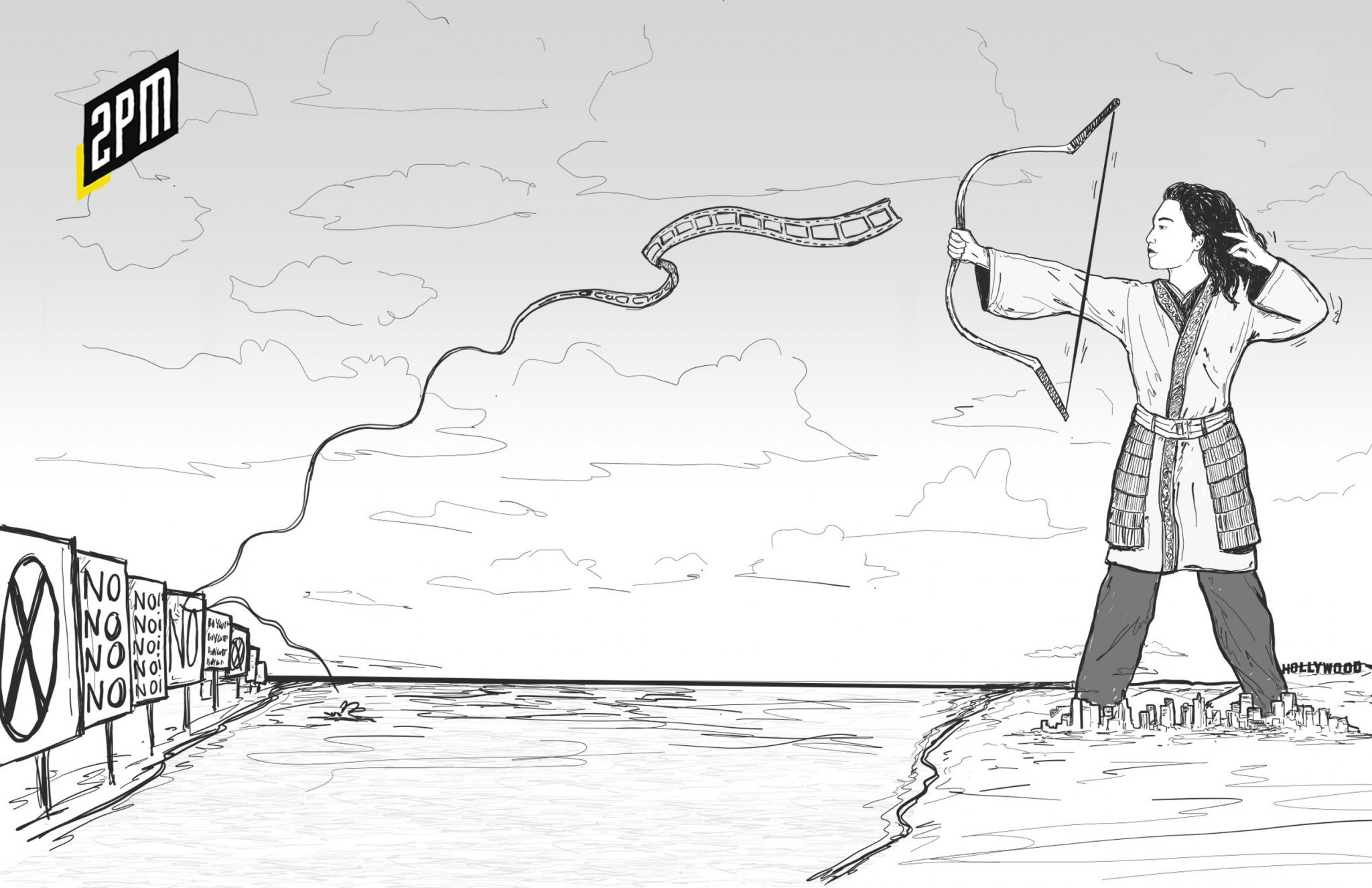
This week, Mulan held the No. 1 position on Disney+’s trending tab. According to CinemaBlend, the film had a 15% share of all streams vs. Hamilton‘s 10% share in its first full weekend. Additionally, Mulan improved Disney+’s downloads by 68% with in-app purchases up 193%. This is in addition to a reported $30 million American opening for the film hosted exclusively on Disney+. In mainland China, the reception was not as positive, stemming from a report that the film required cooperation with officials in Xinjiang, a region that houses alleged mass internment camps for ethnic minorities and has been accused of forced labor practices.

Activists rushed out a new #BoycottMulan campaign, and Disney found itself the latest example of a global company stumbling as the United States and China increasingly clash over human rights, trade and security, even as their economies remain entwined. [3]

The result was an effective boycott of the film, which opened to an underwhelming $23 million in China. Last week, Alibaba’s Taopiaopiao movie review platform published poor social scores, shorting demand for the film and reflecting a disconnect between Disney’s efforts to premiere a calculated movie that required data, focus groups, and government approval to film. Disney’s Mulan was made for Chinese audiences by the Chinese and with the Chinese. The disparity between its American reception and its Chinese failure is an indicator that not even Disney can navigate the great divide between the two nations.

US Senator Josh Hawley (R-Mo) condemned Disney for filming in the region, in what he called an effort to “whitewash” the region’s wrongs. The politics of the global economy are growing more and more complicated. Of the Fortune 500, the following businesses have also been connected to Xinjiang: Amazon, Exxon, Ford, General Electric, Citigroup, Dell, PepsiCo, FedEx, Coca Cola, Nike, Heinz, Abbott Laboratories, and Oracle – the reported owner of TikTok’s US operations – according to a 2018 article by ChinaFile, an online magazine on US-China relations.

We’ve blurred the lines between socio politics, human rights and corporate business to the point that we’ve failed to realize the implications caused when those blurred lines are no longer acceptable. The United States has the most incarcerated population on earth. The private prison system is a big business with outposts near our homes, our stadiums, our factories, and our office centers. As far back as the 1990s, American prison labor employed industries like telemarketing, technical manufacturing, and for brands like Victoria’s Secret [4]. It would take us years to separate our corporate culture from this system and yet, our corporations present with an heir of virtue here and abroad.

Not to mention, a potential American Spring has left international observers questioning the authenticity of it all. Action here and inaction elsewhere is certainly a confusing position. America’s largest corporations supporting activism domestically and not abroad further complicates matters.

In War Games, I concluded with, “Businesses must begin to account for these shifts in geopolitics.” Now that corporatism and politics are so intertwined, it is only a matter of time before scenarios like these – unforeseen just a few years ago – become commonplace. The great concern for American business is that it will become too difficult to account for these variables at any scale.

Disney’s international box office numbers for Mulan flopped in historic fashion for reasons in and out of its control. But consider the long-tail effects of the discourse around its suffering performance. I’d surmise that fewer American corporations will be willing to compete on foreign grounds given the growing sociopolitical complexity. And with new precedent set in the United States by the TikTok acquisition, we can expect reciprocity in that respect. It’s important to remember that we have sociopolitical complexities of our own and in this era of global economy, that makes our physical exports, Hollywood films, and software platforms just as vulnerable. Consumer confidence could use paths for efficient corporate growth, but the two great national economies seem to be at odds more so now than ever. The great divide will grow. And more than ever, the American consumer will notice.

By Web Smith | Editor: Hilary Milnes | Art: Alex Remy | About 2PM

Read part 1 of 2: War Games

Memo: On The Fourth Day of Quarantine

4thdayquarantine.jpg

These are interesting times that require historical perspective. The influenza outbreak of 1918 coincided with the final year of  The Great War, one of the first times in recorded history that soldiers were shipped – en masse – to new countries. First recorded at Fort Riley, Kansas in March of 1918, 24 countries recorded cases by October of that year. Global conflict exacerbated the transmission of the virus and the lack of care that many received due to shortages in available medical professionals. Like an accelerant, the free flow of soldiers contributed to the epidemic.

Censorship by the United States, United Kingdom, Germany, and France led to uninformed populations. However, there was no censorship in Spain. So when the country’s King took ill, the free and open communication influenced a false impression that this strain of the influenza originated in Spain. And so, the moniker of the Spanish Flu was born. Misinformation and censorship were partly responsible for the spread the global epidemic. Inaction was the other.

In one example, consider Philadelphia. One of the worst cases of the 1918 epidemic occurred after Dr. William Crusen, the city’s public health director, allowed a parade to continue as scheduled despite fair warning. On September 28, 1918, that parade drew 200,000 to Philadelphia’s streets and within 72 hours, the city’s 31 hospitals were filled. Every bed was taken. The parade was called to sell war bonds.

The actions of city authorities across America seemed largely dictated by military and business priorities rather than health concerns and nowhere perhaps is this better demonstrated than in the example of New York. [1]

Censorship, a prioritization of local commerce and events, and a lack of clarity in national leadership are but a few of the parallels between today’s public health crisis and the epidemic of 1918-1919. However, that is where the comparisons end. Buoyed by the end of a global conflict, the Dow Jones Industrial Average returned nearly 11% in 1918 in the year that the Spanish Flu killed nearly 1% of the American population. One hundred years later and this same economy is tied to a global economy of such magnitude that the Dow Jones Industrial average suffered a 2,000 point fall over four days despite a relatively small presence of the virus within the borders of the United States.

The magnitude of impact on the globalized economy has yet to be realized as cities continue to quarantine citizens and retail and grocery supply chains crack under pressure. The concept of a global supply chain didn’t exist in the early 1900’s. But it did exist in 2003 during a deadly outbreak of severe acute respiratory syndrome (SARS) in China. That virus impacted nearly 9,000, killing 774 before being contained. In the process of combating this crisis, 2003’s epidemic exacerbated supply chain concerns in ways that would influence how retail was practiced in the then-developing country.

Alibaba and SARS in 2003

Today’s economic interconnectivity leaves markets susceptible to global crises. We are bearing witness to this today with a number of events, conferences, and trade shows cancelled out of precaution of spreading the COVID-19 strain of coronavirus. Events like Facebook’s F8, Shopify’s Unite, Austin’s South by Southwest, and Columbus’ Arnold Fitness Festival are each responsible for hundreds of millions in economic impact. They were cancelled, mostly without contention or uproar. And despite living in age of digital fluency, the Spring of 2020 has illustrated how dependent the international business community is on in-person transactions, interactions, and business development. There are parallels to draw.

Web Smith on Twitter

In 2003: the Canton Fair (China) saw an ~80% drop in attendance. Alibaba built Taobao and Alipay – partly in response to SARS. This launch moved Alibaba away from its initial B2B intentions and towards its P2P marketplace model of today. 2003 sales: $10M 2005 sales: $1.2B

International supply chains and air travel propels markets forward. In this same way, epidemics are more likely to become pandemics. China’s business community learned this lesson at the turn of the 21st century.

China’s Canton Fair in 2003 was a pivotal moment. The China Import and Export Fair is a trade event held each Spring – since 1957 – in Canton (Guangzhou), China. That April, Alibaba Co-Founder Jack Ma faced a difficult decision. With the 93rd Fair set to begin, Ma’s promise to 50 clients was at risk of being broken, Guangzhou was a SARS epidemic zone but Alibaba was responsible for the sales and marketing of goods sold by these 50 clients.

In 2002, eBay invested US$30 million for a 33 percent stake in Each Net, marking the first foreign company to enter into China’s e-commerce sector. [4]

Like Philadelphia in 1918, the Guangzhou government permitted the fair to go on despite the risk to the public. Many of the fair’s exhibitors were reluctant to take the risk. The year prior, the Canton Fair featured 135,000 exhibitors and $19.7 billion in goods traded. That next year, 2003 saw an 85% drop in attendance with just $3.8 billion traded. Ma determined that it was in Alibaba’s interest to attend the event, keeping the commitment to the company’s 50 clients. This decision endangered employees, nearly killing one of them after her return from Guangzhou to Alibaba’s Hangzhou headquarters.

During quarantine, the headquarters were sealed off with a heavy iron chain. A tent was set up downstairs to take charge of diet, temperature checks, disinfection, and care. Jack Ma’s house was guarded night and day. [2]

The result? Nearly 500 associates and nearby medical workers were quarantined. The world’s largest business-to-business marketplace was under siege and for the first time, Ma permitted the majority of his employees to work remotely. This, though broadband communication was in its nascent stages in China. Ma used the pandemic to directly address two concerns. Ebay was beginning to encroach on Alibaba’s growth. And through the frustrations of that year’s Canton Fair, Ma understood that too much of retail was dependent on traditional retail channels. In that eight days of quarantine, the Alibaba team engineered the solution.

Alibaba launched Taobao, its peer-to-peer marketplace and Alipay, two systems remain  pivotal to the corporation’s growth. This moved Ma’s original vision away from Alibaba the B2B company and towards the marketplace of today. At 8 A.M. on May 10, 2003, Taobao went online after the fourth day of quarantine. The homepage read: “Think of those who start a business in trying times.”

Many countries around the world issued travel warnings for businessmen traveling to China, and thus many turned to Alibaba’s online business to source Chinese goods. Starting in March 2003, Alibaba’s B2B e-commerce business added 4,000 new members and 9,000 listings each day, a 3-5x increase over the pre-SARS rate. [3]

Just 17 years later and China’s online retail economy is the envy of the world. At nearly 37% penetration and growing, analysts estimate that the rate with reach 63.9% by 2023. It’s evident that online retailers like Alibaba (and JD.com to a lesser extent) used the crisis to move their countries into eCommerce leadership position.

There were 600,000 internet users in 1997 and nearly 80 million by 2003, according to the peer reviewed journal. Consider this excerpt from a [4] 2006 study on eCommerce growth in China.

The first online sale in March 1998 symbolised the beginning of China’s e-Commerce (OYCF, 2000). US$40 million were generated in 1999 in China, opposed to US $8 million in 1998. The total value of consumer online purchasing reached US $38.6 million in 2000. […] Moreover, according to Easyspace Ltd. Company, the market’s value is projected to expand to US$23 billion within 3 years, in contrast to the current value of US$500 million per year (World IT Report, 2003).

Compared with American and European markets, China’s e-Commerce capacity lags behind (Zhang, 2002). For example, consumer e-Commerce revenues for the first quarter of 2002 in the America was US $17 billion; whereas in China, e-Commerce revenue is projected to reach only US $4.8 billion by 2004. However, this is understandable. Consumers in developing countries tend to purchase goods offline due to a number of factors that affect e-Commerce development. In China, the trade tradition is represented with ‘‘pay off in cash on good’s arrival’’ on a face-to-face basis. [4]

This is an incredible excerpt. In 2002, China’s gross receipts in online retail were projected to reach $4.8 billion by 2004. The United States reached $17 billion by 2003. In the same year that America’s market surpassed $17 billion in sales, Alibaba hovered around $10 million – a far cry from American giants like Ebay or Amazon. By 2003, Amazon reached $3.92 billion in net sales. But by 2005, Alibaba leaped from $10 million to $1.2 billion. Today, these numbers are drastically different: China is leaps and bounds ahead.

  • China (2019): $1.935 trillion (Alibaba leads)
  • United States (2019): $611 billion (Amazon leads)

The Bigger Picture: America and DTC Penetration

Within five years of the SARS epidemic, China’s retail significantly shifted from physical retail to online channels, expanding the total addressable market (TAM) for: marketplace retailers, Chinese brands, and foreign brands hoping to do business within the country.

Ma used eCommerce as a hedge against catastrophe. Never again would a cancelled trade show or business conference impact Alibaba’s sales in the way that it had in 2003 and he was correct. In 2002, China’s penetration rate was 1/4th of the United States. Today, China is at 36.6% penetration while America lags behind at 11.2%. One country prioritized a balanced blend of offline and online retail, another remained focused on the types of events and retailing that has been gravely impacted by today’s public health crisis.

Screen Shot 2020-03-09 at 2.21.28 PM
China’s eCommerce as a % of retail

There is a lot to be gleaned from Alibaba’s growth between 2002 and 2005. In the age of global interconnectivity, opportunities can be found in times of crisis. China’s retail and delivery infrastructure is now more established and capable of operating throughout pandemic scares, including the most recent. Alibaba is once again ahead of the curve.

Whitagram-Image 4.JPG

In contrast, America has seen steep declines in travel and associated commerce activity. This has begun to impact small and large businesses alike, emphasizing our preferences for physical retail. But online sellers of essential goods and services are beginning to see a surge in demand as more consumers shop from home.  A state that has yet to be impacted by the current coronavirus outbreak, Ohio has been witness to a surge in online retail activity.

And while anecdotal, history suggests otherwise. Alibaba faced considerable headwinds when it scaled from $10 million to $1.2 billion in gross merchandise value (GMV) in two years. Broadband infrastructure was in its nascent stages and Chinese culture preferred physical marketplaces, a preference shared by many Americans today. The SARS epidemic coincided with the proliferation of broadband connections, allowing consumers to experience what could be done from the safety of quarantine within their homes. Duncan Clark, author of the new book on Alibaba was recently quoted:

This is just when people began to be offered broadband connections, and people began to experience what they could do when they were stuck at home. […] This was the genesis.

Many of the impediments to online retail adoption that hindered China do not exist in the United States. Our broadband infrastructure is superior and 5G technologies are in early stages of adoption. It is only a matter of consumer education and preference. On the fourth day of quarantine, Alibaba changed how an entire country consumed products and services. It’s time that America begins to do the same.

Report by Web Smith | About 2PM