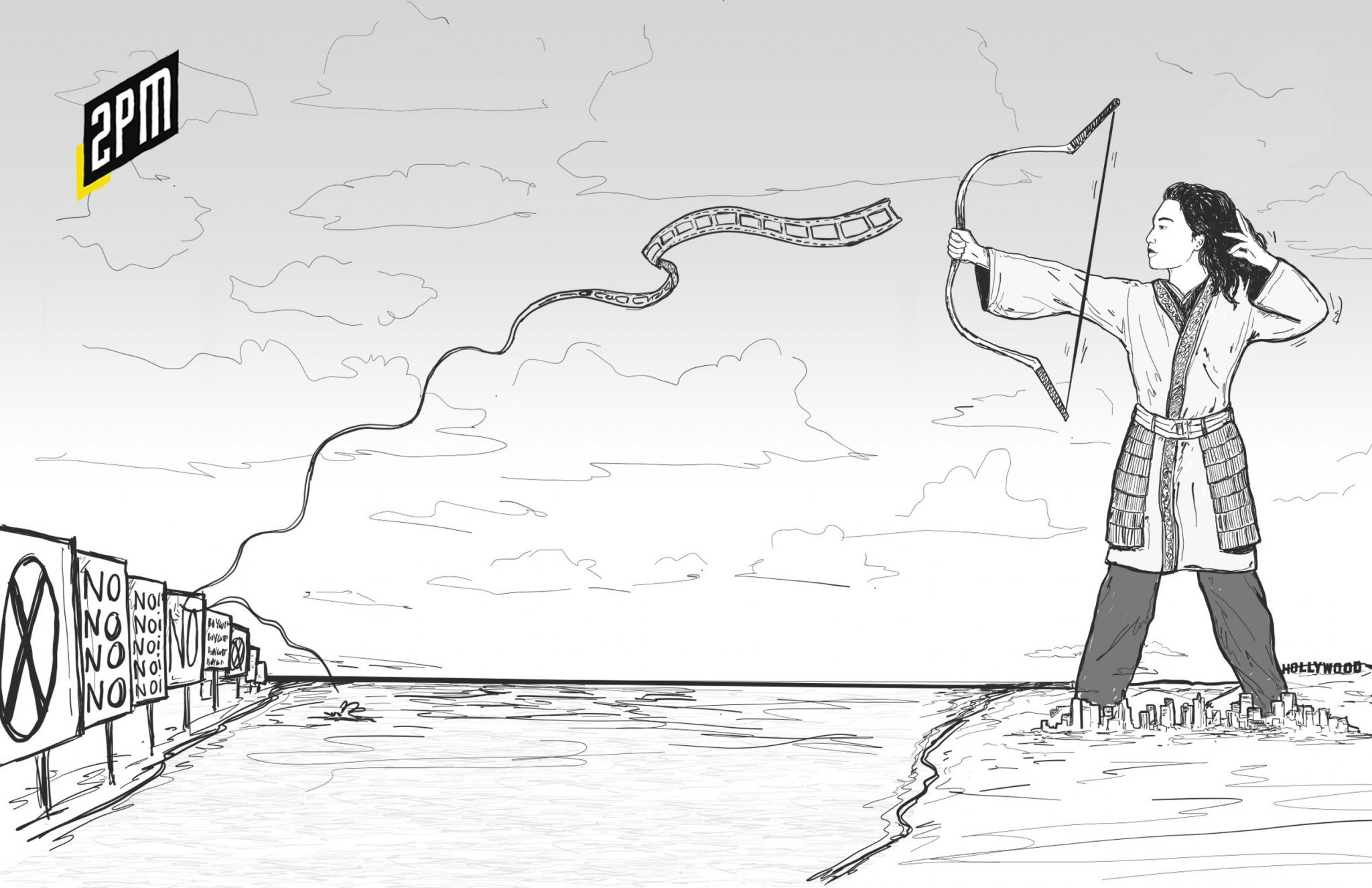
Memorando: A Grande Divisão

Jogos de guerra, continuação. Muitas vezes acreditamos que a divisão partidária é um fenômeno puramente americano, mas talvez não haja maior exemplo da interseção volátil da política e da economia global do que a situação da política comercial da China e dos Estados Unidos. Talvez sempre tenha sido assim. Mas esse novo precedente competitivo foi estabelecido em um novo terreno.

Em 1979, os EUA e a China estabeleceram uma nova ordem de cooperação diplomática e bilateral. Entre aquele ano e 2017, as exportações e importações cresceram de US$ 4 bilhões para US$ 600 bilhões. No entanto, o déficit comercial e a injustiça das práticas comerciais são questões persistentes entre os dois países. Sua persistência é uma mancha no resto. Vou explicar.

Uma nova guerra comercial nasceu de classes de ativos alternativos, como software, filmes, marcas e comunidade digital, alguns dos quais são influenciados pela política da China continental e outros pelo nosso próprio estado político. Plataformas como Snapchat, Twitter, Reddit e Google foram impedidas de operar na China continental em nome da censura patrocinada pelo governo. Até recentemente, nunca havíamos ameaçado com reciprocidade. A venda forçada do TikTok, patrocinada pelo governo, muda isso. A Oracle, liderada pelo grande doador republicano Larry Ellison, venceu a licitação para as operações da TikTok nos EUA.

Não se trata de uma aquisição limpa de operações, e espera-se que a Oracle seja posicionada mais como um supervisor nacional de operações - um "parceiro tecnológico confiável" nos EUA - do que totalmente responsável pelas rédeas. Em um novo e inquietante cenário de precedentes, a Casa Branca terá a palavra final sobre se o negócio está ou não concluído.[2PM, 1]

Com dúvidas sobre o que a aquisição (ou parceria) implica, o despacho oficial de Pequim declarou que a ByteDance, controladora do TikTok, não venderá o algoritmo para a comunidade criativa. O valor da plataforma é esse algoritmo. Essencialmente, estamos dispostos a deixar morrer um mecanismo econômico para criadores e comércio apenas para responder à China. Durante décadas, a política comercial entre as duas superpotências excluiu principalmente o setor de software, mas com uma linguagem penetrante dos mais altos escalões do governo. Isso mudou. Em War Games, eu explico:

Mas com o Secretário de Estado dos EUA sinalizando que mais ações estão por vir, a repressão está se aproximando. Citado no início deste mês, o secretário Mike Pompeo declarou que as empresas americanas deveriam desconfiar da tecnologia chinesa "não confiável". Ele também citou os perigos das redes de nuvem do Alibaba.[2PM, 2]

As tensões geopolíticas estão acelerando tendências que terão efeitos devastadores sobre as pequenas empresas americanas e as empresas de crescimento apoiadas por empreendimentos. A guerra comercial continua há quase dois anos, Pequim e Taiwan estão em desacordo em relação à atividade militar no Mar do Sul da China, a forma como a China lidou com uma epidemia que se transformou em pandemia gerou desconfiança entre seus pares comerciais e as relações da China com Hong Kong estão complicando ainda mais as questões comerciais nos negócios internacionais. Sem mencionar que o potencial de uma primavera americana deixou os observadores internacionais questionando a autenticidade de tudo isso. A ação aqui e a inação em outros lugares é uma posição confusa. O fato de as maiores empresas americanas apoiarem o ativismo internamente e não no exterior complica ainda mais as coisas.

O cálculo funciona nos Estados Unidos, onde empresas como Nike, Disney e Apple são mais jovens e liberais. Esse mesmo cálculo não funciona na China, onde o tipo errado de apoio a uma forma idêntica de ativismo pode impedir o avanço dos negócios. Basta olhar para o lançamento de Mulan.

Esta semana, Mulan ocupou a primeira posição na aba de tendências do Disney+. De acordo com o CinemaBlend, o filme teve uma participação de 15% em todas as transmissões, em comparação com a participação de 10% de Hamiltonem seu primeiro fim de semana completo. Além disso, Mulan aumentou os downloads do Disney+ em 68%, com um aumento de 193% nas compras dentro do aplicativo. Isso se soma a uma abertura americana de US$ 30 milhões para o filme hospedado exclusivamente no Disney+. Na China continental, a recepção não foi tão positiva, devido a uma denúncia de que o filme exigia cooperação com autoridades de Xinjiang, uma região que abriga supostos campos de internamento em massa para minorias étnicas e foi acusada de práticas de trabalho forçado.

Os ativistas lançaram uma nova campanha #BoycottMulan, e a Disney se viu como o exemplo mais recente de uma empresa global que está tropeçando em um conflito cada vez maior entre os Estados Unidos e a China sobre direitos humanos, comércio e segurança, mesmo com suas economias permanecendo entrelaçadas. [3]

O resultado foi um boicote efetivo ao filme, que estreou na China com uma arrecadação de apenas US$ 23 milhões. Na semana passada, a plataforma de avaliação de filmes Taopiaopiao, do Alibaba, publicou pontuações sociais ruins, diminuindo a demanda pelo filme e refletindo uma desconexão entre os esforços da Disney para estrear um filme calculado que exigiu dados, grupos de foco e aprovação do governo para ser filmado. Mulan, da Disney, foi feito para o público chinês, pelos chineses e com os chineses. A disparidade entre a recepção americana e o fracasso chinês é um indicador de que nem mesmo a Disney consegue superar a grande divisão entre as duas nações.

O senador americano Josh Hawley (R-Mo) condenou a Disney por filmar na região, no que ele chamou de um esforço para "encobrir" os erros da região. A política da economia global está se tornando cada vez mais complicada. Entre as empresas listadas na Fortune 500, as seguintes também foram conectadas a Xinjiang: Amazon, Exxon, Ford, General Electric, Citigroup, Dell, PepsiCo, FedEx, Coca Cola, Nike, Heinz, Abbott Laboratories e Oracle - o suposto proprietário das operações do TikTok nos EUA - de acordo com um artigo de 2018 da ChinaFile, uma revista on-line sobre as relações entre os EUA e a China.

Nós borramos as linhas entre política social, direitos humanos e negócios corporativos a ponto de não percebermos as implicações causadas quando essas linhas borradas não são mais aceitáveis. Os Estados Unidos têm a população mais encarcerada do mundo. O sistema prisional privado é um grande negócio com postos avançados perto de nossas casas, estádios, fábricas e centros de escritórios. Já na década de 1990, a mão de obra carcerária americana empregava setores como telemarketing, manufatura técnica e marcas como a Victoria's Secret[4]. Levaríamos anos para separar nossa cultura corporativa desse sistema e, ainda assim, nossas corporações se apresentam com um herdeiro de virtude aqui e no exterior.

Sem mencionar que uma possível primavera americana deixou os observadores internacionais questionando a autenticidade de tudo isso. A ação aqui e a inação em outros lugares é certamente uma posição confusa. O fato de as maiores corporações dos Estados Unidos apoiarem o ativismo internamente e não no exterior complica ainda mais as coisas.

Em War Games, concluí: "As empresas devem começar a levar em conta essas mudanças na geopolítica". Agora que o corporativismo e a política estão tão entrelaçados, é apenas uma questão de tempo até que cenários como esses - imprevistos há apenas alguns anos - se tornem comuns. A grande preocupação das empresas americanas é que se tornará muito difícil levar em conta essas variáveis em qualquer escala.

Os números da bilheteria internacional de Mulan, da Disney, foram um fracasso histórico por motivos dentro e fora de seu controle. Mas considere os efeitos de longo prazo do discurso em torno de seu desempenho sofrível. Eu diria que menos empresas americanas estarão dispostas a competir no exterior, dada a crescente complexidade sociopolítica. E com o novo precedente estabelecido nos Estados Unidos pela aquisição da TikTok, podemos esperar reciprocidade nesse aspecto. É importante lembrar que temos nossas próprias complexidades sociopolíticas e, nesta era de economia global, isso torna nossas exportações físicas, filmes de Hollywood e plataformas de software igualmente vulneráveis. A confiança do consumidor poderia usar caminhos para um crescimento corporativo eficiente, mas as duas grandes economias nacionais parecem estar em desacordo, mais do que nunca. A grande divisão crescerá. E, mais do que nunca, o consumidor americano perceberá.

Por Web Smith | Editor: Hilary Milnes | Arte: Alex Remy | About 2PM

Leia a parte 1 de 2: Jogos de Guerra

Memo: On The Fourth Day of Quarantine

4thdayquarantine.jpg

These are interesting times that require historical perspective. The influenza outbreak of 1918 coincided with the final year of  The Great War, one of the first times in recorded history that soldiers were shipped – en masse – to new countries. First recorded at Fort Riley, Kansas in March of 1918, 24 countries recorded cases by October of that year. Global conflict exacerbated the transmission of the virus and the lack of care that many received due to shortages in available medical professionals. Like an accelerant, the free flow of soldiers contributed to the epidemic.

Censorship by the United States, United Kingdom, Germany, and France led to uninformed populations. However, there was no censorship in Spain. So when the country’s King took ill, the free and open communication influenced a false impression that this strain of the influenza originated in Spain. And so, the moniker of the Spanish Flu was born. Misinformation and censorship were partly responsible for the spread the global epidemic. Inaction was the other.

In one example, consider Philadelphia. One of the worst cases of the 1918 epidemic occurred after Dr. William Crusen, the city’s public health director, allowed a parade to continue as scheduled despite fair warning. On September 28, 1918, that parade drew 200,000 to Philadelphia’s streets and within 72 hours, the city’s 31 hospitals were filled. Every bed was taken. The parade was called to sell war bonds.

The actions of city authorities across America seemed largely dictated by military and business priorities rather than health concerns and nowhere perhaps is this better demonstrated than in the example of New York. [1]

Censorship, a prioritization of local commerce and events, and a lack of clarity in national leadership are but a few of the parallels between today’s public health crisis and the epidemic of 1918-1919. However, that is where the comparisons end. Buoyed by the end of a global conflict, the Dow Jones Industrial Average returned nearly 11% in 1918 in the year that the Spanish Flu killed nearly 1% of the American population. One hundred years later and this same economy is tied to a global economy of such magnitude that the Dow Jones Industrial average suffered a 2,000 point fall over four days despite a relatively small presence of the virus within the borders of the United States.

The magnitude of impact on the globalized economy has yet to be realized as cities continue to quarantine citizens and retail and grocery supply chains crack under pressure. The concept of a global supply chain didn’t exist in the early 1900’s. But it did exist in 2003 during a deadly outbreak of severe acute respiratory syndrome (SARS) in China. That virus impacted nearly 9,000, killing 774 before being contained. In the process of combating this crisis, 2003’s epidemic exacerbated supply chain concerns in ways that would influence how retail was practiced in the then-developing country.

Alibaba and SARS in 2003

Today’s economic interconnectivity leaves markets susceptible to global crises. We are bearing witness to this today with a number of events, conferences, and trade shows cancelled out of precaution of spreading the COVID-19 strain of coronavirus. Events like Facebook’s F8, Shopify’s Unite, Austin’s South by Southwest, and Columbus’ Arnold Fitness Festival are each responsible for hundreds of millions in economic impact. They were cancelled, mostly without contention or uproar. And despite living in age of digital fluency, the Spring of 2020 has illustrated how dependent the international business community is on in-person transactions, interactions, and business development. There are parallels to draw.

Web Smith no Twitter

In 2003: the Canton Fair (China) saw an ~80% drop in attendance. Alibaba built Taobao and Alipay – partly in response to SARS. This launch moved Alibaba away from its initial B2B intentions and towards its P2P marketplace model of today. 2003 sales: $10M 2005 sales: $1.2B

International supply chains and air travel propels markets forward. In this same way, epidemics are more likely to become pandemics. China’s business community learned this lesson at the turn of the 21st century.

China’s Canton Fair in 2003 was a pivotal moment. The China Import and Export Fair is a trade event held each Spring – since 1957 – in Canton (Guangzhou), China. That April, Alibaba Co-Founder Jack Ma faced a difficult decision. With the 93rd Fair set to begin, Ma’s promise to 50 clients was at risk of being broken, Guangzhou was a SARS epidemic zone but Alibaba was responsible for the sales and marketing of goods sold by these 50 clients.

In 2002, eBay invested US$30 million for a 33 percent stake in Each Net, marking the first foreign company to enter into China’s e-commerce sector. [4]

Like Philadelphia in 1918, the Guangzhou government permitted the fair to go on despite the risk to the public. Many of the fair’s exhibitors were reluctant to take the risk. The year prior, the Canton Fair featured 135,000 exhibitors and $19.7 billion in goods traded. That next year, 2003 saw an 85% drop in attendance with just $3.8 billion traded. Ma determined that it was in Alibaba’s interest to attend the event, keeping the commitment to the company’s 50 clients. This decision endangered employees, nearly killing one of them after her return from Guangzhou to Alibaba’s Hangzhou headquarters.

During quarantine, the headquarters were sealed off with a heavy iron chain. A tent was set up downstairs to take charge of diet, temperature checks, disinfection, and care. Jack Ma’s house was guarded night and day. [2]

The result? Nearly 500 associates and nearby medical workers were quarantined. The world’s largest business-to-business marketplace was under siege and for the first time, Ma permitted the majority of his employees to work remotely. This, though broadband communication was in its nascent stages in China. Ma used the pandemic to directly address two concerns. Ebay was beginning to encroach on Alibaba’s growth. And through the frustrations of that year’s Canton Fair, Ma understood that too much of retail was dependent on traditional retail channels. In that eight days of quarantine, the Alibaba team engineered the solution.

Alibaba launched Taobao, its peer-to-peer marketplace and Alipay, two systems remain  pivotal to the corporation’s growth. This moved Ma’s original vision away from Alibaba the B2B company and towards the marketplace of today. At 8 A.M. on May 10, 2003, Taobao went online after the fourth day of quarantine. The homepage read: “Think of those who start a business in trying times.”

Many countries around the world issued travel warnings for businessmen traveling to China, and thus many turned to Alibaba’s online business to source Chinese goods. Starting in March 2003, Alibaba’s B2B e-commerce business added 4,000 new members and 9,000 listings each day, a 3-5x increase over the pre-SARS rate. [3]

Just 17 years later and China’s online retail economy is the envy of the world. At nearly 37% penetration and growing, analysts estimate that the rate with reach 63.9% by 2023. It’s evident that online retailers like Alibaba (and JD.com to a lesser extent) used the crisis to move their countries into eCommerce leadership position.

There were 600,000 internet users in 1997 and nearly 80 million by 2003, according to the peer reviewed journal. Consider this excerpt from a [4] 2006 study on eCommerce growth in China.

The first online sale in March 1998 symbolised the beginning of China’s e-Commerce (OYCF, 2000). US$40 million were generated in 1999 in China, opposed to US $8 million in 1998. The total value of consumer online purchasing reached US $38.6 million in 2000. […] Moreover, according to Easyspace Ltd. Company, the market’s value is projected to expand to US$23 billion within 3 years, in contrast to the current value of US$500 million per year (World IT Report, 2003).

Compared with American and European markets, China’s e-Commerce capacity lags behind (Zhang, 2002). For example, consumer e-Commerce revenues for the first quarter of 2002 in the America was US $17 billion; whereas in China, e-Commerce revenue is projected to reach only US $4.8 billion by 2004. However, this is understandable. Consumers in developing countries tend to purchase goods offline due to a number of factors that affect e-Commerce development. In China, the trade tradition is represented with ‘‘pay off in cash on good’s arrival’’ on a face-to-face basis. [4]

This is an incredible excerpt. In 2002, China’s gross receipts in online retail were projected to reach $4.8 billion by 2004. The United States reached $17 billion by 2003. In the same year that America’s market surpassed $17 billion in sales, Alibaba hovered around $10 million – a far cry from American giants like Ebay or Amazon. By 2003, Amazon reached $3.92 billion in net sales. But by 2005, Alibaba leaped from $10 million to $1.2 billion. Today, these numbers are drastically different: China is leaps and bounds ahead.

  • China (2019): $1.935 trillion (Alibaba leads)
  • United States (2019): $611 billion (Amazon leads)

The Bigger Picture: America and DTC Penetration

Within five years of the SARS epidemic, China’s retail significantly shifted from physical retail to online channels, expanding the total addressable market (TAM) for: marketplace retailers, Chinese brands, and foreign brands hoping to do business within the country.

Ma used eCommerce as a hedge against catastrophe. Never again would a cancelled trade show or business conference impact Alibaba’s sales in the way that it had in 2003 and he was correct. In 2002, China’s penetration rate was 1/4th of the United States. Today, China is at 36.6% penetration while America lags behind at 11.2%. One country prioritized a balanced blend of offline and online retail, another remained focused on the types of events and retailing that has been gravely impacted by today’s public health crisis.

Screen Shot 2020-03-09 at 2.21.28 PM
Comércio eletrônico da China como % do varejo

There is a lot to be gleaned from Alibaba’s growth between 2002 and 2005. In the age of global interconnectivity, opportunities can be found in times of crisis. China’s retail and delivery infrastructure is now more established and capable of operating throughout pandemic scares, including the most recent. Alibaba is once again ahead of the curve.

Whitagram-Image 4.JPG

In contrast, America has seen steep declines in travel and associated commerce activity. This has begun to impact small and large businesses alike, emphasizing our preferences for physical retail. But online sellers of essential goods and services are beginning to see a surge in demand as more consumers shop from home.  A state that has yet to be impacted by the current coronavirus outbreak, Ohio has been witness to a surge in online retail activity.

And while anecdotal, history suggests otherwise. Alibaba faced considerable headwinds when it scaled from $10 million to $1.2 billion in gross merchandise value (GMV) in two years. Broadband infrastructure was in its nascent stages and Chinese culture preferred physical marketplaces, a preference shared by many Americans today. The SARS epidemic coincided with the proliferation of broadband connections, allowing consumers to experience what could be done from the safety of quarantine within their homes. Duncan Clark, author of the new book on Alibaba was recently quoted:

This is just when people began to be offered broadband connections, and people began to experience what they could do when they were stuck at home. […] This was the genesis.

Many of the impediments to online retail adoption that hindered China do not exist in the United States. Our broadband infrastructure is superior and 5G technologies are in early stages of adoption. It is only a matter of consumer education and preference. On the fourth day of quarantine, Alibaba changed how an entire country consumed products and services. It’s time that America begins to do the same.

Relatório de Web Smith | Por volta das 14h