

This member brief is designed exclusively for Executive Members, to make membership easy, you can click below and gain access to hundreds of reports, our DTC Power List, and other tools to help you make high level decisions.
Memo: On WFH and Community

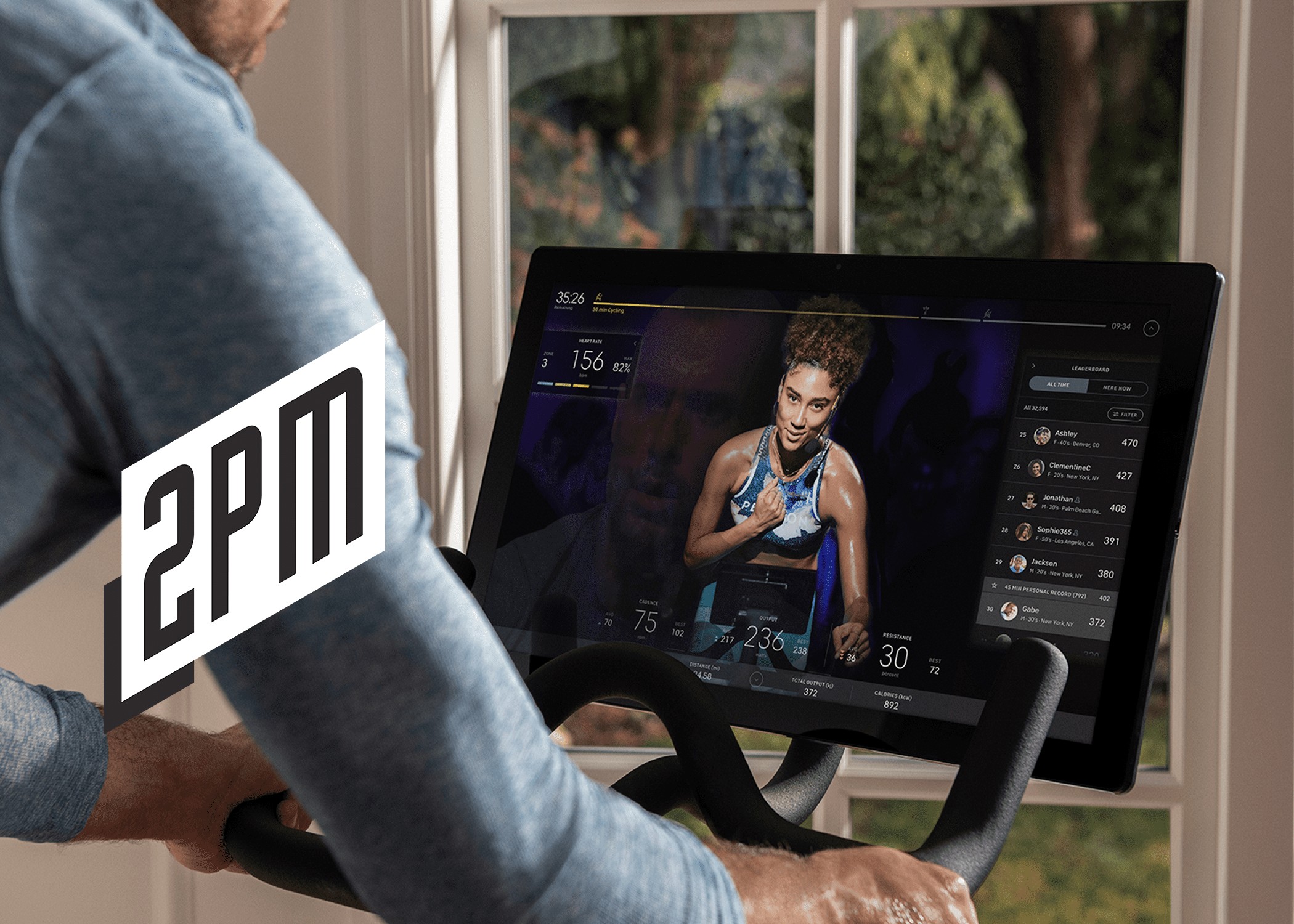
On working from home, fitness, and community. The first weekday after the major disruptions began and on Twitter, a small group of venture capitalists were organizing times to meet at the preferred gym of the moment. Over thirty minutes of replies and excitement, a small group of forty-year-olds organized around a Monday morning Peloton ride. Within hours of this exchange, California’s Bay Area issued a shelter in place order. What was an optional gathering may become the norm. As more cities prohibit recreational travel, free flow to gyms, restaurants, and social gatherings have all but ended.
There are no atheists in foxholes. According to historians, World War II was the first time that the aphorism was heard. For one, it’s a dated phrase. But given the mass closure of businesses, the shuttering of travel, government mandated self-quarantine, the closures of borders, the calls for shared sacrifice, the tumbling markets, and the fear of impacted welfare – this is the closest that many of us have come to the second-order effects of global disruptions. For many, if not for all, wellness is no longer a luxury. As the stress of the isolation continues to mount, community is more of a priority.
Regardless of the aphorism’s original intent, the phrase means something different in this day and age. A number of Americans have begun to shun organized religion altogether. In its place: sports, diets, politics, professional communities, and brands. If atheism is a lack of belief, we rarely see it these days. For secular institutions, we are avid believers. They are our religions. In Imagined Communities, I wrote:
In this way, America has not become non-religious. Rather, America spent the last several decades forging new communities. These types of communities don’t show up in Thompson’s polls. America believes in brands.
Add the belief of fitness to the above list. COVID-19 arrived at a pivotal time for The Related Companies (TRC) and their subsidiaries: Equinox, SoulCycle, and Pure Media. The retail real estate sector is suffering from wide disruption – a result of government mandate. With stores, bars, restaurants, and gyms closed, Stephen Ross’ portfolio is being impacted in ways that few would have foreseen a month ago. Then, two of the first recorded cases of COVID-19 transmission in private gyms occurred within two separate Equinox facilities: New York and Bethesda, Maryland. The company has thus far resisted nationwide closures. March 2020 was ripe for TRC’s first attempt at a direct-to-consumer fitness strategy. But to add insult to injury, the launch of SoulCycle’s DTC product was thwarted when SXSW was cancelled.
Customers will have to exercise patience: Shipments roll out later this spring to select cities including New York, Los Angeles, Chicago, and Austin, where the bike was scheduled for a splashy SXSW debut before COVID-19 concerns spurred the festival’s cancellation. [1]
Shipments will not begin until late Spring, giving direct competitors like Peloton, Mirror, and Tonal the runway to market to as many former gym goers as their marketing budgets will allow. As premium fitness companies like Equinox face growing criticism for acting too slowly in the face of a deepening public health crisis, we are certain to experience a boom in direct-to-consumer fitness.
Peloton is “just a bike with a tablet attached” according to a number of critics. Former Google marketer Adam Singer recently quipped:
My wife is going to win her battle of buying one of those Peloton things isn’t she?Maybe I can find a clunker exercise bike and glue a tablet to it to save some money. I can’t win. This timeline is against me at every macro and micro level possible.
A timely article that touched on critics like Singer. The New York Times also covered the botched SXSW rollout at length in “Maybe You’ll Stop Mocking Peloton.”
A company within the Equinox Group’s portfolio, Equinox Media, also chose this week to introduce Variis, an app featuring content for home workouts from Equinox, SoulCycle and Precision Run, among others. (The company said it had intended to release Variis at South by Southwest, the festival in Austin, Texas, before it was canceled.) [2]
It would seem that community is at the center of this conversation, not the equipment itself. To that end, that trench war aphorism means something different today. As a growing number of entrepreneurs and technology workers adopt a new distributed work lifestyle, there will be new appreciation for connectivity – even if purely digital. With the increased threat of traditional connectivity being disrupted, digital methods of fitness community no longer seem novel.
For many, fitness is a form of organized religion. When New York’s Rumble decided to close, its faithful revolted over social channels. The same can be said for Barry’s Bootcamp, OrangeTheory, and a number of other organizations with “cult” followings. There are providers that are well-positioned to benefit from this shift from premium gyms and group fitness classes to in-home fitness. 2PM published this in September 2018:
By building systems that allow community to be gained outside of physical retail outlets, these tools are aiming to become the new medium for instruction and training. These internet-enabled equipment manufacturers aren’t just selling plastic and metal, they’re selling virtual community. With the advent of polished functional fitness gyms like Orangetheory, SoulCycle, and CycleBar, fitness consumers have grown to value the ability to: a) train with a group b) and track progress over time, with the use of a provided IoT device. [2]
While SoulCycle’s late-Spring launch lands outside of the arbitrage window: Mirror, Tonal, and Peloton are clear beneficiaries. Premium, community-driven providers like Equinox will certainly lose customers to these digital solutions. Especially if these community restrictions continue through the summer. Digital communities like Whoop also have an opportunity to bridge the gap between outdoor activities and in-home fitness. And if real-time connectivity is not a primary need, traditional fitness brands like Rogue will surely benefit from an impending shift to in-home fitness. A recent Instagram post suggests: “It doesn’t need to be fancy to be effective.” A clear nod to the company’s growing number of connected fitness competitors.
Joe Vennare on Twitter: “At-home and connected fitness is seeing a bump in sales and usage. @Hydrow_by_CREW sales increased 3X in recent weeks. Home usage is up more than 40%. @tonal Weekly sales up 36%, weekend sales up 82% WOW. This weekend saw the highest usage in company’s history. https://t.co/VXNLYr2crN / Twitter”
At-home and connected fitness is seeing a bump in sales and usage. @Hydrow_by_CREW sales increased 3X in recent weeks. Home usage is up more than 40%. @tonal Weekly sales up 36%, weekend sales up 82% WOW. This weekend saw the highest usage in company’s history. https://t.co/VXNLYr2crN
As more Americans track the news, panic and disarray will set-in. A lack of community may exacerbate the symptoms of depression as consumers are told to avoid professional settings, social events, and now health and fitness communities. For many of us, the idea of war was as foreign as the lands that they’re fought on. And shared sacrifice is something that many of us ready in history books. In this way, community is more crucial than ever.
In 2017, The Atlantic’s Zan Romanoff wrote: Gyms provide ritual and community, serving as a sort of religion. They also promote values American culture already worships—capitalism and overwork. If fitness is the new religion, community is its driver. And what many consumers felt was a luxury may now be more of a necessity. In this way, this pandemic is as close to a proverbial foxhole as many will ever know – a sudden lifestyle change with immediate consequences.
Consumers with means will do whatever they can to mitigate isolation. This means that it’s likely that DTC fitness critics will reluctantly adopt digital community fitness. In the long-term, digital communities may not replace premium gym experiences. There will always be a need for them. But in the interim, these DTC products will be good enough. Some semblance of community and camaraderie is better than none at all. Because there are no atheists in foxholes. We all want to believe in something.
Report by Web Smith | About 2PM
No. 332: Risk and Religion of Peloton
Today’s public markets seem to penalize the cults of personality. For an example, look no further than WeWork’s current debacle. In a sequence of events that may remind you of the ouster of Uber’s founder and CEO, WeWork also raised venture capital from Softbank and Benchmark. And the company’s board happens to be at odds with its own founder and CEO, just in time for a long-anticipated initial public offering.
It’s kind of stunning how quickly Adam Neumann has become a pariah. I have always thought the business was of questionable value. But it goes to show you how many people are ‘outcome over process.’ And the second the IPO stumbles, the knives come out.
Nick O’Brien
Two venture-backed companies with growing losses and questionable paths to profitability and only one of them looks to clear the bar to IPO. One possesses a cult of personality in Adam Nuemann, the other lords over a cult of fitness thanks to consumers like you. A notoriously fickle industry, Peloton has combatted the ebbs and flows of fitness micro-trends by recruiting and retaining top management. To Peloton, retention is the KPI.
Led by John Foley, Peloton is equal parts: quality of product, quality of programming, and quality of its users. These users are Foley’s collective x-factor. It’s also a cohort that is more vulnerable than you’d think.
Peloton reported an impressive $915 million in total revenue for the year ending June 30, 2019, an increase of 110% from $435 million in fiscal 2018 and $218.6 million in 2017. Its losses, meanwhile, hit $245.7 million in 2019, up significantly from a reported net loss of $47.9 million last year. [1]
As Peloton nears IPO, the company has chosen to experiment with a new sales promotion. The expectation is that Peloton will bolster a few key metrics: new users, new subscriptions, and number of streams. By instituting the “30 day guarantee” found in informercial fitness products like NordicTrack and Bowflex, Peloton runs the risk of reducing lifetime value (LTV), increasing churn, and ostracizing the company’s highly motivated base by marketing to casual users and moving down market.
In the beginning, Peloton buyers were required to purchase the equipment in full. By partnering with Affirm, the consumer finance startup, the hardware / software company opened the doors to 0% financing over 36-48 months. This opened the product to middle class consumers without degrading LTV and average order value. This week, the company took one final step to reduce friction. But while analysts laud the move as an enabler of growth, I’d argue that it may backfire.
Peloton is unlike anything that we have seen. For power users, the matte black cycle has become a source of inspiration, motivation, and even accountability. Personalities like Ally Love and Alex Toussaint have become household names. Just this summer, tennis legend Chris Evert made note of her apreciation for Ally Love during the broadcast of Tennis’ US Open. She noted that Love was “her spin instructor.” Before that moment, they’d never met in person. In my own household, I ocassionally ask my wife about her training sessions, “How was Alex, today?” She laughs every time; the running “joke” between us is that she refuses to stream another instructor.
The cult of Peloton isn’t anchored by the equipment. Rather, it’s the company’s human resources that remains the draw. And surprisingly, the company seems to be willing to manipulate it for short term growth.
 As of the June filing of the the company’s S-1, Peloton showed over 511,000 subscibers and nearly 85 million cumulative sessions. To many users, it is an addiction of sorts. But the addiction is less a result of the physical product and more of a product of its efficacy. That takes time to materialize, much longer than a month. The hardware company’s marketing flywheel is perpetuated by the consumers who evangelize it. I’d argue that the time horizon to understand its value is closer to three months. A one month trial seems like a churn engine, not an acquisition funnel.
I’ve sold a number of colleagues on owning a Peloton of their own. This is commonplace, the S-1 suggests a high rate of word of mouth sales. In selling the product to peers, I’ve noted that the rides are painful but well worth the commitment. The hardware is beautiful and the augmented live stream is extraordinary. But it’s the sense of accomplishment and the commitment to the platform that I have found to be most valuable to the product’s brand equity. So yes, part of the lock-in stems from the commitment to ownership.
Understand the dualing strategies in the fitness industry:
- Planet Fitness thrives on low motivation, short-term commitment, relatively minimal lock-in, and low attrition. The costs are so low, many members forget that they are still paying. This is by design. Costs are minimal because volume is key. If every member showed on the same day, there would be no space to exercise. Planet Fitness is a gym model.
- Equinox thrives on high motivation, network effects, longer-term commitment, and low attrition. Costs are relatively expensive; this cost prevents overcrowding and funds amenities. The network and those amenities keep customers coming back. Equinox is a club model.

At the height of the functional fitness craze, CrossFit’s growth was driven by high participation, efficacy, and peer-to-peer evangelism. Patrons from traditional gyms paid a premium to join one of 7,000 grungy, glorified garages and warehouses around the world. These customers were seeking a twisted enjoyment of challenging workouts (and the physical transformation that followed). But more importantly, they sought an active community. Peloton is shifting from the exclusivity of the club model to the inclusivity of the gym model. And this is where things become trickier for Peloton. The new pricing strategy conflicts with the longterm viability of its market position.
Nothing happens in a month
The 30 day trial promotion has been widely reported in publications like Bicycling Magazine and Shape.
This new offer is a clever way for the brand to give potential long-term customers a true taste of the bike experience and the wide variety of workout classes. For you, it’s a great way to try before you buy. [2]
This messaging conflicts with many of its value propositions. If I had to guess, it was likely a point of conflict within the c-suite. The company’s corporate structure is unique. It has nine members in that c-suite. Yet, a chief of marketing (CMO) is not one of them. It’s one example of an unfortunate trend in consumer retail. After three years as PepsiCo’s senior brand manager, Carolyn Blodgett left a short stint with New York Giants organization to become Peloton’s senior marketer. As an SVP, it’s likely that she reports to the Chief Revenue Officer (Tim Shannehan) or the Chief Content Officer (Jennifer Cotter).
In this way, the lack of a singular vision may play a role in Peloton’s decision to test a trial system. While pricing incentives aren’t rare in SaaS sales or the marketing of physical goods, they do tend to be the tip of the spear for brands seeking to introduce further discounts and incentives. And they spell trouble for a company that will be largely defined by the best practices of fitness clubs and software-based network effects. Peloton will have a hard time explaining the supremacy of its product as the trial periods grow from one month to three or four. Or worse, when the $2,300 cycle that you paid for is on sale for $1,200 over the holiday season. Pricing incentives are a slippery slope.
With marketing and real estate costs eating into Peloton’s net profitability, the writing is on the wall. The company believes that growth costs have become too expensive and with a $1.2 billion IPO in waiting, the story of efficient growth may determine the company’s viability over the next two quarters. Unfortunately, this may be a short-sighted injection of growth.
Like WeWork’s attempt to silence its cult of personality, Peloton risks weakening its cult of fitness. Only one of these seems intentional. It’s unclear whether Peloton’s management fully understands the risks involved. The company’s strength is two-pronged: its on-screen talent and its cult-like early adopters. The market may reward Peloton for leaning on new methods of influence and acquisition. However, their management won’t begin to see the unintended effects of mass adoption (and increased churn) until its marketing flywheel begins to sully.
In the unfortunate case of that happening, Peloton will become just another in-home cycle with a screen. And in that case, consumers will see a lot more of the words Peloton Infomercial 20:00 in their cable guide’s lineup. And that’s no place for a religion to be sold.
Read the No. 332 curation here.
Report by Web Smith | About 2PM
Additional reading: Peloton vs. Tonal (Member Research)