
This member brief is designed exclusively for Executive Members, to make membership easy, you can click below and gain access to hundreds of reports, our DTC Power List, and other tools to help you make high level decisions.
Issue No. 267: On DNVB Branding
What’s next in DNVB branding? Every vertical brand story has its beginning. For lifestyle and fashion DNVBs that are fortunate enough to work with the finest branding agencies, this story often begins with its founder’s biography, the problem that product x begins to solve, and proclamations of the brand’s inevitable staying power. It’s a short history, as most are in online-first retail. But it’s also a forward-thinking approach, one designed for: eCommerce, Instagram and Google advertising, and third party delivery. Less “we’ve been” and more “we will be.”
According to the godfather of the term, “DNVBs are maniacally focused on the customer experience and they interact, transact, and story-tell to consumers primarily on the web.” As brands begin to focus on off-line retail, you’ll begin to find that the packaging around the brands will change with that focus. Whereas technology and futurism appealed early on (2010-2014), the brands that succeed over the next ten years will focus on heritage as much as they focus on futurism.
Phase One (2010-2014): Technology
Warby Parker is the best example by a mile. The brand grew by implementing a practice that other direct-to-consumer companies had not. The company worked to eliminate all barriers to purchase by implementing tools designed to facilitate an ingenious customer experience. For this first phase of DNVB marketing, the eCommerce brand’s technology was the draw. The product is nominal and affordable but the access to it became just as much a part of the brand as the eyewear itself. Take this excerpt from a 2013 Wall Street Journal article co-written by Kevin Lavelle and me:
We are now in the age of e-commerce 3.0, where entrepreneurs can launch companies with few barriers to entry. eCommerce 1.0 consisted of crude online shopping in the ’90s offered by a few businesses met with significant consumer skepticism. This evolved into the more sophisticated interactions of e-commerce 2.0 in the mid 2000s, when most companies realized that if they weren’t online, they were endangering their future.
A new time is here — and the power no longer lies in the hands of a few buyers at large stores. Bigger businesses can be upended by an upstart competitor with a superior product. And retail startups no longer have to endure the long, slow road of trade-show hopping to get their product in front of a handful of buyers, or giving away a hefty portion of each sale to distributors.
Phase Two (2014-2018): Comedy
Dollar Shave Club’s 1m33s “Our Blades Are F***ing Great” video was developed to promote the launch of a (since-acquired) brand and has now been viewed over 25 million times. This internet ad is considered one of the premier examples of top funnel marketing and DSC’s brand of humor has since influenced other mens-focused brands to pursue humor as a means of brand differentiation: Chubbies (no. 67), Untuckit (no. 48), Tommy John (no. 54), and Mizzen+Main (no. 86).
Capturing one customer by way of a top funnel direct-to-consumer ad can cost upwards of $20 per click on Facebook. Digital advertising can be costly. To counter these steadily rising costs, brands have been stimulating awareness, interest, and consideration cycles by promoting a viral brand video. It achieves awareness, consideration, and intent.
Most importantly, introducing mainstream users to your brand and getting them to clickthrough for more information allows marketers to use tools like Facebook’s pixel to retarget casual visitors, moving them further down the sales funnel. Appealing to casual customers was an effective way of increasing top funnel traffic.
Phase Three (2018-forward): Heritage
Brands that began as the embodiment of online-first retailers are now expected to rival age-old incumbents, as they grow their annual revenues well beyond nine figures. Incumbent competitors are still around and some are even stronger than they were before the emergence of online rivals. All the while, new brands are beginning to compete on old-aged ground: mall retail, brick and mortar shops, and traditional advertising. The internet was supposed to completely eliminate these channels, instead, it provided cover until online retailers were prepared to go physical.
eCommerce has matured and physical retail has evolved into a more effective channel. As such, we’re beginning to see brands take on the traits of heritage companies. But if you’re eight years old, you won’t have much of a heritage story. For every Abercrombie, Filson, Ralph Lauren, Lily Pulitzer, Ray Ban, and Tag Heuer, there is a digitally vertical brand like Harry’s, Allbirds, and Outdoor Voices hoping to achieve staying power.
Heritage brands work to maintain heritage, while striving for futurism through of product and channel innovation (see Cole Haan). For heritage brands, presenting an aura of staying power means that the products and channels will present as forward-thinking for a millennial-driven, omni-channel age.
Meanwhile, vertical brands work to establish their products as an evolution of heritage products, while maintaining as many of their technological advantages as possible. For digitally vertical brands, longevity is projected by tethering to history and tradition.
The next wave in DNVB branding will be focused on developing history and tradition. Brands will deepen their roots by way of product collaborations, messaging, and unique origin stories of their own.
Look no further than this example of a heritage maker and vertical brand accomplishing both of their messaging objectives with one collaboration.
Messaging: “Legacy brands approve of us, they want us around.”

Messaging: “The finest legacy brands trust our platform.”
This month, Mr. Porter launched a tongue-in-cheek collaboration with Prada. As luxury continues to grow online, Mr. Porter is pushing to become the destination for such wares. This type of heritage nod goes a long way with consumers.
Since the 1990s, the brand has maintained an enviable position firmly at the forefront of fashion, to the extent that it has become a household name, a byword for sleek elegance, forward-looking design and, yes, a lot of fun print shirts. So great is the admiration for the brand’s wares in the MR PORTER office that there was something of a festival atmosphere when, in September 2016, we became the first online store to offer Prada’s much-coveted menswear collection.
No. 264: Welcome Common Thread
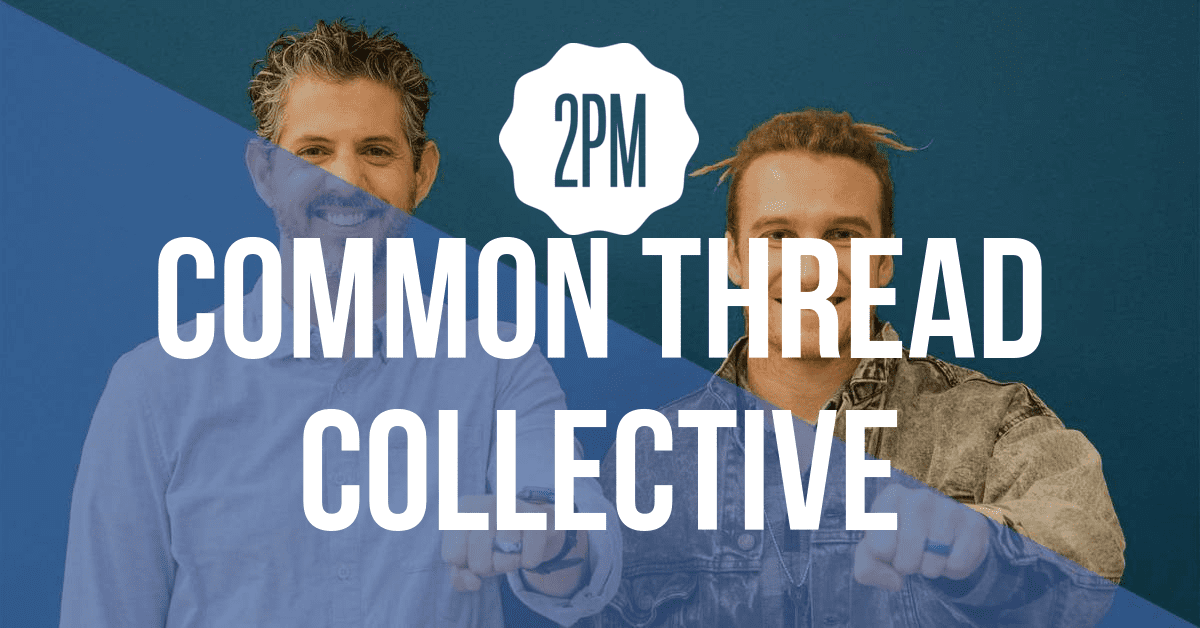
2PM has the privilege of working with a new corporate partner [1] for Q2 2018. Common Thread Collective is one of 2PM’s noted eCommerce agencies, notable for what they are doing on behalf of digitally vertical native brands. Demand generation for eCommerce is an oft-discussed topic on 2PM. There are three styles of content x commerce strategies. The most talked about models:
(1) publishers who are building an eCommerce as a revenue source:
- Goop | shop.goop.com
- Barstool Sports | store.barstoolsports.com
- Uncrate | uncrate.com/supply
- Gear Patrol |store.gearpatrol.com
(2) vertical brands who insource content-publishing to bolster organic traffic, improving net promoter score (NPS):
- Huckberry | huckberry.com
- Glossy | intothegloss.com
- Rogue | roguefitness.com/theindex
- Bevel | getbevel.com/bevelcode
There is a third way that brands interact with top-of-the-funnel consumers. And it centers around connecting brands to influencers, using messaging to develop content that resonates with prospective buyers. From there, it’s about harvesting first-party data to develop one on one relationships with consumers. Here is a highlight from a recent 2PM Executive Member Brief that should provide context for you:
Member Brief No. 3: The Attention Stack
First-party data (FPD) is information compiled and stored by by DNVB’s, media groups, and marketplaces. FPD describes your brand’s visitors, customers, and loyalists. Because companies with FPD have a prior relationship with their customers, they are in a position to use the data, to include names, addresses, email, demo, and gender — to communicate directly with them. First-party data is what is stored in your brand CRM. The attention stack is what your brand and data-minded operatives work to build by harvesting this data.
There isn’t just one way to approach the attention stack or the collection of first-party data. Here’s a look at one of Common Thread Collective’s methods.
- Step one: understand the brand’s existing and potential customers.
- Step two: recognize who influences the brand’s potential customers.
- Step three: configure the most efficient and effective approach to reaching potential consumers with the influence that CTC has cultivated on behalf of your brand. Invite them to engage with your brand.
- Step four: drive them to conversion or re-engage and retarget with the previously engaged consumer with dynamic product ads.
Given the importance of building the eCommerce sales funnel (i.e. the attention stack), I sought out an agency partner that would allow 2PM to observe their work with DNVB’s and mainstream retailers. Over the next three months, 2PM will examine the processes that have worked for their brands.
As Facebook begins to address their data controversy, agencies like Common Thread Collective will be the first to adjust, better serving their brand partners who are dependent upon Facebook’s marketing data to drive numbers at the bottom of the sales funnel.
Why should you know Common Thread?
Their approach to optimizing a brand’s attention stack is working and it’s working well. On top of this, their culture is truly unique. Prior to settling in on agency life, the group of managing partners focused on two areas of business that remain pivotal to their work: product entrepreneurship and professional athletics. The CTC partnership includes the former founders of Power Balance and are the existing owners of Qalo. Common Thread’s key clients are: Diff Eyewear, QALO, Theragun, 511 Tactical, 47 Brand, and Owl Cam.
Many of CTC’s influencers were introduced to brands through the partners’ personal network for professional sports contacts. And influence is vital because CTC’s approach to bolster product sales is driven by social proof. There are two reasons that the average American consumer purchases a product: (1) low pricing (2) recommendations from someone that they trust.
We believe social networks are fueled by human interactions and video content, so to be great at social advertising you have to be able to create human content. We create content and activate influencers in unique and scalable ways.
Taylor Holiday, Managing Director
Growing their own eCommerce brands, in house, is an additional datapoint that sets them apart. The founding team operates a holding company of micro-brands under their 4×400 incubator umbrella, to include: Slick Products, Opening Day, and FC Goods.
By building an attention stack for their own brands, it provided them with a deeper understanding of the economics that determine paid media’s best practices at scale. Common Thread Collective has skin in the game and proving sales efficacy on your own products is not often seen in the agency space. And their work is serving them well, Common Thread Collective’s typical return on advertising (ROA) ranges anywhere between a 4.06x to 8.3x ROA.
Elephant in the room: Facebook changes?
The success of digital ad buys depends heavily on the troves of data that Facebook has on consumers. Given that Facebook could face regulation, this could spell trouble for retailers who are dependent upon Facebook’s ability to influence product sales. The common fear is that Facebook will begin to roll back some of the data collections that allow the best brands and agencies to do their work.
My top priority has always been our social mission of connecting people, building community and bringing the world closer together. Advertisers and developers will never take priority over that as long as I’m running Facebook.
Zuckerberg, Testimony before U.S. Congress
Considering that greater than 70% of Common Thread Collective’s ad money under management is with Facebook and Instagram, Common Thread will be at the forefront of the agencies tasked with managing these potential changes. We’ll continue to discuss those developments here. In the meantime, learn more about Common Thread by clicking the logo below:
Read more of the issue here.
By Web Smith | Web@2pml.com | @2PMLinks