

This member brief is designed exclusively for Executive Members, to make membership easy, you can click below and gain access to hundreds of reports, our DTC Power List, and other tools to help you make high level decisions.
No. 320: It’s Not An Antitrust Problem

The New York Times recently published a report [1] that suggested that Google made $4,700,000,000 on the backs of local news publishers in 2018. This figure has since come under fire but, regardless of its accuracy, the figure frames an argument that you’ll see more of. Are Google and Facebook to blame for digital media’s decline? The answer isn’t as direct as you’d anticipate. And will solutions like HR 2054 properly address the concerns of traditional media? That answer is no.
The HR 2054 bill: To provide a temporary safe harbor for the publishers of online content to collectively negotiate with dominant online platforms regarding the terms on which their content may be distributed.
For the old guard, the problem is technological. But not in the way that they’re thinking. Consider the number of clicks between discovery and a confirmed subscription for a publisher like the Atlanta Journal-Constitution (no seriously, try it). The number ranges between 11 and 17 total clicks. The typical eCommerce site accomplishes the same transaction in 2-5 clicks. Google and Facebook are not the culprits here. Understanding modern commerce ecosystem is the problem.
Digital publishing CEO Erika Nardini has gone on record as saying that, for Barstool Sports, she hires employees that are digital-natives. The idea of being from the internet, not on the internet is a concept that is, in itself, revolutionary. These digital native individuals tend to see things differently, according to Nardini. Certain ideals and processes are native to them. And it enhances their business: Barstool has between 5-7 revenue streams at any given time. This basic understanding of modern media and consumerism can be the difference between seeing FAANG (Facebook, Amazon, Apple, Netflix, and Google) as allies or as the threats.
The digital-native publisher optimizes their offering, in partnership with these platforms, to grow their reach. But this far different than blindly relying upon them for traffic or search juice. But for every Bleacher Report, The Athletic, or Barstool Sports, there is a media company that’s failed to discern a suitable path forward. For digital media, it isn’t solely about reach, it’s more than ever about depth. Depth, more so than reach, is how publishers are rewarded today. Bleacher Report’s growth doesn’t happen without FAANG, the same platforms that traditional publishers decry as the culprit of their shrinking revenues. Look no further than Bleacher Report’s social media statistics. The sports news site uses social media as a value-add rather than the traditional means for social in the media industry: an RSS feed.
2PM Data: Bleacher Report and FAANG


In a recent report, Digiday estimated that Bleacher Report is due to generate over $200 million in revenue in 2019. Led by new CEO Howard Mittman, Bleacher Report (B/R) has methodically adopted a linear commerce strategy to differentiate themselves from others in the market. Here’s a key paragraph from the Digiday report [2]:
Bleacher Report is weaving in commerce with custom apparel and other merchandise that the company sells to fans both online and through its events. For the upcoming FIFA Women’s World Cup, Bleacher Report is working with female artists to design nine unisex soccer jerseys, which people will be able to purchase on Bleacher Report’s site. Bleacher Report’s commerce business is still in its early stages, with revenue up 500% year over year, said the spokesperson.
Though Mittman is against paywalling content, the Turner Broadcasting-owned Bleacher Report has introduced a growing number of opportunities for readers to transact through the company’s channels. A key to these commerce opportunities? Maintaining brand presences wherever their target demographic’s attention is held. In this way, Google and Facebook have become assets rather than liabilities. This is a common refrain amongst digitally-native media companies and the legacy-publishers who’ve adopted these best practices.
Old Dogs, New Tricks
The New York Times leads in this category. Though the 2016 election cycle garners a lot of the attention for the publisher’s subscription performance, growth began before these key election months and has far-exceeded expectations through 2018 and into 2019. If nothing else, this shows that old dogs can learn new tricks.

While some publishers decry Google and Facebook’s presence as barriers to their survival, The New York Times has fostered a cross-promotional catalogue of high-visibility media experiences, brand statements, and enhanced utilities. This has helped to elevate the publisher to a KPI beyond eyeballs and clicks, alone. NYT has developed a level of digital brand affinity that, in turn, has grown the company’s revenue verticals. In short, the Times deemphasized reach, alone, in favor of fostering a readership that sought a deeper consumer relationships with their publisher.
From: Linear Commerce
The digital economy rewards the companies that work along the line that separates traditional digital media and traditional eCommerce.A great product needs an organic and impassioned audience. Captive audiences need products and services to offer the community. Linear commerce is the understanding that digital media and traditional online retail will eventually meet at the center – along the line – the most efficient path for growth.
So why do other publishers seem to ignore this shift? In a recent conversation with CNN, the Editor of the Atlanta Journal Constitution (AJC) made a striking statement; he cites reach, he ignores depth. Here’s Kevin Riley on his concerns:
At the Atlanta Journal-Constitution, our audience has never been larger than it is today. And I think that is true of many, many newspapers when you combine the print audience and the massive digital audience that we can all garner in our markets. So does it make sense, that at a time when our audience is at our biggest point, our financial difficulties are at their most difficult point. To me that doesn’t make sense.
But it does make sense. And it explains the broader disconnect that exists in business, as a whole. Publishers, like many in retail, view their legacy products as dutiful purchases rather than market-driven, affinity-based products. Ben Thompson wrote a brilliant antitrust breakdown in “Tech and Antitrust.” Thompson concluded with the following thoughts on the potential of Facebook or Amazon experiencing legitimate antitrust scrutiny:
At the end of the day tech companies are powerful because consumers like them, not because they are the only option. Consumer welfare still matters, both in a court of law and in the court of public opinion.
Below is a comparison between a newspaper in a top 20 market (blue) and an independent publisher in the same market (orange). The difference couldn’t be more striking, the orange company optimizes for brand affinity, utility, and captive attention. The blue company optimizes for tradition-driven utility.
Web Smith on Twitter
Blue (legacy to digital): 1/ two revenue sources: display, subscriptions 2/ employs 200+ 3/ ownership group is public and trading at historical lows. Orange (digitally-native): 1/ four revenue sources: display, native, affiliate, DTC 2/ employs ~12 3/ privately-held
Across America’s second tier of metropolitan areas, legacy publishers like the Atlanta Journal-Constitution or Ohio’s Columbus Dispatch market to potential customers in a lackluster manner, at best. Like many news bureaus across the country, the contributions of these publishers are critical to the good of the public. As such, the typical value proposition seems to be duty to, rather than affinity for the publisher.
True, the dance between commerce and local news is different than what you’d find in sports or lifestyle but that doesn’t mean that the principles don’t apply. The New York Times has done a masterful job of reducing purchase friction (CRO), for instance. A casual reader can subscribe in 3-5 clicks. The publisher has also taken measures to widen and shorten their marketing funnels while staying true to their core mission. Consumers can learn about their product and convert in a much shorter time.
Traditional newspapers must begin to incorporate the ideas of digitally-native thinkers or viewership, clicks, and subscriptions will continue to suffer. The first step would be to examine their own platforms before dissecting the merits of another. Attacking Google, Facebook, Apple in the name of antitrust scrutiny distracts publishers from the KPIs that will determine present and future. They must operate as affinity-based businesses, now. Duty to newspapers perished with broadband access. But that doesn’t mean that business has to perish with it. What these editors and publishing executives will find is that the truth is less the 17 clicks away.
Read the No. 320 curation here.
Report by Web Smith | About 2PM
No. 280: Media Companies Are Brands Too
The digital landscape is changing beneath our feet. For publishers to continue building organic readership, they must become brands. Operating as a source of content is no longer enough. To do that, efforts can no longer be siloed, the traditional factions of legacy-styled newsrooms must fall.
The factions in every legacy newsroom. The (1) affiliate marketing team is paid bonuses on their revenue growth. Every ounce of content that they publish is devoted to Amazon and Skimlinks. The (2) advertising team is the highest paid group in the company, with salaries ranging from $80,000 – $250,000. They are often adversarial with the affiliate and commerce groups. The (3) native advertising (brand studio) team is newer, so the advertising team leans on them to add value to existing bigger deals. This means bigger bonuses. The (4) editorial / creative team is both underpaid and the most important. For this reason, they want nothing to do with teams 1-3. And if the media company has one, the (5) direct-to-consumer team may as well be on an island. This team sees very little support and collaboration. Hey, it’s an experiment.
A lifestyle newsroom shouldn’t have factions at all. And increasingly, this is becoming the mark of the ones that are well-managed. For those newsrooms, they share a few common beliefs. The most important of those beliefs which they share: media companies are brands, too. And the second of those beliefs: depending on Amazon for a sizable portion of eCommerce revenue is a fatal error in judgment. Let’s revisit a brief from April 2017.
Issue No 209: Amazon Wants to Dress You
Amazon’s growth as an eCommerce company is tied to its growth as a publisher. As such, Amazon’s advertising business will eventually thrive as Bezos has invested in streaming, digital magazines, and owning most of our consumer lives. The intent to buy is a powerful indicator of success and stateside, it’s harder to find a place with more consumers willing to spend money than Amazon.
Their advertising platform will eventually disrupt Google’s Adwords and Facebook’s Newsfeed for this very reason. Whereas “eyeballs” determined the last 25 years of tech growth, cart conversions will determine the next 25 years. The great digital businesses understand that this is the foundation. Amazon and Alibaba are building commerce-driven ecosystems where eyeballs and clicks aren’t enough. Retailers have no choice but to reward publishers for sales efficacy with higher margins, increased leverage, and more ad spend.
Affiliate-only commerce operations will be the next to stumble. Amazon controls affiliate percentages, all while ramping up the company’s ability to generate consumer demand on its own. We’ve seen this before.
In a recent report by Digiday+, Mark Weiss writes:
In the long run, it might be advantageous for publishers to steer clear of Amazon. Selling products on Amazon or referring traffic to Amazon only helps strengthen the direct connections between Amazon and consumers, not between consumers and publishers. As shoppers become accustomed to shopping on Amazon and fast delivery speeds, the chances that consumers will shop directly with publishers could decrease. It will also be interesting to see whether publishers, after being burned by Facebook, let themselves become dependent on another major platform.
Building a brand is essential for publishers. This cannot be done without a strong direct-to-consumer presence. And DTC success cannot happen without a collapse of departmental silos. Editorial teams believe their priority is journalism-alone; other areas of the business suffer because of it. When advertising teams see eCommerce as competition and creative teams as their horses, other areas of the business tend to suffer.
Facts and figures
- Of publishers surveyed, 40% relied on eCommerce as a revenue source.
- An astounding 83% of publishers sell products for Amazon.
- Nearly 43% report sizable revenues from commerce operations
- Less than 30% believe that editorial content should be siloed from commerce operations.
- Recent research shows that only 16 percent of publishers allocate 25%+ of their marketing spend to promote their own commerce projects.
- A worthwhile 61% of those surveyed use audience data to inform content direction.
- Just 29% of publishing executives think that editorial content should be independent of advertising.
- And 47% spend nothing on promoting their commerce efforts, according to a survey of publishing executives.
- In 2017, Amazon generated $21B in revenue on affiliate commerce.
It’s been my experience that direct to consumer commerce operations face unparalleled opposition within publishing houses. Often times, this is simply because it takes the most effort. The advertising machine is in motion, branded content (native advertising) is up-front money, affiliate marketing v1.0 is just writing a hyperbolic blog on whatever it is you’re trying to sell for Amazon or your Skimlinks partner. But direct to consumer commerce takes holistic, interdepartmental development. It takes buy-in from the top down.


In issue No. 252, 2PM covered the successes of publishers excelling in the eCommerce space. Of those publishers: Barstool Sports, Uncrate, Goop, and Buzzfeed stand out as operations who understand the importance of brand, loyalty, and repeat business.
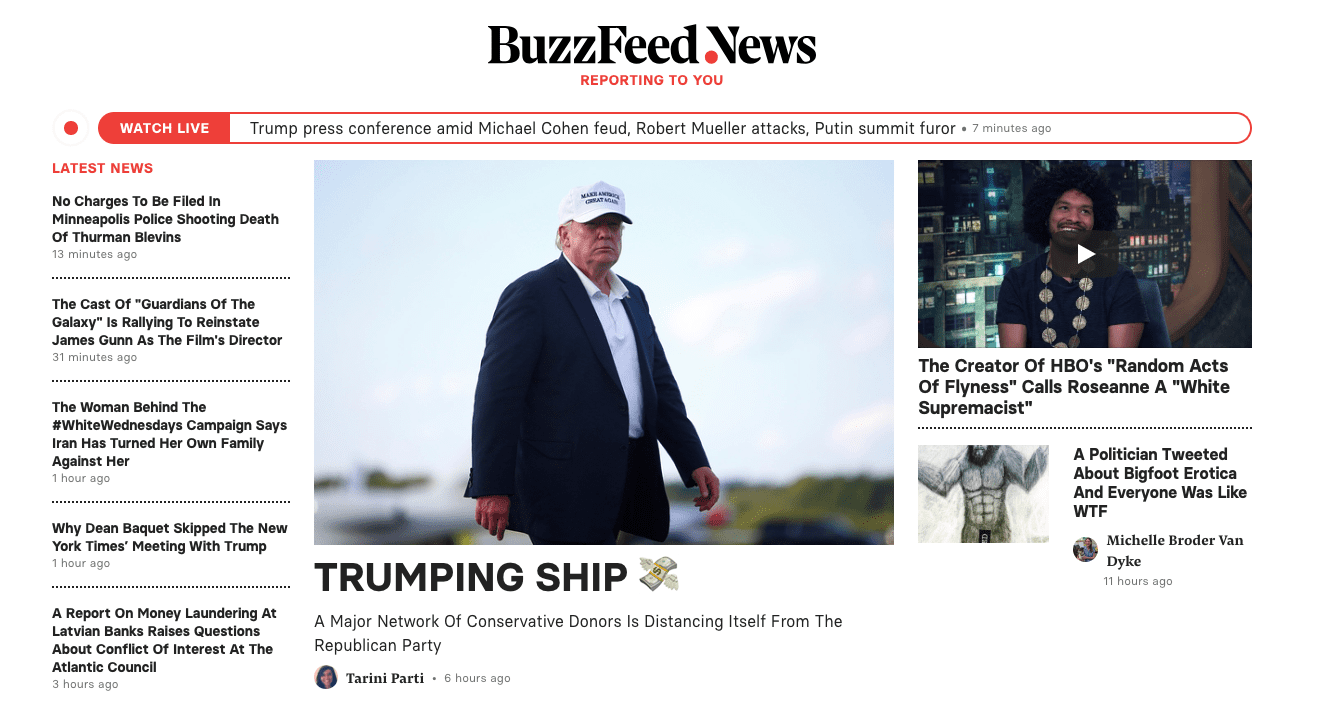
Buzzfeed is a great example. There was such a collaborative effort between departments, that the company relaunched BuzzFeed News as a separate entity responsible for covering serious matters of national import. It’s likely that this arm of BuzzFeed will move to a subscription-based model, like NYT, WAPO, The Information, and other outlets who aim to cover matters objectively.
Just a few weeks later, they launched BuzzFeed Reviews to appeal more to consumers looking for objectivity in their purchases. In Wirecutter fashion, this approach takes research and time. It is an alternative to repetitive lists of travel gadgets to buy.
For media companies that cover non-essential matters like products, sports, entertainment, and culture, there isn’t a valid reason to pretend that journalism isn’t reliant upon the revenue driven by ad dollars and commerce spend. For media companies who do cover essential matters, a subscription model is the most favorable system. Even so, this takes an awareness of brand equity. Building a cohesive message around a publishing mission goes a long way in developing meaningful funnels for affiliate and DTC revenue. The key to understanding this philosophy is simple: publishers must be, both, intellectual property and loyalty-driven companies.
Barstool CEO Erika Nardini on intellectual property and commerce:
We have tripled down on our merchandise business with new lines of clothing, and premium clothing and apparel. Rough N Rowdy was our first foray into pay-per-view. It enables us to create things where our audience is able to buy something to wear, to listen to for 12 hours or an event to go to on a Friday night with friends.
Nardini goes on to say:
Our advertising business has grown 700 percent since I joined. […] Advertisers are also having a harder time breaking through and getting their product to resonate. Barstool does a really good job of that.
Despite perpetual controversy, they’ve figured out a model that few executives in publishing have. They report news, but the majority of their resources are spent generating intellectual property that can be monetized. Barstool has a valuation of $100M+, according to reports.
Bleacher Report, Barstool’s antithesis in many ways, has begun to do the same. Their recent eCommerce efforts have accelerated growth across all departments. According to Ed Romaine, chief brand officer for the publisher,” eCommerce is not the endgame for Bleacher Report, but rather a targeted means with which to grow its brand.”
Read more of the issue here.
By Web Smith | Edited by Meghan Terwilliger | About 2PM