No. 272: A “Tier A” Path Forward

tierapathforward.jpg

The worst thing to happen to the American mall is the boom of online-first modern luxury companies. And it’s also the best thing to happen to the American mall.

There are 1,100+ malls in America and approximately 320 are graded Tier A. We have an oversupply of malls but that does not mean that traditional, anchored shopping centers no longer have a place in consumerism. We’d argue that Tier A malls have yet to see their best years. We expect their footfall traffic KPIs to grow, while B and C tiered malls continue their trends toward repurposed real estate and other methods to maintain footfall traffic KPIs (mall opportunity, sales opportunity, and store performance).

Suzanne Mulvee, director of research at CoStar, cites that “lower-quality malls in markets with smaller populations and lower incomes will continue to close” —a trend that persists today. And here’s a data based position:

Green Street Advisors, a research firm, forecast a 6.0 percent drop in market revenue per available foot (RevPaF) for class-B and -C malls from 2018 to 2022, versus a 0.5 percent increase for class-A malls during the same period. 

Private market values of class-B and -C malls have also dropped the most since January 2017, according to Green Street, plunging 27.0 percent and 25.0 percent, respectively, year-over-year. Meanwhile, the values of class-A malls declined by 14.0 percent year-over-year.

National Real Estate Investor

So what does this mean for digitally vertical native brands (DNVB), old and new? In short, online-first brands should be positioning their product offering for inclusion in Tier A malls. First, let’s look at the established. A retail presence for DNVBs varies, as such:

  • Harry’s has a prominent position in J. Crew shops (Tier A)
  • Shinola has marquee positioning as stand alone stores (Tier A)
  • Mizzen + Main has prominent position at Nordstrom (Tier A)
  • Bevel has showroom real estate at Macys (Tier A / B)
  • Warby Parker has great stand alone stores (Tier A)
  • Greats has marquee positioning at Nordstrom (Tier A)
  • Ministry of Supply has great stand alone stores in Tier A areas
  • Homage has great stand alone stores (Tier A)
  • Bonobos has stand alone stores and Nordstrom positioning (Tier A)
  • MeUndies has positioning at Nordstrom (Tier A)
  • Goop is opening sponsored pop ups (Tier A)

There are very few presences in Tier B malls and virtually no DNVB presence in Tier C malls. These brands have done a wonderful job positioning themselves as modern luxury companies. They’ve been incubated online for five to ten years and they’ve become prominent enough to live as lifestyle brands in traditional retail spaces. It’s a forgone conclusion that omni-channel operations should be a focus for DNVBs; retail real estate analysis is a skill that is becoming more and more important. And DNVB’s are well-positioned to benefit from the Tier A adoption of the online brands. Recall this quote from Issue No. 265:


2PM’s Meghan Terwilliger had this to say:

Luxury, however you define it, is a brand’s embodiment of characteristics that make it desirable. Historically, those characteristics have been more ‘What’ features like quality, exclusivity, and cost. You can still define luxury as characteristics that make a brand desirable, but those characteristics have shifted. Quality is table stakes.

Характеристики, которые делают бренды более желанными, - это "как", такие как превосходный клиентский опыт (как я воспринимаю бренд), значимая миссия бренда (как они отдают свои силы и меняют мир к лучшему) и вовлеченность в жизнь общества. Является ли он созданным художником и чрезмерно дорогим? Возможно, нет. Но если это продукт или даже целый опыт, который очень желанен, его можно считать роскошным брендом. Так уж сложилось, что DNVB обладают отличной инфраструктурой для поддержки характеристик, определяющих современную роскошь.


There are DNVBs that are launching daily. It is important that these brands understand that online retail mechanics has its limits. For these brands to expand into $30 million or more in annual revenue, omni-channel strategy can provide longterm growth. Additionally, this can reinvigorate top funnel sales through online channels.

Here are the top five suggestions for DNVBs launching today:

  • Master the first product. Bonobos began with pants, Mizzen + Main with a single white dress shirt, and Bevel with one blade.
  • Develop a strong sense of product ambassadorship. Mizzen + Main targets millennials, but the most capable buyers are between the age of 34-45. Developing a sense of loyalty with them can pay dividends. For their peers that don’t shop online, they’ll become a top funnel driver of them to your brick and mortar locations.
  • Avoid discount promotion, even at the beginning. Price stability over time is crucial. The moment that a brand is seen as a discounter, the Tier A mall demographic loses interest (with few exceptions).
  • Emphasize advertising to Tier A mall consumers. When DNVB’s grow online, they need to focus on the customers that possess the greatest LTV (lifetime value) potential. This correlates with Tier A mall shoppers.
  • Establish relationships with non-competitive retailers. It can be a powerful signal of longterm viability when existing brands co-sign your early product. This is most often seen by way of product collaborations, cross-promotion, or merchandising your products in their flagship stores.

Retailers that appeal to…the upper class are thriving. One look at Houston’s Galleria, Columbus’ Easton Town Center, or Miami’s Bal Harbour Shops will confirm as such. This is the future that many in retail are planning for. So no, retail is not dead. But retail is leaving the middle class behind because, frankly, so are we.

2PM Member Brief No. 5

In the first sentence, I wrote that online retail is the best and worst thing to happen to malls. In many ways, this is true. The shuttering of weaker retailers and shopping centers is long overdue. Experts attribute this trend to the emergence of online retail brands (and the excessive private equity debt that these retailers accrued to compete with them).

We have more retail real estate than any developed country on earth. Malls are not dying, the bad ones are. While eCommerce efficiency is appealing to digital marketers, the brick and mortar channel is golden for brand operatives who are establishing their brands as modern luxury products. Marketing is arithmetic, whereas brand-building is more of a subjective art. If you were to ask the chief executives at each of the aforementioned brands, they would point to their brick and mortar successes as great milestones. There will be fewer malls in the coming the years, but an early bet on the ones that remain will position young DNVBs for omni-channel success.

Read the rest of the issue.

By Web Smith and Meghan Terwilliger | About 2PM 
No. 270: For DNVBs, brand matters.

facebook-ad copy 4

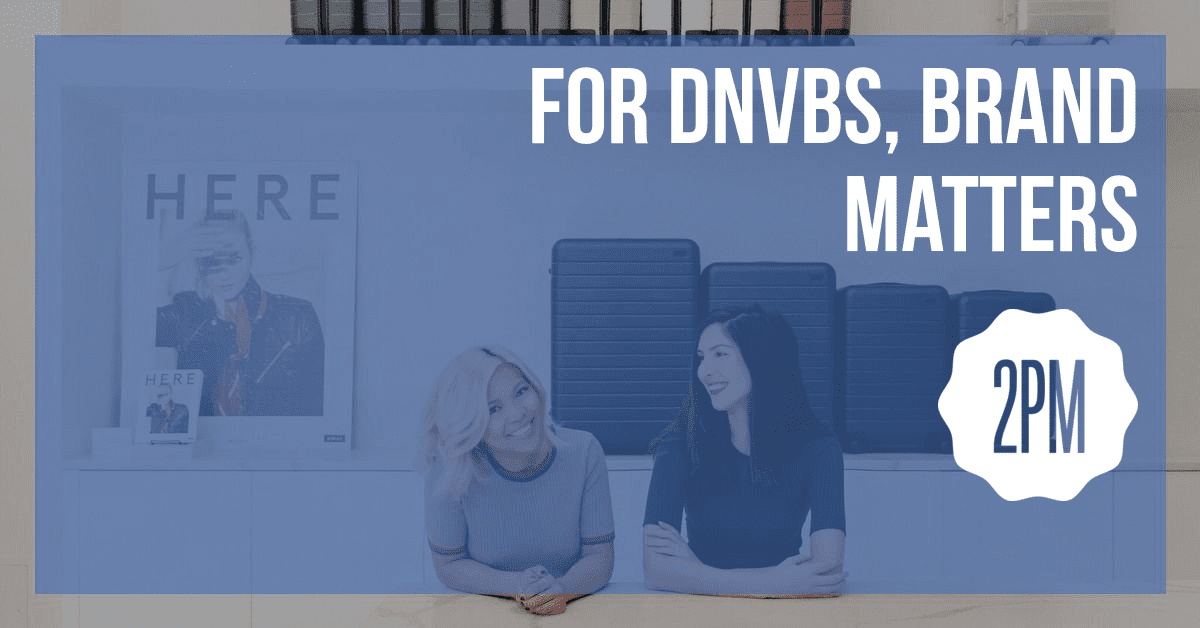
A look at Raden’s shuttering (DNVB No. 119) and Away’s persistence (DNVB No. 40). With the news of Raden shuttering and their founder’s commentary on the online luggage industry’s outlook, 2PM has a deep dive into what may have influenced Raden’s shuttering (it wasn’t just regulation). And Away cofounder and CEO Steph Korey provides commentary on what will shape Away’s bright future.

Founder of Raden, Josh Udashkin had this to say to Conde Nast Traveler about the future of the smart luggage industry: 

I hate to say this, but I think [the future] is nonexistent. All these companies rely on word of mouth, but buying this product now gets you hassled. I don’t see how you can continue selling it.

We disagree. Millennial consumers are practical, savvy, and even slightly territorial. These consumers seek brands that appeal to their lifestyles, their timing, their values, and their personal preferences. The narrative matters because their lifestyle matters.

The key to building a strong DNVB can be attributed to perceived quality, price value, and ease of purchase.

Convenience Change + Price Change + Perception of Quality Change > 0 

Convenience: ease of purchase, superior customer service, ease of return, and quality warranty.

Price: is the price comparable and or cheaper than the premium incumbent brand prices.

Perception of quality: how is the brand perceived? Is there an affinity for the product?

Whereas, if the DNVB’s sum “change” is greater than zero, the DNVB may be a better option than the incumbent. It’s through this lens that DNVBs and CPG brands have been able to position their products against stodgier, traditional brands. One of the keys to building an online retail presence is emphasizing both components of a winning formula: product and narrative.  That narrative communicates quality, community, and brand equity around the product. For DNVBs with $5M or less in total funding, you can argue that the narrative is as important as the product itself.


Issue No. 254: An Open Letter to DNVB CEOs

DNVB executive teams build two products from scratch, supply and demand:

  1. The product: the shirt, or the luggage, the pants, the shades, the coats, or whatever it is that people know you for.
  2. The brand: the aura of that product, the name recognition, the association, the behind-the-scenes partners, the spokeswomen, the ambassadors, the inevitability of success.

Both Raden and Away were founded in the early months of 2015. Raden raised a seed investment from Lerer Hippeau, First Round Capital, and Gin Lane – the famed and de facto kingmaker of DNVBs. Away raised a star studded seed round that included Andy Dunn, the now-Walmart executive who coined the DNVB acronym.

When Udashkin was interviewed by Loose Threads in 2015, Udashkin indicated that product was the entirety of his focus. He went on to add that the product’s narrative wasn’t something that Raden was going to emphasize.

After spending almost a year in the prototype phase, working out of San Francisco, Los Angeles, Montreal, and Taiwan, Raden emerged as a product company that rejected the imagery and celebrity of lifestyle brands.

Udashkin went on to say: “How can you have a lifestyle on day one around your product unless you’re faking it? I think that works in the short term, but over time the customer gets smarter. If you don’t keep working on your product, eventually you lose.”

Cofounders Steph Korey and Jen Rubio took a nearly opposite approach to building their competing brand. In a July 2017 segment in Inc Magazine called “How I did it”, here is what was said about the duo:

Steph Korey and Jen Rubio had a problem. Their planned launch of Away, a new luggage brand, was fast approaching–and none of their suitcases would be ready to sell in time. Luckily, the two had a social media trick packed in their bags. They turned a proven retailing tactic, the preorder, and an idea for a book into a campaign that went viral on Instagram and beyond.

Burt Helm, Inc. Magazine

This thinking permeates through their entire product position. Whereas Raden’s Instagram focused solely on the products being sold, Away’s Instagram account features as much lifestyle and usability as it does the products that Away sells.

Screen Shot 2018-05-21 at 12.28.07 PM

While Away focused on the destination and brand affinity (to include a print magazine called “Here”), the relationship that Raden maintained with customers was altogether different than the one that Away hopes to continue. The difference between the two approaches greatly affected each brand’s product offering: Raden’s was narrow, Away’s is wide. Here’s a pivotal point in today’s featured article by Fast Company:

He walks me through the math. The target market for a direct-to-consumer suitcase brand is relatively narrow. This is not a mass purchase. Your audience is people with enough disposable income to spend between $200 and $400 on a carry-on, but also be digitally savvy enough to be willing to buy the case online, rather than in a department store.

Once the startup has convinced someone within their target market to buy a carry-on, the relationship is basically over. With some persuasion, the brand can try to sell them a piece of checked luggage or perhaps another small travel accessory. But the lifestyle value of each customer is relatively small, compared to other categories. A direct-to-consumer luxury shoe brand like M.Gemi can sell a woman a new pair of $300 shoes twice a year for the rest of her life. Everlane can sell a customer wardrobe updates every month.

Elizabeth Segran, Fast Company

Here Udashkin suggests that he did the right thing by focusing on product superiority alone (just one of the three components to the DNVB formula). But because he saw no value in building a brand and narrative around Raden, there were fewer alternative products that he could offer to his existing customers. This, in addition to his luggage’s immovable battery and the startup’s shorter runway influenced his position that the luggage maker had no choice but to cease operations. He also suggested that there was no market for these types of products in the long run, a far-reaching assertion.


In an email to 2PM, Away CEO Steph Korey explained Away’s position: 

A brand’s success isn’t determined by the amount of money it raises, or by any other one thing, but by the right combination of a lot of little things.

For us, it’s been the combination of having a customer-obsessed approach to everything we do (taking the time to listen to our customers, deeply understand what they’re telling us, and then quickly acting on it), being conscientious about the way we introduce them to the brand in the first place (ensuring what we’re marketing will be interesting to who we’re marketing it to, and simultaneously creating a narrative that’s authentic to who we are as a brand no matter the channel or intended audience), and not limiting ourselves to any one product or plan for the future (expanding from one suitcase to dozens of travel goods since launch, and setting our sights on fixing everything that’s currently wrong with the travel experience).


One of the early lessons in DNVB branding is one that cannot be explained by analytics and logic, alone. It’s too subjective. Phil Knight’s once-fledgling shoe operation sold shoes but Nike was never a shoe company: it was a company that enabled champions. Tesla sells cars but Tesla is a company for futurists. Apple sells computers but it’s a company for creators.

For aspirational products, consumers choose brands that fit their lifestyle, belief system, and goals. From the very beginning, Away achieved something that very few DNVB’s understand early on. Building the product is only half of the battle. This means that no matter what arduous regulations they may encounter, they will maintain a canvas to build products that are relevant to their community of passionate, millennial travelers. It’s likely that as traditional sales continue, you’ll see a growing number of SKUs, styles, and add-ons that are beloved by millennial travelers and commuters. Yes, Steph Korey and Jen Rubio sell luggage, but Away is a travel company. And Away will go where she wants.


Updates: On June 26, Away announced the Away x Dwayne Wade collaboration. On June 28, Away announced a $50M round of investment, one of the largest rounds by female founders in history. According to their Comms Director Cassi Gritzmacher:

With this latest round of funding, Away plans to further establish itself worldwide by extending to new markets; continue to expand its product line to create the one perfect version of everything you need to travel seamlessly; expand its physical retail footprint (opening 6 new stores by the end of 2018 in addition to its current New York, Los Angeles, San Francisco, and Austin locations); build on its existing social impact efforts (through its partnership with Peace Direct and through new initiatives); and create 249 new jobs over the next five years, transitioning the team into a 56,000-square-foot new Global Headquarters in its hometown of New York City.

Подробнее о выпуске читайте здесь.

By Web Smith and Meghan Terwilliger | About 2PM 
Выпуск № 267: О брендинге DNVB

facebook-ad

Что дальше в брендинге DNVB? История каждого вертикального бренда имеет свое начало. Для DNVB, специализирующихся на стиле жизни и моде, которым посчастливилось работать с лучшими брендинговыми агентствами, эта история часто начинается с биографии основателя, проблемы, которую начал решать продукт x, и заявлений о неизбежной силе бренда. Это короткая история, как и большинство других в онлайн-ритейле. Но это и дальновидный подход, рассчитанный на: электронную коммерцию, рекламу в Instagram и Google, доставку третьими лицами. Меньше "мы были" и больше "мы будем".

По словам крестного отца этого термина, "DNVB маниакально сосредоточены на клиентском опыте, и они взаимодействуют, совершают сделки и рассказывают истории потребителям в основном в Интернете". По мере того как бренды начинают фокусироваться на офлайн-ритейле, упаковка вокруг брендов будет меняться вместе с этим фокусом. Если на ранних этапах (2010-2014 гг.) в моде были технологии и футуризм, то в следующие десять лет бренды, которые добьются успеха, будут делать акцент на наследии в той же степени, что и на футуризме.

Первая фаза (2010-2014): Технология

Warby Parker - лучший пример. Бренд вырос благодаря внедрению практики, которой не придерживались другие компании, работающие по принципу direct-to-consumer. Компания стремилась устранить все барьеры на пути к покупке, внедряя инструменты, призванные облегчить гениальный покупательский опыт. На первом этапе маркетинга DNVB привлекала технология электронной коммерции. Продукт номинальный и доступный, но доступ к нему стал такой же частью бренда, как и сами очки. Вот выдержка из статьи в Wall Street Journal 2013 года, написанной совместно Кевином Лавеллом и мной:

Сейчас мы находимся в эпохе электронной коммерции 3.0, когда предприниматели могут запускать компании с минимальными барьерами для входа. Электронная коммерция 1.0 состояла из грубых онлайн-покупок в 90-х годах, которые предлагались несколькими компаниями и вызывали скептицизм у потребителей. Она переросла в более сложные взаимодействия электронной коммерции 2.0 в середине 2000-х годов, когда большинство компаний поняли, что если они не работают в Интернете, то ставят под угрозу свое будущее.

Наступило новое время, и власть больше не находится в руках нескольких покупателей в крупных магазинах. Крупные компании могут быть уничтожены конкурентами с более качественным товаром. А начинающим розничным компаниям больше не нужно проходить долгий и медленный путь участия в выставках, чтобы представить свой товар горстке покупателей, или отдавать значительную долю от каждой продажи дистрибьюторам.

Вторая фаза (2014-2018): Комедия

Видеоролик Dollar Shave Club "Our Blades Are F***ing Great" продолжительностью 1 м33 с был разработан для продвижения запущенного (впоследствии приобретенного) бренда и на данный момент просмотрен более 25 миллионов раз. Эта интернет-реклама считается одним из лучших примеров маркетинга по принципу "верхней воронки", а юмор DSC впоследствии повлиял на то, что другие бренды, ориентированные на мужскую аудиторию, стали использовать юмор как средство дифференциации бренда: Chubbies(№ 67), Untuckit(№ 48), Tommy John(№ 54) и Mizzen+Main(№ 86).

Захват одного клиента с помощью рекламы, направленной на потребителя, может стоить до 20 долларов за клик в Facebook. Цифровая реклама может быть дорогостоящей. Чтобы противостоять этим неуклонно растущим затратам, бренды стимулируют циклы осведомленности, интереса и рассмотрения, продвигая вирусное видео бренда. Это позволяет достичь осведомленности, рассмотрения и намерения.

Самое главное, что знакомство основных пользователей с вашим брендом и их переход по ссылке для получения дополнительной информации позволяет маркетологам использовать такие инструменты, как пиксель Facebook, для ретаргетинга случайных посетителей, продвигая их дальше по воронке продаж. Обращение к случайным покупателям стало эффективным способом увеличения трафика в верхней части воронки.

Третья фаза (2018 год и далее): Наследие

Бренды, которые начинались как воплощение первых онлайн-ритейлеров, теперь, как ожидается, будут соперничать со старыми лидерами, поскольку их годовая выручка превышает девятизначные цифры. Конкуренты-старожилы все еще существуют, а некоторые из них даже сильнее, чем были до появления онлайн-конкурентов. В то же время новые бренды начинают конкурировать со старыми: торговыми центрами, магазинами с кирпичной кладкой и традиционной рекламой. Предполагалось, что интернет полностью устранит эти каналы, но вместо этого он обеспечил прикрытие до тех пор, пока онлайн-ритейлеры не будут готовы перейти к физическим продажам.

Электронная коммерция стала более зрелой, а физическая розница превратилась в более эффективный канал. В связи с этим мы начинаем видеть, как бренды приобретают черты компаний с богатым наследием. Но если вам восемь лет, у вас не будет особой истории наследия. На каждый Abercrombie, Filson, Ralph Lauren, Lily Pulitzer, Ray Ban и Tag Heuer приходится цифровой вертикальный бренд, такой как Harry's, Allbirds и Outdoor Voices, который надеется выстоять.

Наследные бренды стараются сохранить наследие, стремясь при этом к футуризму за счет инноваций в продуктах и каналах(см. Cole Haan). Для традиционных брендов создание ауры устойчивости означает, что продукты и каналы будут выглядеть передовыми для эпохи омни-каналов, управляемой миллениалами.

В то же время вертикальные бренды стремятся представить свою продукцию как эволюцию продуктов, оставшихся в наследство, сохраняя при этом как можно больше технологических преимуществ. Для цифровых вертикальных брендов долголетие прогнозируется благодаря привязке к истории и традициям.

Следующая волна в брендинге DNVB будет направлена на развитие истории и традиций. Бренды будут углублять свои корни путем сотрудничества с продуктами, создания сообщений и собственных уникальных историй происхождения.

Посмотрите на этот пример того, как производитель наследия и вертикальный бренд достигли обеих целей в одном сотрудничестве.

Сообщения: "Наследные бренды одобряют нас, они хотят, чтобы мы были рядом".

Web---NB-ReTooled

Задолго до того, как дизайнерские кроссовки для пап проникли в модные места по всему миру, модель New Balance 574 установила золотой стандарт того, каким должен быть хорошо продуманный, лохматый ретро-бег. Они отлично смотрелись, когда появились в 1988 году, и в 2018 году стильно выглядят практически на каждом, кто их носит - в том числе и на настоящих папах. С годами модель 574 стала основной моделью New Balance, когда дело доходит до коллабораций, поэтому она видела достаточно много обновлений и взаимодействий. Но последняя коллаборация с высокотехнологичным брендом одежды Ministry of Supply переносит 574 в ультрапроизводительное будущее. - Тайлер Ватаманук, GQ

Сообщения: "Лучшие старые бренды доверяют нашей платформе".

В этом месяце Mr. Porter объявил о начале шутливого сотрудничества с Prada. Поскольку роскошь продолжает расти в Интернете, Mr. Porter стремится стать местом назначения для таких товаров. Подобный кивок на наследие не может не понравиться покупателям.

С 1990-х годов бренд занимает завидное положение в авангарде моды, став именем нарицательным, символом элегантности, перспективного дизайна и, да, множества забавных принтованных рубашек. В офисе MR PORTER так восхищаются изделиями бренда, что в сентябре 2016 года мы стали первым онлайн-магазином, предлагающим столь желанную мужскую коллекцию Prada, в атмосфере праздника.

Продолжить чтение "Выпуск № 267: О брендинге DNVB"