No. 281: “V” is For Vertical

facebook-ad
Warby Parker’s factory.

If you read any post on digitally vertical native brands, you’ll be hard pressed to find one single paragraph on manufacturing. In Andy Dunn’s now famous essay on the rise of vertical brands, he doesn’t mention the process of production one time. In CB Insights much-loved analysis of the nine biggest DTC success stories, you won’t find one mention of the production process.  This, despite the entire industry being driven by a global manufacturing resurgence.

Screen Shot 2018-08-06 at 1.45.48 PM
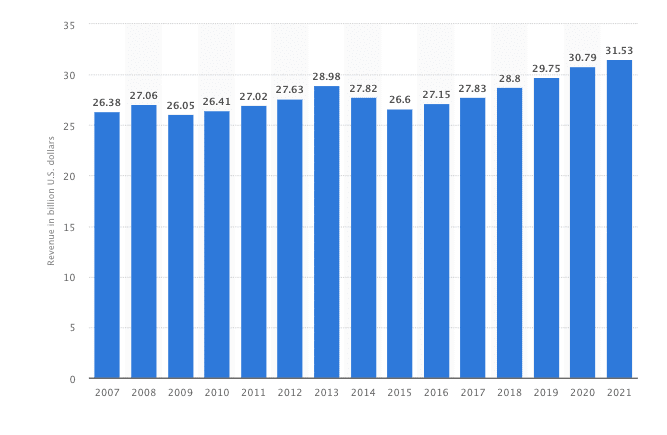
eCommerce as a % of total manufacturing shipments.

You listen hard. Stick to the basics, stick to the basics, stick to the basics, so says the antagonist from one of my favorite films of my youth. But while crusty old Coach Kilmer was a villain in the movie, he made a great point. And it’s a point that many in the DNVB space are overlooking. As the battle to rise above the noise has reached a fever pitch, brands are overlooking the most important part of the value proposition: a great product.

Face it, not everyone has a factory. This means that manufacturing partnerships must be priority number one for product-founders. A partner has to serve your best interest; they are there for the long haul. They make concessions and provide you with help during the product discovery and refinement phases.

Founder Collective on Twitter

Yes! The first Casper Mattress that sold was the 50,001st sold by founder Philip Krim, who spent a decade dropshipping beds previously. The best D2C founders are more focused on industry dynamics and acquisition channels than twee launch videos and clever branding. Follow suit! https://t.co/r9oDO74x6b

A DNVB is a manufacturer first, marketer second. Either you’re building the product within your own walls or you’re spending countless hours overseeing the process with a trusted partner. But for every ShinolaRogue Fitness, Warby Parker, Harry’s or East Fork that own their factories, there are countless DNVB’s (see: Fashion Nova) that excel by optimizing partnerships with manufacturers. The operative word is “partnership.” If you’re the owner of a vertical brand, you’ll need more than a vendor to navigate the obstacles of today. A manufacturing vendor sends you a spreadsheet with pricing, a manufacturing partner tests ideas and sends you samples. They are an extension of you. They are as invested in you as you are in them.

4
American Giant Partners with Eagle Sportswear

Early on in my DNVB journey, I met a savvy product-driven entrepreneur named Adam Blitzer at Manhattan’s Javits Center during the very early days of Mizzen + Main. Those were the years that we spent (a) not paying ourselves and (b) being brushed off at trade shows. Blitzer’s situation was a little different than ours. His booth was always directly across and nearly always bustling. As one of the few young companies who closely-managed their own production, we built a kinship for each others brands. His product offering was refined and constantly evolving. In short, he simplified a very difficult aspect of the business.

Setting aside trade agreements, tariffs, and other political issues, things are booming. More goods, coming from more sources, going to more places.

One other thing that’s increasing: pressure. Every year there is greater pressure on producers to show regulators and customers that their goods are sourced ethically and sustainably. It’s as if the whole world is now from Missouri, saying, “Show me” when it comes to the integrity of products they purchase. Ingredients now matter as much as, if not more, than the end product. To many modern consumers, ingredients are the end product, whether it’s the wheat going into your cereal, or the cotton going into your jeans.

Trends in Global Supply Chain Management

Before becoming the CEO of his latest company, he was the founder of a successful duffel bag direct-to-consumer brand called Blue Claw Co. There, he maneuvered through the arduous obstacles faced by brands that manage the push and pull of global politics on their young companies. It was through this experience that inspired him to build Softline Brand Partners as the solution for vertical brands who are focused on insulating themselves from the industry and market fluctuations (from materials to production to shipments). Softline has become the go-to for DNVBs seeking the type of partnerships that scale from zero to one. A network of domestic and foreign manufacturing plants, the company heralds its partnerships: from startups like Bespoke Post and Leesa Mattress to retail titans like Timex, Woolrich, and Allen Edmonds.

In a recent discussion with Blitzer, here’s what he had to say about the industry:

We’ve grown accustomed to operations like Gin Lane and Red Antler successfully building product brands from sample to market. We’re the company that works with you before you complete the brand development phase. For us, the ultimate partnership would be inline with those legendary marketing agencies. Let us build a better product pipeline and make their jobs easier.

DNVB founders are in a tough position. Not only are the tech (online retail) and acquisition (paid advertising and social) vital components to achieve growth; managing the supply chain may be the most important of the three core competencies. As global trade increases in volatility, brands that are not managing their own product manufacturing (in house or through partnership) will be at a distinct disadvantage.  A brand is not truly vertical unless the founders have a stake in production. The end consumer can observe the difference. There are brands who are thriving thanks to successful partnerships.


From Member Brief No. 27

Fashion Nova is not a traditional DNVB. The fashion brand began as a very small group of retail stores in Los Angeles’ B-level malls. The brand relaunched in 2013 as a digitally native brand and achieved rare air. Instagram, influencers, and consumers-turned-evangelists amassed one of the most effective top funnel efforts in brand-side eCommerce. Needless to say, they’ve built a blueprint for legacy businesses that are looking to reinvent themselves for the digital commerce age. 

Fashion Nova’s manufacturing turn-around is reportedly best-in-industry. CEO Richard Saghian can move from idea to sample to production in under 72 hours by working with close to 1,000 factories. As a result, the five-year-old website releases new designs faster than most fast fashion houses. This means that typical consumers can look like their celebrity and social media icons within a few days of their red carpet appearances. 


The founders who possess the sophistication to navigate trade and supply chain superiority will become the leaders of their product categories. While technical prowess and customer acquisition successes receive the majority of the press buzz, it’s supply chain excellence that empowers brands to maintain the agility and growth potential that characterized DNVBs from the start.

Read more of the issue here.

By Web Smith | Edited by Meghan Terwilliger |About 2PM

Editor’s note: If you would like an introduction to Softline Brand Partners, feel free to reach out. 

No. 280: Media Companies Are Brands Too

facebook-ad
Barstool CEO Erika Nardini | Game recognizes game.

Цифровой ландшафт меняется под нашими ногами. Чтобы издатели могли продолжать наращивать органическую аудиторию, они должны стать брендами. Работа в качестве источника контента уже недостаточна. Чтобы добиться этого, усилия больше не могут быть разрозненными, традиционные фракции унаследованных новостных редакций должны рухнуть.

The factions in every legacy newsroom. The (1) affiliate marketing team is paid bonuses on their revenue growth. Every ounce of content that they publish is devoted to Amazon and Skimlinks. The (2) advertising team is the highest paid group in the company, with salaries ranging from $80,000 – $250,000. They are often adversarial with the affiliate and commerce groups. The (3) native advertising (brand studio) team is newer, so the advertising team leans on them to add value to existing bigger deals. This means bigger bonuses. The (4) editorial / creative team is both underpaid and the most important. For this reason, they want nothing to do with teams 1-3. And if the media company has one, the (5) direct-to-consumer team may as well be on an island. This team sees very little support and collaboration. Hey, it’s an experiment.

A lifestyle newsroom shouldn’t have factions at all. And increasingly, this is becoming the mark of the ones that are well-managed. For those newsrooms, they share a few common beliefs. The most important of those beliefs which they share: media companies are brands, too. And the second of those beliefs: depending on Amazon for a sizable portion of eCommerce revenue is a fatal error in judgment. Let’s revisit a brief from April 2017.


Issue No 209: Amazon Wants to Dress You

Amazon’s growth as an eCommerce company is tied to its growth as a publisher. As such, Amazon’s advertising business will eventually thrive as Bezos has invested in streaming, digital magazines, and owning most of our consumer lives. The intent to buy is a powerful indicator of success and stateside, it’s harder to find a place with more consumers willing to spend money than Amazon.

Their advertising platform will eventually disrupt Google’s Adwords and Facebook’s Newsfeed for this very reason. Whereas “eyeballs” determined the last 25 years of tech growth, cart conversions will determine the next 25 years. The great digital businesses understand that this is the foundation. Amazon and Alibaba are building commerce-driven ecosystems where eyeballs and clicks aren’t enough. Retailers have no choice but to reward publishers for sales efficacy with higher margins, increased leverage, and more ad spend.


Affiliate-only commerce operations will be the next to stumble. Amazon controls affiliate percentages, all while ramping up the company’s ability to generate consumer demand on its own. We’ve seen this before.

In a recent report by Digiday+, Mark Weiss writes: 

In the long run, it might be advantageous for publishers to steer clear of Amazon. Selling products on Amazon or referring traffic to Amazon only helps strengthen the direct connections between Amazon and consumers, not between consumers and publishers. As shoppers become accustomed to shopping on Amazon and fast delivery speeds, the chances that consumers will shop directly with publishers could decrease. It will also be interesting to see whether publishers, after being burned by Facebook, let themselves become dependent on another major platform.

Building a brand is essential for publishers. This cannot be done without a strong direct-to-consumer presence. And DTC success cannot happen without a collapse of departmental silos. Editorial teams believe their priority is journalism-alone; other areas of the business suffer because of it. When advertising teams see eCommerce as competition and creative teams as their horses, other areas of the business tend to suffer.

Facts and figures

  • Of publishers surveyed, 40% relied on eCommerce as a revenue source.
  • An astounding 83% of publishers sell products for Amazon.
  • Nearly 43% report sizable revenues from commerce operations
  • Less than 30% believe that editorial content should be siloed from commerce operations.
  • Recent research shows that only 16 percent of publishers allocate 25%+ of their marketing spend to promote their own commerce projects.
  •  A worthwhile 61% of those surveyed use audience data to inform content direction.
  • Just 29% of publishing executives think that editorial content should be independent of advertising.
  • And 47% spend nothing on promoting their commerce efforts, according to a survey of publishing executives.
  • In 2017, Amazon generated $21B in revenue on affiliate commerce.

It’s been my experience that direct to consumer commerce operations face unparalleled opposition within publishing houses. Often times, this is simply because it takes the most effort.  The advertising machine is in motion, branded content (native advertising) is up-front money, affiliate marketing v1.0 is just writing a hyperbolic blog on whatever it is you’re trying to sell for Amazon or your Skimlinks partner. But direct to consumer commerce takes holistic, interdepartmental development. It takes buy-in from the top down.

In issue No. 252, 2PM covered the successes of publishers excelling in the eCommerce space. Of those publishers: Barstool Sports, Uncrate, Goop, and Buzzfeed stand out as operations who understand the importance of brand, loyalty, and repeat business.

Buzzfeed is a great example. There was such a collaborative effort between departments, that the company relaunched BuzzFeed News as a separate entity responsible for covering serious matters of national import. It’s likely that this arm of BuzzFeed will move to a subscription-based model, like NYT, WAPO, The Information, and other outlets who aim to cover matters objectively.

Just a few weeks later, they launched BuzzFeed Reviews to appeal more to consumers looking for objectivity in their purchases. In Wirecutter fashion, this approach takes research and time. It is an alternative to repetitive lists of travel gadgets to buy.

Screen Shot 2018-07-30 at 2.17.39 PM
BuzzFeedNews.com

For media companies that cover non-essential matters like products, sports, entertainment, and culture, there isn’t a valid reason to pretend that journalism isn’t reliant upon the revenue driven by ad dollars and commerce spend. For media companies who do cover essential matters, a subscription model is the most favorable system. Even so, this takes an awareness of brand equity. Building a cohesive message around a publishing mission goes a long way in developing meaningful funnels for affiliate and DTC revenue. The key to understanding this philosophy is simple: publishers must be, both, intellectual property and loyalty-driven companies.

Barstool CEO Erika Nardini on intellectual property and commerce:

We have tripled down on our merchandise business with new lines of clothing, and premium clothing and apparel. Rough N Rowdy was our first foray into pay-per-view. It enables us to create things where our audience is able to buy something to wear, to listen to for 12 hours or an event to go to on a Friday night with friends.

Nardini goes on to say:

Our advertising business has grown 700 percent since I joined. […] Advertisers are also having a harder time breaking through and getting their product to resonate. Barstool does a really good job of that.

Despite perpetual controversy, they’ve figured out a model that few executives in publishing have. They report news, but the majority of their resources are spent generating intellectual property that can be monetized. Barstool has a valuation of $100M+, according to reports.

Bleacher Report, Barstool’s antithesis in many ways, has begun to do the same. Their recent eCommerce efforts have accelerated growth across all departments. According to Ed Romaine, chief brand officer for the publisher,” eCommerce is not the endgame for Bleacher Report, but rather a targeted means with which to grow its brand.”

Подробнее о выпуске читайте здесь.

By Web Smith | Edited by Meghan Terwilliger | About 2PM


No. 279: Привлекательность независимых

facebook-ad

В то время как общие доходы от рекламы в печатных журналах продолжают снижаться, реальная история - это растущее число хорошо принятых независимых журналов. Вы узнаете эти журналы, когда увидите их. Они шире и тяжелее, чем большинство других, бумага более высокого качества, а фотографии имеют общую тематику. В этих изданиях творческие команды журналов определяют художественное направление; это не направление брендов. Это означает более естественное восприятие и большую связь с читателем.

Эти издания больше похожи на книги, чем на журналы, и цена отражает это: она колеблется в пределах 10-25 долларов за выпуск.

Самые смекалистые из этих издателей обходят стороной ошибки предыдущей эпохи печатных изданий. Новое поколение печатных журналов - это не просто средства массовой информации, созданные для поддержки раздутого рекламного фонда. Это журналы, которые заявляют о бренде и формируют лояльность. Но самое главное - они дают возможность отдохнуть от цифровой экономики, которой мы все так жаждем.

Данные

Снимок экрана 2018-07-23 в 9.24.34 AM
Реклама в журналах продолжит падать (2018-2020 гг.).
Снимок экрана 2018-07-23 в 9.26.24 AM
Основные медиа-оценки на 2018 год: журналы занимают третье место снизу.
Снимок экрана 2018-07-23 в 9.26.46 AM
В ближайшие два года доходы от рекламы в журналах будут падать.

Традиционные издательские дома, такие как Hearst и Conde Nast, увеличивают инвестиции в цифровую недвижимость на фоне падения традиционной печатной рекламы. Но независимые издатели используют контркультурный подход к бизнесу. Недавно газета The Guardian опубликовала своевременную статью о повальном увлечении независимыми издательствами:

Журналы, отстаивающие контркультурную идею "медленной журналистики", такие как Ernest или Delayed Gratification (основанный в 2011 году для анализа новостных событий "после того, как пыль осела", имеет 5 000 подписчиков и 24 000 читателей в печатном виде), финансируются за счет довольно дорогой подписки. Стоимость подписки на Ernest составляет 21,50 фунта стерлингов за два выпуска в год, а на Delayed Gratification - 36 фунтов стерлингов за годовую подписку на четыре выпуска.

Независимо от того, предпочитают ли они элегантный внешний вид или предпочитают андеграундный стиль, похожий на самиздат, всех их объединяет притягательность тактильных ощущений от напечатанной бумаги. "Трудно сказать, почему люди их покупают. Но обычно журналы читают люди, которым нравится, что у них есть право голоса и место, куда можно пойти", - говорит Кэттеролл. Читайте также.


IMG_2815
Выпуск № 6: Патруль передач.

Независимые журналы взяли на себя новую роль, став домом не только для читателей. Эти издания создают сообщества, ориентированные на потребителя, вдали от всемирной паутины. Вот десять самых заметных из них:

Монокль. 14 долларов. Виннипег, Канада. Журнал был запущен в 2007 году. В 2014 году Тайлер Брюле продал значительный миноритарный пакет акций журнала Monocle компании Nikkei Inc. Сообщается, что на момент инвестирования компания оценивалась в $115 млн. Читайте также.

Дорогая. $20. Лос-Анджелес, Калифорния. В 2009 годуосновательница и главный редактор журналаСара Даббелдам и ее муж Стив Даббелдам создали Darling. Начав как блог, первый печатный номер появился осенью 2012 года. Журнал с гордостью рассказывает о женщинах разных национальностей и типов фигуры. Читать далее.

Gear Patrol. $20. Нью-Йорк, Нью-Йорк. В 2014 году основатели Бен Бауэрс и Эрик Янг запустили первый журнал. GP - это отмеченное наградами цифровое, социальное и печатное издание, которое охватывает около двух миллионов молодых обеспеченных мужчин. Креативное направление Эндрю Хейнса подняло бренд Gear Patrol на новый уровень. Читать далее.

Highsnobiety. $10. Нью-Йорк, Нью-Йорк. Издание, освещающее последние тенденции и новости моды, искусства, музыки и культуры на одной платформе. Highsnobiety уверенно построил сильный бренд в мире онлайн-моды и стиля жизни. Сегодня блог и печатный журнал входят в число наиболее посещаемых глобальных источников вдохновения в области моды, кроссовок, музыки, искусства и культуры образа жизни. Читать далее.

Без цены. $15. Колумбус, Огайо. Издание для мужчин, выходящее раз в два года, рассказывает о том, что стоит купить и сколько это стоит. Подробнее.

Вишневая бомбочка. $20. В журнале, выходящем раз в два года, прославляются женщины и еда. В книге рассказываются истории всех, от икон индустрии до заметных новичков, поощряя творчество на кухне. Читать далее.

Чемодан. $25. Лондон, Англия. Этот журнал призван изменить ваши представления о путешествиях: от того, куда поехать, до того, как упаковать вещи. Он предназначен для тех, кто знает толк в путешествиях, а не для туристов. Читать далее.

Ракетка. $15. Нью-Йорк, Нью-Йорк. Racquet - это ежеквартальный журнал, воспевающий искусство, идеи, стиль и культуру, которые окружают теннис. Читать дальше.

Франшиза. $20. Нью-Йорк, Нью-Йорк. Печатное издание премиум-класса, посвященное мировой баскетбольной культуре. Команда состоит из игроков, художников и писателей. Журнал документирует истории, персонажей и идеи, которые формируют игру, которую мы любим. Подробнее.

Здесь. $10. Нью-Йорк, Нью-Йорк. Away - компания с миссией, и их последний проект относится именно к этой категории. Хорошо сделанный, независимый журнал, который больше опирается на бренд, чем на доходы от рекламы. Стеф Корей и Джен Рубио - последние руководители бренда, превратившие свой продукт в спасение для читателей. Читайте также.

Традиционные издательства страдают от влияния принципа "плати за игру" и чрезмерного подхода к продаже и размещению рекламы. Неужели кто-то еще игнорирует первые 20 страниц рекламы? Для брендов, которые стремятся развиваться вместе с увлеченной, независимой аудиторией, именно этот класс издателей действительно оказывает влияние на розничную торговлю.

Старые издатели журналов сосредоточились на создании читательской аудитории, за которую будут платить рекламодатели. Независимые издатели сосредоточены на создании продукта, за который будут платить потребители. Партнерство брендов с независимыми издательствами позволяет выявить меньшую, но еще не набравшуюся аудиторию, которая может дополнить усилия по эффективному маркетингу. За последние два года мы стали свидетелями того, как аналогичные усилия начали предпринимать бренды электронной коммерции: Airbnb, Hodinkee и GOOP.

Поскольку традиционная реклама и продакт-плейсмент продолжают привлекать бренды DNVB, вы можете ожидать большего количества партнерств в этом пространстве. И больше журналов, финансируемых брендами, которые отражают качество независимых изданий.

Подробнее о выпуске читайте здесь.

Веб Смит | Около 2 часов дня