第 286 号DTC 健身品牌

DTC

Silicon Valley wants to redefine the fitness membership. Through the adoption of connected devices like the Peloton bike, there’s been an inflection point as consumers seem to be trickling away from the current model. No longer do you have to drive to a place to be in a community. As Americans become more health conscious and driven to maximize performance, the DTC equipment industry is a timely bet on the next generation of  fitness data-driven IoT (internet of things).

Venture-backed startups are taking the same page out of the direct-to-consumer playbook that became a launchpad for digitally vertical native brands.

Whereas the Fitbit-phase of wearables emphasized individual fitness, the next generation of connected devices seem to be incorporating community in ways that could emerge as a challenge to the status quo: community-driven fitness facilities. Venture-backed startups are taking a page out of the direct-to-consumer playbook, the same page used by digitally vertical native brands like Warby, Harry’s, and Away.

By building systems that allow community to be gained outside of physical retail outlets, these tools are aiming to become the new medium for instruction and training.  These internet-enabled equipment manufacturers aren’t just selling plastic and metal, they’re selling virtual community. With the advent of polished functional fitness gyms like Orangetheory, Soul Cycle, and CycleBar, fitness consumers have grown to value the ability to: a) train with a group b) and track progress over time, with the use of a provided IoT device.

Zooming out of the studio and looking at the big picture, Orangetheory Fitness has 930 locations worldwide. Since it opened its first studio in Fort Lauderdale in 2010, there have been no closures. As a global franchise, CEO Dave Long reported that network-wide annual revenue is set to cross the billion dollar mark this year. Long’s vision is to open 300 new locations a year, as the brand aims to shift towards international expansion.

Inc. Magazine | April 2018

DTC fitness brands like Peloton are building brand equity by servicing the same needs but in the privacy of one’s home gym. Tonal and Mirror recently launched to add the same experience to the functional fitness experience. Get to know the growing list of players in the DTC fitness space:

Tonal’s practice of automatically assigning weights based on performance and encouraging exercisers to push their limits is both convenient and motivating — but could also be dangerous. The machine’s handles have buttons that release the weights, as well as an option for “spotting,” which will reduce the load if the machine senses it is too difficult.

Mirror’s screen gives exercisers cues to work harder or ease off based on their heart rate, while offering workout options tailored to a person’s injuries or pregnancy. Mirror also has the option for one-on-one training sessions, which use the device’s camera, for an extra $40 to $75.


Mirror and Tonal will likely endure the inevitable pushback. One look at the comments section of the New York Times feature and you’ll be reminded that fitness is a religion and equipment is often its proverbial scripture. However, Peloton avoided a lot of the initial pushback for several reasons:

  • Peloton is firmly positioned as a luxury status symbol
  • spin classes are easier to address by way of Peloton’s screen, the user is stationary.
  • the average person who attends a spin class needs less instruction on safety and form. The average person who will begin a functional fitness regimen will need a considerable amount of instruction on safety and form.

Issue No. 265: Can a DNVB achieve modern luxury? 

Peloton is not a traditional luxury product, but it shares consumers with traditional luxury brands. Think about the type of living arrangement necessary to house a wi-fi enabled bicycle or a $4,000 VR treadmill. It’s a brilliant piece of hardware that blends community with product and service. The brand’s proposition explicitly states that the purpose is to free the owner to focus more on experiences.

Peloton’s value proposition is as much about what you can accomplish away from the treadmill. Why take the time to travel to a gym? That time could be better spent elsewhere. This is the mark of a modern luxury brand.


Both hardware platforms will have its detractors but their early adopters, ease of use, and scalability (novice to enthusiast) will determine whether or not the products will achieve long-term viability.

2PM Data: the overall market

Screen Shot 2018-09-10 at 12.39.12 PM
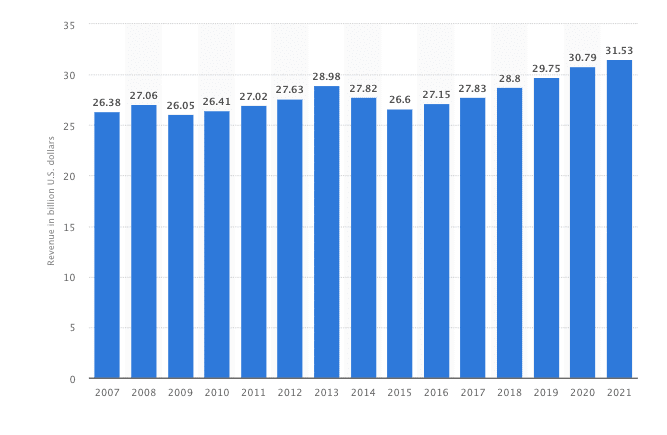
Brick and mortar fitness facilities (US): projected revenue
Screen Shot 2018-09-10 at 11.58.12 AM
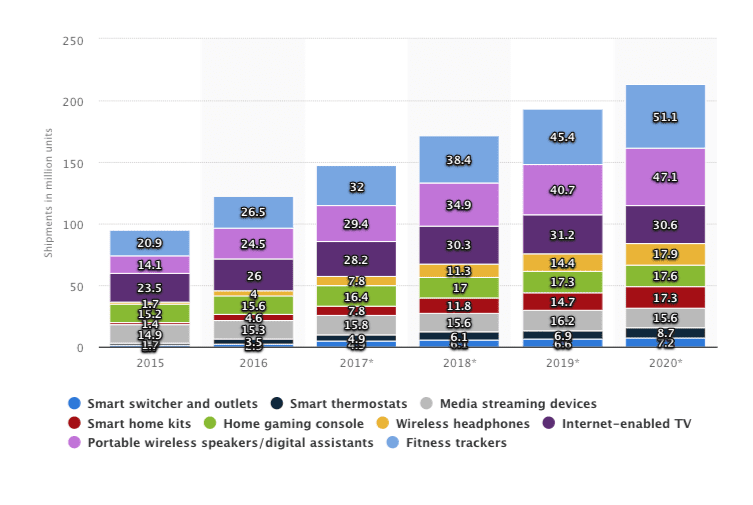
Projected growth in the wearables industry: projected units sold

As interest in gym membership rises, in tandem, with the demand for fitness trackers, smart home kits, and gaming consoles – there’s been no better time to innovate in this space. But the tell will be whether or not platforms like Mirror and Tonal can build community around their equipment. Or whether products like Whoop can continue innovating on the droves of consumer data that they are receiving each day.

CEO of Mirror, Brynn Jinnett Putnam said to the New York Times, “We’re looking to be the next screen in people’s lives. We desire to be an immersive platform, not just a piece of gym equipment.” This quote is a lot to unpack. Whereas Tonal’s system excludes the need for outside equipment so they are directly competing with equipment manufacturers. But Mirror’s take is what Silicon Valley wants to hear; they are hoping that a screen and programming will unlock a greater use for your existing equipment. Only time will tell whether immersive platforms attract the attention of a very specific demo: the high maintenance, upper middle-class gym goer, with ample space in on their spare room’s fortified wall, a strong broadband connection, and a willingness to leave behind their existing fitness community for a purchased one.

If and when manufacturers like Mirror and Tonal figure this out, it could spell trouble for your gym. Spin franchises are already beginning to adjust to the threat of Peloton and as the threat of connected cycles continues to grow as also-has brands rise up in the wake of Peloton’s premium pricing.

Read the rest of the letter here.

By Web Smith |About 2PM

第 285 期:所有权的终结

所有权
场景:租用产品带来的完美度假体验。

去度假时,毫无疑问至少会遇到一对夫妇,他们会拍下自己完美的早午餐体验照片。他们打了一辆Uber前往附近地区,要求司机在 17 分钟的车程中播放他们最喜欢的Spotify播放列表。他们没有走完最后 0.7 英里的路程,而是抓起 "Bird's"前往早午餐地点。嘿,这样风景更美,更令人难忘。丈夫跟在后面,这样他就能拍到妻子的Rent the Runway裙子随风飘扬的完美瞬间。当他们终于到达座位时,他又用Parachut 提供的数码单反相机为妻子拍了一张照片。这是一次完美的体验。

让我们来分析一下访问权与所有权的关系: 

  1. 他们没有开车,而是使用了 Uber。
  2. 他们没有听自己的音乐,而是访问了 Spotify 播放列表。
  3. 他们没有步行 0.7 英里,而是使用了 Bird 滑板车。
  4. 她没有拥有这条裙子,而是从天桥上租来的。
  5. 丈夫没有购买 iPhone,而是通过 AT&T 获得了一部。
  6. 妻子没有配置自己的数码单反相机,而是通过 Parachut 购买了一台。

但这段记忆在很大程度上属于他们自己。他们拥有这段记忆,而这段记忆在美国人存储他们的时刻的地方得到了很好的记录:Instagram。这个地方保存着我们真正想要拥有的东西。最重要的是,我们在乎拥有美好的瞬间。这对夫妇通过租赁物品来拥有一段经历。


第 265 期:DNVB 能否实现现代奢华

购买体验胜过购买消费品是奢侈品群体的一种趋势。对于那些有能力和意识在DNVB品牌购物的顾客来说,奢侈品一词的含义完全不同。斯基弗特(Skift)的最新研究表明,高端游客对更具变革性的旅游体验的需求发生了明显转变(Skift / 2017年5月2日)。过去,昂贵的产品是消费者的愿望:而现在,产品、社区和服务扮演着促成体验经济的角色。


什么是使用经济? 一种由商业模式驱动的经济,在这种模式下,实物商品和服务的交易以使用权而非所有权为基础:它指的是临时租用而非永久出售。

如果你问Joymode 首席执行官乔-费尔南德斯(Joe Fernandez),他会告诉你一场消费革命即将到来。越来越多的访问经济公司创始人和高管都持有这种观点。这也是有道理的。考虑到该领域的初创公司,如Rent the RunwayArmariumParachutFor Days。这些初创公司提供硬商品,以换取每月的订购费。对于消费者来说,这种转变不仅仅是个人经济学或降低拥有成本的问题。它重新定义了 "拥有 "的含义,以及永久拥有产品是否比使用产品更有价值。有些人认为,使用就是拥有。

宝马正在测试名为 "Access "的新项目。以下是 The Verge的安德鲁-霍金斯(Andrew Hawkins)摘录的内容:

每月支付 2000 美元,用户可以选择 X5 SUV、4 系和 5 系轿车等车型,包括所有插电式混合动力版本。如果每月支付 3700 美元,用户可以获得 M4、M5 或 M6 敞篷车以及 X5M 和 X6M SUV,但不包括宝马最高端的 7 系列。宝马表示,该费用包括保险、保养和道路救援。

消费主义是美国基因的一部分,是我们的驱动力。它为我们的国民经济提供动力,促进国际贸易,激励创业创新。但是,即使是一个不经意的观察者,也能理解电子商务所加速的商品积累是如何产生有害影响的。看看《大西洋月刊》最近一篇文章中的这段话 大西洋"我们积累了堆积如山的物品 "

在各种因素的共同作用下,美国人正在囤积大量物品。在互联网出现之前,我们必须留出时间去逛逛实体店,而实体店每天只有一定的营业时间。现在,我们可以随时随地购物--在工作、锻炼甚至睡觉的时候。我们可以告诉阿莱克莎我们需要新内衣,几天后,内衣就会送到家门口。而且,由于制造业的全球化,内衣比以往任何时候都便宜,便宜到我们不假思索地就把它放进了网上购物车。 

在许多方面,Joymode都走在了改变消费者行为的前沿。乍一看,人们很容易将 Joymode 看作是一家活动公司,一个去玩乐的地方。但这只是第一眼。进一步了解他们的产品后,你会发现特色产品都是日常用品。从 Oculus Rift 套件到露营必备品,该平台租赁的产品应有尽有。既有活动产品,也有日常生活产品。这不禁让人好奇。如果事情发展到这一步,我们的衣橱、橱柜和地下室里到底还需要多少产品呢?

Screen Shot 2018-09-04 at 12.30.52 PM
基本产品。我们需要拥有它们吗?

人们的消费方式正在发生文化转变,这将带来巨大的反弹。我很高兴我们能参与其中。本周末,超过 15,000 件产品离开了Joymode的仓库,下周它们将全部返回并进入不同的家庭。大量的人厌倦了债务、杂乱和浪费的恶性循环。

乔-费尔南德斯,Joymode 联合创始人兼首席执行官 

费尔南德斯是Klout 的前创始人,他坚信所有权的未来。与Rent the Runway 等公司相比,他的任务可能更艰巨。与普通家居用品相比,有偿使用服装的门槛可能略低。但我们的分析表明,将会有更多的品牌进入租赁服务领域。这不再仅仅是降低成本的问题。

许多宏观经济指标都支持费尔南德斯的观点:城市化进程加快、住房租赁社区增加、千禧一代债务负担加重、流媒体娱乐增长,甚至我们的旅行方式。作为消费者,你拥有更少的东西。但这些物品将根据你的具体需求进行个性化定制。 人们开始重新定义购买的必要性,因为使用权实际上就是所有权。他们购买的是志同道合的消费者社区。他们花钱购买的不仅仅是产品。他们花钱购买的不仅仅是获得产品的机会,而是进入一个相信理想的集体。而这个理想可能会改变零售业,无论好坏。

作者:Web Smith | 编辑:Meghan Terwilliger |约 2PM


第 284 期:不只是为了出版商

2PM header
A frame from: Fullsterkur (full strength), a Rogue film debut on Youtube – August 26

Between the months of May and July, 5.75 million consumers visited an online retailer that strength and conditioning enthusiasts know as Rogue (No. 11 DNVB). And that’s just the Ohio company’s American site; the company also operates out of Canada, Europe, and Australia. Every SKU sold has been through their native eCommerce channels. They’ve quietly and successfully competed with the old guard of strength and conditioning while holding off well-known retailers like Sports Authority (RIP), Dick’s, and Academy Sports.

It’s quite the operation with an astounding number of online visitors for a company that you’ll rarely hear about. And from what I know about Bill and Caity Henniger, that’s fine by them. The company is eleven years old now, operating out of a single 650,000 square foot installation. Rogue employs over 500 people: from front end development to welding. And, anecdotally at least, the company seems stronger than ever.

There’s very little tech media and pop business notoriety for Rogue but, it suits the company just fine. They’re a well-oiled machine, from what I know. And machines don’t really need the affirmation of public relations mentions. They’re so quiet that, if you want a list of venture capitalists that track them (out of admiration), it’s GGV’s Jeff Richards and Indie.vc‘s Bryce Roberts. And, for the record, Rogue is where I cut my teeth in the sophisticated world of online customer acquisition. Back then, it was just Google SEM, Facebook spend, and daily ROI audits.

Today, for retailers, that’s not enough to efficiently grow a business. CAC is rising, knock offs are abound. And Amazon, Alibaba, and the industry seem to alter the battlefield quarterly,

There’s a point of diminishing return in brand-first eCommerce. At some point, you have to begin to think outside of the box or sales begin to slow, awareness tanks, and the old guard regains their footing against your early years’ momentum. This is the story facing numerous brands across consumer packaged goods (CPG), digitally vertical native brands (DNVB), and marketplaces. But there aren’t many companies in America operating at the level of complexity that Rogue seems to be.

For brands looking at how to navigate Porter’s Five Forces, look no further. It’s the basic understanding of positioning, competition, and other market forces that influence the best and brightest leaders throughout the eCommerce landscape. Not only is the company forward-thinking in manufacturing IP, tech development (in-app, one-click purchasing), and marketing (Youtube is now 21% of all organic social traffic). They seem to understand that for many consumers, there is an important question: “Will a brand be around in ten years?” The answer lies here: “Well, are they respected? Is their product an institution?” The last two questions will determine the answer of the first.

Rogue is quickly becoming an institution. This latest production, live streamed on a Sunday night, was a great introduction to a project that they’ve been working on for years: The Index. For the casual industry observer, it’s a content x commerce play. And it is. But deeper than that, it’s a bridge. You can watch, through the evolution of their videos and academic archives, as Rogue became more and more respected by those at the top of their crafts.


Issue No. 267: On DNVB Branding

For heritage brands, presenting an aura of staying power means that the products and channels will present as forward-thinking for a millennial-driven, omni-channel age.

Meanwhile, vertical brands work to establish their products as an evolution of heritage products, while maintaining as many of their technological advantages as possible. For digitally vertical brands, longevity is projected by tethering to history and tradition.

The next wave in DNVB branding will be focused on developing history and tradition. Brands will deepen their roots by way of product collaborations, messaging, and unique origin stories of their own.


The film was impressive. Directed by a talented videographer named Todd Sansom, who’s been there forever, the film was executive produced by the owners of the company, and influenced by their closest peers. It was a passion project as much as it was a way to address how buyers decide and consume on the internet today.

Content and commerce isn’t just for publishers anymore. And quiet old Rogue, is at the leading edge. The ability to reach new consumers by becoming a destination for their enrichment is often theorized but rarely executed by eCommerce brands. While some go for virality, this is not the intent here. The latest film is part of a collection that draws you in. And while I may be biased here, it works. Rogue’s equipment isn’t exactly inexpensive compared to foreign manufacturers or bargain options, stateside. But for tens of thousands of people who run, jump, and lift – Rogue is their source. Not only for products but for inspiration, education, and the great examples of strength’s golden era. By the time that visitors conclude their rabbit hole viewing of content, they’re reminded that there are tools, apparel, and heavy equipment available to them by freight or overnight mail, depending on the tonnage sold.

Update: Rogue’s Fullsterkur film has garnered critical praise. It is being screened at the Austin Film Festival as a Marquee feature. Per Rogue’s online store:

The Austin Film Festival & Writers Conference (AFF) is the premier film festival recognizing the writers’ contributions to film, television, and new media. The festival is marking its 25th Anniversary in 2018, with a packed schedule of screenings, panels and other events taking place from October 25 through November 1. Among the other Marquee Features joining Fullsterkur on the schedule will be Gillian Flynn and Steve McQueen’s new thriller Widows, Mike Leigh’s period piece Peterloo, the Mickey Rourke-starring boxing drama Tiger, and Paul Dano’s Wildlife, starring Jake Gyllenhaal and Carey Mulligan.

The film will show at the Austin Film Festival on October 30 at 4:30 PM Central. The 90 minute film was broadcast live, where it was viewed 4.1 million times on Facebook and has been watched over 270,000 times on Youtube.

Read more of Issue 284 here.

作者:Web Smith | 编辑:Meghan Terwilliger |约 2PM