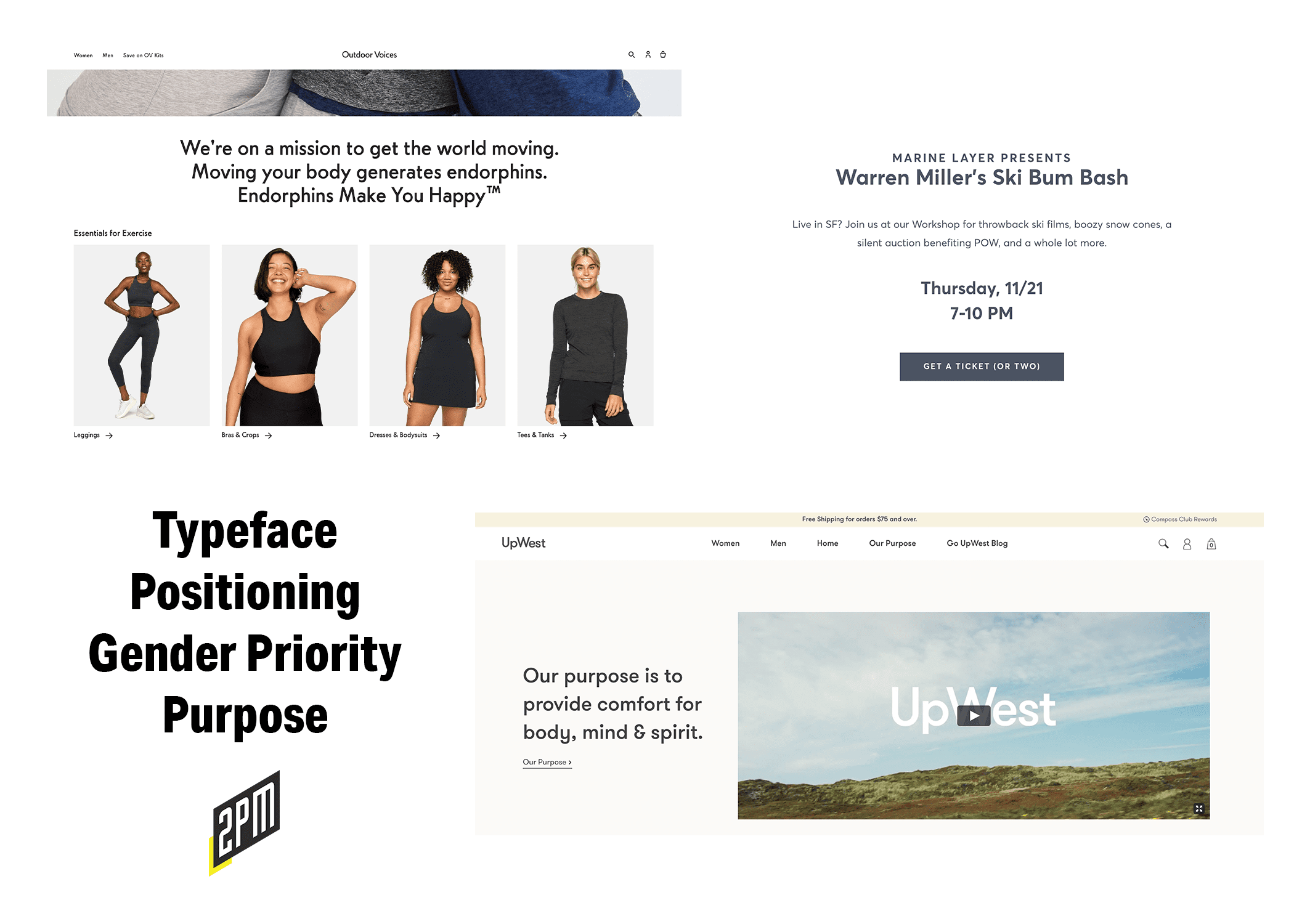
No. 336: The ‘Cycle of More’

There is a subtle trend bubbling beneath the Rothys and Veja’s of urban dwelling millennials. There is a rise in 20 and 30-something workers who choose to take mental health days off from work, citing burnout. CBD-based goods are commonplace throughout specialty retailers’ checkout lines. Meditation apps and hardware are tipping into the mainstream. Rather than the consumption of more and more goods, high-earning millennials are choosing to take time off instead. This shift in priority is in-line with another: the boom of companies pursuing valuation arbitrage by identifying new paths to growth. WeWork, perhaps the case study par excellence of this business cycle crashed –  on demand  – with the help of an angry, financially-free NYU Professor with nothing to lose.

Two trends lead this report: (1) the shift towards mental minimalism and (2) the shift away from the business cycle of more. In a January report in BuzzFeed News, the first of the two began to pick up steam in the mainstream media:

So what now? Should I meditate more, negotiate for more time off, delegate tasks within my relationship, perform acts of self-care, and institute timers on my social media? How, in other words, can I optimize myself to get those mundane tasks done and theoretically cure my burnout? As millennials have aged into our thirties, that’s the question we keep asking — and keep failing to adequately answer. But maybe that’s because it’s the wrong question altogether. [1]

Each daily task, job, extracurricular event, and hobby shares many of the same traits with one another. Bigger, more, faster, more, better, and more. Rarely is any daily occurrence simple, small, or inconsequential. And it’s beginning to show. If you’re reading this, you’re likely thriving in an environment where you Peloton or Tonal before work, Uber Black while answering emails on $2,000 MacBooks, micro-dose to become “limitless,” intermittently fast to optimize for your fitness, and then work twelve hour days to pay for those $3,500 monthly leases. Frankly, we are all burnt out. And there is a connection; brands are beginning to reflect the empathy towards this behavioral undercurrent.

It’s easy to understand, then, why so many of us are so angry. The WeWork’s of the world were built on an ethos of positive vibes and unity — replete with what tech analyst Ranjan Roy calls “high-minded, burning man-esque self-actualization language” that, today, feels offensively out of sync with people’s lived realities. So why would Pattern, or any company that applies a superficial layer of burnout-conscious buzzwords to its products, be different? [2]

Consumer psychology involves the interest in lifestyle, behavior, and habit. It’s an all-encompassing study that considers our idiosyncrasies, our temperaments, and even our subtle personality traits. These are the variables that influence our behaviors as consumers. Psychographic segmentation is the analysis of a consumer cohort’s lifestyle with the intent to create a detailed profile. [3]

Pattern Brands, the group behind Gin Lane (RIP), is at the forefront of this trend identification. The legendary creative agency that developed the mold for millennial consumption by advising Hims, Harrys, Dia & Co, Ayr, Bonobos, Shinola, Stadium Goods, and Rockets of Awesome is pulling back on the messaging that influenced the “business cycle of more.” With a bit of hindsight, it makes sense that Recess and Haus were two of Gin Lane’s final DTC projects. It’s as if they were telegraphing their plans to focus on a new era of messaging by concluding their successful run with two “mindful” brands.

What does this mean for DTC brands?

In the last months, Everlane launched its impact-free shoe, Allbirds released a Rothy’s look-alike, Rhone launched a credible competitor to Mizzen+Main and Ministry. And Away began laying the groundwork for a consumer packaged goods (CPG) operation. It was once common for brands to believe that they could build a defensible growth path by identifying one product-need and one consumer identity. [4]

Scale fast, scale there, scale now. This is the executive mantra of many of today’s top digitally brands. Many product manufacturers began with a single, key product. They then expanded into a growth path befitting that of a traditional category brand. Though, most DTCs have done so prematurely. In contrast, successful traditional brands expanded beyond their initial focus after a decade or more in business.  In this era of retail, the move from product-to-category happens in just a few years. Founders hire product talent to stay atop a growing diversity of SKUs – many of which were barely intended upon the start. Imagine a shoe company designing luggage or a luggage company designing dress shirts, for instance. For a generation of consumers, the business cycle of more isn’t just student loans, rising rents, or WeWork’s demise. It’s also representative of the brands that we consume. Every brand seems to be out to get bigger, faster, and stronger – a subsconscious reminder that we are to do the same. This is beginning to change.

In a recent conversation between AdWeek’s Ann-Marie Alcántara and I, we discussed these concepts in a marathon of off-the-record discussion. To combat the hyper-growth narrative required to achieve venture funding, the early stages of  today’s upstart brand would resemble more of a publisher or community than a retailer. The rationale is simple: a customer is fleeting, a community lasts. This is most often reflected by brands with stronger organic presences. Brooklinen is the example of the hour.

Brooklinen: A “Bedroom” Brand

No longer just a bedding brand, Brooklinen wants to own the bedroom much like Away aims to own travel. Their strategies diverge from there. Brooklinen is in a class of digitally native bedding companies to include: Parachute Home, Buffy, and Hill House Home Inc. Founded in 2014, the company reported nearly $60 million in 2018 sales; the wife-husband duo has only raised $10 million to date, a capital constraint that likely influenced their growth path from product company to category presence. In this case, capital constraint proved an effective growth mechanism.

Screen Shot 2019-10-28 at 3.51.34 PM
From: earthy-minimalist at Brooklinen

In contrast with many of today’s top digitally native brands, cofounders Rich and Vicki Fulop shunned the traditional “category expansion” playbook in favor of a two-way marketplace format that compliments the aforementioned trend undercurrents.  Consumers will reward the brands that offer value without trying to do it all. As such, the launch of the Spaces marketplace gained wide media attention thanks to savvy messaging from the founding team and public relations work by Ogilvy’s Lindsey Martinez, Brooklinen’s public relations firm on record.

Spaces will feature 100 products by 12 partner brands (in addition to the total 89 products created by Brooklinen). Designers will include some independent artisans, as well as recognized brands such as Simply Framed, The Sill, Floyd and Dims, among others. [5]

The launch piqued the curiosity of a number of industry observers who weren’t yet familiar with Brooklinen’s marketplace partner RevCascade or the SaaS company’s tech stack. Rather than expanding beyond the brand’s 89 SKUs by developing or white labeling other in-category products, Brooklinen partnered with RevCascade to launch a two-sided marketplace. With a monthly average of 600,000 – 650,000 visitors with purchase intent, offering complimentary products from fashionable brands like The Sill accomplishes a few things: it monetizes existing traffic while rounding out the consumer’s interpretation of how Brooklinen fits within their lives.

Brooklinen expanding to a marketplace isn’t necessarily a new concept, according to Web Smith, the founder of retail research platform and community 2PM. It’s what Smith calls linear commerce, in which a brand uses an existing audience to monetize further revenue, growth and traffic. [6]

Is Brooklinen any less of a category brand than Casper? The short answer is no. In fact, the market may reward the bedding company for its two-way market strategy. RevCascade provided the tools necessary for Brooklinen to launch a hybrid marketplace that featured (1) wholesale (2) direct (3) and drop-shipped merchandise. In this way, Brooklinen’s approach is reflective of the Law of Linear Commerce.

With so many new brands in different categories, it’s difficult for any company to “cut through the clutter,” Fulop said.

Brooklinen’s founding team paired an existing audience (of 600k MAU) with an additional commerce opportunity. In their case, they did so without any additional hiring, development, or marketing hindrances associated with new product launches. With their approach, they offer new products while maintaining their focus on the production of quality textiles.

In a comment to 2PM: Josh Wexler, cofounder of RevCascade:

RevCascade enables any retailer, eCommerce merchant, or publisher to launch their own curated marketplace or dropship program to elevate their brand, better serve their consumers, and generate new revenue with zero inventory risk. Brooklinen’s approved brands (aka sellers or suppliers) use RevCascade’s “onboarding wizard” to create their profile, upload inventory, and set shipping preferences. In parallel, by leveraging RevCascade’s automated Shopify integration for product data, inventory updates, and transaction data, Brooklinen was able to launch their marketplace in less than 30 days

Anchored by a strong affinity for the company’s core products, Brooklinen gained a competitive advantage by both measures: DTC and marketplace. Consider Verishop, a popular, well-led, and well-capitalized marketplace that launched in July of 2019:

[table id=49 /]

Whether we are discussing Pattern Brands’ approach to remedying burnout culture or the cycle of more’s influence on an ever-crowded market of high-growth brands, Brooklinen’s partnership with RevCascade may serve as a path forward for many of their counterparts. Consumers have grown weary of companies that are looking to grow for the sake of growth. To these consumers, it’s a reminder of their own fast-paced, high-pressured lives.

Consumerism will always exist in some form or the other, but the clutter of brands looking to grow to the next milestone may fall out of grace with many. From Marie Kondo to Core Meditation, clutter culture has become a catalyst for burnout remedies. Experiences that provide ease, value, and simplicity will be rewarded in today’s market. It is a brand’s responsibility to contribute to the solution and not to the cycle of more.

Read the No. 336 curation here.

Report by Web Smith and edited by Tracey Wallace | About 2PM

No. 335: The Merchant Class


The rebuttal that you’ll typically hear is: “eCommerce is not blue collar.” It’s a refrain tweeted from the 20th floors of urban sprawls. On those floors, you’ll find dual-monitored workspaces adjacent to espresso machines and collagen bars. But for Jerry M. of Pickerington, Ohio, his opinion differs.

He’s been a four year member of Amazon’s third shift at its CMH2 facility. With his trusty Fitbit, he measures his nightly activity. His all-time goal is a little over 17,000 steps for the day, though the 57 year old typically falls around 12,000 – 13,000. An impressive number, his picking and packing statistics are even more impressive. On any given night, his fulfillment center is one of Central Ohio’s most prolific. And that’s saying quite a bit. Jerry’s no stranger to hard work, he is a former maintenance man who took the opportunity to grow with Amazon’s exploding logistics-side business. It paid far better.

Central Ohio is a bastion of third-party logistics centers and fulfillment warehouses. Name a digitally native brand and they will likely have a presence in the area. It was my first experience within the walls of one of those retailers that changed my perception of commerce altogether. At 26, I began in the marketing department of Rogue, a now-gargantuan online retailer that employs hundreds of machinists, warehouse workers, packaging engineers, and front office developers and executives. The employees and contractors now sit (or stand) within 900,000 square feet near Downtown Columbus. But on my first two days with the company, I passed the hours in the warehouse moving 40 pound boxes. On the second day, I wore comfortable shoes.

To the marketers, developers, and managers – they are online retail. They are what makes the engine move. And for a time, this was true. Commerce investments like recruiting engineering teams, advertising talent, server space, able creatives, and copywriting mavens rounded out the major spend. Leaders would spend heavily on the front-end, not the back-end. Commerce was pixels, not forklifts. But to those building packaging, operating forklifts, moving goods to trucks, they were commerce. To them, the front office folks were the replaceable ones.

Commoditization of the Front End

The front-end product side of online retail is quickly commoditizing. You have Shopify and Magento, of course. But then, there are solutions for every corner for the ecosystem; these innovations grow by the quarter. There are legacy partners like Fulfillment by Amazon (FBA), Adobe, BigCommerce, Square, Oracle, SalesForce, and WooCommerce. And there are new and innovative no-code options like Webflow Commerce and Storefronts by Elliot, a new plug and play product that launched to much fanfare on Product Hunt. With storefronts, you don’t need many of the front office folks that were required just eight years ago. The constraint is now warehouse logistics, and Shopify saw that before any of its competitors. The labor is the hard part.

The foresight by Shopify’s management team couldn’t have been better-timed.

Despite the front-end component of online retail commoditizing more and more each day, eCommerce is mainly discussed within the confines of code and pixels. But if you’ve ever had to build something, you’re just as grateful for the UPS employee as you are to the front-end developer. Online retail is a blue collar industry built on accessible tech. When Shopify launched into the third-party logistics (3PL) industry earlier this year, it raised eyebrows. Critics suggested that Shopify was losing its focus. Many of the questions centered around matters of optics: Can they maintain efficiency across hundreds of warehouses? Do they understand the difficulty? Will it lower their net promoter score? And don’t they know that they’re a software company?

Unpacking the next battle

It’s the third question that is at the crux of it all. Shopify has a decade-long history of enabling storefronts for tens of thousands of traditional and digitally native retailers. It has been, in effect, a publisher. Over that span of time, the company has added retail operations: omni-channel inventory tracking, point of sale hardware, and now shipping and logistics. The retailer’s primary user base (Shopify account holders) benefits from the company’s growing list of core competencies. [1]

Sitting with Shopify founder and CEO Tobi Lütke in his Ottawa office and one line of thought stood above the rest. I cared more about the enterprise names in commerce than he did. I found that to be confusing at first. Within the Shopify solar system, Plus is its own planet. It operates out of a different city. The cultures between offices are wildly different. One is low key, the other has a dash of braggadocio. But for Lütke, Shopify doesn’t exist for the sake of Shopify Plus. In fact, one could argue that it’s the other way around. Shopify Plus helps Shopify build more tools for the common merchant. To the Ottawa-based CEO, helping mom and pop shops and millennial side hustles is where the action is. Engineering is no longer the bottleneck, in this respect. There are a dozen options if a merchant would like to sell a product and accept payment.

Shopify plans to spend $1 billion on its fulfillment network through 2023, and Wong writes that his research shows that “there is enough merchant discontent with Amazon and sufficient inefficiencies in the logistics workflow to innovate upon, that Shopify could eventually compete against” the e-commerce giant. [2]

But it’s become abundantly clear that, at some point, Shopify’s business needed to shift from the theoretical to the practical – from bits to boxes. If every merchant can find a storefront, Shopify’s original vision is no longer enough. This week, Shopify officially closed acquisition of 6 River Systems for $450 million in a cash and stock deal.

By equipping independent warehouses and 3PLs with task-augmenting robotics, it frees up workforces to do more, faster.

Shopify expects this move to support on-site employees with their daily tasks, such as inventory replenishment, picking, sorting and packing, as well as increase the speed and reliability of its warehouse operations. [3]

This long-term investment was key to Shopify’s strategy. By improving efficiency through out hundreds of warehouses, Shopify is growing capacity at 3PLs. Not only does this lower the costs of shipping, it also increases success rates. Ask any top 3PL if they’d onboard a small business doing less than $300,000 per year; the answer will be “come back when you’ve grown.” If top 3PLs do accept small retailers like these, the costs are disproportionate. The concern and care is minimal. In an industry where top performing 3PLs gross $200 million or more, $100,000 accounts are a strain. But until recently, there was no efficient funnel to help small merchants attract the business of independently owned, small cap 3PLs like Ohio’s Ships-A-Lot.

The average DTC founder spends 20-30% of her time dealing with shipping concerns while managing scale and expectations. Lütke is democratizing third party logistics for all merchants, not just ones at the enterprise levels. By increasing optionality and making the investments into robotics and data systems to lower costs – more merchants, small retailers, and early-stage DTC brands may finally be able to utilize 3PL services earlier in their life cycles. In 2004, Shopify launched products that made founders reconsider hiring full-time engineers. With innovations like no-code platforms, online retail has come a long way since those days. Third-party logistics for smaller merchants is just the latest in the line of pain points that Shopify is well-positioned to address for the merchant class.

Some will argue that eCommerce isn’t blue collar, Shopify’s actions suggest otherwise. For employees like Jerry and the hundreds of thousands of other warehouse workers spread throughout the exurban office parks of America, they see themselves as the center of the eCommerce universe. And rightfully so. Products are picked, packed, and moved by hard-working, tireless people. Retail is the movement of physical goods that require enormous amounts of physical labor to arrive faster and faster to your doors. And so, eCommerce isn’t just a front office job anymore. Of course, many merchants will tell you that it never really was.

Report by Web Smith and edited by Tracey Wallace | About 2PM

No. 334: The Relevance of The Letter (A relevância da carta)

BoF

Esta semana, Kaitlyn Tiffany, da The Atlantic, escreveu um relatório diferenciado e interessante sobre a história do setor de boletins informativos. A extensão da história depende de quem você perguntar. Para ela, a Substack gostaria que você acreditasse que sua equipe foi pioneira no movimento. Ela argumenta, corretamente, que eles o adaptaram com sucesso para um público diferente. É provável que obtenham grande sucesso a longo prazo. Dê uma olhada na tela da tabela de classificação paga do Substack e você poderá entender o argumento da autora. Em seu artigo, ela escreve:

"[Os boletins informativos] têm sido uma coisa", diz Ann Friedman, que escreve um boletim informativo semanal desde 2013, tem 40.000 assinantes e é amplamente reconhecida como uma das líderes do primeiro boom de boletins informativos.

De muitas maneiras, o artigo de Tiffany foi relevante para alguns pensamentos que venho tendo há algum tempo. Ela argumentou com propriedade que, embora o investimento de US$ 15,3 milhões da Andreessen Horowitz no Substack tenha sinalizado um início, ele se tornou uma ferramenta útil para tornar os boletins informativos "legais" para outros grupos. Ela fornece um histórico passo a passo de alguns dos nomes mais importantes da história do setor de boletins informativos. O relatório vale seu tempo.

Nos bastidores do Destination D2C de setembro, uma dezena de colegas se reuniu para conversar sobre o mundo profissional, uma paixão que cada um de nós persegue à sua maneira. Cada um de nós compartilhava algumas coisas em comum, mas a mais importante era nosso interesse no setor de vendas diretas ao consumidor. Agora memorizada no livro "The Rise of the DTC Bro", da Modern Retail, essa cena de bastidores foi um momento significativo e que não teria sido possível sem a ajuda da integração dos boletins informativos como uma plataforma de mídia, conforme a observação anterior de Kaitlyn Tiffany. Cale Weissman começou:

Tudo começou com Paul Munford, fundador do boletim informativo de luxo Lean Luxe, ao lado de Web Smith, fundador do site 2PM, que se sentou ao lado de Helena Price Hambrecht, fundadora e CEO da Haus. Depois veio Marco Marandiz, estrategista e consultor de DTC, que se sentou e participou de uma conversa sobre seus clientes. Depois disso, Nik Sharma, cujo perfil no Twitter se descreve como "o cara do DTC", juntou-se à diversão.

O que, talvez, o repórter da Modern Retail não tenha visto naquela cena foi a quantidade desproporcional de rejeição tolerada por cada membro daquele grupo sentado. Helena Price Hambrecht, hoje uma conhecida fundadora do setor de vendas diretas ao consumidor, começou como criativa. Em seu próprio direito, Hambrecht é uma mestre da comunicação.

Ela se provou rapidamente, mas para aqueles de nós que a conheciam antes do envio das garrafas, ela já estava provada.

Mas antes Haus ser lançada para uma multidão, a marca que ela fundou enfrentou uma batalha difícil. Ninguém queria financiar sua ideia. Logo no início, os repórteres criticaram seu conceito e sua abordagem. Eu sei, pessoalmente, que ela fez mais de 500 apresentações para completar sua rodada inicial de US$ 1 milhão. Essa é uma taxa de fracasso extraordinariamente alta. Os VCs tradicionais consideram: geografia, setor, idade, gênero e muito mais. A correspondência de padrões proporciona conforto e um pouco de segurança. Hambrecht não era uma empresa que correspondia ao padrão. No entanto, a próxima rodada que ela levantou seria fechada em poucos dias. Em um comentário para a 2PM, a fundadora da Haus, Helena Price, escreveu:

Nosso primeiro US$ 1 milhão levou oito meses e cerca de 500 propostas. Ouvimos muitos "nãos". Houve muitos pontos obscuros e momentos de dúvida. Dito isso, se você realmente acredita que existe um público para o que está desenvolvendo, encontrará essas pessoas no capital de risco também. Eu digo às pessoas que estão criando, agora, que elas provavelmente não conheceram 90% das pessoas que acabarão investindo nelas. Basta continuar fazendo apresentações e enviando e-mails frios e, no final, você encontrará seu pessoal.

Ela se provou rapidamente, mas para aqueles de nós que a conheciam antes do envio das garrafas: nada havia mudado, ela já era comprovada. Ela simplesmente não correspondia à ideia de um executivo de varejo e fabricante. Quanto à ideia de um líder ou pensador do setor de comércio eletrônico, poucos de nós que estávamos sentados nos bastidores também correspondiam a esse padrão. Marandiz, Sharma, Munford e eu somos os recursos prototípicos para os degraus mais altos dos setores de comércio e mídia. Você não encontraria um único de nós nessa lista de especialistas do setor. No entanto, há vários membros da lista que assinam a 2PM ou a Lean Luxe.

Em um setor que ignora as contribuições daqueles que não se encaixam no padrão proverbial, o movimento de boletins informativos forneceu uma plataforma. O que cada um de nós compartilhou no momento foi memorizado por esse parágrafo. Antes de sermos editores, fomos operadores em algum momento: fundadores, diretores, gerentes, construtores. E essa experiência adquirida com muito esforço foi o vento que impulsionou nossos projetos pessoais.

Sharma, que já foi diretor de comércio eletrônico da Hint Water (e depois da Vaynermedia), costuma ser co-escritor do prolífico David Perell. Executivo de relações públicas por profissão, Munford lançou a Lean Luxe poucos meses após o lançamento da 2PM. Marco Marandiz fez seu nome publicando as agora famosas análises no Twitter de marcas de DTC como Away e Glossier. Ele começou a fazer isso quando era líder de produtos na HomeAway. E antes de gerenciar o comércio das publicações de mídia Gear Patrol e Uncrate, fui cofundador da Mizzen + Main. Ainda assim, essas credenciais muitas vezes não são suficientes.

358225C3-66C6-4B54-894E-979C7563A454 2
Sherrell Dorsey, Dan Runcie, QuHarrison Terry e Web Smith

Há apenas três meses, o 2PM participou de um painel da National Association of Black Journalists (NABJ) com publicações bem-sucedidas (e lucrativas) de boletins informativos: The Plug, Inevitable Human e Trapital. O tópico era "criar empresas de mídia de assinatura paga". Mas o ponto em comum foi fácil de observar: sem a massa crítica de um público de boletins informativos, nossas ideias provavelmente seriam reempacotadas em um meio de comunicação tradicional por meio de conversas gravadas ou não gravadas com repórteres profissionais. Os editores de boletins informativos se esforçam para se apropriar da distribuição de suas ideias e das comunidades que as cercam.

Portanto, quando li o artigo da Modern Retail, não fiquei chateado. Weissman é um ótimo escritor e provavelmente não fez por mal. Mas fiquei confuso com o fato de ninguém ter visto o que fizemos. Não tenho certeza de que muitos leitores entenderam o quanto estávamos orgulhosos de estarmos sentados ali em primeiro lugar. Apenas três anos antes, aquela cena não teria acontecido. Para mim, o momento pareceu um enorme privilégio. Em cada caso, encontramos nossas próprias maneiras de fornecer nossas ideias práticas e orientadas pela experiência a um ecossistema muito competitivo. E, naquele dia, a equipe fundadora da Yotpo reconheceu a validade de todas elas. Foi um momento importante.

A era pré-subpilha

Meta: publicar 180 cartas. Reavaliar. O lançamento da 2PM, Inc. em 2015 foi uma espécie de granizo. Em dezembro daquele ano, eu já não estava mais co-gerenciando uma operação de DTC. Em vez disso, eu estava aconselhando e/ou criando operações de comércio eletrônico para editores. Como um projeto paralelo, criei o 2pml.com como uma forma de manter a responsabilidade comigo mesmo.

A proposta do 2PM era simples: entender tudo para melhorar em uma única coisa.

Eu queria melhorar em minha profissão. Na época, meu foco em uma tarefa estava levando a mais pontos cegos do que a um progresso tangível. Dessa forma, eu estava perdendo o conhecimento prático que se segue à leitura, ao raciocínio e à análise rigorosa. O primeiro e-mail da 2PM foi publicado para 11 pessoas; eu o monetizaria depois de 180 cartas por necessidade. Construir essa empresa tornou-se meu trabalho em tempo integral.

Ao entender como os setores adjacentes ao comércio do 2PM interagem para impactar negativa ou positivamente uns aos outros, pude mapear as melhores etapas para os projetos aos quais eu estava ligado - na época e agora. Com a 2PM, eu esperava duplicar essas mesmas habilidades para outros colegas do setor. É uma proposta simples: entender tudo para causar impacto em uma única coisa.

Se havia algum ponto cego no artigo da Tiffany, Is Anyone Going to Get Rich off of Email Newsletters? [1], talvez exista um. Há um grupo crescente de ex-operadores que passam a maior parte do tempo aprimorando suas habilidades de publicação. Eles entendem de comércio, marketing, branding, logística e ciência de dados. Já enviaram pacotes, negociaram acordos de distribuição e lideraram esforços de marketing de desempenho. E os leitores parecem ser atraídos pelas perspectivas cruas daqueles que estão discutindo os setores de dentro das paredes. Quer você esteja lendo Chips and Dip, de Emily Singer, Retales, de Magdalena Kala, Loose Threads, de Richie Siegel, Thing Testing, de Jenny Gyllander, ou Lean Luxe, de Paul Munford, a presença da experiência operacional é sentida.

O editor que prioriza o operador

Portanto, sim, o Substack deixou de lado uma história relevante em seu blog "A better history for news" (Uma história melhor para as notícias) de 17 de julho. É claro que eles destacaram Ben Thompson e Jessica Lessin, luminares do setor de assinaturas pagas independentes. Mas o Substack pode ter deixado passar outra tendência. O Substack conclui sua homenagem à publicação com:

Cento e oitenta e quatro anos desde que o New York Sun foi colocado à venda pela primeira vez, estamos à beira de uma nova revolução no setor de notícias. O tempo de lamentar a perda do antigo modelo de mídia acabou. Agora é hora de olhar para os próximos dois séculos.

A revolução em si não é nova. Mas está alcançando novos tipos de pensadores que buscam uma plataforma para impulsionar seus setores. Os editores ficarão ricos com isso? Talvez sim, talvez não. Mas publicar como uma plataforma é completamente diferente de enviar apenas boletins informativos. Gyllander acaba de concluir uma considerável rodada de anjos de muitos dos melhores e mais brilhantes do Vale do Silício. Sua abordagem baseada em assinaturas é nova, confiável e envolvente. Siegel acabou de realizar com sucesso uma conferência de varejo de um dia que não teria existido sem seu boletim informativo Loose Threads. Munford lota os eventos sociais da Lean Luxe sempre que eles são realizados. Embora não seja uma plataforma voltada para assinantes pagos (por enquanto), ele conseguiu monetizar com sucesso por meio de patrocínios semanais. E a 2PM está lançando seu primeiro fórum exclusivo para membros para executivos de comércio e mídia: Polymathic. Cada empresa tem uma enorme oportunidade pela frente.

A era do editor que prioriza a operadora é fascinante de se observar. De certa forma, ela está nivelando um campo de jogo exclusivo dentro das mesas de mídia. Mas em uma mesa, nos bastidores do local bem equipado do Yotpo, um grupo certamente se destacou - literal e figurativamente. Tínhamos um comportamento diferente e uma aparência diferente. Vozes não tradicionais em mídias relacionadas a negócios estão impactando positivamente os círculos da mídia tradicional. E a esperança é que esses boletins transformados em plataformas continuem a fornecer novas ideias para os níveis executivos dos setores digitais estabelecidos. A 2PM está mais uma vez observando um movimento silencioso de dentro para fora.

Leia a curadoria do nº 334 aqui.

Reportagem de Web Smith e editada por Tracey Wallace | About 2PM