Memo: Whoop Won, Amazon Lost

Whoop won; Amazon bricked its Halo line of products.

Amazon decided to shut down its wearable technology operation that aimed to compete with other prominent players in the market such as Google Wear OS and the Apple Watch. But it’s Amazon’s competition with Whoop that was the most noteworthy. Whoop CEO Will Ahmed was livid when Amazon attempted to duplicate Whoop’s core design concepts and technologies. On September 2021, Ahmed tweeted: “[We] left a message for Amazon etc on every 4.0 circuit board.” The competition runs deeper than a tweet, however. A Wall Street Journal report on July 2020 explained:

Former Amazon employees involved in previous deals say the company is so growth-oriented and competitive, and its innovation capabilities so vast, that it frequently can’t resist trying to develop new technologies — even when they compete with startups in which the company has invested.

Amazon faced significant challenges, ultimately losing to Whoop. There are key reasons for Amazon’s failure in this space and Whoop’s continued growth through enterprise partnerships, innovation, and overall awareness.

1. Lack of differentiation: Amazon’s Halo product did not offer anything significant from Whoop or other market leaders. In contrast, Whoop’s offering stood out with its focus on personalized health, performance, and fitness insights to include recovery tracking and sleep analysis. The lack of unique features in Halo made it difficult for Amazon to persuade potential customers to choose its product over products like Whoop.

2. Late entry into the market: By the time Amazon launched Halo, Whoop had already established itself as a strong player in the wearable technology space via numerous official and unofficial partnerships with professional sports leagues and athletes. Consumers and businesses had already grown accustomed to Whoop’s products and ecosystem, making it challenging for Amazon to penetrate the market and gain a significant market share.

3. Brand reputation: Whoop had built a strong reputation for its product quality, innovation, and focus on customer experience. In contrast, Amazon’s approach of imitating Whoop’s product did not sit well with the market, and the negative perception affected the adoption of the Halo device.

4. Enterprise partnerships: Whoop has been successful in forging key partnerships with businesses and organizations that want to leverage the power of wearable technology for their employees’ health and wellness. Whoop is the official partner to the PGA. These types of partnerships have not only helped Whoop gain a steady revenue stream but have also expanded its market presence and brand awareness.
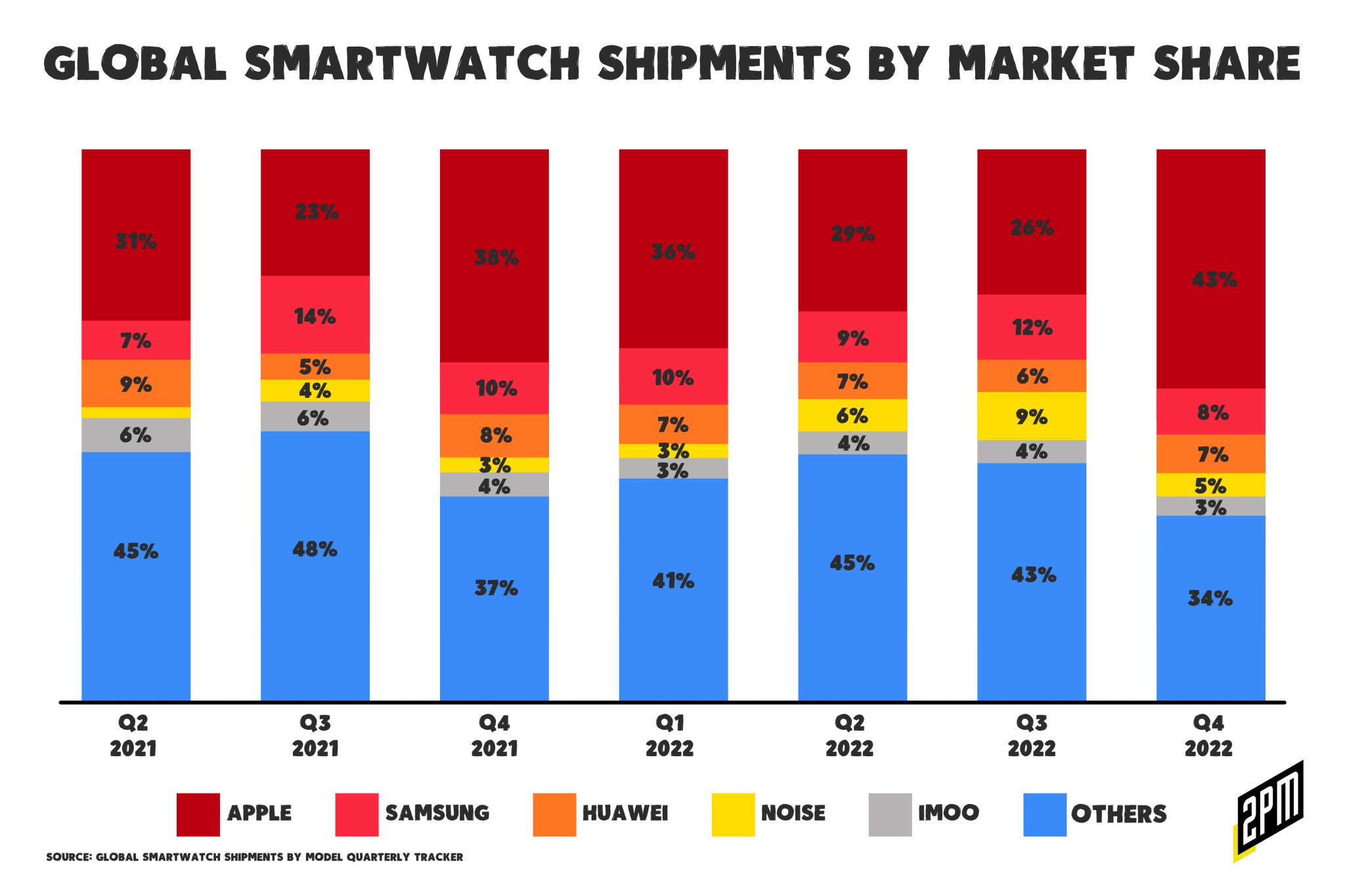
5. Continuous innovation: Whoop has consistently invested in research and development, improving its products and features. This commitment to innovation has allowed the company to stay ahead of the competition and maintain its position as a market leader. Amazon, on the other hand, failed to invest in developing new and unique features for Halo, making it less appealing to consumers. In March, Whoop announced a new stress-tracking feature.

Each member’s current reading, which is converted into a personalized Stress Score, is then compared to their individual HRV baseline from the last 14 days, as well as their typical resting heart rate. When generating a member’s Stress Score, WHOOP is able to delineate between moments of physiological stress and physical strain.

And on April 25, Whoop rolled out its “Strength Trainer,” a service that allows users to track strength training by gauging the “physiological impact of muscular load.”

6. Effective marketing and overall awareness: Whoop has been successful in creating awareness about its products through targeted marketing campaigns, social media presence, and endorsements from athletes and celebrities – especially by the golfing community. This has helped the company build a strong brand presence and attract a dedicated user base. Puff pieces like these by Golf.com are invaluable:

Leading players like Rory McIlroy and Justin Thomas use the detailed recordings of Whoop, while Nick Watney, who was the first PGA Tour golfer to test positive for Covid, was alerted to carrying the virus by the heart and respiratory recording from his Whoop band.

Amazon famously pursued a bold acquisition strategy around connected devices and the many data that they contribute, but for these reasons, it didn’t work out as planned. In Consumer Data and Amazon, I explained:

Amazon now has a presence in the following categories: laptops, streaming television, in-home assistants, smart speakers, Door cameras, fitness monitors, and now vacuum cleaners. Collectively, Amazon knows more about its consumers than any other company on earth.

The closure of the wearables department will mean that Amazon would no longer be able to collect data on users’ health habits, physical activities, and other wellness-related preferences. This data could have been used to serve more targeted advertisements to users, increasing ad revenue.

However, Amazon still possesses a vast data collection infrastructure. While shutting down its wearables department would impact Amazon’s data collection strategy by reducing access to specific types of consumer data, the company’s diversified product and service portfolio ensures that it still possesses a robust data collection infrastructure. But only for now. Amazon seems more than willing to reconsider every program that isn’t focused on traditional eCommerce, physical retail, or retail media networks. What will Amazon brick next?

By Web Smith | Edited by Hilary Milnes with art by Alex Remy and Christina Williams

Members Only: Fully Vertical Meal Delivery

If your consumer product relies exclusively on dry ice for shipment, you’re at a growing disadvantage in the “now” market. for Fully vertical meal delivery (or FVMD) is as much of a marketing channel for traditional shippers as it is a distribution strategy for regional delivery companies. There are some promising developments in this market.

This member brief is designed exclusively for Executive Members, to make membership easy, you can click below and gain access to hundreds of reports, our DTC Power List, and other tools to help you make high level decisions.

Join Here

Memo: The Growth Difficulties in DTC (and a fix for it)

To make sweeping, effective changes requires top down decision-making, humility, and curiosity. Walmart, in 2016, deserves the credit for its senior-level executives’ willingness to listen to innovative problem solvers introduced to the team from the outside.

The recent off-loading of Bonobos and Eloquii were not signs of failure – they were signs of Walmart’s ultimate success in transitioning into a new-age version of itself. This decade is part of an era of corporate retail defined by marketing arbitrage, who achieves it, who lags behind, and who all together ignores it. It’s a tale of complacency and arrogance versus a corporate DNA of humility and curiosity.

The eCommerce industry has many stories of retailers earning effortless growth. They don’t realize at the time that what they’re experiencing is actually well-executed arbitrage. But then the effects of that arbitrage are dampened by saturation. The CMO search ensues and now the pressure is on. Their first task will be to explain to the CEO that the company has the DNA of a laggard and that old ways of doing business needs to cede to newer ways. In a number of ways, Marc Lore, Andy Dunn, and the many women and men who joined Walmart as result served in this role for Walmart between 2016 and 2020. Three years later and the last, formal signs of that have departed. But the DNA of innovation remains at Walmart.

Imagine if Netflix didn’t pivot to streaming because DVDs in red packets were still moving. Many retail CEOs today may not see – and seize – such an opportunity to grow via marketing arbitrage.

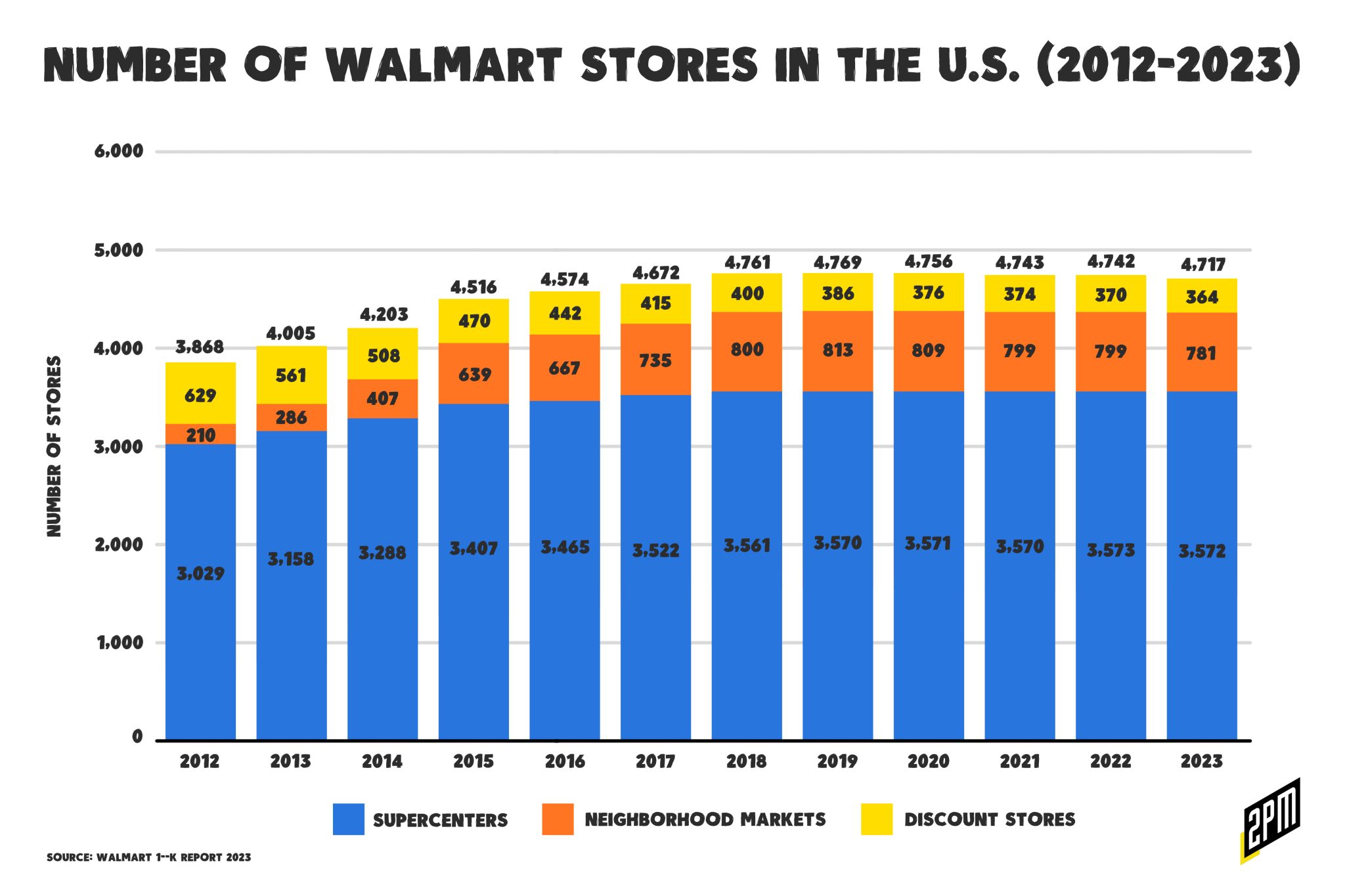
As a result, such a company teeters away from growth mode, holding close to aging methods, while others reinvent themselves by building atop newer forms of arbitrage and mastering the tactics required to navigate the new opportunity. Bed Bath & Beyond just filed for bankruptcy after years of neglecting its eCommerce department. Walmart’s stock is trading near all-time highs despite gradually reducing its store count. The difference is in the DNA.

Marketing arbitrage is when a new channel or novel tactic is identified – one with low saturation that can achieve an outsized impact if leveraged quickly enough. Google’s Global Enablement Lead wrote in 2014:

One of the most exciting parts of being a marketer today is the perpetual challenge of finding new channels and tactics to leverage. There’s a whole host of marketing arbitrage opportunities out there – if you know where to look and spend your time.

Walmart will be considered one of the most innovative companies of the last decade. Not because of anything that the company invented, but rather because it maintained a humility and curiosity to understand that it needed to out-innovate the adoption curve of new technologies and industry-wide practices.

Walmart president and CEO Doug McMillon noticed something about his company that few executives have the foresight to observe in real time: the company lacked the ability to identify marketing arbitrage. It wasn’t in Walmart’s DNA, their methods were proven and stale. Their systems were working as designed and there wasn’t a reason to stray away from what was.

That is what’s typical in retail. A brand or retailer identifies one advantage and rides it into the sunset, failing to innovate. Walmart chose a different approach made famous by Gilded Age tycoons like John D. Rockefeller, who once quipped:

If you want to succeed you should strike out on new paths, rather than travel the worn paths of accepted success.

It only took CEO Doug McMillon two years to move on his mandate to modernize Walmart. Prior to the McMillon-approved “Marc Lore era,” Walmart was a mass-market, bargain-focused physical retailer with little emphasis on eCommerce and technology, nor a grasp on modern principles of brand equity development.

So what did Walmart do? It acquired the DNA of innovation. First with Lore, then with Andy Dunn, and then with countless acquisitions of a particular type. The acquired companies shared a few traits: they maintained an understanding of internet-first brand development, they had a grasp on acquisition through Facebook PPC, they maintained New York PR connections, and they were comfortable seeking out arbitrage opportunities when they could.

Walmart’s eCommerce era began with a string of major acquisitions, including the largest in eCommerce history at $3.3 billion for Jet.com. The Jet.com acquisition was brilliant in retrospect. As a result of that investment, Walmart is still moving up and to the right despite the many forces opposing forward motion. In fact, it thrives today because of its DNA implantation. So much so that it’s leaving what remains of that talent and perspective injection behind. This is how I see the offloading of its last few digitally native vertical brands.

Walmart has been sharpening its focus on ramping up its businesses including advertising and delivery, to diversify its revenue streams and boost margins as inflationary pressures on consumer spending weigh on the retailer. (Yahoo!)

The recent fire sale of Eloquii and Bonobos (preceded by the offloading of MooseJaw and ModCloth) was no shock. Walmart has tremendous resources at its disposal. But with the temperature of today’s market, there are novel ways to drive revenue and grow average margin across a portfolio of goods and services that no longer require managing a group of acquired brands. It made sense to acquire direct-to-consumer brands when its original marketing arbitrage was Facebook PPC. That strategy no longer plays; today’s revenue arbitrage for mass-market retailers and smarter brands looks different than it had just five years ago.

The store count peaked in 2019 while new forms of revenue emerged. However, the stock is trading near all-time highs.

Walmart is a retail media network, it’s an omnichannel titan, it’s a recurring revenue magnet, a private label factory, an enviable marketplace. It’s a modern eCommerce corporation. Who needs low-margin brands like Bonobos when these other fundamentals are in place?

Walmart is on a path to strengthening its global omni-channel ecosystem and scaling higher-margin value streams that serve customers and businesses and are natural connectors to its retail business. This includes advertising, data, memberships and marketplace – all initiatives that will help deliver a better customer and member experience while driving stronger returns.

Many analysts suggest that Q3 of 2023 will be a bloodbath for low-margin retailers, you will find a number of similarities between the companies that will fail to extend their financing or secure profitability in time for tougher market conditions. The measure of success is different than it was pre-pandemic. Gone are the days of rewarding growth without unit economics. Growth? No. Top line revenue? No. Good margin and proper, sustainable unit economics? Yes, these are the companies that will move forward. But the deeper question will be, did these retailers maintain the DNA of innovation throughout its growth curve? The answer, more often than not, will be no.

The end of Facebook PPC as an arbitrage opportunity for direct-to-consumer brands signified a turning point in the digital marketing landscape. Some brands adapted and some did not. Many brands continue to squeeze the remaining value out of the arbitrage that I suppose was thought to be a permanent fixture. It never is. As such, some pivoted to physical retail, omnichannel distribution, or accumulated like-minded products into a native marketplace. Even more so, others went all-in on retail media networks or building linear commerce strategies.

The DNA of innovation was the lifeblood of the pure DTC era. This is what Walmart was buying: the DNA of change. The masters of the craft were successful in identifying arbitrage opportunity after arbitrage opportunity; they molded their companies around it. As a result, Walmart thrived as a multi-faceted retailer.

Walmart’s strength in eCommerce can be seen in its results. Walmart’s US eCommerce sales were up 79% in 2020 and were up 11.0% in 2021 on the back of strong growth in the prior year. Then in 2022 Walmart’s eCommerce sales were up 12%. Walmart is now the second largest eCommerce retailer in the United States with eCommerce making up over 13% of its sales. While Walmart trails Amazon by a wide margin in online sales Walmart is gaining ground. (Indigo Digital)

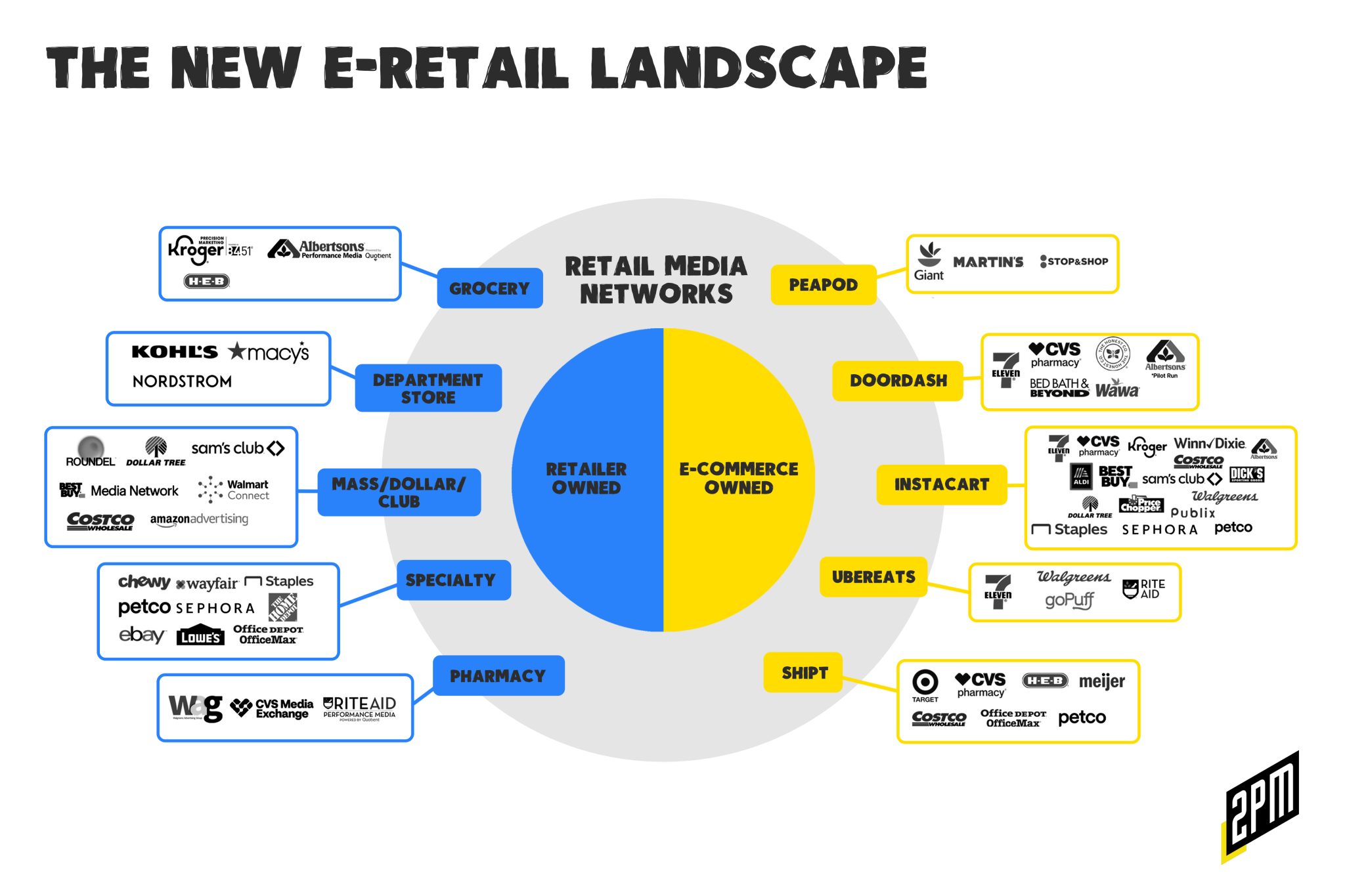
Brands must now adapt and evolve their marketing strategies to stay ahead of the curve. By embracing platform diversification, investing in content marketing, leveraging data and analytics, and focusing on customer experience, DTC brands can thrive in this new era of digital marketing. DTC companies were founded with the hope of growing independently of America’s largest retail marketplaces but retail media networks like Amazon’s, Target’s, and Walmart’s have already begun to contribute to many of these same brands, setting aside idealism for growth. Amazon is already a top-three advertiser with Facebook’s current ad model degrading by the quarter. Walmart is well on its way to becoming a force in advertising:

Walmart’s online advertising business is a fraction the size of Amazon’s. But here, too, Walmart has an advantage because it can provide brands with data on how shoppers spend not just online but also in stores, said Sreenath Reddy, the founder and CEO of Intentwise, which helps clients place ads on web marketplaces. Walmart.com is also less crowded than Amazon.com, with about 135,000 merchants compared with some 2 million on Amazon. (Digital Commerce 360)

As the digital landscape continues to change, it is crucial for brands to be nimble and open to exploring new avenues for growth. Those who can effectively navigate these shifts and seize new opportunities will be well-positioned for success in the increasingly competitive online marketplace. The end of one arbitrage opportunity may be a challenge, but it also offers an opportunity for DTC brands to innovate, differentiate themselves, and establish a lasting connection with their customers in the ever-evolving world of digital marketing.

Sam Walton was known for his innovative and customer-focused mindset, and was always seeking new ways to gain a competitive edge. He would have been a fan of Walmart’s focus on retail media networks. Why? Enhanced customer experience, data-driven decisions, new revenue streams, and building deeper relationships with suppliers. Walton valued strong relationships with retail partners, as they were essential to his low-cost, high-value business model.

Sometimes, gaining a competitive edge means letting go of the tried and true methods that defined earlier versions of your business. And then finding better, newer methods.

By Web Smith | Edited by Hilary Milnes with art by Alex Remy and Christina Williams