
Members: Juneteenth and American Dreams

SM-B6NAw

The discussion between us was slow and every answer labored. It was difficult to tactfully explain the concept of an “unnecessary wait.”

There’s always a wait.

Modern Retail editor Cale Weissman wanted to understand the Black perspective of those of us in eCommerce. I didn’t have many answers for him. I worked to moderate my responses, struggling to mask volumes of persisting frustrations within the digital industries. At one point, Weissman asked for a list of venture-backed founders in the direct-to-consumer space. There was, of course, the obvious answer. Tristan Walker rolls off the tongue. But I didn’t have a novel response in that moment and I was ashamed of that. There are so few Black professionals in this space. For the vast majority of prospective executives, founders, or investors, they’re still waiting.

A portmanteau of “June” and “nineteenth”, you’ll see Juneteenth celebrations from Target, Nike, Glossier, Deciem, Ford Motors, Adobe, Allstate, Altria, Best Buy, Google, JPMorgan, Lyft, Mastercard, Postmates, Tesla, SpaceX, RXBar, Spotify, Twitter, Square, Workday, Uber, and countless others. Most of it will be in vain and some of the efforts will be widely panned.

Dino-Ray “96,000” Ramos on Twitter: “.@Snapchat released a statement about their #Juneteenth filter… pic.twitter.com/KWPZnlWG3n / Twitter”

@Snapchat released a statement about their #Juneteenth filter… pic.twitter.com/KWPZnlWG3n

You’ll observe brands, people, and media commentators missing the point. You’ll see gimmicks, carefully crafted statements, and an oversimplification of a complex period in American history. Imagine our great grandchildren over-simplifying the present day.

For some of us, Juneteenth was only sort of a celebration. Imagine wanting something for your entire life and then waiting two and a half more years for that something. It’s a bittersweet celebration. For those of us who descended from those strong-minded South Texans, today is the annual reminder of their physical, mental, and emotional resilience. It’s a reminder of our inherited endurance, will, and resourcefulness. There’s always a wait. So, Juneteenth: a celebration, sure. A national holiday? Of course. But within the confines of the classrooms, offices, or neighborhoods of our American cities, Juneteenth should be a day to reflect on the waits that remain.

Grandchild of Slaves and Grandma to Me

Dorothy Smith’s grandson’s first essay remained on her bookshelf. It was an elementary school recount of Jack Roosevelt Robinson’s embattled life, the first man to cross the color barrier in Major League Baseball. I remember the essay because in 1992, it was my first time using a color printer for a school project. I recall the pride of using an image of his baseball card as the hook for a project that made me emotional, even as a nine-year-old. The eight-page report was double-spaced with size 18 font. For some reason, she was proud of that essay and it remained in her home until her passing in April of 2014. She’d critique the cadence and the word choices. She’d implore me to slow down when I read it aloud; I stuttered heavily back then. I credit our conversations for helping to heal that ailment.

Between 1992 and 2014, she’d go on to help me with a number of essays. As she got older and less capable, she’d listen to me narrate the stories that I wrote. But earlier in my life, she’d actually help me write them. A highly educated woman, she was my hero. By the end of this essay, she might be yours. One of those essays was a seventh grade report on Juneteenth’s impact on my own family. I’ll never forget her input:

The message of freedom didn’t make it all the way down here and, so, they had to wait a little bit longer. There was always a wait. There’s always a wait.

President Abraham Lincoln drafted Proclamation 95 in September 22, 1862. Imagine hearing word of this proclamation and then waiting for it to save you. It was effective, five months later, as of January 1, 1863. Imagine counting down those days to freedom. For some, the count was far longer. For that lot, their freedom was hidden by economic and political disdain for the federal order. It would be an additional two years before my relatives heard the news.

Every advocate of slavery naturally desires to see blasted, and crushed, the liberty promised the black man by the new constitution.

Those were the words of Abraham Lincoln in 1864 to Union General Stephen Hurlbut, an ally on paper but a critic in private. Even after the order, a number of states avoided the action required to fulfill the president’s wishes. According to Dorothy Smith, the population of Texas was aware of their ordered freedom long before they received it. For them, it was a painful wait. I’ll never forget the emphasis on “there’s always a wait.” These were the words of Dorothy Smith: child of laborers and sharecroppers. She was an entrepreneur, a retailer, a real estate agent, and mother to six college graduates. Dorothy was the grandchild of Texas slaves and my grandmother.

Her grandparents were born in 1858 and 1853. Dave and Sallie Draper Hill were born enslaved in Panola, a small town on the border of Texas and Louisiana. They were of the last American slaves freed by that Galveston, Texas order on June 19th, 1865. They’d later marry in 1881. According to the 1900 census, they’d go on to have 12 children. My great-grandmother was born in 1895. She’d later become an independent farmer, raising cattle, pigs, chickens. She grew and sold vegetables and she tended to a fruit tree orchard on her property. Her daughter would marry James Smith in 1944 and remain married to the Army Air Corps veteran until their passing – one year apart.

I always contemplate what earlier generations of my family would have done with real opportunity. It always seemed as though they were capable, potent, and waiting. It was Dorothy who we credit with taking matters into her own hands. She was defiant in her capitalism, her pursuit of education, her politics, her advocacy, and the opportunities afforded to her six children. She resented the idea of Juneteenth, in ways. It represented neglect and deception, a stalling of opportunity. It was the embodiment of an unnecessary wait for the opportunity to live a full life.

She stopped waiting.

The Sudden Retailer

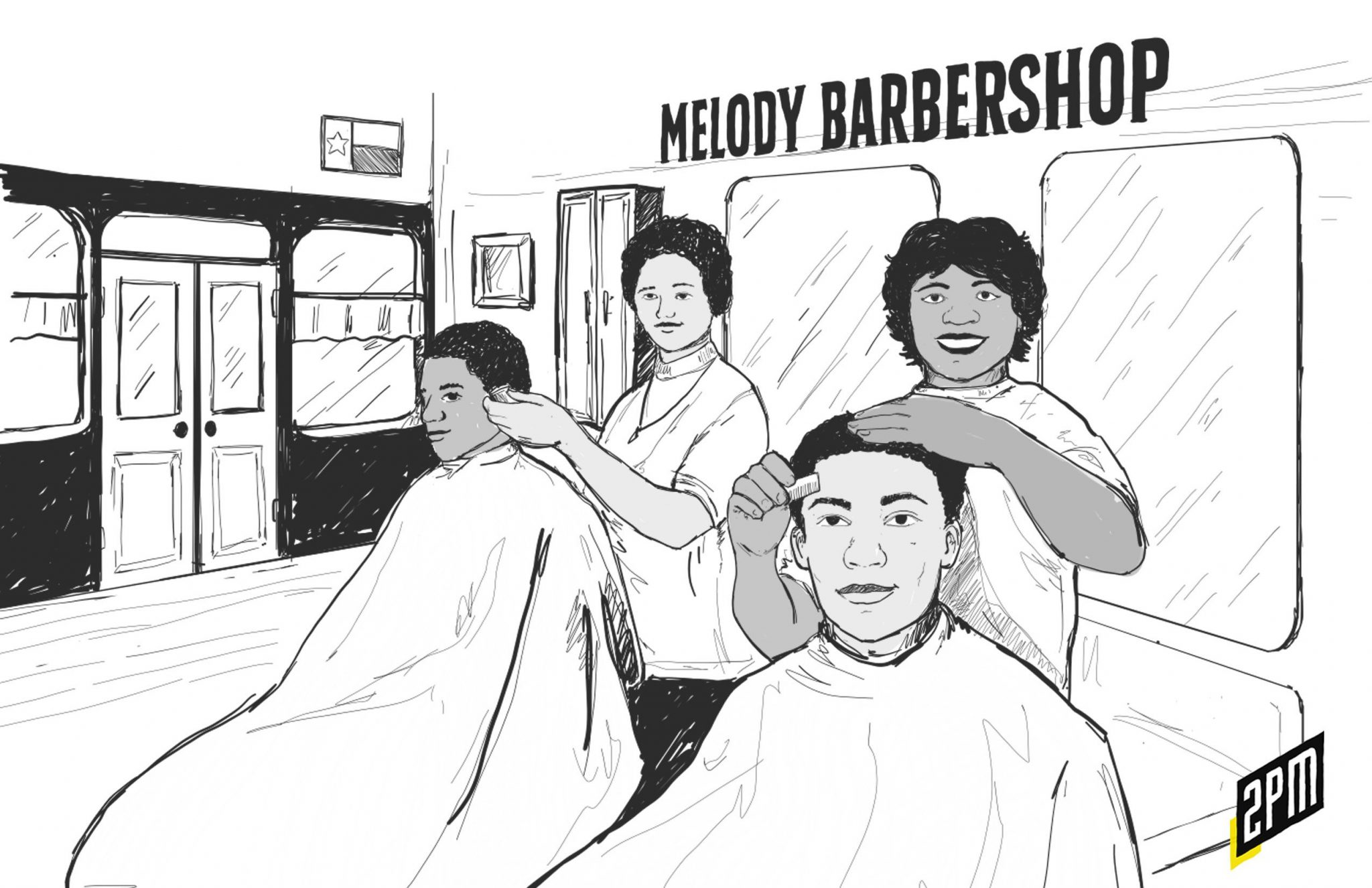
With her meager savings, she launched two businesses that operated in tandem. Both companies were within the same strip mall and they’d feed each other business for decades. A licensed barber and realtor, “Melody” became her calling card. By the mid-1950’s, the barbershop generated substantial cash flow, allowing her to hire staff and procure basic wholesale partnerships. Her storefront would double as a beauty supply retailer, amplifying her earnings by catering to an audience with few places else to shop. This should sound like a familiar strategy. Her clientele was working class and upwardly mobile, a trend that would continue throughout the Civil Rights era.

Many would eventually buy homes in the area Northeast area of downtown Houston. Melody Realty would be one of their guides. The Fifth Ward was an area where Black Americans could buy homes without political or social persecution. Regardless of one’s wealth, the city’s affluent remained deed restricted – first legally and then by proxy. The middle-class son of a Texas Instruments engineer and flight attendant, I’d later be born in that same downtrodden area in 1983. Thirty years later, the city’s deed policies remained. There’s always a wait.
TKZQ5LWw
Pictured: Dorothy, right, with her son.

Dorothy would later become one of the preferred real estate agent of her area. In this way, her storefront operated as a funnel. Her Melody brand of business blended short-term cash flows with longer-term windfalls. It changed the trajectory of our family. James, an Army Air Corps veteran, and Dorothy would send six children to colleges across the United States throughout the 1960s and 1970s. All would graduate and five would go on to have children. By the time that we were born, the idea of college was an afterthought. It was just another task for us. And so was entrepreneurship.

Dorothy would enforce a strict policy for each of her children. My father and his siblings would be required to earn their barber’s license while in high school. This sense of economic independence would propel a number of those children to impactful lives in business, religion, and medicine. Today, Melody Realty continues to operate in the Houston area, a testament to her work.

Conclusion: Ending The Wait

By the time I was born, she’d complete classes at Rice University. She was omnipresent in our lives and she stressed the importance of sacrifice. Dorothy Smith’s life had a profound impact on my own. In our home, she’s taken the form of a superhero. Imagine being born into a world that penned you for one thing and then choosing to achieve something more. She’d send six kids to school before the United States provided her the right to vote. My father was 13 when the Voting Rights Act passed. There’s always a wait.

Dorothy was uncomfortable with Juneteenth because it was symbolic of the proverbial weight of an unnecessary wait. This same concept can be applied across generations, including our own. Dorothy would argue that she was nothing special. Imagine what her parents could have done with the freedoms that Dorothy possessed. I can envision Dorothy Smith atop of our industry, if she was born during my lifetime.

The story of upward mobility in America is one of waiting. In the 1800s, it was for freedom. It the early 1900s, it was waiting for the dignity of citizenship. In the late 1900s, it was the wait for legal equality. And today, it’s the wait for equity in treatment and opportunity. We’re still in the proverbial period of waiting.

Today, we are celebrating the overcoming of adversity. It’s not intended to be a pleasant memory. I’d have preferred to celebrate no Juneteenth at all. I am sure that Sallie and Dave Hill would have agreed. When you’re deserving of opportunity, every single moment without it will feel like a decade. Now, imagine how two years of waiting may feel. The daughter of field laborers, she birthed a generation of Black professionals. Her life was a force function that bent time. There should have been more Dorothy’s in the 1950s and 1960s. There should be more of her children. We have to recognize that an unnecessary wait is just as fraught as no opportunity at all.

The hope is that, today and every day forward, we work to bend time. The leadership of the industries that define American exceptionalism should reflect America. We should provide opportunity, fill executive suites, hire the best people, invest in resilient entrepreneurs, mentor, lead, build, uplift, and provide the freedoms that some Americans take for granted.

There are more Dorothy’s than we know and some of them are waiting. The 45 second pause between Weissman’s question and my answer likely made him as uncomfortable as it made me. In a better version of our world, I would have answered his question with ease. It’s critical that we identify our own unnecessary waits. Once we do, it’s our responsibility to end those waits with opportunity. It’s the one small change that can alter the course of generations.

Essay: Dorothy’s Grandson | Editor: Hilary Milnes | Art: Alex Remy | About
Member Brief: When In Home

zUjA73eA

For decades, media monetized by way of display advertising, native advertising, branded media, affiliate marketing, and eventually direct commerce. Like a technological progression, the funnel widened and shortened over the years. The definition of media broadened with time. Today, click through rate (CTR) means less to a publisher than the revenue that one visitor accounts for. Accounting for revenue per customer means that customer acquisition cost (CAC) is as much a media metric as it is a commerce one. A publisher now assesses her readership with a measure of lifetime value (LTV); this is especially the case for subscription-based operations. A “like” or other forms of engagement used to matter. Today, the measurement of conversion rate and transaction value are prioritized. Media is a competition for audience ownership; it’s a 360 degree battle for your attention.

Este informe está destinado exclusivamente a Miembros ejecutivos, para facilitarle la afiliación, puede hacer clic a continuación y acceder a cientos de informes, a nuestra lista DTC Power List y a otras herramientas que le ayudarán a tomar decisiones de alto nivel.

Únete aquí

Nº 315: Los nativos digitales

Nativo

La agregación definió una era. La agregación a través de los medios de comunicación, el comercio minorista y las plataformas de servicios determinó la viabilidad económica de muchos en la clase de los vendedores a lo largo de la economía digital moderna. Uber empezó como un servicio de coches negros de lujo. Spotify transmitía música. Youtube publicaba vídeos tontos. Amazon empezó vendiendo libros. Y Netflix alquilaba películas en DVD. Imagínese un mundo sin estas empresas como agregadores. Las empresas aumentaron su cuota de mercado añadiendo productos y servicios, incapacitando a sus competidores analógicos. Como la inevitabilidad de la expansión hacia el oeste, la teoría de la agregación sigue moviendo ciertas plataformas hacia la masa crítica.

La teoría es similar a la versión digital del Destino Manifiesto. Durante un tiempo, las plataformas mantuvieron una ventaja, del mismo modo que los minoristas físicos poseían una ventaja inicial sobre los minoristas electrónicos. En el modelo minorista tradicional, las marcas individuales de los productos eran menos importantes que las estanterías en las que se comercializaban. Los consumidores acudían por la selección de productos, la facilidad y el proceso de pago universal. La ventanilla única era la atracción; la fidelidad al producto era una característica secundaria. De este modo, los editores de contenidos, las marcas de productos y los servicios no eran más que un valor añadido para las plataformas existentes. Pocos aprendieron esta dura lección como los músicos populares al principio de la era del streaming. Los podcasts parecían haber aprendido de esas difíciles lecciones.

Ganar influencia es la misión.

Las oportunidades de creación de mercado que comenzaron con las primeras marcas nativas verticales digitales (DNVB) empezaron a influir en las industrias adyacentes a medida que ese modelo de ventas tenía su éxito. Durante décadas, fue casi imposible alcanzar una masa crítica en el comercio minorista sin asociarse con un minorista físico o unos grandes almacenes. Para defenderse de lo que parecía (durante un tiempo) el Destino Manifiesto del comercio minorista físico, los nativos digitales eludieron la infraestructura y se dirigieron directamente al consumidor (DTC). Esto significaba que tenían acceso a mayores márgenes, adquisición eficiente de clientes, acceso a datos y relaciones más sólidas con el consumidor.

Con poco acceso a los principales canales de consumo, las marcas físicas lanzaron canales nativos con la ayuda de plataformas como Shopify y BigCommerce. No está claro si la intención de la industria DTC era su independencia indefinida de la gran distribución. Yo diría que no era el objetivo. Pero, independientemente de ello, el resultado de los últimos diez años ha sido palpable: las marcas de productos nunca han tenido más influencia que ahora. Aunque esa influencia sea temporal.

A medida que salen al mercado nuevas plataformas, las marcas verticales empiezan a notar un cambio en el apalancamiento de la plataforma al vertical. Se trata de un cambio de impulso inoportuno para las empresas de plataformas, empresas que antaño disponían de apalancamiento para actuar indiscriminadamente.

El lenguaje de la DNVB en los medios digitales

A principios de abril, el cómico Russell Brand fue entrevistado por el presentador de la Joe Rogan Experience (JRE), un podcast muy popular que abarca desde deportes de combate y geopolítica hasta arqueología y sociología. Es importante señalar que JRE figura constantemente entre los cinco podcasts más descargados. Hacia el final de la discusión entre los dos hombres, Rogan incitó a Brand a promocionar sus intereses empresariales. Y aunque fue una promoción sutil, aquí es donde las cosas se pusieron interesantes.

Luminary es el editor de audio premium y agregador de contenido que se ha propuesto convertirse en el Netflix del podcasting. Fundada en 2018 por Lauren Sacks, la empresa recaudó 100 millones de dólares de New Enterprise Associates. La financiación equipó a Sacks y al equipo para reclutar varias redes de podcast de tamaño considerable y personalidades de los medios de comunicación de alta visibilidad para incluir: The Ringer, Guy Raz, Trevor Noah y Wondery Media. Wondery es la última red de podcasts conocida por su programación original y Ringer, una red de podcasts de éxito por derecho propio, sigue buscando efectos de red del nivel de Barstool Sports. En retrospectiva, la adquisición de Gimlet y Parcast por parte de Spotify fue un desarrollo tan defensivo como ofensivo.

En el episodio, Russell Brand promocionó su última aventura, un podcast con Luminary. El discurso tenía un doble propósito: (1) utilizar una de las plataformas de audio más influyentes para promocionar sus intereses comerciales y (2) reclutar a Rogan para los fieles de Luminary. La segunda parte no funcionó, el jurado sigue deliberando sobre la primera propuesta. Pero los efectos de esa conversación fueron inmediatos. En menos de 72 horas, JRE fue retirado del catálogo de Luminary. De Hotpod News

El equipo de [JRE] cita explícitamente problemas de licencias como la razón de su intención de retirarse. "No había ningún acuerdo de licencia ni permiso para que Luminary tuviera The Joe Rogan Experience en su plataforma", me dijo anoche un representante del equipo. "Sus representantes se sorprendieron al ver el programa allí hoy y pidieron que se retirara".

The Joe Rogan Experience no ha sido el único gran nombre del podcasting que ha retirado contenidos de la plataforma. Spotify denegó a Luminary el acceso a sus programas y el New York Times retiró The Daily. PodcastOne, Barstool Sports, Endeavor Audio y muchos otros siguieron su ejemplo. Del nº 304: Audiencias in-app:

La adquisición pendiente de Gimlet Media va más allá de la creación de una potencia de podcasting directo al consumidor, se trata de monetizar el audio DTC de nuevas maneras. Spotify no es el propietario de la música que escuchamos millones de personas: Universal Music Group, Sony Music Entertainment Group y Warner Music Group. Con la adquisición pendiente de Gimlet, Spotify se está posicionando directamente como el Netflix del audio. Y la cartera de propiedades de audio de Gimlet podría ser otra herramienta que Spotify utilice para convertir a los suscriptores ocasionales en usuarios premium de pago.

Y aquí está el cofundador y CEO de Luminary, Matt Sacks:

Queremos convertirnos en sinónimo de podcasting del mismo modo que Netflix se ha convertido en sinónimo de streaming. Sé lo ambicioso que suena eso. Creemos que es posible, y algunos de los mejores creadores del sector están de acuerdo.

Spotify y Netflix eran exclusivamente agregadores antes de empezar a seguir su moderna estrategia de crecimiento de las suscripciones. Al adquirir propiedades populares (como Gimlet y Parcast Network) o invertir en el desarrollo de las propiedades nativas por las que ahora es conocido Netflix, ambas empresas se alejaron de la agregación y se acercaron a convertirse en nativas digitales. En el caso de Netflix, ha llegado en el momento oportuno. Compañías de medios como Disney han empezado a tirar de sus propiedades para desarrollar sus propios negocios nativos digitales. Otro signo de la disminución del papel de la teoría de la agregación para las nuevas empresas.

Quizás, la era de la agregación se acerca a su madurez. Según Defining Aggregators, de 2017, por Ben Thompson:

La teoría de la agregación describe cómo las plataformas (es decir, los agregadores) llegan a dominar los sectores en los que compiten de forma sistemática y predecible. La Teoría de la Agregación debería servir de guía para las empresas aspirantes a plataforma, de advertencia para las industrias que se basan en el control de la distribución y de manual para los reguladores que abordan los inevitables problemas antimonopolio que son el fin último de la Teoría de la Agregación.

Dos años después, asistimos a una guerra por los proverbiales derechos de propiedad. A medida que las plataformas han ido perdiendo influencia en determinados segmentos verticales, han invertido mucho en el desarrollo de sus propias propiedades (marcas blancas, marcas nativas y proyectos de medios nativos). En algunos casos, como las adquisiciones de Spotify, han optado por adquirir las propiedades para que los consumidores avancen por el embudo que va del contenido a la suscripción. Para Luminary Media y su Directora de Asociaciones y Desarrollo Empresarial, Meaghan Quindlen, lo que está en juego es mucho más importante que hace tres o cinco años.

Tiene un trabajo poco envidiable: debe convencer a los podcasts alienados para que trabajen con ellos comunicándoles su visión, empleando una nueva estructura de compensación de licencias o una combinación de ambas cosas. Incluso Spotify y Apple Music tuvieron sus propios episodios similares. Pero con 100 millones de dólares de financiación y aspiraciones grandiosas, Luminary tendrá que superar a Spotify en su camino para convertirse en el Netflix de los podcasts , un título que la primera plataforma de audio en alcanzar los 100 millones de suscriptores de pago quiere para sí sola.

Quién sabe si las propiedades de los medios digitales volverán a los tipos de plataformas que antes eran necesarios para crecer; ahora existe un duelo de lealtad entre independencia y alcance potencial. Esta contradicción no existía unos años antes.

Los minoristas nativos digitales están abiertos a trabajar con los grandes minoristas (los agregadores originales) siempre que puedan mantener una apariencia única en la tienda con acceso a algún tipo de datos de los consumidores. En este sentido, el comercio minorista de venta directa es un análogo bastante decente de lo que está ocurriendo en el podcasting hoy en día. Las marcas de productos y medios de comunicación tienen ahora la sartén por el mango. Los consumidores cruzan la puerta, proverbial o no, por sus amadas marcas. Los agregadores deben aprender a operar en un mundo donde la palanca la tienen los nativos digitales. Como mínimo, los agregadores deben aprender a desarrollar una verdadera simbiosis.

Puede que Luminary necesite recaudar más dinero.

Informe de Web Smith | Afiliación a la Ejecutiva