

Este informe está destinado exclusivamente a Miembros ejecutivos, para facilitarle la afiliación, puede hacer clic a continuación y acceder a cientos de informes, a nuestra lista DTC Power List y a otras herramientas que le ayudarán a tomar decisiones de alto nivel.
Nº 306: Plataformas y efectos Halo
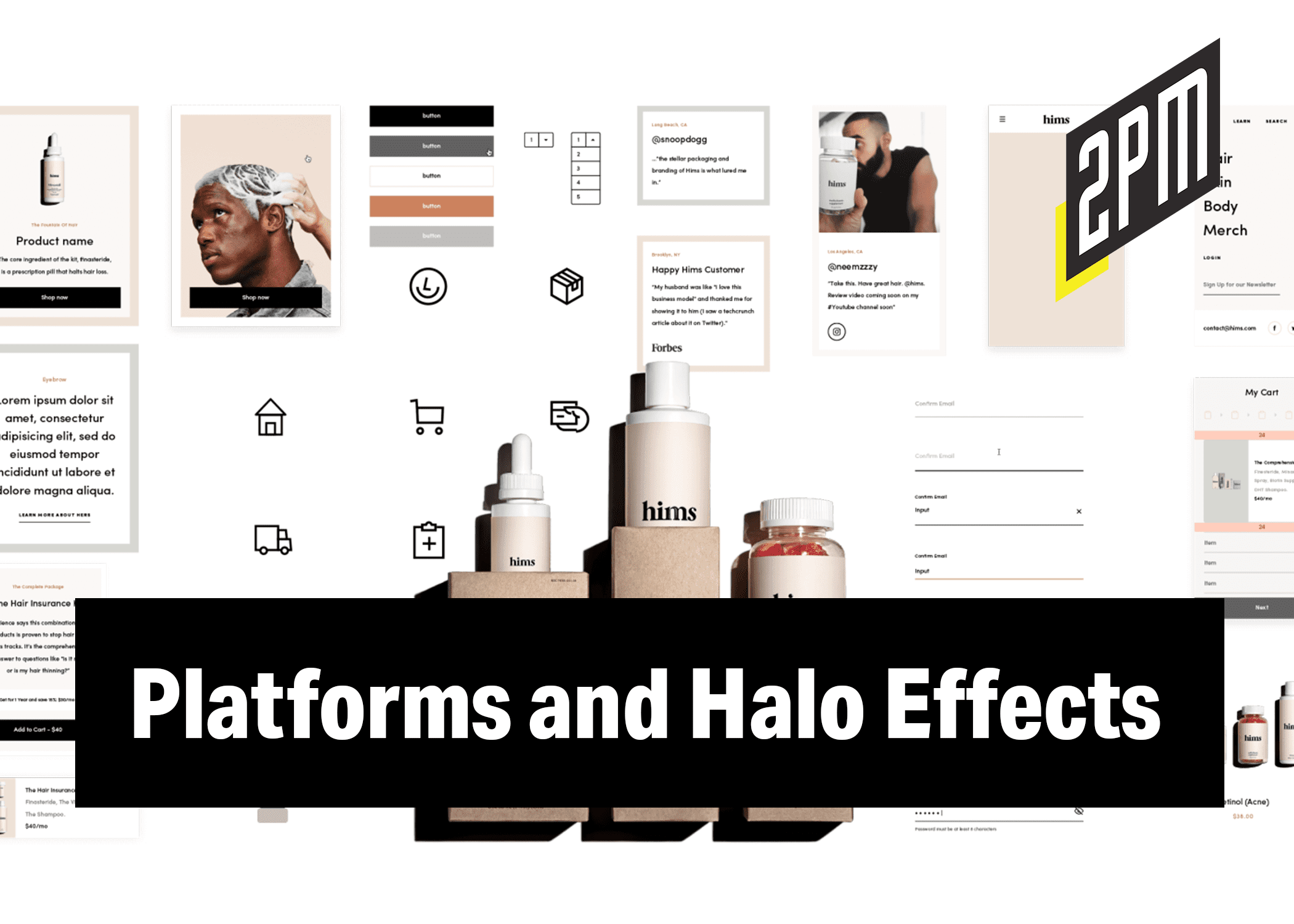
El informe de la plataforma de comercio. El término "efecto halo" fue acuñado por primera vez por un psicólogo en 1920. Edward Thorndike lo utilizó para describir los métodos que empleaban los oficiales militares para evaluar el rendimiento de sus soldados. Estas evaluaciones a menudo revelaban poca variación entre las categorías de rendimiento. O los soldados eran buenos o malos; pocas evaluaciones de rendimiento señalaban un "buen" rendimiento en un aspecto y un "mal" rendimiento en otro. Se dice que en el efecto halo influye más la primera impresión que se tiene de una persona. Si los vemos mal, no pueden hacer nada bueno. Si los vemos buenos, no pueden hacer nada malo. Hoy en día, esta frase se aplica sobre todo a las marcas y a su valor.
El efecto halo es un tipo de discrepancia de juicio inmediata. Es la tendencia de una impresión creada en una categoría a influir en las opiniones de impresiones creadas en otra categoría.
Shopify parece estar en todas partes. En diciembre, Hilary Milnes de Digiday informó que el ecosistema de Shopify de 20,000 desarrolladores asociados generó 800 millones de dólares en negocios de agencias en 2017. Se estima que los socios de Shopify (varios de los cuales se mencionan aquí) obtendrán más de 2.000 millones de dólares en ingresos en 2019.
Construir una plataforma de comercio electrónico similar a Shopify no es difícil. Lo que es muy difícil es reproducir el ecosistema de socios y el valor que generan. Es su ventaja competitiva. No es el software, su ventaja competitiva son las asociaciones.
Jay Myers, Vicepresidente de Crecimiento de Bold Commerce
El efecto halo del ecosistema de Shopify no será fácil de combatir. Dado que muchos de los socios se han convertido en marcas B2B destacadas, el grupo de agencias de comercio electrónico independientes de Shopify desempeña muchas funciones: reclutamiento, evangelización y, quizás, un poco de espionaje, a menudo transmitiendo información sobre los avances y las iniciativas que ofrecen las plataformas de la competencia. Este efecto de halo de marca se amplifica gracias a la era de la marca directa al consumidor (DTC).

El atractivo de la marca y la arquitectura del personal de esta cohorte de empresas que dan prioridad a Internet son las claves para entender por qué tantas marcas aspirantes eligen instintivamente Shopify. Aunque no es un socio de Shopify, la página de "trabajo" de Gin Lane señala las muchas marcas nativas digitales que han dirigido a la plataforma. Entre ellas se encuentran: Harry's, hims, hers, Sunday Goods, Ayr, Stadium Goods, Rockets of Awesome, Cadre, Recess, alma, Smile Direct, Dia & Co, Warby Parker, Everlane, Quip, Shinola, Bonobos y Shake Shack. Del mismo modo, la página de "trabajo" de Red Antler cuenta con asociaciones con Burrow, Casper, Allbirds, Brandless, Crooked Media, Snowe y Boxed. Estas marcas, que se inclinan poderosamente hacia Shopify y Shopify Plus, sirven de reclamo mediático y de combustible para las relaciones públicas.
Tobi Lütke en Twitter
Normalmente no destaco aquí los hitos financieros, pero este merece la pena mencionarlo: Mientras Shopify supera la marca de los mil millones de dólares de ingresos, lo hace con la mayor tasa de crecimiento de cualquier empresa SAAS de la historia. 🎉
De este modo, el efecto halo de Shopify se extiende más allá de las agencias con las que se asocian. Las propias marcas aspirantes se convierten en vehículos de reclutamiento para empresas con ideas afines que buscan construir marcas de cero a uno. De este modo, empresas más nuevas como Great Jones siguen los mismos métodos de creación de marca y las mismas directrices de arquitectura de personal.
Sobre la arquitectura de la marca DTC
Es habitual que las marcas nativas digitales salgan al mercado con más de 3 millones de dólares recaudados. Esta inversión previa a la obtención de ingresos proporciona a las empresas una imagen de marca y unas relaciones públicas tempranas que casi garantizan unos ingresos de siete cifras en el primer año.
Asociarse con Red Antler o Gin Lane puede costar a una marca hasta 400.000 dólares. A menudo hay costes añadidos de desarrollo en los que tendrán que incurrir estas marcas aspirantes. Además del coste de las normas de la marca, los mensajes y la esencia de la marca, el contacto de relaciones públicas adecuado puede costar a una empresa joven entre 180.000 y 240.000 dólares más al año.
Nº 297 El complejo industrial DTC:
Hay toda una industria de marcas de comercio electrónico que fomenta la ideación, el lanzamiento y el crecimiento temprano de las marcas directas al consumidor (DtC). Cuando te fijas en una nueva marca nativa digitalmente vertical en 2018, hay un aura de plataforma alrededor de muchas de ellas. Primero notarás el sensacionalismo temprano de relaciones públicas que solo pueden obtener si se gradúan de la escuela correcta o dejan la corporación correcta. Luego, los fundadores deben vivir en la ciudad correcta, tener los inversores adecuados y pagar el anticipo de relaciones públicas correcto de $ 25,000 por mes.
El CEO de una marca de desafío tiene un alto nivel de formación y, en esta fase, los CEO tienden a fundar las marcas después de haber cursado estudios empresariales. Los equipos fundadores suelen empezar con una combinación de un desarrollador de productos, un responsable financiero y un responsable de captación de clientes. La ingeniería de software es una idea tardía para muchas de estas jóvenes empresas de productos; esta competencia suele subcontratarse a una agencia asociada. En general, la prioridad de las marcas aspirantes es doble: (1) crear un gran producto (2) encontrar una forma eficaz de venderlo. Esto a menudo reduce la urgencia de asociarse con fundadores técnicos o de contratar a empleados técnicos. Mientras que F = fundador, B = marca temprana y P = desarrollo temprano del producto:
F(marketing) + F(finanzas) + B(subcontratado) + P(subcontratado) = arquitectura de fundación de DTC
El ecosistema de Shopify atrae a esta arquitectura en particular. El crecimiento continuado de la empresa con sede en Ottawa depende de la capacidad de su dirección para aumentar el porcentaje de marcas aspirantes que se convierten en clientes empresariales. Y de clientes empresariales a minoristas en línea Top 1000. El estilo de negocio impulsado por el volumen de Shopify es una marca de su compromiso con los minoristas de pequeñas empresas. Pero no es el único método para acelerar el crecimiento empresarial. Hay varias plataformas de comercio con un notable volumen bruto de mercancías (GMV) en su nivel de clientes empresariales.
El panorama de las plataformas
De BigCommerce a Oracle y Salesforce, la era DTC del comercio minorista se extiende más allá de las marcas de las que más se habla en los círculos de diseño, medios tecnológicos y relaciones públicas. Aquí están los datos de las nueve primeras por GMV bruto. Shopify es la que genera más ruido mediático en los círculos de la pequeña empresa: Adobe, Salesforce y Oracle lideran silenciosamente el negocio de empresas+. BigCommerce es a menudo visto como el hermano pequeño de Shopify, sin embargo sus clientes empresariales generan ahora un GMV bruto de 2,5 veces los clientes empresariales de Shopify. Los siguientes datos proceden de un informe reciente de Digital Commerce 360 (2019):
[table id=37 /]
El ecosistema de plataformas es muy amplio. De los 1000 minoristas más importantes, la mayoría de las marcas se crean internamente y en plataformas personalizadas. Casi 450 minoristas han subcontratado sus capacidades técnicas a estas nueve empresas. De cara al futuro, es probable que plataformas como Adobe creen herramientas y un efecto halo mejorado para dirigirse al público clave de Shopify y viceversa. Shopify creará herramientas para responder mejor a las necesidades de los principales clientes empresariales, además de seguir apoyando las necesidades de las marcas DTC que están adoptando los canales minoristas físicos.
Especializarse en un segmento concreto del espectro que va de las pymes a las empresas puede tener consecuencias nefastas para las plataformas en este espacio cada vez más competitivo. Como ha demostrado Shopify, la fidelización temprana tiene su valor. Shopify cuenta con que un buen número de sus minoristas DTC y SMB, líderes del sector, pasen por el embudo hacia los servicios para empresas. Además, el alcance de Shopify crece a medida que las marcas hacen la transición a Shopify desde Magento o creaciones personalizadas. Una tendencia que la adquisición de Magento por parte de Adobe ha afectado potencialmente. Este crecimiento continuado empezaría a inclinar la balanza del VGM de las empresas/empresas+ a su favor.
Las plataformas comerciales anuncian nuevas capacidades con la idea de que los méritos técnicos de una plataforma, por sí solos, atraerán nuevos negocios. Para ello, muchas de estas plataformas han restado prioridad a la superioridad del marketing de marca y al desarrollo de asociaciones influyentes en favor del desarrollo técnico de productos y la publicidad tradicional. Queda por ver si la mejora de las capacidades de las plataformas competidoras sobrevivirá o no a la lealtad a la marca de Shopify. Objetivamente hablando, el volumen y la asociación positiva de la marca juegan a favor de Shopify. Al igual que su efecto halo.
Lea aquí la curación del nº 306.
Informe de Web Smith | About 2PM
No. 301: Influencers and Transactional Authenticity

Just when we believed that we reached peak influencer, we are surprised yet again. We’ve favorably covered the “first family of influence”, in the past. And quantifiably, there isn’t a media conglomerate that comes close to the influence of the Jenner / Kardashian family. This week, one of them reached a new level by “bravely” discussing acne – the presentation and build up left a fractured audience in the wake of the brand partnership announcement when it was revealed to be a paid deal.
A day before the reveal, Kris Jenner, the model and entrepreneur’s mother, teased the reveal of her “deeply personal” issue on Twitter. Tabloid speculation run its course. The roll out was optimized for social media but many were left asking: is this really what’s become of influencer-driven advertising? Vox Media covered the advertising “bait and switch” in depth here.

Proactiv’s recent partnership with Kendall Jenner was a test of authenticity. It also may have been a watershed moment for influencer culture. Yes, it’s the most recent example of the status being used to present a vulnerable issue. In this case, adolescent acne. But authenticity is a currency all its own and volume of audience doesn’t always equal magnitude of impact.The controversy around Proactiv’s newest advertising campaign is an early sign that consumers may be beginning to discount command of advertising’s most influential family. Consumer skepticism is the antidote to influencer culture and it seems to be growing.
The focus on influencer authenticity comes as brands have begun to use more “real people” over models and entertainers. Brands are beginning to highlight people just like us but without the modelesque lighting, the photoshopping, or the narrative embellishment. Just scroll through the feeds of Andie Swimwear, Flamingo, or Chubbies for quality examples of this type of visual marketing.
These brands are succeeding because of, not in spite of, their focus on authenticity.
- Andie Swimwear: Swimsuits made by women, for women.
- Flamingo: We make body care, starting with hair.
- Chubbies: The Weekend Has Arrived.
For influencers, the understanding of how partnerships like Proactiv and Kendall Jenner’s come to life diminishes empathy and therefore trust in an ad’s authenticity. This is especially the case in the era of Netflix and YouTube, where star power (influencer marketing) is used to efficiently monetize audiences. Consumers want authenticity.
The successes of influencer marketing is saturating the market. From celebrity influencers to micro influencers, consumers are being inundated by influence. Some influencers are faking brand deals to gain credibility:
Transitioning from an average Instagram or YouTube user to a professional ‘influencer’—that is, someone who leverages a social-media following to influence others and make money—is not easy,” writes Taylor Lorenz for The Atlantic. “After archiving old photos, redefining your aesthetic, and growing your follower base to at least the quadruple digits, you’ll want to approach brands. But the hardest deal to land is your first, several influencers say; companies want to see your promotional abilities and past campaign work. So many have adopted a new strategy: Fake it until you make it.
There are sincere and authentic influencers who are not embellishing their lifestyles or influence. Often enough, these are the media personalities who are slowest to launch merchandise or product lines. Figures like Youtube’s Casey Neistat or pro surfing legend Kelly Slater are having to contend with a very cumbersome question:
How do you build an authentic advertising or commerce model? And how do you do it without ostracizing long time fans and newcomers?
As 2PM has previously covered, there are businesses that focus specifically on partnering with influencers and digital publishers to create, market, sell, and distribute merchandise. We’ve compiled a list of notable commerce partners:
[table id=8 /]
There is such a demand for appealing to influencers and influential moments that an entire industry has address demand.
Taking a page from the eCommerce playbook
As DTC analysts David Perell and Nik Sharma have often cited, the most resilient brands are audiences. And for influencers to maintain their audience, there must be an evolution from the existing structure of often-gimmicky merchandising and advertising via third-party transactors. And to a method that achieves an authentic experience bolsters user experience and belonging.
The technology seems to be mature enough to address this new standard. Headless Commerce services are offered by BigCommerce, Shopify, Adobe, and ElasticPath. These services are helping to define the possibilities of fully-integrated, content-driven commerce.
Alecia, an early headless commerce pioneer, has taken a first step in this direction with their proprietary video platform. From 2PM Member Brief – Headless Commerce:
Alecia is a company that films and streams original content, letting you shop what you see. The app and the site offer a seamless content and commerce presentation for the viewer. As the product appears on the screen, it is offered (in limited quantities) along the right side of the broadcast. If you’re logged in, purchasing is essentially a two click process. Consumers aren’t clicking to an eCommerce site or an external cart. Instead, the shopping cart is a component of a headless operation, an API call to the cloud-based shopping platform that is external to the featured content.
To date, no such solution exists for influencers on major platforms like YouTube, a place where it could have the most value. way content and commerce in media has begun to alter our understanding of which publications have the most loyal audiences. From 2PM No. 280:
The digital landscape is changing beneath our feet. For publishers to continue building organic readership, they must become brands. Operating as a source of content is no longer enough. To do that, efforts can no longer be siloed, the traditional factions of legacy-styled newsrooms must fall.
It’s no longer just about eyeballs and what influencers can charge for their collection of them. Optimizing for transactional engagement could have a positive effect on the influence ecosystem. In order to earn actual transactions, consumers – more often than not – must sense sincerity, community, and loyalty. By improving bottom-of-funnel operations, influencers can address the needs of community members (potential consumers) without disrupting their experiences.
Ready for increased interactivity?
Millennial audiences are ready for built-in video interactions as evidenced by Netflix’s recent success with Bandersnatch, the “choose-your-own-adventure” augmented film powered by remote or mousepad. These types of media experiences shorten the length between watching and interacting.
But Bandersnatch is more than just a blurring of games and TV. Such interactive adventures could easily become a new revenue source, too, through super-powered product placement and eCommerce. With interactivity comes a new slew of data, and the ability to layer in products, product information and ways to buy. You can bet Amazon is figuring out how to ties its billions of dollars worth of programming into its vast e-commerce operation. And just maybe so are Disney, Apple, Warner Media and Walmart.
One company that went unmentioned in Bloom’s rundown was Google. Google has the most to benefit from engineering a headless commerce solution for YouTube. Consumers and creators would both benefit from an experience that allows consumers purchase from the screen without an external redirection.There is one thing that YouTube has built into its platform that Netflix, Disney, Warner Media and Walmart do not: intuitive user control.
Expect to see a continued shift towards interactive formats; while headless commerce opportunities are further down the line – consumers are already being molded to welcome them. But the media engine of this age is the widely beloved influencer. We’re suggesting that we should reconsider how they’re influence is measured. No, influencers shifting to a headless commerce operation won’t immediately prevent media moments like the Proactive “bait and switch.”
Moving influencers away from optimizing for media impressions, social mention volume, and traditional publicity could alter things if and when creators see what can be accomplished when commerce transactions are closer to the starting line. Commerce relationships develop an authenticity that advertising doesn’t quite need. As interactive video technology continues along its adoption cycle, influencer-creatives would stand to gain a lot from building stronger relationships with their audiences.
By moving transactions closer to the top of the top of the funnel, fans and potential consumers won’t be left wondering: what’s the gimmick? Headless commerce can present that solution in a subtle but effective way by leaving the opportunity to transact to the viewer. Consumers demand authenticity from their influencers. This, especially as the lines between genuine interest and earned media continues to blur.
Read your No. 301 curation here.
Report by Tracey Wallace and Web Smith | About 2PM
Tracey is a 2PM Executive Member and Contributor, the founder of Doris Sleep, and the Editor-in-Chief at BigCommerce.