An Open Letter: A Change in Accessibility

There isn’t a playbook for this niche media era affectionately coined “The Passion Economy” by visionary investor Li Jin. That means, on occasion, mistakes are made. This is about one of those mistakes. And hopefully, it’s a guiding lesson for any of you looking to build your own media operation. The previous open letter was on 2PM’s fifth anniversary. In the concluding paragraph, I added a personal mission.

The 2PM that I want to finish building is one that is even better every day, inside and out. What began as a hobby became my life’s professional pursuit.

Each year, 2PM Inc. grows more sophisticated in its offering. What began as a simple WordPress theme and basic newsletter has become a quilt of custom front-end builds and backend CMS development buoyed by a well-designed, artful newsletter. Each improvement has been self-funded by membership revenue. But of the most important projects at 2PM, it isn’t a custom build at all. The DTC Power List, updated weekly, is host to nearly 500 companies ranked by a host of factors including growth rate. It’s evolved to become a tool that helps investors, media operators, founders, and marketers better understand the modern brand landscape. But it took a while for it to become what it is today. Three years to be precise.

In the process, I raised the price of the annual membership from $120 in 2019 to $150 in 2020 to $200 in 2021, a yearly occurrence that reflected the growing cost of maintenance and an expansive portfolio of content archives and access. In each case, members are grandfathered in at their rate, in perpetuity (as long as they maintain an active account).

In addition to a Yearly Executive Membership, 2021 saw another change. I offered a $120 bi-annual membership for those who couldn’t afford the full $200. But here was the mistake. I ended the Monthly Membership ($20), an option that led to quite a few bad actors who wanted temporary access to 2PM’s archives, databases, or the DTC Power List. A number of monthly subscribers would join and cancel in the same day, some would even institute chargeback fees from our provider. My email volume would rise with customer service concerns, questions, and outright complaints. And this would eventually come to hinder product quality.

To make my life easier, I ended that option to reduce customer service email. But in the process made it a lot harder for those who wanted to access or contribute to 2PM. Those who’ve felt most excluded by the $120 and $200 price points: savvy high school and college students, early-career employees, or even industry-adjacent executives who wanted access despite “not being in eCommerce or DTC.”

As of this week, I have reinstated the monthly executive membership – an efficient and worthwhile way to stay engaged.

I did accomplish my goal in streamlining member services. Customer service requests fell by nearly 72%. But also, inbound commentary and feedback dropped as well. Much of that input had been from younger contributors to the digital industries; many were seeking mentorship or clarity. I love to provide both. One pricing decision excluded many great minds who would have otherwise contributed to the mindshare that is the 2PM community. As of this week, I have reinstated the monthly executive membership – an efficient and worthwhile way to stay engaged. I am also committed to scholarshipping 10 college students who want to learn from and contribute to what we’re building here.

One of the core principles of 2PM is the amplification of access. Each letter, we curate and distill ideas and strategies derived from the industry’s many developments. Today, more of those developments are discussed behind a paywall than ever. To study them, 2PM subscribes to sources like: The Economist, Financial Times, Digiday, Modern Retail, Business of Fashion, The Information, Vogue Business, Washington Post, Digital Commerce 360, Harvard Business Review, New York Times, TechCrunch, Quartz, Stratechery, Trends, countless Substack newsletters, and many more. I read them all and, with the additional context provided by operational experience, I write on these topics with the perspective of an operator.
As costs become more prohibitive for access to this type of information, I believe that the work that we do here also becomes more important. Few can afford thousands per month in subscription fees. We often discuss pricing and market position in the context of retail brands and how those market decisions may impact accessibility or inclusion. Never once did I suspect that the decision to remove the monthly membership would have a collateral impact on the fundamental goal of this company: the democratization of high level information and insight.

With this change, I hope that it can reignite the interest in 2PM by the new, the young, and the curious. In the meantime, this small team and I will continue to work to prove its value.

By Web Smith

Memo: ButcherBox’s Arbitrage with Instacart

This is a story about a pioneering direct-to-consumer leader with a capable team and the humility to take a 2PM insight, collaborate on a strategy, and achieve a positive outcome. This partnership will influence the CPG industry.

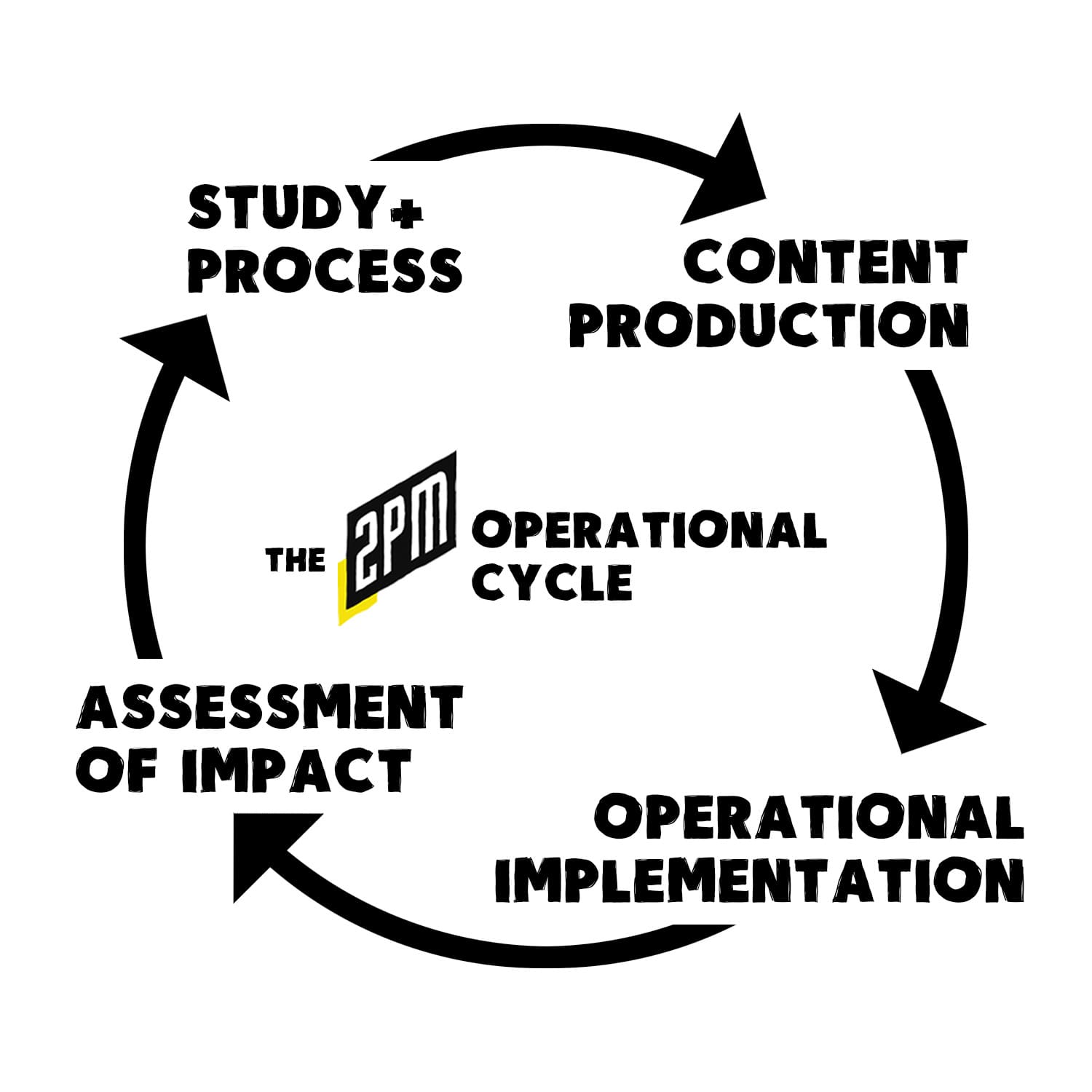
I’ve never viewed 2PM’s work as pure journalism. I am not trained as a master of the art. Rather, the essays published here is operator-driven, steeped in practical experience. I am tasked with taking overarching perspectives and condensing them into useful insights that can direct top leaders in their decision-making processes. Rather than outsider observations, many of the essays are published from an insider’s perspective. In some cases, the successes and failures in commerce or media are deeply personal. The 2PM process is a cycle of sorts: study concepts and news, produce content, implement ideas in operational environments, assess the impact, and then use it to develop more insights for the larger public. It’s a virtuous cycle.

The theory is that the more operationally-driven the content, the more useful it is to our industry of peers and competitors. One way that I fortify the content production process is through operational partnerships with enterprise level brands, software companies, and logistics firms. ButcherBox is a combination of the three, 2PM served as a long-time Growth Partner.

With over 160 employees, a broadcast television advertising budget, and revenues estimated to be in the hundreds of millions, the six-year-old direct-to-consumer butcher company has accomplished what few others have. Led by founder and CEO Mike Salguero, the company achieved a “unicorn” trajectory solely through direct channels, and they did so without a dime of institutional capital. A rarity, Salguero and his organization achieved enterprise scale by bootstrapping the business to sustained profits.

In a previous 2PM essay on early-stage influencer marketing, I explained how his early influencer arbitrage opportunity helped the company grow from $0 to $20 million in annual revenue in under two years. With any arbitrage, the key is to get there as close to first as possible. By using influential fitness and nutrition professionals, Salguero identified an inexpensive and low-risk method of capturing demand.

In 2015, Instagram wasn’t a core sales driver, with limited link sharing. Instead, partnerships with bloggers who had large lists of email subscribers became the strategy that led to early growth. As Salguero learned, many of these influential health bloggers wrote often in support of grass-fed beef, but they lacked a call to action – there was no place online for readers to then stock up. ButcherBox filled the void. [1]

Though this particular channel has since been saturated, the spirit of arbitrage-seeking remains at ButcherBox. At the company’s current scale, this format no longer achieves the desired outcome. In this way, there comes a point when the size of the company begins to work against it. The pressure is always on to find a better way to drive demand. In 2021, the data analyzed by 2PM suggested that growth slowed thanks to a combination of factors: the reopening of the physical economy, meat alternatives taking center stage (Beyond, Nuggs, Impossible), supply chain concerns, and the difficulty of maintaining a lightning pace without third-party marketplace distribution of their goods. Salguero, his Chief of Staff Reba Hatcher, and 2PM leaned on Linear Commerce principles to find the solution. The question:

Where is a large and engaged audience for ButcherBox? And can we sell to them?

This announcement is the result of answering the above questions, as well as a tremendous amount of work by Chief of Staff Reba Hatcher. 2PM is announcing the marketplace partnership between Instacart and ButcherBox. Founded in 2015 by Mike Salguero, ButcherBox is the leading digitally-native meat company in America. Founded in 2012, Instacart is riding a new wave of interest and an impending IPO after successfully navigating the pandemic.

On the heels of a mid-2021 initial public offering, Instacart has instituted a novel concept for digitally-native brands. ButcherBox will be the second digitally-native brand to be integrated into Instacart’s nascent marketplace of third-party goods. Instacart shoppers can now order ButcherBox directly from the app and the order will be delivered one to four days later through FedEx, UPS, or a regional carrier. Chris Rogers, Vice President of Retail at Instacart: 

Instacart is committed to offering customers a wide selection of items and more ways to get exactly what they need from the retailers they know and love. With the addition of ButcherBox to the Instacart marketplace, we’re making their curated, high-quality proteins even more accessible to customers nationwide. 

ButcherBox identified an audience arbitrage; Instacart identified a way to sell in-demand products without the costs associated with logistics. A mutually-beneficial partnership was born.

Early 2021: The Proposed Concept

Over the trailing 12 months, ButcherBox’s advertising load increased 431% while website traffic dropped over the same period. While this isn’t surprising, it was an indication of negative market forces working against it. The reality is that few retailers can continue growing at such a pace with an operation that consists, exclusively, of first-party direct commerce.

The months-long growth partnership between 2PM and ButcherBox was maturing around the January week that I proposed the solution that could begin to address the DTC brand’s three objectives. To Salguero’s credit, he was willing to listen. One of the hallmarks of our growth partnership is that he recognized the time and intensity of my study in this space. Salguero trusted my executable ideas. At this point, neither of us knew for sure that Instacart was experimenting with becoming a third-party marketplace.

What we did know is that Instacart successfully navigated the pandemic to breathe air into a business that was deflating prior to 2020, thanks to Amazon Prime’s commandeering of Whole Foods’ delivery business. We both believed that the partnership could be fruitful. We were right. Instacart will serve as a marketing and distribution partner as ButcherBox’s distribution continues to grow into physical retail spaces. Eventually, same day delivery will be introduced once the brand is carried in retailers like Walmart or Target. Until then, Instacart’s partnership is mostly marketing-driven.

Mid 2021: The Executed Concept

For non-perishable foods and consumer packaged goods (think Siete Foods or Olipop), the timelines for wholesale partnerships are relatively short. But for perishable foods, it can require 18-24 months to land on store shelves. With this type of partnership, ButcherBox may accelerate the timeline by demonstrating its anticipated sales volume. The microsite hosted on Instacart.com launched today:

instacart.com/store/butcherbox/storefront

The Instacart x ButcherBox strategy was the result of a need to expand audience and improve sales distribution. In participating in this marketplace strategy, ButcherBox established a new top funnel marketing format for CPG brands.

This outcome is a testament to a Salguero and Hatcher’s ability to think outside of the box, accept new ideas, and execute on the ones that have promise. Growth is often unpredictable and arbitrage opportunities are rarely found in obvious places. Sometimes, it’s as simple as taking a generalist view of adjacent industries, assessing how they can positively interact, and suggesting a path to partnership.

I was thinking through the concept of Linear Commerce when the idea of marketplace amplification came about. That same idea developed into a strategy employed by Reba Hatcher and ButcherBox’s team. The strategy was approved and implemented by Instacart, an inventive partnership that will be lucrative for both partners. But most importantly, ButcherBox laid the groundwork for like-minded brands to build through Instacart’s channels. And Instacart has a new way to grow revenues without the associated costs of logistics.

Arbitrage opportunities are often win-win outcomes disguised as outlandish ideas – but only outlandish at first. As with arbitrage, we will likely see dozens of digitally-native, perishable food companies – from Daily Harvest to Primal Kitchen – take advantage of an opportunity that was a long shot idea just six months prior.

By Web Smith | Editor: Hilary Milnes | Art: Alex Remy 

Memo: Linear Commerce and Content Fortresses

Apple’s intentions appear straightforward at first glance. The company wanted to improve the privacy of its end users. This virtuous effort came with a few additional outcomes.

By upgrading its privacy practices, Apple will impair large ad networks that have grown with the help of those end users. This could potentially cripple Facebook’s current model with its new privacy demands. Apple has also opened the door to an unintentional adjustment to its privacy mandate. In doing so, the Mark Zuckerberg-led advertising company (and social network) will adopt a new way to accomplish its most critical objectives: revenue growth and user utility. Facebook will become an eCommerce company instead.

The idea for the law of linear commerce was envisioned as a relationship between brands selling physical products and digital media. The first paragraph of the very first member brief read:

Linear commerce is a core tenet of 2PM’s understanding of an evolving commerce ecosystem. It is the prioritization of audience. Product manufacturers often outsource demand generation. Brands that are ahead of the curve emphasize their audience’s growth as much as they do their physical product’s manufacturing. Likewise, digital media publishers that follow these principles will prioritize organic and loyal audience growth over SEO or PPC-driven commodity clicks. [2PM, 1]

If you’ve built a great product, you’ll need a captive audience as a market for the goods. And if you’ve built a captive audience, you’ll need a great product to sell them. This can now be applied to software-driven audiences and the first-party products that monetize them. Mobile apps have, until now, been able to rely on valuable data derived from a tracking system called “Identifiers for Advertisers” or IFDA. As of the recent release of Apple’s iOS 14.5, this data source has been shut off.

Apple forced the advertising industry’s hand with its decision to implement new privacy policies. At the June 2020 WWDC event, Apple announced a new way that the mobile ecosystem’s IFDA would be accessible for advertisers. In the simplest terms, users would need to explicitly opt-in to allow an advertiser access to the IFDA, a $189 billion international industry. The App Tracking Transparency (ATT) framework is a detriment to advertisers who were dependent on this market for iOS customer acquisition.

Flurry Analytics, a Verizon Media company, tracks over 1 million mobile applications, aggregating data and insights from 2 billion mobile devices monthly. According to this data, worldwide opt-in rates are hovering around 11% for iOS 14.5 users. Shockingly, that number degrades further in the United States. It hovers around 4%.

Content Fortresses and “Other”

First-party data is the substance that fills the distillation column of today, retail media networks process that oil-like first-party data into key assets. In this analogy, crude oil is content. As I recently wrote on the reimagining of content’s value, it is now the core of all first-party data strategies. I explained:

First-party data will define the next wave of advertising and sales. American businesses are now in a race: They’ll build, acquire, or market to the audiences that have it. The independent media industry is quick to discuss outcomes but rarely do we dissect the early steps. As more pursue first-party data, audience development will become one of the most coveted skills on the market.

To acquire targeted customers, first-party audiences are replacing third-party collections. An early indicator of things to come: Over the past six months, two major newsletters were acquired by much larger companies. [2PM, 4]

Apple’s decision accelerated the adoption of linear commerce (media meets commerce) by years. Look no further than Facebook’s strategy to rely less on Apple’s ecosystem. With the iOS 14.5 update, Facebook’s ability to track view through conversions has been impaired.

That’s where these eCommerce products come in. If Facebook can sell more products through its own apps, it’s not so dependent on cross-site user tracking. [2]

While Facebook will emerge as an eCommerce company, they aren’t necessarily in it to compete with Amazon. They are likely to make a relatively small margin on the sale of goods. But the advertising of those products will move brand marketers to continue investing in running ads for their goods across Facebook-owned apps, including Instagram and its native shop.

When you make a sale, we deduct a fee from your payout automatically. We call this a selling fee. The selling fee is 5% per shipment, or a flat fee of $0.40 for shipments of $8.00 or less. You keep the rest of your earnings. [3]

When the intended target is reached, Facebook’s efficacy as an advertiser can be tracked no differently than it was before IFDA was impacted by the 14.5 upgrade. Facebook CFO David Wehner shared his optimism with analysts: “The impact on our own business, we think, will be manageable.” Facebook has long held a valuable audience and a recent commitment to native commerce; Apple’s privacy push has steered the Menlo Park company to prioritize its walled garden, a page taken from Amazon’s growth as a walled-garden advertiser.

Ad sales, which the company breaks out as “other,” rose 77% year-over-year to $6.9 billion, Amazon said in its Q1 earnings call on Thursday.

Amazon now encompasses 10.3% of the digital advertising market (up from 7.9%) in the United States with a projected 13% market share by 2023. Amazon’s walled-garden approach ranks them third in an advertising market that is currently dominated by Google and Facebook (one that Apple wants a piece of). Facebook’s walled garden approach is intended to help them climb to the No. 1 position. They are better positioned than Google in this respect.

The phrase “content fortress” was coined by Eric Benjamin Seufert, an analyst at Mobile Dev Memo. The walled-garden approach is indicative of a larger trend to acquire and monetize first-party data.

In early February, Applovin, the mobile ad network, acquired Adjust, a mobile attribution company. Beyond financial engineering (given that Applovin is approaching an IPO), there’s no strategic justification for this acquisition other than that Applovin is building a self-sufficient advertising ecosystem to connect its first-party properties. [5]

First-party data was well on its way to becoming the key asset for advertisers; Apple’s decision further moved advertisers to prioritize its collection, refinement, and monetization. Apple will eventually eliminate data sharing across vendors, a long-time complaint of many of its users. In doing so, walled gardens will take the place of the open web funded by this data practice. Media companies and commerce companies will become indistinguishable, in many ways. The law of linear commerce is no longer just about brands and their content strategies or publishers and their eCommerce development.

Facebook is an advertiser using commerce to sell more first-party ads. Amazon is an eCommerce retailer using first-party advertising to sell more goods. Apple may help the two companies accomplish both, all while bolstering its own privacy practices, which were a solution to an expiring era of advertising.

By Web Smith | Editor: Hilary Milnes