Memo: Middle America Income

Once viewed as “middle-income America,” cities like Nashville, Austin, and Columbus are redefining certain consumer characteristics. Those cities have retailers rethinking how wealth distribution is assessed beyond the top 6-10 major cities. The south and the midwest was long thought to represent a higher concentration of middle income consumers than coastal cities like New York, San Francisco, and Los Angeles. Luxury retailers like Gucci and Prada are looking beyond midwest stereotypes and finding positive results.

There’s opportunity everywhere, even when the might of the American economy seems to be diminishing by the month. At the same time, within the middle-income strata of consumer, inflation is beginning to hit them where it hurts the most. These two ideas appear to be paradoxical at first glance.

Cowen researchers led by Oliver Chen found that 66% of households earning $50,000 to $100,000 expect to slow their spending due to inflation, up from 63% last month. They estimate Kohl’s core customer’s income lands firmly in that range, between $80,000 and $110,000. [1]

The pandemic and post-pandemic correction made “business as usual” impossible to predict for retailers that appeal to middle income Americans. Consumer behavior reverted back to the mean much quicker than anticipated, and it became difficult to forecast around unpredictable demand. This was only exacerbated by the months-long constriction of supply as ports backed up and deliveries slowed to a halt. Retailers with means were able to throw money at the supply chain problem with the employment of creative freight strategies and alternative sourcing but even the deepest pockets couldn’t account for fast-evolving demand.

Now, many of those same retailers are facing an inventory problem exacerbated by knee-jerk reactions to those same pre-holiday supply chain delays. Target, Walmart, Macy’s, Kohl’s and other retailers like Gap and American Eagle all reported higher inventory levels, excess product in categories like furniture and lower operating margin. In a June 2022 inventory report, 2PM expressed concerns about a number of retailers known to appeal to middle-income America: Bath & Body Works, Ross Stores, Carter’s, Target, Walmart, TJX Companies, Foot Locker, and Kohl’s.

Kohl’s was in the most precarious position with the third-highest growth in post-pandemic inventory (behind Target and Ross). Of those three, however, Ross had the steepest fall in sales over Q1 and Q2 (report attached).

But middle-income America and middle America income are not one and the same. The woes of mass market retailers describe a problem unique to middle-income America. Middle-American income has evolved to mean something different to the analysts and researchers who project the viability of retail expansion into certain regions:

Gucci in Columbus, Ohio. Chanel in Troy, Mich. Hermès in Naples, Fla. [2]

What the analysts who work for these luxury retailers are suggesting is that Middle America income is now viable enough for many of them to invest in real estate and employment in oft-forgotten regions. For these “second-tier cities”, they are no longer emblematic of middle-income America. Analysts have long assumed that regions like the Midwest answer to both descriptions but retailers are suggesting that there is divergence in this long-held interpretation. Retail data tells the tale: they are finding that enough of the top 10% enjoy the mild weather and humility of Ohio, Michigan, and Pennsylvania. Or the low taxes and sweltering heat of places like Austin, Naples, Scottsdale, or Nashville.

The geographic middle of the United States is slowly shedding the perception that it serves as a proxy for a concentrated group of middle-income Americans. There is opportunity to be found for retail brands looking to engage with non-coastal, upper-income consumers. Believe it or not, you can find these consumers anywhere – even in places like Tennessee, Ohio, Pennsylvania, and Michigan. This is what the data continues to show. In September 2021’s New York, Los Angeles, and Columbus I riffed on the idea that eventually, consumers will view America’s second-tier cities as ideal for upper-crust retail endeavors. Columbus served as a stand in for the many forgotten cities:

The consumer mix has reassured a growing number of luxury brands that they are ready for market expansion. Wealth and opportunity are dissipating. I grew up believing I needed to be in New York, Los Angeles, or San Francisco to succeed. If you were a child from the South or the Midwest, unless you were well-traveled, you believed that your success would rely on your proximity to the centers of the world. This is less so the case than it was even a decade before.

There have always been higher-income, luxury consumers outside of the coastal hubs known to the world’s very best retailers, but the pandemic likely accelerated a growing presence of those consumers in and around cities like St. Louis and Austin:

Kering, which also owns Saint Laurent and Bottega Veneta, says it plans to capitalize on fast-rising U.S. demand by opening more than 30 new U.S. stores over the next couple of years, including Gucci boutiques in New Orleans and St. Louis, and a Saint Laurent store in Detroit. A new Gucci store in Columbus—the company’s first stand-alone store in Ohio—opened in July, with another new store in Austin having opened in April.

“These cities have changed structurally, it’s not just a spike,” Francois-Henri Pinault, Kering’s chief executive, told reporters earlier this year when outlining the group’s U.S. growth plans, describing what he saw as a permanent shift that had turned these cities into long-term markets for luxury brands. [2]

The majority of American wealth will always concentrate in places like San Francisco, New York, and Los Angeles but there is something to say for luxury’s finest retailers finally beginning to address their customers where they are. What may appear to be a risky real estate investment may actually serve as a hedge against falling retail numbers. Mainstream retailers like Kohl’s will see a “reduction in spend in the face of surging inflation”, as the WSJ notes. But it’s also an acknowledgment that affluent consumers are more insulated from the effects of inflation.

Luxury consumers are everywhere and there’s no better way to reach them than by erecting a store nearby their neighborhoods. For retailers like Gucci, Hermès, and Prada, stores are less about inventory and more about experience. This de-risks stores in ways that Target and Kohl’s can never duplicate. There’s no substitute for experiential retail.

In Columbus, Ohio, the state’s sole standalone Gucci store sits adjacent to two LVMH darlings: a Tiffany and a Louis Vuitton store. These retailers have seen great success within Easton Town Center, the region’s most visible and successful retail development. It’s a sign that many of the finest brands in the world have the opportunity to expand their reach by identifying new pockets of consumers who crave the depth of relationship that only physical retail can provide. It sounds like a paradox but in cities like Columbus, Nashville, and Austin, physical retail is reaching new consumers in authentic and meaningful ways.

It’s now consensus that Middle-America income and middle-income America are no longer communicating the same idea. Middle-America income is no longer viewed as moderate,  average, or midwestern. And middle-income America is no longer perceived as specific to certain regions. As inflation continues to eat into the discretionary income in every geography and demographic. The finest retailers will work to find more of their target consumers wherever they may.

By Web Smith | Edited by Hilary Milnes with art by Alex Remy and Christina Williams

Member Brief: Consumer Data and Amazon

Before Apple began its push for privacy that sent social media advertising into a tailspin, few companies understood the consumer more than Meta, the parent company of Facebook and Instagram. Meta’s most recent earnings report showed the company’s first ever year-over-year decline in advertising revenue. The data that Facebook was able to use powered some of the most effective advertising tools of the last fifteen years.

This member brief is designed exclusively for Executive Members, to make membership easy, you can click below and gain access to hundreds of reports, our DTC Power List, and other tools to help you make high level decisions.

Join Here

Memo: Ads, Marketplaces, and Inflation

Mitigation strategies are top of mind as brands continue to navigate the many changes facing today’s global market. Some have been covered by 2PM including:

  1. Inflation and other persisting macroeconomic pressures
  2. A growing preference for marketplace economics over direct-to-consumer 
  3. Brand advertising preferences (data privacy bolstering Amazon’s advertising businesses)
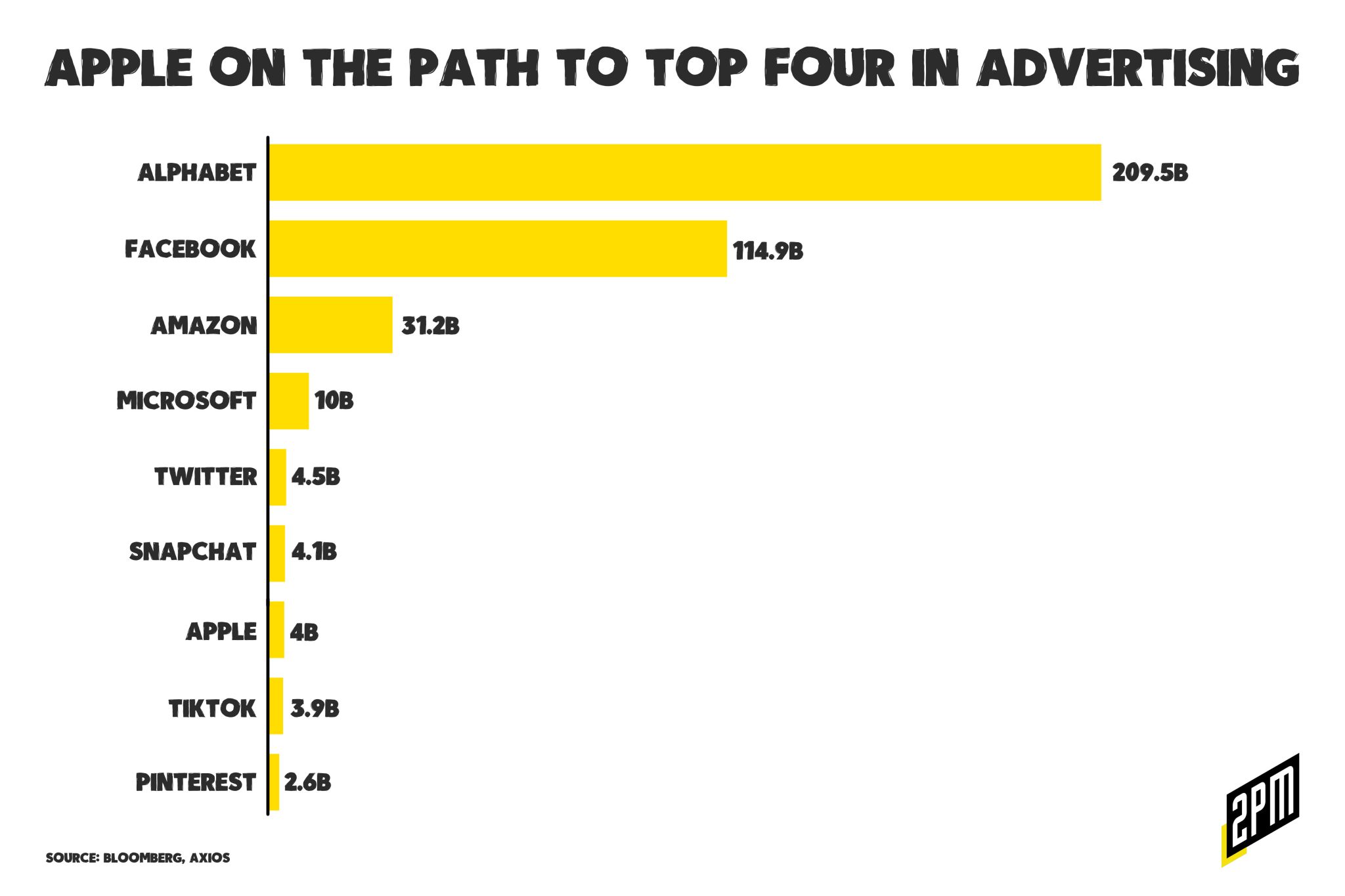
  4. Apple’s sneaky approach to its advertising platform (the Apple Property Tax)

Macroeconomic Pressures

Inflation is the most troubling issue for many in retail, though there are silver linings. In April 2022, more than half of people with household incomes under $50,000 said they already cut back on multiple expenses due to prices, and for those with income of at least $100,000, the cutback levels are similar when it comes to dining out, taking vacations, and buying a car. Over the pandemic, consumerism benefitted from the upper-middle class and wealthier Americans consuming at a pace that seemed to ignore logic. Many are still comfortable paying more for less.

While retail’s gross sales are still climbing, value isn’t and it’s beginning to impact the most economically challenged Americans. A new report by the Wall Street Journal affirmed this shift in consumer sentiment:

Data last week revealed new evidence from companies and the government that household spending is increasingly strained. Families are paring back purchases of items such as electronics and furniture as prices for essentials like food and gasoline have become more expensive. Inflation drove consumer spending in June to a new four-decade high while personal incomes fell when adjusting for inflation and taxes.

But the report went on to explain that there is a disconnect between sentiment and action for many consumers. In the same report, Moody’s Chief Economist explained:

There’s all kinds of disconnects in this economy, but there’s a very strong disconnect between how people say they feel and how they’re behaving. This gap between sentiment and behavior is the widest I’ve ever seen.

There are still opportunities for retailers; they just need to read the tea leaves. Online sales skyrocketed during the pandemic but then crashed as stores reopened. Or did eCommerce crash? According to Benedict Evans, how we currently define eCommerce sales is limiting proper analyses of retail as delivery methods and modes of consumerism evolve.

The lines between online and offline retail have blurred. Consider all the ways to order something online and all the ways it might arrive to your house: Uber, UPS, USPS, local courier, or BOPIS. Or maybe you pick it up in an Amazon locker or curbside at your nearest Target. Does a retailer count that curbside visit as eCommerce?

Evans writes that “addressable retail” is becoming less significant – what matters is how retailers actually fulfill orders. It doesn’t matter if retail is defined as including auto sales or restaurants. They’re all operating within the Amazon model now:

However, I think one could argue that ‘addressable retail’ is becoming less and less useful over time. Not only does Tesla sell cars online, but around half of US restaurant spending has been ‘off-prem’ (collection and delivery) since before the internet, and it’s not clear to me what it means to count tapping the phone icon as ‘offline retail’ and tapping the Doordash icon as ‘online online’ if it’s still a pizza on a bike. And, of course, retailers have talking for years about sales journeys that start online and finish offline and vice versa.

I think it might be more helpful to stop talking about what is or is not ‘addressable’ and just talk about different logistics models – everything will be sold online, but the delivery will vary. What can come through the mail, what needs a cold chain, what needs a truck, and what needs a bike? In other words, what fits Amazon’s commodity, packetised logistics model, and what needs something else?

This will culminate in small and medium sized brands needing their own logistics operations – or needing to join larger marketplace machines.

Marketplaces and Opportunity

That writing has been on the wall. Being a successful brand that will last through the next decade will rely less on brand equity and more on supply chain innovation, delivery efficiencies, and inventory management. What this class of brands needs is a marketplace that can provide the back-end logistics as well as front-end curation. From our report from last week:

Consumer behaviors seem to suggest that they want simplicity in how they buy goods and services, whether offline or online. Marketplaces benefit consumers and brands alike. For consumers, it means more products in one place. For brands, it means more visibility and less reliance on performance marketing spend. Like China’s advanced market suggests, Shopify could add to its resilience by becoming the marketplace for its many brands. If not, Amazon may pursue that strategy on their own.

The marketplace model will become more relevant for digitally-native brands as eCommerce continues to evolve and lines blur. The most capable retailers will reach customers where they are.

In our recent report on the emerging 90s nostalgia and how it may impact our consumer habits, I explained that nostalgia may begin to influence consumerism beyond the television and computer screens:

There is a chance that this next decade will see reality imitating art with more brands handing over their acquisition strategies to physical and digital marketplaces – this could lead to an emphasis on platforms like Amazon, JD.com, and others over individual storefronts like BigCommerce or Shopify (who is undoubtedly struggling).

Today Glossy published a report affirming the notion that eCommerce brands see marketplace strategies as an opportunity for growth.

In a survey of 46 fashion and beauty brands and retailers, more than 37% have introduced a third-party marketplace to their online stores, 35% of which did so in the last year.

Amazon, Walmart, Apple, and Advertising

In 2018, I wrote on Amazon, advertising, and crashing the duopoly of Facebook and Google’s pay-per-click businesses. Though this was written four years ago, it has never been more relevant: “Long term: Amazon will benefit from the use of less intrusive data. Consumer profiles will track on-site purchase behavior and product affinity, not web-wide browsing behavior. The eCommerce giant tracks KPIs like add-to-cart, average order value, and likelihood for add-on products in order to segment and serve higher converting advertisements for merchants who bid on ad space and keywords.” Apple’s privacy directives helped accelerate this idea by five to seven years. The softening of Google and Facebook’s advertising business has Apple’s privacy initiatives to thank. Fast Company published a great report detailing the timely juxtaposition of Apple’s impact, Amazon’s advertising growth, and Facebook’s struggles:

The rise of retail media ad networks is now intersecting with a softening of the digital ad market, brought on by a combination of macro-economic factors, and more secular shifts in the online-ad business resulting from Apple tightening the ability to track user behavior across the Web. Facebook, for instance, just posted a 36% drop in profit from last year, citing ad-market woes.

But Apple’s impact on privacy is also beginning to jumpstart its own advertising fiefdom, as many analysts predicted. This recent quote would have seemed nonsensical just a few years ago. Brooke Tarabochia, the direct of growth marketing for Peloton:

Apple Search Ads was the most efficient, scalable paid channel for our relaunch. We captured a broader audience with higher intent while maintaining efficiency.

The silver linings suggest that though everything around the industry seems to be impacted by the stresses of technology’s innovation cycles and economic fluctuation, there remains opportunity to find success.

By Web Smith | Edited by Hilary Milnes with art by Christina Williams and Alex Remy