

This member brief is designed exclusively for Executive Members, to make membership easy, you can click below and gain access to hundreds of reports, our DTC Power List, and other tools to help you make high level decisions.
Memo: DTC Brands And Secondaries
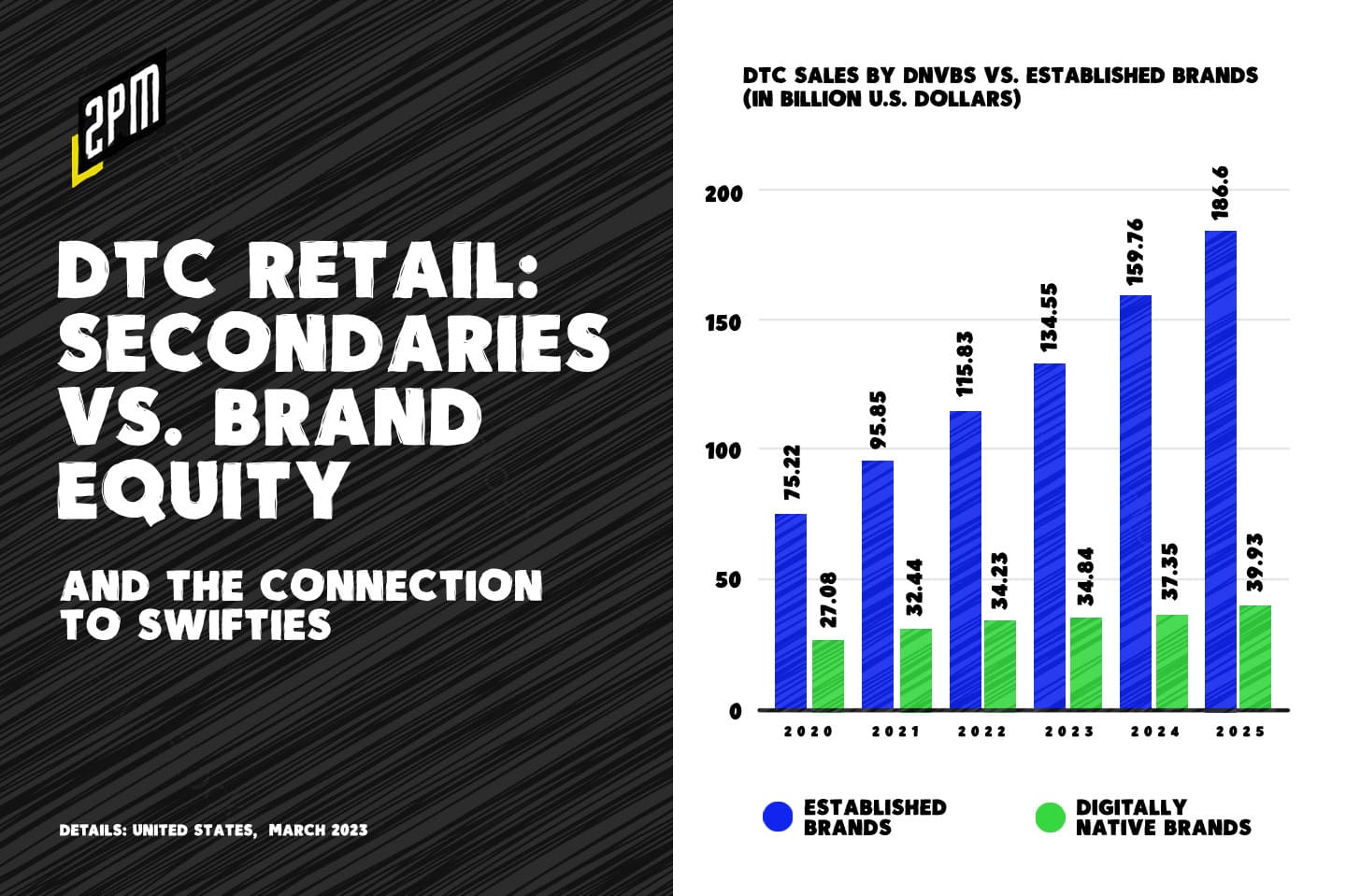
It’s not farfetched to argue that brands are capable of attracting consumer attention and commerce in ways that resemble traditional media and entertainment companies. A Vuori yoga studio would be in high demand for daily classes. An LMNT trail run series would attract enthusiasts in a number of cities known for outdoor activity. Both of these venture-backed companies share more than fitness in common; they share tremendous secondary market interest.
If given the option (even in today’s depressed secondaries market), the brand’s most avid supporters advocates, would buy shares of Vuori or LMNT or Gymshark or Liquid Death. The purchase of secondaries is an expression of brand equity, and it may be the best indicator for a brand’s market viability moving forward.
Brands and their equities are not determined solely by their retail sales. A pop entertainer’s value is not determined solely by primary market sales. If you’ve ever tried to buy Taylor Swift tickets from Seatgeek, you’ll know what I mean. Swifties, perhaps the purest expression of brand advocacy in modern entertainment, are willing to pay a premium just to be there for the show.
In the contemporary marketplace, brands have evolved to become much more than mere purveyors of products or services; they are, in many ways, entertainers. This reality is particularly evident in how consumer engagement and brand experience play central roles in shaping customer perceptions and loyalty. Just as a blockbuster show or a high-profile concert captivates an audience, successful brands like Vuori, Shein, Skims, Faherty, Whoop, and LMNT enrapture many of their customers. These brands leave customers wanting more from them, leaving open the idea of creating immersive and emotionally resonant experiences for then.
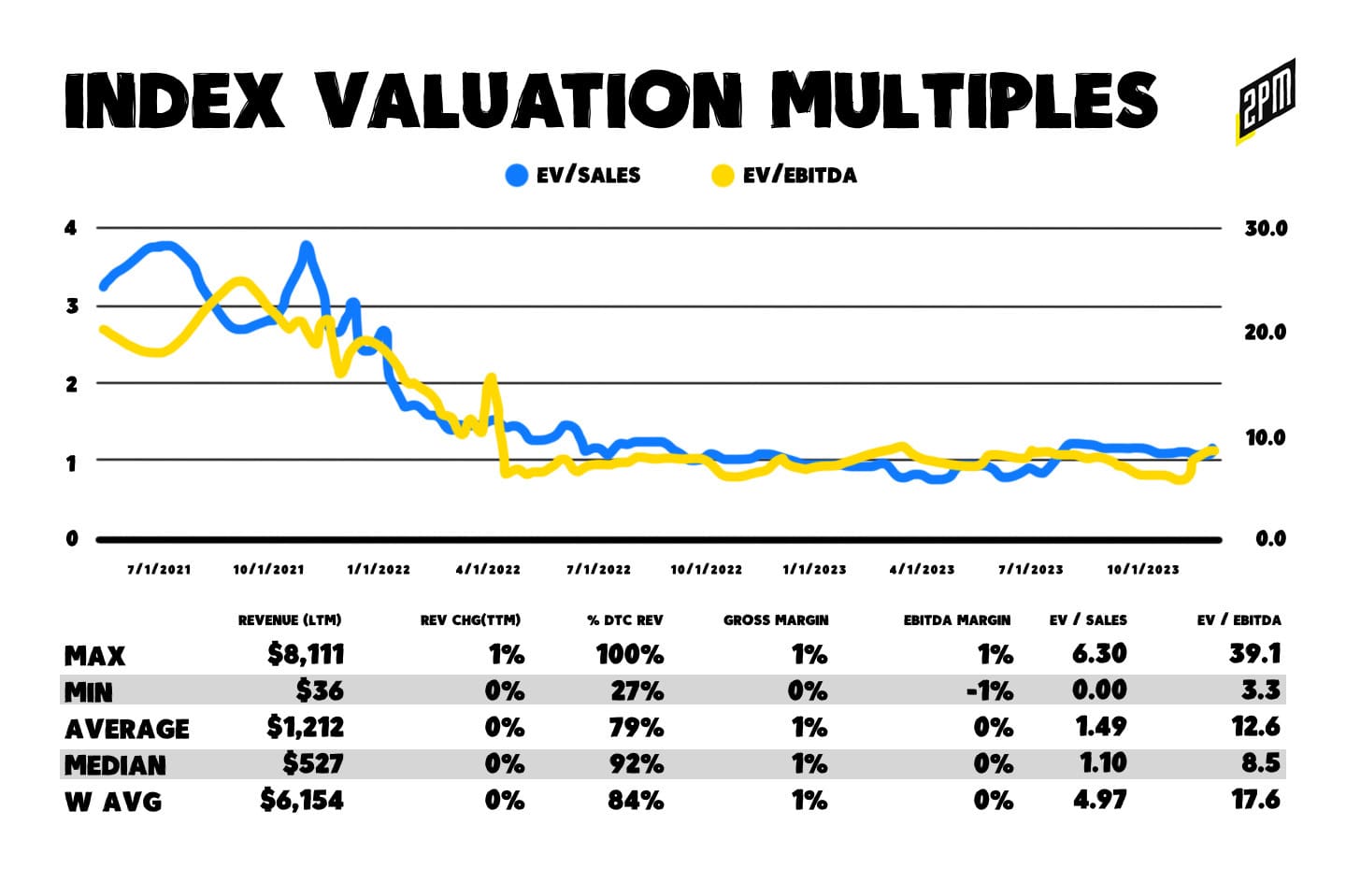
This extends into the realm of financial valuations. For the aforementioned brands, a cross section of extraordinary DTCs, their secondary interest can be likened to after-market ticket prices for major entertainment events. Across the market, valuation multiples in DTC are depressed according to the Drivepoint index that includes: Lululemon., Yeti, Canada Goose, Purple, Hims, Solo Brands, FIGS, Brilliant Earth, Lulu’s, Allbirds, and Laird Superfood Inc. But according to a recent report by Carta, secondary interest in internet-based companies till remains high.
A plurality of startups conducting liquidity programs so far this year on Carta have been in the SaaS sector, which is in line with historical norms. Two other sectors have seen substantial increases in their share of secondary activity: About 23% of deals so far this year involved internet & media companies, up from 18% for the full year 2022. (H1 Report – Carta)
But while this is an indicator of industry health, it is somehwat Carta added: “When the percentage of employees who are sellers declines, the percentage of sellers who are founders and investors increases.” In the context of the ratio of employee offering to founder offering, “Back in H1 2021, nearly seven out of every eight sellers was an employee.” That rate fell to three out of four in H1 2022, and it indicates a reflection of market appeal and the level of excitement a brand generates among investors, akin to a must-see show that draws crowds willing to pay premium second-market prices for the experience.
A barometer for brand equity: what’s the brand’s secondary market like? If the answer is non-existent, it could be a cause for concern. A brand advocate should always want behind-the-scenes access to the top brands.
Just as a sold-out concert or a hit Broadway show signifies high demand and popularity, robust and rising secondary interest in the private market signal a brand’s strong position and the high regard in which it is held by investors. These prices are not just numbers; they represent the collective anticipation and enthusiasm of the brand’s future in the market, mirroring how audience demand drives up ticket prices for a hit entertainment event. While not representative of a secondary market, we commonly see this stock vs. product purchase discussion in the context of Tesla. A Reddit thread on the psychology of this situation is fascinating:
Based on my current behavior, I would rather invest in the company…really want one of the cars though, just not enough to sell the stock.
Or this one:
I have 643 shares of Tesla and don’t own a Tesla. I have a Toyota Tacoma (paid off) and will keep that until the new quad CyberTruck comes out. I will definitely be purchasing that.
When this pattern of thinking is considered, the dynamics of private stock trading become a barometer of a brand’s ‘star power’ in the market. Brands that successfully engage and entertain their audience – with innovative products, compelling marketing, and strong customer relationships – see their ‘ticket prices’ rise, reflecting their desirability and success. Conversely, brands that fail to captivate an audience, much like a lackluster show, might find their secondary interest languishing, indicative of waning investor interest and market appeal. Consider this quote from the Academy of Business Research Journal. There, in 2017, Wei Feng examined the relationship between a firm’s brand equity and its investment value:
Stocks with deteriorating brand equity generally feature lower return potential.
Why do we only consider this with respect to public stock value? Combining the concepts from the business journal review on brand equity with the discussion about secondary stock sale interest for private companies reveals an intricate correlation between increased brand equity and secondary market interest.
High brand equity often translates to a strong, favorable, and unique presence in the consumer’s mind, which can significantly influence their purchasing decisions. Here are three correlations:
Brand Awareness and Equity: The journal article indicates that brand awareness, encompassing recognition and recall of a brand, plays a pivotal role in building brand equity. A private company with high brand awareness is likely to be more recognizable in the market, attracting investor attention. This awareness, especially in the upper echelons of DTC brands, signifies a strong market presence and suggests a robust potential for growth and profitability – key factors that make the company’s shares attractive in secondary markets.
Brand Image and Equity: A positive and strong brand image – comprising attributes, benefits, values, culture, personality, and user type – directly contributes to enhanced brand equity. For private companies, a compelling brand image can be a decisive factor for investors in secondary markets. A favorable brand image often reflects a company’s stability, market strength, and potential for long-term success, making its stocks a desirable commodity in secondary transactions.
Sales Promotions and Equity: Effective sales promotion strategies, both monetary and non-monetary, can bolster a brand’s market presence, directly influencing its equity. For private companies, innovative and successful promotional strategies can signal market agility and consumer appeal, traits that investors seek in secondary market transactions.
When it comes to secondary stock sale interest, this is where the concept of brand equity becomes even more crucial for private companies. High brand equity suggests to potential investors that the company has a strong market position, loyal customer base, and significant growth potential, making its shares a valuable investment.
On platforms like Hiive Markets, Forge Global, and Equity Zen, where secondary transactions for private companies occur, the level of activity and interest in a company’s shares can and should be measured as a data point. Active trading is itself a product offering and can signal strong brand awareness and a positive brand image, suggesting overall robust brand equity.
Summary: For private companies, the interest in secondary stock sales is closely correlated with the brand equity, which is a composite of brand awareness, brand image, and the impact of sales promotions. Strong brand equity not only enhances a company’s standing in the eyes of consumers but also elevates its attractiveness to investors in secondary markets, thereby influencing the liquidity and perceived value of its shares. It can be a virtuous cycle.
In the modern era of branding, where customer engagement is paramount, brands must think and act like entertainers, constantly seeking to captivate and delight their audience. They should also expand their definitions of what a customer is to a brand. A retailer’s ability to do so is not just a matter of market strategy but is directly mirrored in the valuation of their secondary interest. And like a Swiftie’s desire for a ticket at almost any cost, the higher the perceived brand-as-entertainer value, the more customers will be willing to invest. The effort to assess and publish secondary interest in top brands should become a priority, it should become as common as any other subjective measure of equity.
By Web Smith | Editor: Hilary Milnes with art by Alex Remy
Editor’s Note: to join this memo, we’ve added a study to the DTC Power List. For the new feature on polled secondaries interest, we combined a poll (n=97) with internal data on this update’s top 250 brands to assess whether those polled and others would pursue an interest in secondary stock sales from employees, founders, and / or existing shareholders of the retailers mentioned. We weighted the poll as 90% of the the assessment and we plan on growing the list to the full 800+ in the coming weeks. As mentioned above, interest in purchasing secondaries is a positive indicator for the current brand equity, potential brand equity, and current financial health of the retailers mentioned.
Deep Dive: Two DTC Brands
Both companies set out to take on Nike and Adidas. The eventual divergence of their paths can be attributed to a number of differences in decisions: funding methods, geographies, early adopters, and design philosophies. But what ultimately set one shoe brand up for international dominance ($8+ billion market cap) and the other into survival mode ($100 million market cap) came down to this: comfort.
It can be easy to forget that Allbirds, at one time, seemed to be on the same trajectory as On. Wrote Rachel Syme in 2018 for the New Yorker:
In their initial wave of popularity, Allbirds became an essential part of the daily uniform of Bay Area tech entrepreneurs. But in the past year Allbirds have travelled outside the clean hallways of Silicon Valley headquarters and tipped into the mainstream. Mila Kunis wears Allbirds. So does Jennifer Garner. So do Park Slope dads and modern dancers and trendy teen-agers and kooky aunts and registered nurses and bartenders and pretty much every overworked, weary thirtysomething you see on the New York subway.”
The cascading effects of comfort as a variable would take volumes of essays to explain but here I will try to simplify as best I can. I wrote this about Allbirds in February of 2022 when it was still a $1.5 billion company.
Allbirds is cozying up to wholesale. It’s an interesting paradox in omnichannel strategy that takes brand awareness and unit economics into consideration. The brands with sales velocity and stature to own their distribution can and will move towards an owned-store / DTC model. Brands working to reach profitability and scale are moving towards third-party retail wholesale partnerships.
In that essay entitled “Omnichannel Nirvana“, I opined that the strongest brands are pursuing DTC strategies while brands in need of sales growth are highly reliant on wholesale partnerships. The irony of the timing of this new report is that Allbirds is still pursuing wholesale and On Running is shifting in the opposite direction, according to this report in WWD.
The Swiss sports brand reported the strongest quarter in its history Tuesday morning with a jump of 46.5 percent in net sales to 480.5 million Swiss francs, driven in large part by its direct-to-consumer business.
As a result, the company will focus primarily on its own DTC efforts going forward and stick with the wholesale partners it already has without significantly adding to its stable. DTC accounts for 35 percent of overall sales.
The journey from performance to fashion statement encapsulates the evolving dynamics of consumer preferences and market trends. Nike, Adidas, and Reebok followed this pattern. Today, it is On Running. And I suspect that it will tilt the brand’s trajectory even higher.
Phil Knight, the visionary behind Nike, initially believed that running shoes were solely meant for sports. He found out that he was wrong. Over time, basketball shoes, epitomized by brands like Nike and Adidas, became the casual footwear of choice, transcending their functional roots to become fashion staples. Without many exceptions, the trend has pivoted away from basketball and returned to running shoes as the primary exhibitor of daily wear (and fashion in some cases).
Today, brands like Hoka and On Running, renowned for their exceptionally comfortable soles, are worn casually by the executive classes, a demographic that Allbirds once firmly held thanks to the early adoption by west coast venture capitalists alluded to in the introduction. This transition from performance to casual wear reflects the changing landscape of the athletic footwear industry and consumer priorities. The great contrast between the two brands began with comfort. People wear Hoka and On because it feels good to wear the shoe. Eventually, enough people wore them that their appearance became more socially acceptable outside of running circles. Like Hoka, On shoes have a particular look that was more unconventional than their counterparts at Nike and Adidas.
Good Steps and Missteps
The rise of On Running is noteworthy and generational. Founded in 2010 by Swiss Ironman champion Olivier Bernhard, On has experienced a meteoric rise in popularity, especially in the last few years. A significant boost in its profile came in 2019 when Swiss tennis great Roger Federer became a shareholder. In 2023, On announced $490 million in net sales in the second quarter, marking its sixth consecutive best-ever quarter. The brand’s appeal transcends its athletic origins, finding favor among various consumer segments, from tech workers to boomer parents and the athleisure crowd. Keys to its growth:
- Product Innovation: On Running’s unique cloud-like cushioning technology has appealed to both serious athletes and casual wearers. Its focus on technological innovation in footwear has set it apart in terms of performance and comfort.
- Market Positioning: On Running has successfully positioned itself across multiple segments, catering to both high-performance athletes and consumers looking for comfortable, stylish footwear. This dual appeal has broadened its customer base significantly.
- Global Expansion: On Running has expanded its market reach globally, making significant inroads in Europe, North America, and Asia. This global presence has contributed to its growing revenue.
- Brand Partnerships: The involvement of high-profile figures like Roger Federer has boosted On Running’s brand visibility and appeal. These partnerships have helped the brand gain credibility and attract a diverse range of consumers.
On’s shoes, known for their patented CloudTec soles, have historically been relatively firm, catering to a different runner preference than the traditionally softer American market. However, their recent models like the Cloudmonster and partnerships with athletes like Kristian Blummenfelt indicate a renewed focus on athletic performance.
Allbirds, on the other hand, initially captivated the market with its sustainable Wool Runner shoes. Founded in 2016 with a sustainability bend, Allbirds quickly gained popularity, especially in tech hubs like Silicon Valley. However, as the company tried to expand rapidly into new market segments and product lines, like running shoes and apparel, it faced significant challenges. The materials used in its running shoes were not well-suited for intensive activity, leading to durability issues. Its apparel line, made entirely of merino wool, was criticized for being too warm and uncomfortable. Furthermore, Allbirds’ expansion into younger consumer demographics and other product categories without sufficient market research diluted its brand image and confused consumers about what the brand stood for. Keys to its struggles:
- Segmentation Missteps: Allbirds’ expansion into running shoes and apparel was not well-received. The materials used in their products, while sustainable, did not meet the performance and comfort expectations of the new segments they targeted, particularly in the athletic footwear market.
- Brand Dilution: The rapid expansion into various product lines and market segments diluted Allbirds’ core brand image. This lack of focus led to confusion about the brand’s identity and diminished its appeal to its original customer base.
- Pricing and Product Quality: The higher price points of Allbirds’ new products, combined with quality issues, especially in terms of durability and suitability for athletic use, led to customer dissatisfaction and lower sales.
Looking ahead, for Allbirds to reemerge successfully, a pivot in strategy may be crucial. Transitioning from a sustainability-focused brand to one that emphasizes comfort could open new avenues. Developing and patenting exceptional soles, akin to On Running’s CloudTec, could help Allbirds regain a foothold in the market. This focus on comfort, combined with its existing commitment to sustainability, could potentially redefine its brand identity and appeal to a broader consumer base. This strategic shift requires not only technological innovation but also a deep understanding of consumer preferences and market trends.
Asia As The Next Emerging Market For Running
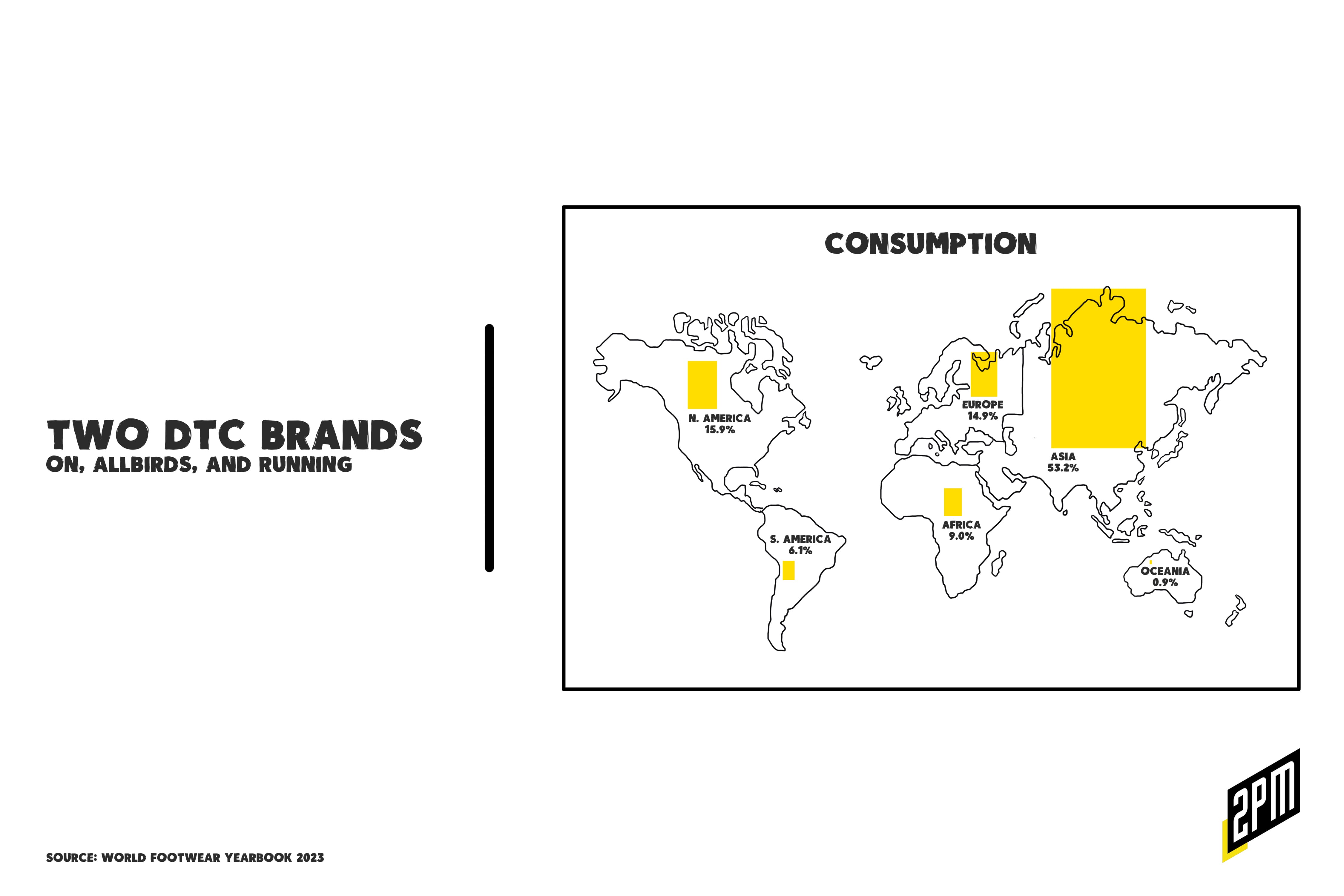
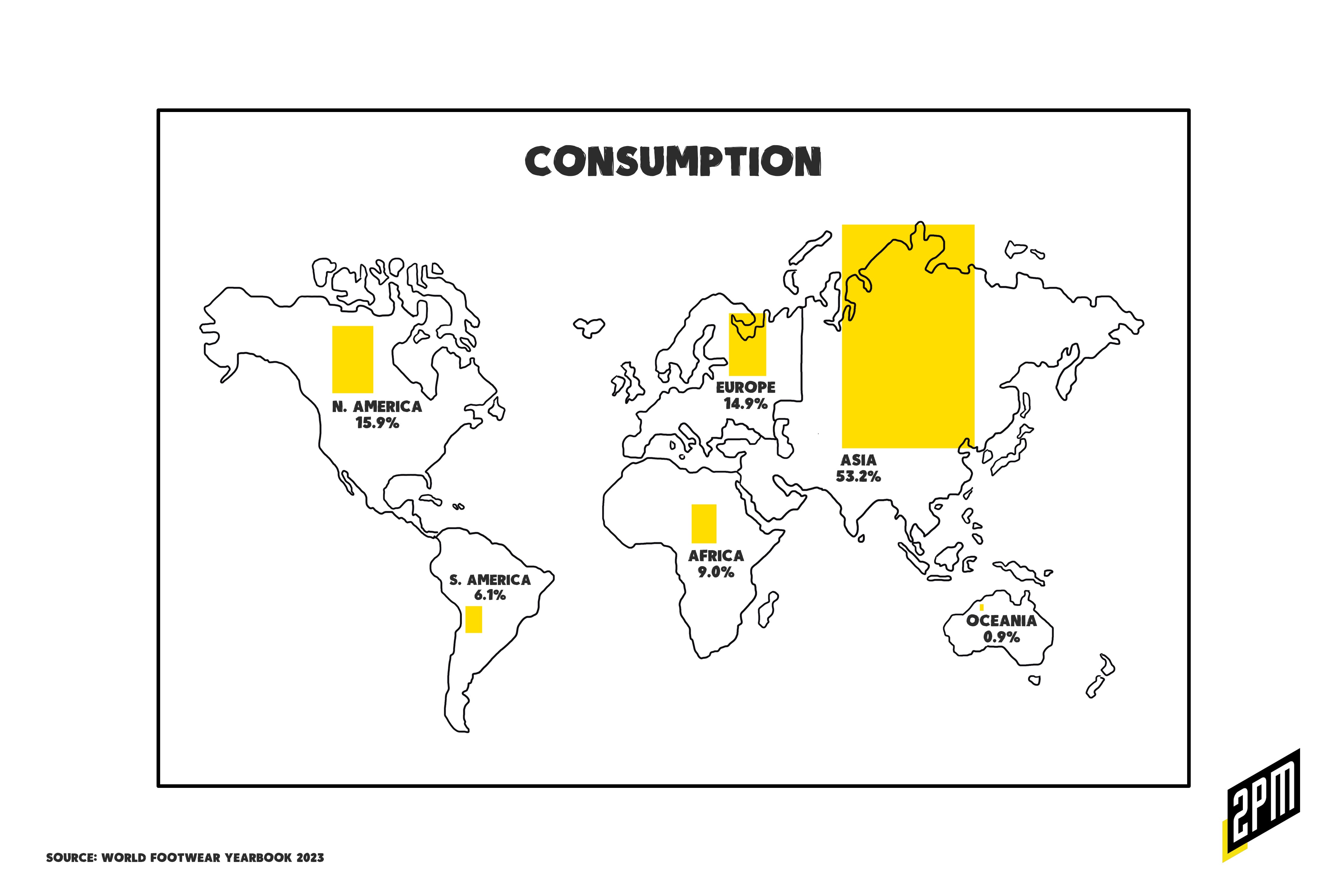
Asia’s burgeoning market for running and athletic footwear presents significant growth opportunities for brands like On Running and Allbirds. The impact of this growth on comfort categories can be substantial, offering new avenues for market expansion and product innovation. Here are a few key points:
Rising Health Consciousness: In many Asian countries, there’s a growing trend towards health and wellness. This shift is driving an increase in activities like running, which in turn boosts the demand for high-quality running shoes. Brands that can tap into this health-conscious market with products that offer both performance and comfort are likely to see success.
Expanding Middle Class: Asia’s expanding middle class is fueling consumer spending on lifestyle and wellness products, including athletic footwear. This demographic is not only looking for functional products but also values comfort and style, blending their needs for athletic and casual footwear.
Urbanization and Lifestyle Changes: Rapid urbanization across Asia has led to lifestyle changes that blend fitness activities with daily life. As a result, there’s a growing preference for versatile footwear that serves both athletic and casual purposes, which is where the comfort category can greatly benefit.
Online Retail and Digital Engagement: The superiority of eCommerce platforms in Asia offers brands an effective channel to reach a broader audience. These platforms also provide valuable consumer data, enabling brands to tailor their products and marketing strategies to local preferences, including comfort-oriented features.
Cultural Trends and Brand Perception: In many Asian markets, Western brands are often perceived as status symbols. Brands like On Running and Allbirds can leverage this perception, emphasizing their unique value propositions in comfort and sustainability to appeal to a wide range of consumers.
Influence on Comfort Categories: The emphasis on running and athletic footwear in Asia is likely to have a trickle-down effect on comfort categories. Consumers who prioritize performance in their athletic wear also seek comfort in their everyday footwear. This overlap creates opportunities for brands to develop products that cater to both needs.
Asia’s growing market for running and athletic footwear is the key area for future growth in this segment, with significant implications for the comfort category. Both can effectively tap into this market by balancing performance, comfort, and style, and adapting to local preferences, stand to gain a significant competitive advantage in this rapidly evolving market landscape.
Allbirds will need to refocus on its core strengths while also innovating in product comfort and performance. Developing and patenting new technologies for soles, similar to On Running’s approach, could help turn it around. This strategic shift should be accompanied by a renewed focus on understanding and catering to its target segments’ needs, particularly around comfort, sustainability, and performance.
The stories of On Running and Allbirds in the athletic footwear industry offer valuable lessons in brand positioning, market segmentation, and the importance of aligning product offerings with consumer expectations. While On Running has successfully navigated these challenges, Allbirds has faced hurdles. However, with the strategic pivot mentioned above, Allbirds could potentially reclaim its position in the market. In the same New Yorker article, Syme wrote: “I have never been the kind of person who selects my shoes based on their orthopedic function.” The irony for high flying running shoe brands like Hoka and On is that this was their appeal before appeal was their appeal. And with that, more consumers prioritized comfort over appearance. Even Adidas and Nike have taken note.
Over four years, emerging sportswear companies Hoka and On Running spent the equivalent of what Nike spends in two weeks to grow their market shares — and added $3 billion worth of revenue over that period, according to TD Cowen. (Business Insider, 2023)
Allbirds can learn from this. Nike is focused on China to continue growing market share. The athletic footwear industry continues to evolve, and brands that can adapt to changing consumer preferences while maintaining a clear and consistent brand identity are likely to succeed in this competitive landscape. This is the tale of the two DTCs.
By Web Smith | Edited by Hilary Milnes with art by Alex Remy and Christina Williams