No. 283: Navigating DNVB Growth Dependency

header.png

With very few exceptions, a digitally vertical native brand (DNVB) that succeeds over the long term will have command over three core components. To CMO-level operators, these core components develop a virtuous sales cycle. The top brands: foster organic (word of mouth) community, convert social following into revenue, and optimize performance marketing spend.

But there are hazards to consider, especially when balance isn’t a priority for a brand. When a DNVB depends too heavily on one of the three components, growth will stall. In an upcoming report commissioned by 2PM and Common Thread Collective, the firm’s Managing Partner Taylor Holiday and I discuss the limits of a DNVB’s proverbial adolescent years.

The teenage years: from start to the end of a brand’s natural growth.

It’s how brands position themselves for the next phase of growth that separates them from their competitors. For brands, the teenage years can look different. Here are three cases:

  1. Dependency: grassroots community. An online kitchenware brand has a coveted, quarterly brochure. The production of the brochure is 60% of all marketing spend. Historically, it has converted well. Sales have begun to stall as fresh entrants eat away at their grassroots awareness by spending heavily on performance marketing. Rather than competing to amplify their sales through social channels and performance marketing, they spend more on the next quarter’s brochure. This exacerbates the problem and opens them to more of an issue once brochure sales falter.
  2. Dependency: performance marketing. An online dress shirt brand builds a strategy around Facebook marketing. They hyper target potential customers and reach them again and again. But the cost per thousand (CPM) for DNVB advertising has risen 50% per year over the last three years. It’s not sustainable and as such, the brand begins to lose to competing brands with word-of-mouth influence and great social capital.
  3. Dependency: social. A CPG beauty brand is backed by a high-powered celebrity. Each instagram post generates 100,000 clicks to the brand’s site and sales are nearly automatic to the tune of a 7% conversion rate. But Instagram’s algorithm changes to deemphasize promotional posts that aren’t run through Facebook’s ad server. Traffic decreases and there is no performance marketing system in place.

For DNVBs, it’s often easier to stick with what works at the expense of missing out on efficient, long term growth. In a recent article on eCommerce innovation and DNVBs, Internet Retailer’s James Risley got something completely wrong.

DNVBs’ ability to create unique products and connect with niche audiences insulates them from some competition with Amazon.com Inc. (No. 1) and other big retailers. And the direct-to-consumer model keeps prices down as well, making their unique wears more affordable to the niche or mass-market audience they want to draw.

Brands are not at all insulated. In fact, you’re beginning to see well-funded startups and brand conglomerates go after early-stage retailers even earlier, these days. When direct to consumer shoe brand Atoms launched, Allbirds immediately went on the offensive. And fashion retailers, including Stitch Fix, were met with opposition very early on.

Amazon has launched their version of nearly every product offering on the market. Brands don’t win by insulating themselves. Quite the opposite, they succeed by branching into new channels and reaching the customers that are adjacent to their most passionate advocates. Eventually every DNVB faces the incumbent, but first they have to get out of their own way.

To leave adolescence behind, diversification is often a necessity. There are several brands who’ve successfully navigated brand adolescence:

Originally (and passionately) online-only, Warby Parker began opening up retail locations to influence customers who were hesitant to purchase without touching the product.

Though Harry’s was competing with Gillette by marketing directly to consumers and getting to customers before they made it to stores, the razor brand eventually partnered with Target stores to compete with Gillette head to head.

fenty beauty rihanna 2017 billboard
Sunset Plaza on January 5, 2018.

Rihanna’s Fenty Beauty is driven by the superstar’s social following. However, to reach new potential customers, she began paying for traditional advertising in major cities. This allowed her to back off promoting the product so often through her primary channel – Instagram.

Screen Shot 2018-08-19 at 10.41.24 PM
Facebook’s % growth in CPM (Cost Per Mille)

For C-Suite level marketers, there is a three-part operational exercise that can go a long way in identifying best practices for a DNVB’s demand generation program.

  1. Identify the most important variables that drive your brand’s success.
  2. Collect and interpret data from a range of market research materials to better evaluate marketing mix strategies.
  3. Develop marketing recommendations that are fact-based and free of inference.

Diversification, within reason, is often the outcome of this exercise. To move beyond the early days of a brand’s growth, it is necessary to meet potential customers half way. This means reinvesting in new marketing verticals is a worthwhile strategy. Advantage goes to the brands that see this and act on it before the market makes the decision for them.

Read more of Issue No. 283.

By Web Smith | Edited by Meghan Terwilliger | About 2PM
No. 281: “V” is For Vertical

facebook-ad
Warby Parker’s factory.

If you read any post on digitally vertical native brands, you’ll be hard pressed to find one single paragraph on manufacturing. In Andy Dunn’s now famous essay on the rise of vertical brands, he doesn’t mention the process of production one time. In CB Insights much-loved analysis of the nine biggest DTC success stories, you won’t find one mention of the production process.  This, despite the entire industry being driven by a global manufacturing resurgence.

Screen Shot 2018-08-06 at 1.45.48 PM
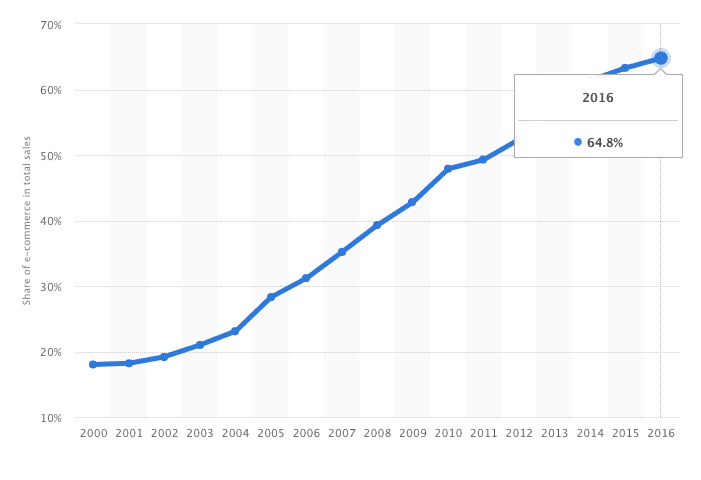
eCommerce as a % of total manufacturing shipments.

You listen hard. Stick to the basics, stick to the basics, stick to the basics, so says the antagonist from one of my favorite films of my youth. But while crusty old Coach Kilmer was a villain in the movie, he made a great point. And it’s a point that many in the DNVB space are overlooking. As the battle to rise above the noise has reached a fever pitch, brands are overlooking the most important part of the value proposition: a great product.

Face it, not everyone has a factory. This means that manufacturing partnerships must be priority number one for product-founders. A partner has to serve your best interest; they are there for the long haul. They make concessions and provide you with help during the product discovery and refinement phases.

Founder Collective on Twitter

Yes! The first Casper Mattress that sold was the 50,001st sold by founder Philip Krim, who spent a decade dropshipping beds previously. The best D2C founders are more focused on industry dynamics and acquisition channels than twee launch videos and clever branding. Follow suit! https://t.co/r9oDO74x6b

A DNVB is a manufacturer first, marketer second. Either you’re building the product within your own walls or you’re spending countless hours overseeing the process with a trusted partner. But for every ShinolaRogue Fitness, Warby Parker, Harry’s or East Fork that own their factories, there are countless DNVB’s (see: Fashion Nova) that excel by optimizing partnerships with manufacturers. The operative word is “partnership.” If you’re the owner of a vertical brand, you’ll need more than a vendor to navigate the obstacles of today. A manufacturing vendor sends you a spreadsheet with pricing, a manufacturing partner tests ideas and sends you samples. They are an extension of you. They are as invested in you as you are in them.

4
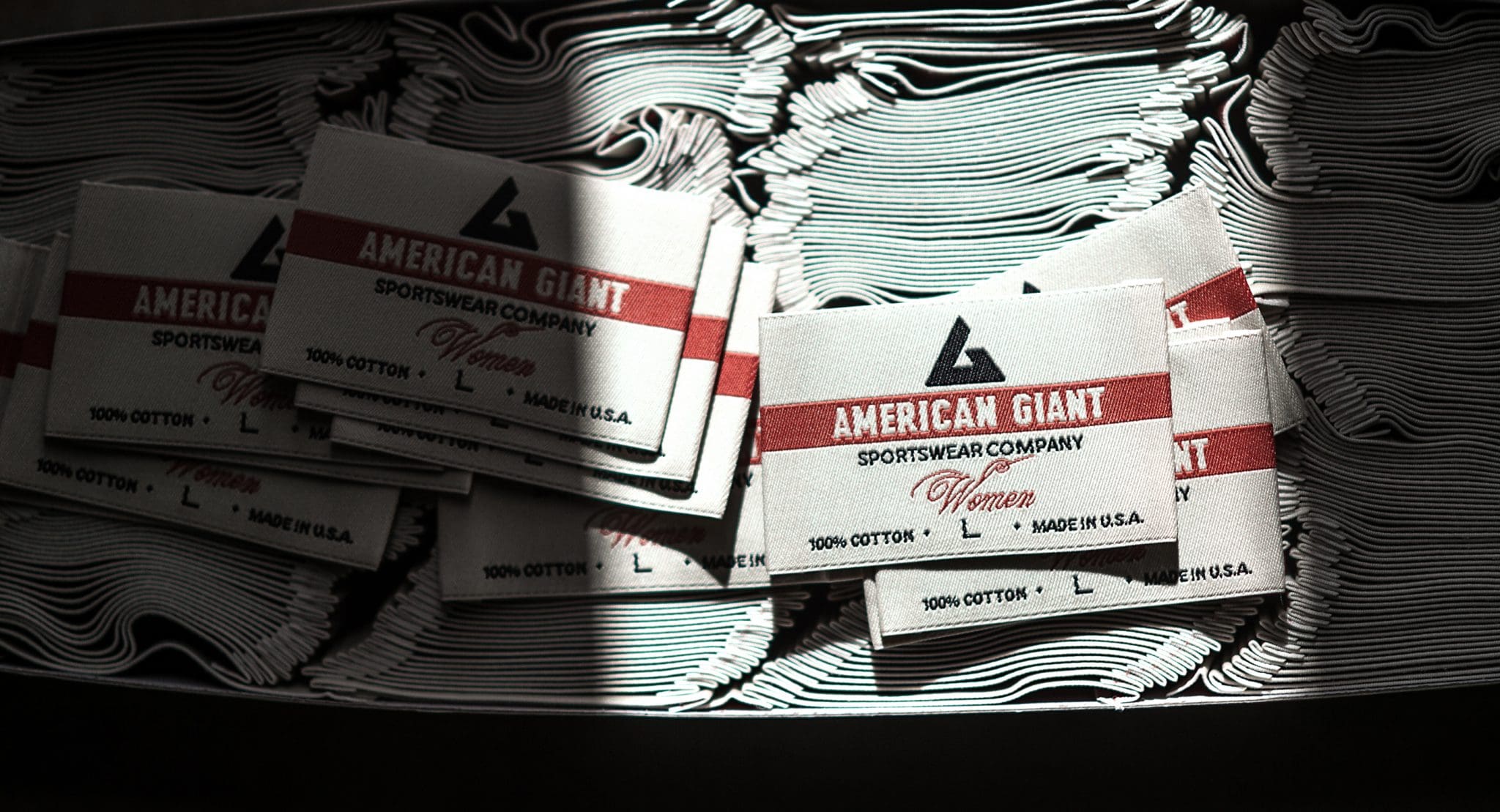
American Giant Partners with Eagle Sportswear

Early on in my DNVB journey, I met a savvy product-driven entrepreneur named Adam Blitzer at Manhattan’s Javits Center during the very early days of Mizzen + Main. Those were the years that we spent (a) not paying ourselves and (b) being brushed off at trade shows. Blitzer’s situation was a little different than ours. His booth was always directly across and nearly always bustling. As one of the few young companies who closely-managed their own production, we built a kinship for each others brands. His product offering was refined and constantly evolving. In short, he simplified a very difficult aspect of the business.

Setting aside trade agreements, tariffs, and other political issues, things are booming. More goods, coming from more sources, going to more places.

One other thing that’s increasing: pressure. Every year there is greater pressure on producers to show regulators and customers that their goods are sourced ethically and sustainably. It’s as if the whole world is now from Missouri, saying, “Show me” when it comes to the integrity of products they purchase. Ingredients now matter as much as, if not more, than the end product. To many modern consumers, ingredients are the end product, whether it’s the wheat going into your cereal, or the cotton going into your jeans.

Trends in Global Supply Chain Management

Before becoming the CEO of his latest company, he was the founder of a successful duffel bag direct-to-consumer brand called Blue Claw Co. There, he maneuvered through the arduous obstacles faced by brands that manage the push and pull of global politics on their young companies. It was through this experience that inspired him to build Softline Brand Partners as the solution for vertical brands who are focused on insulating themselves from the industry and market fluctuations (from materials to production to shipments). Softline has become the go-to for DNVBs seeking the type of partnerships that scale from zero to one. A network of domestic and foreign manufacturing plants, the company heralds its partnerships: from startups like Bespoke Post and Leesa Mattress to retail titans like Timex, Woolrich, and Allen Edmonds.

In a recent discussion with Blitzer, here’s what he had to say about the industry:

We’ve grown accustomed to operations like Gin Lane and Red Antler successfully building product brands from sample to market. We’re the company that works with you before you complete the brand development phase. For us, the ultimate partnership would be inline with those legendary marketing agencies. Let us build a better product pipeline and make their jobs easier.

DNVB founders are in a tough position. Not only are the tech (online retail) and acquisition (paid advertising and social) vital components to achieve growth; managing the supply chain may be the most important of the three core competencies. As global trade increases in volatility, brands that are not managing their own product manufacturing (in house or through partnership) will be at a distinct disadvantage.  A brand is not truly vertical unless the founders have a stake in production. The end consumer can observe the difference. There are brands who are thriving thanks to successful partnerships.


From Member Brief No. 27

Fashion Nova is not a traditional DNVB. The fashion brand began as a very small group of retail stores in Los Angeles’ B-level malls. The brand relaunched in 2013 as a digitally native brand and achieved rare air. Instagram, influencers, and consumers-turned-evangelists amassed one of the most effective top funnel efforts in brand-side eCommerce. Needless to say, they’ve built a blueprint for legacy businesses that are looking to reinvent themselves for the digital commerce age. 

Fashion Nova’s manufacturing turn-around is reportedly best-in-industry. CEO Richard Saghian can move from idea to sample to production in under 72 hours by working with close to 1,000 factories. As a result, the five-year-old website releases new designs faster than most fast fashion houses. This means that typical consumers can look like their celebrity and social media icons within a few days of their red carpet appearances. 


The founders who possess the sophistication to navigate trade and supply chain superiority will become the leaders of their product categories. While technical prowess and customer acquisition successes receive the majority of the press buzz, it’s supply chain excellence that empowers brands to maintain the agility and growth potential that characterized DNVBs from the start.

Read more of the issue here.

By Web Smith | Edited by Meghan Terwilliger |About 2PM

Editor’s note: If you would like an introduction to Softline Brand Partners, feel free to reach out. 

Выпуск № 267: О брендинге DNVB

facebook-ad

Что дальше в брендинге DNVB? История каждого вертикального бренда имеет свое начало. Для DNVB, специализирующихся на стиле жизни и моде, которым посчастливилось работать с лучшими брендинговыми агентствами, эта история часто начинается с биографии основателя, проблемы, которую начал решать продукт x, и заявлений о неизбежной силе бренда. Это короткая история, как и большинство других в онлайн-ритейле. Но это и дальновидный подход, рассчитанный на: электронную коммерцию, рекламу в Instagram и Google, доставку третьими лицами. Меньше "мы были" и больше "мы будем".

По словам крестного отца этого термина, "DNVB маниакально сосредоточены на клиентском опыте, и они взаимодействуют, совершают сделки и рассказывают истории потребителям в основном в Интернете". По мере того как бренды начинают фокусироваться на офлайн-ритейле, упаковка вокруг брендов будет меняться вместе с этим фокусом. Если на ранних этапах (2010-2014 гг.) в моде были технологии и футуризм, то в следующие десять лет бренды, которые добьются успеха, будут делать акцент на наследии в той же степени, что и на футуризме.

Первая фаза (2010-2014): Технология

Warby Parker - лучший пример. Бренд вырос благодаря внедрению практики, которой не придерживались другие компании, работающие по принципу direct-to-consumer. Компания стремилась устранить все барьеры на пути к покупке, внедряя инструменты, призванные облегчить гениальный покупательский опыт. На первом этапе маркетинга DNVB привлекала технология электронной коммерции. Продукт номинальный и доступный, но доступ к нему стал такой же частью бренда, как и сами очки. Вот выдержка из статьи в Wall Street Journal 2013 года, написанной совместно Кевином Лавеллом и мной:

Сейчас мы находимся в эпохе электронной коммерции 3.0, когда предприниматели могут запускать компании с минимальными барьерами для входа. Электронная коммерция 1.0 состояла из грубых онлайн-покупок в 90-х годах, которые предлагались несколькими компаниями и вызывали скептицизм у потребителей. Она переросла в более сложные взаимодействия электронной коммерции 2.0 в середине 2000-х годов, когда большинство компаний поняли, что если они не работают в Интернете, то ставят под угрозу свое будущее.

Наступило новое время, и власть больше не находится в руках нескольких покупателей в крупных магазинах. Крупные компании могут быть уничтожены конкурентами с более качественным товаром. А начинающим розничным компаниям больше не нужно проходить долгий и медленный путь участия в выставках, чтобы представить свой товар горстке покупателей, или отдавать значительную долю от каждой продажи дистрибьюторам.

Вторая фаза (2014-2018): Комедия

Видеоролик Dollar Shave Club "Our Blades Are F***ing Great" продолжительностью 1 м33 с был разработан для продвижения запущенного (впоследствии приобретенного) бренда и на данный момент просмотрен более 25 миллионов раз. Эта интернет-реклама считается одним из лучших примеров маркетинга по принципу "верхней воронки", а юмор DSC впоследствии повлиял на то, что другие бренды, ориентированные на мужскую аудиторию, стали использовать юмор как средство дифференциации бренда: Chubbies(№ 67), Untuckit(№ 48), Tommy John(№ 54) и Mizzen+Main(№ 86).

Захват одного клиента с помощью рекламы, направленной на потребителя, может стоить до 20 долларов за клик в Facebook. Цифровая реклама может быть дорогостоящей. Чтобы противостоять этим неуклонно растущим затратам, бренды стимулируют циклы осведомленности, интереса и рассмотрения, продвигая вирусное видео бренда. Это позволяет достичь осведомленности, рассмотрения и намерения.

Самое главное, что знакомство основных пользователей с вашим брендом и их переход по ссылке для получения дополнительной информации позволяет маркетологам использовать такие инструменты, как пиксель Facebook, для ретаргетинга случайных посетителей, продвигая их дальше по воронке продаж. Обращение к случайным покупателям стало эффективным способом увеличения трафика в верхней части воронки.

Третья фаза (2018 год и далее): Наследие

Бренды, которые начинались как воплощение первых онлайн-ритейлеров, теперь, как ожидается, будут соперничать со старыми лидерами, поскольку их годовая выручка превышает девятизначные цифры. Конкуренты-старожилы все еще существуют, а некоторые из них даже сильнее, чем были до появления онлайн-конкурентов. В то же время новые бренды начинают конкурировать со старыми: торговыми центрами, магазинами с кирпичной кладкой и традиционной рекламой. Предполагалось, что интернет полностью устранит эти каналы, но вместо этого он обеспечил прикрытие до тех пор, пока онлайн-ритейлеры не будут готовы перейти к физическим продажам.

Электронная коммерция стала более зрелой, а физическая розница превратилась в более эффективный канал. В связи с этим мы начинаем видеть, как бренды приобретают черты компаний с богатым наследием. Но если вам восемь лет, у вас не будет особой истории наследия. На каждый Abercrombie, Filson, Ralph Lauren, Lily Pulitzer, Ray Ban и Tag Heuer приходится цифровой вертикальный бренд, такой как Harry's, Allbirds и Outdoor Voices, который надеется выстоять.

Наследные бренды стараются сохранить наследие, стремясь при этом к футуризму за счет инноваций в продуктах и каналах(см. Cole Haan). Для традиционных брендов создание ауры устойчивости означает, что продукты и каналы будут выглядеть передовыми для эпохи омни-каналов, управляемой миллениалами.

В то же время вертикальные бренды стремятся представить свою продукцию как эволюцию продуктов, оставшихся в наследство, сохраняя при этом как можно больше технологических преимуществ. Для цифровых вертикальных брендов долголетие прогнозируется благодаря привязке к истории и традициям.

Следующая волна в брендинге DNVB будет направлена на развитие истории и традиций. Бренды будут углублять свои корни путем сотрудничества с продуктами, создания сообщений и собственных уникальных историй происхождения.

Посмотрите на этот пример того, как производитель наследия и вертикальный бренд достигли обеих целей в одном сотрудничестве.

Сообщения: "Наследные бренды одобряют нас, они хотят, чтобы мы были рядом".

Web---NB-ReTooled

Задолго до того, как дизайнерские кроссовки для пап проникли в модные места по всему миру, модель New Balance 574 установила золотой стандарт того, каким должен быть хорошо продуманный, лохматый ретро-бег. Они отлично смотрелись, когда появились в 1988 году, и в 2018 году стильно выглядят практически на каждом, кто их носит - в том числе и на настоящих папах. С годами модель 574 стала основной моделью New Balance, когда дело доходит до коллабораций, поэтому она видела достаточно много обновлений и взаимодействий. Но последняя коллаборация с высокотехнологичным брендом одежды Ministry of Supply переносит 574 в ультрапроизводительное будущее. - Тайлер Ватаманук, GQ

Сообщения: "Лучшие старые бренды доверяют нашей платформе".

В этом месяце Mr. Porter объявил о начале шутливого сотрудничества с Prada. Поскольку роскошь продолжает расти в Интернете, Mr. Porter стремится стать местом назначения для таких товаров. Подобный кивок на наследие не может не понравиться покупателям.

С 1990-х годов бренд занимает завидное положение в авангарде моды, став именем нарицательным, символом элегантности, перспективного дизайна и, да, множества забавных принтованных рубашек. В офисе MR PORTER так восхищаются изделиями бренда, что в сентябре 2016 года мы стали первым онлайн-магазином, предлагающим столь желанную мужскую коллекцию Prada, в атмосфере праздника.

Продолжить чтение "Выпуск № 267: О брендинге DNVB"