No. 283: Navigating DNVB Growth Dependency

header.png

With very few exceptions, a digitally vertical native brand (DNVB) that succeeds over the long term will have command over three core components. To CMO-level operators, these core components develop a virtuous sales cycle. The top brands: foster organic (word of mouth) community, convert social following into revenue, and optimize performance marketing spend.

But there are hazards to consider, especially when balance isn’t a priority for a brand. When a DNVB depends too heavily on one of the three components, growth will stall. In an upcoming report commissioned by 2PM and Common Thread Collective, the firm’s Managing Partner Taylor Holiday and I discuss the limits of a DNVB’s proverbial adolescent years.

The teenage years: from start to the end of a brand’s natural growth.

It’s how brands position themselves for the next phase of growth that separates them from their competitors. For brands, the teenage years can look different. Here are three cases:

  1. Dependency: grassroots community. An online kitchenware brand has a coveted, quarterly brochure. The production of the brochure is 60% of all marketing spend. Historically, it has converted well. Sales have begun to stall as fresh entrants eat away at their grassroots awareness by spending heavily on performance marketing. Rather than competing to amplify their sales through social channels and performance marketing, they spend more on the next quarter’s brochure. This exacerbates the problem and opens them to more of an issue once brochure sales falter.
  2. Dependency: performance marketing. An online dress shirt brand builds a strategy around Facebook marketing. They hyper target potential customers and reach them again and again. But the cost per thousand (CPM) for DNVB advertising has risen 50% per year over the last three years. It’s not sustainable and as such, the brand begins to lose to competing brands with word-of-mouth influence and great social capital.
  3. Dependency: social. A CPG beauty brand is backed by a high-powered celebrity. Each instagram post generates 100,000 clicks to the brand’s site and sales are nearly automatic to the tune of a 7% conversion rate. But Instagram’s algorithm changes to deemphasize promotional posts that aren’t run through Facebook’s ad server. Traffic decreases and there is no performance marketing system in place.

For DNVBs, it’s often easier to stick with what works at the expense of missing out on efficient, long term growth. In a recent article on eCommerce innovation and DNVBs, Internet Retailer’s James Risley got something completely wrong.

DNVBs’ ability to create unique products and connect with niche audiences insulates them from some competition with Amazon.com Inc. (No. 1) and other big retailers. And the direct-to-consumer model keeps prices down as well, making their unique wears more affordable to the niche or mass-market audience they want to draw.

Brands are not at all insulated. In fact, you’re beginning to see well-funded startups and brand conglomerates go after early-stage retailers even earlier, these days. When direct to consumer shoe brand Atoms launched, Allbirds immediately went on the offensive. And fashion retailers, including Stitch Fix, were met with opposition very early on.

Amazon has launched their version of nearly every product offering on the market. Brands don’t win by insulating themselves. Quite the opposite, they succeed by branching into new channels and reaching the customers that are adjacent to their most passionate advocates. Eventually every DNVB faces the incumbent, but first they have to get out of their own way.

To leave adolescence behind, diversification is often a necessity. There are several brands who’ve successfully navigated brand adolescence:

Originally (and passionately) online-only, Warby Parker began opening up retail locations to influence customers who were hesitant to purchase without touching the product.

Though Harry’s was competing with Gillette by marketing directly to consumers and getting to customers before they made it to stores, the razor brand eventually partnered with Target stores to compete with Gillette head to head.

fenty beauty rihanna 2017 billboard
Sunset Plaza on January 5, 2018.

Rihanna’s Fenty Beauty is driven by the superstar’s social following. However, to reach new potential customers, she began paying for traditional advertising in major cities. This allowed her to back off promoting the product so often through her primary channel – Instagram.

Screen Shot 2018-08-19 at 10.41.24 PM
Facebook’s % growth in CPM (Cost Per Mille)

For C-Suite level marketers, there is a three-part operational exercise that can go a long way in identifying best practices for a DNVB’s demand generation program.

  1. Identify the most important variables that drive your brand’s success.
  2. Collect and interpret data from a range of market research materials to better evaluate marketing mix strategies.
  3. Develop marketing recommendations that are fact-based and free of inference.

Diversification, within reason, is often the outcome of this exercise. To move beyond the early days of a brand’s growth, it is necessary to meet potential customers half way. This means reinvesting in new marketing verticals is a worthwhile strategy. Advantage goes to the brands that see this and act on it before the market makes the decision for them.

Read more of Issue No. 283.

By Web Smith | Edited by Meghan Terwilliger | About 2PM
No. 281: “V” is For Vertical

anúncio no facebook
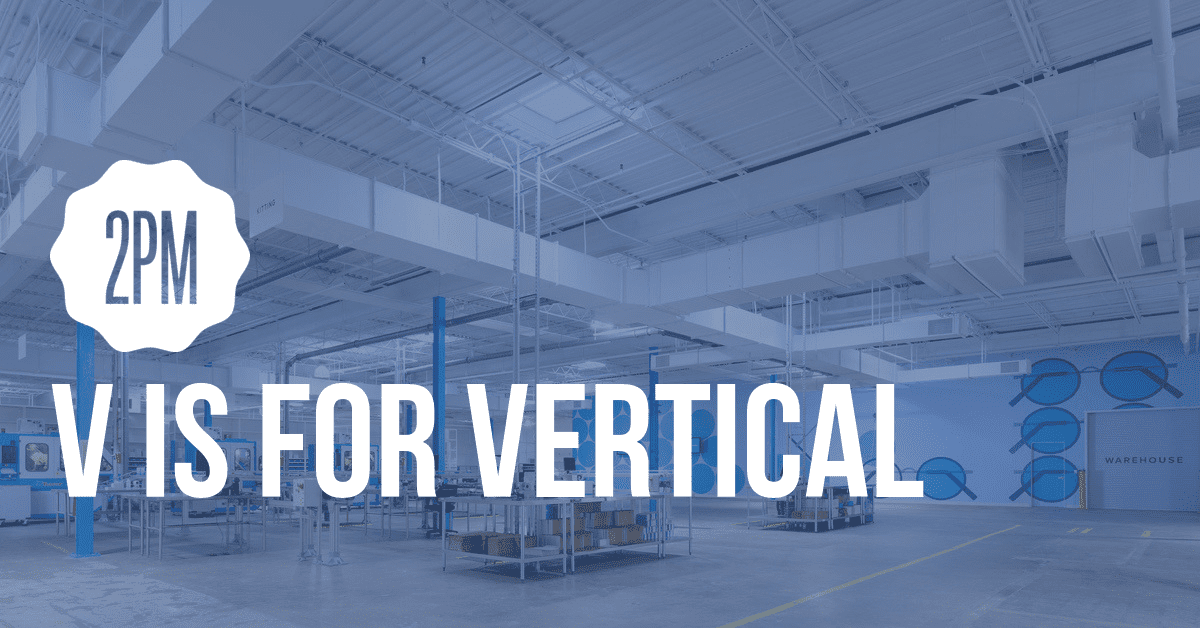
Warby Parker’s factory.

If you read any post on digitally vertical native brands, you’ll be hard pressed to find one single paragraph on manufacturing. In Andy Dunn’s now famous essay on the rise of vertical brands, he doesn’t mention the process of production one time. In CB Insights much-loved analysis of the nine biggest DTC success stories, you won’t find one mention of the production process.  This, despite the entire industry being driven by a global manufacturing resurgence.

Screen Shot 2018-08-06 at 1.45.48 PM
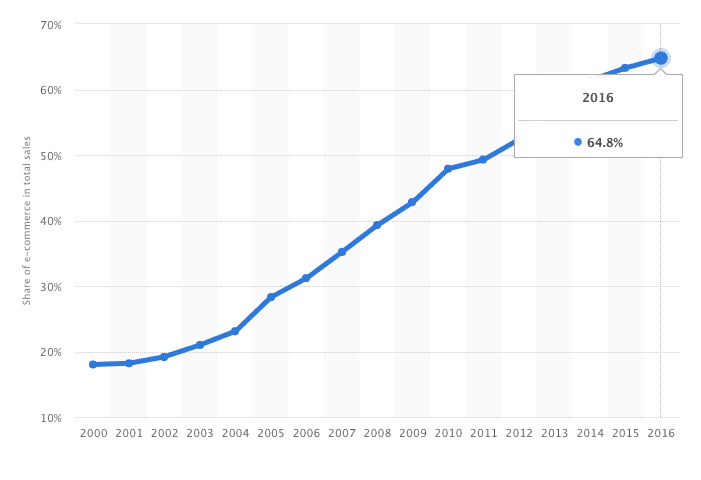
eCommerce as a % of total manufacturing shipments.

You listen hard. Stick to the basics, stick to the basics, stick to the basics, so says the antagonist from one of my favorite films of my youth. But while crusty old Coach Kilmer was a villain in the movie, he made a great point. And it’s a point that many in the DNVB space are overlooking. As the battle to rise above the noise has reached a fever pitch, brands are overlooking the most important part of the value proposition: a great product.

Face it, not everyone has a factory. This means that manufacturing partnerships must be priority number one for product-founders. A partner has to serve your best interest; they are there for the long haul. They make concessions and provide you with help during the product discovery and refinement phases.

Founder Collective on Twitter

Yes! The first Casper Mattress that sold was the 50,001st sold by founder Philip Krim, who spent a decade dropshipping beds previously. The best D2C founders are more focused on industry dynamics and acquisition channels than twee launch videos and clever branding. Follow suit! https://t.co/r9oDO74x6b

A DNVB is a manufacturer first, marketer second. Either you’re building the product within your own walls or you’re spending countless hours overseeing the process with a trusted partner. But for every ShinolaRogue Fitness, Warby Parker, Harry’s or East Fork that own their factories, there are countless DNVB’s (see: Fashion Nova) that excel by optimizing partnerships with manufacturers. The operative word is “partnership.” If you’re the owner of a vertical brand, you’ll need more than a vendor to navigate the obstacles of today. A manufacturing vendor sends you a spreadsheet with pricing, a manufacturing partner tests ideas and sends you samples. They are an extension of you. They are as invested in you as you are in them.

4
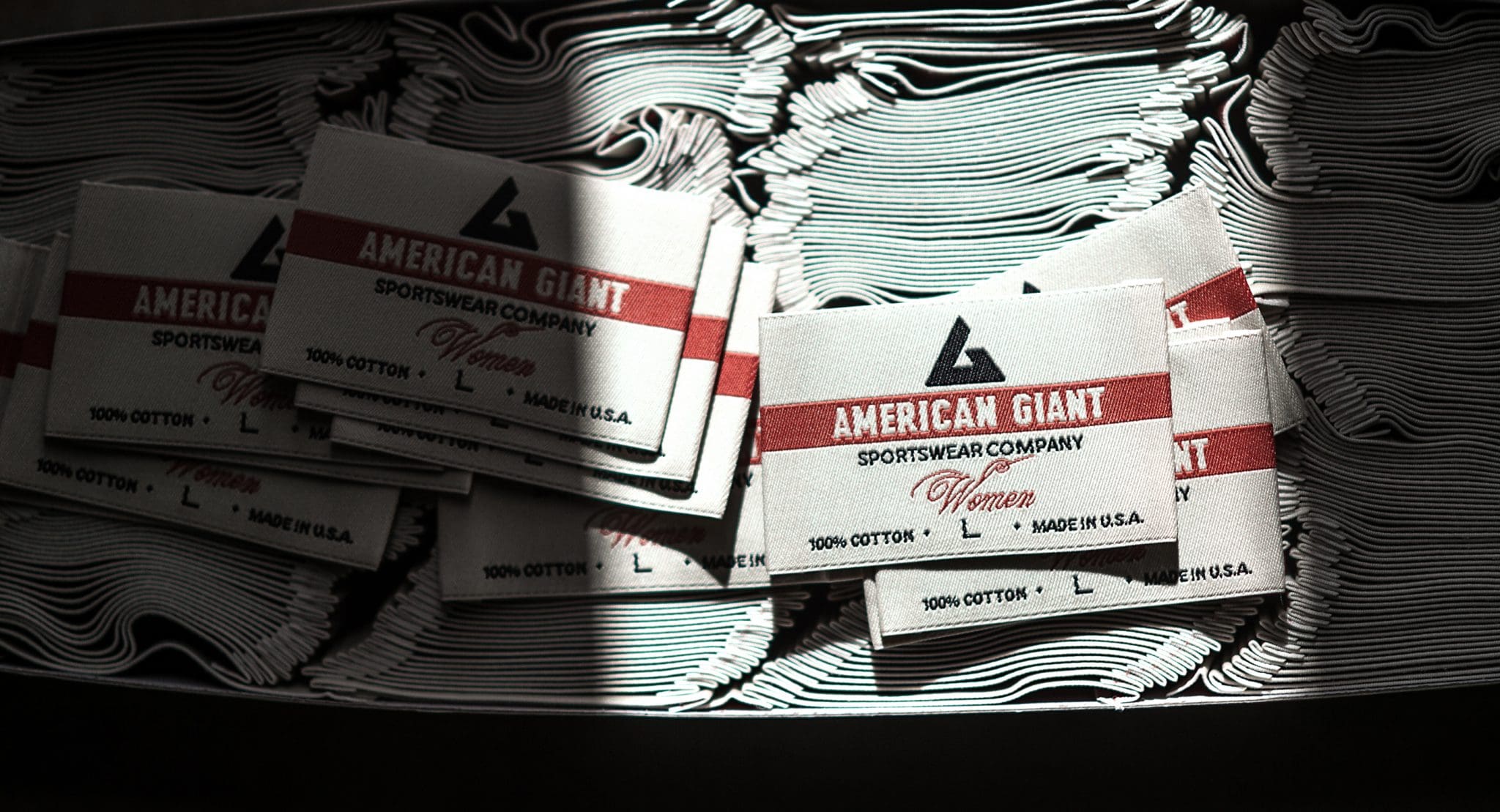
American Giant Partners with Eagle Sportswear

Early on in my DNVB journey, I met a savvy product-driven entrepreneur named Adam Blitzer at Manhattan’s Javits Center during the very early days of Mizzen + Main. Those were the years that we spent (a) not paying ourselves and (b) being brushed off at trade shows. Blitzer’s situation was a little different than ours. His booth was always directly across and nearly always bustling. As one of the few young companies who closely-managed their own production, we built a kinship for each others brands. His product offering was refined and constantly evolving. In short, he simplified a very difficult aspect of the business.

Setting aside trade agreements, tariffs, and other political issues, things are booming. More goods, coming from more sources, going to more places.

One other thing that’s increasing: pressure. Every year there is greater pressure on producers to show regulators and customers that their goods are sourced ethically and sustainably. It’s as if the whole world is now from Missouri, saying, “Show me” when it comes to the integrity of products they purchase. Ingredients now matter as much as, if not more, than the end product. To many modern consumers, ingredients are the end product, whether it’s the wheat going into your cereal, or the cotton going into your jeans.

Trends in Global Supply Chain Management

Before becoming the CEO of his latest company, he was the founder of a successful duffel bag direct-to-consumer brand called Blue Claw Co. There, he maneuvered through the arduous obstacles faced by brands that manage the push and pull of global politics on their young companies. It was through this experience that inspired him to build Softline Brand Partners as the solution for vertical brands who are focused on insulating themselves from the industry and market fluctuations (from materials to production to shipments). Softline has become the go-to for DNVBs seeking the type of partnerships that scale from zero to one. A network of domestic and foreign manufacturing plants, the company heralds its partnerships: from startups like Bespoke Post and Leesa Mattress to retail titans like Timex, Woolrich, and Allen Edmonds.

In a recent discussion with Blitzer, here’s what he had to say about the industry:

We’ve grown accustomed to operations like Gin Lane and Red Antler successfully building product brands from sample to market. We’re the company that works with you before you complete the brand development phase. For us, the ultimate partnership would be inline with those legendary marketing agencies. Let us build a better product pipeline and make their jobs easier.

DNVB founders are in a tough position. Not only are the tech (online retail) and acquisition (paid advertising and social) vital components to achieve growth; managing the supply chain may be the most important of the three core competencies. As global trade increases in volatility, brands that are not managing their own product manufacturing (in house or through partnership) will be at a distinct disadvantage.  A brand is not truly vertical unless the founders have a stake in production. The end consumer can observe the difference. There are brands who are thriving thanks to successful partnerships.


From Member Brief No. 27

Fashion Nova is not a traditional DNVB. The fashion brand began as a very small group of retail stores in Los Angeles’ B-level malls. The brand relaunched in 2013 as a digitally native brand and achieved rare air. Instagram, influencers, and consumers-turned-evangelists amassed one of the most effective top funnel efforts in brand-side eCommerce. Needless to say, they’ve built a blueprint for legacy businesses that are looking to reinvent themselves for the digital commerce age. 

Fashion Nova’s manufacturing turn-around is reportedly best-in-industry. CEO Richard Saghian can move from idea to sample to production in under 72 hours by working with close to 1,000 factories. As a result, the five-year-old website releases new designs faster than most fast fashion houses. This means that typical consumers can look like their celebrity and social media icons within a few days of their red carpet appearances. 


The founders who possess the sophistication to navigate trade and supply chain superiority will become the leaders of their product categories. While technical prowess and customer acquisition successes receive the majority of the press buzz, it’s supply chain excellence that empowers brands to maintain the agility and growth potential that characterized DNVBs from the start.

Leia mais sobre o assunto aqui.

By Web Smith | Edited by Meghan Terwilliger |About 2PM

Editor’s note: If you would like an introduction to Softline Brand Partners, feel free to reach out. 

Edição nº 267: Sobre a marca DNVB

anúncio no facebook

O que vem a seguir no branding da DNVB? Toda história de marca vertical tem seu início. Para as DNVBs de moda e estilo de vida que têm a sorte de trabalhar com as melhores agências de branding, essa história geralmente começa com a biografia de seu fundador, o problema que o produto x começa a resolver e as proclamações do inevitável poder de permanência da marca. É uma história curta, como a maioria das histórias do varejo online. Mas também é uma abordagem com visão de futuro, projetada para: comércio eletrônico, publicidade no Instagram e no Google e entrega por terceiros. Menos "nós fomos" e mais "nós seremos".

De acordo com o padrinho do termo, "os DNVBs são maniacamente focados na experiência do cliente e interagem, fazem transações e contam histórias para os consumidores principalmente na Web". À medida que as marcas começarem a se concentrar no varejo off-line, você começará a perceber que a embalagem em torno das marcas mudará com esse foco. Enquanto a tecnologia e o futurismo foram atraentes no início (2010-2014), as marcas bem-sucedidas nos próximos dez anos se concentrarão no patrimônio tanto quanto no futurismo.

Primeira fase (2010-2014): Tecnologia

A Warby Parker é o melhor exemplo, sem dúvida alguma. A marca cresceu ao implementar uma prática que outras empresas de venda direta ao consumidor não tinham. A empresa trabalhou para eliminar todas as barreiras à compra, implementando ferramentas projetadas para facilitar uma experiência engenhosa para o cliente. Para essa primeira fase do marketing da DNVB, a tecnologia da marca de comércio eletrônico foi a atração. O produto é nominal e acessível, mas o acesso a ele tornou-se tão importante para a marca quanto os próprios óculos. Veja este trecho de um artigo do Wall Street Journal de 2013, coescrito por Kevin Lavelle e por mim:

Estamos agora na era do comércio eletrônico 3.0, em que os empreendedores podem lançar empresas com poucas barreiras de entrada. O comércio eletrônico 1.0 consistia em compras on-line simples nos anos 90, oferecidas por algumas empresas que enfrentaram um ceticismo significativo por parte dos consumidores. Isso evoluiu para as interações mais sofisticadas do comércio eletrônico 2.0 em meados dos anos 2000, quando a maioria das empresas percebeu que, se não estivessem on-line, estariam colocando em risco seu futuro.

Estamos em uma nova era, e o poder não está mais nas mãos de poucos compradores em grandes lojas. As grandes empresas podem ser derrubadas por um concorrente iniciante com um produto superior. E as startups de varejo não precisam mais suportar o longo e lento caminho de saltar de feiras para apresentar seu produto a um punhado de compradores ou dar uma boa parte de cada venda aos distribuidores.

Segunda fase (2014-2018): Comédia

O vídeo "Our Blades Are F***ing Great" (Nossas lâminas são ótimas ), de 1m33s, do Dollar Shave Club, foi desenvolvido para promover o lançamento de uma marca (já adquirida) e já foi visto mais de 25 milhões de vezes. Esse anúncio na Internet é considerado um dos principais exemplos de marketing de topo de funil, e a marca de humor da DSC influenciou outras marcas voltadas para o público masculino a adotar o humor como meio de diferenciação da marca: Chubbies(nº 67), Untuckit(nº 48), Tommy John(nº 54) e Mizzen+Main(nº 86).

Capturar um cliente por meio de um anúncio direto ao consumidor no topo do funil pode custar mais de US$ 20 por clique no Facebook. A publicidade digital pode ser cara. Para combater esses custos cada vez mais altos, as marcas têm estimulado os ciclos de conscientização, interesse e consideração por meio da promoção de um vídeo viral da marca. Isso gera conscientização, consideração e intenção.

Mais importante ainda, apresentar a sua marca aos usuários comuns e fazer com que eles cliquem para obter mais informações permite que os profissionais de marketing usem ferramentas como o pixel do Facebook para redirecionar os visitantes casuais, levando-os mais adiante no funil de vendas. O apelo aos clientes casuais foi uma maneira eficaz de aumentar o tráfego do topo do funil.

Terceira fase (de 2018 em diante): Patrimônio

Espera-se que as marcas que começaram como a personificação dos varejistas que priorizam o on-line agora rivalizem com as antigas empresas estabelecidas, à medida que aumentam suas receitas anuais para muito além dos nove dígitos. Os concorrentes estabelecidos ainda estão presentes e alguns são ainda mais fortes do que eram antes do surgimento dos rivais on-line. Ao mesmo tempo, novas marcas estão começando a competir em terreno antigo: varejo em shopping centers, lojas de tijolo e argamassa e publicidade tradicional. A Internet deveria ter eliminado completamente esses canais; em vez disso, ela serviu de cobertura até que os varejistas on-line estivessem preparados para se tornarem físicos.

O comércio eletrônico amadureceu e o varejo físico evoluiu para um canal mais eficaz. Dessa forma, estamos começando a ver as marcas assumirem as características de empresas tradicionais. Mas se você tiver oito anos de idade, não terá muita história de patrimônio. Para cada Abercrombie, Filson, Ralph Lauren, Lily Pulitzer, Ray Ban e Tag Heuer, há uma marca digitalmente verticalizada como Harry's, Allbirds e Outdoor Voices que espera obter poder de permanência.

As marcas tradicionais trabalham para manter o patrimônio, ao mesmo tempo em que buscam o futurismo por meio da inovação de produtos e canais(veja Cole Haan). Para as marcas tradicionais, apresentar uma aura de poder de permanência significa que os produtos e os canais se apresentarão como inovadores para uma era de omnicanal e orientada para a geração do milênio.

Enquanto isso, as marcas verticais trabalham para estabelecer seus produtos como uma evolução dos produtos tradicionais, mantendo o máximo possível de suas vantagens tecnológicas. Para as marcas digitalmente verticais, a longevidade é projetada por meio da vinculação à história e à tradição.

A próxima onda de branding da DNVB se concentrará no desenvolvimento da história e da tradição. As marcas aprofundarão suas raízes por meio de colaborações de produtos, mensagens e histórias de origem exclusivas.

Veja este exemplo de um fabricante de patrimônio e de uma marca vertical que alcançou os dois objetivos de mensagem com uma única colaboração.

Mensagens: "As marcas tradicionais nos aprovam, elas nos querem por perto".

Web---NB-ReTooled

Muito antes de os tênis de pai de grife se infiltrarem nos pontos quentes da moda em todo o mundo, o New Balance 574 definiu o padrão de ouro para o que deveria ser um tênis de corrida retrô bem projetado e robusto. Ele era ótimo quando foi lançado em 1988 e, em 2018, consegue ficar estiloso em praticamente qualquer pessoa que o use - inclusive em pais de verdade. Com o passar dos anos, o 574 também se tornou o modelo preferido da New Balance quando se trata de colaborações, por isso recebeu um número razoável de atualizações e interações. Mas a mais recente colaboração - com a marca de roupas de alta tecnologia Ministry of Supply - traz o 574 para o futuro do ultra-desempenho. - Tyler Watamanuk, GQ

Mensagens: "As melhores marcas tradicionais confiam em nossa plataforma".

Este mês, a Mr. Porter lançou uma colaboração irônica com a Prada. Como o luxo continua a crescer on-line, a Mr. Porter está se esforçando para se tornar o destino para esses produtos. Esse tipo de aceno de herança é muito importante para os consumidores.

Desde a década de 1990, a marca tem mantido uma posição invejável na vanguarda da moda, a ponto de se tornar um nome familiar, um sinônimo de elegância elegante, design voltado para o futuro e, sim, muitas camisetas com estampas divertidas. A admiração pelos produtos da marca no escritório da MR PORTER é tão grande que houve uma atmosfera de festival quando, em setembro de 2016, nos tornamos a primeira loja on-line a oferecer a tão cobiçada coleção de roupas masculinas da Prada.

Continuar lendo "Edição nº 267: Sobre a marca DNVB"