Memo: Cyber Five

More than a quantitative measure of retail health, this year’s span of five days – beginning on Thanksgiving and ending on Cyber Monday – may serve as a judge of the entire economy. If text messages like these are any indication, our economy is coming out of its hole:

Positive news: we absolutely, unequivocally CRUSHED BFCM week.

Black Friday fought the good fight against inflation and cost of living hikes, this year. But there’s more to this weekend’s holiday shopping story than that day. Our Blackest Friday report began with a Jeff Bezos quote: “Don’t buy a fridge, hold on to your money.” So to spend or not to spend? This was the question. The answer was a resounding ‘yes’; consumers spent despite the economic forces at play. First, the top line numbers.

  • According to Adobe, online sales for Black Friday reached a record $9.12 billion, a 2.3% year-over-year increase.
  • Adobe anticipated that weekend online sales on the Saturday and Sunday on Thanksgiving weekend would hit $9 billion on their own, while Cyber Monday sales would hit $11.2-11.7 billion, versus $10.7 billion last year.
  • This year, mobile shopping hit a new record, accounting for 48% of online sales, up from 44% last year. Buy now, pay later schemes also had a big year – a sign of the times.
  • BNPL orders increased 78% during the holiday week (November 19-25) compared to the week prior, while BNPL revenue increased 81% in the same time frame.
  • Exercise equipment, toys, smart home devices, audio equipment, games and gaming devices, Macbooks and Dyson products were all top sellers. Apparel, sporting goods and TVs all saw peak discounts over the weekend.

In all, Adobe data indicates 2022’s “Cyber Five” is on track to generate a total of $34.8 billion in online sales, a 2.8% increase over 2021’s data and a drop off from the projected 7% growth that analysts predicted. A few things are happening at once.

In the past several years, retailers successfully trained customers to shop earlier and earlier: Cyber 5 is more like October through December. This allowed for a steadier stream of high sales volume days – though none are expected to top Cyber Monday. The extension of the sales holiday also places less strain on logistics and supply chain efforts by spreading sales volume over 60-70 days rather than 6-7. As Adobe pointed out, savvy shoppers are waiting until December 1 to buy appliances, for instance, when discounts are expected to peak.

At the same time, inflation is the story of this season. A 2.8% increase is insignificant compared to the 7% projection. The 2.8% increase is less impressive when you consider the higher consumer pricing index (CPI). Discounts for the holiday weekend were also not as extreme, hinting that retailers are waiting to see how much is necessary in terms of markdowns before customers bite. As Axios calls it, it’s a “game of chicken” to see who gives in first: the customers making purchases vs. the retailers setting the prices. Last year, customers were scrambling to buy early to avoid everything selling out as supply chain backups gripped the season. USA Today reported on this year’s consumers bargain hunting before a different backdrop:

Due to elevated prices for food, rent, gasoline and other essentials, many people were being more selective, reluctant to spend unless there was a big sale. Some were dipping more into savings, turning to “buy now, pay later” services that allow payment in installments, or running up their credit cards at a time when the Federal Reserve is hiking rates to cool the U.S. economy.

The Two Winners: BNPL and Physical Stores

One industry segment that is benefitting from the current economic shortfall are the “buy now, pay later” family of companies. These platforms removed one more barrier out of the way of cash-sensitive consumers, allowing them to pay for products over the course of four or more payments – minimizing up front costs. Holiday seasons are often mortgaged during times of economic distress.

In a US survey, 60% of people were found to be more likely to use BNPL because of inflation, and 53% were using BNPL out of necessity. Forty-five percent said they were were most likely to use BNPL when their finances are tight. That means that Klarna’s 2022 troubles aren’t to be blamed on a decline in interest on BNPL. But rather, a more tenuous financial outlook makes people more reliant on services like BNPL. For many, it’s a way to make purchases now without taking on credit card debt. It’s a dangerously unregulated substitute for traditional debt. CNBC recently explained how Klarna’s rebound may be tied to increase usage:

The Stockholm-based startup saw 85% erased from its market value in a so-called “down round” earlier this year, taking the company’s valuation down from $46 billion to $6.7 billion, as investor sentiment surrounding tech shifted over fears of a higher interest rate environment.

This Cyber Five’s winner? The physical store. This year: Walmart, Target and Kohl’s all overtook Amazon in terms of online Black Friday discount searches according to data from Captify. Walmart searches surged 386%, followed by Target, then Kohl’s, then Amazon. That’s telling for a few reasons. People seem to associate Amazon with the best deals less than they used to. And more people are likely to search for deals across stores and online, knowing they can strike both at any of the big-box retailers before Amazon. According to MasterCard SpendingPulse data, in store sales increased 12% year over year. RetailNext, tracking foot traffic to stores, found that traffic rose 7% this year on Black Friday compared to 2021. Here was the takeaway from Placer.ai:

Shopping malls saw far and above average visits. Indoor malls saw visits up 261% compared to the daily average for Q1-Q3 2022, outlet malls saw visits up almost 366%, and open-air lifestyle centers saw visits up around 151%. Compared to the first three weeks of November 2022, visits were up about 277% (indoor), 395% (outlet), and almost 160% (open-air lifestyle centers), respectively, at those mall types.

Going into Black Friday, we forecasted some of these key elements, to include muted growth and the return to physical stores:

​​(1) The recessionary effects are likely to cause muted growth in eCommerce performance in a YoY basis. Searching for bargains, more customers will be pursuing in-store purchases where deals may be greater. (2) Try to conserve your money this season to prepare for any additional market downturns. It’s likely that large purchases may be fewer and farther between in 2022 YoY basis. (3) eCommerce marketplaces will do better than traditional DTC brands’ online stores because utility purchases are likely to rise vs. luxury and other purchases that signal high-discretionary income.

But about that traditional DTC brand thought, it wasn’t altogether accurate. Shopify noted: “More than 52 million consumers globally purchased from brands powered by Shopify this year, an 18% increase from 2021.” Shopify reported promising Black Friday sales figures for its merchants; Shopify merchants brought in $1.52 million a minute on Thanksgiving and $3.5 million per minute at its Black Friday peak, setting a record with $3.36 billion and $7.5 billion between Friday and Monday. This was a 19% increase in sales and a 21% increase on a constant currency basis. But this is more a reflection of how Shopify has grown as an enterprise retail provider than as a snapshot of the greater whole.

Cyber Monday Data (via Adobe)

According to Adobe’s data, consumers rang in $11.3 billion on Cyber Monday, seeing the industry to a 5.8% YoY improvement and a whopping $12.8 million earned per minute. Vivek Pandya, lead analyst, Adobe Digital Insights:

With oversupply and a softening consumer spending environment, retailers made the right call this season to drive demand through heavy discounting. It spurred online spending to levels that were higher than expected, and reinforced e-commerce as a major channel to drive volume and capture consumer interest.

In all, the Cyber Five earned $35.27 billion, a 4% increase over 2021’s eCommerce-driven holiday season. This number is even bigger when you consider the entirety of the shopping season: November 1 – November 28 rang in $107.7 billion with $210 billion expected through December 31. How did this happen? Adobe Analytics noted that discounting hit records highs in 2022 to offset the rising costs of living. And BNPL services like Affirm saw volume rise 85% vs. the prior week, increasing revenue 88% over that time period. One surprising line from the analytics data provided by Adobe:

Strong consumer spending across Cyber Week was driven by net-new demand, and not just higher prices.

Consumers came out for the week and chose the glee over doom, there will be study after study written about this holiday season. It wasn’t all black and white. With the holiday shopping season at its peak, the statistics have been unpredictable at best but not altogether surprising. Retail is irrational and retailers are hoping that it stays that way over the closing four weeks of the holiday shopping season. Jeff Bezos went unheard, consumers chose the 30% off refrigerator over holding on to their money. Let’s just hope that the good news extends and the economy continues its slow recovery.

Автор Веб Смит | Под редакцией Хилари Милнс с иллюстрациями Алекса Реми и Кристины Уильямс

Мемо: Дисней и один эпизод в Атланте

Один из них известен как своего рода эрудит в области развлечений: он писатель, рэпер, актер, режиссер, комик, кино- и телепродюсер. Сериал Дональда Гловера "Атланта" можно посмотреть на Hulu, потоковом сервисе, принадлежащем Walt Disney Company.

Он известен тем, что успешно сменил Майкла Эйснера и приобрел компанию Pixar, вернув корпорацию Walt Disney к ее анимационным корням. Боб Айгер также возглавил переговоры о приобретении Marvel Entertainment, а спустя три года приобрел LucasFilm. А через шесть лет после этого Disney приобрела активы компании Fox. Но самое главное, что Игер считает себя центристом и был назначен на должности двумя самыми влиятельными политическими семьями Америки: Клинтоны и Трампы. Согласно его странице в Википедии, Игер рассматривал возможность участия в выборах 2020 года, но затем решил отказаться от своих политических амбиций. Основатель и генеральный директор Netflix Рид Хастингс кивнул на оба ключевых атрибута последнего:

Уф. Я надеялся, что Игер будет баллотироваться в президенты. Он потрясающий.

Через два дня после увольнения Боба Чапека Игер снова занял пост генерального директора.

В самом увлекательном эпизоде последнего сезона "Атланты" Гловер рассказал странную историю о найме и увольнении генерального директора Disney на фоне культурных и политических перемен.

Срок пребывания Чапека на посту генерального директора был прерван не иначе как по той причине, что Айгер понял: он не сможет баллотироваться на пост губернатора Калифорнии или президента США. Для Гастингса, которому теперь предстоит сразиться с самым способным руководителем индустрии, это отложенная мечта. И хотя все будут считать, что ошибки Чапека стоили ему места, более вероятно, что Айгер просто лучше справляется со своей работой и гораздо лучше управляет политическим давлением того времени, в котором мы находимся.

Именно Боб Чапек и председатель отдела дистрибуции Карим Дэниел в конечном итоге подписали эпизод "Атланты" под руководством Дональда Гловера, в котором был показан вымышленный документальный фильм об афроамериканце по имени Томас "Том" Вашингтон. В самом начале шоу был размещен фальшивый дисклеймер, тонко подкалывающий руководство Disney. Это было сюрреалистично. В эпизоде (S4E8), который я настоятельно рекомендую вам посмотреть, Вашингтон был генеральным директором корпорации Walt Disney до выхода в 1995 году фильма "Гуфи", который долгое время считался первым фильмом Disney для чернокожих миллениалов. Журнал Vulture Magazine представил лучшее резюме предпосылок эпизода "Атланта":

В то время как в Лос-Анджелесе и по всей стране нарастала расовая напряженность, компания Disney потеряла своего генерального директора из-за осложнений со здоровьем, которые в итоге привели к летальному исходу. Исполнительный совет проголосовал за Тома Вашингтона - человека, чье настоящее имя было Томпсон Вашингтон, а не Томас, - тем самым назначив чернокожего генерального директора из-за канцелярской ошибки. Не желая, чтобы в обществе быстро наняли и уволили чернокожего, и не имея возможности замять дело из-за упорства Тома в том, что он по праву является генеральным директором, Disney пошла дальше, приняв это случайное решение.

В этом фальшивом документальном фильме первый чернокожий генеральный директор Disney радикально изменил творческий процесс организации, чтобы продвигать истории об инклюзивности. В этой истории "Гуфи-фильм" был фильмом о чернокожем американском отцовстве, снятым чернокожим американским отцом. Став генеральным директором, Том Вашингтон вывернул организацию наизнанку, чтобы создать компанию, которая подчеркивала бы свои черные таланты и черные истории. Затем совет директоров бесцеремонно выставил его за дверь и скорректировал курс, наняв кого-то более подходящего для руководства компанией в центристском ключе. Фильм "Гуфи" вышел в прокат как менее радикальная версия того видения, которое Вашингтон имел для фильма.

В каком-то смысле это очень метко написано. Эпизод с "Атлантой" был гениальным. И он может оказаться в какой-то степени провидческим, учитывая, что недавняя критика Disney зеркально отражает критику, предрешенную эпизодом "Атланты". Тремя руководителями, которые, вероятно, подписали проект, были генеральный директор Боб Чапек, Карим Дэниел и Дана Уолден, нынешний председатель совета директоров Disney по цифровому контенту.

Уолден был назначен на эту должность после того, как Чапек бесцеремонно уволил Питера Райса. Как и в эпизоде "Атланты", посвященном руководству Disney, компания, похоже, умеет увольнять руководителей без предупреждения. Об увольнении Райса написала газета Variety:

Судя по всему, Райс не ожидал такого поворота событий. Он был ошеломлен, узнав о своей судьбе в разговоре с генеральным директором Disney Бобом Чапеком, который, по словам источника, длился менее 10 минут. По словам нескольких источников, близких к ситуации, Чапек просто почувствовал, что Райс на самом деле не является командой Чапека.

И вот, после одного из самых неожиданных увольнений в индустрии развлечений, Чапека постигла та же участь всего пять месяцев спустя. А Боб Айгер вернулся к руководству Disney спустя два года. Возвращение Айгера вступает в силу немедленно, продлится два года и будет сопровождаться "поручением совета директоров определить стратегическое направление для возобновления роста и тесно сотрудничать с советом директоров в разработке преемника, который возглавит компанию по окончании срока его полномочий", говорится в пресс-релизе Disney. Совет директоров уволил Чапека, который был выбран Айгером в качестве замены, в воскресенье. В каком-то смысле собственность Disney ("Атланту" можно посмотреть на Hulu) предвещала собственные корпоративные проблемы и изменения.

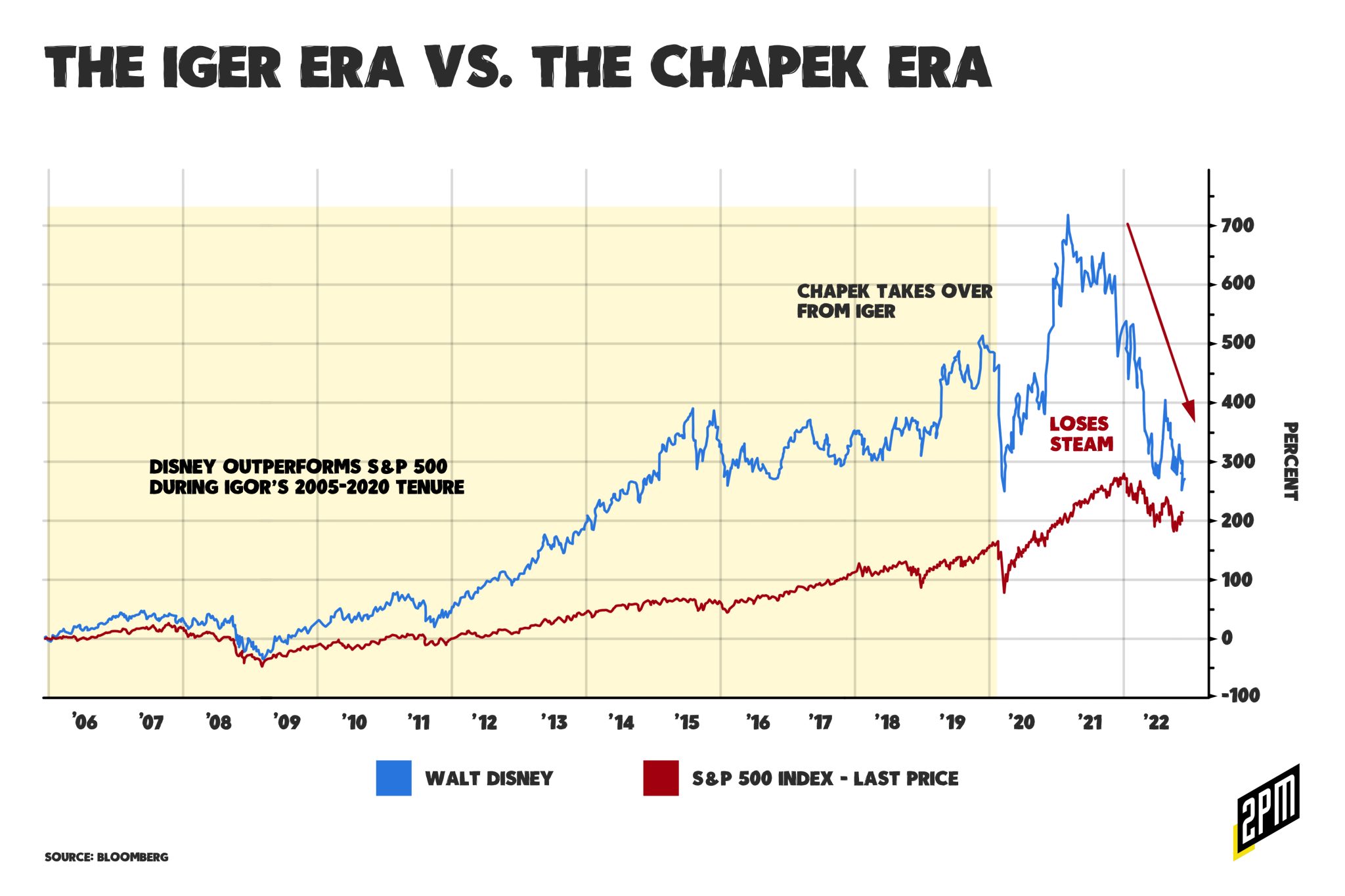
Два года под руководством Чапека прошли для Disney неспокойно, и частично это заслуга самого Чапека. Акции компании упали на 40 % в этом году, а в последнем квартале она сообщила, что Disney+ потеряла 1,5 миллиарда долларов, несмотря на рост числа цифровых подписчиков. Но как следовать за руководством, которое за 15 лет купило Pixar, Marvel и Stars Wars? Ряд ранних шагов Чапека был не очень хорошо воспринят индустрией и потребителями. Quartz подводит итог серии осечек:

Было ясно, что за Игером будет трудно угнаться, но Чапек совершал свои собственные промахи в руководстве, включая неудачную реорганизацию, некрасивую публичную ссору из-за вознаграждения звезды "Черной вдовы" Скарлетт Йоханссон за потоковое вещание и неудачную реакцию на противоречивый законопроект Флориды "Не говори "гей", который ограничивал преподавание в классах по вопросам гендерной идентичности и сексуальной ориентации. (Игер не стал прямо называть его в последнем случае, но сказал, что это вопрос "правильно или неправильно" и "вы должны занять свою позицию").

Под руководством Чапека компанию Disney часто неправильно характеризовали, используя прилагательное "взвинченный". Эта характеристика использовалась для каждого решения, касающегося контента и парковой стратегии. Чапеку удавалось разозлить обе основные политические идеологии своим действием или бездействием. Для сравнения, Игеру было удобнее вести политические марионеточные войны, будучи прямым и решительным. Variety поясняет:

Нежелание Чапека вступать в полемику контрастирует с его предшественником Бобом Айгером, который 24 февраля в своем твиттере высказался против законопроекта. Говорят, что Чапек в целом менее охотно, чем Айгер, принимает политические решения. Но он столкнулся с климатом, в котором сотрудники стали более смелыми, чтобы требовать действий от своих боссов.

В конечном итоге именно увольнение Райса в наибольшей степени способствовало увольнению самого Чапека. Дело было не только в проблемах Disney с парковым подразделением, низких зрительских рейтингах или экономике потокового вещания. По данным ScreenRant:

Однако в конечном итоге судьбу Чапека, скорее всего, решил неутешительный финансовый отчет в начале ноября 2022 года. Основная проблема заключается в потоковом вещании; хотя Disney+ превзошел ожидания по подписке - по иронии судьбы, этому способствовала пандемия, - он все еще приносит убытки.

Ответом Чапека на его проблемы со стримингом и провальные экономические показатели Disney+ стало увольнение хорошо любимого Питера Райса и замена его Даной Уолден. Чапек не назвал особых причин, согласно описанию инцидента в Variety, но было высказано мнение, что Чапек "не думал, что Райс полностью поддерживает его". Я прочитал это как "Питер Райс может стать генеральным директором после меня, что потенциально сократит срок моего пребывания на посту".

У Игера есть два года, чтобы вернуть компанию на прежний путь и найти другого преемника. Решения Игера и их обоснование будут окончательными и непоколебимыми, что, несомненно, изменит представление о компании Disney и ее политике.

Документальный фильм Disney был достаточно правдоподобным, чтобы сбить с толку некоторых случайных зрителей Атланты. В повествовании использовались архивные клипы, ностальгические детали и реальные события. История казалась одновременно надуманной и правдоподобной. Но на этой неделе в выходные без предупреждения уволили генерального директора, которому только что продлили контракт на три года. Это тоже было надуманно и правдоподобно.

Одним из первых изменений стало увольнение с поста председателя медиа- и развлекательной группы Disney Карима Дэниела, старшего лейтенанта Чапека. К чести Дэниела, он помог потоковым сервисам вырасти до 235 миллионов активных пользователей. Это решение наделяет большей властью создателей контента и меньшей - руководителей потоковых сервисов, которые распространяют их работу.

В сентябрьском интервью Дэниелу он объяснил:

И вот вы переноситесь в новую организацию, которой в следующем месяце исполнится два года... В ней работают невероятно талантливые команды, создающие контент, который развлекает людей по всему миру. Мне кажется, что я немного понимаю, что это такое, проведя время в творческой организации, не имеющей высшей власти, где я знаю, что сотрудничество абсолютно необходимо. Вы не можете управлять бизнесом, не имея истинной благодарности и связи с творческой группой.

Подразделение DTC компании Disney (в которое входят Hulu и ESPN+) потеряло 1,5 миллиарда долларов в 3 квартале 2022 года. В 3 квартале 2021 года эта цифра составляла 630 миллионов долларов. Стратегия дистрибуции Дэниела была очевидным недостатком. В течение 24 часов Игер продемонстрировал свою признательность и связь с творческой группой. И в процессе он показал, что потоковое вещание больше не может быть святым Граалем для Disney. Четыре сезона "Атланты" на Hulu закончились в нужное время, и Рид Хастингс, возможно, в конце концов, станет счастливее. Возможно, Disney+ будет меньше беспокоить Netflix.

Автор Веб Смит | Под редакцией Хилари Милнс с иллюстрациями Алекса Реми и Кристины Уильямс

Memo: Stockholm FTX Banco

This past weekend in Sao Paulo, the Grand Prix’s top drivers had a sudden change of plan. George Russell and Lewis Hamilton’s Formula One racers were without FTX branding, within hours of the bank run on Samuel Bankman-Fried’s cornerstone of the cryptocurrency exchange industry. Mercedes AMG reacted in kind.

The Bitcoin currency has seen a 77% decline from its trading peak in November 2021. The dot com bubble was a 76% decline from its peak in March 2000, according to a study administered by Bank of America. The only two steeper declines on record were the 83% decline in the stocks of US homebuilders between 2005-2008 and the preceding months of the Great Depression. A recent report by Fortune explains:

The economic events of 100 years ago also share similarities with today. Following the first world war, the U.S. government was spending more than it was earning back in tax revenue, and high inflation ensued. American industrial power, though, created a flood of jobs as the country emerged as a major international player.

According to an NBC poll in May 2022, one in five Americans have invested in cryptocurrency. Nearly half of men between the ages of 18 and 49 have traded cryptocurrencies and around 40% of African Americans polled as traders of the digital currencies. These are staggering figures that may help to explain why the failure of the second largest crypto exchange has shaken many users and enthusiasts. But there was a striking paragraph just a few beneath this demographic rundown:

But without a major legislative effort, the crypto market still looks like the “Wild West,” according to Securities and Exchange Commission Chair Gary Gensler. That may be why only 19% of those polled by NBC News said they view crypto positively and 25% indicated they view it in a negative light.

A quarter of those polled indicated a negative view of “crypto.” This report, just six months removed, will be remembered as one of the many prescient ones. In a number of ways, the “crypto collapse” mirrors the first of many bank runs: the Stockholms Banco run of 1660. Within three years of the bank’s founding, the first to ever issue banknotes, its illiquidity issue became the first of many examples throughout history. A greater irony is that just 1,213 kilometers away from the Stockholms Banco, the first speculative bubble in history came and went: Tulipomania. Both events occurred within 25 years.

Written just 30 days prior to the bank run on FTX, a found essay by Bank Underground highlights the fact of the matter. That there remains a number of old problems for the new assets:

New assets don’t always mean new problems or new solutions. Ironically, despite being promoted as alternatives to traditional finance, the crypto ecosystem faces many of the same problems. Some challenges relate to the underlying currencies – ideally you want a currency with stable value whose quantity can be changed to supply liquidity. But unbacked cryptocurrencies like bitcoin or ethereum which are the cornerstones of the system have the opposite properties: unstable value and a quantity that can’t be easily changed.

FTX has contrasts and similarities to the forefathers of modern banking. Due to the SEC’s mismanagement of regulatory clarity, it was not uncommon for exchanges to move offshore (FTX is currently based in the Bahamas). Aaron Klein, a senior fellow in economic studies at the Brookings Institution:

The US regulatory system is not well-designed to handle crypto. But part of the appeal of crypto was that it’s not well-regulated and that it disrupts the existing financial system.

The implosion of FTX means a financial reckoning is certain; there are lessons to gather from the past. Risks can come with reward, but to ignore history in pursuit of high-stakes gambling is historically ill-fated. Web3 and crypto have largely been distractions from the real-world infrastructure that is worth the same investment.

The fallout has been swift. Many FTX holders are still in the lurch, unsure if they’ll regain any of their investments following the company’s bankruptcy filing and the stepping down of CEO Sam Bankman-Fried, once considered a genius entrepreneur, unchecked by the common oversights typical of companies that size. Bankman-Fried was once worth $24 billion. In the course of the week, his former company began bankruptcy consideration and awaited potential investigation by the US Department of Justice. FTX’s undoing has been explained thoroughly elsewhere but here is the debrief. Last week, competitor Binance’s CEO Changpeng Zhao announced that his company was withdrawing its FTT holdings from FTX based on the belief that the company may not be stable. The bank run ensued as spooked customers rushed to cash out. FTX didn’t have the funds for the payouts – about $8 billion were owed. Binance nearly stepped in to buy FTX and bail it out, but further review of the company and its business practices led to it pulling out of the deal.

People who had money tied up in FTX’s exchange, or held its coin FTT, are now at risk of losing their investments and savings. WIRED magazine detailed the crises that people are now facing, including a person whose $25,000 nest egg may never be reimbursed and one who was locked out of their account for 24 hours, unable to cash out funds before it was too late. Why the black hole in the balance sheet? FTX shifted customer deposits around into external investment vehicles – against the terms of services of the FTX platform. From WIRED:

Aaron Kaplan, a securities attorney and co-CEO of trading platform Prometheum, says that although the final outcome for FTX and its customers is not yet crystal clear, there is precedent in scenarios such as this for people never to recover their funds. Unfortunately, those caught up in the collapse are left with little in the way of legal recourse, says Kaplan. “The facts will come out in time. What is clear at this present moment is that FTX was taking advantage of a gray area at the heart of which was the expectation of profit, irrespective of the best interest of customers.”

The founder and CEO of Binance (FTX’s chief competitor), Zhao recently tweeted a reflection meant to serve as, both, a rebuke and an assurance.

Two big lessons:

1: Never use a token you created as collateral.

2: Don’t borrow if you run a crypto business. Don’t use capital “efficiently”. Have a large reserve.

FTX’s ripple effect means that the entire crypto community is being viewed through a skeptical lens. Bankman-Fried’s firm had links to multiple crypto exchanges, including BlockFi, which had been bailed out by FTX earlier this year. Also, Solana sold 50 million units of its currency to FTX.

Many have been wiped out and the way forward is unknown. Crypto is largely unregulated, and investments were essentially bids on digital-first infrastructure and the idea that it could replace more traditional (and to some archaic) ways of building and transferring wealth. At the same time, the parallels between this crypto crash and the 2008 crash are strikingly similar. Bank Underground drew the points clearly:

But crypto lenders such as Celsius allowed collateral to be rehypothecated – ie the lender could then use the collateral itself and re-pledge that asset to another lender. The collateral then gets passed along with multiple claims on it. If any party in the chain gets into trouble, there can be a domino effect. Rehypothecation by shadow banks and others was identified as a problem after the 2008 crisis by Singh and Aitken and others.

Other key tentpoles of Web3 and the crypto space have broken down. Meta’s bet on the metaverse is not materializing. Layoffs are expected to continue across the entirety of the tech sector. And it’s hard to overemphasize how much money and trust has already been lost. Consumer trust in crypto has been fractured since the products’ year-long collapse sustained and this will only make it far worse.

If it wasn’t for the 2008 economic crash, it’s like that Bernard Madoff’s ponzi scheme would have survived much longer. If it wasn’t for the 2022 crypto crash, FTX would be in good standing. Has crypto been a distraction, all along? Existing infrastructure, real world problems, and improvements are all in need of investment, sweat equity, and proper management. Web3 will be there waiting when we’re ready for it. But for now, we’re not – and there’s historical precedent that suggests that stability is far more valuable the speculation.

Автор Веб Смит | Под редакцией Хилари Милнс с иллюстрациями Алекса Реми и Кристины Уильямс