Memo: Post-Pandemic Deceleration

We are choosing real world experiences over virtual and digital ones. It says less about the end of the pandemic and more about human tendency and the role that technology plays in the hierarchy of things. For a long while, I believed that digital worlds, digital monies, and digital practices were evolutions of their physical counterparts. I don’t anymore, and neither do many others.

I do not shop for groceries through Amazon Prime because I believe that it’s a better, more evolved version of walking through a Whole Foods, Kroger, or Albertsons. I shop digitally to free myself up to be at my daughters’ practices, on a walk with my in-laws, or at a sporting event with neighbors. It frees me to do other, more important things in person. The operative words are “in person.”

Or here’s another example. I recently tried to explain a recent trip to an impoverished country to a friend who’d never been. I couldn’t explain the senses that I felt when I was there, nor could I properly relay the tension that I felt between fear of danger and gratitude that I had the opportunity to be there in the first place. A metaverse-like experience will walk you through an urban center but will it replicate its balance between chaos and potential? No.

The metaverse will never replace the real world as our primary means of communication, trade, and community. The same can be said of eCommerce and its role in retail: it won’t replace conventional shopping. I believe that we have a need for the types of interactions found within stores. I believe that we need offices. I believe that fiat currencies are at the core of our international bonds with another. But if you asked me two years ago, my answer wouldn’t have been nearly as direct (or seemingly skeptical).
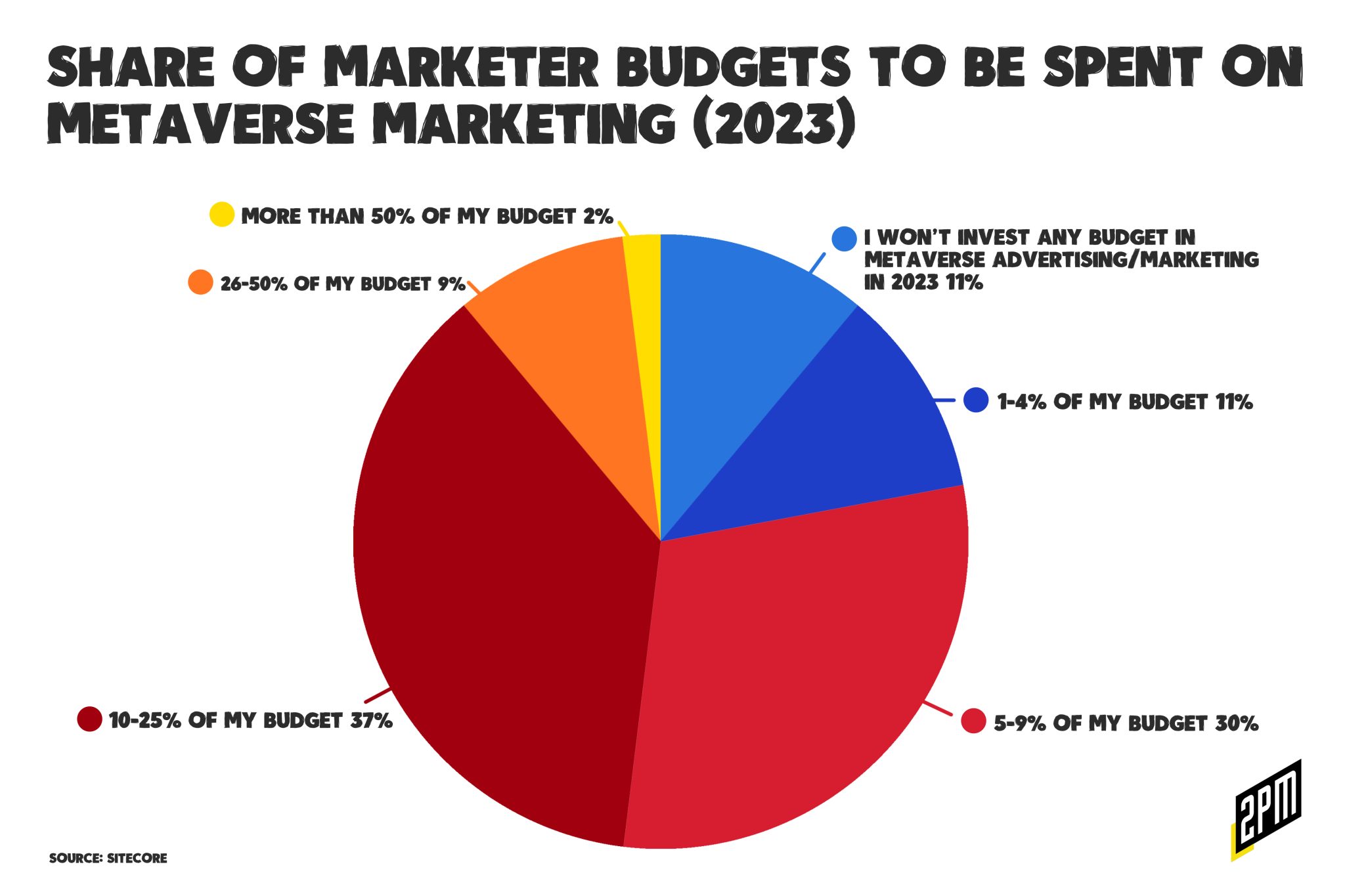
I’ve been working to make sense of today’s retail and media ecosystems, where they intersect, and how human nature has contributed to the expansion and relative contraction in interest. The two worlds seem tethered in ways; at the core of both is Meta.

Between 2020 and and the first nine months of 2022, the company grew its workforce by hiring nearly 42,000, topping 87,000 workers. No tech company has laid off more than Meta over the previous two or three months. Fortune Magazine had an interesting take on this:

Three years into the pandemic, life is so close to back to normal that Ticketmaster is failing to process the wild demand for Taylor Swift tickets and e-commerce shopping has come crashing back to earth as people leave their homes to return to brick-and-mortar stores.

But I believe that it’s much deeper than pre- and post-pandemic. I believe that we learned that just because digital lives, currencies, and commerce are better doesn’t mean that they are better. How do you draw a line in the sand when the sand is moving beneath it? Think about that question for a moment. The definitions of everything that we do, are, say, and believe are changing by the year. But for now, the line in the sand separates the mostly conventional (better) from the passionately digital (better). Zuckerberg said it best in a recent staff email:

Many people predicted this would be a permanent acceleration that would continue even after the pandemic ended. I did, too, so I made the decision to significantly increase our investments. Unfortunately, this did not play out the way I expected.

Zuckerberg and Lutke and many other of the world’s finest CEOs believed that their technologies were an acceleration away from convention. What this period has proven is that technology must reinforce convention rather than leave it behind. Air travel accelerated time so that we could be with loved ones faster. Modern payments technologies accelerated transaction so that we could do more with the time that we saved. Shopify Chief Executive Officer Tobi Lutke wrote in a letter to employees:

It’s now clear that bet didn’t pay off. What we see now is the mix reverting to roughly where pre-Covid data would have suggested it should be at this point. Still growing steadily, but it wasn’t a meaningful five-year leap ahead. Ultimately, placing this bet was my call to make, and I got this wrong.

Two letters from two titans of industry are saying much the same. Both made bets on data that was incomplete; a black swan-level event will do that. Data-reliant and detail oriented, both believed that the data showed a future anxious to rid itself of the past. Many like myself agreed. But I also believed that the technology was better than the convention that it would replace. No, it was just better.

In this way, I think about the scene from The Matrix, a film that alludes to life within a fully-digital existence. Before Neo unplugged, he was within a world that was better that the conventional one that existed. The air, the aroma, the architecture, the safety, the careers, and the clothing were all better. But then he chose to wake up only to realize that he preferred conventional reality over the permanent acceleration into the future. In no way was life post-wake up better than his Matrix experience. But it was better.

I do believe that eventually the metaverse will be omnipresent. I agree that there’s a chance that cryptocurrencies and Web3 technologies will be as relied upon as the fiat and organizational structures that exist today. And, lastly, eCommerce will become as critical to daily life as picking up one’s mail from its box. But one of two things will happen to make these things so.

The first: preferences of the human relational experience will change so drastically, that those technologies are better and better than the conventional standards that we prefer today. And the second: leaders of the digital revolutions that defined the pandemic will set aside strategies of replacement. Rather, they will build worlds and systems that focus on making existing infrastructure and humanity more livable. Technology should enhance, not replace.

All of the Fortune 500’s might seems focused on accelerating us into a techno-centric future that quickly replaces the norms of the present. I am not sure it’s ever worked that way. For instance: trains, cars, and planes traverse the country in tandem. We have fewer trains, sure. But those trains maintain a vital role. Physical dollars, debit cards, and Apple Pay are used in the same lines of convenient stores. Each has an audience; each has role in the community of exchange. We should build atop of the systems that got us this far, not market these technologies as extinction-level asteroids. The metaverse should enhance our lives, not replace it. And eCommerce should make in-person shopping efficient and attractive; or it should provide us more time to do what we love. It’s a means to an end, not an end. The technologies that defined the pandemic should be great enough to improve the rest of our lives, not upend the whole of it.

I think that this philosophy will define the next decade of technological adoption.

By Web Smith | Edited by Hilary Milnes with art by Alex Remy and Christina Williams
Memo: Cyber Five

More than a quantitative measure of retail health, this year’s span of five days – beginning on Thanksgiving and ending on Cyber Monday – may serve as a judge of the entire economy. If text messages like these are any indication, our economy is coming out of its hole:

Positive news: we absolutely, unequivocally CRUSHED BFCM week.

Black Friday fought the good fight against inflation and cost of living hikes, this year. But there’s more to this weekend’s holiday shopping story than that day. Our Blackest Friday report began with a Jeff Bezos quote: “Don’t buy a fridge, hold on to your money.” So to spend or not to spend? This was the question. The answer was a resounding ‘yes’; consumers spent despite the economic forces at play. First, the top line numbers.

  • According to Adobe, online sales for Black Friday reached a record $9.12 billion, a 2.3% year-over-year increase.
  • Adobe anticipated that weekend online sales on the Saturday and Sunday on Thanksgiving weekend would hit $9 billion on their own, while Cyber Monday sales would hit $11.2-11.7 billion, versus $10.7 billion last year.
  • This year, mobile shopping hit a new record, accounting for 48% of online sales, up from 44% last year. Buy now, pay later schemes also had a big year – a sign of the times.
  • BNPL orders increased 78% during the holiday week (November 19-25) compared to the week prior, while BNPL revenue increased 81% in the same time frame.
  • Exercise equipment, toys, smart home devices, audio equipment, games and gaming devices, Macbooks and Dyson products were all top sellers. Apparel, sporting goods and TVs all saw peak discounts over the weekend.

In all, Adobe data indicates 2022’s “Cyber Five” is on track to generate a total of $34.8 billion in online sales, a 2.8% increase over 2021’s data and a drop off from the projected 7% growth that analysts predicted. A few things are happening at once.

In the past several years, retailers successfully trained customers to shop earlier and earlier: Cyber 5 is more like October through December. This allowed for a steadier stream of high sales volume days – though none are expected to top Cyber Monday. The extension of the sales holiday also places less strain on logistics and supply chain efforts by spreading sales volume over 60-70 days rather than 6-7. As Adobe pointed out, savvy shoppers are waiting until December 1 to buy appliances, for instance, when discounts are expected to peak.

At the same time, inflation is the story of this season. A 2.8% increase is insignificant compared to the 7% projection. The 2.8% increase is less impressive when you consider the higher consumer pricing index (CPI). Discounts for the holiday weekend were also not as extreme, hinting that retailers are waiting to see how much is necessary in terms of markdowns before customers bite. As Axios calls it, it’s a “game of chicken” to see who gives in first: the customers making purchases vs. the retailers setting the prices. Last year, customers were scrambling to buy early to avoid everything selling out as supply chain backups gripped the season. USA Today reported on this year’s consumers bargain hunting before a different backdrop:

Due to elevated prices for food, rent, gasoline and other essentials, many people were being more selective, reluctant to spend unless there was a big sale. Some were dipping more into savings, turning to “buy now, pay later” services that allow payment in installments, or running up their credit cards at a time when the Federal Reserve is hiking rates to cool the U.S. economy.

The Two Winners: BNPL and Physical Stores

One industry segment that is benefitting from the current economic shortfall are the “buy now, pay later” family of companies. These platforms removed one more barrier out of the way of cash-sensitive consumers, allowing them to pay for products over the course of four or more payments – minimizing up front costs. Holiday seasons are often mortgaged during times of economic distress.

In a US survey, 60% of people were found to be more likely to use BNPL because of inflation, and 53% were using BNPL out of necessity. Forty-five percent said they were were most likely to use BNPL when their finances are tight. That means that Klarna’s 2022 troubles aren’t to be blamed on a decline in interest on BNPL. But rather, a more tenuous financial outlook makes people more reliant on services like BNPL. For many, it’s a way to make purchases now without taking on credit card debt. It’s a dangerously unregulated substitute for traditional debt. CNBC recently explained how Klarna’s rebound may be tied to increase usage:

The Stockholm-based startup saw 85% erased from its market value in a so-called “down round” earlier this year, taking the company’s valuation down from $46 billion to $6.7 billion, as investor sentiment surrounding tech shifted over fears of a higher interest rate environment.

This Cyber Five’s winner? The physical store. This year: Walmart, Target and Kohl’s all overtook Amazon in terms of online Black Friday discount searches according to data from Captify. Walmart searches surged 386%, followed by Target, then Kohl’s, then Amazon. That’s telling for a few reasons. People seem to associate Amazon with the best deals less than they used to. And more people are likely to search for deals across stores and online, knowing they can strike both at any of the big-box retailers before Amazon. According to MasterCard SpendingPulse data, in store sales increased 12% year over year. RetailNext, tracking foot traffic to stores, found that traffic rose 7% this year on Black Friday compared to 2021. Here was the takeaway from Placer.ai:

Shopping malls saw far and above average visits. Indoor malls saw visits up 261% compared to the daily average for Q1-Q3 2022, outlet malls saw visits up almost 366%, and open-air lifestyle centers saw visits up around 151%. Compared to the first three weeks of November 2022, visits were up about 277% (indoor), 395% (outlet), and almost 160% (open-air lifestyle centers), respectively, at those mall types.

Going into Black Friday, we forecasted some of these key elements, to include muted growth and the return to physical stores:

​​(1) The recessionary effects are likely to cause muted growth in eCommerce performance in a YoY basis. Searching for bargains, more customers will be pursuing in-store purchases where deals may be greater. (2) Try to conserve your money this season to prepare for any additional market downturns. It’s likely that large purchases may be fewer and farther between in 2022 YoY basis. (3) eCommerce marketplaces will do better than traditional DTC brands’ online stores because utility purchases are likely to rise vs. luxury and other purchases that signal high-discretionary income.

But about that traditional DTC brand thought, it wasn’t altogether accurate. Shopify noted: “More than 52 million consumers globally purchased from brands powered by Shopify this year, an 18% increase from 2021.” Shopify reported promising Black Friday sales figures for its merchants; Shopify merchants brought in $1.52 million a minute on Thanksgiving and $3.5 million per minute at its Black Friday peak, setting a record with $3.36 billion and $7.5 billion between Friday and Monday. This was a 19% increase in sales and a 21% increase on a constant currency basis. But this is more a reflection of how Shopify has grown as an enterprise retail provider than as a snapshot of the greater whole.

Cyber Monday Data (via Adobe)

According to Adobe’s data, consumers rang in $11.3 billion on Cyber Monday, seeing the industry to a 5.8% YoY improvement and a whopping $12.8 million earned per minute. Vivek Pandya, lead analyst, Adobe Digital Insights:

With oversupply and a softening consumer spending environment, retailers made the right call this season to drive demand through heavy discounting. It spurred online spending to levels that were higher than expected, and reinforced e-commerce as a major channel to drive volume and capture consumer interest.

In all, the Cyber Five earned $35.27 billion, a 4% increase over 2021’s eCommerce-driven holiday season. This number is even bigger when you consider the entirety of the shopping season: November 1 – November 28 rang in $107.7 billion with $210 billion expected through December 31. How did this happen? Adobe Analytics noted that discounting hit records highs in 2022 to offset the rising costs of living. And BNPL services like Affirm saw volume rise 85% vs. the prior week, increasing revenue 88% over that time period. One surprising line from the analytics data provided by Adobe:

Strong consumer spending across Cyber Week was driven by net-new demand, and not just higher prices.

Consumers came out for the week and chose the glee over doom, there will be study after study written about this holiday season. It wasn’t all black and white. With the holiday shopping season at its peak, the statistics have been unpredictable at best but not altogether surprising. Retail is irrational and retailers are hoping that it stays that way over the closing four weeks of the holiday shopping season. Jeff Bezos went unheard, consumers chose the 30% off refrigerator over holding on to their money. Let’s just hope that the good news extends and the economy continues its slow recovery.

By Web Smith | Edited by Hilary Milnes with art by Alex Remy and Christina Williams

Memo: Disney and That One Atlanta Episode

One is known as an entertainment savant of sorts: he is a writer, rapper, actor, director, comedian, film and television producer. Donald Glover’s show “Atlanta” can be watched on Hulu, a streaming property owned by the Walt Disney Company.

One is known for his successful replacement of Michael Eisner and his ensuing acquisition of Pixar films, returning the Walt Disney Corporation to its animation roots. Bob Iger also led negotiations to acquire Marvel Entertainment, and then three years later acquired LucasFilm. And six years after that, Disney purchased assets from Fox. But most importantly, Iger self-identifies as a centrist and has been appointed to positions by two of America’s most powerful political families: The Clintons and The Trumps. According to his Wikipedia page, Iger considered a 2020 election run but later chose to discard his political ambitions. Netflix Founder and CEO Reed Hastings nodded to both key attributes of the latter:

Ugh. I had been hoping Iger would run for President. He is Amazing.

Two days after the firing of Bob Chapek, Iger assumed his role as CEO (again).

Glover’s most fascinating episode of his final season of “Atlanta” featured an odd story about the hiring and firing of a Disney CEO amidst the backdrop of cultural and political change.

Chapek’s tenure as CEO was cut short, not for any other reason than Iger realized he was not going to be able to run for Governor of California or President of the United States. It is a dream deferred for Hastings, who now must match up against the industry’s most capable executive. While the narrative will likely hold that Chapek’s missteps cost him his seat, it’s more likely that Iger is just better at the job and is much better at managing the political pressures of the time we’re in.

It was Bob Chapek and Chairperson of Distribution Kareem Daniel who ultimately signed off on the Donald Glover-led “Atlanta” episode that featured a fictional documentary about an African-American man named Thomas “Tom” Washington. The show featured a faux-disclaimer at the show’s beginning, taking a subtle jab at Disney’s management. It was surreal. In the episode (S4E8) that I highly recommend that you watch, Washington was CEO of the Walt Disney Corporation leading up to the 1995 release of “The Goofy Movie,” a film that has long been viewed as Disney’s first film for black millennials. Vulture Magazine presented the best summary of the Atlanta episode’s premise:

As racial tensions rose in L.A. and across the country, Disney happened to lose its CEO due to ultimately fatal health complications. The executive board voted for Tom Washington — a man whose real name was Thompson Washington, not Thomas — thus installing a Black CEO due to a clerical error. Not wanting the optics of quickly hiring and firing a Black man, and being unable to sweep things under the rug because of Tom’s insistence that he is rightfully the CEO, Disney moved forward with the accidental decision.

In the faux-documentary, the first black CEO of Disney radically changed the organization’s creative process to promote stories of inclusivity. In this narrative, The Goofy Movie was a film about Black-American fatherhood, produced by a Black-American father. As CEO, Tom Washington turned the organization inside out to build a company that highlighted its black talent and black stories. Then, the Board of Directors unceremoniously saw him to the door and course-corrected by hiring someone more suited to lead the company in a centrist manner. The Goofy Movie hit theaters as a less-radical version of the vision Washington had for the film.

In a way, this feels so meta to write. The episode of Atlanta was a stroke of genius. And it may go down as somewhat prescient given the recent critiques of Disney mirrored the critiques foreshadowed by the episode of Atlanta. The three executives who likely signed off on the project were CEO Bob Chapek, Kareem Daniel, and Dana Walden, Disney’s current Chairman of Digital Content.

Walden was promoted into the role after Chapek’s unceremonious firing of Peter Rice. Like Atlanta’s episode on Disney’s executive management, the company seems to be adept in firing executives without warning. Variety wrote about Rice’s firing:

By all accounts, Rice didn’t see it coming — at all. He was blindsided as he learned of his fate in what was described by a source as a conversation with Disney CEO Bob Chapek that lasted less than 10 minutes. Chapek simply felt that Rice was not, in fact, Team Chapek, according to multiple sources close to the situation.

So, after one of the most surprising terminations in the entertainment industry, Chapek suffered the same fate just five months later. And Bob Iger is back at the helm at Disney after two years. Iger’s return is effective immediately, will last two years and comes “with a mandate from the Board to set the strategic direction for renewed growth and to work closely with the Board in developing a successor to lead the company at the completion of his term,” according to Disney’s press release. The board fired Chapek, who was handpicked by Iger to replace him, on Sunday. In a way, a Disney property (Atlanta can be seen on Hulu) foreshadowed its own corporate concerns and changes.

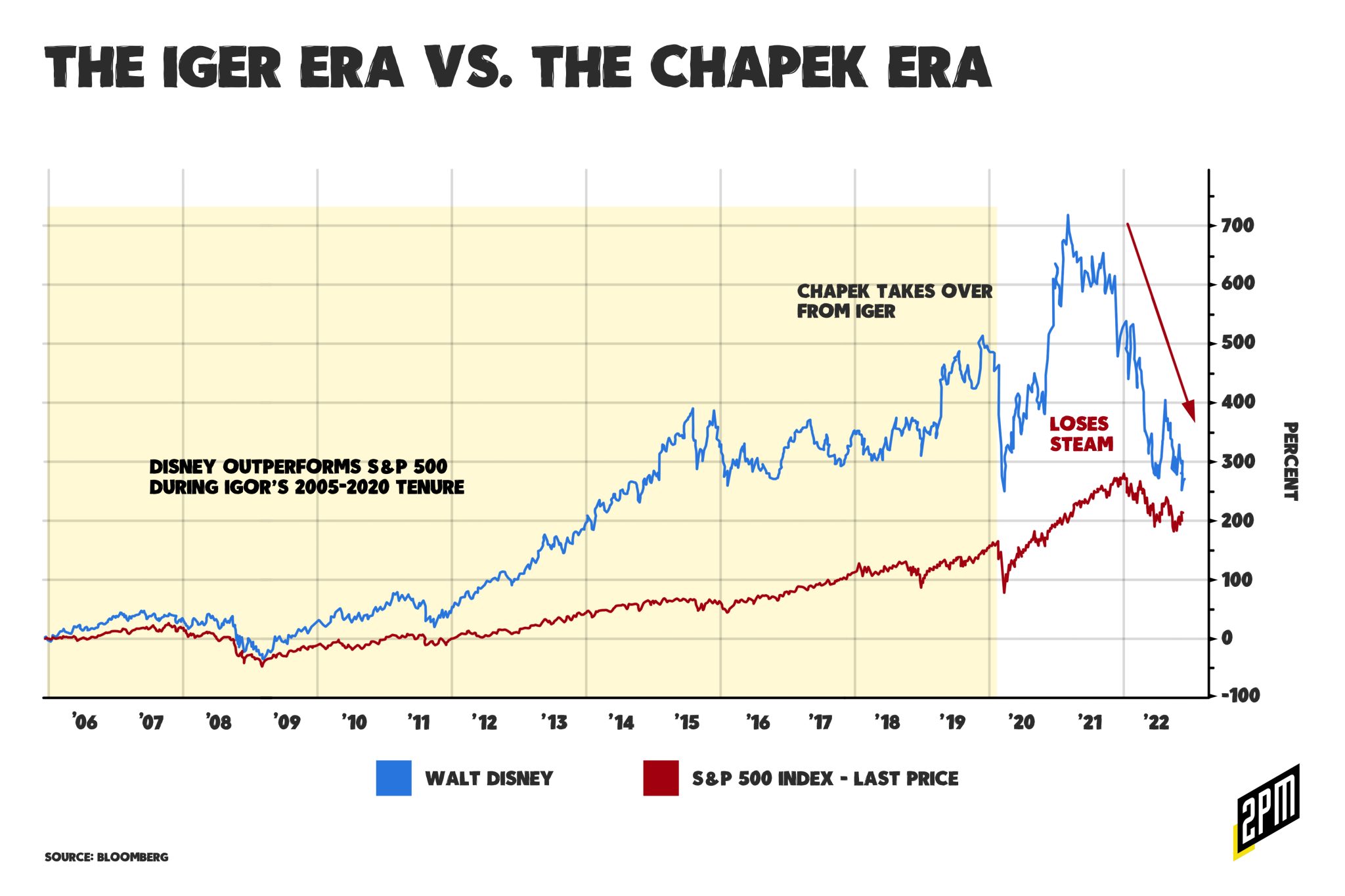
It’s been a turbulent two years for Disney under Chapek and some of it is Chapek’s own doing. The company’s shares have fallen 40% this year and it reported in the most recent quarter that Disney+ lost $1.5 billion despite growing its digital subscribers. But how do you follow the leadership that bought Pixar, Marvel and Stars Wars over 15 years? A series of Chapek’s early moves were not very well received by the industry or by customers. Quartz sums up a series of misfires:

It was a given that Iger would be a tough act to follow but Chapek made his own leadership blunders including a bungled reorganization, an ugly public spat over Black Widow star Scarlett Johansson’s streaming remuneration, and his botching his response to Florida’s controversial “Don’t Say Gay” bill, which restricted instruction on gender identity and sexual orientation in classrooms. (Iger did not explicitly call him out on the latter, but did say it’s a matter of “right or wrong” and “you have to take a stand.”)

Under Chapek’s leadership, Disney was often mischaracterized with that eye-roll of an adjective: “woke.” This characterization was used for every content decision and park strategy. Chapek managed to anger both major political ideologies by action or inaction. By comparison, Iger was more comfortable dealing in political proxy wars by being direct and decisive. Variety explained:

Chapek’s reluctance to wade into the controversy came in contrast with his predecessor, Bob Iger, who tweeted his opposition to the bill on Feb. 24. Chapek is said to be less willing than Iger to take political stands in general. But he is facing a climate in which employees have become more emboldened to demand action from their bosses.

Ultimately, it may be the firing of Rice that most contributed to Chapek’s own firing. It wasn’t just Disney’s struggles with its park division, poor viewership ratings, or the unit economics of its streaming product. According to ScreenRant:

In the end, though, Chapek’s fate was likely decided by a disappointing financial statement at the beginning of November 2022. The core problem lies with streaming; although Disney+ has exceeded expectations for subscriptions – ironically helped by the pandemic – it is still making a loss.

Chapek’s answer to his streaming concerns and Disney+’s failed unit economics was to fire the well-liked Peter Rice and to replace him with Dana Walden. Chapek didn’t give much reason, according to Variety’s recounting of the incident, but the opinion was that Chapek “didn’t think Rice was fully behind him.” I read this as “Peter Rice could be CEO after me, potentially shortening my tenure.”

Iger has two years to reset the company’s path and find another successor. Iger’s decisions and rationale for them will be definitive and unwavering – surely changing the perception of Disney and its politics.

The faux Disney documentary was larger than life and just believable enough to confuse some of Atlanta’s casual viewers. There were archival clips, nostalgic details, and real events that peppered the narrative. The story seemed both far-fetched and believable. But this week, a CEO who just received a three year extension was fired over a weekend with no notice. This was also far-fetched and believable.

One of the first changes made was Iger’s termination of Chapek’s top lieutenant Kareem Daniel, the Chairman of Disney’s Media and Entertainment Group. To Daniel’s credit, he helped streaming services grow to 235 million active users. The decision places more power with the content creators and less with the streaming service executives who distribute their work.

In a September interview with Daniel, he explained:

So you fast-forward to this new organization that is two years old next month … There’s incredibly talented content teams that are making things that are entertaining people all over the world. I feel like I have a bit of understanding of what that’s like having spent time in a creative organization without that ultimate authority, where I know that collaboration is absolutely critical. You can’t operate a business without having a true appreciation and connection with that creative group.

Disney’s DTC division (which includes Hulu and ESPN+) lost $1.5 billion in Q3 2022. In Q3 2021, that figure was $630 million. Daniel’s distribution strategy was an obvious flaw. Within 24 hours, Iger showed an appreciation and connection with the creative group. And in the process, he established that streaming may no longer be the holy grail for Disney. Atlanta’s four season run on Hulu ended at the right time and Reed Hastings may be happier after all. Disney+ may be less of a concern to Netflix.

By Web Smith | Edited by Hilary Milnes with art by Alex Remy and Christina Williams