No. 282: Instagram’s CPG Problem

Watermark_ByTailorBrands
Pictured: Cannuka, a CBD-based beauty brand from Ohio

Imagine launching a CPG brand. You spend your life savings on developing the product. You nail your branding and packaging. You setup distribution and hire a marketing agency to drive your message. Except, the strategy leans heavily on the types of media buys and influencer marketing typically employed by others in the DNVB / CPG space – and Facebook won’t cooperate.

CBD, short for cannabidiol, is growing in popularity among beauty and health consumers. It’s a THC-free substance known for treating everything from muscle relief to insomnia. In June, the first CBD-based drug won FDA approval for epilepsy treatment. And as it relates to this article, CBD has been popping up in high-end skincare products. But Facebook and Instagram’s rules have been uneven at best and it’s causing quite an issue in the CPG space. It falls under Facebook’s prohibited content category.

So when I met Michael Bumgarner, cofounder of Cannuka, I was surprised to hear that he was clashing with Facebook’s prohibited content policy. This, even though he sells a THC-free product that could be sold through sites like Popsugar. “They’ll acknowledge we have a 100 percent legal product, but they’re still not allowing us to post ads,” he said in a recent interview with Carrie Ghose of Business Journals.

While fairness is an altogether different issue, there is actually a valid reason why Facebook has positioned the platform to prohibit CBD-based products as a category: lack of regulation. While Facebook is perpetually targeted for how little they police the validity of news and gossip, they have maintained an opposition to unregulated products (supplements, etc).

CBD in consumer skin care is still a bit like the Wild West. A study published in the Journal of the American Medical Association found widespread mislabeling of CBD products sold online. “The problem is that there’s no study which indicates the proper dose,” says Bíró. Jacknin also cautions that “at this moment, CBD and marijuana products are totally unregulated and the ingredients in the jar don’t have to be the same as on the packaging because no one is checking.”

Karen Adelson | The Strategist 

However, it’s Cannuka’s quality among an industry of mislabeled products and shady sellers that have allowed them to achieve national traction and an early seed investment of $750,000. Despite a nation-wide, progressive push around cannabis’ 100% legal derivatives, Facebook (and Instagram) lag behind here. Will they reconsider how it influences the fates of CPG companies?

Copy-of-dirty-lemon-cbd-lifestyle-8-1278x720
Photo: Courtesy of Dirty Lemon

CPG drink brand “Dirty Lemon” has had quite the opposite experience despite similar product-dynamics and origins. With over 101,000 Instagram followers and droves of influencer backing, the drink brand has seen success by using Facebook and Instagram as an acquisition channel.

The potion—which is fit to tackle anxiety, diffuse stress, decrease muscle and joint pain, calm acne, and improve sleep quality—includes 20 milligrams of full-spectrum cannabidiol, sourced from luxury cannabis brand BEBOE; pure hemp oil; and a blend of pineapple, blood orange, and tangerine juices (cheekily called the “pineapple express blend”). Of course, the usual Dirty Lemon suspects are also included: filtered water, pure lemon juice, ocean minerals, Himalayan pink sea salt, Luo Han Guo, and L-theanine.

Kells McPhillips | Well and Good

While the brands have numerous similarities, its the approach to marketing that seems to be making the difference in the relationship between brand and Facebook. Priya Rao of Glossy reports:

In late June, Dirty Lemon first floated a new beverage drop on Instagram Stories and asked its community to guess the company’s latest ingredient in exchange for a free case of drinks. […] To date, [Dirty Lemon’s] +CBD launch in July has been the company’s strongest. Dirty Lemon sold out of its first production run, which is roughly 20,000 bottles, in two days, and a waitlist existed until last week. All Dirty Lemon beverages are sold in six-bottle cases and shipped to customers’ homes for $65.

Screen Shot 2018-08-13 at 5.01.55 PM

A whopping 66% of their referral traffic in July was through Yahoo.com’s paid channels, while, Facebook chatter generated nearly 8% of referral traffic via FB Messenger. While Dirty Lemon has avoided traditional Instagram advertising, their Instagram Stories have driven the most “direct” traffic: 27%. IG’s story platform seems to be where they most often blend organic promotion with influencer (paid) promotion. The ambiguity is serving them well. And the payoff could be worth billions.

The Data

Screen Shot 2018-08-13 at 2.23.47 PM
Estimated Growth of CBD products
Screen Shot 2018-08-13 at 1.57.39 PM
Estimated Revenue of CBD-based products (in millions)

The cannabis-driven CPG industry is an important one to track. Not only because of the estimated growth over the next four years but because it’s one of the few remaining product-based companies that seem to be navigating the last of Facebook’s archaic advertising rules. Facebook’s advertising system is lacking objectivity and consistency here. It’s accelerating some CPG startups while leaving others in its wake.

Read more of Issue 282 here.

By Web Smith | About 2PM
Member Brief: Lack of Trust

0_vFrMCAPeFsd3SmYc

Voice commerce was supposed to be all the rage. Consumers were supposed to quickly intrust Amazon with their retail data preferences. For Americans who don’t need to track their checking account balances, impulsive purchasing was to be one of Alexa’s primary uses cases. But the barrier to purchase has never been higher for voice commerce. Consumers are as hesitant as ever before. This member brief breaks down the numbers behind the lack of voice-driven revenue for Amazon and Google.

This member brief is designed exclusively for Executive Members, to make membership easy, you can click below and gain access to hundreds of reports, our DTC Power List, and other tools to help you make high level decisions.

Join Here

No. 281: “V” is For Vertical

facebook-ad
Warby Parker’s factory.

If you read any post on digitally vertical native brands, you’ll be hard pressed to find one single paragraph on manufacturing. In Andy Dunn’s now famous essay on the rise of vertical brands, he doesn’t mention the process of production one time. In CB Insights much-loved analysis of the nine biggest DTC success stories, you won’t find one mention of the production process.  This, despite the entire industry being driven by a global manufacturing resurgence.

Screen Shot 2018-08-06 at 1.45.48 PM
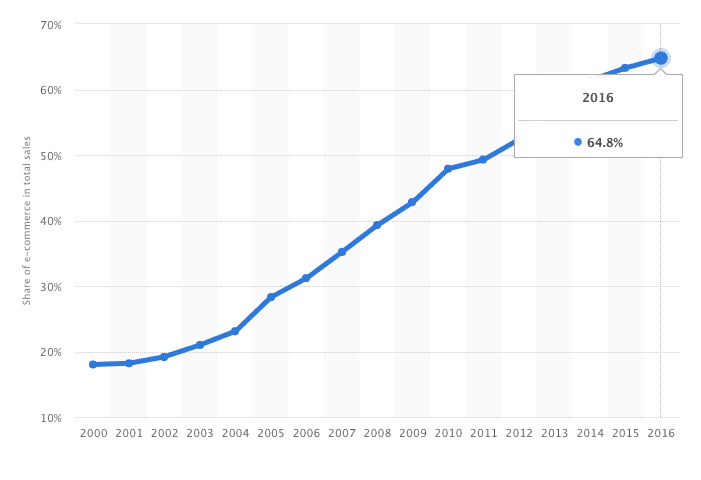
eCommerce as a % of total manufacturing shipments.

You listen hard. Stick to the basics, stick to the basics, stick to the basics, so says the antagonist from one of my favorite films of my youth. But while crusty old Coach Kilmer was a villain in the movie, he made a great point. And it’s a point that many in the DNVB space are overlooking. As the battle to rise above the noise has reached a fever pitch, brands are overlooking the most important part of the value proposition: a great product.

Face it, not everyone has a factory. This means that manufacturing partnerships must be priority number one for product-founders. A partner has to serve your best interest; they are there for the long haul. They make concessions and provide you with help during the product discovery and refinement phases.

Founder Collective on Twitter

Yes! The first Casper Mattress that sold was the 50,001st sold by founder Philip Krim, who spent a decade dropshipping beds previously. The best D2C founders are more focused on industry dynamics and acquisition channels than twee launch videos and clever branding. Follow suit! https://t.co/r9oDO74x6b

A DNVB is a manufacturer first, marketer second. Either you’re building the product within your own walls or you’re spending countless hours overseeing the process with a trusted partner. But for every ShinolaRogue Fitness, Warby Parker, Harry’s or East Fork that own their factories, there are countless DNVB’s (see: Fashion Nova) that excel by optimizing partnerships with manufacturers. The operative word is “partnership.” If you’re the owner of a vertical brand, you’ll need more than a vendor to navigate the obstacles of today. A manufacturing vendor sends you a spreadsheet with pricing, a manufacturing partner tests ideas and sends you samples. They are an extension of you. They are as invested in you as you are in them.

4
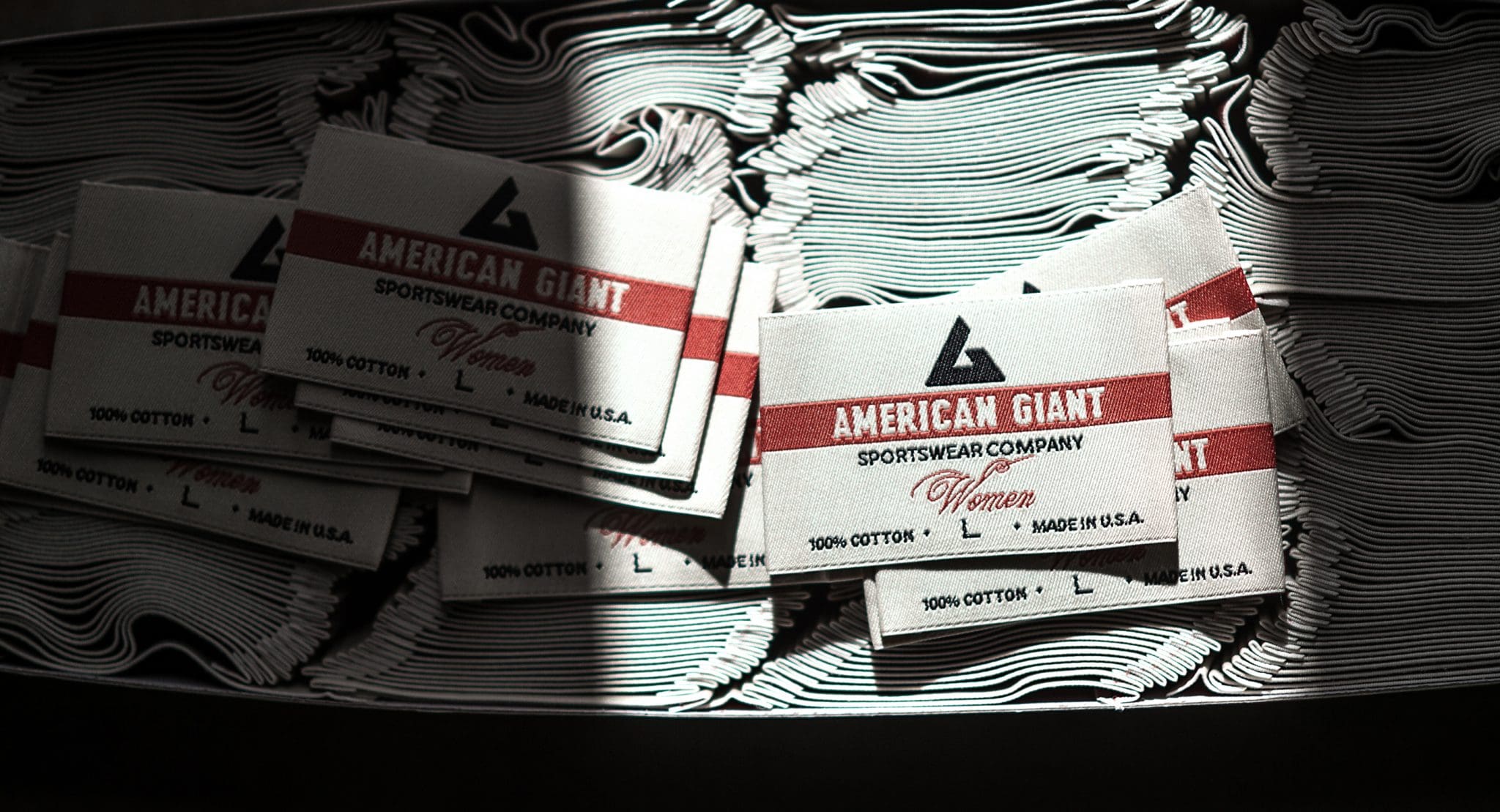
American Giant Partners with Eagle Sportswear

Early on in my DNVB journey, I met a savvy product-driven entrepreneur named Adam Blitzer at Manhattan’s Javits Center during the very early days of Mizzen + Main. Those were the years that we spent (a) not paying ourselves and (b) being brushed off at trade shows. Blitzer’s situation was a little different than ours. His booth was always directly across and nearly always bustling. As one of the few young companies who closely-managed their own production, we built a kinship for each others brands. His product offering was refined and constantly evolving. In short, he simplified a very difficult aspect of the business.

Setting aside trade agreements, tariffs, and other political issues, things are booming. More goods, coming from more sources, going to more places.

One other thing that’s increasing: pressure. Every year there is greater pressure on producers to show regulators and customers that their goods are sourced ethically and sustainably. It’s as if the whole world is now from Missouri, saying, “Show me” when it comes to the integrity of products they purchase. Ingredients now matter as much as, if not more, than the end product. To many modern consumers, ingredients are the end product, whether it’s the wheat going into your cereal, or the cotton going into your jeans.

Trends in Global Supply Chain Management

Before becoming the CEO of his latest company, he was the founder of a successful duffel bag direct-to-consumer brand called Blue Claw Co. There, he maneuvered through the arduous obstacles faced by brands that manage the push and pull of global politics on their young companies. It was through this experience that inspired him to build Softline Brand Partners as the solution for vertical brands who are focused on insulating themselves from the industry and market fluctuations (from materials to production to shipments). Softline has become the go-to for DNVBs seeking the type of partnerships that scale from zero to one. A network of domestic and foreign manufacturing plants, the company heralds its partnerships: from startups like Bespoke Post and Leesa Mattress to retail titans like Timex, Woolrich, and Allen Edmonds.

In a recent discussion with Blitzer, here’s what he had to say about the industry:

We’ve grown accustomed to operations like Gin Lane and Red Antler successfully building product brands from sample to market. We’re the company that works with you before you complete the brand development phase. For us, the ultimate partnership would be inline with those legendary marketing agencies. Let us build a better product pipeline and make their jobs easier.

DNVB founders are in a tough position. Not only are the tech (online retail) and acquisition (paid advertising and social) vital components to achieve growth; managing the supply chain may be the most important of the three core competencies. As global trade increases in volatility, brands that are not managing their own product manufacturing (in house or through partnership) will be at a distinct disadvantage.  A brand is not truly vertical unless the founders have a stake in production. The end consumer can observe the difference. There are brands who are thriving thanks to successful partnerships.


From Member Brief No. 27

Fashion Nova is not a traditional DNVB. The fashion brand began as a very small group of retail stores in Los Angeles’ B-level malls. The brand relaunched in 2013 as a digitally native brand and achieved rare air. Instagram, influencers, and consumers-turned-evangelists amassed one of the most effective top funnel efforts in brand-side eCommerce. Needless to say, they’ve built a blueprint for legacy businesses that are looking to reinvent themselves for the digital commerce age. 

Fashion Nova’s manufacturing turn-around is reportedly best-in-industry. CEO Richard Saghian can move from idea to sample to production in under 72 hours by working with close to 1,000 factories. As a result, the five-year-old website releases new designs faster than most fast fashion houses. This means that typical consumers can look like their celebrity and social media icons within a few days of their red carpet appearances. 


The founders who possess the sophistication to navigate trade and supply chain superiority will become the leaders of their product categories. While technical prowess and customer acquisition successes receive the majority of the press buzz, it’s supply chain excellence that empowers brands to maintain the agility and growth potential that characterized DNVBs from the start.

Read more of the issue here.

By Web Smith | Edited by Meghan Terwilliger |About 2PM

Editor’s note: If you would like an introduction to Softline Brand Partners, feel free to reach out.