
A 40-year old mall retailer and an investment vehicle for troubled companies are teaming up, but there’s more to the positive spin and shareholders’ support upon further look.

A 40-year old mall retailer and an investment vehicle for troubled companies are teaming up, but there’s more to the positive spin and shareholders’ support upon further look.
We are choosing real world experiences over virtual and digital ones. It says less about the end of the pandemic and more about human tendency and the role that technology plays in the hierarchy of things. For a long while, I believed that digital worlds, digital monies, and digital practices were evolutions of their physical counterparts. I don’t anymore, and neither do many others.
I do not shop for groceries through Amazon Prime because I believe that it’s a better, more evolved version of walking through a Whole Foods, Kroger, or Albertsons. I shop digitally to free myself up to be at my daughters’ practices, on a walk with my in-laws, or at a sporting event with neighbors. It frees me to do other, more important things in person. The operative words are “in person.”
Or here’s another example. I recently tried to explain a recent trip to an impoverished country to a friend who’d never been. I couldn’t explain the senses that I felt when I was there, nor could I properly relay the tension that I felt between fear of danger and gratitude that I had the opportunity to be there in the first place. A metaverse-like experience will walk you through an urban center but will it replicate its balance between chaos and potential? No.
The metaverse will never replace the real world as our primary means of communication, trade, and community. The same can be said of eCommerce and its role in retail: it won’t replace conventional shopping. I believe that we have a need for the types of interactions found within stores. I believe that we need offices. I believe that fiat currencies are at the core of our international bonds with another. But if you asked me two years ago, my answer wouldn’t have been nearly as direct (or seemingly skeptical).
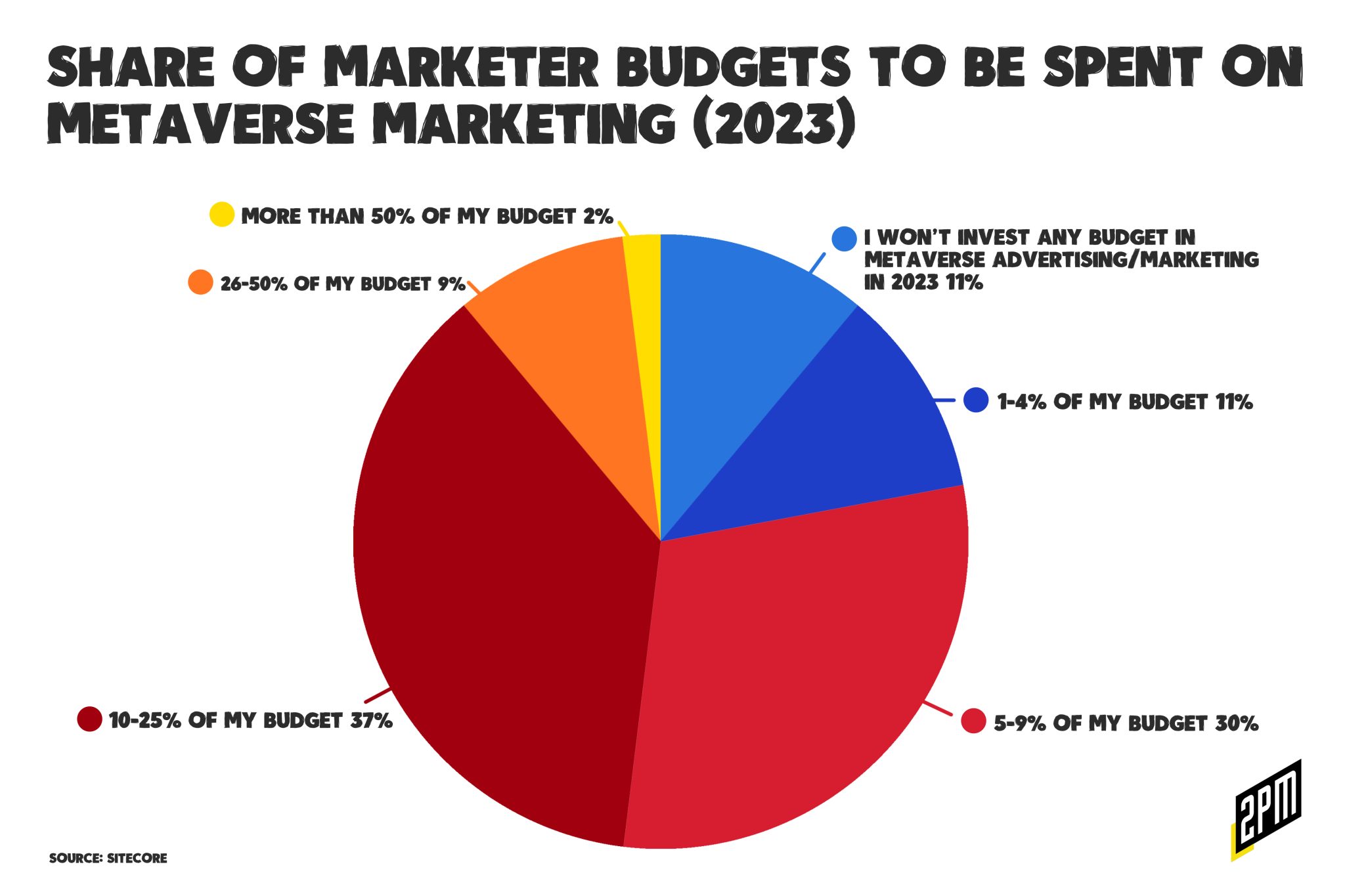
I’ve been working to make sense of today’s retail and media ecosystems, where they intersect, and how human nature has contributed to the expansion and relative contraction in interest. The two worlds seem tethered in ways; at the core of both is Meta.
Between 2020 and and the first nine months of 2022, the company grew its workforce by hiring nearly 42,000, topping 87,000 workers. No tech company has laid off more than Meta over the previous two or three months. Fortune Magazine had an interesting take on this:
Three years into the pandemic, life is so close to back to normal that Ticketmaster is failing to process the wild demand for Taylor Swift tickets and e-commerce shopping has come crashing back to earth as people leave their homes to return to brick-and-mortar stores.
But I believe that it’s much deeper than pre- and post-pandemic. I believe that we learned that just because digital lives, currencies, and commerce are better doesn’t mean that they are better. How do you draw a line in the sand when the sand is moving beneath it? Think about that question for a moment. The definitions of everything that we do, are, say, and believe are changing by the year. But for now, the line in the sand separates the mostly conventional (better) from the passionately digital (better). Zuckerberg said it best in a recent staff email:
Many people predicted this would be a permanent acceleration that would continue even after the pandemic ended. I did, too, so I made the decision to significantly increase our investments. Unfortunately, this did not play out the way I expected.
Zuckerberg and Lutke and many other of the world’s finest CEOs believed that their technologies were an acceleration away from convention. What this period has proven is that technology must reinforce convention rather than leave it behind. Air travel accelerated time so that we could be with loved ones faster. Modern payments technologies accelerated transaction so that we could do more with the time that we saved. Shopify Chief Executive Officer Tobi Lutke wrote in a letter to employees:
It’s now clear that bet didn’t pay off. What we see now is the mix reverting to roughly where pre-Covid data would have suggested it should be at this point. Still growing steadily, but it wasn’t a meaningful five-year leap ahead. Ultimately, placing this bet was my call to make, and I got this wrong.
Two letters from two titans of industry are saying much the same. Both made bets on data that was incomplete; a black swan-level event will do that. Data-reliant and detail oriented, both believed that the data showed a future anxious to rid itself of the past. Many like myself agreed. But I also believed that the technology was better than the convention that it would replace. No, it was just better.
In this way, I think about the scene from The Matrix, a film that alludes to life within a fully-digital existence. Before Neo unplugged, he was within a world that was better that the conventional one that existed. The air, the aroma, the architecture, the safety, the careers, and the clothing were all better. But then he chose to wake up only to realize that he preferred conventional reality over the permanent acceleration into the future. In no way was life post-wake up better than his Matrix experience. But it was better.
I do believe that eventually the metaverse will be omnipresent. I agree that there’s a chance that cryptocurrencies and Web3 technologies will be as relied upon as the fiat and organizational structures that exist today. And, lastly, eCommerce will become as critical to daily life as picking up one’s mail from its box. But one of two things will happen to make these things so.
The first: preferences of the human relational experience will change so drastically, that those technologies are better and better than the conventional standards that we prefer today. And the second: leaders of the digital revolutions that defined the pandemic will set aside strategies of replacement. Rather, they will build worlds and systems that focus on making existing infrastructure and humanity more livable. Technology should enhance, not replace.
All of the Fortune 500’s might seems focused on accelerating us into a techno-centric future that quickly replaces the norms of the present. I am not sure it’s ever worked that way. For instance: trains, cars, and planes traverse the country in tandem. We have fewer trains, sure. But those trains maintain a vital role. Physical dollars, debit cards, and Apple Pay are used in the same lines of convenient stores. Each has an audience; each has role in the community of exchange. We should build atop of the systems that got us this far, not market these technologies as extinction-level asteroids. The metaverse should enhance our lives, not replace it. And eCommerce should make in-person shopping efficient and attractive; or it should provide us more time to do what we love. It’s a means to an end, not an end. The technologies that defined the pandemic should be great enough to improve the rest of our lives, not upend the whole of it.
I think that this philosophy will define the next decade of technological adoption.
By Web Smith | Edited by Hilary Milnes with art by Alex Remy and Christina Williams

Subscription boxes are essentially products built on the principles of marketing arbitrage: you set a price, you buy a customer, and you count on the lifetime value of the customer exceeding the cost of that acquisition. Many brands that pursued this model raised loads of capital, front-loaded costs, and hoped to achieve profitability at scale (with superior retention). The revenue is predictable and marketing methods are often quantitative in nature. The problem is that very few companies can perfect unit economics, maintain fruitful marketing channels, and maintain the sense of utility required to keep a customer engaged.
Winc, Birchbox, and Blue Apron’s shrinking markets tell the story of what happens when a subscription model falls out of favor with consumers. Each company’s current concerns teach a different lesson: Winc’s DTC-only strategy diminished growth, Birchbox’s acquisition partners failed at every turn, and Blue Apron can’t seem to turn a profit. In each case, these subscription companies learned that the novelty of subscription wears off.
Winc went public last year after it raised $22 million in its initial offering. Founded in 2011, the company shipped bottles of wine to customers on a subscription renewal basis, personalizing recommendations, and saying it offered discounts by cutting out the middlemen. Winc’s subscription was $60 a month with the fee going toward total purchase cost. The wine subscription model, like many other online concepts, had a pandemic boom period, when consumers were looking to avoid trips to the store and spend more time at home (with a deserved glass of wine). It went public like many other internet retailers did, including: ThredUp, Poshmark, Allbirds and Warby Parker. But a year later, without ever turning a profit, the company’s stock price had plummeted to .30 / share and it said it would be filing for Chapter 11, Bloomberg reported.
Losses ended up eating Winc alive, just in time for people to return to liquor stores and bars. Just a week before the bankruptcy announcement, the company’s CMO spoke to PracticalEcommerce about the complexities of selling wine online. As he put it, the company’s competitive advantage was the fact that it was direct to consumer, buying grapes directly from growers and making and selling wines in house. But key to its downfall was the shipping and logistics of selling alcohol online. CMO Jai Dolwani:
Selling alcohol online is a difficult business. Shipping it is equally difficult owing to the weight and fragility. U.S. laws surrounding the sale of beverage alcohol date to the 1920s prohibition era. It’s a three-tier distribution system of complex rules and regulations.
This is a story we’ve seen before: Haus shut down operations earlier this year, citing the expenses and challenges around shipping bottles of alcohol. Alcohol deliveries had also presented challenges for Winc’s subscription model: two years ago, Dolwani said, the company switched from an automated delivery system – meaning customers only had to opt-in once to unlock repeat purchases, a win for companies who rely on forgetful users who forget to cancel – to a credits-based system that replenished automatically but required customers to build and ship boxes of wine.
But ironically enough, the data shows that DTC alcohol sales is on the upswing. The Spirits Business reports:
Looking to 2025, e-commerce is expected to represent 6% of all off-trade beverage alcohol volumes – compared with less than 2% in 2018. The study also found that online business models for alcohol sales are becoming more diverse, as consumers tend to shift between channels to purchase alcohol online.
Buying drinks online is now divided into the ‘traditional’ and ‘modern’, according to IWSR. The traditional model is website and delivery-driven with longer delivery times, and ‘modern’ is centered around app-led online platforms with on-demand features.
Like many online retailers before, Winc seems to have suffered from a case of too little too late. With the growth rate tipping in Winc’s favor, it remains to be seen whether the business could be viable under different management. Their business has faced headwinds relative to other categories of online retail like apparel, consumer packaged goods, electronics, or beauty. But segment maturity does not always equal profitability or even long-term viability.
Birchbox, the pioneering subscription beauty box company, began warning creditors of impending bankruptcy proceedings. The company had been on rough waters for several years, trying a number of evolutions before stumbling to this point. It has tried to become an online marketplace for beauty and skincare, expanding beyond traditional box subscription economics. It sold through Walgreens in an attempt to diversify its distribution model, as well. No luck there, either. In 2021, a healthcare startup FemTech bought the company and planned to reestablish it as a wellness offering. But that hasn’t panned out, and the company is no longer accepting new subscribers.
Like DTC alcohol, grocery subscriptions are a difficult sell (though HelloFresh seems to be humming along). Blue Apron, which has been figuring out how to keep customers and trying to innovate after leading the meal kit subscription boom, has looked to the reliance on the subscription model as the source of some of its troubles. From PYMNTS:
In what could be seen as the latest wrinkle in the subscription commerce sector, Blue Apron said Monday (Nov. 7) that meal kits that stick to a subscription-only model could be losing valuable customers, including those who make purchases from the brand every week.
The comments from the meal kit provider came on a call with analysts to discuss the company’s third quarter 2022 financial results that it has learned, through its partnerships with online marketplaces Walmart and Amazon, that non-subscription offerings can help the firm reach new, high-value customers.
What does all of this mean for the subscription model? At the height of the DTC retail boom, subscriptions became a popular way to quantify brand loyalty. Customers of these internet brands were more likely to want to become subscribers, which kept loyalty high and which translated to automatically replenished orders, helping to lower pressure on customer acquisition costs. Companies from MeUndies to TechStyle, which eventually faced a lawsuit over its misleading subscription acquisition practices, used the model to gain and retain customers. Box subscriptions also took off, with Blue Apron pioneering meal kits, Winc leading in wine subscriptions, and Birchbox inventing the beauty box model. But for many retailers without proper unit economics, the model appears to have run its course, proving that subscription is best as an added function and not the entire pitch.

Which is to say that they can still work; there is still interest in the market – especially for gifting. Butcherbox has a big and profitable business built on the back of a meat subscription. How has it pulled it off? Any CEO would be wise to ask and answer these questions when considering the subscription model:
On that last note, Winc revealed in its bankruptcy filing that its top creditor is Meta, owing the platform more than $700,000 in advertising spend. For each struggling business, you can see how the subscription proposition falls apart as you ask more questions. Blue Apron meals cost more than they would at the grocery store, and many people’s lives are too unpredictable to sign up for fresh food being constantly delivered at home. Winc is not selling anything that you can’t find in your local store. And Birchbox’s monthly boxes are never meant to be a permanent fixture in anyone’s life: they sell products to test, meaning samples added up and people ultimately shop elsewhere for their beauty needs, where options are more plentiful.
The industry is settling in and while this report highlighted three companies that are struggling, there are a number of subscription box retailers that continue to find success with their model. The proliferation of the model has illustrated that there has to be a value that surpasses the ease of shopping through eCommerce apps. The products have to be unique enough to outlast competition. And the products have to have the right price incentive or lack of availability elsewhere. If you can buy it from Prime and have it within the hour, the subscription value proposition may not be enough to convince a consumer that automation is superior to the convenience and variability of the instant needs industry.
By Web Smith | Edited by Hilary Milnes with Art by Alex Remy and Christina Williams