Memo: The Swift Effect on The NFL

Major League Soccer needed its “Netflix moment,” and Apple TV needed more streaming subscribers. The Lionel Messi experiment delivered the momentum needed to make the deal viable for both organizations. Today, you cannot use Apple TV without seeing Messi’s face. YouTubeTV was looking for similar momentum.

NFL bosses appear to have taken notes from Lionel Messi’s debut appearance playing for Inter Miami in Fort Lauderdale in July. Watching him from the stands were celebrities Kim Kardashian, Leonardo Di Caprio, Le Bron James and Victoria and David Beckham. (Daily Mail)

One of YouTube TV’s premiere products – NFL Sunday Ticket – could use a boost. Taylor Swift may be what provides it. For almost three decades, Sunday Ticket was exclusive to DirecTV, a satellite package that allowed football fans to watch games not shown on traditional cable. Last year – much like the MLS and Apple TV deal – the NFL sold the rights to the package to YouTube for $2 billion annually. For YouTube TV, it’s been a slow and steady six years of growth in relative anonymity. The YouTube product is well known, but as a catalyst for live sports? Not so much. Like the MLS bolstered Apple TV’s value proposition, the NFL is meant to bolster YouTube TV.

In the ever-evolving world of sports and entertainment, celebrities have often been used as marketing tools to attract new audiences and generate buzz around events. One such recent phenomenon that has caught the attention of the sports world is the budding relationship between pop sensation Taylor Swift and Kansas City Chiefs’ star tight end Travis Kelce. This union has sparked a fanfare of epic proportions and has ushered in a new narrative for the NFL. Swift’s loose affiliation Kelce garnered attention in a way that the NFL has desperately coveted by cluing in a younger demographic, particularly young women and Generation Z, to the league.

A shifting narrative in the NFL. The NFL has been actively seeking ways to attract a younger and more gender diverse audience. The traditional American football audience has predominantly been male, but the league’s efforts to broaden its appeal have included initiatives like alternative broadcasts on Nickelodeon and Disney+. These endeavors are aimed at engaging younger viewers and diversifying the fanbase.

Again, parallel moves have been made by MLS, which has successfully leveraged celebrity appearances to attract new fans. David Beckham and Messi attract stars like Kim Kardashian to watch their games.

Some of the biggest celebrities and athletes in the United States, including Serena Williams, LeBron James and Kim Kardashian, were part of the sold-out crowd present at DRV PNK Stadium in Fort Lauderdale to see Messi’s 94th-minute free kick. (Bleacher Report)

This strategic use of celebrity star power has been effective in engaging younger generations and broadening the appeal of the sport. But Taylor Swift’s impact on the NFL’s viewership has been nothing short of remarkable. Her appearance at the Jets-Chiefs game, the second NFL game she attended in two weeks, drew millions of fans from her mammoth fanbase to tune in. The results speak for themselves. The Chiefs-Bears game, where Swift made her initial appearance, became the most-viewed game of that weekend, with 24.3 million viewers. This surge in viewership was not limited to existing NFL fans, as there was a 63% increase in female viewers aged 18-49, a consumer subset that the NFL has worked to capture.

In an exceptional piece of data, Travis Kelce’s search traffic eclipsed Lionel Messi’s in America and all it took was an undefined association with Taylor Swift. The NFL is doing everything it can to monetize the association.

NFL SVP of social and influencer marketing, Ian Trombetta, acknowledged the cultural significance of Swift’s presence, describing it as a “culture moment like we haven’t seen in some time.” The NFL seized the opportunity to connect with new Swiftie fans, many of whom had never watched a football game before.

NFL games accounted for 83 of the most 100 viewed telecasts last year, according to the TV ratings firm Nielsen, and the league is enjoying record profits. But Swift’s 94.5 million followers on X, formerly known as Twitter, nearly triples that of the N.F.L.’s, and her connection with Kelce is netting the league a new cohort of fans. (New York Times)

Social media platforms were buzzing with explanations of NFL rules for these newfound enthusiasts. Swift’s influence extended beyond the screen, as the Chiefs and Travis Kelce experienced a significant boost in their social media following. The Chiefs gained 200,000 new followers, while Kelce’s followers surged by 400,000. The exposure extended to sports podcasts, with “New Heights with Jason and Travis Kelce” topping the charts.

The Swiftie Effect. The NFL recognized the potential of tapping Swift’s enormous fanbase, known as “Swifties,” and they were not disappointed. Swifties turned up to watch NFL games wearing Swift T-shirts and merchandise, demonstrating their newfound interest in football.

Roku TV data revealed that Chiefs/Bears saw a 63% increase in female viewers ages 18-49 (Swift’s main fan demographic) from the Chiefs’ week prior game against Jacksonville. SIXTY THREE PERCENT. The game reached 10.2 million adults, which was a 61% increase overall, and household reach grew from 2.8 million to 4.4 million. (Front Office Sports)

Lisa Delpy Neirotti, director of the MS in Sport Management Program at George Washington University, emphasized the win-win nature of this marketing situation. She stated, “There’s no greater fan base than Swifties. And then you combine that with sports and you get a lot of interest.” The crossover appeal between Taylor Swift and NFL football has proven to be a powerful combination.

While Swift’s impact on NFL viewership has been overwhelmingly positive, it has not been without its challenges and criticisms. Some die-hard NFL fans have expressed frustration at the constant cutaways to Swift during game coverage, with complaints that it distracts from the game itself. Critics argue that excessive coverage of celebrities like Swift can dilute the essence of the sport and alienate traditional fans.

While there are detractors who decry the “Swiftie takeover” of football broadcasts, the NFL’s ability to harness the power of celebrity to broaden its appeal cannot be denied. As the NFL continues to evolve and adapt to changing audience demographics, the influence of Taylor Swift and stars like her may prove instrumental in securing the league’s future fanbase. The data shows that it’s working.

At best, the relationship lasts forever and so does Swifties’ interest in the NFL. But if the NFL is smart, the world’s most popular performer should have a permanent business role. She turned down this year’s Super Bowl halftime show; perhaps she needs a C-suite ambassadorship role instead. Messi has direct business dealing with Apple TV; perhaps, at the very least, YouTube TV can shell out whatever’s necessary to secure Swift’s largely trusted voice – whether the Kelce romance lasts or not. For MLS, Lionel Messi is the athlete and the show. Kelce is just Swift’s introduction to America’s most powerful business – the NFL.

By Web Smith | Editor: Hilary Milnes with art by Alex Remy and Christina Williams
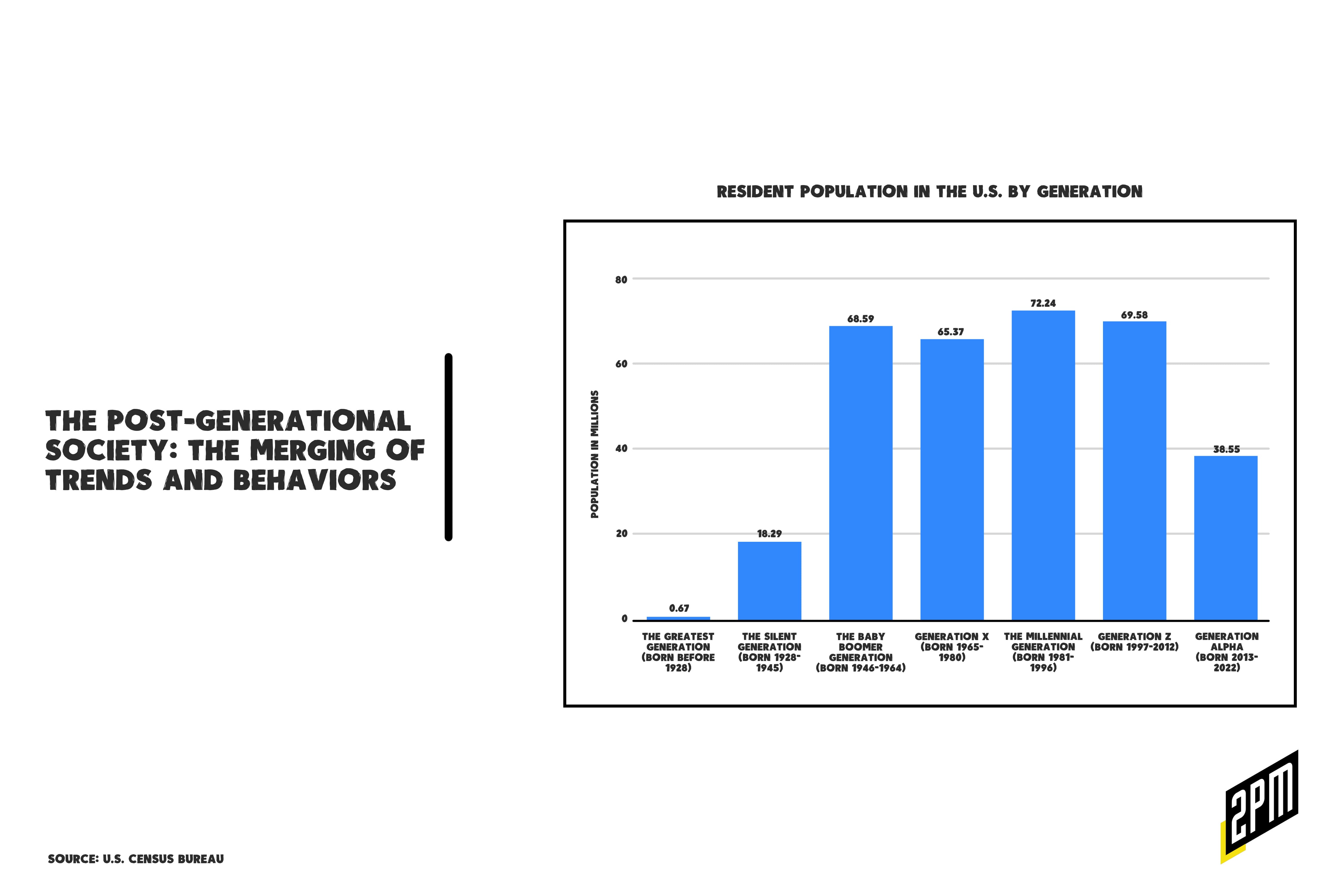
FORECAST 5 OF 5: The Post-Generational Society

In the tapestry of human history, the single nuclear family dwelling in isolation is a  relatively recent concept. For centuries, multi-generational households – where grandparents, parents, children, and sometimes even uncles and aunts coexisted under a single roof – were the norm. This model of living, rooted deeply in community values, promoted shared responsibilities, pooled resources, and intergenerational wisdom.

This member brief is designed exclusively for Executive Members, to make membership easy, you can click below and gain access to hundreds of reports, our DTC Power List, and other tools to help you make high level decisions.

Join Here

Memo: Solo Brands’ Novel Strategy

A once-obscure brand just outside of Dallas, Texas evolved into a generational model for how business is done, brands are built, and liquidity is achieved for stakeholders. Founded in 2010 and trading today at $DTC with a market cap that hovers around $500 million, Solo Brands has an exceptional story.

The maturing of Solo Brands is as a masterclass in strategic expansion and fiscal diligence. While many navigate the turbulent waters of the DTC marketplace, Solo Brands has set a gold standard, embodying a synergy of vision, cooperation, fiscal responsibility, and an understanding of its target customer. And they’ve just made their latest acquisition.

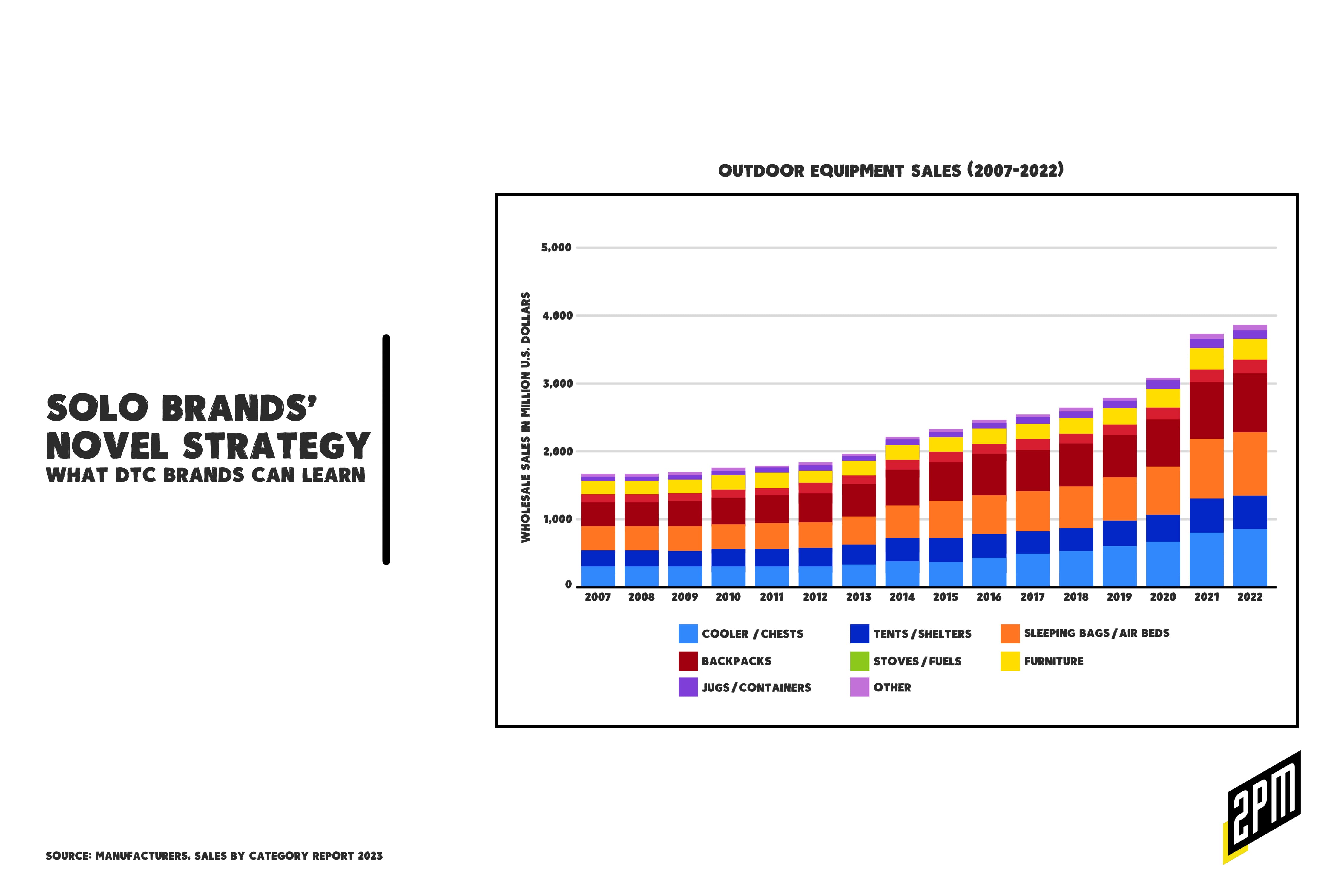
The company started as Solo Stove, a portable fire pit retailer, and evolved into a powerhouse of diverse outdoor brands. Their acquisition strategy stands testament to their understanding of who buys their products. By integrating brands such as IcyBreeze Cooling, they’ve not only augmented their product line but also enhanced the holistic experience for their consumers. The company’s genius in curating complementary and diverse offerings, and capturing the essence of outdoor adventures, is not novel. However, it is novel at the relatively early stage at which Solo Brands is operating. Thirteen years after its founding by brothers Spencer and Jeff Jan and bootstrapped since inception, the company has risen to a level that other brands can only dream of.

In 2016 it was still just my brother and me — no employees. We didn’t have an office;  we worked out of our homes. We used third-party fulfillment providers and other vendors for various tasks. We wanted a lifestyle business, one that offered a balance for careers and time to ourselves. By 2016 the company was growing beyond what we had envisioned. […] So in 2016 we started exploring a sale. But the response came back that the business wasn’t salable since we had no employees, staff, or systems. A buyer couldn’t step in and keep it growing. We spent the next three years building a company to sell. That was our focus. (Practical eCommerce)

What truly sets Solo Brands apart is its unwavering commitment to the consumer. More than just selling products, they invest in sincere market needs; it’s in the company’s DNA. By focusing on forging genuine consumer connections, they’ve successfully transformed one-time purchasers into loyal brand evangelists. The burgeoning popularity of products like IcyBreeze, revered by renowned events and global influencers, is a glowing endorsement of Solo’s dedication to quality and consumer satisfaction.

Financial acumen is the other separator for Solo Brands. Their alliance with Generational Equity is a testament to their vision and commitment to fiscal prudence. Operating with discretion and strategic foresight, Solo Brands ensures that every financial move, every acquisition, is a carefully choreographed step towards sustainable growth.

In today’s digital era, a brand’s reach determines its success. Solo Brands, in its pursuit of ubiquity, has crafted a multifaceted distribution model. This tapestry of eCommerce platforms, strategic wholesale partnerships, and physical storefronts ensures they’re omnipresent and catering to consumers across diverse touchpoints.

The power of synergy shines brightly in Solo’s approach to brand integration. Brands like Chubbies, Oru Kayak, and ISLE, while distinct in their offerings, coalesce seamlessly under the overarching vision of Solo Brands. This harmony ensures that while each brand retains its individuality, they collectively cater to the myriad facets of the adventurous lifestyle. That list of offerings recently grew by one, further cementing Solo as a destination for well-built, profitable, niche-drawn DTC brands:

IcyBreeze, based in Sweetwater, Texas, has carved a niche in manufacturing and direct-to-consumer distribution of personal air-conditioning and heat relief solutions. The pioneering firm said its products combine a portable AC’s efficiency with an insulated cooler’s convenience. (Dallas Innovates)

Leadership, they say, determines the fate of a venture. Solo Brands’ monumental success can be attributed to its leaders, both pre- and post-private equity majority ownership. At every stage, the company’s leader steered the ship with precision and passion while maintaining the venture’s original inspiration. Their astuteness in facilitating strategic collaborations, as evidenced in the partnership with IcyBreeze, showcases their expertise in harnessing collective strengths for shared success.

Innovation is a core tenet of Solo Brands. Their commitment to breaking new ground is evident in their association with pioneering products, be it Oru Kayak’s groundbreaking designs or IcyBreeze’s unique cooling solutions. This constant push for innovation ensures Solo remains not just relevant but a trendsetter in an ever-evolving marketplace.

Yet, even as Solo Brands continues its rise, another potential avenue beckons: shared financial services. Despite Solo’s public push for more and better retail spaces (see below), the company still purports to earn upwards of 70% of its volume through DTC channels.

Since consumers are seeking more in-person experiences, Dick’s Sporting Goods aims to utilize its physical presence and introduce a contextual commerce experience in its brick-and-mortar stores. The company intends to expand by introducing 20 new Dick’s House of Sport concept stores, which offer rock-climbing walls, batting cages, and putting greens to enhance the customer experience. (PYMNTS)

Such a unifying product as a shared financial service could revolutionize the consumer experience for most brands, but especially a savvy aggregator like Solo Brands. Imagine a Solo co-branded credit card or a consolidated loyalty program, offering incentives across all of Solo’s brands. This would not only elevate sales but further deepen brand loyalty. Such integration could provide unparalleled insights into consumer behavior, enabling Solo to tailor experiences, offers, and products with pinpoint accuracy. Furthermore, these shared services could enhance brand cohesion, reminding consumers of the interconnected ecosystem that Solo Brands offers, catering to every nuance of their outdoor lifestyle.

In the grand tapestry of DTC brands, Solo Brands stands tall, a luminous beacon of strategic prowess and fiscal wisdom. Their journey, replete with lessons on growth, diversification, and consumer engagement, is a playbook for brands across the globe. As the narrative of Solo Brands continues to unfold, their legacy serves as a testament to clear leadership, innovative strategy, and unwavering commitment to an underserved target consumer.

By Web Smith | Editor: Hilary Milnes with art by Alex Remy and Christina Williams