The commerce platform report. The term “halo effect” was first coined by a psychologist in 1920. Edward Thorndike used the moniker to describe the methods that military officers used to assess the performance of their soldiers. These assessments often revealed little variance across the categories of performance. Either the soldiers were good or bad; few performance evaluations noted “good” performance in one respect and “bad” performance in another. It is said that the halo effect is influenced most by a person’s first impression. If we see them as bad, they can do no good. If we see them as good, they can do no ill. Today, this phrase is most-often applied to brands and their equity.
The halo effect is a type of immediate judgment discrepancy. It is the tendency for an impression that is created in one category to influence the opinions of impressions created in another category.
Shopify is seemingly everywhere. In December, Digiday’s Hilary Milnes reported that Shopify’s ecosystem of 20,000 partner developers generated $800 million in agency business in 2017. It’s estimated that Shopify’s partners (several of whom are mentioned here) will earn north of $2 billion in revenue in 2019.
To build a Shopify-like eCommerce platform is not hard to do. What’s very hard to do is replicate the partnership ecosystem and the value they drive. It’s their moat. It’s not the software — their competitive advantage is the partnerships.
Jay Myers, VP of Growth at Bold Commerce
The halo effect of Shopify’s ecosystem will not be easily combated. With many of the partners becoming standout B2B brands themselves, Shopify’s group of independent eCommerce agencies serves many functions: recruiting, evangelizing, and perhaps a bit of espionage – often relaying word of advancements and initiatives proffered by competing platforms. This brand halo effect is amplified thanks to the era of the direct to consumer (DTC) brand.

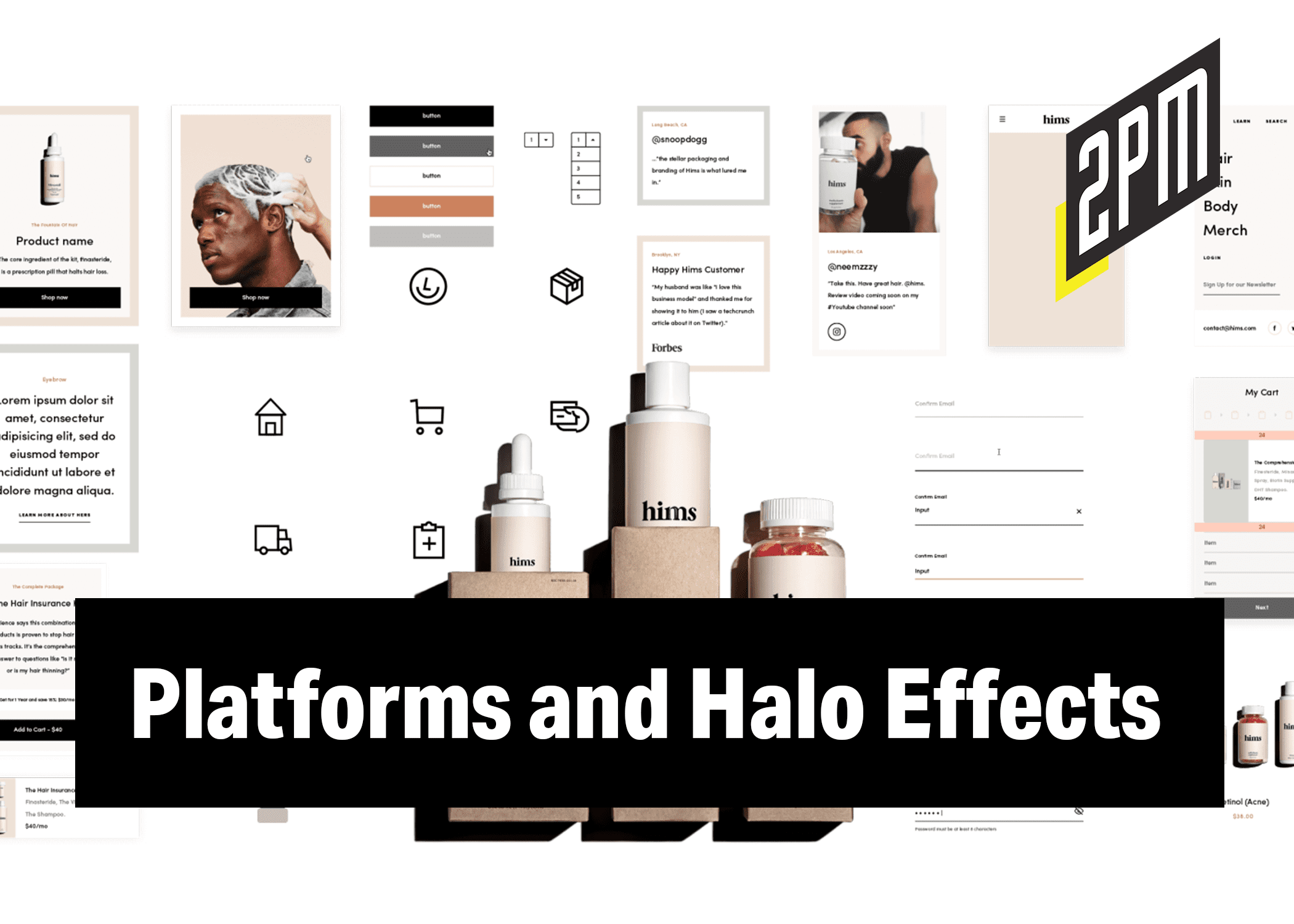
The brand appeal and staff architecture of this cohort of internet-first companies are keys to understanding why so many challenger brands instinctively select Shopify. Though not a Shopify Partner, Gin Lane’s “work” page notes the many digitally native brands that they’ve steered to the platform. These names include: Harry’s, hims, hers, Sunday Goods, Ayr, Stadium Goods, Rockets of Awesome, Cadre, Recess, alma, Smile Direct, Dia & Co, Warby Parker, Everlane, Quip, Shinola, Bonobos, and Shake Shack. Similarly, Red Antler’s “work” page boasts partnerships with Burrow, Casper, Allbirds, Brandless, Crooked Media, Snowe, and Boxed. These brands, which skew mightily towards Shopify and Shopify Plus, serve as media darlings and public relations fuel.
Tobi Lütke on Twitter
I usually don’t highlight financial milestones here, but this one is worth mentioning: As Shopify passes the $1 billion-dollar revenue mark it does so with the highest growth rate of any SAAS company ever. 🎉
In this way, Shopify’s halo effect extends beyond the agencies with whom they partner. The challenger brands, themselves, become recruiting vehicles for like-minded companies looking to build brands from zero to one. As such, newer companies like Great Jones follow the same branding methods and staff architecture guidelines
On DTC Brand Architecture
It’s common for digitally native brands (DNVBs) to go to market with over $3 million raised. This pre-revenue war chest affords companies an early branding and public relations prowess that almost guarantees seven figures of revenue in the first year.
Partnering with a Red Antler or a Gin Lane can cost a brand up to $400,000. There are often added developmental costs that these challenger brands will have to incur. In addition to the cost for the brand standards, messaging, and the essence of the brand, the right PR contact can cost a young company another $180,000 to $240,000 per year.
No. 297 The DTC Industrial Complex:
There is an entire eCommerce branding industry that fosters the ideation, launch, and early growth of direct to consumer (DtC) brands. When you notice a new digitally vertical native brand in 2018, there’s a platform aura around many of them. First you’ll notice the early PR sensationalism that they can only garner if they graduate from the right school or leave the right corporation. Then, the founders must live in the right city, have the right investors, and pay the right $25,000 per month public relations retainer.
The challenger brand CEO is very well-educated and, at this stage, CEOs tend to start the brands post-business school. Founding teams tend to begin with some combination of a product developer, finance lead, and a customer acquisition lead. Software engineering is an afterthought for many of these young product companies; this competency is often outsourced to a partnering agency. Universally, the priority for challenger brands is two-pronged: (1) making a great product (2) find an efficient way to sell said products. This often reduces the urgency to partner with technical founders or hire early, technical employees. Whereas F = founder, B = early branding, and P = early product development:
F(marketing) + F(finance) + B(outsourced) + P(outsourced) = DTC founding architecture
Shopify’s ecosystem appeals to this particular architecture. The Ottawa-based company’s continued growth depends on their management’s ability to increase the percentage of challenger brands that grow into enterprise clients. And from enterprise clients to Top 1000 online retailers. Shopify’s volume-driven style of business is a mark of its commitment to small business retailers. But it’s not the only method of accelerating enterprise growth. There are several commerce platforms with notable gross merchandise volume (GMV) across their enterprise level of clients.
The Platform Landscape
From BigCommerce to Oracle and Salesforce, the DTC era of retail extends beyond the brands that are the most talked about in design, tech media, and public relations circles. Here is the data on the top nine by gross GMV. While Shopify generates the most media buzz in small business circles: Adobe, Salesforce, and Oracle are quietly leading the enterprise+ business. BigCommerce is often viewed as Shopify’s younger sibling, however their enterprise clients now generate a gross GMV of 2.5x Shopify’s enterprise clients. The following data is derived from a recent Digital Commerce 360 report (2019):
[table id=37 /]
The platform ecosystem is vast. Of the top 1000 retailers, the majority of brands are built in-house and on custom platforms. Nearly 450 retailers have outsourced their technical capabilities to these nine companies. Moving forward, we will likely see platforms like Adobe building tools and an improved halo effect to address Shopify’s key audience and vice versa. Shopify will build tools to address more of the needs of top enterprise plus clients, as well as continuing to support the needs of the DTC brands that are adopting physical retail channels.
Specializing for a particular segment of the SMB to enterprise to enterprise plus spectrum may have dire consequences for platforms in this increasingly competitive space. As Shopify has shown, there is value in building early loyalty. Shopify is counting on a number of their industry-leading number of DTC and SMB retailers moving through the funnel to enterprise services. Additionally, Shopify’s reach grows as brands transition to Shopify from Magento or custom builds. A trend that the Adobe acquisition of Magento has potentially impacted. This continued growth would begin to tip the enterprise / enterprise+ GMV scales in their favor.
Commerce platforms advertise new capabilities with the idea that the technical merits of a platform, alone, will attract new business. To this effect, many of these platforms have deprioritized brand marketing superiority and influential partnership development in favor of technical product development and traditional advertising. Whether or not the improvement of competitor platform capabilities will outlast Shopify’s hard-wired brand loyalty remains to be seen. Objectively speaking, the sheer volume and positive brand association plays in Shopify’s favor. As does their halo effect.
Read the No. 306 curation here.
Report by Web Smith | About 2PM