No. 344: IPO and The “Frontier Thesis”

2PM-Frontier-Democracy

By air and by sea, thousands of would-be gold miners traveled to California in pursuit of wealth. They’d come to be known as 49ers. In March of 1848, 800 non-natives made the trip to California. By the end of 1848, that number ballooned to 20,000. And by 1849, that number reached 100,000. The gold rush was one of America’s earliest examples of the frontier thesis. Historian Frederick Jackson Turner penned an essay in 1893 that explained that the economic strength and vitality of America was tied to moving towards the frontier.

I define ‘frontier’ as the social levelling associated with large numbers of people comprising a broad spectrum of skills, educational levels and class backgrounds, working alongside each other at rough parity in open access, high potential gold mining. [1]

That frontier line, a demarcation that separated the known from the unknown, spurred innovations in: commerce, behavioral economics, government, and social sciences. Of course, there is no longer any physical frontier. Today, that line is figurative. With any new industry, these behaviors repeat in seen and unforeseen ways. Direct-to-consumer brands have begun to reach venture-backed maturity. Like the physical frontier of old, this new line of demarcation bears many of the same traits — uncertainty is one of them.

During the gold rush, it wasn’t the miners that made the real money. It was the toolmakers, the workers that manufactured the implements necessary for the droves of miners to strike it rich.  We remember Levi Strauss & Co but few rarely can recall top gold miners of the time. The toolmakers made riches; the vast majority of the miners went home empty handed. Not even their tools made the trip. As the adage goes: you can mine for gold or you can sell the pickaxes. Like the commerce tools themselves, venture capital eventually flooded brand retail. This not only affected who could scale, but also it affected how companies were scaled.

The problem with all of the tech-enabled customer channels, though, is that they are available to everyone. Indeed, the flipside of tech concentration when it comes to platforms and Aggregators is the democratization and commoditization of basically everyone else in the stack. That is how you end up with, as of August 2019, 175 different online mattress companies. [2]

Seated to my right on a flight from Ohio to Minnesota was a salesman whom we’ll call Dave. “Do you want to start a mattress company?” he utters through a smirk and a light smile. After his third whiskey he opens a laptop to reveal a spreadsheet with nearly 100 rows of data and says, “Look at this.” I’m interested and I immediately recognize several of the companies out of the corner of my eye. Of them, Casper is atop the list. Dave is an employee of a company that manufactures mattresses for many of the the top brands. I was stunned. “Wait. Casper doesn’t make their own mattresses?” I asked. Dave goes on and he asks if I want know how to start. Curious, he lays it out for me.

Start a website and use Spotify [SIC] or something. Pre-sale the mattresses for $800. Buy them from me for $400-$500. We will deliver them to you within three weeks of the sale. Rinse and repeat.

Dave was the proverbial pickaxe seller, and the DTC era was his gold rush. According to him, Casper was one of his company’s many customers. I didn’t believe Dave until I read Casper’s S-1 filing. He was correct, Casper doesn’t manufacture its own mattresses. And neither do the vast majority of its nearly 200 competitors. Instead, the Casper team buys them from a source and marks them up for resale.

While most of our product design is developed in-house, certain foam formulations are currently licensed from certain of our contract manufacturers pursuant to our manufacturing agreements with them, some of which include varying degrees of exclusivity. [3]

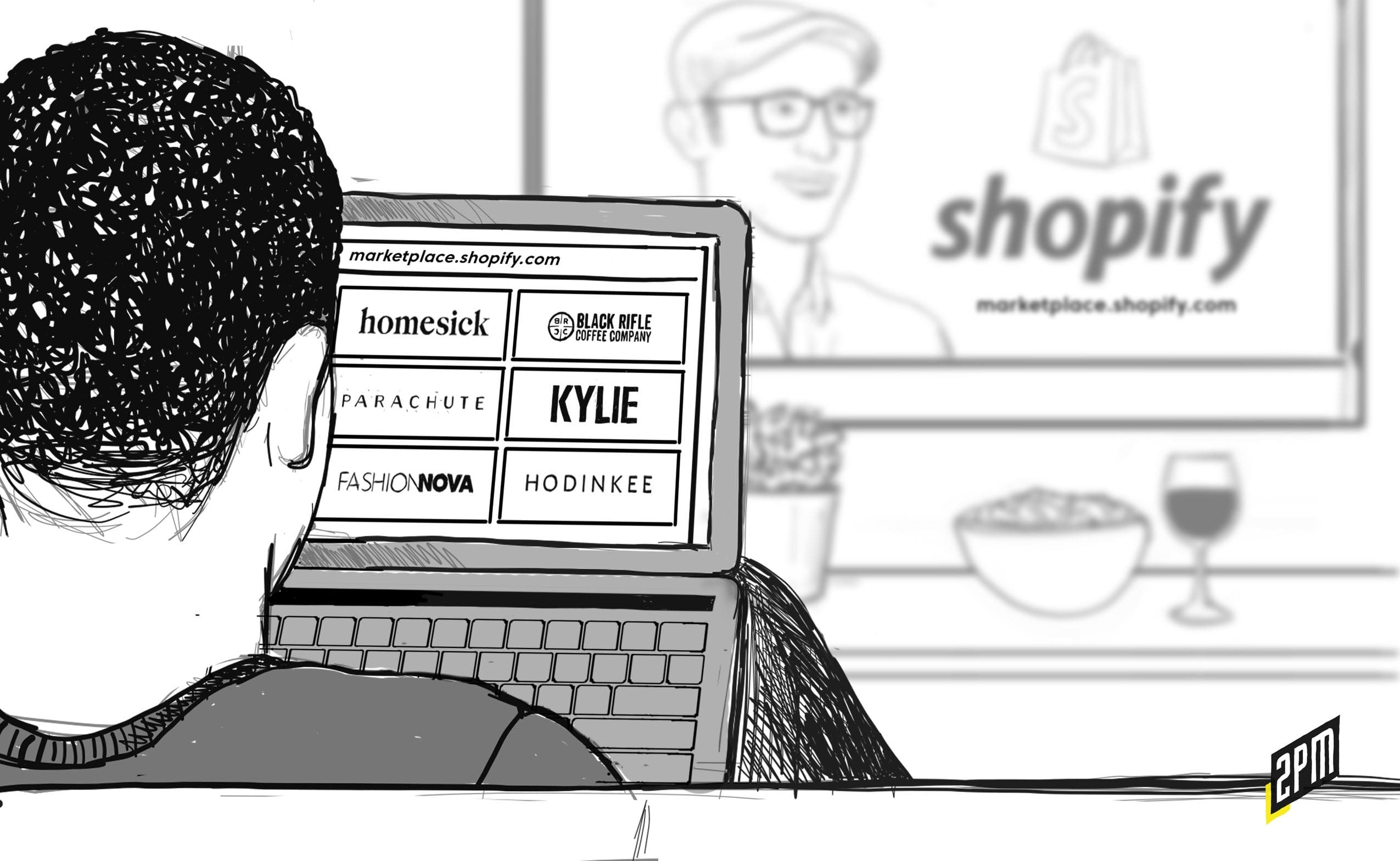
And this manufacturer isn’t the only pickaxe seller. While Casper.com is a custom cart build, a majority of digital natives are built within the Shopify ecosystem. This is a reflection of modern retail as a whole, which has been influenced by the greatest pickaxe seller of them all.

Venture capital has disrupted retail in a number of ways. Imagine an entrepreneur raising VC to launch a clothing, shoe, or mattress company in the 1990’s. The thought would have been implausible. But retail brands aren’t new; its tools are. Prior to 2006, these types of businesses pursued other funding sources: private loans, lines of credit, or friends and family rounds. They often began with the idea that unit economics would be at the forefront. Some decided to grow on cash flows. The earlier the profitability, the better.

And if these companies did go public, it would be after a measure of decades and not a measure of years. Take Ralph Lauren Corporation: founded in 1967, it went public 30 years later. Or Nike Inc., a retailer that went public nearly sixteen years after its founding. In Columbus, Ohio, there are a number of specialty retailers that took similarly long paths to becoming public companies: Express, L Brands, DSW, and Abercrombie & Fitch are but a few.

Web Smith on Twitter

On brand ceilings and valuations. 1967: RL was founded. 1994: Goldman acquired 28% of @RalphLauren at a $520 million valuation. 1997: RL IPOs at a $2.4b valuation after 30 years – a number of them in the black. 2020: $8.8b market cap (1.3x revenue) From the S-1:

Like a Cambrian Explosion, venture opened the door to a diversity of platforms, apps, logistics services, and packaging solutions. It also developed a new format for retail, one based on hyper growth. And by extension, venture capitalists began funding the companies that would be built on them. For would-be retail founders, the bar for starting a business reached an historic low. And the ability to raise historic sums of venture capital reached its high in the same period of time: 2014. The last decade of eCommerce was just as much about the tools sold as the nuggets of gold that were mined.

But while venture capital disrupted pickaxes for the better, one could argue that it disrupted the miners for the worst. The DTC era has seen few acquisitions and even fewer public offerings. Even so, Stitch Fix President Mike Smith suggested that staying private is the best bet for many of these brands. He explained to Recode’s Jason Del Rey:

Should you be a public company? In a lot of cases my answer would be no. You have to bring your A-game to the public markets. You can hide in the private markets and spend a lot of your venture capital on Facebook.

For the digitally native brands of today, they’ll have to think and behave a lot less like their contemporary peers as they approach the new frontier line. In this way, Casper’s IPO will serve as a bellwether for this era of digitally-native brands. Can they IPO without a realistic path to profitability? The thought has its headwinds. In these tweets below, I summarized most of the bear argument.

No Title

No Description

Casper’s management will have to convince Wall Street that they’re capable of something that few brands aren’t: they must “own the category” and do so profitably. There are two obstacles to this. And this is where it gets a bit technical.

Parallels: Casper and Mattress Firm

Consumer-based corporate valuation. In the company’s S-1, they chose not to report cohorted revenue data. But a few key figures stood out: 14% of customers returned within a year of the original purchase. In the S-1, Casper cites returning customers and not the figure in sales. According to venture capitalist Alex Taussig, the company’s annual dollar retention is just 6%. Their repeat business is nearly non-existent.

Casper’s average order value (AOV) is $867 with a repeat AOV of $87, according to Marketing Professor Daniel McCarthy. This is based on the assumption that 80% of the orders are at the primary AOV and that repeat AOV is $87. The customer acquisition cost (CAC) for that $867 sale is $324. In a fascinating thread of marketing mathematics, Professor McCarthy cites a five year customer value at $455 with a lifetime value (LTV) of $131. But one thought stood out:

Bulls will probably point to stores as a way to bring CAC down, upsell, and supply chain efficiency margin improvement. Bears will point to late adopters being harder to bring in, and competition picking up.

Back where we started. The institution that Casper disrupted with direct-to-consumer delivery is now its best hope — brick and mortar retail. Within the year that Casper launched, there were two separate instances of note. Of course, Casper quickly scaled its direct-to-consumer model. And Mattress Firm invested in a brick and mortar company as Casper’s DTC offering generated nearly $100 million in first year sales.

[Mattress Firm] was constrained by its decision to buy retail chain Sleepy’s in 2015 for $780 million. Instead of investing in digital tools and shipping infrastructure, Mattress Firm expanded its store base at exactly the wrong moment. [4]

Mattress Firm’s retail acquisition left the company over-retailed (by nearly 1,000 stores) at a time when customer acquisition arbitrage for mattress-in-a-box retail was peaking. Just a year later, Steinhoff International acquired Mattress Firm for around 1x gross revenues.

The South African retailer Steinhoff International Holdings will buy Mattress Firm Holding Corporation, the largest specialty bedding retailer in the United States, for $3.8 billion, including debt, both companies said on Sunday. The deal would create the world’s largest mattress retail distribution company. [5]

In 2018, Mattress Firm filed for Chapter 11 Bankruptcy to begin the process of restructuring, closing nearly 700 of its 3,230 company-stores. In effect, the bankruptcy began to offset the poor timing of the 2015 Sleepy acquisition. As Mattress Firm retracts, Casper hopes to gain its share. According to the Casper S-1, physical retail is a major component of their growth.

Our presence in physical retail stores has proven complementary to our e-commerce channel, as we believe interaction with multiple channels has created a synergistic “network effect” that increases system-wide sales as a whole. Driving continued success in our retail store expansions will be an important contributor to our future growth and profitability

The question remains whether or not Casper can convince Wall Street investors that their plan to capture the value that Mattress Firm is a viable one. While Casper’s vision of a sleep economy is grander, Mattress Firm’s annual revenue was $3.2b in 2019 (according to Steinhoff International). To capture this, they may have to rebuild the company from in inside out.

With nearly 700 employees and no in-house product manufacturing, Casper is a very large product company that doesn’t manufacture its own goods. This is evident in its G&A category. Casper’s spend on General and Administration is 5x that of Purple ($106.2m to $19.1m) with similar sales figures. To capture the value of its incumbents and fend off its challengers, Casper can be more competitive. For Casper to become a “category owner”, they’ll have become more like Nike internally. Founding CEO Phil Knight said it best:

Beating the competition is relatively easy. Beating yourself is a never-ending commitment.

A Leaner and Meaner “Nike of Sleep”


Screen Shot 2020-01-13 at 5.17.05 PM
Share of online mattress retail | Source: Rakuten Intelligence

The comparison began with a quote in Forbes. In 2016, the same year that Mattress Firm was acquired, Casper Co-Founder Luke Sherwin laid out his vision for the company. In the interview with Ron Rofe, Sherwin explained:

Casper can do for sleep what Nike did for sports. We want to make sleep a lifestyle and build sleep environments that become a major part of your life.

In their securities filings, Casper laid the groundwork to address product commodity by expanding their total addressable market beyond the category of mattresses:

As the wellness equation increasingly evolves to include sleep, the business of sleep is growing and evolving into what we call the Sleep Economy. We are helping to accelerate this transformation. Our mission is to awaken the potential of a well-rested world, and we want Casper to become the top-of-mind brand for best-in-class products and experiences that improve how we sleep.

Nike owns 17.9% of footwear and spends 10% of its gross revenues on marketing and advertising. Casper owns 5% of mattresses and spends upwards of 33% of revenues on marketing. Without capital efficiency and a short-term path to profitability, Casper cannot mimic the brand that it aspires to. To become the Nike of Sleep, Casper must become more like the Nike of marketing and sales. They have to lead the industry in the ability to acquire customers efficiently. What I am suggesting is simple enough: leave the DTC industry behind altogether. With partnerships with Amazon, Target, Walmart, and Costco as a solid foundation, Casper can shift to a leaner and profitable model by:

  • emphasizing relationships with third-party sellers for sales and distribution
  • shifting from short-term performance marketing to a brand marketing strategy

Though Casper has raised at a $1.1 billion valuation, as recently as March 2019, most companies in and around its space are trading for 10-20x EBITDA or 1-2x revenues. For Casper, that means an initial market capitalization of $500-600 million (they’ve raised $339 million). In this report alone, there are two comparables to consider: Ralph Lauren traded at a $2 billion market capitalization on an EBITDA of $140 million. A year after Mattress Firm went public, it was trading at $1.91 billion or 24x EBITDA.

To reach profitability, Casper must “beat themselves” as well as they’ve beat others in the market — challengers and incumbents alike. They’ll have to build their company like the early-stage retailers of old, long before the abundance of venture capital and rising CAC. By reducing General and Administrative by even $50 million, annually, they will be close to break even. By shifting marketing spend from digital-first to third-party partnerships, Casper could be EBITDA positive in its first year.

Casper adopted the tech-adjacent model that’s plagued the DTC industry over the years: incredible sums of money raised, New York or Los Angeles offices, excessive marketing spend (relative to gross revenues), costly executive salaries, prime real estate leases, and startup perks. By reducing these expenses and shifting to third-party sales, Casper can become the publicly-traded brand that it is pitching to Wall Street. Existing competitors like Mattress Firm would welcome Casper’s partnerships alongside Sleepy’s, Purple, and others. With each of the aforementioned retailers, Casper brings a new customer to their stores.

At $50+ million in EBITDA, Casper can become the $1 billion brand that they envision. Like the gold miners on the frontier, Philip Krim and team can be the ones to map the path forward for digitally-native brands like Away and Glossier, two others with IPO intentions. To compete in public markets, these brands will have to operate more traditionally.

The DTC era experienced a decade of grow-by-any-means marketing and often inefficient operations masked by excessive venture capital. As private companies, this can last as long as rounds can be raised. But they’re at the frontier now. And this represents somewhat of a reckoning for the DTC industry. When the miners arrived, they would often choose to set aside what they brought with them. For some, it was valuables and others, it was an inflated sense of self-worth. There, on the frontier – where sacrifice and discomfort are a necessity – it was about what you brought home with that expensive pickaxe.

Research and Report by Web Smith | Edited by Carolyn Penner |  About 2PM

Note: Subscribe here to receive Letter No. 344 on Tuesday at 2pm EST.

Member Brief: Quibi and VC-Subsidized Media

Quibi-header

In March of 2009, Uber launched in San Francisco to great fanfare. At the time, the mobility company’s Chief Executive, Travis Kalanick, had a goal that seemed simple enough: first attract the higher rungs of society and then dominate the world by capturing marketshare. Except, to do so, he’d have to adjust the prices. Uber was too expensive for everyday users. Over the next decade, Uber would employ a tactic that has been popular throughout Silicon Valley circles — deploying hundreds of millions in venture capital to subsidize the cost of the product, which in Uber’s case is rides.

This member brief is designed exclusively for Executive Members, to make membership easy, you can click below and gain access to hundreds of reports, our DTC Power List, and other tools to help you make high level decisions.

Join Here

No. 343: From Audiences to Communities

2PM-Opener

An open letter to creators. By now, there are hundreds, if not thousands, of viable membership-based newsletters. And that’s a great thing – an unequivocal advantage for creators and consumers alike. Of those thousands, a number of them serve as sources of original ideas, news, and analyses that are incredibly valuable to professional ecosystems. It’s the synthesis of these ideas that has the greatest potential impact. If education is priceless, we are entering a new era of value creation. Imagine an Enlightenment-era coffeehouse.

There are newsletters run by operators who publish original ideas. There are meaningful letters that curate the ideas of of others. Some of them report on the news and others categorize and comment on industry developments. Often, reports that have been written by one person are refined by others. And frequently enough, mainstream outlets like The Wall Street Journal or CNBC will pick up on original concepts and make them their own. Like a coffee shop, this is a valuable form of information synthesis.

John Dowell is a professor at Michigan State University. Over his nearly 40-year career, he’s taught English, Sociology, and Anthropology. His course on the introduction of synthesis explains:

A synthesis is a written discussion that draws on one or more sources. It follows that your ability to write synthesis depends on your ability to infer relationships among sources – essays, articles, fiction, and also non-written sources, such as lectures, interviews, observations. This process is nothing new for you, since you infer relationships all the time – say, between something you’ve read in the newspaper and something you’ve seen for yourself, or between the teaching styles of your favorite and least favorite instructors.

In the Age of Enlightenment (1715-1789), a European could gain entry into a coffeehouse by buying a drink. But the drink was just the price of admission, the conversation was the attraction. It wasn’t solely the conversations on matters of sociology, economics, and law that drove the age forward. Sometimes, patrons would overhear concepts that would fill gaps in their own thinking. Other conversations would solidify pivotal ideas, directly or indirectly.

Coffeehouse Inspiration

It was a coffeehouse conversation that I had in November of 2015 that struck me as one of the most important professional discussions that I’ve had. The discussion was on the mechanics of community and the need for tools that could maximize serendipity. On an idle day in late 2015, I began planning the launch of what I then called 2PM Links. I paid for a service called Goodbits and launched the landing page for the site. After a week or so of pushing the idea of 2PM on Twitter, I confirmed that the first letter would publish to twelve whole readers. I’d go on to publish five days per week for 180 business days straight.

On paper: 2PM Links would be one part original concepts and one part data and narrative synthesis, a curation of developments that would tell a story. The emails themselves would allow for 1:1 dialogue. The most engaged readers would write in explaining how they recognized microtrends and larger movements. Others would explain methods for synthesizing each letter for maximum effect. On occasion, I’d read an email from an early subscriber explaining how a cluster of articles over several weeks helped them to plan their company’s next steps. For nearly two years, those letters would help sustain the motivation to maintain operational consistency.

Reach vs. Depth

To build something that was designed to grow slowly, I maintained paying roles at established companies. However, at the time that I started the publication, I was between media jobs. Having managed or led eCommerce at two digital media publishers, I learned a tremendous amount from two vastly different styles of conversion-based (read: affiliate) publishing.


Company A built a hyper-targeted funnel, honing in on a specific (affluent) consumer. There, direct traffic was high and SEO was a secondary funnel. Brand was most important. This company would rely on it. Company B built a system that would rely upon SEO and topic interest, not the clout of the platform itself. For B, reader loyalty was secondary to SEO discovery. Visitors clicked through to read about a topic that they stumbled upon. If A was a funnel, it would be short and wide. Trust was built over time. For A, the readership would be driven by loyalty to the platform. Meanwhile, the B funnel captured new people by optimizing articles for topical keywords. Its funnel would be longer with a number of entry points throughout. Those entry points would also serve as exit opportunities. Churn was higher.

The result:

  • Company A: smaller audience, higher loyalty, higher conversion rate. 1.8 million to 2.2 million MAU. Product segment: modern luxury.
  • Company B: lower loyalty, lower conversion rate, larger audience. 6-7 million MAU. Product segment: accessible luxury down to daily deals.

A and B continue to operate successful media brands with disparate objectives. As they say, there’s more than one way to skin the proverbial cat.


To prove out the long term viability of the newsletter, I allotted 180 letters to figure things out. As things progressed, 2PM took on more and more characteristics of Company A. After reaching number 180, this identity influenced the next steps. Once I reached Letter No. 180, there would be three options:

  1. move forward and publish No. 181
  2. shutter the letter
  3. replatform and build a company

The choice was option number three. In my seven pages of scribbled plans, I agreed that I’d emphasize depth over reach. I’d maintain an emphasis on the “A” version of media. To do so, I emphasized a paid subscriber model. And then a data / advisory model. And later, an executive community. These initiatives would allow me to reinvest revenues into improved services, design, content development, and greater overall access.

From Audience to Community

Over a matter of two weeks between December 2017 and January 2018, I replatformed from Goodbits to Mailchimp, designing around a Memberful integration. I invested in branding and design. I coded much of v1 of the site in my free time. And later I’d import some 240 editions of 2PM to the WordPress site, one by one. In March of 2018, after two months of testing, 2PM’s first membership launched to the Monday Letter’s subscribers.

Screen Shot 2020-01-07 at 1.51.20 AM
How 2PM works. | About 

In this way, 2PM’s system became somewhat of a funnel. Around 10% of all subscribers become Executive Members. And, upon invitation, a percentage of Executive Members opt in for direct communication with like-minded executives across a number of digital industries.

2PM’s community of Executive Members, Polymathic was inspired by two separate thoughts.

  • The forum is designed to help talented executives develop new core competencies by: (a) identifying blind spots and (b) learning from leaders who’ve mastered those pursuits.
  • When I arrived at the latest Code Commerce, I recall four great conversations within my first hour at the venue. These conversations were with Jason Del Rey, Alex Taussig, Marc Lore, and Jen Rubio.
1D49AA7D-BD20-4B00-BDC0-0B424ADC810B
Executive Member Dinner: SF (December)

To attend Recode’s two-day event, tickets range from $2,000 to $4,000. Pricing serves a valuable function, in this respect. There, everyone that you talk to is likely to leave a valuable impression. The events tend to attract high level operators. Between the keynote speeches at these key events, few conversations are wasted and most every extracurricular interaction adds professional value. As such, the event isn’t the only product. The community of attendees provide an additional value. The Polymathic Forum is designed to resemble digital hallways of top conferences like Sundance, PopTech, Google’s Solve for X, or FOO Camp. As the numbers grow, so does the strength of the venue.

From hosting 15-25 Executive Members at our monthly roundtables to building out 2PM’s Polymathic, the shift from audience to community has provided serendipity in ways that were previously unimaginable. Subscription revenue becomes the key variable here. Paid memberships provide a level of opportunity that advertising-driven platforms cannot. For a practical example, consider the difference between fast food restaurants and four star establishments.

There are generally two types of restaurants. One chain advertises “billions served”. This emphasizes the company’s KPIs: reach, volume, and satisfaction by the masses. But what if you aren’t trying to reach the masses? The second type of restaurant stands on the quality of the food and service in addition to the inviting atmosphere for conversation. In the latter environment, serendipity is more likely to be found. It’s emblematic of a shift from prioritizing audience (reach) to prioritizing community (depth). 

Andy McIllwain, a senior marketing manager for GoDaddy, had an interesting thought on the growth of the newsletter industry and the shift from audience to community. In a short series of tweets, he explains:

The 2010s were about radically open social media platforms – a gigantic, unmanageable mess. The next ten years? The pendulum swings back to niche communities of interest and purpose.

McIllwain goes on:

Community revenue models: Direct sponsorship, tiered membership fees, affiliate commissions, and paid experiences (events, retreats). Brands need to get in on this. It’s the flip from audience to community.

Though membership-driven newsletters existed prior to Substack, the concept of paywalled community was popularized as the A16Z-backed platform’s popularity has grown. Like a table at your favorite dining establishment, the food is only a portion of the attraction in these environments, when executed appropriately. The other is the ambiance and the environment. For 2PM, the idea of community is taken one step further. Executive Membership unlocks legitimate opportunities for serendipity. Ten times per year, we invite our paying members to a complimentary dinner in one of the major markets (New York, Los Angeles, Chicago, Austin, and Boston).

In this way: gated, media-driven communities have become the antidote to the noise of digital commonplaces. You’ll see this in publications like: Trapital, Petition, Off The Chain, Stratechery, and Thing Testing. In each instance, each media founder works tirelessly to provide value for their paying members. A membership is a vote for the future in addition to the present. There is more room for businesses like these. And these projects often begin with simple strategies around original ideas. The hope is that more newsletters launch and more communities form around. We should encourage involvement and competition. This is how ideas take shape. The ecosystem, as a whole, is the coffeehouse of today. This isn’t just the future of media, it’s emblematic of a greater shift as humanity adopts digital-first culture as its own.

Read the No. 343 letter here.

Report by Web Smith | Edited by Carolyn Penner | About 2PM