Deep Dive: 2025’s Politics, Logistics, and New Rules

The Section 321 loophole is done for. Or is it?

Section 321 is a provision under U.S. Customs and Border Protection (CBP) regulations that allows certain goods to enter the United States without incurring customs duties or taxes. To qualify, shipments must meet the de minimis threshold, which is currently set at $800 per shipment, per person, per day.

The advantages of Section 321 are significant for DTC brands. It helps reduce international shipping expenses, accelerates the cross-border shipping process, and provides these companies with a competitive advantage by lowering overall costs.

The way Section 321 works is straightforward: it exempts shipments valued below the established threshold from paying taxes and duties, simplifying and speeding up the clearance process, allowing goods to reach consumers more quickly and efficiently.

One year ago today, I wrote on forward-thinking look at 2024 and the three issues that will define commerce. Scroll 13 paragraphs in and you will find the following:

Another issue relates to customs duties, where Shein benefits from the de minimis trade rule, exempting imports under $800 from fees. Critics argue that this provision was intended for personal items, not as a loophole for corporations relying on low-cost, high-volume shipping.

Countless direct-to-consumer apparel retailers have been dependent on a related mechanism of that loophole. In November, President Claudia Sheinbaum penned a letter to Donald Trump:

For every tariff, there will be a response in kind, until we put at risk our shared enterprises. Yes, shared. For instance, among Mexico’s main exporters to the United States are General Motors, Stellantis, and Ford Motor Company, which arrived in Mexico 80 years ago. Why impose a tariff that would jeopardize them?

Such a measure would be unacceptable and would lead to inflation and job losses in both the United States and Mexico. I am convinced that North America’s economic strength lies in maintaining our trade partnership. This allows us to remain competitive against other economic blocs. For this reason, I believe that dialogue is the best path to understanding, peace, and prosperity for our nations. I hope our teams can meet soon to continue building joint solutions.

As of December 19, 2024 – just 356 days after the publishing of “2024,” that loophole was addressed by the President of Mexico. According to Craig Fuller, CEO of Freight Waves:

Mexican President Claudia Sheinbaum has issued a decree that effectively ended the popular “border-skipping” strategy many U.S. e-commerce sellers used to avoid tariffs on Chinese goods. This decision, which was announced on Dec. 19 and took effect immediately, primarily targets apparel imports and is set to have far-reaching consequences for the industry.

This explains they what, why, and how. And then the where brands will go from here.

The Recent Decree

The recent decree by Mexican President Claudia Sheinbaum to restrict textile imports under the IMMEX program marks a critical turning point in the ongoing struggle between global commerce and national security. For years, U.S. eCommerce companies exploited the “border-skipping” loophole, importing goods from China into Mexico and shipping them to the U.S. in smaller shipments valued under $800 to avoid tariffs. This strategy, enabled by the de minimis provision in U.S. law, allowed businesses to circumvent customs duties and take advantage of Mexico’s low labor costs and favorable trade position.

In theory, the decree responds to growing concern in Mexico over the negative impact of imports on its domestic textile industry. Through the restriction of the importation of finished goods and the rise in tariffs on certain textiles, the government is trying to protect local jobs and bolster domestic manufacturing, which the competition for cheaper imported goods has challenged. President Sheinbaum seeks to fill the gap between Mexico’s textile industry and the growing dependency on low-cost imports from countries like China. While those changes will undoubtedly affect U.S. companies that use Mexican warehouses for their eCommerce business, they point out a much bigger problem: the intersection of commerce and national security. This could potentially lead to a shift in the U.S. economy, as companies may need to find allied governments to partner with for alternative sources for their products, potentially impacting jobs and consumer prices.

The decision to limit the IMMEX program and put in place higher tariffs is a response to a few geopolitical and economic factors, including ongoing trade tension between the U.S. and China and broader worries over national security stemming from China’s deepening influence over trade and currency manipulation. As noted in previous discussions, eCommerce giants like Shein have used the de minimis rule to inundate the U.S. market with cheap, often poor-quality, goods while paying no U.S. import duties. While this may benefit consumers by driving down prices, it has tended to weaken the competitiveness of American manufacturers – a likely goal of the Chinese government. It has also provoked national security concerns about what Chinese companies might obtain through consumer data. In response, U.S. policymakers considered measures to protect domestic industries and national security, potentially destabilizing trade dynamics and global commerce.

The new restriction on Mexican textile imports come when global supply chains face significant disruptions. Companies that once depended on Mexican fulfillment centers to are now rethinking their logistics stacks. The new tariffs, including increased apparel imports from 20-25% to 35%, will disrupt operations for many of these eCommerce brands. The additional costs will now have to be absorbed by these brands or alternative sources of supply have to be found. The changes will make it more difficult for U.S. companies to take advantage of Mexico’s IMMEX program, which allowed them to temporarily import raw materials and finished goods for re-export to the U.S. without paying duties.

This new landscape is of significant concern to the smaller and mid-sized brands, many of which had grown accustomed to the advantages of the de minimis provision. Now, these brands, which used to treat Mexico as a low-cost fulfillment hub, are disadvantaged by their larger competitors and burdened by higher import duties and more complex logistics. A large number of these smaller retail companies are looking for new fulfillment centers and 3PL providers to help them navigate this new reality.

The direct consequences of this decree have already started creating ripples up and down the supply chain, including notices from some logistics providers, such as XB Fulfillment, to their customers that they would no longer be able to import apparel into Mexican warehouses. These companies seek ways to mitigate the disruption by searching for other 3PL providers in different regions, such as Canada or the Dominican Republic, where trade agreements may offer more favorable conditions. As the retail sector grapples with these changes, it’s becoming clear that a comprehensive strategy to address these logistical challenges will be necessary.

Without the Shein and Temu conversations, we wouldn’t be having conversations about the Mexico Loophole.

This new policy shift also brings attention to the broader national security issues tied to global commerce. The intersection of retail and national security has become increasingly evident, especially as tensions between the U.S. and China continue to escalate. As I mentioned in my last post on December 28, 2024, the confluence of increased influence by China in global eCommerce has created a perfect storm of vulnerabilities across the global supply chain. Retailers now must consider how their dependence on foreign suppliers and international logistics can be a double-edged sword, exposing them to economic risks and potential security threats.

De Minimis Revisited

The rise of eCommerce companies in China, such as Shein, which has rapidly developed into one of the world’s biggest clothing brands, is emblematic of how the old demarcation lines between commerce and national security are blurring. By capitalizing on low-cost, small-batch production, data-driven demand forecasting, and a vast digital presence, Shein’s business model has disrupted traditional retail channels. Being based in China, Shein has faced questions regarding its collection of data and potential ties to the Chinese government’s broader surveillance efforts. These are not theoretical issues; there are practical consequences. Without the Shein and Temu conversations, we wouldn’t be having conversations about the Mexico Loophole.

The consequences of these problems go beyond the eCommerce companies themselves. The very nature of the global supply chain is increasingly a complex battleground, where governments are more actively engaging in the regulation of trade practices that could have economic consequences. The United States has been focusing on lessening its dependence on Chinese products, notably in strategic sectors such as technology and manufacturing (CHIPS Act). This change is furthered by the growing recognition that global supply chains are susceptible to geopolitical disruptions. As seen during the Suez Canal crisis, when shipping traffic was disrupted due to attacks by Iranian-backed forces, the flow of goods can be instantly halted with far-reaching economic consequences. The Suez Canal is only one example of the susceptibility of the retail sector to geopolitical instability in a crucial artery for global trade.

Looking ahead, U.S. eCommerce companies will need to reevaluate their reliance on the loopholes of the de minimis provision and the IMMEX program. As the recent restrictions by Mexico show, governments are taking a more proactive role in regulating international trade to protect domestic industries and national interests. The disruptions caused by these changes underscore the importance of developing a more resilient and diversified supply chain strategy. This is not just a challenge, but an opportunity for companies to be proactive and prepared for the changing global trade landscape. Those companies that can move the fastest and embrace new trade routes, such as those via the Dominican Republic, will be best positioned to navigate these challenges.

The Dominican Republic as An Alternative

I recently did a bit of research on this matter and in doing so, I had the opportunity to help a flagship direct-to-consumer brand navigate their acute scenario: millions of dollars in their products, stuck in San Diego, awaiting payment of steep duties.

Larimar Logistics offers a feasible alternative to companies seeking a strategy away from Mexico as a reliable substitute for traditional fulfillment centers with access to U.S. markets while avoiding potential risks arising from the newly imposed tariffs by Mexico. These benefits come with added value to the brands via the beneficial trade agreements and expanding infrastructure of the Dominican Republic, maintaining continuity in their low-cost and efficient delivery of orders, thereby bypassing growing import costs from Mexico.

When comparing the Dominican Republic (DR) to Mexico (MX), several key benefits make Dominican Republic a more advantageous option for eCommerce fulfillment and manufacturing. The DR does not face the recent IMMEX duty-free apparel ban, allowing companies to avoid the restrictions now in place in Mexico. Additionally, DR operates under the Central America-Dominican Republic Free Trade Agreement (CAFTA-DR), which provides preferential access to the U.S. market and advantageous trade terms.

The labor market in DR is not only more affordable but also more stable, ensuring longer-term cost efficiency and operational continuity. Goods imported directly into DR are not subject to the 18-month customs clock that Mexico enforces, further streamlining the process. This significantly reduces potential delays and complications in customs.

Unlike Mexico, DR experiences no port congestion, which allows for quicker deliveries—particularly to the U.S. East Coast—providing a major advantage in meeting tight delivery timelines. And Larimar Logistics boasts robust capabilities in decoration, assembly, and production, particularly in sectors like footwear and apparel, which are critical for many eCommerce brands.

The DR offers a 100% reduction in duties and tariffs, ensuring that retailers don’t lose out on the savings generated by a more cost-effective manufacturing and shipping environment. In short, DR stands out as a strategic, efficient, and cost-effective solution for brands seeking to stay competitive in a rapidly shifting global market.

While the lines between commerce and national security continue to blur, companies must continue being agile and proactive regarding anything to do with their approach toward supply chain management. These changes are a big challenge, but they open opportunities for companies to rethink and re-strategize plans to build their global operations more resiliently and securely.

Research, Data, and Writing by Web Smith

Editor’s Note: 2PM will be publishing a follow up on Friday (May 3) that features the words of ten executives in Mexico. Five believe that the decree will be stayed by the Mexican government and five believe that the decree will stand. I spoke with 16 executives in total. This detail will be available to 2PM members.

Memo: “Buy Now”

I did something slightly different this year: I opted out of Black Friday and Cyber Monday.

It was an experiment to see if I could withstand the many advertising and consumer forces that I always loved. eCommerce has long been a drug of choice and I’d been in denial about the hold it had on me. But my push to change didn’t start with America’s biggest holiday.

Earlier in the fall of 2024, I adopted a new philosophy: I would not purchase an article of clothing unless I felt that it would last my natural lifetime (this excluded many technical fabric textiles). From there, I selected a minimalist number for each category of my wardrobe items:

  • Six sweaters or sweatshirts
  • Five pairs of pants
  • Six polo shirts
  • Three belts
  • Three pairs of shoes

I would then rotate these pieces based on the day and combination. The goal? To reduce my personal spending and address my reliance on an overburdened textile industry rife with harmful materials and processes—each contributing to an outcome that was invisible for far too long. Brands like Indi+Ash, Firstport Company, Sid Mashburn, Fair Harbor, and Merz B. Schwanen led the fall/winter wardrobe. Ministry of Supply was the only exception to this rule; they’ve since ventured into products manufactured sustainably.

This became a deliberate shift in mindset and, therefore, the basis upon which I approached the consumption framework that perfectly aligned with the themes in Buy Now! The Shopping Conspiracy.

Sustainable fabrics, even more sustainable fabrics. Both longer-lasting.

Netflix’s documentary Buy Now! The Shopping Conspiracy came right on time in the run-up to Black Friday and Cyber Monday – a cultural phenomenon that epitomizes consumerism at its most extreme. As holiday sales are about to overwhelm people, the film deconstructed how multinational corporations engineer overconsumption that results in environmental and social devastation. The documentary’s release was a kind of reminder that this shopping frenzy is not just an economic event; it is also environmental and psychological, with effects reaching far beyond the holiday season.

The Engineered Cycle of Overconsumption

Directed by Nic Stacey, Buy Now! shows global brands using sophisticated marketing and conversion rate optimization tactics that trap consumers in an endless buying cycle. Former executives from companies such as Amazon, Apple, and Adidas admit their roles were to optimize consumption. From sleek advertising to disposable product designs, corporations have made shopping seamless-one in which consumers act on impulse rather than need.

The film’s narrator—a digital assistant-inspired character named Sasha—walks viewers through staggering statistics. Globally, 2.5 million shoes are manufactured every hour, and 13 million mobile phones are discarded every day. These numbers are presented through vivid animations, illustrating the sheer scale of production and waste. It’s a problem largely hidden from the consumer’s view but painfully visible in places like Ghana, where mountains of discarded clothing and electronics accumulate, as documented by the Or Foundation.

The Black Friday Effect

The Black Friday and Cyber Monday phenomenon is a philosophy that Buy Now! sets out to challenge. Once an American ritual connected to Thanksgiving, Black Friday has gone global, long-removed from its historical context. In the United Kingdom, Black Friday has been embedded into the retail calendar for a little more than a decade, primarily driven by online giants like Amazon.

It is not consumer demand that drives this growth but an ecosystem predicated on short-term gain over long-term sustainability. Companies push products to fail or become obsolete to drive consumers back into the marketplace. This is called planned obsolescence, wherein a steady stream of revenue is ensured while leaving a legacy of waste.

What this reveals more poignantly, however, is Amazon’s place within that narrative. It’s this frictionless buying that the company has – first – pioneered and – second – mastered. This vivid history was shared by former user experience designer Maren Costa. One-click purchasing and speedy delivery reduced barriers to buying on psychological levels and made it easier for consumers to rack up goods. Later let go (reportedly due to her activism within Amazon), Costa revealed the tension between corporate objectives and individual initiatives that work for change.

The Global Waste Crisis

The ecological consequences of consumption are overwhelming; more than 15 million pieces of clothes, rejected mainly by Western consumers, arrive in Ghana each week. These often consist of low-quality, fast-fashion items that cannot be repaired or sold and thus enter the textile waste stream. Similarly, this proliferation has created a new category of electronic waste. Much of it lands in landfills or is incinerated and releases toxic chemicals into the air.

Stacy’s documentary underlines the fact that the problem is not only one of waste management but also one of production and consumption. As former CEO of Unilever Paul Polman says in the film,

Away isn’t a magic place; it’s just somewhere else on Earth.

From clothes to electronics to plastics, the products of our lives rarely meet their maker when they leave the consumer’s hand; instead, they linger on as pollutants, microplastics, or non-biodegradable waste.

The Role of Consumers and Corporations

The film made a point that while individual actions, such as buying less and repairing items have value, the scale of the problem demands systemic change. This requires not just changes in consumer behavior but also in corporate practice and public policy. Several contributors to the film put forward a number of directions in which movement might take place:

  • Extending Product Lifespan: Companies should focus more on making products durable than disposable. One of the very striking examples was drawn from the movie-a Hong Kong-based cloth manufacturer that 15 years ago tested garments, washing them 50 times to ensure their good service life. Nowadays, companies have given up such policies in favor of cheaper quick fixes.
  • Policy Interventions:Through the use of appropriate legislation, governments could offer incentives for sustainable practices and wasteful ones. For instance, policies requiring companies to manage end-of-life disposal of their products,  like extended producer responsibility in some regions.
  • Consumerism Consciousness: The film does not directly blame the consumer but it does make the consumer stop and think about how they consume. 

The Black Friday Paradox

The timing of Buy Now! underlines a paradox: Black Friday and Cyber Monday are – both – holidays of consumption and a time for reflection. While millions peruse retail websites, the film challenges viewers to consider the real cost of what they buy. The temptation of discounts often blinds consumers to the hidden costs: environmental degradation, labor exploitation, and the perpetuation of a wasteful system.

To retailers, Black Friday has become a make-or-break moment. Companies pump money into advertising and logistics to capture as much consumer spending as possible. But as Buy Now! made clear, this relentless drive for growth is coming at the expense of sustainability. Even brands that tout themselves as ecologically friendly are not beyond reproach; greenwashing, or making spurious claims about environmental benefits, is rife during the holiday season.

Hope Amid the Chaos

But despite the bleak subject matter, Buy Now! ends on a note of hope. The film found particular traction among young people, many of whom have been discussing the topic – both at the micro and macro levels – on TikTok. And the #BuyNow hashtag has accumulated millions of views, indicating a growing consciousness.

The documentary’s immediate success is proof that times are changing. According to Stacey, people who don’t even call themselves environmentalists have been inspired to think twice. It’s at least a cultural shift that can help grease the wheels for systemic changes more broadly.

*****

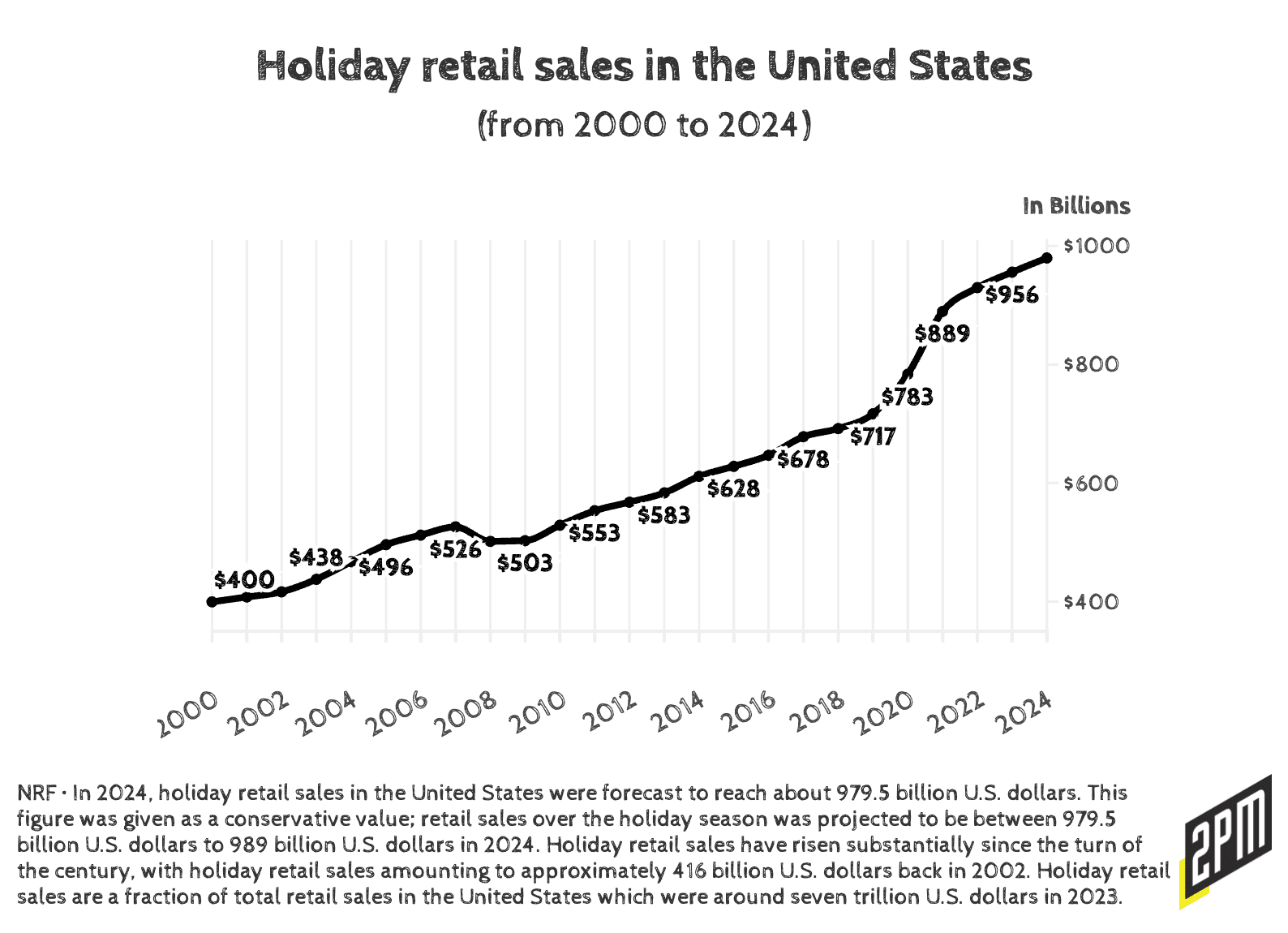
The lessons learned go far beyond Black Friday and Cyber Monday. Consumers must avoid the equating of happiness with material possessions. Corporations will also have to adapt to a new paradigm where sustainability will stand shoulder to shoulder with profitability. As the documentary eloquently concludes, “Whoever dies with the most stuff does not win.” The true measure of progress lies not in how much we consume but in how thoughtfully we live. This was another record-breaking Black Friday.

Sustainability is the wrong word, we need a reversal of policy, a reversal of collection, and a solution for the waste that has already left our grasp – from cardboard box to $17 Temu dress and $9 disposable men’s razor.

By Web Smith

Memo: The Distressed Brand

The opposite of brand equity isn’t no equity; it’s brand apathy. This is when a brand can appear to succeed financially while diminishing in stature. How many of your favorite brands have followed the same path you’ll read about below? There are lessons for anyone who ever dares to build from scratch. So, the brand was anonymized for the sake of this essay. Why?

A brand’s life cycle often mirrors a parabola: the rise, the zenith, and, for some, the descent. And for a small few: a resurgence. What happens when a once-vibrant brand begins to flicker, showing signs of an identity crisis and operational fatigue? For one brand, the streets have noticed, and the chorus of commentary grows louder by the day.

In the ever-dynamic world of cultural fashion, authenticity isn’t just a buzzword—it’s the currency that makes or breaks loyalty. Today, we delve into the case of a brand once considered untouchable in its space, now grappling with the realities of technical growth and brand apathy.

A Decline in Customer Intimacy

For years, the brand’s hallmark was its ability to connect with its audience. Customer service was sharp, swift, and personal—every email was answered, and every issue was resolved with a human touch. Fast forward to today, and the inbox silence is deafening. The company’s customer support team, once the bridge between the brand and its loyalists, now feels like an afterthought. Emails go unanswered for weeks, if they’re answered at all.

“This isn’t the brand I fell in love with,” says J.D., a longtime, self-described streetwear enthusiast. “They don’t even respond anymore, bro. We’re out here shouting into the void.”

The emotional disconnection bleeds into the larger narrative. When a brand begins to neglect its foundational relationships, it’s not just customers who notice—culture notices. And culture doesn’t forgive easily.

The Stagnant PR Machine

The drip-feed of stories, campaigns, and aspirational media coverage that once defined the brand’s public relations engine has all but stopped. The company’s media presence feels sluggish, almost indifferent. For a brand that thrived on relevance, it’s a quiet signal that something is amiss.

“I used to see them everywhere, stories that resonated. Now? It’s like they’ve stopped trying,” laments a frequent visitor to retail trade publications. “It feels like their ambition evaporated overnight.”

In a category where perception is everything, silence from the brand’s PR front is interpreted as either arrogance or neglect. Both are unflattering—and neither inspires trust.

The Shift in Product Design

One of the most glaring red flags is the evolution—or rather, the devolution—of the brand’s product line. Gone are the intricate, ambitious designs that catered to the tastemakers. In their place: simpler, safer, and more generic pieces.

“It’s like they’re designing for Target or Walmart now,” quips a long-time follower. “The vibe is gone. Where’s the personality?”

Another enthusiast added that the brand didn’t appear to be taking risks. Noting that, “they’re just trying to appeal to everybody. And when you appeal to everybody, you lose the ones who really matter.”

This shift towards mass-market appeal may seem like a smart move on paper—especially in a precarious economy—but it comes at a significant cost: cultural cachet. The die-hard fans who once championed the brand are now watching from the sidelines, unrecognizable in the sea of new, less discerning consumers. The ethos that made the brand distinct has been diluted to the point of no return.

The Cultural Rebellion

Among core communities – where word of mouth is king – an apathetic sentiment can damning. A brand that was once a badge of authenticity and style is now being described as out of touch, out of ideas, and, perhaps worst of all, irrelevant.

“They’ve lost us,” says Chris, who used to line up for drops that sold out in minutes. “If you’re not designing for us, then who are you designing for?”

Even the once-loyal, upper-middle-class white consumer—a demographic that brands in this space often count on for stable revenue—is turning away. “Honestly, I can get this same look at (noted mall brand),” says one former customer. “Why would I keep paying for a name that doesn’t mean anything anymore?

These aren’t isolated grumbles—they’re part of a growing chorus that underscores the brand’s fundamental disconnect from its consumer base.

Data Tells the Story

A closer look at the brand’s Charm.io metrics paints an even grimmer picture. While the brand maintains a respectable Charm Growth Score, the cracks are evident when we zoom into specific categories. Instagram engagement remains high, but the rest of the platform strategy – TikTok, Facebook, and X — speaks to an inconsistent and poorly aligned digital presence.

Traffic metrics bolster the narrative of stagnation. Monthly paid traffic is up 14%, but total traffic has declined by 8% over the last 12 months. Meanwhile, traditional advertising efforts are growing, signaling a reliance on paid media to fill the gap left by organic word-of-mouth, but it’s not enough to sustain the brand’s once-vibrant allure.

One surprising bright spot: online resellers. The brand’s notably high percentile indicates demand still exists in niche channels, likely among collectors and loyalists. But even this feels like a fleeting flicker of the brand’s past glory rather than a sustainable strategy.

The Root Cause

So, what happened? Was it poor leadership? A miscalculated pivot to mass appeal? The answers aren’t straightforward, but some trends emerge:

Overcorrection for Scale: The brand’s efforts to appeal to a broader demographic came at the expense of its core identity. Simplifying the product line may have boosted operational efficiency, but it alienated the tastemakers who built the brand in the first place.

Resource Drain: From customer service to PR to design, every touchpoint appears stretched thin. Whether due to financial strain or mismanagement, the cracks are glaring.

Digital Decline: The brand’s digital strategy feels reactive rather than proactive. While Instagram engagement remains strong, other platforms are being neglected, leaving critical audience segments untapped.

The Way Back

It’s not too late for the brand to stage a comeback. But doing so will require humility, focus, and a willingness to embrace the hard truths of its current situation. Here’s what needs to happen:

Reignite Authenticity: Double down on what made the brand special in the first place. Whether through limited-edition drops, collaborations with cultural icons, or a return to more daring designs, the brand needs to win back its core audience.

Reinvest in Relationships: Customer service isn’t optional—it’s foundational. Fixing this will require resources and effort, but it’s non-negotiable.

Simplify the Message: The brand’s current identity feels scattered. A cohesive narrative—supported by a consistent digital presence—can help regain consumer trust.

Accept Smaller Ambitions: Not every brand needs to be a mass-market success. There’s power in being niche, as long as it’s done intentionally.

****

The tale of this distressed brand isn’t just a cautionary one, it’s a lesson to others navigating the volatile world of fashion and culture. Staying relevant requires more than momentum; it requires a relentless commitment to the principles that made you great. Lose sight of those, and the descent begins.

As for this brand? The streets are still watching. The question is whether the story ends with a whimper—or with a comeback that defies the odds.

Written by Web Smith