
In December of last year, I proposed a novel concept to a returns management software company. I suggested that adding an exchange function to their technology stack would shape the industry by promoting a method of reCommerce and a post-purchase marketplace led by the company’s many direct-to-consumer clients currently using the software to simplify returns.
The idea’s crux was built on a critical issue rapidly gaining momentum: microplastics management. This environmental challenge pushes companies to reconsider their approach to product returns, recycling, and resale. The essence of my proposal was simple: companies need systems to upcycle and recycle materials, leveraging these efforts for tax incentives, public goodwill, or even profit. I ended the proposal with the following words (edited for brevity):
This idea is infinitely scalable and will be a prominent business with or without [company]. But you are positioned with several advantages and a head start to include: existing portfolio of companies to offer the service, a brand that suggests the power of upcycling, a network of potentially interested partners who can help you facilitate. I just happen to believe that this can transform [company] – moving it to a higher plane. And it can transform the industry that I love with all of my heart.
The proposal was scalable, innovative, and essential to addressing the growing microplastics crisis in the fashion industry. My proposal to the returns management company was not accepted. Fast-forward to the fourth quarter of 2024 and a better solution has been brewing for nearly three years. TipTop is a venture-backed development billed as a payments solution from Postmates founder Bastian Lehmann.
Recycled goods can be a downpayment on future purchase.
Lehmann’s TipTop is taking bold steps to reimagine the lifecycle of consumer goods: how they’re sold, acquired, and ultimately resold or recycled. With the rise of reCommerce (the resale of products), TipTop’s new payment system is an answer to a forward-thinking vision, one that aligns sustainability with profitability in the world of fast-moving consumer goods. Tiptop is designed to make it easy to resell and repurpose items and is not only a business model innovation but it can be a solution to an environmental dilemma that has been long overlooked until recently. On September 24, The Guardian published this legislative news on textiles in the state of California:
If passed, Californians will be able to bring unwanted and even damaged apparel and household textiles to thrift stores, charities and other accessible collection sites throughout the state for sorting and recycling. This first-in-the-nation bill, known as the Responsible Textile Recovery Act, requires producers of apparel, towels, bedding and upholstery to implement and fund a statewide reuse, repair and recycling program for their products. [cite]
It doesn’t require tremendous vision to see how TipTop’s payments architecture could replace altruism-alone for a more profitable version.
How It Works: The Power of TipTop’s Payment System
TipTop’s system addresses a fundamental problem in the retail ecosystem: it’s easier to buy than it is to sell. Consumers accumulate products—tech gadgets, clothing, accessories—often with no clear pathway for reselling or discarding them responsibly. Lehmann identified this gap and seized upon the opportunity to create a two-pronged platform that leverages consumer habits for both immediate monetary returns and longer-term resale plans.
With TipTop, users can receive instant cash offers for their old products, like electronics or fashion items, simply by connecting their Gmail or Amazon accounts. The platform scans for eligible items and predicts their resale value. This seamless experience removes the friction of traditional resale models, where consumers often have to stage, price, and list their items across multiple platforms like eBay or Facebook Marketplace. TipTop brings liquidity to this otherwise sluggish market, offering sellers cash in hand, while a delivery service picks up the product.
But TipTop’s real innovation is its payment solution, TipTop Pay, where the system allows buyers to receive an upfront discount on new items in exchange for committing to return them after a fixed period. This introduces an entirely new way to think about consumption—a shift from ownership to usage, akin to the “buy-now-pay-later” models that have reshaped retail finance. TipTop resells these items in bulk to wholesalers or via third-party marketplaces like eBay, creating a virtuous cycle of consumption and resale. If this vision can become a reality – at scale – it will revolutionize retail in ways yet to be seen.
For brands, this model is a game-changer. They can capture value from products after their initial sale, extending the lifecycle of goods and reducing the environmental impact associated with waste and overproduction. The speed of liquidity for the consumer is the “killer app.” And back to that sense of altruism, this concept ties directly to the need for sustainable initiatives I outlined in my original proposal: brands must move toward recycling, upcycling, and innovative disposal methods for microplastic-laden products to remain competitive and appease a more eco-conscious consumer base.
ReCommerce and Environmental Responsibility
The rise of reCommerce, or the resale of goods, is not just a trend but a critical business strategy for fashion and consumer brands navigating an era of heightened environmental awareness. As I noted in my 2023 study on the subject, the fast fashion and athleisure sectors are facing increasing scrutiny for their reliance on non-biodegradable synthetic fibers. By 2050, it’s estimated that 590 million tons of plastic will be produced annually, much of which will end up in landfills or the ocean.
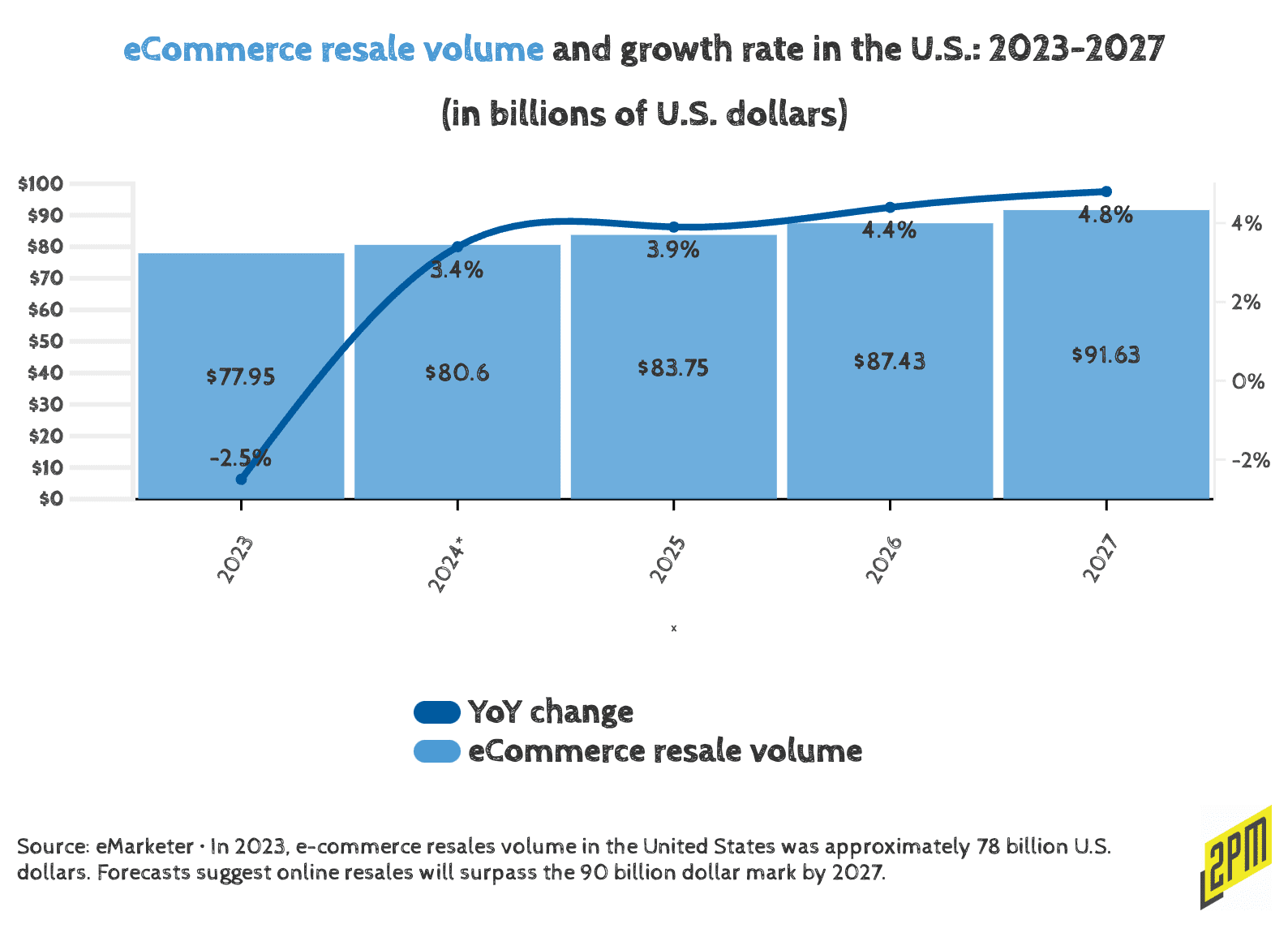
Legislative intervention, such as the aforementioned California’s Responsible Textile Recovery Act, is creating pressure for brands to address the environmental impact of their products. TipTop’s solution offers the path forward without relying on government, enabling brands to monetize the resale of their products while simultaneously contributing to a reduction in waste. By simplifying the process for consumers to return goods, and by providing a scalable marketplace for brands to resell items, I believe that TipTop aligns financial incentives with environmental responsibility.
This connection between reCommerce and sustainability is already evident in the actions of major players in the retail space. Brands like Patagonia, Levi’s, and Nike have introduced their own resale platforms, recognizing that the resale value of their products is an important metric for both sustainability and consumer loyalty. However, for smaller brands without the resources to build proprietary resale platforms, a solution like TipTop offers the same benefits without the infrastructure investment. And even the larger enterprise brands don’t have veriable, speedy liquidity built into their models.
A Solution for Microplastic-Fueled Industries
Industries heavily reliant on synthetic fibers: athleisure, fast fashion, and performance wear – are the most at risk in this new regulatory environment. As consumers become more aware of the health risks associated with the build up of microplastics in landfills and waterways, and as governments begin to legislate against this accumulation, brands will need systems in place to manage product lifecycles responsibly.
TipTop’s resale model offers a unique advantage for these brands. By facilitating the resale of synthetic products, it extends their lifecycle, potentially offsetting the negative environmental impact of their initial production. Moreover, as brands adopt recycling and upcycling strategies, TipTop’s system could evolve to accommodate returns of materials for recycling or resale: closing the loop on product lifecycles.
In this way, TipTop could answer one of the most pressing challenges facing the fashion industry: how to monetize sustainability. By creating a frictionless way for consumers to resell items, the platform not only encourages responsible consumption but also provides brands with a new revenue stream and a powerful marketing tool. Brands that adopt this model can position themselves as leaders in the sustainability space, differentiating themselves from competitors who continue to ignore the issue.
Smarter Than What I Envisioned
When I proposed to a returns management company in 2023 that they take ownership of the recycling and material return initiatives for microplastic-heavy brands, I knew that the conversation around fast fashion and environmental responsibility was only beginning. What I couldn’t have predicted was how quickly a solution like TipTop would emerge to fulfill that vision. Transactional ease for the consumer positively influences demand for the trade
TipTop represents the intersection of technological innovation and enviro-economic necessity. It’s a system that not only simplifies the resale process for consumers but also creates a viable, scalable solution for brands looking to reduce their environmental impact. Whether through electronics or fashion: the rise of reCommerce will define the next decade of retail, offering a new way for brands to engage with consumers and a new way for consumers to think about their role in the lifecycle of the products they buy.
As TipTop’s payment system gains traction, it may become the standard for brands seeking to integrate reCommerce-led sustainability into their business models. And for those brands that are ready to embrace this shift, the opportunity is clear: not only to meet consumer demand for more sustainable practices but also to monetize those efforts in ways that benefit each their bottom lines, consumers, and the planet. TipTop can shape sustainability and recommence by redefining payments.