No. 288: An open letter to publishers

well

To digital publishing executives. Yesterday’s Wall Street Journal published an eye-opening look at one of the best-positioned digital publishers in the industry.  Founded in 2008, Vox Media has raised $307.6 million in venture capital and made several key acquisitions. None of these acquisitions are more important than Recode, the tech news site founded by Kara Swisher. At a valuation in excess of $1 billion and nearly 700 employees (via Linkedin), Vox Media is by most accounts, the model venture-backed publisher.

Ryan Pauley, the brand’s talented SVP of biz ops and strategy also serves as the head of Concert, Vox Media’s attempt to platformize their sophisticated advertising operations. And recently, the company launched “The Goods”, the media conglomerate’s editor-driven attempt at driving affiliate commerce.

The Goods by Vox’s editorial team will publish a range of news, features, ongoing series, videos and Explainers each weekday. There will be an email newsletter delivering The Goods by Vox content to your inbox twice per week.

Vox’s Deputy Managing Editor Eleanor Barkhorn will oversee The Goods by Vox, as well as a team of talented reporters and editors, including Editor Julia Rubin and Deputy Editors Meredith Haggerty and Alanna Okun.

Vox Media PR

This doesn’t sound like the profile of a company that will struggle to reach $185 million in 2018 revenue but it is so. Digital advertising’s collapse is diminishing or has diminished several top publishers: Vice, Mashable, The Outline, and Buzzfeed. And there is no end in sight, as long as the duopoly of Facebook and Google persists.


2PM Datos

statistic_id288615_growth-of-digital-advertising-revenue-in-the-us-2017-2018-by-format-1.png

statistic_id455840_digital-market-outlook_-digital-advertising-revenue-in-the-us-2016-2022-by-format


One consistency that you’ll find across many of these media platforms, amidst sagging performance, is the outsized cost of managing advertising executives.

In August, Vox Media announced internally a reorganization of its advertising sales workforce, creating one team to handle major categories and accounts and another to focus on cultivating new business. In April, the company promoted Chief Marketing Officer Lindsay Nelson to become its chief commercial officer in charge of leading revenue growth efforts.

Amol Sharma | Wall Street Journal

One study places the average salary for lower level advertising sales employees at $120,000+ per year, cutting into companies’ gross margins while deepening the dependency on these personnel investments. Meanwhile, commerce operations are often reduced to inconsequential merch operations.

Screen Shot 2018-09-24 at 1.29.02 PM
Vox Media: SB Nation’s Shopify store

But not everyone in the industry sees it this way. Buzzfeed has one of the most robust commerce operations in the industry. In a recent report by The Information, Jonah Peretti’s strategy was laid bare:

Late last year, Mr. Peretti unveiled his “Nine Boxes” strategy in an employee memo outlining the areas the company was focusing on to increase revenue. They included ecommerce, programmatic ads and BuzzFeed News making TV shows for streaming services and TV networks. The goal of the memo was to provide clarity to employees about where they stood in the company’s strategy, one thing some employees had said was missing, Mr. Peretti said.

Publishers must begin deemphasizing digital advertising to invest in direct-to-consumer (DTC) commerce teams. These commerce teams should be equipped to handle all affiliate operations, in line with the brand’s strategy for commerce and advertising. Affiliate commerce operations is not a suitable role for journalists; they should focus on their crucial, core competency: creating and building community around their content. They are the priority!


Issue No. 280: Media companies are brands too

The digital landscape is changing beneath our feet. For publishers to continue building organic readership, they must become brands. Operating as a source of content is no longer enough. To do that, efforts can no longer be siloed, the traditional factions of legacy-styled newsrooms must fall.


There are publishers who are doing this successfully. In No. 252, 2PM took a deep dive into content and commerce. We recognized the media brands that drive meaningful operational margins with DTC commerce. Of these media brands, Uncrate may have the most notable blueprint for a publishing revenue ecosystem. The company generates revenue with (1) well-performing display ads, (2) a coveted native advertising offering, and an (3) online store featuring direct access to a curation of the brands most desired by the publisher’s target demo.

When this flavor of revenue operations works alongside a team focused on delivering relevant content, these three revenue components actually feed an aggregate growth in viewership, advertising interest, and social referrals. Investments into commerce operations indicate that digital publishers have prioritized the growth of self-sustaining ecosystems void of reliance on Google and Facebook. While publishers need the duopoly of Silicon Valley advertising giants, their pie is growing at your expense.

Read more of the issue here.

Por Web Smith | About 2PM

Nº 273: El lujo moderno no se doblega

Marca_de_agua_por_marca_de_cola
En la foto: Outdoor Voices, de nuestra Carta Abierta a los Directores Generales de la DNVB

En noviembre de 2016, Paul Munford , de Lean Luxe, escribió una especie de guion para las nuevas marcas de lujo modernas: los minoristas con muchas promociones no durarán.Losúltimos informes económicos sugieren que el apocalipsis del comercio minorista está llegando a su fin, una gran señal para las DNVB con aspiraciones que buscan expandirse al comercio físico.

Captura de pantalla 2018-06-12 a las 10.05.48 AM.png

Nos encontramos en una época de lanzamientos, colaboraciones, adquisiciones y reimaginaciones de marcas minoristas sin precedentes, muchas de ellas primero en línea. Esto nos lleva a preguntarnos qué separará a los ganadores de los productos básicos. Hay decisiones tempranas y permanentes que determinan la trayectoria de una marca. Por cada Mizzen + Main o Ministry of Supply, hay una State and Liberty. Por cada Outdoor Voices, hay una Bandier. Y por cada Away, hay un Raden. Cada decisión es importante. Y ninguna decisión importa más que los precios y las tendencias promocionales de una marca.

He aquí los diez puntos principales de algunos de los mejores trabajos de Munford:

  • Ninguna maniobra en el comercio minorista parece tan fácil de poner en marcha y, sin embargo, ninguna estrategia es tan perjudicial para las perspectivas a largo plazo de un minorista como el gran descuento. Es una píldora paliativa: maravillosa para el consumidor a corto plazo, pero en última instancia mala tanto para la empresa como para los compradores a largo plazo. Se trata de una mercantilización de la marca, que obliga a las empresas a diferenciarse por el precio. 
  • El segundo problema, también relacionado con la escala, es sistémico de la propia industria: La necesidad de añadir constantemente más y más productos a intervalos regulares, inundando el mercado con bienes que son más nuevos, pero rara vez mejores.
  • La tentación de los descuentos se vuelve entonces demasiado difícil de resistir. Proporciona un impulso a corto plazo a la cuenta de resultados y la ilusión de crecimiento, pero a expensas de la reputación de la marca y los beneficios sostenibles, dos arterias vitales para la salud general de una empresa.
  • Las empresas de lujo modernas han descubierto la fórmula, y es sorprendentemente sencilla: crear menos mercancía de la que se venderá (y predecir, si es posible, el índice de ventas, con pedidos anticipados), mantener alta la demanda. Abrazar la lista de espera, como hacen a menudo Everlane, Glossier, Caraa y Alala, entre otras. 
  • Nunca haga descuentos; preserve el prestigio de la marca. Sin embargo, estas tácticas no funcionan, o al menos no durante mucho tiempo, si el nivel de los productos está por debajo de lo normal.
  • Hermes, por ejemplo, tiene fama de no bajar nunca los precios. Sus productos tienen prestigio por ello y siempre hay demanda, por frívolo que sea el artículo. Y no dudan en poner a prueba los límites de la devoción de los consumidores: Ha llegado incluso a reempaquetar sus retales de cuero para venderlos como cajas de regalo de alto precio.
  • Que la oposición a los descuentos proceda de fundadores del emergente sector del lujo moderno no es casualidad. Por un lado, muestra el característico sentido de serena confianza en el producto por el que este grupo se está dando a conocer rápidamente. 
  • En cuanto al Sr. Preysman, el mantra del precio íntegro alimenta su misión de refinar constantemente el producto, mejorarlo y acercarlo cada vez más a la perfección según los estándares de la marca.
  • Sorprendentemente, rechazar el descuento también está bastante centrado en el consumidor. El eternamente sabio Ben Franklin lo dijo mejor, por supuesto, cuando ofreció esta observación: "La amargura de la mala calidad permanece mucho tiempo después de que se olvida la dulzura del bajo precio".
  • Se necesita una gran madurez y resistencia para luchar contra la necesidad de obtener un descuento temporal a costa de preservar la reputación a largo plazo. 

Madurez, paciencia, agallas y, tal vez, pobreza temporal son las claves para desarrollar el tipo de marcas que crecen para competir con leyendas milenarias y rivales feroces (pero, con suerte, amistosos). En 2013, Brooks Brothers comentó para el New York Times la influencia de Mizzen + Main en la industria camisera:

Aunque Brooks Brothers experimentó con camisas "de alto rendimiento" similares a las de Mizzen & Main, el Sr. Blee [portavoz de Brooks Brothers] afirmó que los clientes preferían la comodidad general del algodón convencional. Las fibras elásticas les parecían sintéticas. Aunque una gama de camisas oxford de Brooks Brothers tiene propiedades de evacuación de la humedad, dijo, "Se nos conoce como una casa de fibras naturales: 100% algodón, 100% cachemira" .

Sólo cinco años después, Brooks Brothers lanza un competidor para competir en un mundo de la moda masculina que está siendo redefinido por los tejidos técnicos y otras innovaciones.

Mizzen+Main en Twitter

somos lo bastante mayores para recordar cuando Brooks Brothers se reía de la moda masculina de alto rendimiento: https://t.co/5hBzcUHAEx https://t.co/xCN29dVk81

Recuerdo la alegría de que ese artículo llegara a los quioscos el 18 de diciembre de 2013. No por la notoriedad que nos proporcionaría, sino porque había pasado más de un año y medio y realmente necesitábamos las ventas. Nos mantuvimos firmes en el precio mientras creábamos alianzas y Kevin trabajaba febrilmente para mejorar el producto. Y la empresa perduró. Lo que Lavelle y su equipo han hecho hoy es espectacular. Y ha permitido a la marca estar, ojo con ojo, en los mismos clubes y en los mismos campos que la empresa que inventó el polo (lo siento, Ralph).

Para lograr crecimiento y longevidad, la marca no puede considerarse una habilidad blanda. El precio no puede considerarse una cifra arbitraria que manipular. Siempre hay que tener en cuenta las cinco fuerzas. Y la paciencia debe ser primordial porque las grandes marcas empiezan poco a poco. En la era de las DNVB de lujo modernas, esto es tan importante como los propios productos.

Más información: Carta abierta a los directores generales de la DNVB (Número 254)

Lea el resto del número 273 aquí.

Por Web Smith y Meghan Terwilliger | About 2PM

No. 268: The Billions Effect

facebook-ad copy 2

Affleisure: affluent leisure. Showtime’s hit series Billions peers into the life of Bobby Axelrod, a 9/11 survivor who rose through the ranks to become a billionaire hedge fund investor only to establish a rivalry with U.S. Attorney Chuck Rhoades. Axelrod is loosely based on hedge fund manager Steve Cohen and is described as a man from humble beginnings. This is the appeal of the most polarizing character on television. And he is just one part of premium cable television’s most talked about show.

If you’ve built a great product, you’ll need an audience. And if you’ve built a captive audience, you’ll need a great product. The study of content x commerce shouldn’t be reduced to digital publishing.  We see examples of media properties’ influence on commerce all around us. As such, analysts cannot ignore the influence that Billions and, particularly, Damien Lewis’ portrayal of ‘Bobby Axelrod’ has had on apparel consumers.

Historically, a media property’s proof of influence is the measure that drives advertising revenue. Thanks to a shift to streaming media, media conglomerates like Showtime, Inc. will measure this data in new ways. Namely: how will this media property advance our subscription business? 

The show, which averages between 4.5-to-5 million weekly viewers across platforms, has a very loyal legion of fans that via word-of-mouth, have helped grow the show’s viewership season-over-season. Throughout season two, the series grew on Sunday nights by more than 35% from premiere-to-finale. And, the season three premiere was the show’s highest-rated ever with the March 25 debut up 23% from last year.

Fans Love Billions, Forbes

Taking note of the viral spread of pop culture trends based on influence, Showtime recognized the opportunity to drive an additional revenue stream beyond the standard media subscriptions and event sponsorship (boxing, etc.).


Here is a recap from Issue No. 252: Content x Commerce Super Powers:

Billion’s Axe Capital is one of the most intriguing fictional companies on television. It should be no surprise that I’ve stumbled upon a handful of sophisticated finance-types wearing these branded hedge fund vests on a spring day in Manhattan. They are in on the joke.

But more than just intellectual property hawking, Showtime is innovating here. Their commerce software is capable of overlaying store content on screen during broadcasts.

Connekt’s patent for T-Commerce enables seamless and secure viewer engagement and checkout by combining consumer profiles with pre-existing registration services.

Showtime is preparing for an Apple TV-driven entertainment world where purchasing products is as simple as authorizing your iTunes account to spend $44.95 for the hoodie that Bobby Axelrod was wearing.

See the Showtime store here.


As media and branding continues to converge, controlling the ecosystem is key for many industry players. One of 2PM’s capstone beliefs is that success in merchandising is a foremost indicator that a publisher’s existing community can grow by word of mouth. And without the pull of fickle social networks or a weakening advertising business.

Web Smith en Twitter

Bobby Axlerod is influencing white collar soccer dads. Everyone is dressed in head-to-toe, all-black, biz-athleisure.

This is where cultural impact comes into play. Unlike viewership and eCommerce sales, culture can be difficult to quantify. But it’s apparent that the show is influencing its target demo: 24-39 year old males.

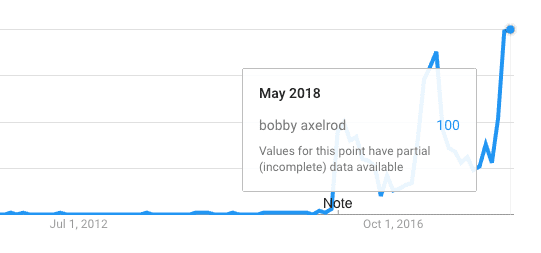
Type “Bobby Axelrod” into Google and the first recommendation that pops up is “Bobby Axelrod hoodie.” So, to satisfy your curiosity: Mr. Axelrod, the cool-as-an-ice-cube-in-Alaska protagonist of Showtime’s series “Billions,” wears Loro Piana zip-ups. They’re cashmere and just in case you’re really interested in dressing like the man who makes the billions on “Billions,” each one costs $2,295. 

How to Dress Like a Billionaire, Wall Street Journal

There is a palpable shift in both the style of clothing and the color palette used by the upper-middle class fans of the show in Silicon Valley, Los Angeles, New York, and even the metropolitan midwestern cities. Brands are beginning to partner with Showtime to capitalize on this.

Last week, Brooklyn’s Greats Brand released an ultra-limited edition Axelrod shoe; 100 pairs of the premium Italian-suede shoes sold out in under 17 minutes. Viewers are so drawn to morally-ambiguous Bobby Axelrod that they’re buying shoes in his name.

Screen-Shot-2018-05-07-at-3.41.18-PM.png
May 2018 saw peak search traffic for the ‘Billions’ character

CEO of GREATS Brand (2PM No. 73), Ryan Babenzien had this to say in defense of the collaboration:

Bobby Axelrod is a man from humble beginnings. A desire to escape his means and prove his ambition drove years of hustling and grinding. Add no small amount of cunning, and eventually Axe made himself into one of the most powerful men on Wall Street: a bona fide billionaire. We admire Axe for his ambition as much as we do for his style. Favoring a well-worn pair of jeans and Metallica t-shirt over the obvious power-suit, Axe carries himself with the confidence and understated elegance that we appreciate here at GREATS. With Axe as our inspiration, we partnered with Showtime to create our richest Royale yet.

Billions has achieved a television milestone like only a handful of shows before it. It’s influenced men’s fashion by redefining business casual (specifically high dollar affleisure) for white collar workers. Babenzien’s aforementioned statement perfectly summarized the character’s appeal. The shoe collaboration further established the influence of the show’s culture and the virtuous cycle of water cooler chatter, media buzz, and search traffic around each week’s episode. Coincidentally, the most recent Sunday night was the show’s strongest in its three year history.

Read more of the issue here.

Por Web Smith y Meghan Terwilliger | About 2PM