第 288 期:致出版商的公开信

well

To digital publishing executives. Yesterday’s Wall Street Journal published an eye-opening look at one of the best-positioned digital publishers in the industry.  Founded in 2008, Vox Media has raised $307.6 million in venture capital and made several key acquisitions. None of these acquisitions are more important than Recode, the tech news site founded by Kara Swisher. At a valuation in excess of $1 billion and nearly 700 employees (via Linkedin), Vox Media is by most accounts, the model venture-backed publisher.

Ryan Pauley, the brand’s talented SVP of biz ops and strategy also serves as the head of Concert, Vox Media’s attempt to platformize their sophisticated advertising operations. And recently, the company launched “The Goods”, the media conglomerate’s editor-driven attempt at driving affiliate commerce.

The Goods by Vox’s editorial team will publish a range of news, features, ongoing series, videos and Explainers each weekday. There will be an email newsletter delivering The Goods by Vox content to your inbox twice per week.

Vox’s Deputy Managing Editor Eleanor Barkhorn will oversee The Goods by Vox, as well as a team of talented reporters and editors, including Editor Julia Rubin and Deputy Editors Meredith Haggerty and Alanna Okun.

Vox Media PR

This doesn’t sound like the profile of a company that will struggle to reach $185 million in 2018 revenue but it is so. Digital advertising’s collapse is diminishing or has diminished several top publishers: Vice, Mashable, The Outline, and Buzzfeed. And there is no end in sight, as long as the duopoly of Facebook and Google persists.


2PM 数据

statistic_id288615_growth-of-digital-advertising-revenue-in-the-us-2017-2018-by-format-1.png

statistic_id455840_digital-market-outlook_-digital-advertising-revenue-in-the-us-2016-2022-by-format


One consistency that you’ll find across many of these media platforms, amidst sagging performance, is the outsized cost of managing advertising executives.

In August, Vox Media announced internally a reorganization of its advertising sales workforce, creating one team to handle major categories and accounts and another to focus on cultivating new business. In April, the company promoted Chief Marketing Officer Lindsay Nelson to become its chief commercial officer in charge of leading revenue growth efforts.

Amol Sharma | Wall Street Journal

One study places the average salary for lower level advertising sales employees at $120,000+ per year, cutting into companies’ gross margins while deepening the dependency on these personnel investments. Meanwhile, commerce operations are often reduced to inconsequential merch operations.

Screen Shot 2018-09-24 at 1.29.02 PM
Vox Media: SB Nation’s Shopify store

But not everyone in the industry sees it this way. Buzzfeed has one of the most robust commerce operations in the industry. In a recent report by The Information, Jonah Peretti’s strategy was laid bare:

Late last year, Mr. Peretti unveiled his “Nine Boxes” strategy in an employee memo outlining the areas the company was focusing on to increase revenue. They included ecommerce, programmatic ads and BuzzFeed News making TV shows for streaming services and TV networks. The goal of the memo was to provide clarity to employees about where they stood in the company’s strategy, one thing some employees had said was missing, Mr. Peretti said.

Publishers must begin deemphasizing digital advertising to invest in direct-to-consumer (DTC) commerce teams. These commerce teams should be equipped to handle all affiliate operations, in line with the brand’s strategy for commerce and advertising. Affiliate commerce operations is not a suitable role for journalists; they should focus on their crucial, core competency: creating and building community around their content. They are the priority!


Issue No. 280: Media companies are brands too

The digital landscape is changing beneath our feet. For publishers to continue building organic readership, they must become brands. Operating as a source of content is no longer enough. To do that, efforts can no longer be siloed, the traditional factions of legacy-styled newsrooms must fall.


There are publishers who are doing this successfully. In No. 252, 2PM took a deep dive into content and commerce. We recognized the media brands that drive meaningful operational margins with DTC commerce. Of these media brands, Uncrate may have the most notable blueprint for a publishing revenue ecosystem. The company generates revenue with (1) well-performing display ads, (2) a coveted native advertising offering, and an (3) online store featuring direct access to a curation of the brands most desired by the publisher’s target demo.

When this flavor of revenue operations works alongside a team focused on delivering relevant content, these three revenue components actually feed an aggregate growth in viewership, advertising interest, and social referrals. Investments into commerce operations indicate that digital publishers have prioritized the growth of self-sustaining ecosystems void of reliance on Google and Facebook. While publishers need the duopoly of Silicon Valley advertising giants, their pie is growing at your expense.

Read more of the issue here.

By Web Smith |About 2PM

第 273 期现代奢华不弯曲

水印_ByTailorBrands
Pictured: Outdoor Voices, from our Open Letter to DNVB CEOs

In November of 2016, Lean Luxe’s Paul Munford penned somewhat of a scripture to upstart modern luxury brands: promotion-heavy retailers will not last. There are few takeaways from “The Downward Spiral” that are worth mentioning as recent economic reports suggest that the retail apocalypse is coming to an end, a great sign for aspirational DNVBs that are looking to expand into physical retail.

Screen Shot 2018-06-12 at 10.05.48 AM.png

We are in a time of unprecedented retail brand launches, collaborations, acquisitions, and re-imaginations – much of which is online-first. This begs the question, what will separate the winners from the commodities? There are early and permanent decisions that determine a brand’s trajectory. For every Mizzen + Main or Ministry of Supply, there is a State and Liberty. For every Outdoor Voices, there is a Bandier. And for every Away, there is a Raden. Each decision matters. And no decision matters more than pricing and a brand’s promotional tendencies.

Here are the top ten takeaways from some of Munford’s best work:

  • No maneuver in retail appears to be as easy to roll out, yet no strategy is as detrimental to a retailer’s long term prospects as the heavy discount. It is a palliative pill: wonderful for the consumer in the short run, but ultimately bad for both business and shoppers over time. It commoditizes the brand, forcing companies to differentiate on price. 
  • The second problem, also related to scale, is systemic to the industry itself: The need to constantly add more and more products at regular intervals, flooding the marketplace with goods that are newer, but rarely better.
  • The lure of the discount, then, becomes too hard to resist. It provides a short term boost to the bottom line and the illusion of growth, but at the expense of brand reputation and sustainable profit — two vital arteries for a business’s overall health.
  • Modern luxury companies have figured out the formula, and it’s remarkably simple: create less merchandise than will sell (and predict, if possible, the sell-through rate, with pre-orders), keep demand high. Embrace the waiting list, as Everlane, Glossier, Caraa, and Alala, among others, often do. 
  • Never discount; preserve the standing of the brand. These tactics certainly do not work, however, or at least for very long, if product standards are below par.
  • Hermes, for instance, is notorious for never slashing prices. Its products carry a prestige because of that, and there is always a demand, no matter how frivolous the item. And they certainly are not above testing the limits of consumer devotion: It has even gone so far as to repackage its cutting floor leather scraps to sell them as high-priced gift boxes.
  • That opposition to discounting would come from founders within the emerging modern luxury industry is no coincidence. For one, it displays the trademark sense of calm confidence in the product that this group is quickly becoming known for. 
  • As for Mr. Preysman, the full price mantra feeds into his mission to constantly refine the product, to make it better, and push it ever closer to perfection according to the standards of the brand.
  • Surprisingly, rejecting the discount is also quite consumer-centric. The eternally-wise Ben Franklin said it best, of course, when he offered this observation: “The bitterness of poor quality remains long after the sweetness of low price is forgotten.”
  • It takes superb maturity and a great deal of resilience to fight the urge for the temporary discount boost at the expense of preserving a long term reputation. 

Maturity, patience, grit, and perhaps temporary poverty are keys to developing the types of brands that grow to compete with age old legends and fierce (but hopefully friendly) rivals. In 2013, Brooks Brothers commented on Mizzen + Main’s influence on the shirting industry for the New York Times:

While Brooks Brothers experimented with “performance” shirts akin to Mizzen & Main’s, [Brooks Brothers’ spokesman] Mr. Blee said that customers preferred the general wearability of conventional all-cotton. The stretch fibers felt synthetic to them. Although a range of Brooks Brothers oxford shirts have moisture-wicking properties, he said, “We are known as a natural-fiber house: 100 percent cotton, 100 percent cashmere.

Just five years later, Brooks Brothers is launching a competitor to compete in a menswear world that is being re-defined by technical fabrics and other innovations.

Mizzen+Main on Twitter

we’re old enough to remember when Brooks Brothers laughed at performance menswear: https://t.co/5hBzcUHAEx https://t.co/xCN29dVk81

I remember the joy of that article hitting the newsstands on December 18, 2013. Not because of the notoriety that it would provide but because it had been over a year and half and we really needed the sales. We stood firm on our price while we built allegiances and Kevin worked feverishly to improve the product. And the company lasted. What Lavelle and team has done today is nothing short of spectacular. And it has allowed the brand to stand, eye to eye, in the same clubs and on the same courses as the company that invented the polo shirt (sorry, Ralph).

To achieve growth and longevity, branding cannot be viewed as a soft skill. Price cannot be viewed as an arbitrary number to manipulate. The five forces must always be considered. And patience must be paramount because great brands start slowly. In the age of modern luxury DNVB’s this is as important as the products themselves.

Read more: An Open Letter to DNVB CEOs (Issue No. 254)

Read the rest of Issue No. 273 here.

By Web Smith and Meghan Terwilliger |About 2PM

第 268 期:十亿效应

facebook-ad 副本 2

Affleisure:富裕休闲。Showtime 的热门剧集《Billions》讲述了 911 事件幸存者鲍比-阿克塞尔罗德(Bobby Axelrod)的一生,他从一个普通人成长为亿万富翁对冲基金投资人,却与美国检察官查克-罗兹(Chuck Rhoades)建立了竞争关系。阿克塞尔罗德的原型是对冲基金经理史蒂夫-科恩(Steve Cohen),被描述为一个出身卑微的人。这就是电视上最两极分化角色的魅力所在。而他只是高端有线电视最受关注节目的一部分。

如果你打造了一个伟大的产品,你就需要一个受众。如果你已经拥有了一批忠实的受众,你就需要一个伟大的产品。对内容 与商业 的研究不应局限于数字出版。 我们身边随处可见媒体对商业产生影响的例子。因此,分析师不能忽视《十亿》 ,尤其是达米安-刘易斯扮演的 "鲍比-阿克塞尔罗德 "对服装消费者的影响。

从历史上看,媒体属性的影响力证明是推动广告收入的衡量标准。由于向流媒体的转变,像 Showtime 公司这样的媒体集团将以新的方式来衡量这些数据。即:这一媒体属性将如何推进我们的订阅业务? 

该剧在各个平台的平均周收视率在 450 万到 500 万之间,拥有一批非常忠实的粉丝,他们通过口口相传,帮助该剧的收视率逐季增长。在第二季中,该剧周日晚间的收视率从首播到终播增长了 35% 以上。而第三季的首播收视率也创下了该剧的最高纪录,3 月 25 日的首播收视率比去年增长了 23%。

粉丝们热爱《福布斯

Showtime 注意到流行文化趋势在影响力基础上的病毒式传播,认识到有机会在标准媒体订阅和活动赞助(拳击等)之外带来额外的收入来源。


以下是以下内容的回顾 第 252 期:内容 x 超级商业力量:

Billion'sAxe Capital 是电视上最引人入胜的虚构公司之一。在曼哈顿的春日里,我偶然发现了一些穿着这些品牌对冲基金马甲的成熟金融人士,这并不奇怪。他们是在开玩笑。

不过,Showtime 不仅仅是在兜售知识产权,更是在进行创新。他们的商务软件能够在播放过程中在屏幕上叠加商店内容。

Connekt 的 T-Commerce 专利通过将消费者档案与已有的注册服务相结合,实现了无缝、安全的观众参与和结账。

Showtime 正在为苹果电视驱动的娱乐世界做准备,在这个世界里,购买产品就像授权你的 iTunes 账户花 44.95 美元购买鲍比-阿克塞尔罗德(Bobby Axelrod)穿的连帽衫一样简单。

点击此处查看 Showtime 商店。


随着媒体和品牌的不断融合,对许多行业参与者而言,控制生态系统是关键所在。2PM 的基本信念之一是,商品销售的成功是出版商现有社区口碑增长的首要指标。而且不受善变的社交网络或日渐衰弱的广告业务的影响。

推特上的网络史密斯

Bobby Axlerod 正在影响着白领足球老爸们。每个人都穿着从头到脚的全黑商务休闲装。

这就是文化影响发挥作用的地方。与收视率和电子商务销售额不同,文化很难量化。但很明显,该节目正在影响其目标人群:24-39 岁的男性。

在谷歌上输入 "鲍比-阿克塞尔罗德",跳出来的第一个推荐就是 "鲍比-阿克塞尔罗德连帽衫"。为了满足你的好奇心阿克塞尔罗德先生,Showtime 的《Billions》系列剧中酷得像阿拉斯加冰立方体的主角,穿着 Loro Piana 拉链衫。它们是羊绒的,如果你真的有兴趣穿得像 "Billions "中赚取数十亿美元的人一样,每件售价为 2295 美元。 

如何穿得像亿万富翁,《华尔街日报

在硅谷、洛杉矶、纽约,甚至中西部的大都市,中上阶层的剧迷在服装风格和色调上都发生了明显的变化。各品牌开始与 Showtime 合作,以充分利用这一点。

上周,布鲁克林的Greats 品牌发布了一款超限量版的阿克塞尔罗德鞋;100 双高级意大利绒面革鞋在不到 17 分钟的时间内销售一空。观众被道貌岸然的鲍比-阿克塞尔罗德所吸引,纷纷以他的名义购买鞋子。

Screen-Shot-2018-05-07-at-3.41.18-PM.png
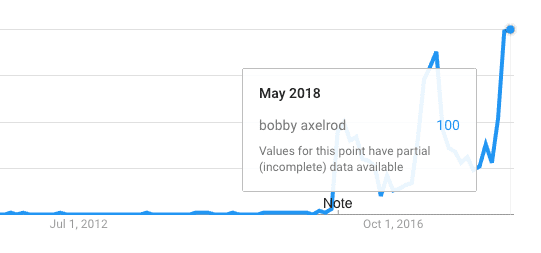
2018 年 5 月,"亿 "字的搜索流量达到峰值

GREATS 品牌(2PM 第 73 位)首席执行官 Ryan Babenzien 在为这次合作辩护时这样说道:

鲍比-阿克塞尔罗德出身卑微。为了摆脱困境,证明自己的雄心壮志,他多年来兢兢业业。再加上不小的狡猾,阿克斯最终成为华尔街最有权势的人之一:一个名副其实的亿万富翁。我们钦佩阿克斯的雄心壮志,同样也钦佩他的行事风格。他喜欢穿一条破旧的牛仔裤和 Metallica T 恤,而不是显而易见的劲装,他的自信和低调优雅正是我们 GREATS 所欣赏的。以 Axe 为灵感来源,我们与 Showtime 合作,打造了迄今为止最丰富的 Royale 系列。

亿万富翁》(Billions)实现了一个电视里程碑,在此之前只有少数几部剧集能做到这一点。它重新定义了白领的商务休闲(特别是高价休闲,从而影响了男士时尚。Babenzien 的上述言论完美地概括了这一角色的魅力。这次鞋履合作进一步确立了该剧文化的影响力,以及围绕每周剧集的饮水机话题、媒体讨论和搜索流量的良性循环。巧合的是,最近的周日晚是该节目三年来最火爆的一天。

点击此处阅读更多相关内容

By Web Smith and Meghan Terwilliger |About 2PM