Member Brief: Omnichannel Nirvana

The two sides are seeking omnichannel nirvana.

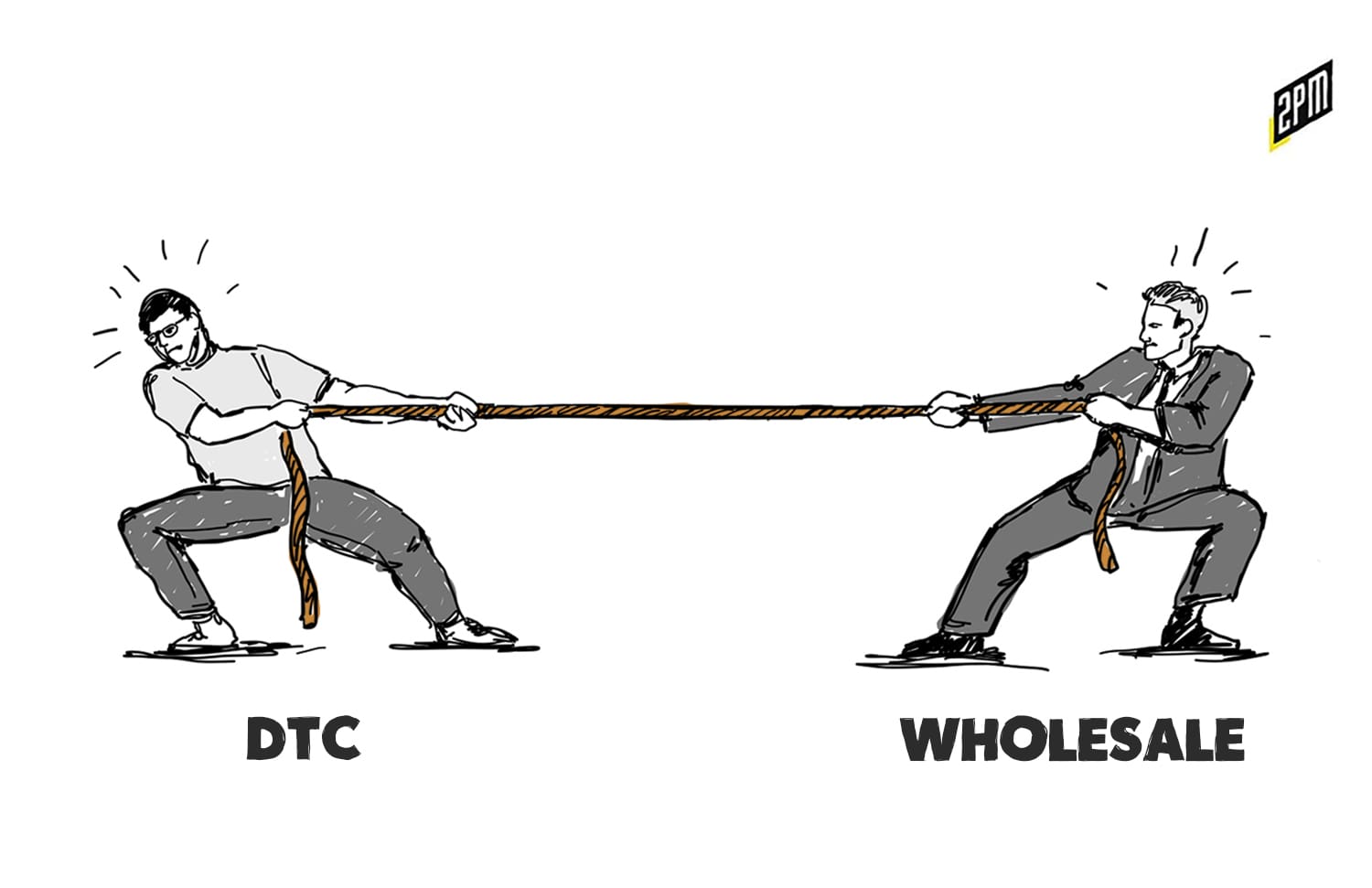
As Nike focuses on its direct-to-consumer strategy, hurting department and specialty stores in the process, Allbirds is cozying up to wholesale. It’s an interesting paradox in omnichannel strategy that takes brand awareness and unit economics into consideration. The brands with sales velocity and stature to own their distribution can and will move towards an owned-store / DTC model. Brands working to reach profitability and scale are moving towards third-party retail wholesale partnerships.

A cycle seems to be forming: digitally-native and traditional brands that reach critical mass by working with wholesalers may eventually resign to a digital-first strategy.

This is just another sign of the vulnerable state of the DTC playbook and follows this macro-trends shaping retail right now. In just one week since publishing, two key commerce trends and their ripple effects outlined by 2PM on Tuesday began playing out in real time. From the Digital Commerce Global Summit presentation:

Physical-to-digital: Retailers are pulling back from third-party retailers

Una estrategia líder para las marcas de todos los tamaños y estatus es crear intencionada y cuidadosamente una red mayorista que permita el control del inventario y la asociación por encima del enfoque de rociar y rociar de las generaciones minoristas del pasado. Los minoristas externos desempeñarán un papel menor y diferente que antes, ya que las marcas se centrarán en sus propios canales. Un ejemplo: Nike tendrá un 70% de venta directa en 2027.

Digital-to-physical: DNVBs are opening owned shopping experiences

Para las marcas en línea, la expansión se produce en las tiendas. Las tiendas físicas realzan el halo online de la marca y, si se hacen bien, generan dinero. El riesgo es evitar la sobreventa. En paralelo a esta expansión, el centro comercial se rehará a imagen y semejanza de DTC.

Allbirds’ earnings this week underscored its need to rethink its physical store and wholesale strategies. According to CNBC, shares fell after the brand posted mounting costs that ate into profits. Retail store openings were a top expense. To recoup sales, Allbirds said it would be selling through third-party retailers, naming Nordstrom as its wholesale partner. A recent WWD article explained:

The company will start wholesaling primarily in the U.S. as well as a small number of European retailers, with Asian stores in the plans for the future, Zwillinger said. He said the stores will not be given access to the full Allbirds assortment but select products most appropriate for their market segments. They will be limited in what they can sell on promotion to maintain Allbirds’ pricing integrity that it has maintained for the past five years, Zwillinger said.

To return to its DTC roots, Allbirds will need to grow its business and build stronger brand equity while maintaining the unit economics (pricing integrity) that CEO Joey Zwillinger cited in his comments to WWD. Nike has had a decades long advantage and it is an unfair comparison but this reversal is how it’s currently rebuilding its distribution model. According to NPD Group, Nike, along with Adidas and Skechers, is its own best retail channel.

Nike’s direct retail strategy is vast and nuanced, factoring in store concepts, gaming, apps and Web 3.0. Its plans to own the customer at every interaction is hurting retailers that have come to rely on it. Footwear News cited an urgency to consolidate distribution at Nike headquarters:

For Nike, an aggressive DTC strategy has led the brand to terminated wholesale accounts with retailers like Zappos, Dillard’s, DSW, Urban Outfitters, Shoe Show and more, leaving many retailers without the ability to sell one of the most popular brands in stores. Nike has also cut back on the amount of product it is offering in existing vendors, like Foot Locker, in order to consolidate distribution.

Foot Locker shares fell as it reported a grim outlook on the heels of losing some of Nike’s presence in stores. And other retailers like DSW and Urban Outfitters and Shoe Show have faced similar market pressures after news of Nike’s departure. While the brands are along their own cycle, the stores that rely on them are experiencing their own renaissance. It won’t be doom nor gloom for most.

If my assumptions are correct, the omnichannel void left by the largest, most established retailers will be filled by the up and coming class of modern brands like Allbirds and NOBULL. And then five, 10, or 20 years from now, the same stories may be written about these modern brands looking to build their futures – this is the new shape of the symbiotic relationship between brands, physical retailers, and evolving distribution strategies.

On one end: profitable, enterprise traditional brands are in the news for moving away from wholesale and towards DTC. And on the other end: yet-to-be profitable digitally-native brands are in the news for moving towards department store wholesale in search of profits and scale.

They’re each trying to achieve a sort of omnichannel nirvana.

By Web Smith | Editor by Hilary Milnes with art by Christina Williams

Memo: Peloton, Just Do It.

Who knows? It’s likely that Nike will dismiss rumors of its potential Peloton takeover if they haven’t already. CNBC noted earlier that John Foley has “unwavering confidence” in the company’s future as a standalone company. Peloton is not the type to cede power to any external company but if they did, it would work wonderfully. Assuming the deal won’t happen, this is why it should have. This Bloomberg opinion piece was spot on:

Nike can be considered a luxury label if you look at the upper-end of its price ranges, with jackets and sneakers topping $500. That fits well with Peloton’s positioning, given its hefty price tags, with bikes starting at $1,495.

What Peloton needs more than anything is energized and engaged new users who will feel comfortable paying the full price for Peloton hardware while remaining engaged in the mobile app and virtual community that comes with it. Nike can offer this, especially now that American consumers are returning to gyms:

Nike has spent years investing in its virtual community by leaning heavily into a suite of apps that serve different customers and different needs. Its main Nike app is for straightforward shopping, Nike Run Club and Nike Training Club track workouts, and the SNKRS app is the go-to for sneaker heads closely following upcoming drops and releases. Being a Nike+ member, while free, activates a closer relationship to the retailer via product updates and exclusives. It’s easy to see how Peloton could fit into Nike’s fitness apps and propel a spin into paid memberships for Nike. The user bases of the two companies likely overlap but there are a number of cross-selling opportunities between the two. Peloton’s high-earning customers could level up Nike’s positioning as a luxury offering for those who want to buy in, while Nike’s vast reach will inject Peloton with efficient customer acquisition. It’s also easy to see why Peloton might need Nike’s assistance.

The Peloton brand isn’t what it was. In Peloton’s Diffusion, we wrote: “In diffusing its rabid base to gain as many customers as possible, it weakened the bonds between those in its core demographic.” The result of targeting mass adoption by lowering prices and increasing financing opportunities meant that the brand stands for less to its early adopters that turned the in-home cycle to one with a cultish following. It is reflected in its diminished apparel business. CNBC recently reported that it is slashing its apparel sales forecast for 2022. Still, Peloton’s product is still superior to any competitor on the market – for now. Echelon recently convinced the USPTO that Peloton’s patents for streaming and on-demand classes were not actually patentable. According to a recent Bloomberg report, there could be more to come.

The risk with Peloton’s strategy is that it could backfire if courts deem that its “revolutionary technology” isn’t so revolutionary after all. As in, what just happened with Echelon. Should this occur on a wider scale, Peloton risks finding itself out millions of dollars and without legal protections for the core of its business.

So if Peloton is losing brand equity, losing the rights to technological patents that differentiated it from competitors, and losing the battle against the resurgent interest in gyms – who better to reinvigorate interest in the product than Nike?

Nike’s been transitioning to a direct-to-consumer brand. In addition to its apps, it’s spent time investing in store concepts like House of Innovation, curtailing underperforming wholesale partnerships and tiering its products to create a fuller, richer experience for direct customers. Recent initiatives to bring Nike to Web3 have underscored the important of a DTC strategy. Nike has been busy filing trademarks for the metaverse, building a virtual Nikeland world on Roblox and it also acquired RTFKT, signaling a deeper investment in the metaverse.

As a result, Nike isn’t just an apparel company any longer. It’s a direct-to-consumer leader and a Web3 pioneer. With a Peloton deal, Nike would receive hundreds of thousands of screens to market its own products: physical, digital, and everything in between. But more importantly, it would properly position it against its foremost challenger: Lululemon/Mirror and Tonal’s continued rise in prominence.

Nike and Amazon’s pursuits of Peloton will likely end with little to show for it. Acquisition interest comes and goes. But if there was a partner suited to benefit from Peloton’s existing infrastructure, it would be Nike. In a recent deep dive into another retailer’s strategy, we explained that Nike was actually laying the groundwork for its involvement in the in-home digital fitness arena:

Nike is laying the groundwork for further expansion. The brand is currently going up against Lululemon in a patent spat over Mirror technology – demonstrating it’s fighting for ownership in a bigger Nike universe.

When Nike sued Lululemon for patent infringement over its Mirror technology in December, implications that Nike is planning its own investment in hardware and at-home fitness tech were apparent. The lawsuit accuses Lululemon of infringing patents, including exertion-level technology, user competitions and performance recordings. Whether or not Nike’s future in at-home fitness tech lies with Peloton, its aggressive move to challenge Lululemon and Mirror’s own strategy signals that Nike is at least threatened by the category’s rise encroaching on its turf.

John Foley is an independent thinker, a CEO that thrives on control and territorial leadership. It’s unlikely that he will cede any power to fitness’ top company. But if he did, it would be the most mutually beneficial relationships in business today. In Nike, Peloton receives a pipeline of new business and a reestablished footing in luxury fitness. In Peloton, Nike claims a stake what appears to be a multi-pronged approach to grow into owned physical spaces, owned digital channels, and a burgeoning Web3 space where the behaviors of IRL community and digital commerce collaborate in new ways. Even here, Peloton can help facilitate further innovation.

Peloton has shed the market cap to make this $10 billion bet one that makes sense for the $230 billion brand. In the small chance that the sides see that they share many of the same goals, Nike will be as present in the home as it is in gyms, the metaverse, and sporting arenas everywhere. And Peloton, who has increased ad placements by 46% over the previous three months would have the total addressable market that money could not buy.

By Web Smith | Edited by Hilary Milnes with art by Christina Williams and Art Remy

Member Brief: Not Authenticated

Since StockX began minting its own Nike sneaker NFTs in January, it’s been tempting fate. Now that Nike has come along with a lawsuit that claims the online reseller’s NFTs are in violation of its trademarks, more will be decided on who has rights to what real-world intellectual property in the metaverse.

Este informe está destinado exclusivamente a Miembros ejecutivos, para facilitarle la afiliación, puede hacer clic a continuación y acceder a cientos de informes, a nuestra lista DTC Power List y a otras herramientas que le ayudarán a tomar decisiones de alto nivel.

Únete aquí