Members: Juneteenth and American Dreams

SM-B6NAw

The discussion between us was slow and every answer labored. It was difficult to tactfully explain the concept of an “unnecessary wait.”

There’s always a wait.

Modern Retail editor Cale Weissman wanted to understand the Black perspective of those of us in eCommerce. I didn’t have many answers for him. I worked to moderate my responses, struggling to mask volumes of persisting frustrations within the digital industries. At one point, Weissman asked for a list of venture-backed founders in the direct-to-consumer space. There was, of course, the obvious answer. Tristan Walker rolls off the tongue. But I didn’t have a novel response in that moment and I was ashamed of that. There are so few Black professionals in this space. For the vast majority of prospective executives, founders, or investors, they’re still waiting.

A portmanteau of “June” and “nineteenth”, you’ll see Juneteenth celebrations from Target, Nike, Glossier, Deciem, Ford Motors, Adobe, Allstate, Altria, Best Buy, Google, JPMorgan, Lyft, Mastercard, Postmates, Tesla, SpaceX, RXBar, Spotify, Twitter, Square, Workday, Uber, and countless others. Most of it will be in vain and some of the efforts will be widely panned.

Dino-Ray “96,000” Ramos on Twitter: “.@Snapchat released a statement about their #Juneteenth filter… pic.twitter.com/KWPZnlWG3n / Twitter”

@Snapchat released a statement about their #Juneteenth filter… pic.twitter.com/KWPZnlWG3n

You’ll observe brands, people, and media commentators missing the point. You’ll see gimmicks, carefully crafted statements, and an oversimplification of a complex period in American history. Imagine our great grandchildren over-simplifying the present day.

For some of us, Juneteenth was only sort of a celebration. Imagine wanting something for your entire life and then waiting two and a half more years for that something. It’s a bittersweet celebration. For those of us who descended from those strong-minded South Texans, today is the annual reminder of their physical, mental, and emotional resilience. It’s a reminder of our inherited endurance, will, and resourcefulness. There’s always a wait. So, Juneteenth: a celebration, sure. A national holiday? Of course. But within the confines of the classrooms, offices, or neighborhoods of our American cities, Juneteenth should be a day to reflect on the waits that remain.

Grandchild of Slaves and Grandma to Me

Dorothy Smith’s grandson’s first essay remained on her bookshelf. It was an elementary school recount of Jack Roosevelt Robinson’s embattled life, the first man to cross the color barrier in Major League Baseball. I remember the essay because in 1992, it was my first time using a color printer for a school project. I recall the pride of using an image of his baseball card as the hook for a project that made me emotional, even as a nine-year-old. The eight-page report was double-spaced with size 18 font. For some reason, she was proud of that essay and it remained in her home until her passing in April of 2014. She’d critique the cadence and the word choices. She’d implore me to slow down when I read it aloud; I stuttered heavily back then. I credit our conversations for helping to heal that ailment.

Between 1992 and 2014, she’d go on to help me with a number of essays. As she got older and less capable, she’d listen to me narrate the stories that I wrote. But earlier in my life, she’d actually help me write them. A highly educated woman, she was my hero. By the end of this essay, she might be yours. One of those essays was a seventh grade report on Juneteenth’s impact on my own family. I’ll never forget her input:

The message of freedom didn’t make it all the way down here and, so, they had to wait a little bit longer. There was always a wait. There’s always a wait.

President Abraham Lincoln drafted Proclamation 95 in September 22, 1862. Imagine hearing word of this proclamation and then waiting for it to save you. It was effective, five months later, as of January 1, 1863. Imagine counting down those days to freedom. For some, the count was far longer. For that lot, their freedom was hidden by economic and political disdain for the federal order. It would be an additional two years before my relatives heard the news.

Every advocate of slavery naturally desires to see blasted, and crushed, the liberty promised the black man by the new constitution.

Those were the words of Abraham Lincoln in 1864 to Union General Stephen Hurlbut, an ally on paper but a critic in private. Even after the order, a number of states avoided the action required to fulfill the president’s wishes. According to Dorothy Smith, the population of Texas was aware of their ordered freedom long before they received it. For them, it was a painful wait. I’ll never forget the emphasis on “there’s always a wait.” These were the words of Dorothy Smith: child of laborers and sharecroppers. She was an entrepreneur, a retailer, a real estate agent, and mother to six college graduates. Dorothy was the grandchild of Texas slaves and my grandmother.

Her grandparents were born in 1858 and 1853. Dave and Sallie Draper Hill were born enslaved in Panola, a small town on the border of Texas and Louisiana. They were of the last American slaves freed by that Galveston, Texas order on June 19th, 1865. They’d later marry in 1881. According to the 1900 census, they’d go on to have 12 children. My great-grandmother was born in 1895. She’d later become an independent farmer, raising cattle, pigs, chickens. She grew and sold vegetables and she tended to a fruit tree orchard on her property. Her daughter would marry James Smith in 1944 and remain married to the Army Air Corps veteran until their passing – one year apart.

I always contemplate what earlier generations of my family would have done with real opportunity. It always seemed as though they were capable, potent, and waiting. It was Dorothy who we credit with taking matters into her own hands. She was defiant in her capitalism, her pursuit of education, her politics, her advocacy, and the opportunities afforded to her six children. She resented the idea of Juneteenth, in ways. It represented neglect and deception, a stalling of opportunity. It was the embodiment of an unnecessary wait for the opportunity to live a full life.

She stopped waiting.

The Sudden Retailer

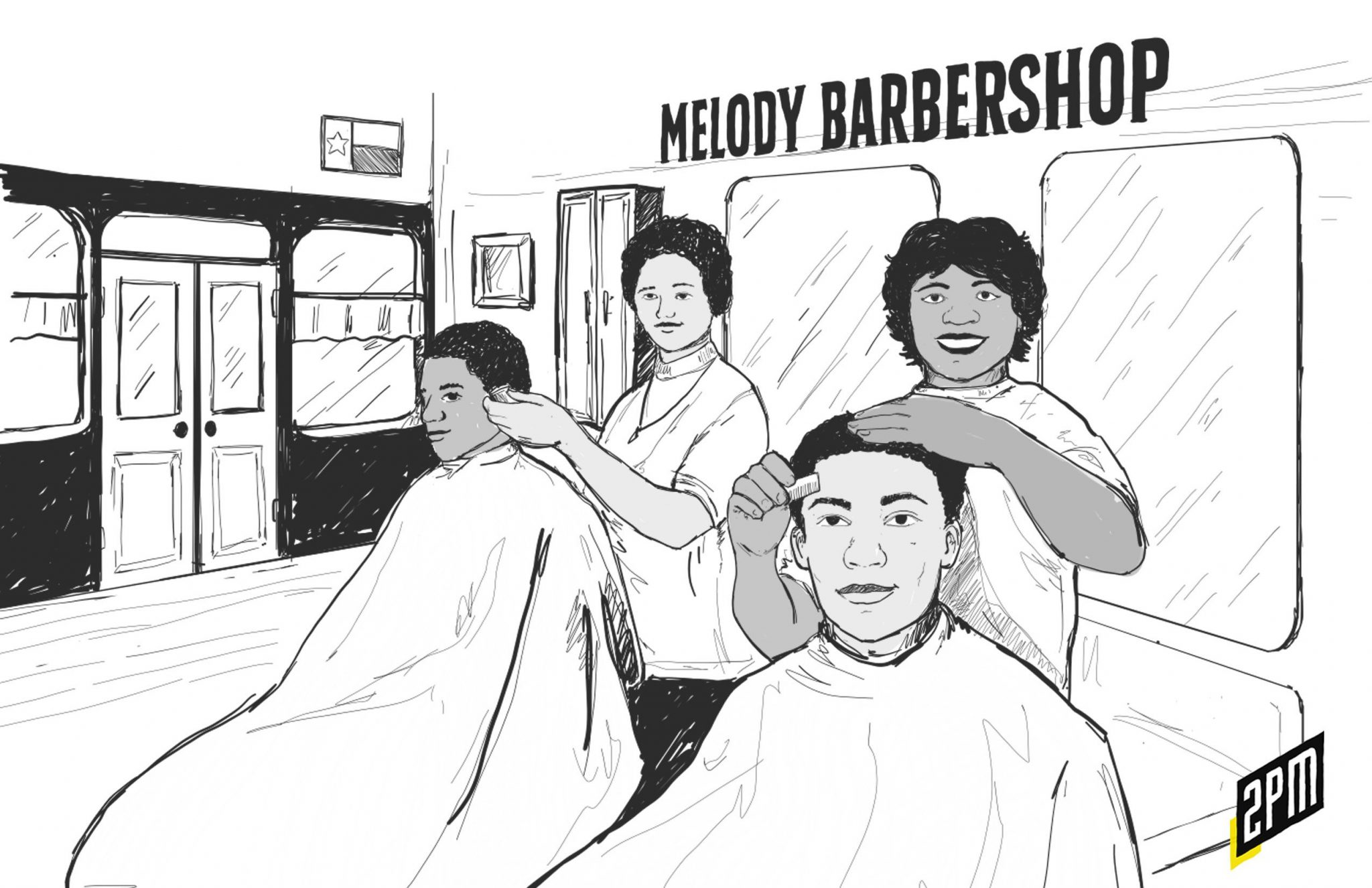
With her meager savings, she launched two businesses that operated in tandem. Both companies were within the same strip mall and they’d feed each other business for decades. A licensed barber and realtor, “Melody” became her calling card. By the mid-1950’s, the barbershop generated substantial cash flow, allowing her to hire staff and procure basic wholesale partnerships. Her storefront would double as a beauty supply retailer, amplifying her earnings by catering to an audience with few places else to shop. This should sound like a familiar strategy. Her clientele was working class and upwardly mobile, a trend that would continue throughout the Civil Rights era.

Many would eventually buy homes in the area Northeast area of downtown Houston. Melody Realty would be one of their guides. The Fifth Ward was an area where Black Americans could buy homes without political or social persecution. Regardless of one’s wealth, the city’s affluent remained deed restricted – first legally and then by proxy. The middle-class son of a Texas Instruments engineer and flight attendant, I’d later be born in that same downtrodden area in 1983. Thirty years later, the city’s deed policies remained. There’s always a wait.
TKZQ5LWw
Pictured: Dorothy, right, with her son.

Dorothy would later become one of the preferred real estate agent of her area. In this way, her storefront operated as a funnel. Her Melody brand of business blended short-term cash flows with longer-term windfalls. It changed the trajectory of our family. James, an Army Air Corps veteran, and Dorothy would send six children to colleges across the United States throughout the 1960s and 1970s. All would graduate and five would go on to have children. By the time that we were born, the idea of college was an afterthought. It was just another task for us. And so was entrepreneurship.

Dorothy would enforce a strict policy for each of her children. My father and his siblings would be required to earn their barber’s license while in high school. This sense of economic independence would propel a number of those children to impactful lives in business, religion, and medicine. Today, Melody Realty continues to operate in the Houston area, a testament to her work.

Conclusion: Ending The Wait

By the time I was born, she’d complete classes at Rice University. She was omnipresent in our lives and she stressed the importance of sacrifice. Dorothy Smith’s life had a profound impact on my own. In our home, she’s taken the form of a superhero. Imagine being born into a world that penned you for one thing and then choosing to achieve something more. She’d send six kids to school before the United States provided her the right to vote. My father was 13 when the Voting Rights Act passed. There’s always a wait.

Dorothy was uncomfortable with Juneteenth because it was symbolic of the proverbial weight of an unnecessary wait. This same concept can be applied across generations, including our own. Dorothy would argue that she was nothing special. Imagine what her parents could have done with the freedoms that Dorothy possessed. I can envision Dorothy Smith atop of our industry, if she was born during my lifetime.

The story of upward mobility in America is one of waiting. In the 1800s, it was for freedom. It the early 1900s, it was waiting for the dignity of citizenship. In the late 1900s, it was the wait for legal equality. And today, it’s the wait for equity in treatment and opportunity. We’re still in the proverbial period of waiting.

Today, we are celebrating the overcoming of adversity. It’s not intended to be a pleasant memory. I’d have preferred to celebrate no Juneteenth at all. I am sure that Sallie and Dave Hill would have agreed. When you’re deserving of opportunity, every single moment without it will feel like a decade. Now, imagine how two years of waiting may feel. The daughter of field laborers, she birthed a generation of Black professionals. Her life was a force function that bent time. There should have been more Dorothy’s in the 1950s and 1960s. There should be more of her children. We have to recognize that an unnecessary wait is just as fraught as no opportunity at all.

The hope is that, today and every day forward, we work to bend time. The leadership of the industries that define American exceptionalism should reflect America. We should provide opportunity, fill executive suites, hire the best people, invest in resilient entrepreneurs, mentor, lead, build, uplift, and provide the freedoms that some Americans take for granted.

There are more Dorothy’s than we know and some of them are waiting. The 45 second pause between Weissman’s question and my answer likely made him as uncomfortable as it made me. In a better version of our world, I would have answered his question with ease. It’s critical that we identify our own unnecessary waits. Once we do, it’s our responsibility to end those waits with opportunity. It’s the one small change that can alter the course of generations.

Essay: Dorothy’s Grandson | Editor: Hilary Milnes | Art: Alex Remy | About

Nº 333: Alimentos52 y comercio lineal

comida52.jpg

En 13 años ha habido pocas salidas significativas. Por ello, las preguntas en torno a la falta de salidas del sector de venta directa al consumidor han alcanzado un punto álgido. Los inversores llevan tiempo cuestionando la viabilidad de los mercados y las marcas de venta directa al consumidor. Inicialmente presentadas como empresas tecnológicas, plataformas como Shopify y BigCommerce simplificaron los requisitos técnicos de muchas estrategias de comercialización. Esto llevó a muchos inversores a cuestionar la defensibilidad, las ventajas de la propiedad o el valor de la propiedad intelectual de una marca, si es que existe. Con muchas empresas de DTC recaudando capital con la intención de crecer como empresas de software, surge la pregunta: ¿comprenden su verdadero valor? La respuesta corta es no.

Sin título

No estoy seguro de que muchos propietarios de marcas DTC se den cuenta de que están construyendo empresas valoradas entre 1 y 1,5 veces sus ingresos.

Cuando el capitalista de riesgo Fred Wilson publicó sus reflexiones sobre el Gran ajuste de cuentas del mercado públicosentó las bases para un importante debate sobre las valoraciones de las empresas respaldadas por capital riesgo. empresas respaldadas por capital riesgo. Los ingresos de WeWork en 2018 fueron de 1.800 millones de dólares con pérdidas de 1.900 millones. En agosto de 2019, los mejores bancos de inversión de Estados Unidos vendían a los inversores consumidores la historia de que los flujos de caja descontados (DCF) de la empresa justificaban una valoración de 47.000 millones de dólares en la OPV.

Si el producto es software y, por lo tanto, puede producir márgenes brutos de software (75% o más), entonces debe valorarse como una empresa de software. Si el producto es otra cosa y no puede producir márgenes brutos de software, entonces debe valorarse como otras empresas similares con márgenes similares, pero tal vez con alguna prima para reconocer el apalancamiento que puede obtener a través del software.

Softbank, el último inversor de WeWork, creía que la empresa podría llegar a superar los 100.000 millones de dólares de valor. A día de hoy, esa solicitud de OPV se ha archivado indefinidamente; el folleto de OPV que una vez valoró la empresa en casi 50.000 millones de dólares se ha rescindido. WeWork vuelve al tablero de dibujo y a la caza de un EBITDA saludable, ya que es probable que una empresa así sea juzgada por un rasero diferente. Este puede ser un camino difícil. La empresa de coworking mantiene márgenes brutos del 20%. Hasta hace poco, la disonancia cognitiva entre valor y valoración seguía ampliándose.

Peloton cotiza a 6 veces los ingresos, en lugar de las 7-8 veces que pretendían los suscriptores. Teniendo en cuenta sus márgenes brutos (46%), es probable que el múltiplo sea de 5x. Lyft mantiene un margen bruto del 39%; Lyft cotiza a 4-5x y es posible que acabe cayendo a entre 3-4x. Lo que tienen en común Lyft, Uber y Peloton es el apalancamiento de software que comparten. Cada una de las tres mantiene un ángulo de software que prima sus respectivas valoraciones.

Para muchas marcas DTC, esa misma ventaja rara vez existe. Por cada StitchFix, hay docenas de minoristas que entran dentro de ese rango. Se trata de empresas sin mucha propiedad intelectual técnica, si es que tienen alguna. Esto es un don y una maldición. Shopify ha racionalizado muchos de los requisitos que habrían requerido un cofundador técnico hace apenas una década. Es por esta razón que los múltiplos de ingresos de la tecnología no deberían ser la medida en absoluto. Los minoristas en línea son negocios con EBITDA. Y es hora de que la categoría se optimice para mejorar los márgenes brutos y la sostenibilidad. Esto puede significar menos capital riesgo y un crecimiento más lento en un horizonte temporal más largo.

El capital riesgo no es adecuado para muchas empresas, pero si en algún momento quieres obtener financiación de un fondo de capital riesgo, debes entender que a menudo los inversores se preocupan más por el crecimiento que por los beneficios. No quieren altas tasas de quema, pero nunca financiarán un crecimiento lento. [1]

El reproche del mercado público a WeWork es sólo uno de los últimos golpes a la afición del mercado privado por comercializar valoraciones sobreestimadas. En el comercio minorista en línea, hay un ajuste clave que se puede hacer para posicionar mejor la industria DTC para la opcionalidad de salida. El primero de ellos es aprender a construir comunidades de los editores de medios digitales.

Un múltiplo DTC común de los ingresos es de 1,5-2x. Al parecer, la adquisición de Greats Brand por parte de Steve Madden se situó dentro de este rango. Un año de ingresos de 13 millones de dólares dio lugar a una venta por 20-25 millones de dólares. Un múltiplo común de mercado de los ingresos es de 2-4x, se trata de una empresa como Chewy.com o StitchFix.com. Un múltiplo común de ingresos para una marca de medios de comunicación de comercio primero es 3-7x. Glossier ha sido valorada en más de 1.000 millones de dólares con unos ingresos totales que oscilan entre 100 y 150 millones de dólares. Para las empresas tecnológicas, SaaS tiene una prima. En algunos casos, multiplican por 10 los ingresos. Para los minoristas, los múltiplos de valoración están influidos por las audiencias orgánicas.

Comercio lineal y múltiplos de ingresos

1565363735634-buyables2_2Alimentos52 pertenece a una nueva generación de plataformas digitales que combinan operaciones comerciales y de medios de comunicación. Esto ayuda a diversificar los canales de ingresos al tiempo que minimiza los costes crecientes de la captación tradicional de clientes. No es fácil, pero puede ser gratificante. Hay varios editores en esta categoría: Barstool Sports, Uncrate, Highsnobiety, Hypebeast, y Hodinkee. Y recuerde, Glossier comenzó como un blog llamado Con brillo.


Nº 314 Comercio lineal: para las marcas que mejor se adaptan a la economía minorista moderna, los medios de comunicación y las operaciones comerciales se combinan para optimizar la audiencia y la conversión. Este es el camino eficiente para el crecimiento sostenido, la retención y la rentabilidad.

Screen-Shot-2019-04-22-at-1.01.30-PM (4)
Food52 es un minorista de "Versión 4". La mayoría de las marcas DTC mantienen una estructura de "Versión 1".

Cada uno de estos editores atrae a un público especializado y apasionado. Sus audiencias alimentan varias operaciones de ingresos: marketing de afiliación, publicidad gráfica, publicidad nativa y venta minorista DTC. Se da prioridad al comercio y se minimiza la publicidad tradicional.

El acuerdo encaja en la dirección que ha tomado The Chernin Group: La empresa, que en su día planeó crear un gran conglomerado de Internet tras adquirir un gran ancla como Hulu, se ha dedicado en cambio a comprar y construir un conjunto de empresas de Internet dirigidas a públicos distintos, todas ellas basadas en fuentes de ingresos más allá de la publicidad en Internet.[2]

A principios de septiembre, 25 operadores de medios digitales, medios tradicionales y comercio se sentaron en un comedor de Manhattan. Entre ellos estaban los fundadores de Food52, Amanda Hesser y Merrill Stubbs. La empresa de capital riesgo y anfitriona de la velada desveló la verdad. En un anuncio sorpresa, The Chernin Group mencionó que estaban decididos a adquirir la mayoría de Food52. La sala aplaudió a los fundadores. Fue una salida poco habitual en un sector que ha luchado por afianzarse.

TCG posee una participación mayoritaria en MeatEater Inc, una empresa de medios digitales dirigida a cazadores, pescadores y cocineros caseros, y también ha invertido en Action Network, una startup de análisis de apuestas deportivas. [3]

Los asistentes dejaron de lado el anuncio improvisado y permitieron que el ciclo natural de relaciones públicas siguiera su curso. Y así fue. Ayer, varios medios se hicieron eco de la venta. Estas son las cifras:

  • Adquisición de la mayoría de la empresa por 83 millones de dólares
  • Una valoración de 100 millones de dólares
  • 13 millones de dólares recaudados en cuatro rondas de capital
  • Unos ingresos declarados en 2018 de 30 millones de dólares (no son rentables)
  • Tráfico: 7 millones de visitas activas mensuales
  • Tráfico de pago: menos del 2,5% del volumen total
screen-shot-2015-07-06-at-9-27-09-pm.0.1486507956.0
Mike Kerns, Presidente

La adquisición de Food52, una inversión del Fondo 1 de Lerer Hippeau, fue un resultado positivo tanto para los inversores como para los fundadores. También es un atisbo de los métodos que emplean más empresas digitales para mejorar sus opciones de salida. ¿Qué métodos? Crear valor de marca, fomentar la comunidad y apropiarse de su audiencia. En una conversación con 2PM, Mike Kerns, Presidente de The Chernin Group, declaró:

Nos encanta invertir en emprendedores que están creando marcas duraderas que atraen al público. Food52 ha creado una empresa comercial en expansión con muy poco gasto en marketing. Su marketing está construyendo su valor empresarial y defensibilidad, que es la inversión en su contenido y comunidad.

continúa Kerns:

Para TCG nos gustan las empresas que pueden construir negocios con su audiencia establecida en lugar de tratar de comprar la audiencia de otra persona.

En la breve afirmación de Kerns se esconde una verdad que muchos en el espacio DTC no reconocen. Cuanto mayor sea la audiencia orgánica, mayor será la prima en la valoración de una empresa. No todos los ingresos son iguales. Si un minorista puede ganar una venta sin comprar una audiencia cada vez, esto se convierte en atractivo para los inversores potenciales. Entonces, ¿por qué la resistencia a este enfoque? En pocas palabras, no es fácil.

Las empresas más viables de todo el ecosistema digital compartirán un rasgo común: audiencias establecidas y orgánicas. El contenido y la comunidad son fundamentales para este resultado. Para las marcas de comercio lineal bien ejecutadas, las tasas de retención serán altas y el CAC será bajo. La hoja de ruta está ahí para las marcas que buscan una ventaja sostenible y una mayor opcionalidad. Tal vez, los mercados públicos y privados recompensen a más de ellas.

Lea aquí la curación del nº 333.

Informe de Web Smith | About 2PM


No. 298: Retention is the new currency

Contributor. The much mused about sharing economy jump started by disruptors like AirBnB, Rent The Runway, Netflix and Uber is running past its adolescence. In 2019, both Uber and its rival Lyft expect to go public.

According to Fortune, Uber alone could be valued at as much as $120 billion, higher than the valuations of Ford, General Motors and Fiat Chrysler combined.

It’s also close to double Uber’s valuation at a fundraising round two months ago and would be the biggest debut since Alibaba went public in 2014.

AirBnB, too, is expected to file as early as 2019, bringing some of the biggest disruptors of the last decade to Wall Street. But their impact has already been felt beyond their Silicon Valley offices.

The sharing economy has given rise to the subscription economy:

  • An economy preferred by investors for it’s stability.
  • An economy loved by consumers for its accessibility.
  • An economy coveted by entrepreneurs for it’s long-term customer relationships.
2PM, Inc. contributor: Tracey Wallace

The rise is thanks to the ubiquity of internet access and smartphones in the U.S. across nearly all segments. “Customers, the ultimate endpoint of any business, are today just as connected as the employees of any large enterprise,” writes Ben Thompson on The Stratchery.

This gives consumers and businesses alike endless access to on-going services that don’t function like gym-memberships of old. Instead, modern subscription models are gym-like in execution and participation.

  • They are based on service, not product: The product is the means not the ends.
  • They build convenient communities of like-minded individuals with end-goals in mind: Think Shopify users want to be seen as successful entrepreneurs. Spotify users want to be seen as having the best playlists and musical tastes.
  • They rinse and repeat the experience: The service begets the product, the product begets the goal, the goal begets the service.

Retention is the new currency

Costco – perhaps the longest standing subscription business around – has perfected the model. Amazon evolved it online with Amazon Prime. Giants like Apple and Google are touting their subscription services as differentiators for their products.

  • Google is offering six month free YouTube Premium subscription for all Google Home devices (and varying YouTube Premium subscription access for nearly all Google devices).
  • Apple is packaging their streaming music service and phone care services into single packages –– selling you a full suite of services that beget a product.

The success of the model is clear. You need only look at Dollar Shave Club on the consumer side to see the impact on the industry (or look at newer DNVBs like Quip following similar paths). Or, on the B2B side, look at the stock prices of Adobe (up 770% since 2012), Microsoft (up 320%) or Autodesk (up 360%), which have shifted to offer internet cloud-based software for a monthly or annual fee.

Indeed,  many DNVBs are putting their own spin on the subscription model business. In retail alone, there are more than 5,000 brands offering clothing, cosmetic or the like “subscription boxes” each month.

“It is totally faddish right now,” says Robbie Kellman Baxter, a consultant with Peninsula Strategies and author of The Membership Economy. “Most of them are going to fail. How many ties does dad need?”

But in technology, the rent-rather-than-own trend is holding stronger. In health care, too, it is growing in popularity with brands like SmileDirectClub and MDVIP, a direct primary care service, gaining more and more subscribers.

In media is where we will see the most pronounced shifts. After all, subscriptions are the easiest way around an unforgiving advertising world inhabited by Google and Facebook’s duopoly.

That duopoly began hitting media brands as early as 2015, when many considered the “gold standard” of online content to be free and commoditized. Many digital media brands have yet to recover from this mistake.

According to CNBC:

Vice Media has been the gold standard, earning a valuation of $5.7 billion in June 2017. Earlier this month, Disney wrote down some of its investment in Vice by 40 percent, suggesting a declining overall valuation.

Buzzfeed has built itself into a company that tops $1 billion in value. Still, Buzzfeed missed its 2017 revenue forecast by up to 20 percent, the Wall Street Journal reported last year, pushing back hopes of an initial public offering indefinitely. Vox Media, the owner of sites including SBNation, Eater and The Verge, also missed internal revenue forecasts and is not planning to go public any time soon, said people familiar with the matter, who asked not to be named because the company’s financials are private.

Separately, media companies including The New York Times, The Wall Street Journal, The Washington Post, New York Magazine, Quartz, Bloomberg, Business Insider, Vanity Fair and Wired have all returned back to media’s subscription business model roots by completely paywalling, introduced paywalls or hardening their paywalls beginning in 2018.

We’re living in an environment where Facebook, Google, and Amazon are sucking up so much of the advertising revenue,” says Sterling Auty, software analyst at J.P. Morgan. “Subscriptions and ecommerce are an antidote to that.”

These media companies are looking to lower their reliance on Facebook and Google algorithms and return to their service roots through subscription payments –– adding yet another monthly subscription to consumers’ bank accounts.

On paid subscription tolerance

According to eMarketer, 71% of U.S. consumers with internet access subscribe to at least one streaming video service. However, the number for all other verticals drop dramatically beyond video.

This leaves ample room for other verticals to grow their subscription services, especially as consumers become more accustomed to the model and testing out various offerings. Paid subscriptions through Apple’s App Store reached over 330 million last quarter. That’s up 50% year over year and includes both Apple and third-party services like Netflix.

Consumers are downloading. They are trying. They are testing. And there will be winners. Some analysts like Eddie Yoon, a consultant and author of the book Superconsumers, see the subscription economy as a 20-year trend –– just now beginning to hit its growth stage.

But there are caveats:

“All brands will try to offer subscriptions, but only a few will take,” he added. “Consumers will push back if they feel overwhelmed with subscription services,” Yoon says. “People won’t tolerate a world where everything is subscriptionized,” he said. “For the things that you really care about, you’ll definitely subscribe.”

The experience economy edges in

This is where the experience economy matters most. Subscription business models create desirable P&Ls, forecasting models and enable brands to act in the best interest of their most dedicated subscribers (rather than advertisers), but fail to provide the experience and you’ll lose your list and your recurring revenue.

Ben Thompson from The Stratechery pulled out this quote from Bill McDermott, the CEO of SAP, on this challenge on an investor call:

There are millions of complaints every day about disappointing customer experiences. This is called the experience gap. Businesses used to have time to sort this out, but in today’s unforgiving world, the damage is immediate, disruption is imminent. This has shifted the challenge from a running a business to guaranteeing great experiences for every single person.

It’s best here to remember that subscription and membership are separate things. Membership provides experience and community. Subscription just gets you access to something behind a gate.

Take a look at Peloton, for example. The company has long argued that it’s bike ($2,000) and subscription program ($39 monthly) are a bargain compared to regularly attended SoulCycle classes. And SoulCycle is hard to beat. Similar to fitness organizations like CrossFit, Inc., it has a hardened fanbase and community.

But where Peloton succeeds is its content –– the ability to stream classes on your bike, forgoing a trip to a physical class. All for substantially lower costs than regular in-person classes anyway. Peloton reports its churn at less than 1%.

You have to do delightful things and leave money on the table,” says Peloton CEO and co-founder John Foley.The monthly service is what you really buy. That was the flaw with the old models. It was just hardware.

Of course, not every company can be a Peloton. The subscription model itself does not lower the cost of doing business. It cannot, on its own, generate demand.

As subscriptions proliferate, investors need to dig deeper into the dynamics of their models,” says Aswath Damodaran, a finance professor and valuation specialist at New York University’s Stern School of Business.Many venture capitalists and public investors are pricing user-based companies on user count, with only a few seriously trying to distinguish between good, indifferent, and bad user-based models.

What’s next in the subscription era is a dwindling down to those brands, media packages, and services which can offer the experience worth paying for –– the service that begets the product, and the product that begets the consumer’s goal. A subscription model, alone, won’t be enough. Consumers will seek membership and the benefits that come with it: experience, community, and camaraderie. For the product companies, the software companies, and media companies that figure it out – the prize is recurring revenue and stability until the next preferred model comes along.  

Read the rest of your No. 298 curation here.

Additional reading. Member Brief: The Subscription Economy

By Tracey Wallace | Edited by Web Smith | About 2PM

Editor’s Note: Tracey serves as the Editor-in-Chief at BigCommerce and a public speaker. She is launching a DtC pillow brand, this spring. She is a paid contributor of 2PM, Inc.