Membros: Juneteenth e sonhos americanos

SM-B6NAw

A discussão entre nós foi lenta e cada resposta foi difícil. Era difícil explicar com tato o conceito de uma "espera desnecessária".

Sempre há uma espera.

O editor da Modern Retail, Cale Weissman, queria entender a perspectiva dos negros em relação ao comércio eletrônico. Eu não tinha muitas respostas para ele. Trabalhei para moderar minhas respostas, lutando para mascarar volumes de frustrações persistentes nos setores digitais. Em um determinado momento, Weissman pediu uma lista de fundadores apoiados por capital de risco no espaço direto ao consumidor. Havia, é claro, a resposta óbvia. Tristan Walker é fácil de falar. Mas eu não tive uma resposta nova naquele momento e fiquei envergonhado com isso. Há tão poucos profissionais negros nessa área. Para a grande maioria dos executivos, fundadores ou investidores em potencial, eles ainda estão esperando.

Um portmanteau de "June" (junho) e "nineteenth" (décimo nono), você verá comemorações do Juneteenth na Target, Nike, Glossier, Deciem, Ford Motors, Adobe, Allstate, Altria, Best Buy, Google, JPMorgan, Lyft, Mastercard, Postmates, Tesla, SpaceX, RXBar, Spotify, Twitter, Square, Workday, Uber e inúmeras outras. A maior parte será em vão e alguns dos esforços serão amplamente criticados.

Dino-Ray "96.000" Ramos no Twitter: ".@Snapchat divulgou uma declaração sobre seu filtro #Juneteenth... pic.twitter.com/KWPZnlWG3n / Twitter"

O @Snapchat divulgou uma declaração sobre seu filtro #Juneteenth... pic.twitter.com/KWPZnlWG3n

Você verá marcas, pessoas e comentaristas da mídia perdendo o foco. Você verá truques, declarações cuidadosamente elaboradas e uma simplificação exagerada de um período complexo da história americana. Imagine nossos bisnetos simplificando demais os dias de hoje.

Para alguns de nós, o Juneteenth foi apenas uma espécie de comemoração. Imagine querer algo por toda a sua vida e depois esperar mais dois anos e meio por esse algo. É uma comemoração agridoce. Para aqueles de nós que descendem desses texanos do sul de mente forte, hoje é o lembrete anual de sua resistência física, mental e emocional. É um lembrete de nossa resistência, vontade e desenvoltura herdadas. Sempre há uma espera. Então, Juneteenth: uma comemoração, com certeza. Um feriado nacional? Claro que sim. Mas dentro dos limites das salas de aula, escritórios ou bairros de nossas cidades americanas, o Juneteenth deveria ser um dia para refletir sobre as esperas que ainda restam.

Neto de escravos e avó para mim

A primeira redação do neto de Dorothy Smith permaneceu em sua estante. Era um relato da escola primária sobre a vida conturbada de Jack Roosevelt Robinson, o primeiro homem a cruzar a barreira da cor na Liga Principal de Beisebol. Lembro-me da redação porque, em 1992, foi a primeira vez que usei uma impressora colorida para um projeto escolar. Lembro-me do orgulho de usar uma imagem de seu cartão de beisebol como gancho para um projeto que me deixou emocionado, mesmo quando eu tinha nove anos de idade. O relatório de oito páginas estava em espaço duplo com fonte tamanho 18. Por alguma razão, ela se orgulhava daquela redação e ela permaneceu em sua casa até seu falecimento em abril de 2014. Ela criticava a cadência e a escolha das palavras. Implorava para que eu fosse mais devagar ao lê-la em voz alta; eu gaguejava muito naquela época. Atribuo às nossas conversas o mérito de terem ajudado a curar essa doença.

Entre 1992 e 2014, ela me ajudou em vários ensaios. À medida que foi ficando mais velha e menos capaz, ela me ouvia narrar as histórias que eu escrevia. Mas, no início de minha vida, ela realmente me ajudava a escrevê-las. Uma mulher altamente instruída, ela era minha heroína. Ao final deste ensaio, talvez ela seja a sua. Uma dessas redações foi um relatório da sétima série sobre o impacto do Juneteenth em minha própria família. Nunca me esquecerei de sua opinião:

A mensagem de liberdade não chegou até aqui e, portanto, eles tiveram que esperar um pouco mais. Sempre houve uma espera. Sempre há uma espera.

O presidente Abraham Lincoln redigiu a Proclamação 95 em 22 de setembro de 1862. Imagine ouvir a notícia dessa proclamação e depois esperar que ela o salvasse. Ela entrou em vigor cinco meses depois, em 1º de janeiro de 1863. Imagine a contagem regressiva desses dias até a liberdade. Para alguns, a contagem foi muito mais longa. Para esses, a liberdade estava oculta pelo desprezo econômico e político pela ordem federal. Passariam mais dois anos até que meus parentes recebessem a notícia.

Todo defensor da escravidão naturalmente deseja ver destruída e esmagada a liberdade prometida ao homem negro pela nova constituição.

Essas foram as palavras de Abraham Lincoln em 1864 para o general da União Stephen Hurlbut, um aliado no papel, mas um crítico em particular. Mesmo após a ordem, vários estados evitaram a ação necessária para cumprir os desejos do presidente. De acordo com Dorothy Smith, a população do Texas estava ciente de sua liberdade ordenada muito antes de recebê-la. Para eles, foi uma espera dolorosa. Nunca me esquecerei da ênfase em "sempre há uma espera". Essas foram as palavras de Dorothy Smith: filha de trabalhadores e meeiros. Ela era empresária, varejista, corretora de imóveis e mãe de seis universitários formados. Dorothy era neta de escravos do Texas e minha avó.

Seus avós nasceram em 1858 e 1853. Dave e Sallie Draper Hill nasceram escravizados em Panola, uma pequena cidade na fronteira entre o Texas e a Louisiana. Eles foram um dos últimos escravos americanos libertados pela ordem de Galveston, Texas, em 19 de junho de 1865. Mais tarde, eles se casariam em 1881. De acordo com o censo de 1900, eles tiveram 12 filhos. Minha bisavó nasceu em 1895. Mais tarde, ela se tornou uma fazendeira independente, criando gado, porcos e galinhas. Ela cultivava e vendia legumes e cuidava de um pomar de árvores frutíferas em sua propriedade. Sua filha se casaria com James Smith em 1944 e permaneceria casada com o veterano do Corpo Aéreo do Exército até seu falecimento - com um ano de diferença.

Sempre penso no que as gerações anteriores de minha família teriam feito com uma oportunidade real. Sempre me pareceu que eles eram capazes, potentes e estavam esperando. É a Dorothy que creditamos o fato de ter resolvido o problema com suas próprias mãos. Ela foi desafiadora em seu capitalismo, sua busca por educação, sua política, sua defesa e as oportunidades oferecidas a seus seis filhos. De certa forma, ela se ressentia da ideia do Juneteenth. Representava negligência e decepção, um impedimento de oportunidades. Era a personificação de uma espera desnecessária pela oportunidade de viver uma vida plena.

Ela parou de esperar.

O varejista repentino

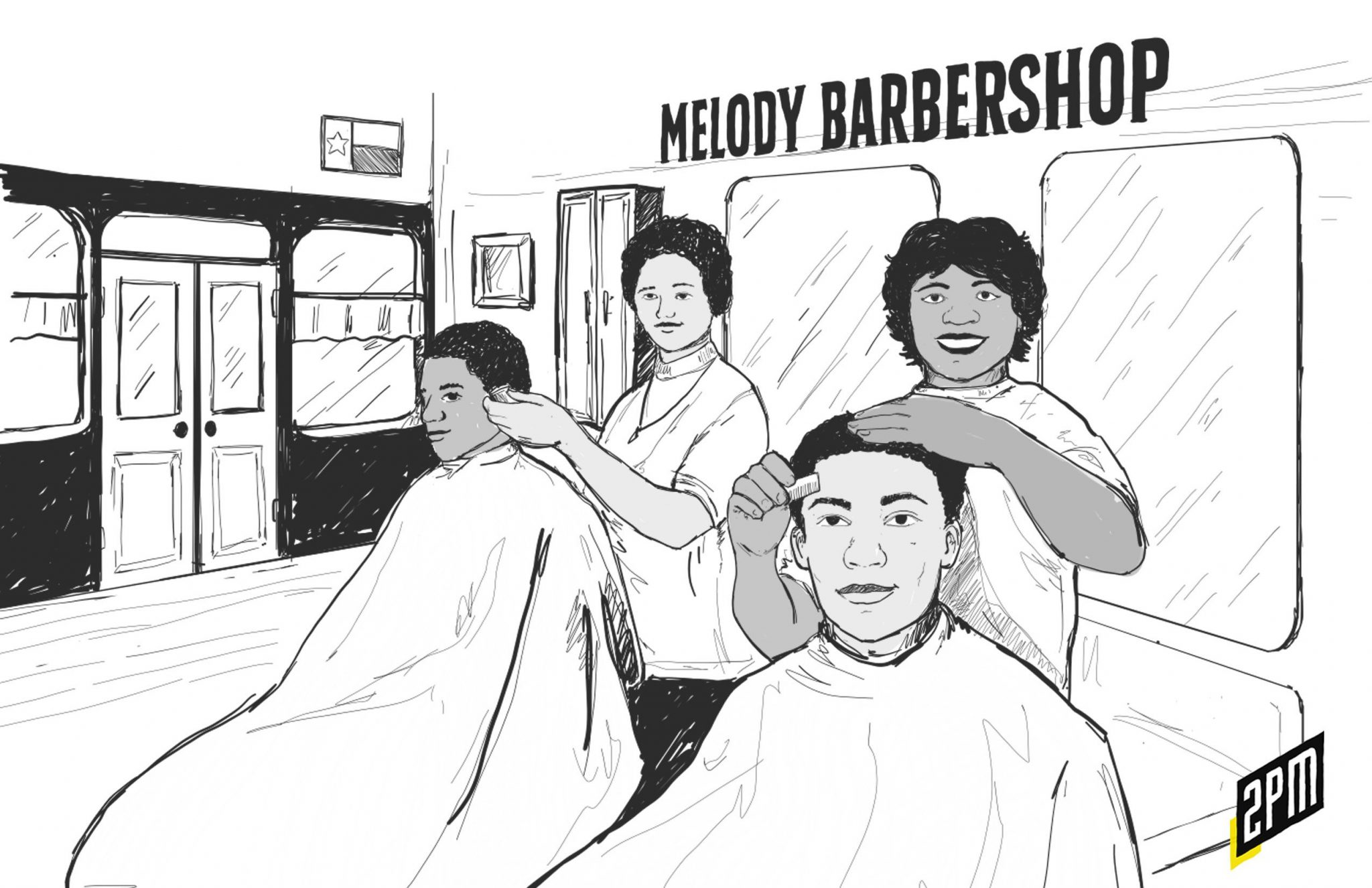
Com suas parcas economias, ela abriu duas empresas que operavam em conjunto. Ambas as empresas ficavam no mesmo shopping center e alimentaram uma a outra com negócios durante décadas. Barbeira e corretora de imóveis licenciada, "Melody" tornou-se seu cartão de visita. Em meados da década de 1950, a barbearia gerava um fluxo de caixa substancial, permitindo que ela contratasse funcionários e obtivesse parcerias básicas no atacado. Sua loja funcionava também como varejista de produtos de beleza, ampliando seus ganhos ao atender a um público com poucos lugares para fazer compras. Isso deve soar como uma estratégia familiar. Sua clientela era da classe trabalhadora e de classe alta, uma tendência que continuaria durante a era dos Direitos Civis.

Muitos acabariam comprando casas na área nordeste do centro de Houston. A Melody Realty seria um de seus guias. A Fifth Ward era uma área onde os negros americanos podiam comprar casas sem perseguição política ou social. Independentemente da riqueza de uma pessoa, os ricos da cidade continuavam com restrições de escritura - primeiro legalmente e depois por procuração. Filho de classe média de um engenheiro da Texas Instruments e de uma comissária de bordo, eu nasceria mais tarde nessa mesma área oprimida, em 1983. Trinta anos depois, as políticas de escritura da cidade permaneceram. Sempre há uma espera.

TKZQ5LWw
Na foto: Dorothy, à direita, com seu filho.

Mais tarde, Dorothy se tornaria uma das corretoras de imóveis preferidas de sua região. Dessa forma, sua loja funcionava como um funil. Sua marca Melody de negócios combinava fluxos de caixa de curto prazo com ganhos inesperados de longo prazo. Isso mudou a trajetória de nossa família. James, um veterano do Corpo Aéreo do Exército, e Dorothy mandariam seis filhos para faculdades nos Estados Unidos durante as décadas de 1960 e 1970. Todos se formaram e cinco tiveram filhos. Na época em que nascemos, a ideia de ir para a faculdade era uma reflexão tardia. Era apenas mais uma tarefa para nós. Assim como o empreendedorismo.

Dorothy aplicava uma política rígida para cada um de seus filhos. Meu pai e seus irmãos precisariam obter sua licença de barbeiro enquanto estivessem no ensino médio. Esse senso de independência econômica impulsionaria vários desses filhos a terem uma vida impactante nos negócios, na religião e na medicina. Hoje, a Melody Realty continua operando na área de Houston, um testemunho de seu trabalho.

Conclusão: Fim da espera

Quando eu nasci, ela já havia concluído os cursos na Rice University. Ela era onipresente em nossas vidas e enfatizava a importância do sacrifício. A vida de Dorothy Smith teve um impacto profundo em minha própria vida. Em nossa casa, ela assumiu a forma de uma super-heroína. Imagine ter nascido em um mundo que o destinava a uma coisa e depois optar por realizar algo mais. Ela mandou seis filhos para a escola antes que os Estados Unidos lhe dessem o direito de votar. Meu pai tinha 13 anos quando a Lei do Direito ao Voto foi aprovada. Sempre há uma espera.

Dorothy não se sentia à vontade com o Juneteenth porque ele simbolizava o peso proverbial de uma espera desnecessária. Esse mesmo conceito pode ser aplicado a várias gerações, inclusive a nossa. Dorothy argumentaria que ela não era nada especial. Imagine o que seus pais poderiam ter feito com as liberdades que Dorothy possuía. Posso imaginar Dorothy Smith no topo de nosso setor, se ela tivesse nascido durante minha vida.

A história da mobilidade ascendente nos Estados Unidos é uma história de espera. Nos anos 1800, era a espera pela liberdade. No início dos anos 1900, era a espera pela dignidade da cidadania. No final dos anos 1900, foi a espera pela igualdade jurídica. E hoje, é a espera pela igualdade de tratamento e de oportunidades. Ainda estamos no proverbial período de espera.

Hoje, estamos comemorando a superação da adversidade. A intenção não é que seja uma lembrança agradável. Eu teria preferido não comemorar nenhum Juneteenth. Tenho certeza de que Sallie e Dave Hill teriam concordado. Quando você merece uma oportunidade, cada momento sem ela parecerá uma década. Agora, imagine como podem ser dois anos de espera. Filha de trabalhadores rurais, ela deu origem a uma geração de profissionais negros. Sua vida foi uma função de força que dobrou o tempo. Deveria ter havido mais Dorothy's nas décadas de 1950 e 1960. Deveria haver mais filhos dela. Temos que reconhecer que uma espera desnecessária é tão preocupante quanto não ter nenhuma oportunidade.

A esperança é que, hoje e todos os dias, trabalhemos para dobrar o tempo. A liderança dos setores que definem o excepcionalismo americano deve refletir os Estados Unidos. Devemos oferecer oportunidades, preencher as suítes executivas, contratar as melhores pessoas, investir em empreendedores resilientes, orientar, liderar, construir, elevar e oferecer as liberdades que alguns americanos consideram garantidas.

Há mais Dorothy's do que sabemos e algumas delas estão esperando. A pausa de 45 segundos entre a pergunta de Weissman e minha resposta provavelmente o deixou tão desconfortável quanto a mim. Em uma versão melhor do nosso mundo, eu teria respondido à sua pergunta com facilidade. É fundamental identificarmos nossas próprias esperas desnecessárias. Quando o fizermos, é nossa responsabilidade acabar com essas esperas com oportunidades. Essa é uma pequena mudança que pode alterar o curso de gerações.

Ensaio: Dorothy's Grandson | Editor: Hilary Milnes | Arte: Alex Remy | Sobre

No. 333: Food52 e comércio linear

food52.jpg

There have been few meaningful exits over 13 years. As such, questions surrounding the direct-to-consumer industry’s lack of exits have reached fever pitch. Investors have long questioned the viability of marketplaces and DTC brands. Initially pitched as technology companies, platforms like Shopify and BigCommerce streamlined the technical requirements for many go-to-market strategies. This left many investors questioning defensibility, proprietary advantages, or the value of a brand’s intellectual property – if any.  With many DTC companies raising capital with the intention of growing like software companies, it begs the question: do they understand their true value? The short answer is no.

Sem título

Não tenho certeza de que muitos proprietários de marcas DTC percebam que estão construindo empresas avaliadas em 1 a 1,5x a receita.

When venture capitalist Fred Wilson published his thoughts on the Great Public Market Reckoning, he set the stage for an important discussion on the valuations of venture-backed companies. WeWork’s 2018 revenue was $1.8 billion on $1.9 billion in losses. In August 2019, America’s finest investment banks were selling consumer investors the story that the company’s discounted cash flows (DCF) justified a $47 billion valuation at IPO.

If the product is software and thus can produce software gross margins (75% or greater), then it should be valued as a software company. If the product is something else and cannot produce software gross margins then it needs to be valued like other similar businesses with similar margins, but maybe at some premium to recognize the leverage it can get through software.

Softbank, WeWork’s latest investor, believed that the company could eventually exceed $100 billion in value. As of today, that IPO filing has been shelved indefinitely; the IPO prospectus that once valued the company at nearly $50 billion has been rescinded. WeWork is back to the drawing board and on a hunt for a healthy EBITDA, as it’s likely that a company like that will be judged by a different standard. This may be a difficult path. The coworking company maintains 20% gross margins. Until recently, the cognitive dissonance between value and valuation continued to widen.

Peloton is trading at 6x revenues, rather than the 7-8x that underwriters intended. Based on their gross margins (46%), it’s likely that the multiple will 5x. Lyft maintains a 39% gross margin; Lyft is trading at 4-5x and may eventually fall to somewhere between 3-4x. The commonality shared by Lyft, Uber, and Peloton is the software leverage that they share. Each of the three maintains a software angle that places a premium on their respective valuations.

For many DTC brands, that same leverage rarely exists. For every StitchFix, there are dozens of retailers that fall within that range. These are companies without much technical IP, if any at all. This is a gift and a curse. Shopify has streamlined many of the requirements that would have required a technical co-founder just a decade ago. It’s for this reason that tech’s multiples of revenue shouldn’t be the measure at all. Online retailers are EBITDA businesses. And it’s time that the category optimizes for improved gross margins and sustainability. This may mean less venture capital raised and slower growth over a longer time horizon.

Venture capital isn’t right for many businesses, but if you do want to raise from a VC at some point, you need to understand that often investors care more about growth than profits. They don’t want high burn rates but they will never fund slow growth. [1]

The public market’s rebuke of WeWork is just one of the latest hits to the private market’s penchant for marketing overestimated valuations. In online retail, there is a key adjustment that can be made to better position the DTC industry for exit optionality. The first of which is to learn community building from digital media publishers.

A common DTC multiple of revenue is 1.5-2x. The Steve Madden acquisition of Greats Brand was reportedly within this range. A $13 million revenue year resulted in a sale for $20-25 million. A common marketplace multiple of revenue is 2-4x, this is a company like Chewy.com or StitchFix.com. A common multiple of revenue for a commerce-first media brand is 3-7x. Glossier has been valued at over $1 billion with a revenue total ranging between $100 – $150 million. For tech companies, SaaS has a premium. In some cases, 10x revenue multiples.  For retailers, valuation multiples are influenced by organic audiences.

Linear Commerce and Revenue Multiples

1565363735634-buyables2_2Food52 is a member of a new breed of digital platform, one that combines commerce and media operations. This aids diversificaton of revenue channels while minimizing the rising costs of traditional customer acquisition. It is not easy but it can be rewarding. There are a number of publishers in this category, to include: Barstool Sports, Uncrate, Highsnobiety, Hypebeast, and Hodinkee. And remember, Glossier began as a blog called Into The Gloss.



No. 314 Linear Commerce: for the brands that are most suited to the modern retail economy, media and commerce operations combine to optimize for audience and conversion. This is the efficient path for sustained growth, retention, and profitability.

Screen-Shot-2019-04-22-at-1.01.30-PM (4)
Food52 is a ‘Version 4’ retailer. Most DTC brands maintain a ‘Version 1’ structure.

Each of these publishers attracts a niche, passionate audience. Their audiences fuel several revenue operations: affiliate marketing, display advertising, native advertising, and DTC retail. Commerce is prioritized and traditional advertising is minimized.

The deal does fit in with the direction The Chernin Group has been headed: The company, which once had plans to put together a very big internet conglomerate after acquiring an big anchor like Hulu, has instead been buying and building a stable of internet companies aimed at distinct audiences, all of which rely on revenue streams beyond internet advertising. [2]

In early September, 25 operators spanning digital media, traditional media, and commerce were seated in a Manhattan dining room. Of them were the founders of Food52, Amanda Hesser and Merrill Stubbs. The venture firm and host of the evening’s festivities let the cat out of the bag. In a surprise announcement, The Chernin Group mentioned that they were set on acquiring a majority of Food52. The room applauded the founders. It was a rare exit in an industry that has struggled to gain its footing.

TCG owns a controlling stake in MeatEater Inc., a digital media company aimed at hunters, fishermen and home cooks, and has also invested in Action Network, a sports-betting analytics startup. [3]

The attendees brushed the impromptu announcement aside and allowed the natural public relations cycle run its course. And that it did. Yesterday, a number of outlets reported the sale. Here are the numbers:

  • $83 million acquisition of the majority of the company
  • A valuation of $100 million
  • $13 million raised over four equity rounds
  • A reported 2018 revenue of $30 million (not profitable)
  • Traffic: 7 million monthly active uniques
  • Paid traffic: less than 2.5% of overall volume
screen-shot-2015-07-06-at-9-27-09-pm.0.1486507956.0
Mike Kerns, President

A Fund 1 investment by Lerer Hippeau, the Food52 acquisition was a positive outcome for investors and founders alike. It’s also a glimpse into the methods that more digital-first companies employ to improve their exit optionality. Those methods? Building brand equity, fostering community, and owning their audience. In a 2PM conversation, Mike Kerns, President of The Chernin Group, stated:

We love to invest in entrepreneurs who are building enduring brands that have engaged audiences. Food52 has built a growing commerce business with very little marketing spend. Their marketing is building their enterprise value and defensibility which is the investment in to their content and community.

Kerns continues:

For TCG we like businesses that can build businesses with their audience established versus trying to purchase the audience from someone else.

In Kerns short statement lies a bit of truth that many in the DTC space fail to recognize. The stronger the organic audience, the higher the premium on a company’s valuation. All revenue is not equal. If a retailer can earn a sale without buying an audience each time, this becomes attractive to potential investors. So why the resistance towards this approach? In short, it isn’t easy to do.

The most viable companies across the digital ecosystem will share a common trait: established, organic audiences. Content and community are core to that outcome. For the well-executed linear commerce brands, retention rates will be high and CAC will be low. The road map is there for the brands looking for a sustainable advantage and improved optionality. Perhaps, the public and private markets will reward more of them.

Read the No. 333 curation here.

Relatório de Web Smith | Por volta das 14h


No. 298: Retention is the new currency

Contributor. The much mused about sharing economy jump started by disruptors like AirBnB, Rent The Runway, Netflix and Uber is running past its adolescence. In 2019, both Uber and its rival Lyft expect to go public.

According to Fortune, Uber alone could be valued at as much as $120 billion, higher than the valuations of Ford, General Motors and Fiat Chrysler combined.

It’s also close to double Uber’s valuation at a fundraising round two months ago and would be the biggest debut since Alibaba went public in 2014.

AirBnB, too, is expected to file as early as 2019, bringing some of the biggest disruptors of the last decade to Wall Street. But their impact has already been felt beyond their Silicon Valley offices.

The sharing economy has given rise to the subscription economy:

  • An economy preferred by investors for it’s stability.
  • An economy loved by consumers for its accessibility.
  • An economy coveted by entrepreneurs for it’s long-term customer relationships.
2PM, Inc. contributor: Tracey Wallace

The rise is thanks to the ubiquity of internet access and smartphones in the U.S. across nearly all segments. “Customers, the ultimate endpoint of any business, are today just as connected as the employees of any large enterprise,” writes Ben Thompson on The Stratchery.

This gives consumers and businesses alike endless access to on-going services that don’t function like gym-memberships of old. Instead, modern subscription models are gym-like in execution and participation.

  • They are based on service, not product: The product is the means not the ends.
  • They build convenient communities of like-minded individuals with end-goals in mind: Think Shopify users want to be seen as successful entrepreneurs. Spotify users want to be seen as having the best playlists and musical tastes.
  • They rinse and repeat the experience: The service begets the product, the product begets the goal, the goal begets the service.

Retention is the new currency

Costco – perhaps the longest standing subscription business around – has perfected the model. Amazon evolved it online with Amazon Prime. Giants like Apple and Google are touting their subscription services as differentiators for their products.

  • Google is offering six month free YouTube Premium subscription for all Google Home devices (and varying YouTube Premium subscription access for nearly all Google devices).
  • Apple is packaging their streaming music service and phone care services into single packages –– selling you a full suite of services that beget a product.

The success of the model is clear. You need only look at Dollar Shave Club on the consumer side to see the impact on the industry (or look at newer DNVBs like Quip following similar paths). Or, on the B2B side, look at the stock prices of Adobe (up 770% since 2012), Microsoft (up 320%) or Autodesk (up 360%), which have shifted to offer internet cloud-based software for a monthly or annual fee.

Indeed,  many DNVBs are putting their own spin on the subscription model business. In retail alone, there are more than 5,000 brands offering clothing, cosmetic or the like “subscription boxes” each month.

“It is totally faddish right now,” says Robbie Kellman Baxter, a consultant with Peninsula Strategies and author of The Membership Economy. “Most of them are going to fail. How many ties does dad need?”

But in technology, the rent-rather-than-own trend is holding stronger. In health care, too, it is growing in popularity with brands like SmileDirectClub and MDVIP, a direct primary care service, gaining more and more subscribers.

In media is where we will see the most pronounced shifts. After all, subscriptions are the easiest way around an unforgiving advertising world inhabited by Google and Facebook’s duopoly.

That duopoly began hitting media brands as early as 2015, when many considered the “gold standard” of online content to be free and commoditized. Many digital media brands have yet to recover from this mistake.

According to CNBC:

Vice Media has been the gold standard, earning a valuation of $5.7 billion in June 2017. Earlier this month, Disney wrote down some of its investment in Vice by 40 percent, suggesting a declining overall valuation.

Buzzfeed has built itself into a company that tops $1 billion in value. Still, Buzzfeed missed its 2017 revenue forecast by up to 20 percent, the Wall Street Journal reported last year, pushing back hopes of an initial public offering indefinitely. Vox Media, the owner of sites including SBNation, Eater and The Verge, also missed internal revenue forecasts and is not planning to go public any time soon, said people familiar with the matter, who asked not to be named because the company’s financials are private.

Separately, media companies including The New York Times, The Wall Street Journal, The Washington Post, New York Magazine, Quartz, Bloomberg, Business Insider, Vanity Fair and Wired have all returned back to media’s subscription business model roots by completely paywalling, introduced paywalls or hardening their paywalls beginning in 2018.

We’re living in an environment where Facebook, Google, and Amazon are sucking up so much of the advertising revenue,” says Sterling Auty, software analyst at J.P. Morgan. “Subscriptions and ecommerce are an antidote to that.”

These media companies are looking to lower their reliance on Facebook and Google algorithms and return to their service roots through subscription payments –– adding yet another monthly subscription to consumers’ bank accounts.

On paid subscription tolerance

According to eMarketer, 71% of U.S. consumers with internet access subscribe to at least one streaming video service. However, the number for all other verticals drop dramatically beyond video.

This leaves ample room for other verticals to grow their subscription services, especially as consumers become more accustomed to the model and testing out various offerings. Paid subscriptions through Apple’s App Store reached over 330 million last quarter. That’s up 50% year over year and includes both Apple and third-party services like Netflix.

Consumers are downloading. They are trying. They are testing. And there will be winners. Some analysts like Eddie Yoon, a consultant and author of the book Superconsumers, see the subscription economy as a 20-year trend –– just now beginning to hit its growth stage.

But there are caveats:

“All brands will try to offer subscriptions, but only a few will take,” he added. “Consumers will push back if they feel overwhelmed with subscription services,” Yoon says. “People won’t tolerate a world where everything is subscriptionized,” he said. “For the things that you really care about, you’ll definitely subscribe.”

The experience economy edges in

This is where the experience economy matters most. Subscription business models create desirable P&Ls, forecasting models and enable brands to act in the best interest of their most dedicated subscribers (rather than advertisers), but fail to provide the experience and you’ll lose your list and your recurring revenue.

Ben Thompson from The Stratechery pulled out this quote from Bill McDermott, the CEO of SAP, on this challenge on an investor call:

There are millions of complaints every day about disappointing customer experiences. This is called the experience gap. Businesses used to have time to sort this out, but in today’s unforgiving world, the damage is immediate, disruption is imminent. This has shifted the challenge from a running a business to guaranteeing great experiences for every single person.

It’s best here to remember that subscription and membership are separate things. Membership provides experience and community. Subscription just gets you access to something behind a gate.

Take a look at Peloton, for example. The company has long argued that it’s bike ($2,000) and subscription program ($39 monthly) are a bargain compared to regularly attended SoulCycle classes. And SoulCycle is hard to beat. Similar to fitness organizations like CrossFit, Inc., it has a hardened fanbase and community.

But where Peloton succeeds is its content –– the ability to stream classes on your bike, forgoing a trip to a physical class. All for substantially lower costs than regular in-person classes anyway. Peloton reports its churn at less than 1%.

You have to do delightful things and leave money on the table,” says Peloton CEO and co-founder John Foley.The monthly service is what you really buy. That was the flaw with the old models. It was just hardware.

Of course, not every company can be a Peloton. The subscription model itself does not lower the cost of doing business. It cannot, on its own, generate demand.

As subscriptions proliferate, investors need to dig deeper into the dynamics of their models,” says Aswath Damodaran, a finance professor and valuation specialist at New York University’s Stern School of Business.Many venture capitalists and public investors are pricing user-based companies on user count, with only a few seriously trying to distinguish between good, indifferent, and bad user-based models.

What’s next in the subscription era is a dwindling down to those brands, media packages, and services which can offer the experience worth paying for –– the service that begets the product, and the product that begets the consumer’s goal. A subscription model, alone, won’t be enough. Consumers will seek membership and the benefits that come with it: experience, community, and camaraderie. For the product companies, the software companies, and media companies that figure it out – the prize is recurring revenue and stability until the next preferred model comes along.  

Read the rest of your No. 298 curation here.

Additional reading. Member Brief: The Subscription Economy

By Tracey Wallace | Edited by Web Smith | About 2PM

Editor’s Note: Tracey serves as the Editor-in-Chief at BigCommerce and a public speaker. She is launching a DtC pillow brand, this spring. She is a paid contributor of 2PM, Inc.