No. 317: The DTC Playbook is a Trap

dtcplaybooktrap.jpg

Harry’s delivered a sizable outcome in their recent $1.37 billion exit. The men’s grooming company should be viewed as somewhat of a wake up call to DNVB leaders. Yes, Harry’s sold a simple product but it also disrupted the DTC playbook on its way to an exit. The company wrote and followed its own playbook, why don’t more digital-natives do the same? It has been reported that just 20% of Harry’s sales volume came by way of direct to consumer revenue. Everything about Harry’s ascension opposed the presumed operating instructions of the DTC era.

Yes, Target and J. Crew accounted for nearly 80% of Harry’s overall sales. But that isn’t only what sets Harry’s apart from the tendencies of other digital-natives. By all reports, Harry’s is a well-run business: the logistics operation is flawless, the company is reportedly profitable, and they’ve essentially retooled manufacturing for the demands of the DTC era. Simply put, Andy Katz-Mayfield and Jeff Raider have been extraordinary leaders.

Harry’s accomplished a great deal in six years. The razor manufacturer was an early omni-channel pioneer: partnerships with Target and J. Crew were pivotal in their ensuing mainstream success. Collaborations with digital publishers like Uncrate reminded consumers that Harry’s was an elevated brand, something more than their competitors. Harry’s was one of the first to launch pop-up activations. Each of these decisions countered conventional wisdom at the time.


From a 2014 interview with CNBC: Warby Parker takes on Gillette

Raider and Katz-Mayfield believe the key to Harry’s growth lies in this vertical integration, or what they like to call v-commerce. Simply put, the company now owns the entire process—from R&D to manufacturing to selling direct to the consumer. “It creates this virtuous cycle that makes for really happy customers, and then they become our best advocates,” says Katz-Mayfield.


When Harry’s acquired their manufacturing partner, the company became one of the few truly vertical brands of the DTC era. This was also antithetical. But, it allowed them to iterate their core product quicker and streamline product iteration for their sourced products like skincare, soaps, and shaving additives. The result was a Target aisle that began to reflect that Harry’s was more than a product brand, they were a category leader. In this way, Harry’s began challenging Gillette in an asymmetrical fashion by becoming one of the first true DTC category brands. By designing appealing products in other product verticals, Harry’s gained an advantage. This leverage helped them to amass over 2.4% of the entire razor market. In short, Harry’s wasn’t just great at marketing and design – they disrupted their industry.

I’m bearish. It’s hard, only the disruptors will survive.

Anonymous Founder

Skepticism of the direct to consumer era of online retail isn’t new. General Partner of Great Oaks Ventures, Henry McNamara recently tweeted:

Henry McNamara on Twitter

DNVBs Valued @ $1B+ & Funding 👓Warby $1.75B- $290M raised (6x) 👟Allbirds $1.4B- $77M raised (18x) 🪒Harry’s $1.37B- $461M raised (3x)* 💄Glossier $1.2B- $187M raised (6.5x) 🛏️Casper $1.1B- $339M raised (3.5x) 🪒Dollar Shave $1B- $163M raised (6x)* 🧔Hims $1B- $197M raised (5x)

He later corrected his figure on Harry’s ($375 million in equity sold) but the point stands. Is investing in digital-natives worth it? Yes. But only if the brand is capable of disrupting prior growth tactics and brand positioning. Dollar Shave Club and Harry’s represent two of the most notable exits of the DTC era, both found ways to acquire customers and sell a growing catalogue of products to them. Both were valued between 4-6x the capital raised. These companies found innovative ways to market, distribute, and grow. In turn, they innovated their way to earned market share, at the expense of incumbents and other challengers.

THE DTC PLAYBOOK IS A TRAP

It goes without saying that I’m bearish on DNVBs as a whole. As a whole, the industry tends to rely upon left-brain operators with systems and definite plans. But, I’m bullish on the challenger brands who’ve figured out that winning is often a result of rewriting the playbook. For the brands looking to grow to (efficient) critical mass or even an exit, the DTC playbook is a trap. The journey from zero to one is not one backed by b-school theory. Brands won’t be able to project tomorrow’s viability by analyzing yesterday’s LTV:CAC ratio, alone. But DNVB growth isn’t an art, either. Digital-natives will have to be more than beautiful design and savvy copywriting. The proverbial DTC playbook must be rewritten each time. If the DTC playbook were to be written, it could be boiled down to this:

There is no playbook. DNVB growth must be a malleable and agile operation. Brands must find opportunities where there were none. They must seek to do what hasn’t yet been done.

So yes, I am bearish on many of today’s DNVBs. Brands are merely following the paths of the brands before them and I believe that it hinders more than helps. Their paths to their early-stage milestones are often unproven anecdotes written by investors who’ve likely never sold a physical product.

In a recent thread by Ryan Caldbeck on this same topic, the founder and CEO of Circle Up expressed his similar skepticisms with the following points:

    • I’m not that convinced that DTC is going to kill a lot of incumbents. If we look at share loss for Pepsi, Unilever, etc- much of that is not DTC, it is products/brands that meet unique needs of today’s fragmenting consumers.
    • I’m deeply skeptical that the DTC startups have nailed online marketing. Almost all of them are burning cash at levels unprecedented in CPG (most of $ for marketing). Does that mean they are good at marketing, or just that they have convinced venture capitalist to to give them money?
    • A question might be: can they sustain the innovation? I haven’t seen a lot of startups come out with more than a small handful of products. Most of the DTC companies are not using DTC for what I think it’s great at – which is iterating on product development.

YOU SHOULD BE BEARISH

In a recent Member Brief, I wrote on the asymmetrical warfare that Caldbeck summarizes so eloquently, “A dynamic brand enables more than product success, it enables category success. As brands known for one thing enter the categories of other competitors, the companies with the most brand equity and marketing sophistication seem to be best positioned to make the leap from product company to category brand.”[1] But brand equity is just one component; Harry’s operational superiority and omnichannel sophistication has been on display over its six years as an independent company. It should be a message to younger companies that achieving an exit will take more than a beautifully-crafted facade that hides operational chaos (as is often the case).

Mientras las marcas DTC intenten seguir lo que se ha hecho antes que ellas, usted también debería mostrarse escéptico ante el sector. Muchos inversores parecen buscar un libro de jugadas DTC para entregar a las empresas de su cartera. Como si dijeran: "Así es como se hace. Ahora ejecute el plan de juego". Pero es probable que nunca sea así. A medida que los nativos digitales empiezan a competir en el territorio del comercio minorista tradicional, las marcas tradicionales deberían servir de recordatorio. Tuvieron caminos únicos hacia la masa crítica, muy pocas se encontraron con la previsibilidad que busca la era DTC.

Rather than determining speculative best practices with few data points, DNVBs should review the small number of successes from the DTC era. There have been but a few unicorns minted and even fewer exits earned. Those that do exit are often quiet, EBITDA-driven brands that represent “scalable profit.”  Great examples of this are Schmidt’s Naturals or Native Deodorant. These retailers earned a place atop the market by responding to forces, maintaining agility, promoting executive autonomy, and thinking a few steps ahead of the curve. That should be the only guidance that earlier-stage founders need.

Read the No. 317 curation here.

Por Web Smith | About 2PM

Editor’s Note: Edgewell backed out of the Harry’s acquisition in February 2020, some eight months after breaking the news.


No. 316: The Rise of “O2O”

In a recent report in the Minnesota Star-Tribune, Jackie Crosby details Target’s latest plan with their recently rebranded media company – Roundel.

Target Corp. does more than just sell merchandise to shoppers. Since 2016, it also has operated a separate, in-house media company that creates digital advertising for a host of major brands and businesses, not all of whom sell products at Target stores.

According to the recently-named president of Roundel, Kristi Argyilan believes that the in-house agency “represents a different way of thinking.” Target serves as a bridge between its customers and nearly 1,000 business partners in a novel way: “We infuse math — the insights and analytics that make our media company successful, with magic — the great, guest-focused design and shopping experiences that differentiate Target.” Roundel develops ad campaigns for Target.com and about 150 digital platforms like Pinterest and Instagram.

Facebook’s foray into Instagram eCommerce was more defensive than analysts have so-far remarked.

The Star-Tribune report noted that the retailer isn’t the only company reconsidering the strength of an in-house media business. Walmart debuted an overhaul to Walmart Media Group in recent months. In addition, Amazon generated $10 billion in advertising in 2018 per the report. With Target, the report indicated, a new advertising identity would show to potential new clients that offerings extend beyond Target.com display ads. For Roundel – data and advertising design aren’t the differentiators, the physical stores are. The agency’s hope is to pioneer the analytics to correctly determine online-to-offline sales efficacy.

Target gets you every time

Most of us underestimate the potential at the intersection of performance marketing and physical retailers like Target. Outside of Foursquare’s private data, there isn’t yet a sufficient means of quantifying the marketing influence that the internet has on the traditional DTC-era consumer who also shops in physical environments. I’ll try to explain with my recent, one-off anecdote.

On a recent visit to Target, I was searching for place mats when I walked past the Quip display along the main corridor. On a mission to spend no more than $30, I felt pulled to the display like a tractor beam. Without the physical display, a Quip purchase would have remained a long-term “maybe.” As such, I disregarded my $30 commitment and picked up a Quip box. But this funnel began long before that walk past the display of battery-powered toothbrushes.


Observations:

  • Awareness of the product: I’d read about it in tech media and retail publications (top funnel), I’d seen the product in searches (middle funnel), and I’ve passively noticed a few retargeting advertisements over the past several months. None of this visibility moved me closer to the sale.
  • The packaging design: structurally unique when compared to the incumbent brands like Oral-B, Philips Sonicare. The box, itself, was taller. Target stockists have no choice but to place the product on the top shelf – prioritizing the Quip over the likes of traditional devices.
  • Branding: The colors popped and the design was superior, because the incumbent devices all possessed some variation of blue and white packaging.
  • Value: The price was 30-60% cheaper than the conventional, powered toothbrush.

Familiarity, appeal, and price were factors in my decision to purchase. But Target isn’t the only retailer that is competing to develop an O2O-capable, in-house media business. Walmart has overhauled its team – with the anticipation of a long period of growth. And Amazon generated $10 billion in advertising in 2018. Display advertising through Target, Walmart, and Amazon has been used to offset the rising costs of traditional advertising services like Facebook and Google. We expect this to grow. Digiday+ recently surveyed 71 media buying executives in March 2019. Nearly 80% anticipated increased spend on Amazon.com, 20% of the executives were planning to spend more on Walmart.com, and 14% were scheduled to spend more on Target.com through their reinvented advertising house.

Web Smith en Twitter

Target is a retail marvel, you walk in for one $20 item and you leave $140 poorer. There isn’t a brick and mortar retailer that is better for certain DTCs. It’s the ultimate retargeting ad.

Fostering DTC brand relationships has been a strategic advantage for the Minnesota retailer; no marketplace retailer has more of them. There are few companies with DTC recruitment initiatives to match Target’s recent partnership speed. The retailer selects rising brands, markets them with prime real estate, and presents great products within an environment known for soliciting impulsive purchases. Even so, the largest DTC brands have taken the digital-to-physical sales funnel into their own hands.

The online-to-offline Sales Funnel

In No. 272: A Path Forward, I discussed the positives of DTC brands operating within existing retail developments, improved sales potential, foot traffic KPIs, and the decline of Tier B and C malls.

There are 1,100+ malls in America and approximately 320 are graded Tier A. We have an oversupply of malls but that does not mean that traditional, anchored shopping centers no longer have a place in modern consumerism. Tier A malls have yet to see their best years. We expect their footfall traffic KPIs to grow, while B and C tiered malls continue a drift toward repurposed real estate.

O2O or “online-to-offline” commerce is a strategy that develops consumer affinity through digital channels and then brings consumers into physical settings to purchase in-store. The brand treats online and offline channels as complimentary offerings. The advantage of this model is three-fold: these retailers can assess consumer behaviors, share payment information between online and offline channels, and targeted consumers can be served at the top of the digital funnel for eventual offline purchase (or vice versa). Facebook’s foray into Instagram eCommerce was more defensive than analysts have so-far remarked.

We compiled a list of 14 brands that have publicly reported revenues in the Top 1000 and one retailer who has yet to publicly report revenue. The following DTC brands have almost exclusively avoided marketplace wholesale deals in exchange for focusing on direct sales through physical locations.

[table id=43 /]

Whether through advertising agencies like Roundel or through their own channels, these brands have benefited from a growing means of commerce: online-to-offline. With the exception of Casper, which is partially owned by Target, these top digital natives have insourced all brick and mortar sales to their direct channels. As the ability to attribute sales improves, we anticipate an increased use of O2O for customer acquisition. For performance marketers who are judged by conversion rates and return on ad spend (ROAS), O2O is a welcomed opportunity to develop new methodologies for sales attribution and new advertising models to increase targeted foot traffic for retailers straddling the digital and the physical.

Read the latest curation here.

Informe de Web Smith | About 2PM

Nº 308: Las marcas heredadas pueden redefinir el DTC

Sobre Procter & Gamble y por qué deberían invertir más en el comercio minorista físico. Si la convención Shoptalk de Las Vegas de 2019 es una indicación, la representación de la marca puede marcar un alejamiento de las marcas autosuficientes y directas al consumidor (DTC). La competencia heredada de los bienes de consumo envasados (CPG) busca recuperar el impulso que la era DTC ha obstaculizado. Este año, las marcas DTC destacadas son cada vez menos numerosas. En Shoptalk, Bonobos está tradicionalmente presente, pero la marca es ahora propiedad de Walmart. Dollar Shave Club, otro pilar, es ahora propiedad de Unilever. Y Trunk Club es ahora propiedad de Nordstrom. Esto es simbólico en sí mismo. Al igual que muchas marcas del sector DTC, dependen cada vez más de los canales minoristas tradicionales para alcanzar una masa crítica.

De los asistentes a Shoptalk de este año, son menos los que representan a unas 100 marcas DTC. He aquí una breve lista de las marcas verticales digitales asistentes: Allbirds, Brandless, Boxed, Dirty Lemon, Everlane, Frank + Oak, Glossier, Harry's, Mack Weldon, Mizzen + Main, Native Deodorant (Procter & Gamble) y Tuft & Needle. De todas ellas, pocas han renunciado a la venta al por mayor y menos aún a la venta al por menor. Aunque estas empresas han modificado el panorama tradicional con importantes asociaciones minoristas, adquisiciones o crecimiento del comercio minorista físico, los poderes tradicionales han tardado en tener en cuenta los cambios resultantes.

En el último Informe para los Miembros, publicamos The Target Report:

Target, Walmart y Amazon (TWA) se enfrentan a la mercantilización de las ventas de comestibles en línea, ya que los nuevos competidores siguen obstaculizando el crecimiento de la capitalización de mercado de TWA. Para hacer frente a estos desafíos, cada minorista está adoptando comercializadores de productos y marcas DTC son fuentes de nuevos negocios y clientes leales. En cada caso, TWA se están posicionando como hogares prácticos para las marcas de moda, belleza, electrónica y estilo de vida. Amazon está agregando. Target selecciona. Y Walmart está adquiriendo. 

Mientras que la grandeza de las marcas DTC puede estar disminuyendo, las marcas heredadas como Unilever y Procter & Gamble (P&G) están reinvirtiendo en soluciones de la era DTC. Entre 2010 y 2019, las marcas de CPG challenger establecieron un impulso que las empresas tradicionales han tenido que contrarrestar. Hasta la fecha, las empresas tradicionales aún no han montado una verdadera ofensiva contra los aspirantes y los minoristas que los han cortejado. Según Happi Magazine, P&G es responsable del 18% de las ventas en tienda de Walmart. Esta cifra es superior al 15% de 2016. Esta cifra ha crecido, hasta ahora, a pesar de la fuerte inversión de Walmart en operaciones DTC, asociaciones exclusivas CPG y desarrollo de marcas privadas.

Datos de las 2PM: P&G CoNTEXT

Ingresos de los principales fabricantes de bienes de consumo de belleza en miles de millones (2016)
Previsión de EBITDA de Procter & Gamble Co en millones (2018-2020)
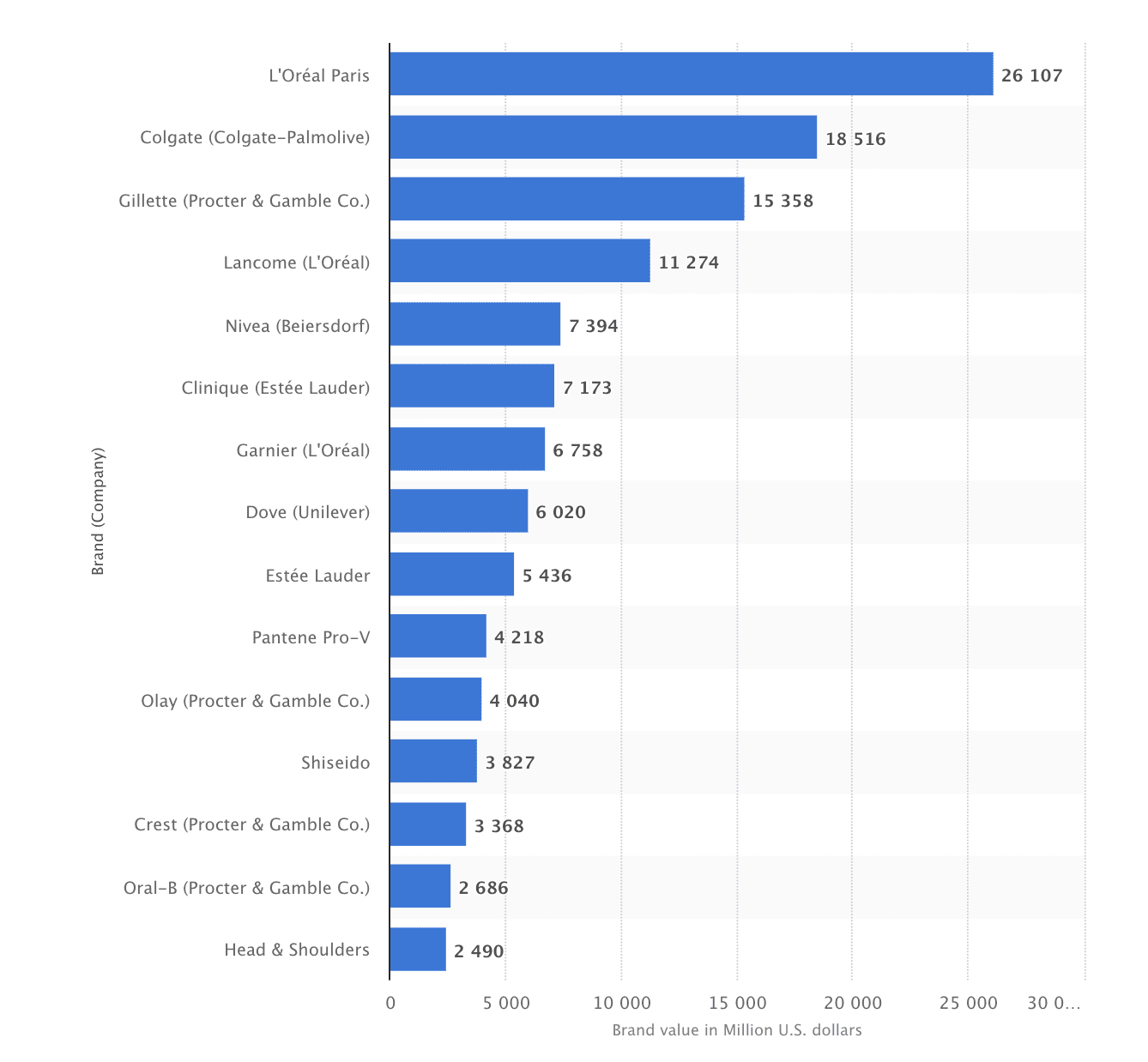
Valor de marca de las principales marcas de cuidado personal en todo el mundo en millones (2018)
Ventas netas de Procter & Gamble en todo el mundo por segmento de negocio en millones (2014-2018)

P&G se encuentra en una encrucijada. La marca de consumo de 182 años obtuvo su cifra de ingresos más alta en 2012 y aún no ha alcanzado esas alturas desde entonces, aunque han logrado recortar gastos y reforzar los beneficios. Aun así, la cifra de ingresos netos de P&G en 2018 fue la segunda más baja de sus últimos 13 años. Esta posición disminuida se corresponde con el crecimiento del sector minorista DTC. Este crecimiento, junto con el desarrollo continuo de marcas privadas de CPG bien comercializadas en grandes minoristas, ha dado lugar a una mayor sustitución de productos tradicionales de comercializadores como P&G y Unilever.

Redefinición de la venta directa al consumidor

Una representación de su oportunidad de franquicia

P&G tiene una gran oportunidad de aprovechar sus productos de formas nuevas e inventivas. La empresa, con sede en Cincinnati, acaba de lanzar Tide Cleaners, una franquicia de venta al por menor y centro de servicio de tintorería. Los franquiciados obtienen acceso a la marca más reconocida de artículos para el hogar y Tide consigue un nuevo canal minorista para vender productos, crear afinidad, aumentar la publicidad en el embudo superior y obtener flujos de ingresos basados en el servicio.

Tide, una de las marcas más reconocidas de P&G, ha sido reutilizada para presentar un servicio de lavandería a la carta. Tide Dry Cleaners permite a los clientes seleccionar el servicio deseado en la aplicación, pagar y, a continuación, dejar su ropa en las tiendas para que la recojan cuando reciban una notificación. Al volver, los clientes encontrarán su ropa lavada, seca y doblada. Estas tintorerías ya funcionan en Cincinnati, Boston, Chicago, DC, Filadelfia, Denver y Dallas. Esta nueva experiencia de venta plantea la siguiente pregunta: ¿por qué no ampliar el comercio vertical con tiendas físicas "de toda la vida"?

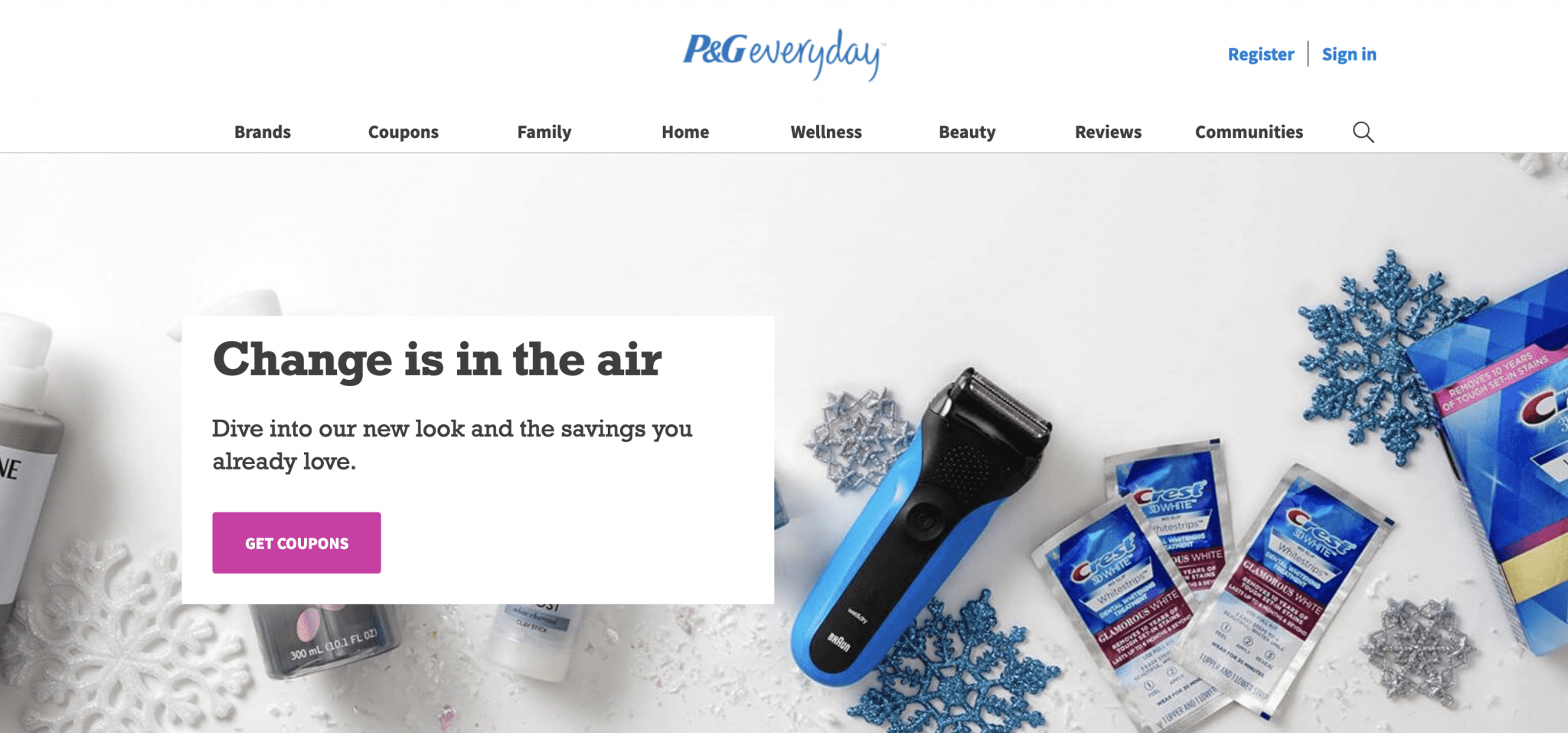
Un ejemplo de las iniciativas de DTC de Procter & Gamble

Sobre "P&G Everyday" y la defensibilidad. En 2018, Harry's y Dollar Shave Club (Unilever) ganaron más del 12% de la cuota de mercado de Gillette gracias a su modelo directo y a sus asociaciones con minoristas. Procter and Gamble se beneficiaría aún más del desarrollo de un modelo minorista físico DTC. Al poseer sus experiencias "cotidianas" en las tiendas, P&G podría cumplir algunos objetivos que serían útiles a medida que Amazon, Walmart y Target continúen desarrollando marcas competidoras de artículos para el hogar para hacer frente a sus propios problemas de rentabilidad.

  • Las tiendas físicas podrían reducir la dependencia de Walmart y Target como principales canales de venta, al tiempo que darían a P&G más influencia para negociar mejores condiciones y garantías de marketing en tienda en Target y Walmart o en Amazon (actualmente socio publicitario).
  • Al dirigirse directamente al consumidor, estas tiendas propias reducirían la dependencia de P&G de las relaciones con los mayoristas, promoviendo mayores márgenes por venta.
  • Con tiendas propias, P&G podría poner en marcha sus propios servicios de reparto y operaciones de última milla.

Mientras que "directo al consumidor" es la frase de moda de esta era en el comercio minorista, las tiendas físicas se están convirtiendo de nuevo en componentes críticos de un ecosistema saludable de captación de clientes. Pero los fabricantes de marcas ya no pueden confiar en que los grandes minoristas funcionen como lo hacían antes de esta era. Las marcas nativas digitales están dando prioridad al comercio físico para reducir los costes de captación de clientes y fidelizarlos a largo plazo. Como resultado de este cambio de los minoristas que dan prioridad a Internet, los grandes minoristas como Walmart y Target han dado prioridad a las asociaciones y adquisiciones con estas marcas para llevar a sus clientes a sus tiendas.

Walmart Inc. espera aumentar sus beneficios cobrando por la publicidad en las tiendas y en Internet de algunos de sus principales proveedores, como Procter & Gamble Co.

¿Pagará P&G por anunciarse en las tiendas?

La era DTC del comercio minorista ha empezado a situar a empresas como Unilever y P&G en desventaja. Hace apenas diez años, P&G era la dueña de los pasillos de aseo y belleza en tiendas como Target. En algunas tiendas, las instalaciones de Harry's y Flamingo son las más visibles. En otras, su desodorante Native's o las almohadas Casper. A medida que minoristas como Walmart reevaluaban el espacio en las estanterías y el marketing en las tiendas, P&G empezó a perder el control de la presentación de sus productos. Pero su apuesta por los modelos de negocio directos al consumidor es una señal de que esta desventaja puede durar poco.

Además del sistema de franquicias de tintorerías Tide, P&G está experimentando con marcas nativas digitales. Además, la empresa sigue probando nuevos formatos de venta online con BigCommerce. Pero es el formato de tienda directa el que podría ofrecer crecimiento en la venta al por menor física y defensibilidad de la marca en medio de la continua evolución de la venta al por menor. Una tienda propia de P&G no sería sólo un lugar donde mantener relaciones con antiguos clientes. Serviría como un espacio donde las nuevas marcas de P&G digitalmente nativas podrían probar y adquirir nuevos clientes. La venta al por menor directa al consumidor no se limita a los canales en línea, las DNVB están innovando en este sentido. Las empresas de marketing como Unilever y P&G pueden hacer lo mismo.

Lea aquí la curación del nº 308.

Informe de Web Smith | About 2PM