
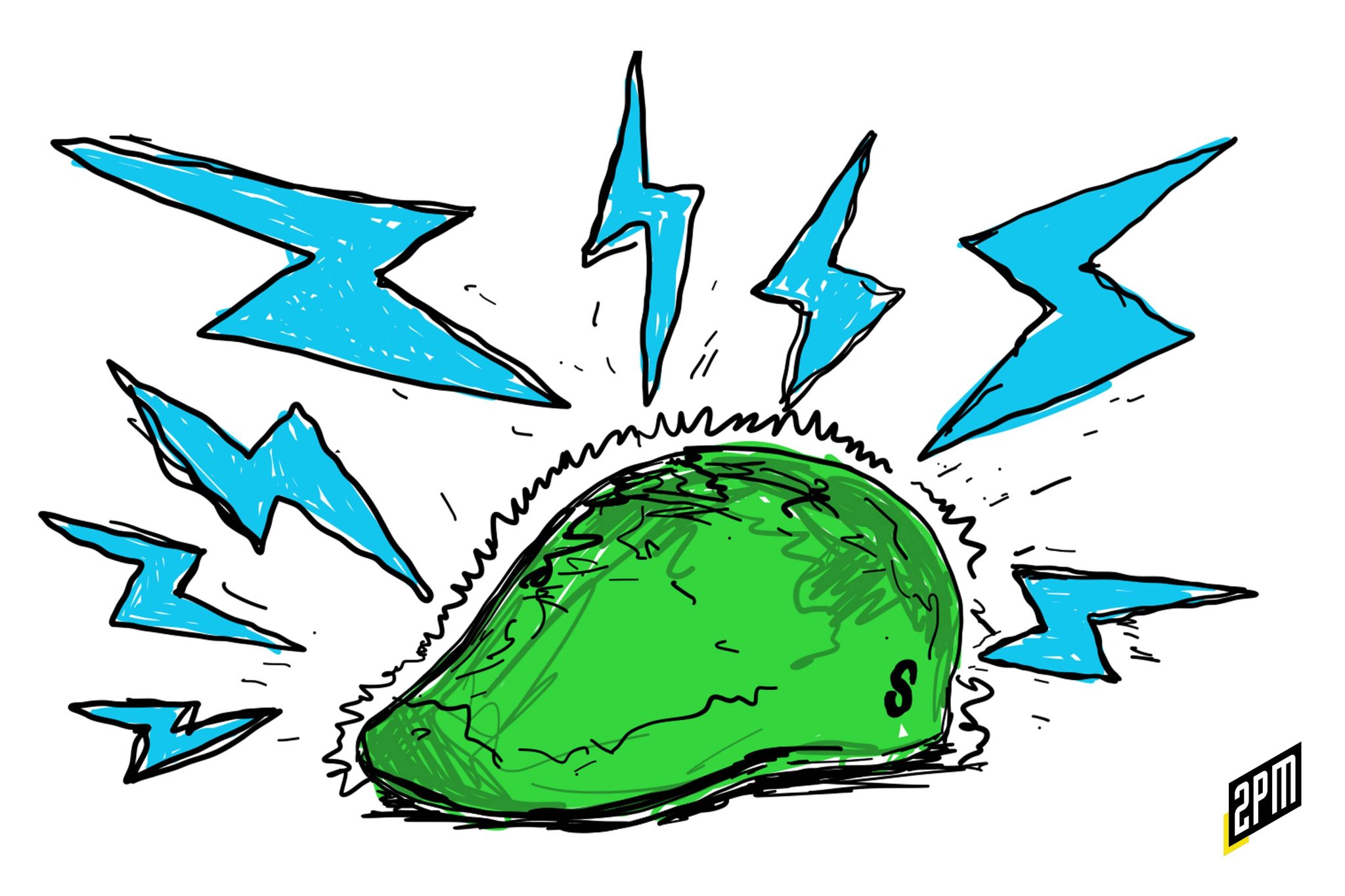
Memo: Bolt’s Gutsy Strategy

Puede que no funcione, pero es una estrategia valiente. Bolt intenta superar el arsenal de los rebeldes. La llamada a la acción es clara: "Cámbiate a Bolt". En otro hilo ardiente del fundador de Bolt, Ryan Breslow, comenzó: Shopify se está comiendo su ecosistema.

Ryan Breslow 🕺 on Twitter: “Shopify is Eating their Ecosystem (thread): / Twitter”

Shopify is Eating their Ecosystem (thread):

Just two days after, in a sponsored article published in Retail Dive on Monday, Bolt challenged Shopify directly. The headline “Has your online shop outgrown Shopify?” insinuates a new direction taken by Breslow and team. It’s now a rivalry stoked by a chairman of the checkout platform now valued at over $11 billion by investors. A click-through link titled “Tired of Shopify holding you back?” drove the message home.

  • top of funnel: viral thread
  • mid-funnel: topical sponsored article
  • bottom funnel: custom landing page to capture interest

Bolt wants to take on Shopify, transitioning from a one-click checkout tool to a full-fledged eCommerce platform. The landing page that Retail Dive sends readers to leaves no question unanswered:

Take back control of your store with Bolt CheckoutOS, the checkout partner that scales with you. Switch from Shopify for a flexible commerce solution and get up to $2M in incentives and marketing funds.

The thread, sponsored article, and the landing pages are all part of the new approach to growth that Bolt is relying on to reach its goals. The $11 billion valuation is hefty, especially given that Shopify competitor BigCommerce is trading at below a $2 billion market capitalization. According to filings, Bolt’s total revenue for 2021 was expected to be between $216.2 million and $216.6 million with a Non-GAAP operating loss of $19-20 million.

The thread headlines a repositioning strategy that may be designed to help Bolt stretch its total addressable market (TAM).

In the viral thread, Breslow says that Shopify copied Bolt when it launched Shop Pay. He also says that Shopify uses its positioning in the market and app store to bring in developers to build solutions for its clients, uses the app landscape as its own R&D and then manipulates app store restrictions to cut off the most popular apps at their knees and recreate the product themselves.

Breslow has become known for fiery tweet storms targeting powerful industry players. His last, which challenged YCombinator, came shortly before he stepped down as Bolt’s CEO (a choice he said was his own). In that thread, Breslow said his Twitter threads were not a marketing strategy. At least in the Shopify case, the tweets accompanied by the sponsored article seem coordinated. Bolt wants to become a Shopify competitor, and this narrative shift around Bolt’s own positioning (while pointing out the weaknesses of Shopify) were clearly planned.

This move to take on Shopify could boost Bolt’s business from one-trick tech company. Bolt’s current valuation underscores just how valuable checkout solutions have become. But to earn its valuation (and eventually grow beyond it) its next chapter has to be bigger. This is the impetus behind its growing value proposition. It now bills itself as a “CheckoutOS.” Bolt isn’t the only company that started in one corner of eCommerce tech and is looking at what other areas it can conquer in order to raise its own ceiling. But becoming the next Shopify is a tall order. Can Bolt achieve it without eventually using the same tactics as Shopify to grow users?

Right now, Bolt is suggesting it can be a home for both growing businesses as well as app developers who may have been burned by Shopify. The bottom line of Breslow’s argument is that eCommerce should be open-source. Bolt sees itself as a leading candidate in the version of eCommerce that is now inhabited by companies like BigCommerce, Magento, and Commerce Cloud – where commerce scale is decentralized because of open platform access. It wants to not only compete with Shopify, but replace it with a new model. However, Wall Street is still catching up to Shopify.

Shopify is down 57 percent over the trailing three months. Unlike Amazon, who found ways to calm the Street while reinvesting in future growth, Shopify has not been able to weave the same “we’re just beginning” narrative. Shopify needs quarterly growth to justify its market cap and to achieve that, it will have to own more and more of the ecosystem until the eCommerce industry matures beyond its currently nascent stage. Wall Street sees online retail as an industry in post-COVID retraction, further agitated by Apple’s privacy policies impacting the Facebook advertising that many retailers relied upon. Look at how reliant Shopify is on Facebook’s marketing prowess:

Speaking anonymously (with permission to share his thoughts), a Shopify executive contested my view that product decisions are made with the public market in mind. No one in Shopify’s leadership “optimizes for Wall Street,” he said. Rather, the Shopify executive explained that simplicity is prioritized. Products are concluded because they are not good for merchants, consumers, or the ecosystem as a whole.

A product manager also reached out to explain the unique role of checkout within the Shopify ecosystem. End to end control is critical, it’s “the most important piece of commerce.” And as Shopify continues to scale, the company wants control over the most critical point of the consumer workflow.

So while Shopify isn’t publicly weaving the narrative that its Amazonian rival did in its first 15 years, the management team is still playing by the same book: ruthlessly thinking for the long-term even throughout global and societal changes.

The ultimate irony of Bolt’s new strategy of antagonizing Shopify (like Shopify antagonizes Amazon) is simple. Shopify is slowly becoming more like Amazon to capture more share of eCommerce growth. If Bolt wants to compete against Shopify in other platforms, they will eventually adapt the same practices: picking and choosing between who gets to work within its ecosystem. When Bolt went after YCombinator, I wondered if the leadership team sanctioned the controversial statements made by Ryan Breslow. By taking aim at Shopify and backing it up with sponsored articles and thematic landing pages, it’s clear that the new marketing and public relations strategy has been sanctioned by the company. It has elevated Bolt in the eCommerce discussion. It’s set the stage for merchants and developers to see Bolt through the lens of larger aspirations.

Breslow sees Bolt as the third-generation of commerce enablers, a position shared by a number of headless competitors including its rival Fast.

But while the marketing strategy seems effective thus far, scale is a risky proposition. As Breslow correctly notes, there is a “success ceiling.” To break through the glass, you may end up making as many enemies as you do partners. If Bolt succeeds, it will have its own viral threads from younger, ambitious entrepreneurs to contend with. They’ll talk of the next generation and the right way to do things. And if they’re lucky, they’ll see the success ceiling too and adjust their strategies accordingly. It may lead to a bit of compromise. It may not work but it’s a gutsy strategy.

Por Web Smith | Editado por Hilary Milnes con arte de Alex Remy y Christina Williams 
Member Brief: Omnichannel Nirvana

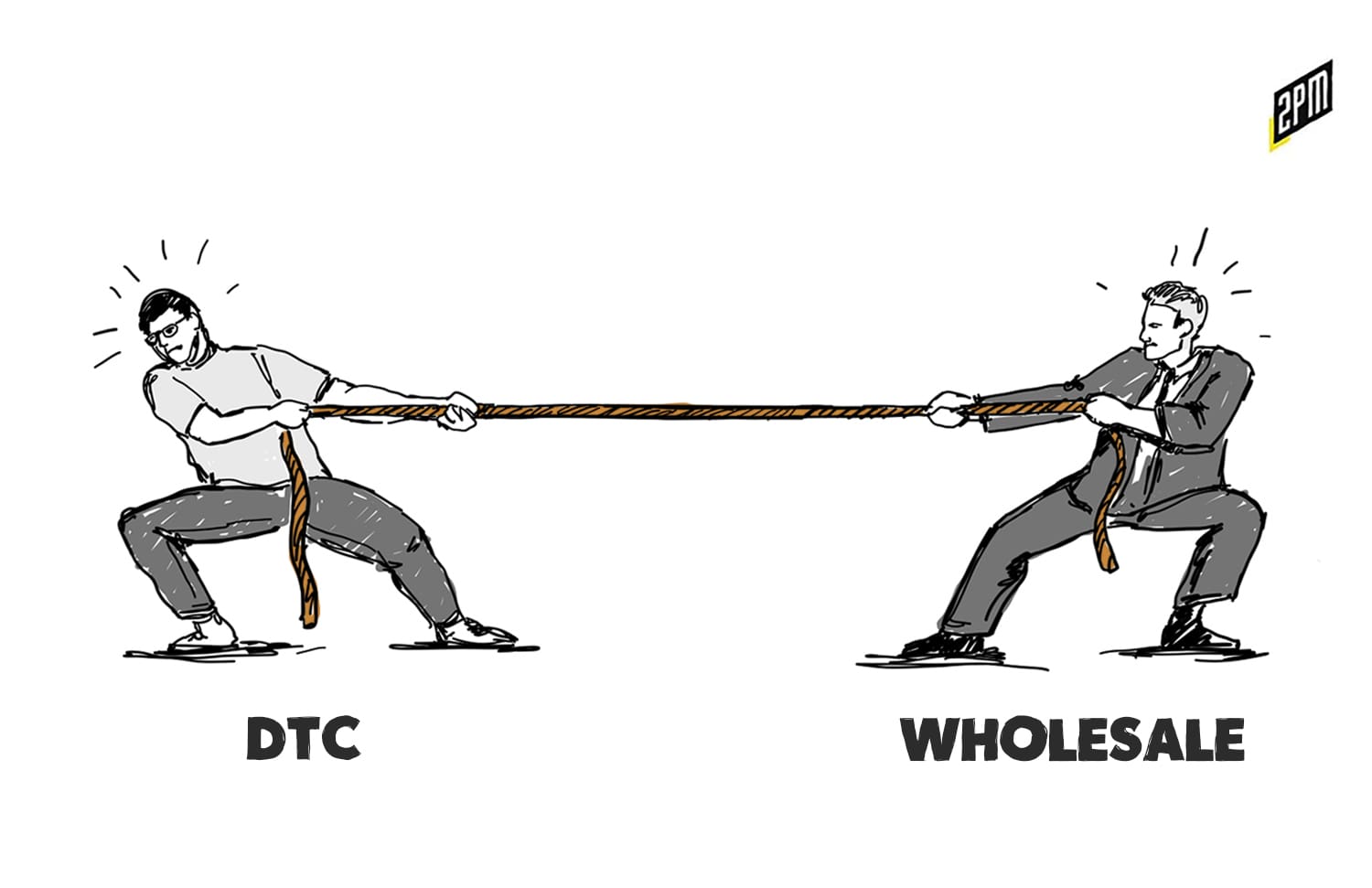
The two sides are seeking omnichannel nirvana.

As Nike focuses on its direct-to-consumer strategy, hurting department and specialty stores in the process, Allbirds is cozying up to wholesale. It’s an interesting paradox in omnichannel strategy that takes brand awareness and unit economics into consideration. The brands with sales velocity and stature to own their distribution can and will move towards an owned-store / DTC model. Brands working to reach profitability and scale are moving towards third-party retail wholesale partnerships.

A cycle seems to be forming: digitally-native and traditional brands that reach critical mass by working with wholesalers may eventually resign to a digital-first strategy.

This is just another sign of the vulnerable state of the DTC playbook and follows this macro-trends shaping retail right now. In just one week since publishing, two key commerce trends and their ripple effects outlined by 2PM on Tuesday began playing out in real time. From the Digital Commerce Global Summit presentation:

Physical-to-digital: Retailers are pulling back from third-party retailers

Una estrategia líder para las marcas de todos los tamaños y estatus es crear intencionada y cuidadosamente una red mayorista que permita el control del inventario y la asociación por encima del enfoque de rociar y rociar de las generaciones minoristas del pasado. Los minoristas externos desempeñarán un papel menor y diferente que antes, ya que las marcas se centrarán en sus propios canales. Un ejemplo: Nike tendrá un 70% de venta directa en 2027.

Digital-to-physical: DNVBs are opening owned shopping experiences

Para las marcas en línea, la expansión se produce en las tiendas. Las tiendas físicas realzan el halo online de la marca y, si se hacen bien, generan dinero. El riesgo es evitar la sobreventa. En paralelo a esta expansión, el centro comercial se rehará a imagen y semejanza de DTC.

Allbirds’ earnings this week underscored its need to rethink its physical store and wholesale strategies. According to CNBC, shares fell after the brand posted mounting costs that ate into profits. Retail store openings were a top expense. To recoup sales, Allbirds said it would be selling through third-party retailers, naming Nordstrom as its wholesale partner. A recent WWD article explained:

The company will start wholesaling primarily in the U.S. as well as a small number of European retailers, with Asian stores in the plans for the future, Zwillinger said. He said the stores will not be given access to the full Allbirds assortment but select products most appropriate for their market segments. They will be limited in what they can sell on promotion to maintain Allbirds’ pricing integrity that it has maintained for the past five years, Zwillinger said.

To return to its DTC roots, Allbirds will need to grow its business and build stronger brand equity while maintaining the unit economics (pricing integrity) that CEO Joey Zwillinger cited in his comments to WWD. Nike has had a decades long advantage and it is an unfair comparison but this reversal is how it’s currently rebuilding its distribution model. According to NPD Group, Nike, along with Adidas and Skechers, is its own best retail channel.

Nike’s direct retail strategy is vast and nuanced, factoring in store concepts, gaming, apps and Web 3.0. Its plans to own the customer at every interaction is hurting retailers that have come to rely on it. Footwear News cited an urgency to consolidate distribution at Nike headquarters:

For Nike, an aggressive DTC strategy has led the brand to terminated wholesale accounts with retailers like Zappos, Dillard’s, DSW, Urban Outfitters, Shoe Show and more, leaving many retailers without the ability to sell one of the most popular brands in stores. Nike has also cut back on the amount of product it is offering in existing vendors, like Foot Locker, in order to consolidate distribution.

Foot Locker shares fell as it reported a grim outlook on the heels of losing some of Nike’s presence in stores. And other retailers like DSW and Urban Outfitters and Shoe Show have faced similar market pressures after news of Nike’s departure. While the brands are along their own cycle, the stores that rely on them are experiencing their own renaissance. It won’t be doom nor gloom for most.

If my assumptions are correct, the omnichannel void left by the largest, most established retailers will be filled by the up and coming class of modern brands like Allbirds and NOBULL. And then five, 10, or 20 years from now, the same stories may be written about these modern brands looking to build their futures – this is the new shape of the symbiotic relationship between brands, physical retailers, and evolving distribution strategies.

On one end: profitable, enterprise traditional brands are in the news for moving away from wholesale and towards DTC. And on the other end: yet-to-be profitable digitally-native brands are in the news for moving towards department store wholesale in search of profits and scale.

They’re each trying to achieve a sort of omnichannel nirvana.

By Web Smith | Editor by Hilary Milnes with art by Christina Williams

Memo: La presentación sobre comercio digital de 2PM

Aunque gran parte de la composición del carácter de las APNV sigue siendo el mismo, el telón de fondo ha cambiado drásticamente. Las nuevas tendencias macroeconómicas y las fuerzas del mercado están influyendo en el sector de las DNVB, y el sector de las DNVB está influyendo en el viejo mundo. La cobertura y el análisis de 2PM siguen de cerca estas tendencias en tiempo real; merece la pena dar un paso atrás para evaluar las perspectivas generales del futuro del comercio minorista, la Web3, la cadena de suministro, la privacidad, el sector inmobiliario y la idea de propiedad dentro del metaverso.

En una presentación para Deloitte Digital, 2PM esbozó ocho ideas con visión de futuro.

De lo físico a lo digital: Los minoristas se alejan de terceros[1

Una estrategia líder para las marcas de todos los tamaños y estatus es crear intencionada y cuidadosamente una red mayorista que permita el control del inventario y la asociación por encima del enfoque de rociar y rociar de las generaciones minoristas del pasado. Los minoristas externos desempeñarán un papel menor y diferente que antes, ya que las marcas se centrarán en sus propios canales. Un ejemplo: Nike tendrá un 70% de venta directa en 2027.

De lo digital a lo físico: Las DNVB están abriendo experiencias de compra propias[2].

Para las marcas en línea, la expansión se produce en las tiendas. Las tiendas físicas realzan el halo online de la marca y, si se hacen bien, generan dinero. El riesgo es evitar la sobreventa. En paralelo a esta expansión, el centro comercial se rehará a imagen y semejanza de DTC.

Cambios en la publicidad: La actualización de la privacidad de Apple tendrá efectos duraderos[3].

Los datos de origen definirán la próxima ola de publicidad y ventas. Las marcas y las plataformas se esfuerzan ahora por adaptarse a la actualización de privacidad de Apple, mientras Google planea un cambio similar para Android. Apple desafiará a Meta y Google como principales plataformas publicitarias. Si añadimos la compra con un solo clic, el dominio de Apple no es difícil de imaginar. También hay que prestar atención: El auge del gCommerce y la prevalencia del código QR.

El CAC sigue aumentando y las asociaciones de contenidos son cada vez más importantes para las propiedades[4].

Apple no es el único cambio que afecta a las estrategias publicitarias. Los costes de adquisición de clientes son cada vez más elevados. Además del énfasis en los datos de primera mano, las asociaciones de contenido serán una estrategia clave para los anunciantes en el futuro. Evolucionará más allá de la asociación, y las marcas adquirirán propiedades de medios de comunicación para acceder a información sobre la demanda de productos y la comunidad.

El crecimiento de los pagos de proximidad precede a la adopción del eCom en Estados Unidos[5].

Estados Unidos es actualmente el octavo país del mundo en adopción de pagos móviles. Esa será la próxima carrera armamentística de la tecnología en el país, ya que las empresas compiten por convertirse en el mayor operador de pagos móviles. Predicción: Estados Unidos alcanzará el 30% de penetración del comercio electrónico en 2027.

Carga aérea, portacontenedores y cadenas en propiedad[6].

Las alteraciones de la cadena de suministro han reconfigurado el comercio minorista en los dos últimos años. Los mayores minoristas tomarán medidas para asegurarse de que ya no están en deuda con fuerzas que escapan a su control, porque tienen los recursos para poseer sus cadenas de suministro. Es de esperar que Amazon, Target y Walmart adquieran más facilitadores de su cadena de suministro. Esto podría hacer que las marcas más pequeñas estén más en deuda con los grandes minoristas.

Los centros comerciales facilitarán las devoluciones de eCom para impulsar el tráfico peatonal[7]

¿Cuál será el propósito del centro comercial dentro de cinco años? Seguir el mayor punto de dolor del minorista: Las devoluciones en línea. Con tanta superficie comercial extra en los centros comerciales de Estados Unidos en apuros, cada vez más se convertirán en centros de logística inversa para ayudar a las marcas a aliviar el coste de las devoluciones en línea.

Web3 y DTC, comercio minorista en la cadena de bloques[8].

El metaverso ya está aquí y, para 2027, cabe esperar que los minoristas hayan invertido tanto en su presencia en mundos virtuales como en el físico. Web3 puede ayudar a las marcas a establecer programas de fidelización y comunidades de la nueva era, al tiempo que crea una fuente de ingresos que no está vinculada a la creación de más bienes físicos. Fíjate en Nike y Starbucks para ver hacia dónde se dirige esto.

Aquí lo tiene. Los PDF están disponibles para los suscriptores, sólo tienen que responder al correo electrónico del suscriptor y se lo enviaré personalmente:

Por Web Smith con Hilary Milnes, Christina Williams y Alex Remy