

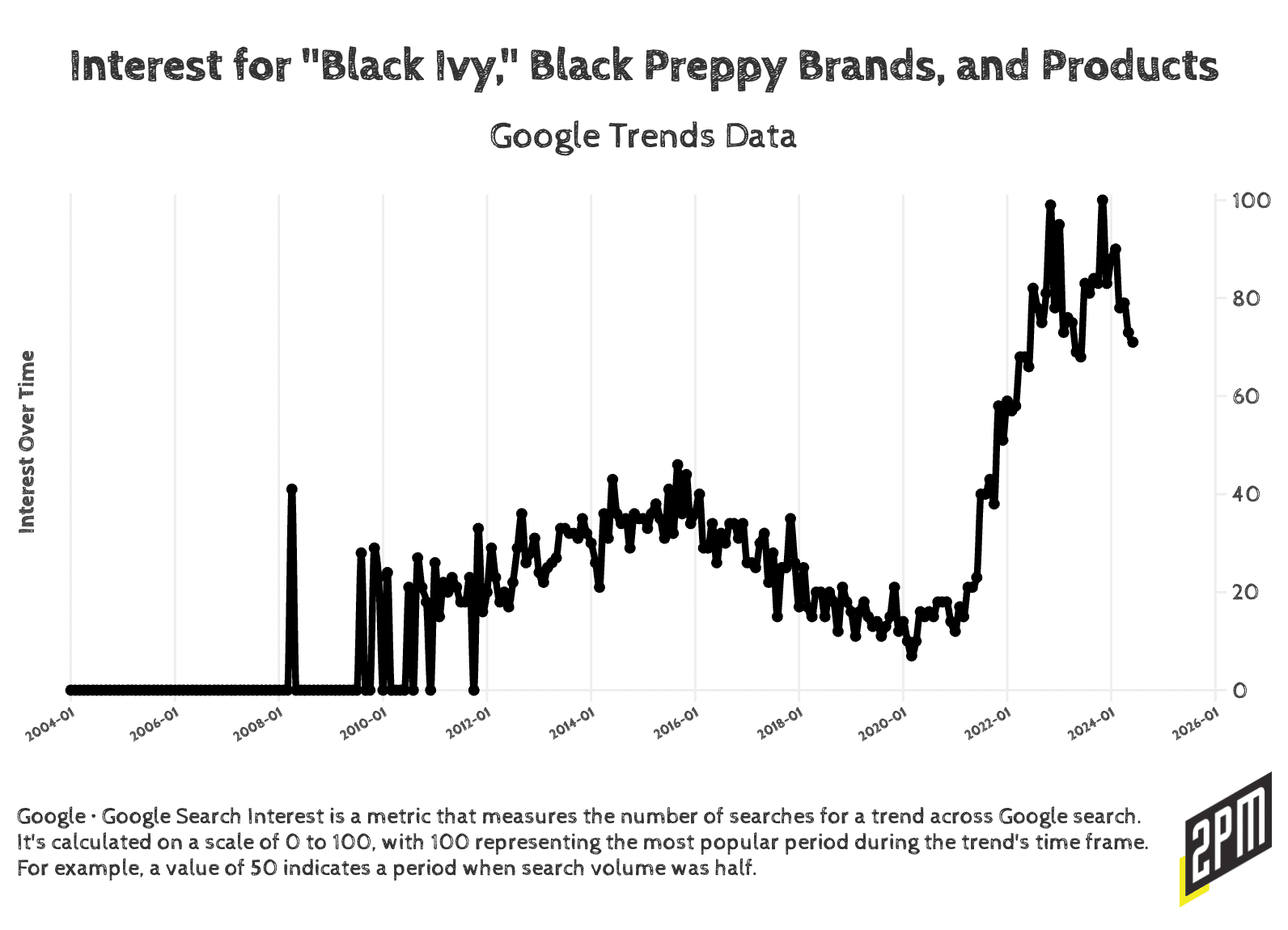
Tap in. There’s very little that’s new under a sun that shines on modern brand development; this is one trendline that may define collaborations, media interest, and investment strategy. Just one decade ago, it was nearly impossible to find a majority black-owned, preppy-focused brand. Five years ago, one would be hard pressed to find brand advertisements with models that represented the culture. And today, you can name enough to fill an autumn wardrobe for your kid’s freshman year at Boston College or Vanderbilt.
As the air of Fall 2024 sweeps across college campuses and city streets, the continued rise of “Black Preppy” culture continues to make waves in the fashion world. This movement, a casual blend of streetwear elements with the refined aesthetics of old guard, blue-blooded Ivy League fashion, reflects a broader cultural shift. In the words of Black Ivy author Jason Jules,
It’s not just about the clothes. It’s about the culture, the confidence, the community.
Nearer to the forefront of this sartorial renaissance stands one of a number of notable upstarts: Blackstock & Weber.
A New Era of Black Preppy Culture
When Ralph Lauren launched its HBCU (Historically Black Colleges and Universities) collaboration in 2022, the response was mixed. Some critics felt uneasy about the nostalgic imagery, while others saw it as a necessary reframing, showcasing Black models in preppy styles that African Americans have long been a part of.
Chris Echevarria, founder of Blackstock & Weber, embodies this sentiment of this contradiction with his brand, aiming to be “the next Ralph Lauren.” His goal is lofty but worthy, highlighting the lack of authentic representation in preppy fashion. While countless brands have helped to pry open the doors, Echevarria’s 100% Black-owned brand proves there is ample space for Black preppy acolytes to thrive. In my opinion, Echevarria’s vision transcends mere fashion—it’s a cultural statement, rooted in quality and authenticity, carving out a new space in the preppy pantheon. In fact, it’s a vision that I failed to achieve on my own during my time at Mizzen+Main.
The B&W brand’s founder is a story is one of passion, resilience, and an unyielding commitment to quality. Born and raised in New Jersey, Echevarria developed a keen eye for fashion at a young age. His mother recalls how even as a child, he had a strong preference for picking out his own clothes, a trait that would later define his career.
When I was young, I loved clothes. My mother remembers that even at the age of 4, I would cry when she didn’t let me pick out my own clothes. (Essence Magazine)
This early passion influenced the groundwork for his later success. Initially pursuing a career in medicine, he eventually followed his true passion, enrolling at the Fashion Institute of Technology (F.I.T.) in New York City. His time at F.I.T. and subsequent roles in the fashion industry, including a significant stint at J.Crew, shaped his understanding of the market and honed his design skills.
Launched in 2018, Blackstock & Weber quickly gained a reputation for its modern takes on classic styles, particularly the penny loafer. Echevarria’s vision was clear: to create a brand that combined the timeless appeal of artisanal workmanship with the dynamic communication style of modern streetwear brands. This strategy proved successful, as Blackstock & Weber grew by 300% annually, becoming a beacon of the preppy-with-a-twist style.
Echevarria’s approach to business relationships has also been pivotal. “I don’t have wholesale partners; I have friends,” he says, emphasizing the importance of personal connections. This approach has fostered loyal partnerships with influential retailers like Kith and 3sixteen, and even extended to Hong Kong with Leather Healer. This personal touch, combined with his strategic vision, has helped the brand carve out a unique niche in the fashion industry.
Media Interest and Cultural Impact
The media has taken notice of Blackstock & Weber’s unique position in the fashion industry. In the interview with Essence, Echevarria discussed how he channels nostalgia to create a brand that feels both timeless and contemporary. “It becomes a candid discussion about channeling nostalgia to feel grounded in the present, and how navigating the space between adversity and insight allows Echevarria to sit in his own power,” Devine Blacksher writes.
Shoppe Black also highlighted the brand’s distinctiveness. It noted that Blackstock & Weber carved a niche by offering limited-edition footwear that combines traditional craftsmanship with modern sensibilities. Echevarria’s commitment to quality and his ability to bridge the gap between high-end fashion and accessibility set the brand apart. The brand’s small-batch production ensured exclusivity, while collaborations with partners like J.Crew and Kith demonstrated its wide appeal.
A New Wave of Media Acceptance
The rise of Blackstock & Weber signifies a broader cultural acceptance of black preppy culture. Note brands like Recreational Habits, this Howard Crew piece by Wales Bonner, the summer shaker sweater by Noah, or this field rugby by Echevarria’s Academy.
Historically, preppy fashion was associated with the elite, often excluding African-Americans whose heritage contributed to the mid-century preppy movement. The emergence of history packaged by Black Ivy culture has redefined this narrative. Let Black Ivy author Jason Jules tell it:
In Mr. Jules’s telling, the adoption by generations of Black men of sartorial codes originating among a white Ivy League elite may initially have been a natural inflection point in the arc of men’s wear evolution. Yet it was also a conscious development, one with a strategic agenda that extended well beyond the obvious goal of looking good. (New York Times)
Black men have long adopted, adapted, and influenced preppy styles, infusing them with their own cultural significance and flair. The moodern fusion created a unique aesthetic that resonates with a wide audience.
But Black Ivy culture itself has deep roots. During the mid-20th century, black students at Ivy League and historically black colleges adopted and transformed traditional preppy styles, creating a look that was both sophisticated and reflective of their identity. This cultural evolution has continued to influence fashion, contributing to the rise of brands like Blackstock & Weber.
Looking Ahead. In 2020’s, “New Prep,” I explained: “Like Aimé Leon Dore and Noah, Rowing Blazers’ presence is noticeably diverse. Product page and brand photography aside, the images shared through social channels communicate a common theme. But more than a theme, it’s a welcome sign.” B&W is one of a growing class of brands who’ve walked through that door.
As Blackstock & Weber continues to grow, it stands as a beacon of innovation, quality, and cultural pride. Echevarria’s vision, coupled with his ability to connect with consumers on a personal level, has paved the way for him. As the fashion world continues to evolve, Blackstock & Weber is well-positioned to lead the charge, redefining classic menswear staples for the modern age and setting new standards for what it means to be preppy in the 21st century.
The story of Blackstock & Weber is not just about fashion; it’s about cultural transformation, personal vision, and the ability to transcend traditional boundaries. As Echevarria continues to innovate and inspire, Blackstock & Weber’s rise is a testament to the enduring appeal of black preppy culture and its rightful place in the mainstream fashion narrative.
The difference is that a number of the leaders who cater to the blue blood and blue blood-adjacent are ones who’d have been wiped or excluded from cap tables. Today, they have quickly become the collaborative partner of choice of brands seeking to tap in to a culture that was once excluded from the conversation. You don’t need to collaborate with a brand like this, if you are a brand like this.
By Web Smith
In halls where ivy tendrils climb, and echoes of tradition chime, a new rhythm blends with classic grace, Black Ivy culture finds its place. And so, we honor this grand design, Where blackness and prep intertwine, a culture rich, with stories told, in every thread, both new and old.