备忘录Netflix Playbook 2.0

一次招聘就能决定一切。对于 Netflix 来说,乔希-西蒙(Josh Simon)作为消费产品副总裁的角色,对于平台的进攻、防守和长期生存至关重要,因为工作室将成为自给自足的内容堡垒

Netflix 推进电子商务的兴奋之情溢于言表。如果该项目取得成功,其影响将更为深远。首席执行官泰德-萨兰多斯(Ted Sarandos)和 Netflix 正处于潜能休眠期。如果直接面向消费者的零售获得成功,这家流媒体服务公司和电影制片厂就能在另一条战线上与迪斯尼竞争。

Disney Plus 侵占了 Netflix 的地盘,并因此对其产品造成了直接影响。Netflix 的漫威星球大战和皮克斯目录现在已经稀少。2021 年 4 月,其他主要的知识产权工厂也开始威胁要将自己的项目从 Netflix 搬走。Engadget 最近概括了日益加剧的竞争:

为了在流媒体时代占据一席之地,好莱坞电影制片厂开始采取守势。在向 Netflix 和亚马逊授权电影和节目后,迪斯尼和华纳媒体等公司已将其最大的产业从竞争中撤出,以促进自身平台的发展。据彭博社报道,康卡斯特旗下的 NBC 环球公司也不甘落后,正在酝酿类似的策略,以扶持其刚刚起步的流媒体公司 Peacock。[1]

随着好莱坞的步步紧逼,Netflix 也采取了应对策略,这预示着与迪士尼、亚马逊、华纳传媒和康卡斯特旗下的 NBC 环球公司的竞争将进入一个更长期的阶段。它从 DTC 零售开始。

第一阶段:原始品牌零售

Netflix选择Shopify并不令人意外。与传统的定制构建或与 Salesforce、BigCommerce 或 Magento 建立更稳固的合作关系相比,Netflix 决定采用千禧一代喜欢的商务风格,这很能说明问题。这就是大公司在不完全确定方向时的做法:怀疑和效率并存。但这一决定可能对它有利。
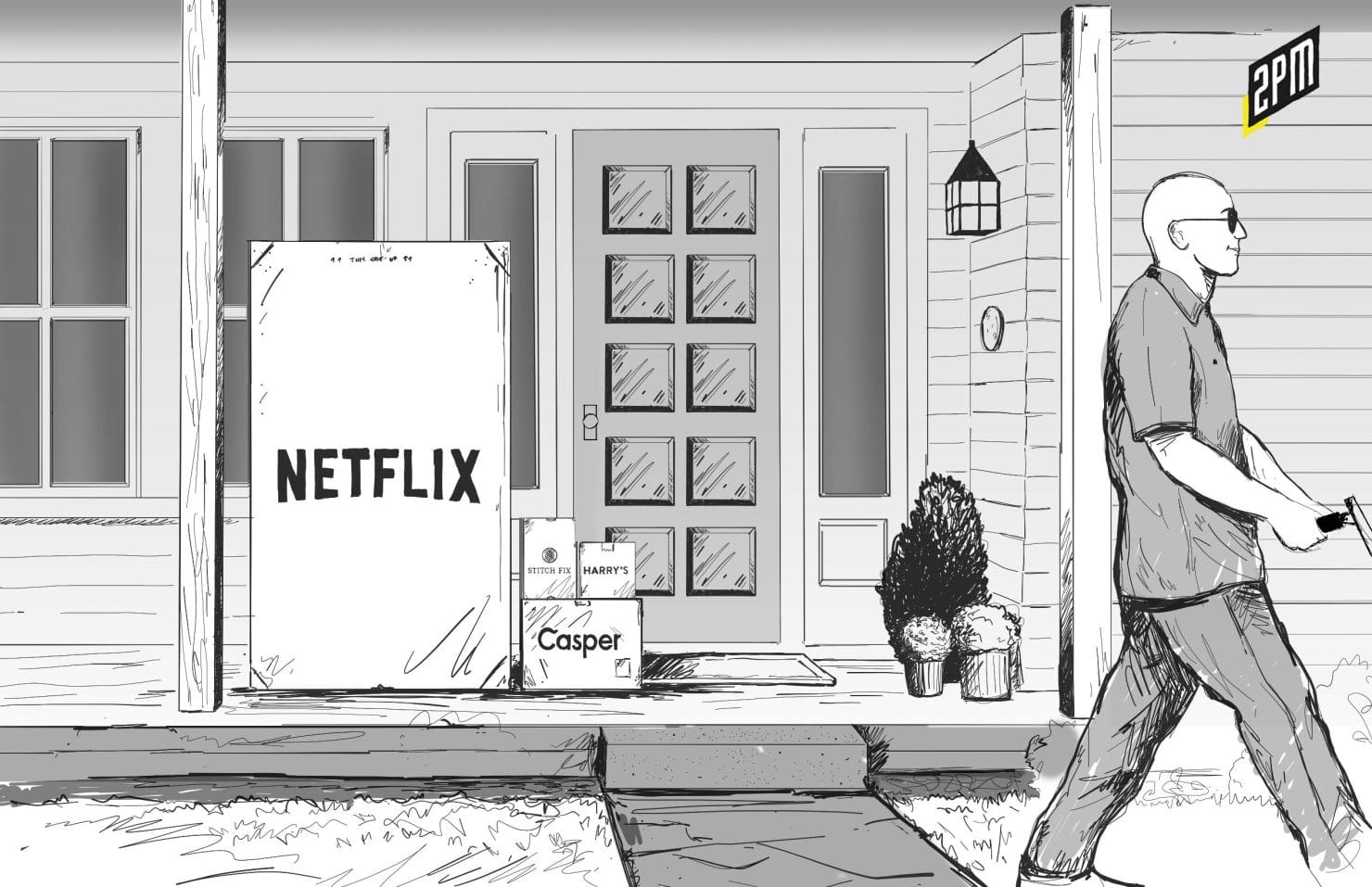
即使 Shopify 的开发需要 100 万至 300 万美元(成本可能要低得多),但对于一个新生的运营机构来说,这只是一笔相对较小的投资,在未来几周内,它将有条不紊地发展壮大。Netflix.shopBVA设计,SDG(Skims 和 Prive Revaux 的合作伙伴)开发,是这家流媒体巨头进入 DTC 领域的第一步。该公司希望通过这次发布,传达其品牌比其年龄(Netflix 现已 24 岁)更年轻的信息。

从美学、功能和心理角度来看,Shopify 的方法与 Netflix 的目标是一致的。这不仅体现在前端外观和商品陈列上,还体现在所使用的技术上:Shopify、Klaviyo 和 Signifyd。在产品开发、合作伙伴和产品摄影造型方面,该零售平台成功地吸引了年轻、充满活力和精明的消费者。年轻到 "千禧一代 "的老人可能无法完全理解 Netflix 的产品和合作战略。日本的 Beam 品牌、动漫和 Yasuke 动画都表明,这种做法可能会产生更大的影响。因此,从理论上讲,这项小投资可能会成为 Netflix 最重要的投资。

网络史密斯在推特上写道"我们的女儿们现在拥有价值高达 126 美元的《怪奇物语》第三季纪念商品,除了极少的授权费外,Netflix 没有获得任何收益。线性商务将改变 Netflix 的前景。/ Twitter"

现在,我们的女儿们拥有价值高达 126 美元的《怪奇物语》第三季纪念商品,而除了极少的授权费外,Netflix 没有获得任何收益。线性商务将改变 Netflix 的前景。

Netflix 很早就知道自己在利用知识产权进行商品销售方面的潜力。2019 年 7 月,无数零售商获得了 Netflix 的《怪奇物语》版权授权。短时间内,塔吉特、亚马逊、H&M、凯洛格、汉堡王、可口可乐、Hot Topic、沃尔玛,甚至芭斯罗缤(Baskin-Robbins)都迎来了零售业的大丰收,他们将自己的 75 家门店改造成了剧中的"Scoops Ahoy "冰淇淋店

Duffers 夫妇表示,这些旨在炒作他们节目的营销交易都不会增加他们的银行账户。他们说:"我们不会从中得到任何收入"。他们说,"我们只是希望能让节目得到更多曝光"。[2]

但在整个 Netflix 时代,潜在的交易只有节目中的产品植入和潜在的订阅兴趣提升。

第二阶段:现场活动和激活

2020 年 3 月,我计算了 Netflix 的电子商务潜力,因为这家流媒体工作室聘用乔希-西蒙(Josh Simon)指明了当前的发展方向。

推特上的 Web Smith:"7月份,我对Netflix的在线零售/授权潜力做了一些基本估算。"只要有 7% 的 Netflix 观众通过应用程序购买(AOV 为 50 美元),就相当于从 4100 万户家庭中获得超过 1.4 亿美元的销售额。"@Netflix 正在向线性商务发展。

今年 7 月,我对 Netflix 的在线零售/授权潜力做了一些基本估算。"只要有 7% 的 Netflix 观众通过应用程序购买(AOV 为 50 美元),就相当于从 4100 万户家庭中获得超过 1.4 亿美元的销售额。

西蒙的任职既有方向性,也有功能性。在这位新任消费产品副总裁的职业生涯早期,他曾在耐克公司工作过一段时间。不过,他在迪士尼工作室和 Blumhouse 现场体验业务部门工作的六年时间,将为 Netflix 制定消费品的品牌和受众战略。根据《综艺》(Variety)在 2020 年的一篇文章[3],他的任务是 "确定和制定消费品不同业务线的计划"。

因此,Shopify 的试验具有长远意义。如果 Netflix 能够证明,它可以通过内包更多的零售业务,成功获取更多的商业利益,那么更多的现场活动也将随之而来。2020 年晚些时候,《怪奇物语》乘着与芭斯金斯-罗宾斯合作的东风,在洛杉矶推出了互动式驾驶体验。在洛杉矶市中心的 Skylight Row,占地 400,000 平方英尺,长达一小时的表演以 1985 年霍金斯的场景为主题。来宾们被鼓励穿上上世纪 80 年代最漂亮的衣服,回到 35 年前的高中同学聚会、虚构的 "Starcourt Mall",然后观看由三部分组成的演出,其中包括三季的关键时刻。这次现场活动由 Netflix 和风投支持的活动平台 Fever 联合制作。这与《广告周刊》的观点不谋而合,即这家流媒体巨头将继续寻找创新的方式来利用其知识产权:

Netflix 多年来一直通过零售和品牌合作伙伴关系涉足消费产品业务,希望找到利用其部分原创剧集大获成功的方法,而此次电子商务的推进为 Netflix 的这一尝试画上了圆满的句号。[4]

Netflix 的 Shopify 战略是一项重点工作的前奏,旨在增强其各类产业的生存能力,这些产业最终可能会以临时现场活动的形式出现。但是,Netflix 的雄心壮志并没有到此为止。

第三阶段Netflix 宇宙

乔希-西蒙(Josh Simon)希望借助一些原创剧集的大获成功,Netflix 的战略不太可能通过临时性的现场活动和短期激活来完成。Netflix 具有游乐园的潜力,它决定将商业作为第一步,这是它捕捉数据的一次可靠尝试,而这些数据正是围绕面向年轻人的实体场所制定战略所必需的。Netflix正试图与视频游戏工作室、游乐园和拥有自己流媒体服务的电影制作公司竞争,这其中就包括Netflix的核心人群Z世代成员。考虑一下 Netflix 最大的竞争对手:

Netflix 在 2019 年表示,它最大的竞争对手其实是 堡垒之夜,这才更有可能将玩家从流媒体服务中拉走。[5]

Netflix 的数字世界可能会永远与实体世界融合在一起。近十年来,好莱坞的传统电影公司一直在削弱 Netflix 的两大优势之一:从其他电影公司策划的内容。其结果可能是 Netflix 在这一过程中变得更像迪斯尼或环球影业:

在 Netflix 试图在全球范围内与迪士尼竞争的同时,它也在努力创造能够像《星球大战》或《玩具总动员》一样对文化产生影响的特许经营项目。[6]

Netflix 不可能像迪斯尼那样拥有 25000 英亩的土地,也不可能像环球影城那样拥有 415 英亩的土地。但几乎在美国的每个大都市地区,都有一个濒临倒闭的购物中心--在《怪奇物语》中虚构的 Starcourt 购物中心所描绘的那个时代,它曾熙熙攘攘。首席执行官泰德-萨兰多斯(Ted Sarandos)可以利用价格低廉的地产,Netflix将濒临倒闭的购物中心改造成有用的东西,这已经不是第一次了。

如果这家流媒体巨头证明了以 IP 为动力的商品可以畅销,那么实体零售店、弹出式体验和娱乐活动也可能会畅销。如果 Netflix 在进军实体零售、活动以及为其深受喜爱的原创内容建立永久的家园之前进行数字实验,请不要感到惊讶。它创造了有价值的特许经营权。沃尔特-迪斯尼(Walt Disney)在佛罗里达州海湾湖为其特许经营权建造家园时就知道自己在做什么。在当今时代,以 DTC 开始的东西往往以实体形式结束。它将有价值的财产变成受人喜爱的财产。随之而来的可能是持久的文化影响。

作者:Web Smith | 艺术:Alex Remy | 编辑:Hilary Milnes编辑:Hilary Milnes

Member Practical: Art, Science, and Economics Meet

A kitten, an NBA champion, a canvas of graffiti-covered art, and 4,101 parcels of virtual land walk into a bar. Instantly, the value of that bar grows by 137 ethereum. If you have no idea what I am talking about, you are not alone. This primer will help explain the origin, the present, and the future of non-fungible tokens – a complex field that will make a sizable impact beyonded of its intended audience. The term “NFTs” is entering the mainstream. Yes, even for those who may scoff at the idea of blockchain technologies, tokenized goods, or paying for an asset class that was previously free or easily transferable.

本会员简报专为以下人士设计 执行委员为了方便加入,您可以点击下面的链接,获取数百份报告、我们的 DTC 权力清单和其他工具,帮助您做出高水平的决策。

在此加入

备忘录伟大的战争

Robert Vann, publisher and editor of the Pittsburgh Courier, wrote in awe about the newly minted international sports icon Jesse Owens in 1936. Owens had just won four gold medals at that year’s Olympics, held in Berlin.

I looked on with a heart which beat proudly as the lad who was crowned king of the 100 meters event, get an ovation the like of which I have never heard before. I saw him greeted by the Grand Chancellor of this country as a brilliant sun peeped out through the clouds. I saw a vast crowd of some 85,000 or 90,000 people stand up and cheer him to the echo.

A sprinter from the Jim Crow South and student at a then-segregated Ohio State University, Owens experienced racially-integrated life for the first time while sailing to Europe and living abroad for the Olympics. In a span of a week during the Olympic games, he challenged and diminished many of the ethnic and racial myths perpetuated by Adolf Hitler, the “Grand Chancellor” referenced by Vann, by dominating the Berlin Olympics and undermining Hitler’s claims of national and racial supremacy.

Berlin, on the verge of World War II, was bristling with Nazism, red-and-black swastikas flying everywhere. Brown-shirted Storm Troopers goose-stepped while Adolf Hitler postured, harangued, threatened. A montage of evil was played over the chillingly familiar Nazi anthem: “Deutschland Uber Alles.” This was the background for the 1936 Olympics. When Owens finished competing, the African-American son of a sharecropper and the grandson of slaves had single-handedly crushed Hitler’s myth. [1]

Owens returned to America after the Olympics, where President Franklin D. Roosevelt would not acknowledge his feat and, in failing to do so, spawned an historic missed opportunity to shift a global narrative. What could have been had Owens’ treatment at home matched his achievements abroad? Had America amplified and marketed his four Olympic gold medals as symbols of psychological defeat over Germany’s prevailing ideology, perhaps a tyrannical belief system could have been thwarted before words turned to actions. In reality, Kristallnacht would take place two years following the 1936 Olympics. Owens would go on to say:

Some people say Hitler snubbed me. But I tell you, Hitler did not snub me. I am not knocking the President. Remember, I am not a politician, but remember that the President did not send me a message of congratulations because, people said, he was too busy.

Because he was an African-American man, major corporations would not employ him as a pitch man. His amateur status was revoked by the NCAA, and he was reduced to running against horses for compensation. During Owens’ career, the country was pioneering large-scale advertising and public relations campaigns, but we failed to use his historical wins to our advantage.

We must ask ourselves why.

The Great Invention of the 20th Century

Owens’ story becomes a lesson in foreshadowing and an important parable. Advertising is one of the most powerful forces in shaping opinion and influencing policy, but it’s much harder to advertise when a company, brand, or sovereign nation isn’t itself in support of the cause in question.

Just five years after Owens silenced Hitler with his speed, American advertising agencies and their brand partners mastered cause marketing when they needed it most: World War II. America was at war abroad and grappling with a vulnerable economy at home. The economic engine of war involved a never before seen form of consumer marketing. Advertising was used to promote consumerism as a patriotic duty and brands were intertwined with government initiatives to both supply our military industrial complex and support the domestic economy. WWII-era brands and media agencies were aligned in a forceful showing that ideas could be used no differently than physical weaponry.

Throughout history, brands have grown stronger during periods of societal unrest, but only when the dissonance between their ideas and their actions were at a minimum. Civil rights wasn’t an American corporate or policy priority when Owens stood above a saluting Nazi, laying waste to the host country’s agenda. Contrast this to the collective efforts that won a war after escalation required our participation.

Film depictions of WWII feature the Lucky Strike brand of cigarettes as prominently as if the packages of rolled tobacco were leading characters of the story’s arc. Lucky Strike was omnipresent internationally throughout the war. But before the packs of branded cigarettes were included as C-rations for American soldiers, Edward Bernays, known as “the father of public relations”, helped the American subsidiary of the British tobacco company with its first mindshare coup. History’s first PR campaign was designed to convince American women to take up smoking. With the wind of suffrage at their backs and the 19th Amendment to the Constitution fueling a new wave of enfranchisement, women became a marketer’s new focal point. Lucky Strike cigarettes were their “torches of freedom.” Corporate America co-opted a social movement to further an economy. It would be the first time of many.

无标题

Modern marketing / PR was a byproduct of American war efforts in the Wilson administration (1917). Without Edward Bernays and his uncle (Freud), our consumer economy would not be the same.What he didn’t account for was our distributed media system. From 1928’s “Propaganda”: pic.twitter.com/9C7MIkYTAx

Alongside savvy marketing tactics, new brand innovations gained traction thanks to their contributions to wartime economies. Walt Disney manufactured morale for GIs shipped to different theaters of war. Jeeps were built for the American military. Mars invented M&Ms during the Spanish Civil War. Bausch & Lomb created Ray-Ban aviator anti-glare frames at the request of an Army Air Corps lieutenant general. Kotex began as a WWI-era gauze before being adapted by Army nurses to relieve menstrual bleeding. Super Glue was formulated in 1942 to serve as a manufacturing additive for military weapons. Silly Putty was designed after a war-production experiment to find an alternative for rubber went wrong. And Fanta was invented after a trade embargo prevented Coca-Cola syrup from being imported into Nazi Germany during World War II.

Overwhelmingly, at the dawn of the American advertising age, brands were a part of the war effort, liberation, and many cultural shifts of the times. There were exceptions, of course, just as there are exceptions today.

A Century Later, Lessons Forgotten

When outspoken Coinbase CEO Brian Armstrong suggested in a September 2020 blog post that his company was better served by apathy, it was consistent with the culture within its walls.

Everyone is asking the question about how companies should engage in broader societal issues during these difficult times, while keeping their teams united and focused on the mission. Coinbase has had its own challenges here, including employee walkouts. I decided to share publicly how I’m addressing this in case it helps others navigate a path through these challenging times.

In short, I want Coinbase to be laser focused on achieving its mission, because I believe that this is the way that we can have the biggest impact on the world. [2]

An argument can be made that Armstrong’s assessment of the mood of his own workforce was accurate. Given Coinbase’s internal dynamics, running an advertisement akin to Beats By Dre’s “You Love Me” would not have worked for the same reason Cadillac could not have run an advertisement on behalf of Jesse Owens’ historic days abroad in 1936: The brand’s promotion of freedom would have clashed with Owens’ reality.

Commonplace in 1944, rare in 2021.

But the Coinbase culture eventually spoke for itself when a number of minority employees called out cultural schisms within company walls. In many ways, Armstrong was right: His company had no authority to take a public position on civil rights or equality.

Recent decisions at companies like Shopify, Twitter, Facebook, Snapchat, and Google to deplatform Donald Trump and his campaign can be interpreted as good-faith efforts to address current societal unrest, which has seen online words evolve into real-life actions. But like Coinbase, many of these companies are also laser-focused on their missions. The ideas of freedom, cooperation, and equality that are so critical to democracy are barely communicated or shared by today’s top advertisers.

I began to wonder why cause-based advertising wasn’t more prevalent given the issue’s thread throughout our society: economically, politically, socially, and otherwise.

During WWII-era advertising, nearly every major corporation was directly involved with the issue of its time. During that same era of advertising, Jim Crow bigotry and violence prevailed at home while racial and ethnic atrocities persisted abroad. Today, the corporations that are best positioned to promote the ideas that a threatened democracy requires to heal seem to be extraordinarily quiet right now, when it matters most. Beats by Dre’s ad in November 2020, Dove’s June 2020 ad placement, and the Nike’s September 2018 spot starring Colin Kaepernick are exceptions to the rule.

Overall, few corporations are prepared to champion the American ideals the way their predecessors did during past threats to American democracy. And perhaps it’s because, like Jesse Owens’ wins and the PR blitz that never was, there is a dissonance between the messages that today’s advertisers want to share and the reality of the dynamics within our own walls: our neighborhoods, our workplaces, and our places of gather.

A timely lesson bound to reemerge

Eighty years ago, a war threatened democracy. And in the first month of 2021, democracy is again under siege. At the root of today’s unrest is the myth that an election was stolen – the same contest that saw historic levels of African-American voter turnout in swing states. The corollary is not a mistake. In the 1940s, corporations were proponents of the war’s resolution. They manufactured goods and used their associations with the war efforts to espouse American ideals. Where is today’s equivalent? One possible explanation is that media has never been more fractured and brands’ abilities to promote ideals has diminished over the decades. The explanation more difficult to hear is that perhaps we are more like the racially-segregated country that Owens came home to than we are willing to admit. Look no further than our own workspaces, virtual or otherwise.

Back then, we needed Cadillac to build engines for fighter planes. Today, we need brands to internally reflect the ideals of America that they so desperately want to espouse in marketing: from workplace equity to representation in leadership. This past week, many Americans have found that we are not what we thought we were. Today’s primary mission is to heal a deep-seated division. The resolution is found within the walls of our homes, our places of gather, the workforces that we build alongside, and our nation. Maybe and only then can the marketing and advertising of today reflect who we as Americans believe ourselves to be. As of now, there aren’t many examples at which to point.

The refrain seems to grow louder by the day from people who look like me. You love my culture but do you love me? Corporate America never answered that question for Owens and the many other pioneers of his day. In doing so, we missed an opportunity to beat down evil in its idea stage. Perhaps today’s corporations will see the need to be more dynamic in how they respond. First, with action, and then, through the amplification of messaging that has been proven to impact the hearts and minds of the people.

By Web Smith | Editor: Hilary Milnes | Art: Alex Remy | About 2PM