备忘录苹果与效果营销

Though founded in the 1960s, Walmart came into its own as a “mom and pop” store killer by the late 1970s. Overnight, independently-owned stores folded as Walmart sold products with greater efficiency and lower prices. Product marketers worked tirelessly to place their products on Walmart shelves. Sixty years later, the company’s grasp over physical retail remains.

We will remember the Apple iOS privacy changes as a similarly transformative moment for retailers. Like then, it is beginning to separate the haves from the have-nots.

For a small, small selection of brands, performance marketing is not essential. This essay is about two of those companies and everyone else who seems to be playing a different game all together.

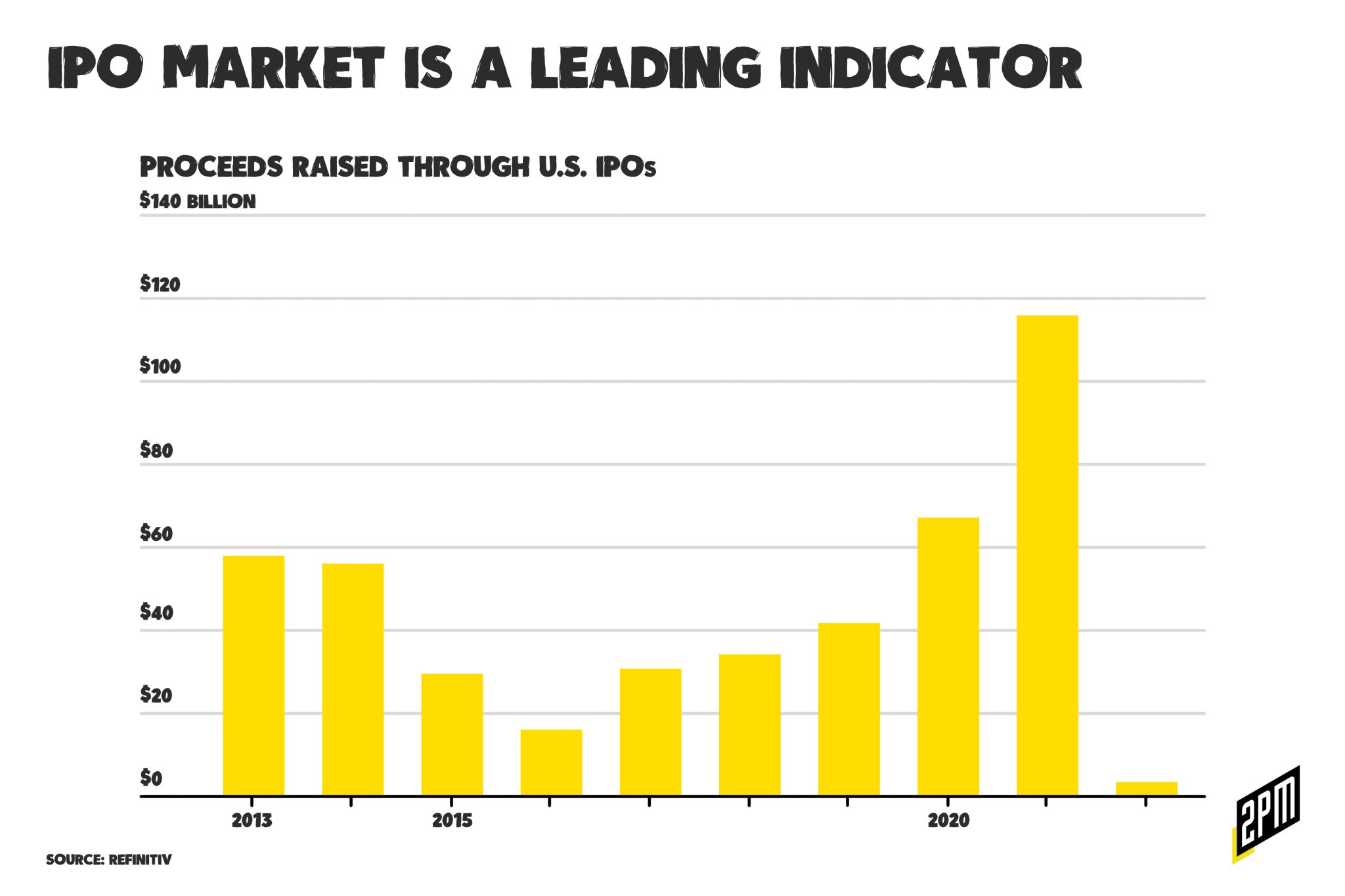
Two digitally-native brands are in the press for their growth; their founders are two of the most visible human beings on the planet. First, Robyn “Rihanna” Fenty is floating a $3 billion IPO for her brand Savage x Fenty.

Savage x Fenty was launched in 2018 and has since collected a healthy stash of venture capital to support its growth. The brand has raised $310 million to date. Most recently, it raised $125 million in January in a round led by Neuberger Berman and other existing investors L Catterton (LVMH’s investment arm), Avenir, Sunley House Capital and Marcy Venture Partners. Positioning itself as an anti-Victoria’s Secret by embracing all body types, genders and customers who have felt excluded by the mainstream lingerie giant, Savage x Fenty has become a formidable industry force. Owned by TechStyle Fashion Group, the brand built up hype around its eCommerce store with annual fashion shows airing on Amazon Prime. Last year, Savage made moves into physical retail, with five stores now open and plans to hit 10 this year. Though IPO plans are not confirmed, as reported by Bloomberg, they’re on the table for 2023.

Meanwhile, Kim Kardashian is expanding the Skims brand to include swimwear. In a recent report in Business of Fashion, she and co-founder Jens Grede (also behind brands including Frame and Good American) eschew performance marketing for a brand like hers:

Skims’ brand work, plus Kardashian’s promotion on social media, have made performance marketing all but unnecessary.

“[Performance marketing] would be very ineffective for us because we’re always running out of stock,” Grede said. Besides, he doesn’t believe it suits Skim’s long-term goals.

Instead, the report says, Skims spends on “brand-building” marketing efforts that include billboards, high-profile photographers and Kardashian tagging the brand in her own Instagram posts. Skims is on track to add 2 million customers by the end of this year, and it’s biggest restraint is fulfilling orders and keeping items in stock as supply chain disruptions drag on. It’s a problem and a curse, but overall, the brand’s in a healthier position than other DTC brands that are now trying to grow outside of paid marketing.

But most brands do not have the visibility or influence of a Kardashian on their cap tables. That leaves two options for many: partner with a celebrity that reduces the cost of marketing and improves cash conversion cycles or build systems to reevaluate how the brand measures marketing conversions.

A recent report by Catherine Perloff of AdWeek covered the strategies employed by Ben-Zvi, an agency-based performance marketer with brands like e.l.f. Cosmetics, Etsy, and Revlon. The report explained how he built strategies around third-party tools (and his agency’s proprietary technology) to identify correlations between active campaigns and conversion outcomes.

Before identifier deprecation, measuring a campaign’s effectiveness depended a lot on statistics from Meta, said Ben-Zvi, who works with brands such as e.l.f. Cosmetics, Etsy and Revlon. “It was all about figuring out what is the proper attribution window based on what Facebook is telling me,” he said.

Now Ben-Zvi relies on various tools, including looking for correlations between when a campaign was active and certain conversion outcomes, leveraging his agency’s proprietary technology. For example, when the campaign was active, did the advertiser see a lift in direct sales on its website or an increase in branded search via Google? Ben-Zvi said he has also looked to third-party tech, such as Blackcrow.ai, which helps brands build their own audiences to target without Meta.

Another strategy mentioned in this AdWeek report was the collection of first-party data:

Ashley Karim-Kincey, vp of media at creative agency Dagger, said she uses tech such as floodlight tags on the brand’s website to track who has visited and double-click tracking tags within their ads to cross-reference the data, both of which are Google ad-tech products.

In a series of essays devoted to the likelihood of this type of disruption, in April 2021 we highlighted the utility of first-party data as iOS changes were due to disrupt the performance marketing industry. From On First Party Data and Media:

第一方数据将引领下一波广告和销售浪潮。美国企业现在正处于一场竞赛中:他们将建立、收购或营销拥有这些数据的受众。独立媒体行业很快就会讨论结果,但我们很少对早期步骤进行剖析。随着越来越多的人追求第一方数据,受众开发将成为市场上最令人垂涎的技能之一。

To acquire targeted customers, first-party audiences are replacing third-party collections.

In our follow up on content fortresses, I continued:

First-party data was well on its way to becoming the key asset for advertisers; Apple’s decision further moved advertisers to prioritize its collection, refinement, and monetization. Apple will eventually eliminate data sharing across vendors, a long-time complaint of many of its users. In doing so, walled gardens will take the place of the open web funded by this data practice. Media companies and commerce companies will become indistinguishable, in many ways. The law of linear commerce is no longer just about brands and their content strategies or publishers and their eCommerce development.

But how did we get here? Wayne Ma of The Information published an inside look into Apple’s decision to “blow up the digital ads business.” Apple’s pivot to privacy has had serious implications for Meta, Facebook’s parent company, which “ expects the changes to shave $10 billion off its revenues this year because of their impact on the company’s prodigious data collection practices,” according to Ma.

But in interviews with The Information, people with direct knowledge of Apple’s privacy deliberations stressed that Meta wasn’t the primary target of the company’s changes, despite a long history of thinly veiled rhetoric from Cook viewed as critical of the company’s practices. Instead, Apple was going after the most egregious forms of abuse—for example, weather apps that sold data about users’ locations to brokers, the people say.

Apple is now trying to close the “Pandora’s box” it opened with its data sharing that was upholding entire surveillance and advertising industries. While one is more nefarious than the other, they are inextricably linked. And performance marketing is in the crosshairs of the crackdown. Already, marketers have become aware that over-reliance on Facebook and Instagram ads spelled bad business. But weaning off of the platforms has gained a new urgency thanks to Apple’s decision. With it, Meta has learned its own lesson in reliance on outside businesses. And while Apple’s driving motivation is eliminating bad actors who abuse its user data, something else is true at the same time: it no longer serves Apple to prop up Meta and other platforms’ ad businesses. Google is now following Apple and will introduce similar privacy changes for Android. Brands that relied on performance marketing are now at a disadvantage in a way that the Skim’s and Fenty’s of the world are not.

So here we are, two worlds represented within the same category of brands. One is highly dependent on the advertising methods of the last decade or so and the other seems to scoff at them as if they were never necessary. Skims’ Grede told Alexandra Mondalek of BOF:

You cannot advertise your way to success. Advertising is certainly important as a part of it, but sales-driven marketing has never built brands.

Meanwhile, a founder of a venture-funded brand that, itself, is nearing a potential IPO chimed in on the report published by The Information:

What this [The Information] article doesn’t do is analyze the downstream implications for DTC brands and small businesses, which have been catastrophic.

It is unlikely that Apple reverses course on its ATT changes and its diminishing of the IDFA but an entire industry is in need of a middle ground. For many founders and executives, their livelihoods are on the line and it isn’t Facebook that will be remembered as the culprit. Apple must either resolve its decision in favor of the advertisers reliant on sales-driven marketing. Or the company needs to partner with major social media platforms and media companies to offer its own advertising network (fueled by Apple’s first-party data, coincidentally). In either situation, Apple will face pushback for hypocrisy. But the digitally-native brand industry, as it stands, may not survive the privacy changes attributed to Apple. That is unless, a global icon is on the brand’s founding team.

There’s never been a greater disparity between the haves and the have nots for brands growing in the age of Apple’s privacy power moves.

作者:Web Smith | 编辑:Hilary Milnes,美术:Alex Remy 和 Christina Williams 

备忘录泰-哈尼归来

Much can happen in two years. She was the face of an industry and then – fairly or unfairly – she was one of its many whipping posts. She’d later return to Outdoor Voices to reclaim her role as its creative driver. In doing so, Outdoor Voices regained its footing. It’s in a much better position than it was before. In 2020’s Evolving Brand of DTC, I wrote:

Surely, with Ashley Merrill at the helm, Tyler Haney back in an active role, and a new CEO search in process: a positive outcome is more likely than it was with Mickey Drexler involved.

With her next project, Haney takes another leap away from retail’s old guard (represented by the likes of Alex Mill CEO Mickey Drexler) and into the new. Is an NFT a conduit to a new era of customer loyalty? Haney thinks so. Her new venture, called Try Your Best (TYB), got the New York Times profile treatment this week as Haney makes the pivot from her past dealings. She’s making the pivot from leading a workout revolution through accessible athletic apparel to her next one in the world of Web3. TYB essentially trades access for brand engagement and the concept has been covered at 2PM. From the New York Times:

Though she is no longer with Outdoor Voices, Ms. Haney, 33, is hoping to bring its tenets of community building and consumer engagement into a new sphere: the blockchain-based future of the internet known as web3. She’s betting that in the next phase of online retail, “minting things” will be the new “doing things.”

TYB seems to be the product of keen observation and opportunity. We’ve seen recent successes with DAOs, NFT-based communities, and metaverse product drops – Haney is betting that this is the natural progression. Right now, the fervor and hype surrounds branded NFT drops. Brands like Nike, Adidas, Gucci, Balmain, Champion, and Clinique have released their own NFTs. Depending on the brand, the use cases vary. Some are marketing tools meant to test the waters. Some drive purchases via in-game partnerships. Some are tied to loyalty programs. Starbucks has made moves to tokenize its loyalty program. In a recent 2PM memo, we make the point that this type of project is a natural progression in retail. In this way, Starbucks would be the best candidate for a parallel corporate structure built atop a DAO. The potential is a shift in ownership and influence, providing more input from the company’s best customers. From November:

Starbucks has an enormous, built-in community. There are few major retailers that could achieve what Starbucks can with its existing infrastructure. A loyalty DAO would mean new product ideas, governance over potential marketing tactics, and rewards based not only in short-term gain but long-term upside. The Starbucks loyalty program, with the help of the mobile app that totals 28.4 million quarterly users, could precede a fundamental shift in how Starbucks uses one of its most valuable assets. If Starbucks does tokenize its loyalty program, corporate governance would be tiered: traditional C-suite, stock-based premium shareholders, and the loyalty DAO.

The common thread across these projects that they are designed to grant exclusive membership into a sort of “club” for brand fans. That’s one reason luxury brands and sports brands have taken to NFTs so quickly – brand affinity is high in those fields. In this way, NFTs are more than collectibles, they are corporate status symbols or declarations of rank.

What TYB wants to do is pull this sort of one-off-NFT-drop brand engagement into one platform. On the How It Works page on the site, the company uses a brand called Joggy as an example (Joggy is a new brand also led by Haney that sells CBD products). Users who participate in customer feedback loops by weighing in on decisions like packaging colors (one example seen on the site) receive collectibles in return. These unlock access to things like exclusive or early-access products, event invitations and private channels, according to the site description.

The concept of branded community has been heralded in the DTC era, when companies recognized that loyal customers – or the community – were the most valuable assets. Especially in an era where brands lived and died by lifetime value and retention rates. Community is both marketing jargon and a survival tool. TYB pushes the concept of community forward by laying “what’s in it for me?” on the line. Customers who opt in know what to expect in return, and that the more they put in, the more they’ll get out. At least that’s the high level theory in practice.

This is common among NFT drops. Brands like Gucci are rewarding top fans with their NFTs. To qualify to receive one, you have to have jumped through multiple hoops like joined the brand’s Discord server and followed past updates. NFTs then become a badge of belonging in an inner circle. That works for some brands with enough of a halo – and not to mention, it’s far from Gucci’s main business proposition.

Haney’s concept raises further questions. Can a platform manufacture it for brands looking for customer feedback? Do customers care enough about the typical brand to spend time on Try Your Best? And do brands – who pay to appear on the platform – want to outsource something as valuable as customer feedback and loyalty to an outside company? Haney used Glossier as an example of a brand that has drawn an engaged millennial and Gen Z audience, and Glossier’s strategy was defined by how much it included customers in its product development. Tokenization formalizes the arrangement.

The challenge will be for TYB to become a must-have for customers. Whether or not the perks will be remarkable enough to devote time to the app stands in the way. But regardless of whether Try Your Best takes off, one of the industry’s top performers is betting the next stage of her career on Web3. This time, there is much less of retail’s past to stand in her way (or the future’s).

By Web Smith with editing by Hilary Milnes

备忘录历史性制裁

We are accustomed to stories of wartime sabotage. Bridges are blown, airfields are destroyed, and transport trucks incapacitated. But those were acts by armed forces. What we are witnessing now is the disruption of trade instigated by corporate boardrooms, not military war rooms. It’s beginning to have an effect.

The ongoing conflict in Ukraine will be remembered as a war of corporate intervention at a level not seen in previous wars. One by one, corporations are taking sides before many nations are. It’s divided the retail community, for one. The Chief Executive Officer of Uniqlo, Tadashi Yanai was recently quoted in Nikkei:

Clothing is a necessity of life. The people of Russia have the same right to live as we do.

The company’s 50 stores will continue to operate in Russia. Uniqlo is one of the last retail corporations to voice support for its commerce business in the country that is the aggressor in this war. Yanai’s stance is in the minority. Some of the world’s biggest brands have exited or suspended operations in Russia, putting an end to decades of post-USSR investment into the region, at least for now.

Since Russian troops invaded Ukraine on February 24, western companies have begun pulling out of Russia in a sign of anti-war sentiment and support for Ukraine. The motion spans across industries, with airlines, automobiles, tech giants, mass and luxury retailers, energy companies, consulting firms, logistics and shipping operators, financial firms, and media companies all halting operations in Russia.

Notable companies include Nike, which has closed stores and stopped eCommerce orders in Russia. Apple has stopped selling its products and ceased all exports to Russian sales channels. Google suspended advertising. H&M has also paused operations in the country.

And despite exemptions for luxury goods, higher-end fashion retailers have followed their peers with their own private sanctions against the country. Luxury conglomerates LVMH, Kering and Richemont plus Chanel, Hermès and Prada have closed stores and stopped shipments into Russia, cutting off wealthy shoppers’ spending. A recent report in the Guardian explained the ripple effect:

On Friday LVMH Moët Hennessy Louis Vuitton, owner of brands including Christian Dior, Givenchy and Bulgari, said it was shuttering its 124 boutiques in Russia from Sunday, while Kering, which owns Gucci and Saint Laurent, confirmed it would close its two shops in the country.

The private sanctions have extended to fintech. Visa, Mastercard and PayPal have blocked Russian banks from using their systems, while Apple Pay and Google Pay have also been blocked. In the entertainment industry, you’ll find more of the same. Disney has suspended movie releases in the country.

In the case of social media platforms, the Russian government made the first move in banning Meta platforms, YouTube and Twitter; TikTok then acted to stop streaming in the country in response to Russia’s fake news law enacted to control media narratives.

Ceasing business in Russia has been framed by a number of companies as an act of safety for employees and a response to a complex situation. Some companies including Nike have said they will keep paying employees’ salaries while businesses are closed. The goal is to put pressure on Vladimir Putin to put an end to his aggression towards a sovereign country. While the U.S. military industrial complex has been largely quiet, retailers and technology companies have seemingly taken to a different kind of war, amplifying the potential of long-term financial turmoil directly in response to the ongoing invasion. In this way, Russian citizens and millions of workers are the collateral damage. For western companies, the risk is hurting their own share prices. But the public pressure to signal support for Ukraine is a factor.

The war is playing out on social media in an unprecedented way, making it more difficult for businesses to carry on as usual. From TechCrunch, regarding TikTok’s decision to pull out of Russia:

​​TikTok has been a crucial platform of the war. The New Yorker called the conflict in Ukraine “the world’s first TikTok war” because of how Ukrainians have used the app to document the situation on the ground.

Not only are companies pulling out of Russia, they’re also sending support to Ukraine. Millions of dollars have been donated by corporations to UNICEF relief efforts. Elon Musk sent Starlink satellites to Ukraine to enable high-speed internet connections. And private citizens have departed the country to work along the border of Poland to aid refugees.

The decisions from major companies to pause operations in Russia will serve as a one-two punch when combined with western sanctions against Russia. Whether or not the combined efforts will hit Russia’s economy hard enough to have a material impact on the war remains to be seen, but what’s clear is just how interlaced politics and private corporations are today. In the internet’s war, silence seems to be an act of war for businesses. There has never been this type of galvanization around a cause. Once considered an expansion opportunity to countless western corporations, Russia is now the most sanctioned country on earth.

Let’s just hope that closed doors accomplish what ground troops and and weaponry have long been used for – winning wars.

作者:Web Smith | 编辑:Hilary Milnes,美术:Alex Remy 和 Christina Williams