Memo: Active Listening and Retail Media

The digital marketing world has evolved to fit the times but it’s evolving far faster than public knowledge has been made aware. The data available to the most savvy marketers far exceeds the potency of what existed at Facebook’s third-party advertising peak. It leaves the latest iteration, first-party data far behind. This months old anecdote by James Heurcher of AdExchanger adequately sums up the struggling promise of first-party data:

The promises of first-party data and individual personalization are alluring, he said. What vendors don’t mention is its super-fast half-life: first-party cookies and device IDs disappear, IP addresses change, emails turn out to be placeholder spam accounts. And through it all, ad blockers prohibit many one-to-one marketing use cases.

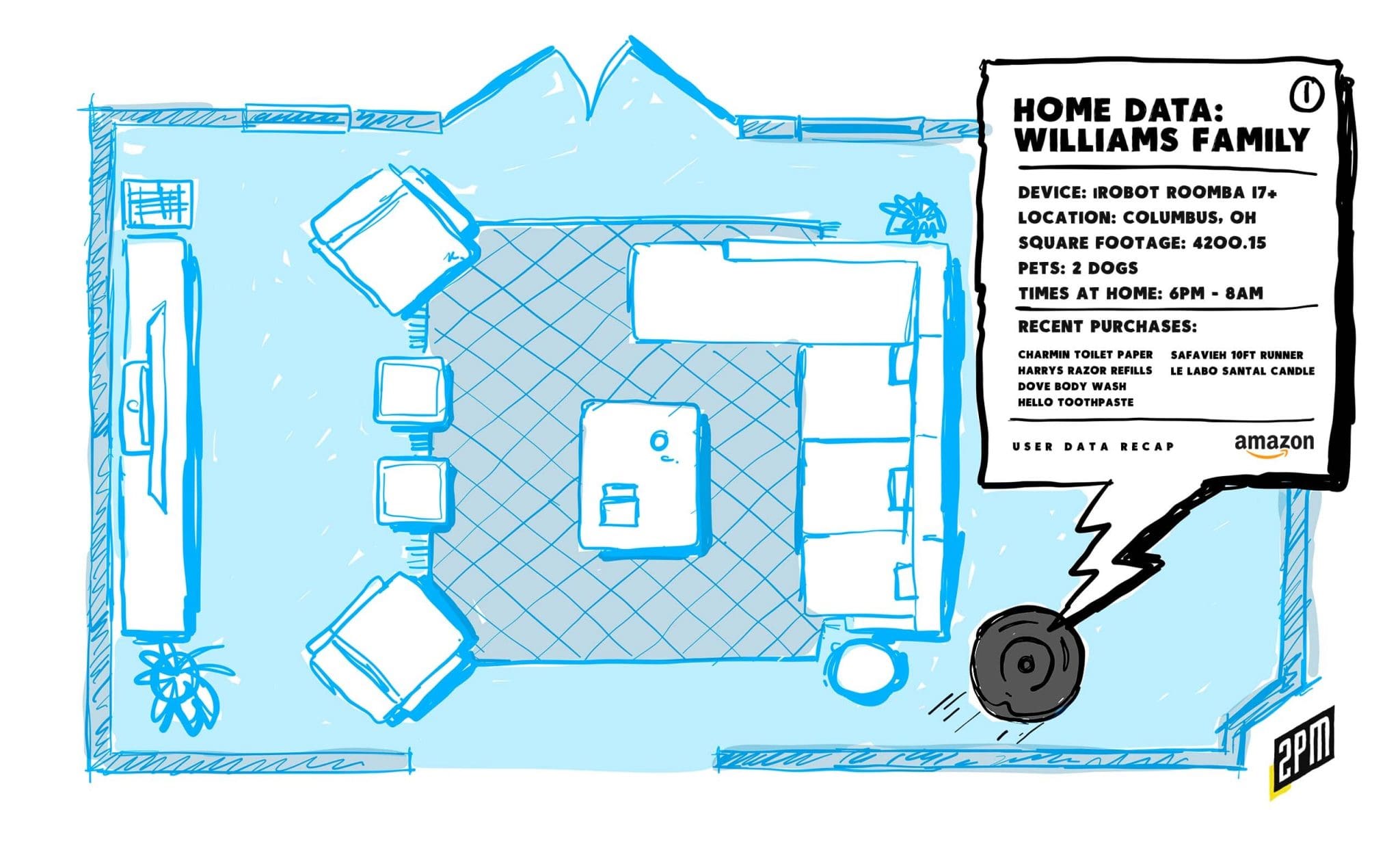
Operations are finding workarounds using increasingly sophisticated, open-sourced intelligence-based approaches. This summarizes one of several that I am aware of. Identifiable data is acquired at a premium; one of the most prevalent forms comes through active listening, which has emerged as a solution, according to recent reports and documents. The technology leverages real-time interpersonal conversations to build precise, hyper-targeted advertising campaigns. Cox Media Group (CMG) is at the forefront of this innovation, whose Active Listening technology claims to collect voice data from smart devices and pair it with behavioral insights to target consumers who are “ready to buy.” While the concept sounds futuristic, it also raises concerns about privacy and the boundaries of data collection.

According to reporting by 404 Media, CMG’s pitch deck (view here) reveals how voice data is allegedly sourced from device microphones. However, it is unclear which specific devices are involved—whether smart speakers, televisions, or smartphones. The company’s strategy relies on AI to process this data, enabling advertisers to reach potential customers before competitors do. CMG claims to work with 470+ data sources, combining voice and behavioral data to create highly targeted audience lists that can be uploaded into major ad platforms like Google, Facebook, Amazon, and Bing.

The Mechanics of Voice-Driven Ad Targeting

The core of CMG’s pitch centers on its ability to capture real-time intent data by listening to conversations near device microphones. This voice data is processed through AI and enriched with other behavioral insights to generate a list of consumers who are ready to make a purchase. Once the list is created, advertisers can target potential customers through a variety of channels, including streaming TV, audio, display ads, and social media.

This precision targeting comes with a price: $100 per day for a 10-mile radius, or $200 per day for a 20-mile radius. By geo-targeting consumers within a specific area, businesses can serve ads to the right audience at the right time, significantly improving the effectiveness of their campaigns. According to the pitch deck, CMG promises that this approach not only reduces click and acquisition costs but also enables advertisers to generate lookalike audiences at a fraction of the typical cost.

A Partnership Network in Question

In its pitch, CMG positions itself as a leader in digital marketing, citing key partnerships with tech giants such as Google, Facebook, and Amazon. According to the 404 Media report, CMG boasted of being among the first media companies to become a Facebook marketing partner and the first-ever media partner for Amazon Advertising. Additionally, CMG claimed to be a Google Premier Partner, which places it in the top 3% of advertisers.

However, these claims have come under scrutiny. Google has since removed CMG from its Partners Program following an inquiry by 404 Media, signaling potential violations of Google’s advertising policies. In a statement to 404 Media, Google emphasized that all advertisers must comply with applicable laws and regulations. Amazon also distanced itself from the program, stating that it has never worked with CMG on Active Listening and has no plans to do so in the future. Meta (Facebook’s parent company) has been more cautious, stating that they are reviewing whether CMG’s use of voice data violates their terms and conditions.

The Ethical Debate: Privacy Concerns and Transparency

The concept of using voice data from everyday conversations for targeted advertising inevitably raises ethical questions, at the very least. How much are consumers aware of how their data is being used? And more importantly, where is the line between personalized advertising and invasive surveillance? CMG’s technology sits at the center of this debate, especially as it gains traction in a world where privacy laws are tightening and consumers are becoming more protective of their personal data.

When 404 Media first reported on CMG’s Active Listening capabilities, the company’s website openly advertised the service with provocative language: “No, it’s not a Black Mirror episode—it’s Voice Data, and CMG has the capabilities to use it to your business advantage.” That page was subsequently removed following the initial media coverage, leaving more questions than answers about the future of this controversial advertising approach.

Further complicating the matter is a related report by 404 Media involving MindSift, a smaller company that similarly boasted about using voice data to target ads through smart speaker microphones. After the revelations, MindSift quickly wiped any mentions of this capability from its social media platforms, raising concerns about how many companies are quietly exploring this invasive form of data collection.

A Competitive Edge with Active Listening—But at What Cost?

From a business perspective, CMG’s Active Listening offers clear advantages. By being able to pinpoint when a consumer is discussing a need for a product or service, advertisers can deliver highly personalized, contextually relevant ads in real-time. This precision not only drives higher conversion rates but also reduces advertising spend on irrelevant audiences.

Yet, as 404 Media points out, this technological capability also raises significant concerns about data transparency and the potential misuse of voice data. Companies looking to use Active Listening as part of their advertising strategy must tread carefully, ensuring compliance with privacy regulations and being transparent with consumers about how their data is being collected and used.

The Future of Voice Data in Advertising

While CMG’s voice-driven ad technology promised to reshape how brands reach consumers, it also faces considerable hurdles, both from a regulatory and consumer trust perspective. As Google, Amazon, and Meta reevaluate their relationships with CMG, the broader industry will need to reckon with the ethical implications of using voice data for commercial gain.

For brands, the decision to engage with this type of technology requires careful consideration of both the potential ROI and the risk of alienating consumers. In a world where privacy is increasingly valued, the future of voice data in advertising will likely be shaped as much by public perception as it will by technological advances.

On May 21, a company called Audacy, Inc. posted the following:

Among those likely to use voice to interact with ads, most would likely to get additional information (71%) or learn about deals (62%). Almost half (46%) of those interested in voice-based interactions would go ahead and complete a purchase.

And who are the voice shoppers of today? They are high-income suburbanites with smart speakers at their homes. They are almost universally streaming audio, with more than half listening to podcasts weekly. Women tend to be the more cautious, but smart shoppers: Among those interested in voice ads, information- and deal-seekers (59%) skew female, men (53%) are slightly more likely to purchase with voice. [CITE]

The above feels innocuous but the part that went unsaid is that it’s the high-income suburbanites with smart speakers in their homes that are supplying this trade. Active Listening technology may be a powerful tool in the marketer’s arsenal, but it also pushes the boundaries of consumer privacy. The involvement of companies like Google and Amazon in distancing themselves from this practice suggests that the risks might outweigh the rewards. For now, brands considering this technology must weigh the benefits of hyper-targeted ads against the ethical and legal scrutiny that will undoubtedly follow.

By keeping an ear to developments in this space, marketers can better navigate the future of voice-driven advertising, ensuring that they remain compliant with regulations while also respecting consumer trust.

Research, Data, and Writing by Web Smith 
Memo: An Emerging Marketing Channel

Adding my drivers license to my Apple Wallet was revelational; the screen was less a convenience and more a necessity. Then it got me thinking: loyalty, visibility, transactional power, and identity. The Apple Wallet is one of the most significant pieces of digital real estate for brands – DTC, enterprise, and everything in between.

With the recent announcement that California residents will soon be able to add their driver’s licenses and state I.D.s (joining Arizona, Maryland, Colorado, Georgia, and Ohio) to Apple Wallet, the implications for both consumers and brands are profound. This move signals a shift towards a future where the Apple Wallet screen—especially the area above the fold—becomes an essential touchpoint for brands aiming to deepen their relationships with consumers. It becomes a loyalty play, an engine to allow them to remain top-of-mind. This space’s high visibility and frequent usage will make it invaluable for brand engagement, particularly among high-earners-not-rich-yet (H.E.N.R.Y.s) who are known for their discerning tastes and desire to signal brand affinity and status. This is a psychographic that I will use to denote key consumers in the Gen Z and Millennial demographics.

The Apple Wallet as Prime Digital Real Estate

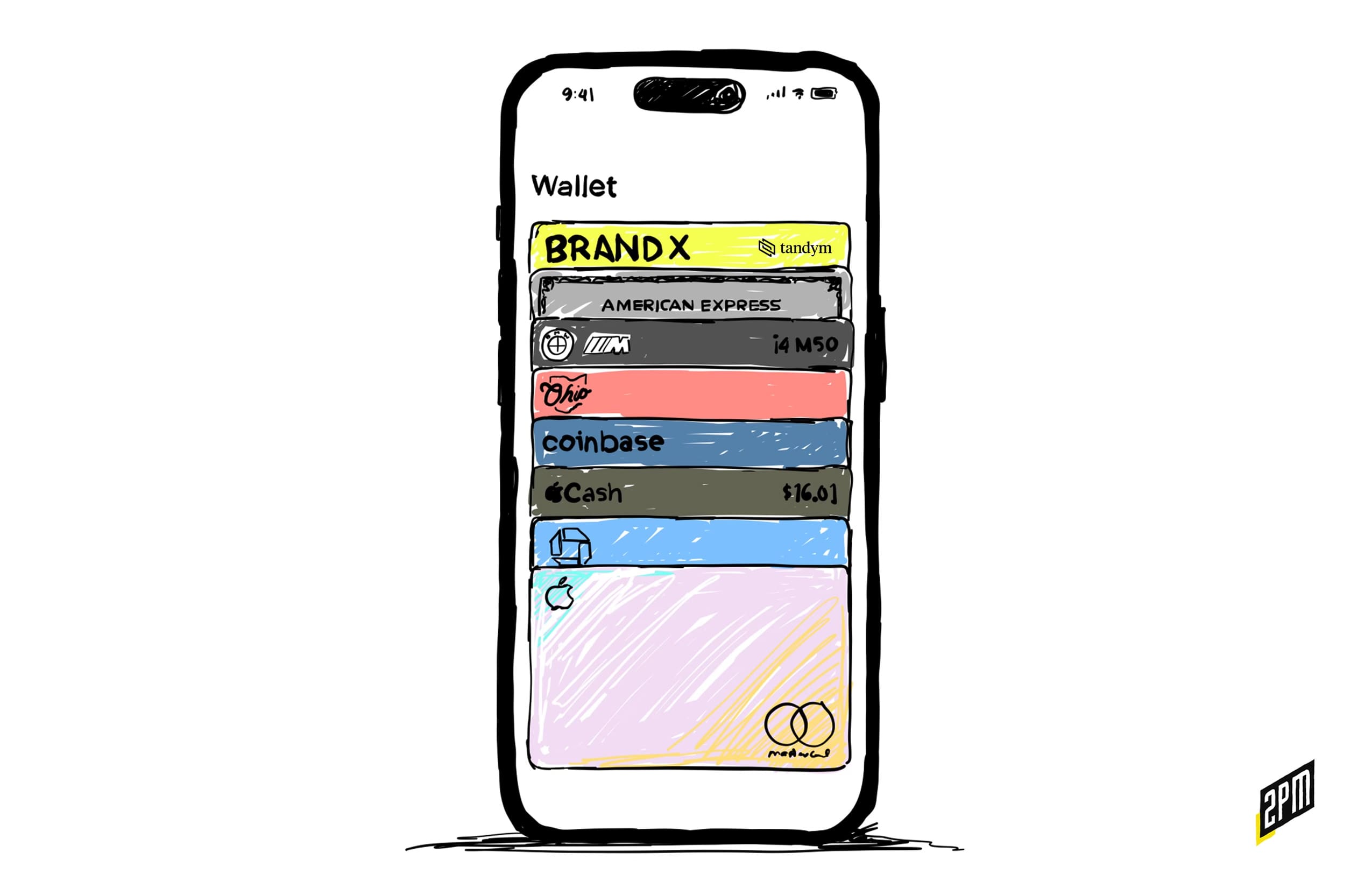
The Apple Wallet is waiting for the first co-branded credit card; a DTC powerhouse and the card’s provider. Which brand would you want to see in your wallet every day? I can name a few.

It’s no longer just a convenient app for storing credit cards and boarding passes. It is quickly becoming a central hub for all forms of identification and access. The Wallet’s role in daily life is expanding. As The Verge reported, this fall, some California residents will be able to participate in a pilot program allowing them to add their driver’s licenses and state I.D.s to Apple Wallet. This pilot is part of a broader trend where digital I.D.s are becoming more commonplace. What happens when Apple authorizes every state in the union?

This expansion of digital I.D.s within Apple Wallet means that users will interact with the app more frequently. Whether they’re going through airport security, purchasing age-restricted products, or simply proving their identity, users will open their Apple Wallet multiple times a day. This increased usage transforms the Wallet screen into prime digital real estate, particularly the area above the fold, which is the first thing users see when they open the app. Brands that secure a presence in this space can achieve daily consumer interaction, making it a powerful tool for brand reinforcement and customer loyalty. And, as of yet, Apple cannot control it.

Above the Fold: A New Battleground for Brand Visibility

The concept of “above the fold” originates from the newspaper industry, where the most important stories were placed on the upper half of the front page, above the literal fold, to attract attention. In the digital age, this concept has been adapted to websites, where the most crucial content is placed at the top of the page before users scroll. With the increasing significance of the Apple Wallet, the “above the fold” area of the Wallet screen is becoming one of the most coveted spaces for brands.

When a user opens their Apple Wallet, the first cards they see are those that reside above the fold. These cards are likely to include their most frequently used payment methods, co-branded credit cards, digital car keys, and digital I.D.s. For brands, being visible in this area resembles having prime billboard space in the busiest part of town. Every time a user opens their Wallet, they are exposed to the brand’s presence, reinforcing brand recognition and fostering a sense of familiarity.

For H.E.N.R.Y.s, who are often on the cutting edge of technology adoption, the Apple Wallet’s above-the-fold section becomes a digital expression of their lifestyle and values. These consumers will likely curate their Wallet to reflect their brand affinities and status, keeping certain cards or I.D.s in prominent positions as a subtle signal of their preferences and social standing.

H.E.N.R.Y.s and the Power of Brand Affinity

H.E.N.R.Y.s (“High Earners, Not Rich Yet“) represent a unique consumer segment characterized by their substantial disposable income, yet they are not typically classified as wealthy. This demographic is particularly attractive to brands because they have the financial means to make aspirational purchases and are highly brand-conscious. For H.E.N.R.Y.s, the brands they choose to associate with are more than just providers of goods and services; they are extensions of their identity.

The Apple Wallet offers H.E.N.R.Y.s a powerful platform to signal their brand affinities. For instance, having a premium credit card or a membership to an exclusive club stored in a prominent position in their Wallet can serve as a potent status symbol, visible each time they use their device. This is akin to how physical wallets once displayed gold or platinum cards as indicators of financial success, but in a more digital and dynamic form.

Brands targeting H.E.N.R.Y.s must recognize the potential of the Apple Wallet as a status-signaling tool. By offering digital cards that convey exclusivity or prestige, brands can deepen their relationships with this demographic. For example, a luxury brand could offer a co-branded, digital loyalty card that provides rewards and features exclusive design elements or limited-time offers that appeal to the H.E.N.R.Y.’s desire for unique, high-status experiences.

Privacy and Security: A Key Consideration

While the Apple Wallet presents a significant opportunity for brands, it is also essential to address the privacy and security concerns that come with storing sensitive information in a digital format. As The Verge recently noted, state-run mobile I.D. programs have sparked debates about potential security risks, including the possibility of third parties accessing users’ information or law enforcement using mobile I.D.s as a pretext to seize phones.

Apple has made assurances that I.D.s stored in Apple Wallet are secure and cannot be accessed by third parties, including Apple itself. According to Apple’s press release, driver’s license information added to Apple Wallet is only stored on the user’s device and is not accessible unless the user chooses to present it. This level of security is crucial for maintaining consumer trust, especially for H.E.N.R.Y.s, who are likely to be highly aware of the importance of data privacy.

The Future of Brand Engagement in the Apple Wallet

As the Apple Wallet continues to evolve beyond movie passes and debit cards, it is poised to become one of the most important digital platforms for brand engagement. The integration of the above mentioned categories of cards means that the Wallet will be a frequent touchpoint in users’ daily lives. For brands, particularly those targeting H.E.N.R.Y.s, securing a presence in the above-the-fold section of the Apple Wallet offers an unparalleled opportunity to deepen relationships with consumers. This trend is likely to continue, making the Apple Wallet a key platform for brand engagement in the future.

The Apple Wallet’s transformation into a central hub for digital identity and access is not just a convenience for users; it is a strategic opportunity for brands. By understanding the importance of this digital real estate and how it can signal brand affinity and status, brands can position themselves to engage with consumers meaningfully and meaningfully. As digital I.D.s become more common and the Wallet’s role in daily life expands, this screen will become as valuable as the traditional home page, if not more so, for brands aiming to connect with today’s discerning consumers.

Research and Writing by Web Smith 

Memo: Retailers and Co-Branded Credit

Think symbiosis.

Lending and brand equity go hand in hand. Buy Now, Pay Later (BNPL) providers and the retailers that they serve are key to each other’s operations; they are mutually beneficial, they work in tandem. Affirm, Klarna, and countless others are key products for many retailers. Without these services, gross merchandising volume (GMV) would have been considerably lower for many, over recent years. Consumer Packaged Goods (CPG) lenders like Ampla served brands by lending to them; this allowed them to acquire inventory or pay for marketing services that helped them grow top-line revenues. As their portfolio of lending customers grew, so did their valuation – at least for a time.

And then, there are companies like Tandym, a financial services company that works with merchants to create their own private-label digital credit cards and rewards programs. Tandym charges a processing fee of just 0.5%, a substantial savings compared to the typical 1.5% to 3% fees imposed by major credit card providers. Tandym provides the capital necessary to extend credit directly to a retailer’s customers, offering businesses a seamless and cost-effective way to grow and engage their customer bases. A retailer doesn’t need to be worth trillions or even billions to access such technologies. At almost any level, credit lending and retail brands can achieve symbiosis.

****

When it comes to credit / brand symbiosis, Apple has once again set the standard at the enterprise level. This marks the fourth consecutive year that Apple Card, in partnership with Goldman Sachs, has achieved the top ranking, a testament to its user-centric design, loyalty rewards, and commitment to financial health. With innovative features like daily cash rewards and integration with Apple Wallet, it’s become a favorite among consumers.

As Apple continues to dominate the U.S. market with its top-rated card, Amazon is making its significant move in the loyalty-driven economy with the launch of a new co-branded credit card in partnership with Barclays. The Amazon Barclaycard will aim to capture consumer loyalty by offering rewards on everyday purchases, which can be redeemed for Amazon gift cards. With no annual fee and additional perks for Amazon Prime members, this new card is designed to strengthen Amazon’s ecosystem while providing customers with valuable benefits tailored to their shopping habits.

Together, these developments underscore the growing importance of branded credit cards in fostering customer loyalty and delivering value in today’s competitive financial landscape.

The consumer credit landscape is rapidly changing, with branded credit cards standing out as the most attractive option in an increasingly strained economy. Driven by rising interest rates, diminishing brand loyalty, and growing revolving debt, branded credit cards are becoming a go-to tool for brands that aim to shore up their value.

The shift toward value-oriented credit cards

The recent J.D. Power 2024 U.S. Credit Card Satisfaction Study communicates a shift in consumer preferences and revelations worth noting here. The study reveals that over half of U.S. credit card customers are financially unhealthy, with 51% carrying revolving debt as interest rates climb. This is buoyed by the rise in Buy Now Pay Later transactions, which Apple chose to end in June of 2024. But, when juxtaposed on the data shared below, it illustrates just how important credit card usage is to the retail industry: 44% of transactions are through credit cards, another 40% are through “Brand Pay” systems and BNPL technologies: Google Pay, Apple Pay, Paypal, Klarna, Affirm, and so on. 

Given the growing strains caused by economic distress, the appeal of traditional points and air miles cards is diminishing, with many consumers opting for cash back cards that offer more tangible benefits. As such, cash back cards now dominate the market, used by 58% of cardholders, compared to 31% who still favor points and miles cards.

60% of co-branded cardholders primarily use cards affiliated with major retailers like Amazon, Costco, or Target. This shows the strong appeal of cards offering rewards on everyday purchases. (The Financial Brand)

This trend can be seen as a direct response to mounting pressures. Cashback cards, which often come with lower or no annual fees, provide a more accessible way for consumers to derive value from their spending without the complexity and long-term commitment associated with points and miles programs. As financial health declines, so does the attractiveness of credit cards that promise rewards in the distant future. Consumers are looking for immediate benefits, and cashback cards deliver just that.

Regulatory pressures and the rise of BNPL

At the same time, regulatory pressures are disrupting the Buy Now, Pay Later (BNPL) services that reshaped the broader credit landscape. The Consumer Financial Protection Bureau (CFPB) has been scrutinizing BNPL products, proposing new regulations subjecting them to similar rules as traditional credit cards. Companies like Affirm have responded by advocating for a regulatory framework tailored specifically to BNPL, arguing that applying credit card regulations to these products could create confusion and unnecessary compliance burdens.

As BNPL products have grown in popularity, they’ve posed a potential threat to traditional credit cards, particularly those that rely on high-interest revolving debt for profitability. However, recent months have stressed the importance of innovation and adaptability in the credit market. One of those innovations is the rise of the co-branded credit card.

Co-branded credit cards: a strategic advantage

Co-branded credit cards are emerging as a strategic advantage for both issuers and partner brands. The recent partnership between Amazon and Barclays to launch a co-branded credit car in the U.K. is a prime example of the continuation of this trend. The Amazon Barclaycard will offer customers rewards on everyday spending, which can be redeemed for Amazon gift cards, with additional perks for Amazon Prime members. This card strengthens customer loyalty to Amazon and provides Barclays with a valuable touchpoint for engaging with a broad customer base. Here are six top examples of co-branded credit cards:

Apple Card (Goldman Sachs):

The Apple Card stands out for its seamless integration with Apple Wallet and its commitment to transparency. With no fees, not even for late payments, and a straightforward cashback program that offers up to 3% Daily Cash on purchases, it’s designed for users who value simplicity and financial health.

Amazon Prime Rewards Visa Signature Card:

Tailored for the avid Amazon shopper, this card delivers substantial rewards—5% back on Amazon and Whole Foods purchases. Beyond Amazon, it also offers 2% back at restaurants, gas stations, and drugstores, making it a versatile tool for everyday spending. There’s no annual fee for Prime members, adding to its appeal.

Chase Sapphire Reserve:

Known for its travel perks, the Chase Sapphire Reserve is a premium card that provides 3x points on travel and dining worldwide. Cardholders enjoy an annual $300 travel credit, access to over 1,000 airport lounges through Priority Pass, and valuable travel insurance, making it a top choice for those who are often on the go.

Hilton Honors American Express Aspire Card:

This card is a powerhouse for Hilton enthusiasts, offering 14x points on stays at Hilton properties. Cardholders receive automatic Hilton Diamond status, which includes room upgrades and late checkouts, along with a free weekend night every year. It’s the ultimate companion for frequent Hilton guests.

Southwest Rapid Rewards Premier Credit Card:

This card is tailored for those who frequently fly Southwest Airlines. It rewards users with 2x points on Southwest purchases and anniversary bonus points each year. With no foreign transaction fees and the ability to earn towards Companion Pass status, it’s a strong contender for domestic travelers.

Costco Anywhere Visa® Card by Citi:

A go-to for Costco shoppers, this card offers impressive rewards, including 4% cash back on gas, 3% on restaurants and travel, and 2% on Costco purchases. Its broad rewards categories make it a versatile option for those who do most of their shopping at Costco.

Co-branded credit cards offer several key benefits. First, they align the interests of the issuer and partner brands, creating a mutually beneficial relationship that can drive customer engagement and retention. For brands like Amazon, co-branded cards enhance the shopping experience by offering rewards directly tied to their ecosystem.

The role of branded credit cards in the loyalty economy

These cards are playing an increasingly important role in the loyalty-driven economy. They offer consumers a way to earn rewards and benefits that align with their spending habits and financial goals. As the financial health of many consumers deteriorates, these cards provide a valuable tool for managing expenses and maximizing the value of everyday spending.

Best Buy listed its credit card as the second-largest driver of customer loyalty and repeat action. (eMarketer)

The success of branded credit cards depends on their ability to adapt to the changing needs and preferences of consumers. Issuers must navigate a complex landscape, balancing the need for profitability with the demand for accessible and valuable rewards. This requires a deep understanding of consumer behavior and a willingness to innovate and respond to regulatory challenges.

In all, branded credit cards represent a bright spot in an economy under increasing pressure from revolving debt and financial instability. By offering tailored rewards, lower fees, and partnerships with famous brands, these cards are helping consumers navigate a challenging financial landscape while providing issuers with a valuable tool for building customer loyalty. Co-branded credit cards offer a compelling growth opportunity for financial institutions and their retail partners. By tackling existing challenges and capitalizing on new market trends, these tailored financial products can seize a greater portion of the credit card market while delivering distinct advantages to a diverse range of consumers. Success in this space hinges on crafting strong value propositions, clearly conveying these benefits to prospective cardholders, and persistently innovating to keep pace with the shifting demands and preferences of consumers.

As the credit market continues to evolve, branded credit cards are likely to become even more important, serving as a critical driver of consumer satisfaction, financial resilience, and brand value.

Research, Data, and Writing by Web Smith